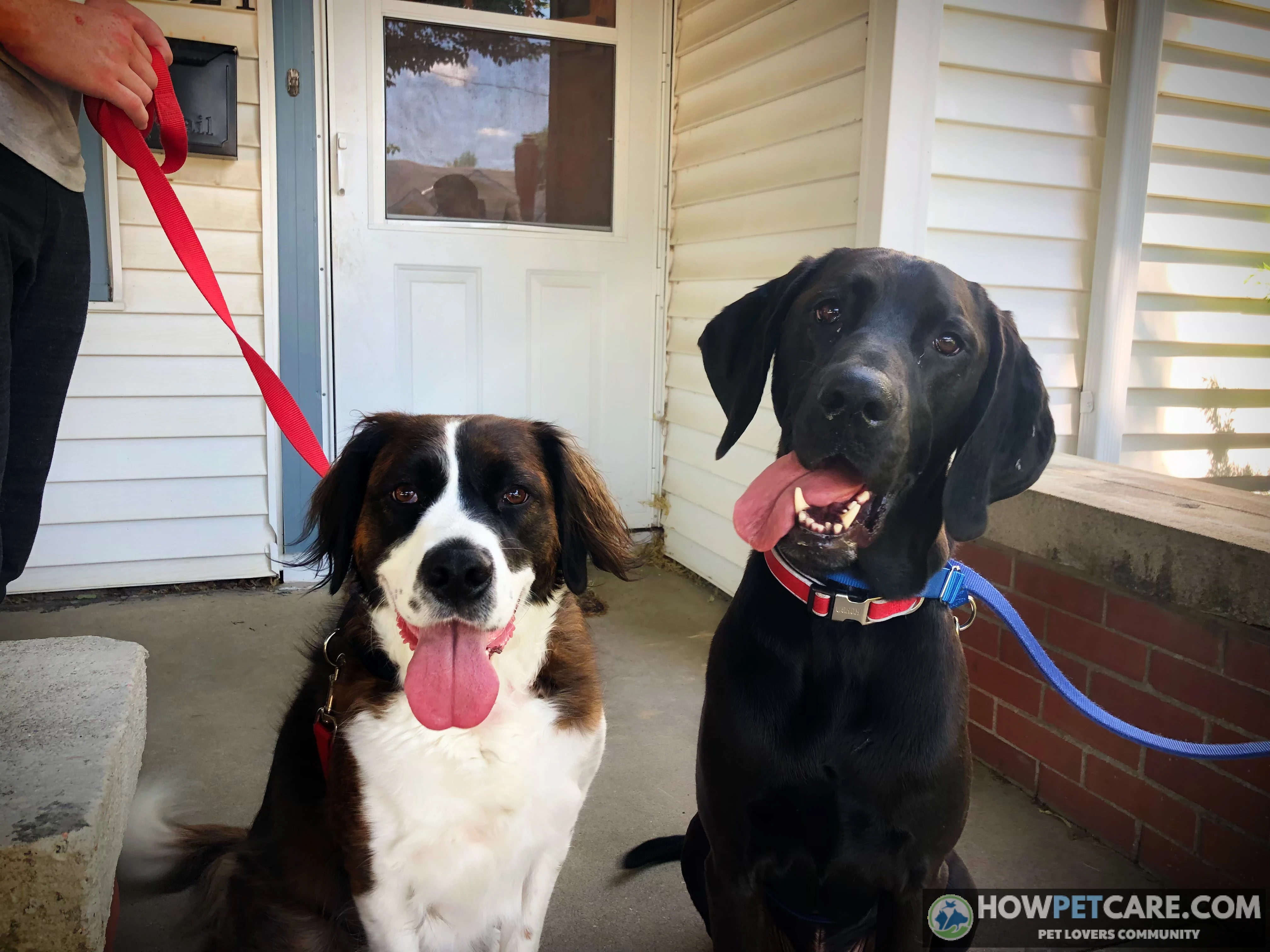

A second dog usually works when your resident dog greets other dogs calmly, your budget covers roughly double current pet costs plus a $1,500–$3,000 emergency fund, and every adult in the home wants one. Hold off if your dog guards resources, reacts aggressively to other dogs, or you hope a companion will fix separation anxiety.
Adding a second dog can bring more joy to your home, but it also increases your daily workload, financial commitments, and management responsibilities. A second dog is often a rewarding addition when your resident dog is socially confident, your home has enough space and a stable routine for two animals, and your monthly budget can comfortably cover ongoing veterinary and food expenses. Bringing a new dog home is usually a poor choice if your resident dog shows territorial reactivity, resource guarding, or acute fear of other dogs—or if you hope a newcomer will cure your current pet’s separation anxiety or chronic boredom.
Before moving from one dog to two, consider your household’s capacity, the dogs’ compatibility, and the likely costs. If you decide to proceed, plan a structured introduction on neutral ground and a patient, month-long integration rather than expecting the dogs to work everything out themselves.
One Dog or Two? A Readiness Scorecard to Decide in 10 Minutes
Before browsing adoption listings or visiting breeders, take an honest look at whether your home is ready for another dog. A companion changes the household’s social balance. Managing two dogs means responding to different personalities and physical needs, as well as the ways their behavior can influence each other.
Many owners assume two dogs will entertain each other and cut their exercise duties in half. In practice, each dog needs individual training, bonding time, and medical care. Dogs left alone together all day may feed on each other’s excitement, bark together, and compound destructive behaviors instead of resting quietly.
Readiness scorecard: 10 yes/no questions
Answer each question honestly. This scorecard is a practical rule of thumb, not a clinically validated diagnostic tool. If you encounter even one red flag, pause your adoption plans until you’ve addressed that issue.
- ☐ 1. Can you commit at least 30 to 45 minutes of physical exercise plus 5 to 10 minutes of one-on-one training for each dog individually every day, even during busy work weeks?
- ☐ 2. Can your monthly cash flow absorb double your current pet care expenses, plus an immediate emergency veterinary reserve of $1,000 to $3,000? (RED FLAG if no)
- ☐ 3. Does your resident dog routinely greet unfamiliar dogs with relaxed, loose body posture—or at least calmly disengage and ignore other dogs on walks? (RED FLAG if your current dog guards food, toys, or resting spots, snaps at dogs, or displays fearful freezing)
- ☐ 4. Do you have space to safely separate the dogs behind barriers (crates, secure baby gates, or separate rooms) during meals and unsupervised hours?
- ☐ 5. Does your municipal code, homeowners association, or rental lease explicitly permit two dogs within the allowable weight limits?
- ☐ 6. Does every adult living in the home want a second dog and agree to share handling duties, rather than merely tolerating the idea? (RED FLAG if any adult household member objects)
- ☐ 7. Do you have an established pet-sitter, boarding facility, or trusted friend capable of caring for two dogs at the same time when you travel?
- ☐ 8. Is your current dog medically sound, free from chronic untreated joint pain, and under approximately 10 years of age, or has your veterinarian explicitly cleared them for a new companion?
- ☐ 9. Is your home life stable for the foreseeable future (no imminent moves, newborn babies, major job shifts, or home renovations planned in the next 6 to 12 months)?
- ☐ 10. Are you pursuing a second dog because you genuinely want another companion, rather than using a new pet to treat your first dog’s separation anxiety, hyperactivity, or boredom? (RED FLAG if the adoption is meant to fix an existing behavioral deficit)

Scoring your results: If you answer "yes" to 8 or more questions and have zero red flags, your home is likely well-positioned for a second dog. A single red flag means you should halt the process and address that limitation first. If you answer "yes" to 5 or fewer items, another dog will almost certainly place severe emotional and financial strain on your household.
What the research does and doesn’t support
Popular pet media often overstates the health benefits of multi-dog households. Articles may claim that "studies prove dogs with companions live longer, healthier lives," but the peer-reviewed literature is more nuanced. Controlled veterinary trials confirming that dogs living together have better physiological health or longer lifespans than dogs living alone are scarce.
Observational studies and applied behavioral science do show that dogs are facultatively social animals. When compatible dogs share a home, owners often report more daily play, environmental stimulation, and cooperative communication. A confident adult dog can also model behavior for an insecure dog encountering unfamiliar things such as vacuum cleaners or stairs.
A second dog, however, will not resolve these foundational problems:
- Separation anxiety: Clinical separation distress is almost always rooted in an unhealthy attachment to human handlers, not a lack of canine companionship. A newcomer may mimic the resident dog’s vocalizations and destructive pacing.
- Under-exercise: Two dogs wrestling in a living room don’t expend mental or physical energy in the same constructive way as they do on structured sniff walks, during fetch sessions, or through off-leash exploration.
- Lack of basic training: Poor leash manners, jumping on guests, and door-dashing can spread between dogs. An untrained resident dog may quickly teach those habits to an impressionable newcomer.
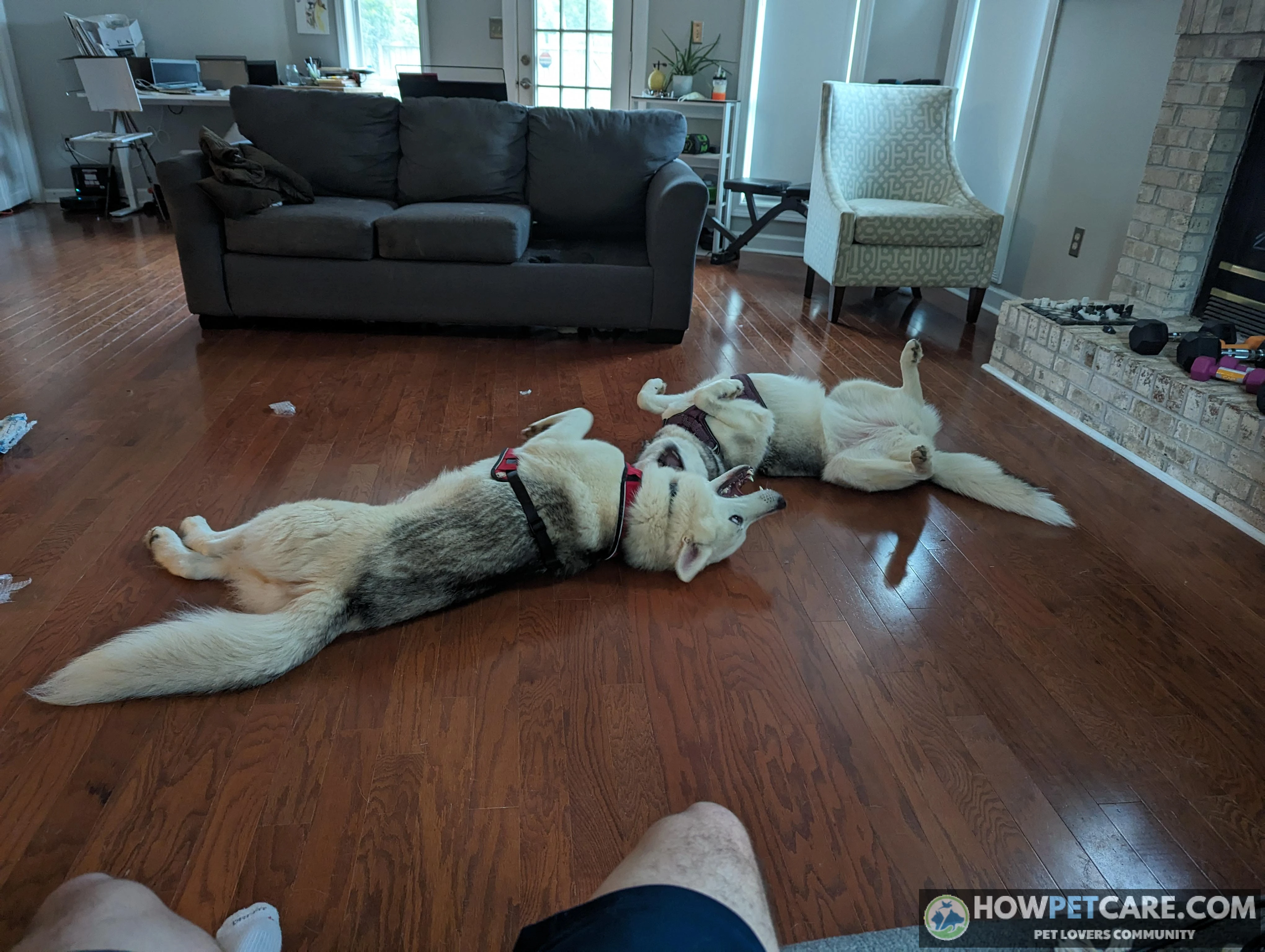
Dogs learn from each other constantly. If your resident dog barks aggressively at passing delivery trucks or resource-guards the living room rug, the new dog may begin rehearsing those same behaviors within two to three weeks of arrival.
Signs Your Current Dog Isn’t Suited to Living With Another Dog
Not every dog is comfortable sharing territory, resources, or human affection. Expecting a dog who doesn’t tolerate other dogs to welcome one into their home can place an unfair burden on them and lead to chronic distress or dangerous fights.
Behavioral red flags vs. fixable quirks
Distinguishing serious incompatibilities from minor quirks can help you make a decision before you’ve formed an emotional attachment to a prospective dog.
Serious behavioral red flags include:
- Resource guarding of high-value items: Stiffening, lip curls, low growling, or lunging when a human or another animal approaches food bowls, raw chews, tennis balls, or sleeping furniture.
- Dog-directed reactivity or bite history: A history of snapping at, pinning, or injuring unfamiliar dogs during off-leash encounters, neighborhood walks, or dog park visits.
- Persistent territorial hyper-arousal: Frantic fence-running, barrier frustration, or distress vocalizations whenever an unfamiliar animal is visible near the home.
- Hyper-attachment to one handler: Intense guarding of a specific owner, blocking access, or snarling when family members or other pets sit nearby.

More manageable quirks include some vocal posturing when startled, initial aloofness around new dogs, or brief, polite corrections when an adolescent puppy behaves rudely. A well-adjusted dog might give a short, dry growl to say "back off," then return to a soft, relaxed posture when the other dog respects the boundary. That’s normal canine communication, not pathological aggression.
When to consult a vet or behaviorist before deciding
If you notice concerning behavior, schedule a comprehensive physical exam with your veterinarian before adopting. Undiagnosed musculoskeletal discomfort—such as hip dysplasia, early osteoarthritis, or spinal spondylosis—often causes sudden irritability in mature dogs. A dog who anticipates pain from an accidental collision may lash out at an energetic companion.
For a simple behavioral screening, arrange three to five structured, parallel-walking sessions with calm, vaccinated, dog-neutral adult dogs belonging to friends or family. Watch your dog’s body language:
- Promising indicators: Loose spine, low wagging tail with broad lateral sweeps, soft eye contact, frequent ground-sniffing, and an ability to focus on food rewards in the presence of another dog.
- Concerning indicators: Rigid muscular freeze, hard direct stare, tightly closed mouth, raised hackles along the spine, whale eye (showing the whites of the sclera), or complete avoidance and hiding behind your legs.

If your resident dog consistently shows concerning signs, accept that they may prefer being an only pet. Forcing companionship on an introverted or dog-reactive dog rarely ends well. Instead, meet their social and mental needs through scent-work games, solo training classes, or structured time with people.
If you’re unsure how your dog would tolerate a full-time roommate, ask local rescue groups about short-term foster-to-adopt arrangements. You can observe your resident dog’s reactions at home over two to three weeks before signing permanent adoption paperwork.
What Two Dogs Really Cost: Monthly and Yearly Budget Breakdown
Owning two dogs is a substantial, ongoing financial commitment. Owners considering another dog may double the price of their current kibble bag but overlook additional veterinary fees, preventive medications, and service charges.
Monthly and annual cost table (small, medium, large dogs)
Food requirements vary with body weight and activity level. For each dog, choose a diet that meets established AAFCO standards for complete and balanced pet nutrition at their life stage. Whether you feed dry kibble, add wet dog food, or use nutrient-dense dog food toppers to increase protein content and palatability, your monthly food bill will rise.
The budget matrix below offers practical estimates based on 2026 pet industry averages, standard veterinary fees, and commercial retail pricing.
| Expense category | Two small dogs (monthly) | Two medium dogs (monthly) | Two large dogs (monthly) | Annual range, typical (2 dogs) | Source or assumption |
|---|---|---|---|---|---|
| Food (kibble & wet dog food) | $40–$80 | $70–$130 | $110–$200 | $800–$2,400 | Author estimate from major-brand feeding guidelines by weight; wet food runs roughly 1.5–2x kibble |
| Routine vet + preventives | $50–$90 | $60–$110 | $70–$130 | $700–$1,500 | Author estimate: 2 annual wellness exams, core vaccines, year-round heartworm, flea, and tick preventives |
| Pet insurance (accident & illness) | $40–$90 | $60–$120 | $80–$160 | $700–$1,900 | Published insurer average premiums (NAPHIA industry benchmarks); rates vary by age, breed, and zip code |
| Professional grooming | $0–$40 | $20–$80 | $30–$100 | $0–$1,200 | Author estimate; $0 for DIY short-coat grooming, $60–$100+ per session for double-coated or curly breeds |
| Training classes & enrichment | $20–$50 | $20–$50 | $20–$50 | $250–$600 | Group obedience classes (~$150–$300 per dog per course) amortized across the first year |
| Licenses, supplies, dog treats | $15–$40 | $15–$40 | $20–$50 | $200–$600 | Author estimate; replacement bedding, durable chew toys, training treats, and annual city licensing |
| Boarding / pet-sitting | $20–$60 | $25–$70 | $30–$80 | $300–$900 | Assumes approximately 5 to 7 days per year of boarding or in-home pet sitting at standard domestic rates |
| Typical monthly total | $185–$410 | $270–$600 | $360–$770 | $3,000–$8,000/yr | Projected operational ranges; actual figures vary significantly by geography and canine health |

Where scale helps: You can save modest amounts by buying 30-pound or 40-pound bags of dog food in bulk, sharing grooming clippers, and reusing durable crates and transport barriers.
What never discounts: Veterinary care, annual core vaccines, prescription parasiticide preventives, municipal registration fees, and professional boarding rates scale with each dog. Boarding two dogs at a reputable kennel often costs close to twice as much as boarding one.
One-time startup costs
A second dog also brings immediate setup expenses. Depending on whether you acquire your dog from a municipal shelter, a specialized rescue group, or an ethical preservation breeder, plan for these one-time costs:
- Adoption or purchase fee: $50 to $450 for shelters/rescues; $1,200 to $3,500+ for purebred puppies from health-tested working or show lines.
- Initial veterinary intake exam: $75 to $150 (ruling out internal parasites, infectious skin conditions, or underlying cardiac murmurs).
- Spay or neuter surgery: $150 to $600 (often included in rescue adoption fees, but an out-of-pocket expense for privately acquired puppies).
- Microchip implantation & registry fee: $35 to $65.
- Housing and travel infrastructure: $120 to $250 (a second wire or impact crate, heavy-duty pressure-mounted baby gates, car seatbelt tethers, and secondary dog beds).
- Walking equipment: $40 to $90 (two nylon or Biothane leashes, properly fitted Y-shaped front-clip harnesses, and identification tags).
Expect an initial startup baseline of approximately $500 to $1,500 before routine monthly costs.
Insurance and multi-pet discounts: what to check
Many national pet insurance underwriters offer a multi-pet discount of 5% to 10% off the secondary policy premium. The discount can reduce your bill, but check the contract terms before enrolling:
- Individual deductibles: Pet insurance policies almost never have a shared household deductible. Each dog has an independent annual deductible to meet before reimbursement begins.
- Pre-existing condition clauses: The second dog’s veterinary history will be closely reviewed upon your first claim. Any illness, lameness, or gastrointestinal upset documented in shelter or breeder records before the policy starts will be permanently excluded.
- Breed-specific pricing adjustments: Adding a brachycephalic breed (such as a French Bulldog) or a giant breed (such as a Great Dane) will cost substantially more per month than insuring an athletic mixed-breed hound.
To protect your household against catastrophic veterinary costs, keep a dedicated liquid emergency fund of $1,500 to $3,000 in a high-yield savings account, even if both dogs have insurance.
Worked Budget: Two Real Households
These two common scenarios show how the numbers can play out at home:
Household A — "The Matched Rescue Pair": An owner of a calm, 4-year-old, 45-pound spayed mixed-breed adopts a 2-year-old, 50-pound neutered companion from a local shelter. Both dogs eat mid-tier adult kibble with wet food toppers, are bathed at home, and participate in one basic group obedience refresher.
- Monthly recurring expenses: Food $110 + Vet/preventives $95 + Multi-pet insurance policy $100 + Supplies and treats $30 + Travel/boarding savings allocation 50 = ~385 per month (~$4,620 annually).
- One-time setup expenses: $350 shelter adoption fee + $120 secondary crate and walking harness + 80 initial veterinary physical = ~550 total startup.
Household B — "The Senior and the Large Puppy": An owner of a 9-year-old, 18-pound small dog introduces a large-breed, 8-week-old retriever puppy. The dogs eat different diets: a high-protein puppy growth formula meeting specific large-breed AAFCO standards and a joint-support senior canine diet. The senior dog receives professional grooming every six weeks, while the puppy attends puppy socialization and juvenile obedience courses.
- Monthly recurring expenses: Food $150 + Vet/preventives $140 + Comprehensive pet insurance $130 + Professional grooming $60 + Training class tuition $40 + Boarding reserve fund $60 = ~$580 per month (~$6,960 annually).
- One-time setup expenses: $500 adoption fee + $300 juvenile spay surgery deposit + 150 heavy-duty containment gates and enrichment gear = ~950 total startup.
The Emergency Vet Reality Check: Imagine an 8-month-old puppy swallowing a stray sock and developing an acute foreign-body intestinal obstruction. Emergency surgical enterotomy typically costs $2,500 to $4,500. With an insurance policy providing 80% reimbursement after a $250 deductible, your out-of-pocket expenditure is roughly $700 to $1,100. Without insurance, the entire balance falls due immediately at discharge. If that bill would require high-interest revolving credit, build your emergency buffer before adopting.

Choosing the Right Pair: Sex, Age Gap, Breed, and Temperament
A successful pairing depends on behavioral balance, not just luck. Consider how sex, developmental stage, and play preferences may interact when choosing a companion for your resident dog.
Pairing compatibility chart
Individual temperament matters more than demographic categories, but veterinary surveys and trainer consensus point to trends across different pairings. In a retrospective survey of inter-dog aggression within households published in the Journal of the American Veterinary Medical Association (Wrubel et al., JAVMA 2011), researchers evaluated conflicts between dogs living together. Same-sex pairs—particularly female-female pairings—were frequently overrepresented in clinical referrals for severe intra-household aggression, which often required sustained behavioral intervention. The study examined a specific clinical sample, so its findings are suggestive rather than absolute. Experienced practitioners nevertheless broadly agree that male-female combinations present the lowest baseline risk for territorial fighting.
| Pairing type | Typical upside | Common risk | Best fit for | Evidence level |
|---|---|---|---|---|
| Male + female | Lowest recorded statistical rate of serious household aggression | Intact pairs require strict reproductive management to prevent accidental litters | Most family homes seeking an uncomplicated integration | Small peer-reviewed studies (e.g., Wrubel et al., 2011) + strong practitioner consensus |
| Male + male | Generally successful if both dogs are neutered and socially stable | Potential status posturing during juvenile sexual maturity (ages 12–24 months) | Homes with a relaxed, socially easygoing resident male | Moderate practitioner consensus |
| Female + female | Harmonious when temperaments match and boundaries are respected | Conflicts, when they do arise, can be intensely persistent and difficult to resolve | Experienced handlers committed to meticulous early management | Clinical survey data + professional trainer consensus |
| Puppy + adult (2–5 yr gap) | The adult models reliable house manners; the puppy socializes easily | The puppy’s ceaseless biting and pouncing can exhaust and irritate the adult | Physically sound resident dogs with high social tolerance | Broad professional trainer consensus |
| Puppy + senior (8+ yrs) | Gentle companionship without competitive physical rivalry | Energetic puppy play stresses an arthritic or sensory-impaired senior dog | Rarely recommended unless the senior is exceptionally robust | Broad veterinary and behavior consensus |
| Two puppies at once | Puppies provide mutual physical exercise and bite inhibition | Severe risk of littermate syndrome; double the house-training workload | Experienced working-dog handlers only; otherwise strongly discouraged | Strong behavioral consensus (practical concept, not formal DSM diagnosis) |
| High-energy + low-energy | A placid resident dog can sometimes provide a grounding presence | Mismatched drive results in the active dog bullying or pestering the couch potato | Only functional if the calm dog possesses firm, polite disengagement skills | Practical trainer consensus |
| Large breed + small breed | Peaceful coexistence is common when both understand basic manners | Inadvertent crush injuries during rough play, or triggering predatory drift | Large dogs with verifiable low prey drive and gentle, grounded play styles | Practical handling consensus |
Age gaps and energy matching
Professional dog trainers generally recommend an age gap of two to four years. At two to three years of age, a resident dog has completed physical and social maturation, their adult personality is established, and their basic obedience foundation is reliable.
A bouncy 10-week-old puppy can create friction for a 12-year-old senior dog with early cognitive decline or degenerative joint disease. Senior dogs may have little tolerance for sharp puppy teeth, lunges, and interrupted naps. If you bring a young dog into a home with an aging pet, provide physical barriers so the senior has a place to rest undisturbed.
Energy and play style matter too. Pair chase-oriented sprinters (such as Sighthounds) with dogs that enjoy chasing games, and body-slamming wrestlers (such as Boxers or Staffordshire Bull Terriers) with dogs that tolerate physical contact. Repeated rough contact from a high-arousal dog is likely to cause friction with a delicate, aloof dog.

Testing compatibility before you commit
Give your resident dog a chance to "vote" before finalizing an adoption. Reputable shelters and foster-based rescues arrange structured dog-to-dog meet-and-greets on neutral territory. Bring your dog to a quiet, outdoor, fenced enclosure at the facility and watch for these signs:
- Do both dogs voluntarily break eye contact after brief, polite greetings?
- Do they display mutual "curved" approaches rather than direct, head-on charging?
- Can each dog be easily redirected away from the other using food or verbal cues?
If the candidate dog fixes a stiff, unblinking glare on yours, or your resident dog cowers and refuses to leave your vehicle, walk away. Wishful thinking can’t manufacture compatibility.
Before the Second Dog Comes Home: Gear Checklist and Walking Two Dogs
Preparation helps prevent management mistakes during the vulnerable first week. Set up your home before the new dog arrives to reduce resource conflicts and give both animals room to settle safely.
Pre-arrival supply checklist
Assemble this gear in advance so your household is ready from day one:
- ☐ Duplicate stainless-steel feeding and water dishes placed in distinct rooms
- ☐ A dedicated secondary crate matching the new dog’s adult size
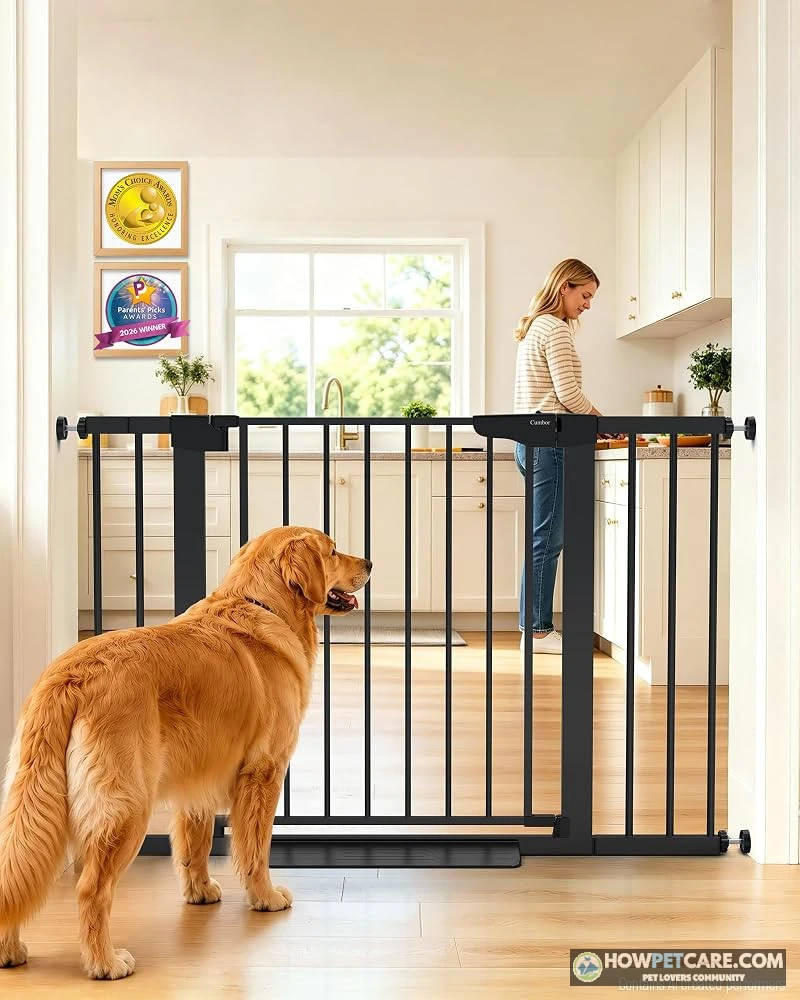
- ☐ Two to three heavy-duty, pressure-mounted walk-through baby gates
- ☐ Two 6-foot nylon or Biothane flat leashes (avoid retractable flexi-leads entirely)
- ☐ Two correctly fitted Y-shaped, front-clip walking harnesses
- ☐ Customized identification tags stamped with your current phone number
- ☐ An enzymatic odor-neutralizing cleaning spray for accidental urine markings
- ☐ A two-week supply of the exact dog food brand the newcomer is currently eating
- ☐ Multiple high-value, non-splintering chew toys (e.g., rubber Kongs) stored safely out of sight
- ☐ A pre-scheduled veterinary wellness intake appointment booked with your clinic

Setting up feeding stations and safe spaces
Resource guarding is the most common cause of early fights between dogs living together. Food bowls, raw bones, rawhides, and comfortable beds are valuable resources. When unfamiliar dogs are close together around high-value food, survival instincts can override polite manners.
Set up separate feeding stations behind closed doors or baby gates. During initial integration, don’t place the bowls where the dogs can see each other. Give both dogs space to eat without worrying that the other might approach. Store high-value chew toys, marrow bones, and puzzle feeders in a secure cupboard, and offer them only when the dogs are in separate crates or rooms.
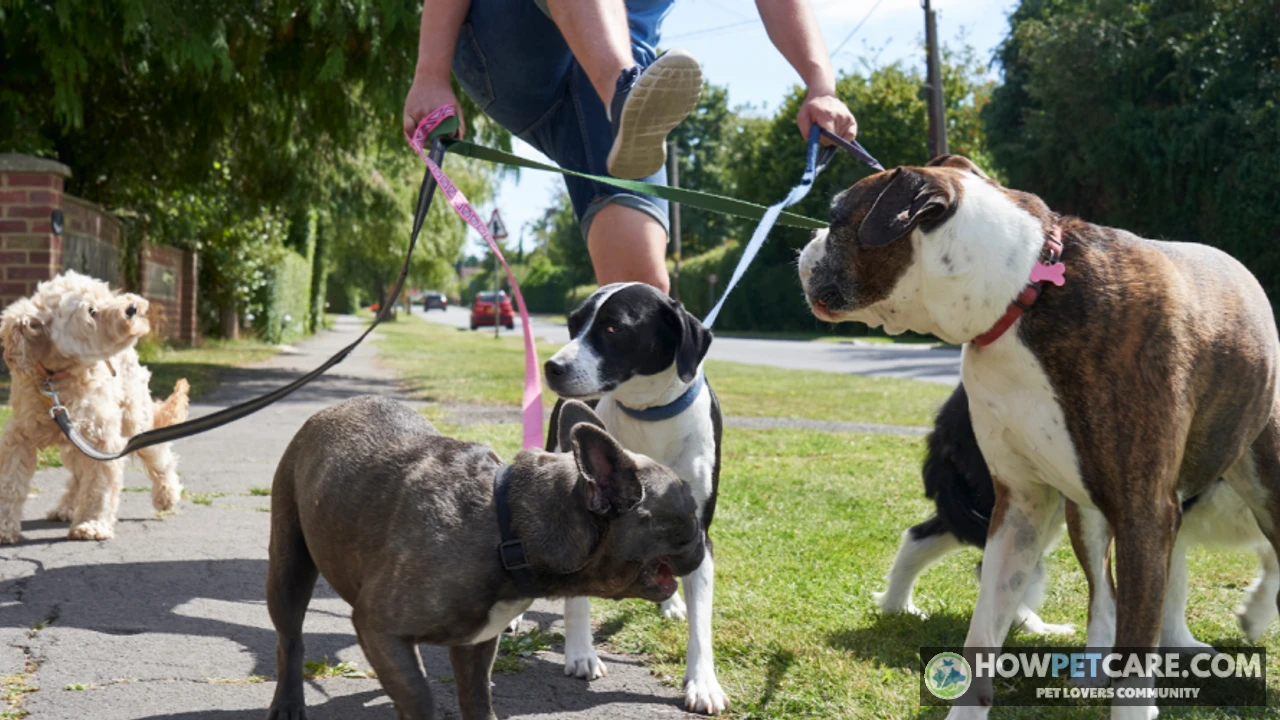
How to walk two dogs that both pull
Walking two untrained dogs who pull can lead to injury, dropped leashes, and tangled, reactive dogs. If both pull hard, handling them together on public sidewalks without individual training is unsafe.
Dual-dog leash splitters or couplers mechanically bind two animals together. If one dog lunges toward a passing bicycle or lunges defensively at another dog, the coupler violently jerks the second dog’s neck, sparking redirected frustration and sudden aggression between the two pets.
Use these steps to work toward walking both dogs safely:
- Stagger your training walks initially: Walk each dog individually for the first two to three weeks. Spend 15 minutes per dog per day reinforcing loose-leash walking, rewarding the dog for keeping tension off the leash and checking in with you.
- Equip front-clip harnesses: Fit both dogs with balanced, Y-shaped harnesses with a front-chest attachment point. Front-attaching leashes redirect forward pulling momentum toward you without compressing the trachea or cervical vertebrae.
- Position dogs strategically: Avoid holding one leash in each hand with your arms spread wide; you could be pulled off balance. Instead, teach both dogs to walk on your left, or keep your calmest dog on your left while your newer dog learns to walk on your right.
- Use independent leashes anchored properly: Hold both leashes securely with the loops anchored through your thumb and palm, resting the excess strap across your fingers. Keep four to six feet of functional slack so neither dog feels constant tension.
- Create immediate physical distance: If an approaching dog or reactive trigger appears on the sidewalk, don’t freeze or yell. Step into a driveway or onto a lawn, place your body between your dogs and the trigger, and scatter high-value treats for a sniffing scavenger hunt while the distraction passes.
How to Introduce a Second Dog on Neutral Ground, Step by Step
A first meeting establishes a baseline for the dogs’ future relationship. Don’t bring an adopted dog directly into your house or let them sprint loose in your fenced backyard to meet your resident dog. Your resident dog sees the home and yard as established territory, and an unannounced introduction there can spark defensive aggression.
Step-by-step neutral-ground meeting
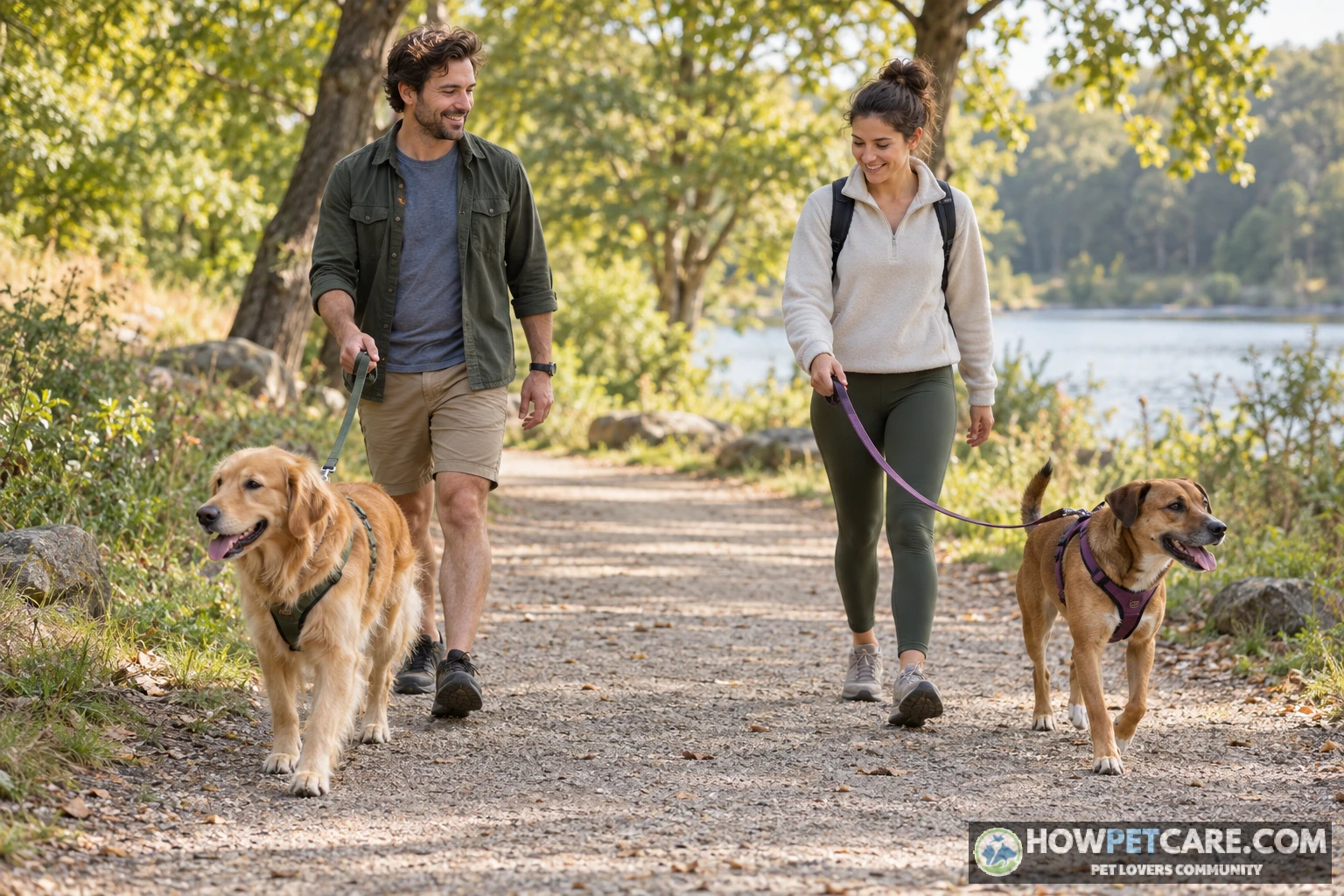
Choose an unfamiliar, quiet outdoor location, such as a wide suburban park, an empty sports field, or an open cul-de-sac. Both dogs should wear flat collars or harnesses with standard 6-foot leashes and be handled by two calm, capable adults.
-
Step 1: Parallel Walking at a Wide Distance
Begin walking both dogs in the same direction, separated by approximately 30 to 40 feet of open space. Walk at a brisk, purposeful pace. Don’t let the dogs pull toward each other. Reward each dog with small, tasty treats when they willingly glance away from the other and focus on their handler.
-
Step 2: Gradually Closing the Distance
As both dogs settle into an easy rhythm and show soft body language, gradually bring your walking lines closer. Narrow the gap to 20 feet, then 10 feet, while continuing forward together. Parallel movement draws on natural pack-travel dynamics and helps dissipate nervous energy without the pressure of a direct confrontation.
-
Step 3: Controlled Parallel Sniffing
Let the dogs walk within 5 to 6 feet of each other, alternating which dog leads. Allow each dog to sniff the ground where the other just walked. This gives both animals a chance to gather chemical information without the social pressure of direct eye contact.
-
Step 4: The Three-Second Greeting Rule
Once both dogs are relaxed, allow a brief, curving nose-to-rear greeting on completely slack leashes. Count silently: one, two, three. At three seconds, both handlers should cheerfully call their dog’s name, turn 180 degrees, and walk away, rewarding the dog generously for disengaging.
-
Step 5: Extended Interaction and Play
Repeat the three-second greetings several times. If body language remains fluid and loose, let the dogs walk side-by-side and play briefly. Keep leashes loosely draped in hand to prevent tangling, but don’t drop them entirely.
Green, yellow, and red body language
Reading subtle expressions and postural tension can help you intervene before a manageable misunderstanding becomes a fight.
CANINE BODY LANGUAGE ESCALATION SPECTRUM
=========================================================================
[ GREEN: LOOSE & SAFE ]  --> [ YELLOW: TENSION RISES ] --> [ RED: DANGER ]
• Soft, blinking eyes        • Direct, unblinking stare     • Hard freeze / rigid body
• Curving spinal posture     • Raised hackles along neck    • Deep, guttural growl
• Exaggerated play bows      • Lip licking & yawning        • Wrinkled muzzle / teeth
• Bouncy, lateral gait       • Whale eye (sclera showing)   • Direct forward charge
• Willing disengagement     • Stiff, vibrating high tail   • Snapping / lunging
=========================================================================- Green Signals (Safe to proceed): Bouncy, curved bodies; open, relaxed mouths with loose tongues; play bows with rear ends elevated; soft eye contact; reciprocal give-and-take during chase games.
- Yellow Signals (Pause and create distance): Stiffening legs; closed mouth; prolonged eye contact without blinking; slow, mechanical tail wagging held high over the back; lip licking; head turns away combined with whale eye; raised fur (piloerection) across the shoulder blades or base of spine. Call your dog away immediately, widen the gap, and resume parallel walking until the tension dissipates.
- Red Signals (Abort introduction immediately): A sudden, motionless freeze; lowered head with a forward-leaning posture; wrinkled muzzle exposing front canines; deep, low-frequency growling; sudden explosive lunging. Step backward smoothly, guide your dog away on the leash, and end the interaction without yelling or physically punishing them.

Bringing the new dog into the house
After a successful neutral-ground session, take the dogs home in separate vehicles or secured in separate crates. On arrival, leave the new dog outside on a leash with the second handler while you take your resident dog into the fenced yard to relieve themselves.
Bring the new dog into the yard on leash for another brief round of relaxed parallel sniffing. Then walk the new dog into the house first, leaving the resident dog in the yard with the second handler. Keep the newcomer on a loose leash while they explore the main living areas and find their water bowl. Finally, bring the resident dog inside on leash. Keep baby gates closed between rooms for the rest of the evening so the dogs can see each other without physical pressure.
The First 30 Days With Two Dogs: A Week-by-Week Integration Plan
The popular "3-3-3 rule" in canine rescue is a rule of thumb, not an immutable biological law. It offers a framework for acclimatization: three days to decompress from acute shelter stress, three weeks to learn household routines, and three months to feel completely secure in the environment.
30-day integration schedule
| Stage | What to do | Milestone to reach | Warning sign | Action if warning sign appears |
|---|---|---|---|---|
| Days 1–3: Decompression | Maintain strict physical separation with baby gates; walk separately; feed in isolated rooms | New dog sleeps soundly, eats regular meals, and displays normal elimination patterns | Constant whining, pacing, door scratching, or explosive fence fighting across gates | Cover gates with solid blankets to block visual contact; widen separation to separate closed rooms |
| Week 1: Structured Routine | Supervised communal drag-leash interactions in neutral living spaces (10–15 min bursts); separate crates for resting | Both dogs lie down calmly in the same room separated by 8–10 feet of space | Persistent resource guarding of human handlers or resting furniture | Pick up all throw pillows and floor dog beds; prohibit both dogs from sitting on human furniture |
| Week 2: Parallel Expansion | Initiate combined daily neighborhood walks with two handlers; allow supervised off-leash interaction in neutral yard | Dogs engage in brief, reciprocal bouts of play, then voluntarily separate to sniff grass | Asymmetrical bullying where one dog constantly pins or pursues the other without role reversal | Interrupt play immediately; enforce mandatory 15-minute crate naps behind closed doors |
| Weeks 3–4: Consolidation | Handlers transition to solo tandem walking if manners allow; permit supervised unhindered access to shared home spaces | Dogs comfortably share space without constant vigilance or monitoring of handler movements | Low-frequency growling over forgotten items, narrow doorways, or tight hallway thresholds | Re-install hallway baby gates; consult a credentialed behavior professional if growling escalates |
Normal adjustment vs. warning signs
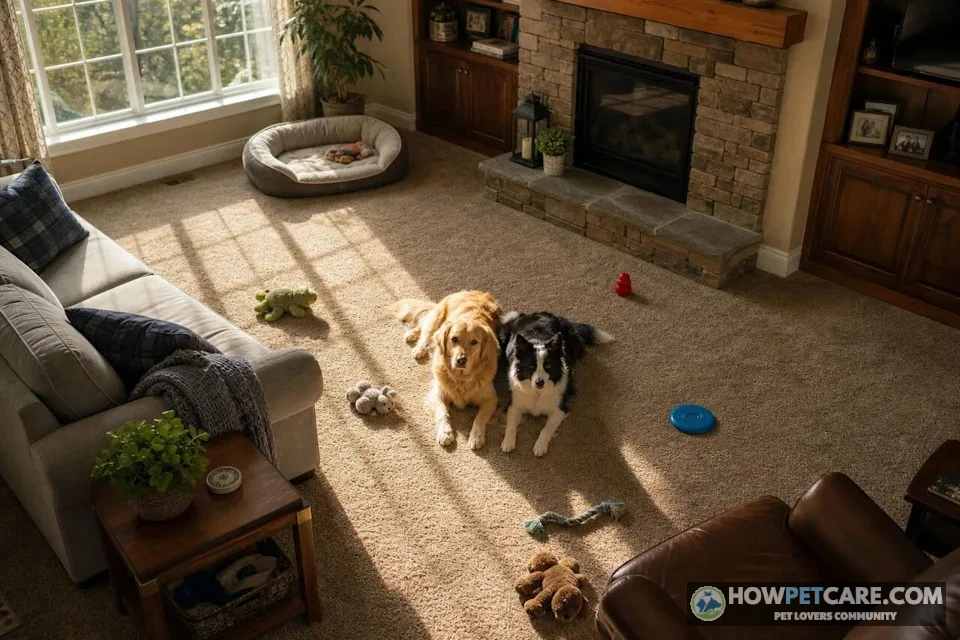
Dogs living together need to work out social boundaries. Knowing which behaviors are normal and which call for intervention can keep you from overreacting to healthy communication or overlooking danger.
Completely normal adjustment behaviors:
- Occasional dry, polite growls when an energetic newcomer approaches a resting dog too quickly.
- Mild spatial avoidance, such as the resident dog choosing to sleep in a different room for the first ten days.
- Temporary, minor changes in appetite or bathroom schedules as cortisol levels equalize.
- Occasional muzzle-licking or submissive lip-tucking during early greetings.
Warning signs requiring immediate intervention:
- One dog consistently cornering or trapping the other behind furniture or inside hallways.
- One dog refusing to drink water, eat meals, or leave their crate due to hyper-vigilance.
- Continuous, silent shadowing where one dog tracks the other’s every physical movement with an unblinking stare.
- Any bite that breaks canine or human skin, regardless of perceived provocation.
Daily routine for two dogs
A predictable schedule gives nervous dogs structure and can reduce competitive anxiety. This sample routine provides a balanced daily rhythm for two adult dogs:
- 7:00 AM — Separate Feeding: Dogs enter their own rooms or crates and eat behind closed doors. Leave bowls down for 15 minutes, then remove them.
- 7:30 AM — Morning Exercise: Stagger individual 20-minute walks, or take a combined parallel walk if both dogs have reliable loose-leash skills.
- 8:30 AM to 12:00 PM — Decompression & Quiet Time: Separate the dogs into their safe zones or crates with durable, frozen rubber chew toys for quiet rest while humans work.
- 12:30 PM — Mid-Day Relief & Solo Bonding: Take a quick bathroom break in the yard, followed by 5 to 10 minutes of one-on-one training with each dog (practicing sits, stays, and hand targets).
- 1:00 PM to 5:00 PM — Secondary Rest Cycle: Let the dogs rest unsupervised behind baby gates to prevent prolonged daytime excitement.
- 5:30 PM — Evening Exercise & Communal Play: Offer structured backyard play or a neighborhood walk, watching closely for over-arousal.
- 6:30 PM — Separate Dinner: Follow the breakfast protocol, with the dogs physically separated around food bowls.
- 8:00 PM — Relaxed Communal Coexistence: Supervise rest in the family living room. Both dogs settle on their own mats and receive periodic rewards for calm, quiet disengagement.
When Things Go Wrong: Littermate Syndrome, Fights, and a Resident Dog Who Is Struggling
Even careful planning can’t prevent every behavioral problem in a multi-dog household. A response plan can help you avoid panic and physical injury when trouble arises.
What littermate syndrome is and how to prevent it
"Littermate syndrome" is a descriptive term used by applied animal behaviorists and certified trainers for the developmental risks of raising two puppies of identical age at the same time. It isn’t a formal veterinary diagnosis, but the behavioral phenomenon is well documented in clinical practice.
When two puppies under six months of age grow up in the same home, they may form an intense, exclusive attachment to each other that harms their bond with human handlers. Common manifestations include:
- Acute separation panic, vocalization, and self-injurious behavior when one puppy is removed even briefly for a solo veterinary visit.
- Severe fear, neophobia, and generalized anxiety around novel humans and unfamiliar environments.
- Profound communicative failure, culminating in intense inter-dog fighting as both reach social maturity between 12 and 24 months of age.
Preventing littermate syndrome takes a great deal of work. If you adopt two puppies at once, raise them largely apart: use separate crates in different rooms, hold separate daily training sessions, and arrange independent socialization outings and veterinary appointments. For most families, staggering adoptions by at least 12 to 18 months is a safer, more sustainable approach.

If your dogs fight: safe response and when to call a behaviorist
If a fight erupts, try not to panic. Never reach bare hands into the mouth or collar region of fighting dogs. Reflexive, redirected bites happen in fractions of a second and can cause severe hand trauma.
Techniques for disrupting an active dog fight include:
- Visual and physical barriers: Slam a wide sheet of plywood, a heavy plastic baby gate, or an ironing board between the dogs’ faces to interrupt visual and jaw contact.
- Water or loud distraction: Dump a bucket of cold water over their heads or fire a compressed-air canister toward the ground nearby to startle them into breaking engagement.
- The wheelbarrow method: If two handlers are present, each adult approaches one dog from directly behind, firmly grasps the dog’s rear legs, and lifts them like a wheelbarrow, walking backward in a slow, curving arc away from the other dog. Once the dogs are apart, move each behind a solid door before releasing their legs.
Afterward, don’t yell at or punish either dog. Separate them completely into dark, quiet rooms to let adrenaline and cortisol levels metabolize, which takes several hours. Check both dogs thoroughly for small puncture wounds hidden beneath their fur.
The Escalation Ladder
Use this four-level framework to decide what kind of intervention is appropriate:
- Level 1 — Environmental Management (Days 1–30): Mild grumbling over proximity or stiff postures around doorways. Action: Re-install baby gates, feed in separate rooms, remove all toys, and reward calm coexistence from a distance.
- Level 2 — Veterinary Physical Examination (Immediate): Sudden, uncharacteristic irritability or fighting between previously friendly dogs. Action: Schedule a comprehensive physical exam with your veterinarian to screen for hidden pain, orthopedic injury, dental abscesses, or endocrine disorders.
- Level 3 — Credentialed Professional Trainer (CPDT-KA or KPA-CTP): Persistent tension beyond 30 days, leash reactivity between the dogs, or predictable resource guarding that doesn’t resolve with simple containment. Action: Hire an experienced, force-free trainer specializing in multi-dog households. Avoid trainers who advocate dominance rolls, choke chains, or shock collars, which reliably escalate defensive aggression.
- Level 4 — Board-Certified Veterinary Behaviorist (DACVB or CAAB): Any fight resulting in puncture wounds that require veterinary treatment, unpredictable fights without identifiable environmental triggers, or one dog living in perpetual, debilitating terror. Action: Separate the dogs completely and immediately (crate-and-rotate management), and seek a direct referral to a Diplomate of the American College of Veterinary Behaviorists (DACVB) or a Certified Applied Animal Behaviorist (CAAB). Pharmaceutical behavioral support combined with structured desensitization protocols is often necessary at this level.
If dogs have inflicted punctures on each other, do not allow them visual contact. Implement a strict crate-and-rotate schedule: Dog A enjoys the home while Dog B is safely secured in a bedroom or crate; switch their locations on a regular timer throughout the day. Never attempt to force reconciled contact without direct supervision from a certified behavior professional.
Depression, regression, and grief in the resident dog
A new arrival doesn’t always cause overt conflict; sometimes the toll is emotional. Resident dogs may experience behavioral depression, showing listlessness, food refusal, house-soiling accidents, or withdrawal from family activities. If this happens, immediately set aside two dedicated, 20-minute windows each day just for your resident dog. Spend that time on their favorite walking trail or playing their favorite game to reinforce their sense of security.
A dog may also grieve when a bonded companion dies. They may search the home, whimper at doors, refuse meals, or become profoundly lethargic. If euthanasia takes place at a clinic or at home, allowing the surviving dog to calmly sniff the deceased companion’s body for a few minutes often helps them process the absence. Maintain daily routines, provide gentle mental enrichment, and consult your veterinarian if complete anorexia or depressive lethargy persists past two weeks.
If your dogs remain fundamentally incompatible despite extensive behavioral modification, rehoming the newcomer is a compassionate, responsible decision. Forcing incompatible dogs to live in perpetual fear or permanent isolation behind closed doors reduces everyone’s quality of life. Returning a rescue dog to an ethical adoption organization or finding them a single-dog household is responsible stewardship, not a moral failure.
Your Next Steps: Decide, Prepare, and Introduce
Moving from one dog to two calls for a considered plan rather than an emotional impulse. Choose your next steps based on your household’s readiness:
1According to behavioral research cited in the guide, why is adopting a second dog rarely an effective solution for a resident dog's separation anxiety?
Clinical separation distress is rooted in an unhealthy attachment to human owners, meaning another animal does not address the underlying issue and may even learn to mimic the behavior.
2Which of the following behaviors exhibited by a resident dog is classified as a serious behavioral red flag when evaluating readiness for a second dog?
Resource guarding high-value items like food or resting spots indicates serious territorial incompatibility that can lead to hazardous conflicts.
3What key detail regarding multi-pet insurance policies should owners keep in mind when budgeting for a second dog?
Insurance providers treat each insured pet separately, meaning claims for a second dog do not contribute toward the primary dog's deductible.
4Based on veterinary research and practitioner consensus, which sex pairing presents the lowest baseline risk for intra-household territorial fighting?
Male-female pairings statistically present the lowest baseline rate of serious household aggression compared to same-sex combinations.
5Why does the guide strongly advise against using dual-dog leash couplers when walking two untrained dogs together?
Binding two pulling dogs together creates physical tension that can easily lead to frustration and accidental fights between the paired animals.
6What is the recommended protocol during the initial physical greeting phase of a neutral-ground introduction?
The three-second greeting rule allows chemical information gathering while preventing social pressure from escalating into postural tension.
7Which cluster of body language indicators places a dog-to-dog interaction in the 'Yellow' (tension rising) caution category?
These indicators signal heightened arousal and stress, requiring handlers to create immediate physical distance before aggression occurs.
8What management strategy is essential to prevent 'littermate syndrome' when raising two young puppies simultaneously?
Preventing unhealthy hyper-attachment and building individual confidence requires separate housing, training, and socialization.
9If an active fight breaks out between two dogs, which method is recommended to safely break them apart?
The wheelbarrow method enables handlers to disengage fighting dogs while keeping human hands safely away from biting zones.
10According to the Escalation Ladder framework, when is a direct referral to a Board-Certified Veterinary Behaviorist (DACVB) necessary?
Level 4 intervention is required when severe injury occurs or when severe anxiety and aggression cannot be managed through simple environmental changes.
- If your path is YES: Review your finances against the cost table, verify municipal pet limits, buy duplicate containment supplies, and contact a rescue group that supports structured compatibility assessments on neutral ground.
- If your path is NOT YET: Spend the next three to six months addressing your resident dog’s behavioral quirks. Enroll in a positive-reinforcement loose-leash walking class, work on resource guarding with a qualified trainer, build your $2,000 liquid veterinary emergency reserve, and revisit the readiness scorecard.
- If your path is NO: Celebrate your resident dog’s personality as a solo pet. Enrich their life through organized canine scent work, agility games, weekend hiking adventures, or supervised playdates with known, dog-friendly neighborhood companions.
Quick-Start Action Checklist
- ☐ Complete the 10-Question Two-Dog Readiness Scorecard with all adult household members
- ☐ Build a minimum $1,500 liquid veterinary emergency reserve fund in a dedicated account
- ☐ Confirm your municipal pet licensing limits, lease terms, and homeowners insurance riders
- ☐ Install pressure-mounted walk-through baby gates to isolate feeding areas and rest zones
- ☐ Purchase duplicate bowls, crates, 6-foot flat leashes, and Y-shaped front-clip walking harnesses
- ☐ Schedule an introductory wellness checkup with your veterinarian for the prospective arrival
- ☐ Recruit a second capable adult handler and locate a neutral, open outdoor space for the initial introduction
To verify behavioral guidelines and find certified professionals in your area, consult the American College of Veterinary Behaviorists (ACVB), the Certification Council for Professional Dog Trainers (CCPDT), and the American Veterinary Medical Association (AVMA). Use their guidance alongside a careful introduction and a household management plan as your dogs settle in.
| Pairing Type | Typical Upside | Common Risk | Best Fit For | Evidence Level |
|---|---|---|---|---|
| Male + female | Lowest recorded statistical rate of serious household aggression | Intact pairs require strict reproductive management to prevent accidental litters | Most family homes seeking an uncomplicated integration | Small peer-reviewed studies (e.g., Wrubel et al., 2011) + strong practitioner consensus |
| Male + male | Generally successful if both dogs are neutered and socially stable | Potential status posturing during juvenile sexual maturity (ages 12–24 months) | Homes with a relaxed, socially easygoing resident male | Moderate practitioner consensus |
| Female + female | Harmonious when temperaments match and boundaries are respected | Conflicts, when they do arise, can be intensely persistent and difficult to resolve | Experienced handlers committed to meticulous early management | Clinical survey data + professional trainer consensus |
| Puppy + adult (2–5 yr gap) | The adult models reliable house manners; the puppy socializes easily | The puppy's ceaseless biting and pouncing can exhaust and irritate the adult | Physically sound resident dogs with high social tolerance | Broad professional trainer consensus |
| Puppy + senior (8+ yrs) | Gentle companionship without competitive physical rivalry | Energetic puppy play stresses an arthritic or sensory-impaired senior dog | Rarely recommended unless the senior is exceptionally robust | Broad veterinary and behavior consensus |
| Two puppies at once | Puppies provide mutual physical exercise and bite inhibition | Severe risk of littermate syndrome; double the house-training workload | Experienced working-dog handlers only; otherwise strongly discouraged | Strong behavioral consensus (practical concept, not formal DSM diagnosis) |
| High-energy + low-energy | A placid resident dog can sometimes provide a grounding presence | Mismatched drive results in the active dog bullying or pestering the couch potato | Only functional if the calm dog possesses firm, polite disengagement skills | Practical trainer consensus |
| Large breed + small breed | Peaceful coexistence is common when both understand basic manners | Inadvertent crush injuries during rough play, or triggering predatory drift | Large dogs with verifiable low prey drive and gentle, grounded play styles | Practical handling consensus |
FAQ
Will a second dog cure my dog’s separation anxiety?
Usually not. Separation anxiety is typically about the absence of a particular person, so a companion dog often does not help, and the new dog may even pick up the anxious behavior. Treat the anxiety with your vet or a qualified behavior professional before deciding on a second dog.
Is it okay to get a second dog if my first dog is a senior?
It can work if the older dog is healthy, socially tolerant, and has a calm, adult companion with a similar energy level. A young puppy can be stressful for an older dog, so have a vet check first and give the senior a quiet space away from the newcomer.
How much time per day do two dogs need?
Plan for each dog to get its own exercise, feeding, and training time on top of shared activities. Many owners need roughly an extra hour a day in the early weeks, though the amount depends on age, breed, and training level.
Should two dogs share bowls, beds, and toys?
Not at first. Separate bowls, feeding spots, and beds reduce conflict and let you see each dog’s appetite. Offer toys one at a time and remove high-value chews when you can’t supervise.
Can I try a second dog before committing?
Often yes. Many shelters and rescues offer foster-to-adopt arrangements, and a short foster stay lets you see how your resident dog responds. Ask about the organization’s return policy before you start.