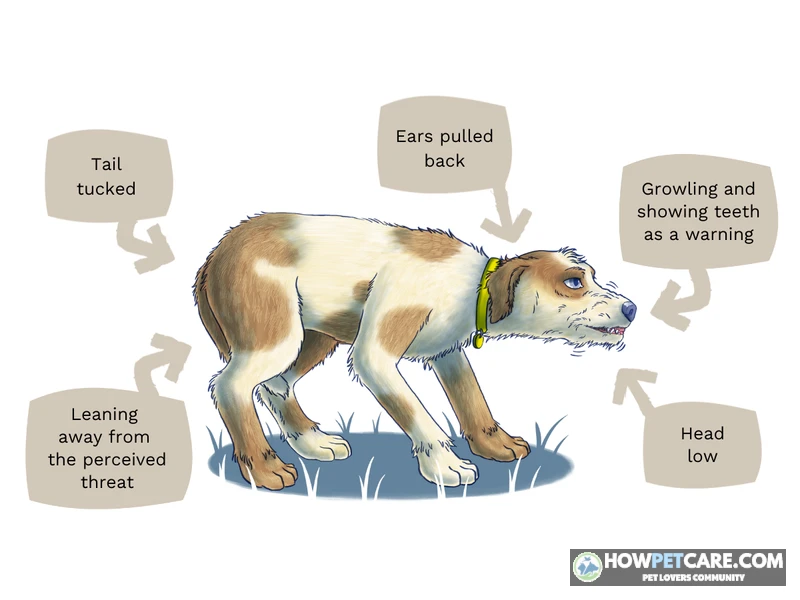

Common signs of stress in dogs, from subtle to severe:
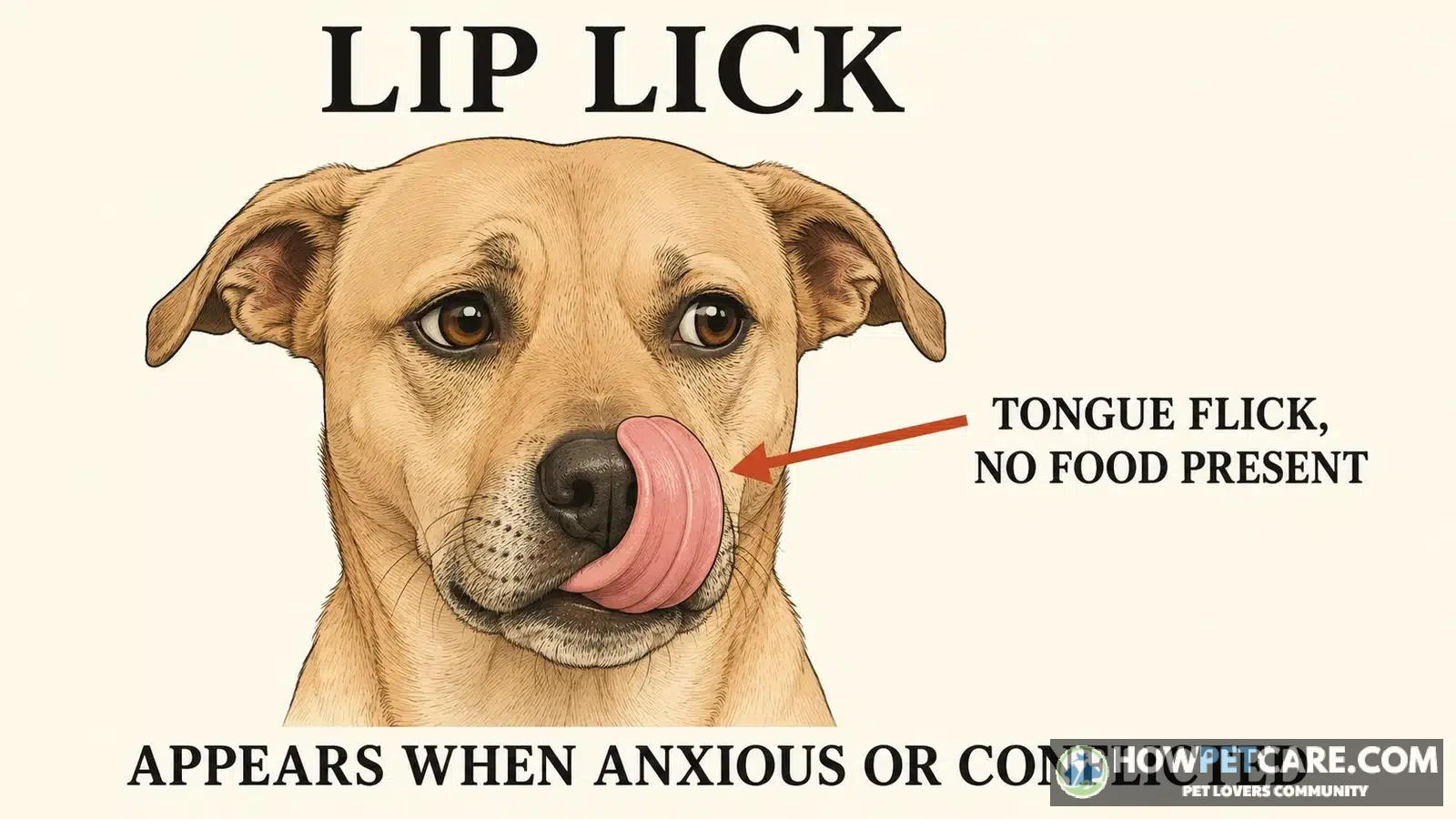
- Subtle calming signals: lip licking, yawning out of context, whale eye (whites showing), pinned ears, sudden scratching or sniffing.
- Moderate signs: panting when cool, pacing, whining, tucked tail, clinginess or hiding, refusing treats.
- Severe signs: trembling, drooling, escape attempts, destructive chewing, stress diarrhea, shaking off when dry.
- Emergency signs: freezing stiff, hard stare, lifted lip, growling, or total shutdown—give space and seek professional help.
Always judge signs in clusters and in context: a yawn after a nap is normal, but a yawn when a stranger leans in is a request for space.
Signs of stress in dogs usually appear as clusters of subtle posture shifts and sudden behavior changes, rather than a single dramatic outburst. Early warnings include brief lip licking, yawning out of context, showing the whites of the eyes (whale eye), pinned-back ears, and tight mouth corners. As tension rises, a dog may show more obvious distress: persistent panting when cool, pacing, whining, trembling, hiding, loss of appetite, or destructive chewing. To read these signs, look at the cluster, the context, and your dog’s usual demeanor. A yawn after waking is just a yawn, but one when a stranger leans over your dog’s head is a clear request for space.
The following scale shows how signals can progress from subtle to obvious:
- Level 1: Subtle Calming Signals. Small cues such as brief nose licks, sudden scratching, an averted gaze, and slow head turns.
- Level 2: Mild-to-Moderate Stress. Sustained panting, pacing, flattened ears, low carriage, a tucked tail, and an inability to settle.
- Level 3: High Stress. Trembling, drooling, panic-driven escape attempts, stress diarrhea, dilated pupils, and refusal of high-value treats.
- Level 4: Shutdown or Imminent Bite Risk. Freezing solid, a stiff body, hard eye contact, a wrinkled muzzle or lifted lip, growling, or total behavioral shutdown.
Catching these signals early protects your dog’s emotional health and your family’s safety. The sections below explain body language from head to tail, offer a triage ladder for assessing bite risk, and cover medical look-alikes and practical ways to help your dog settle.
Subtle Stress Signals: Dog Body Language You Might Be Missing
Dogs communicate through subtle shifts in posture, facial tension, and small movements that behaviorists call calming signals or displacement behaviors. These self-soothing gestures can diffuse perceived threats and communicate that the dog wants to avoid conflict.
Before assuming a behavior indicates distress, ask: does the physical context explain it? Licking lips after eating peanut butter, shaking off after a bath, or yawning after a nap are completely normal bodily functions. Those same actions during a vet checkup, when a child approaches, or while thunder rumbles are stress reactions.
Eyes, ears, and face: whale eye, pinned ears, tense mouth
A dog’s face can provide clear early warnings. When a dog feels anxious or conflicted, its facial muscles tighten:
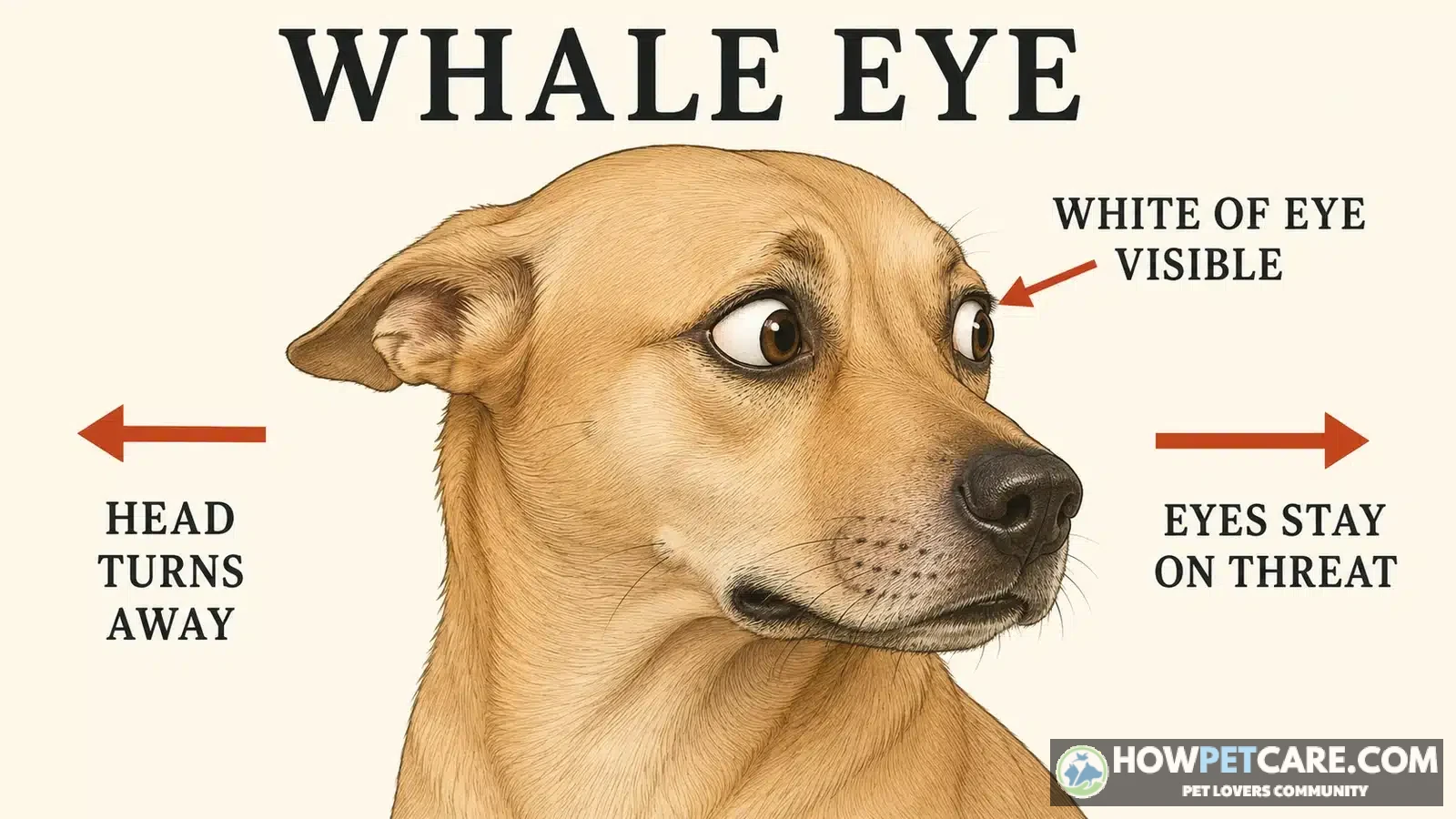
- Whale Eye (Half-Moon Eye): A dog turns their head slightly away from a troubling trigger but keeps their eyes fixed on it. The movement exposes the white outer rim of the sclera in a crescent shape. It signals immediate discomfort and a desire for distance.
- Ear Position: A relaxed dog’s ears rest in their natural breed position (floppy, half-cocked, or gently upright). Under stress, they may pull backward and flatten tightly against the skull ("pinned ears") or shift rapidly in uneven, hypervigilant scanning patterns.
- Mouth and Commissures: A relaxed dog has soft, parted lips or a gentle open-mouth pant with relaxed tongue edges. A stressed dog may show "long lips" (mouth corners pulled tautly backward), a tightly clenched jaw, or abrupt lip licking, with the tongue darting out to flick the nose or upper lip.
Displacement behaviors that look random but aren’t
Displacement behaviors can appear when a dog feels torn between two impulses—for example, wanting to approach an owner but fearing an unfamiliar object in their hands. The dog directs that nervous energy into a seemingly unrelated action:
- Yawning: An intense, prolonged yawn with tight facial muscles is a common early stress cue.
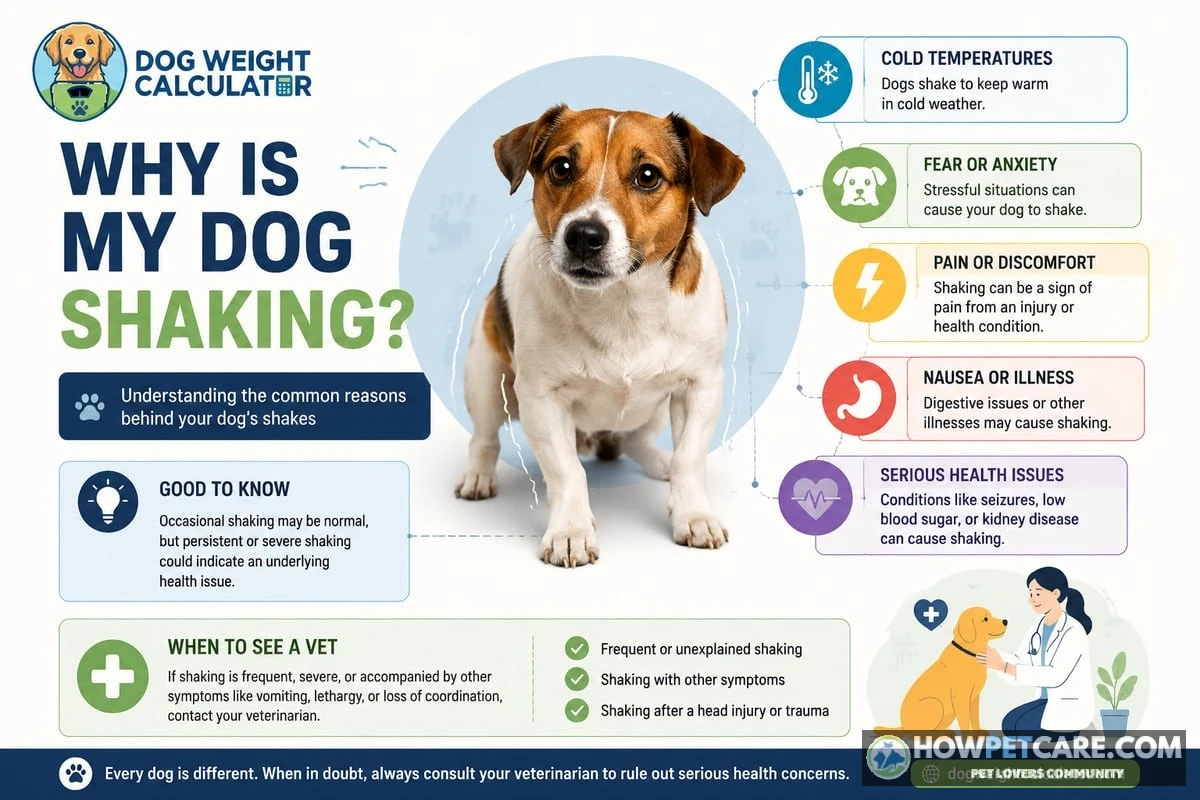
- Shaking Off When Dry: Dogs may instinctively perform a vigorous, head-to-tail "wet dog shake" after leaving a tense situation, such as an awkward interaction with an unfamiliar dog or a physical examination. It acts as a physiological reset, helping shed bodily tension.
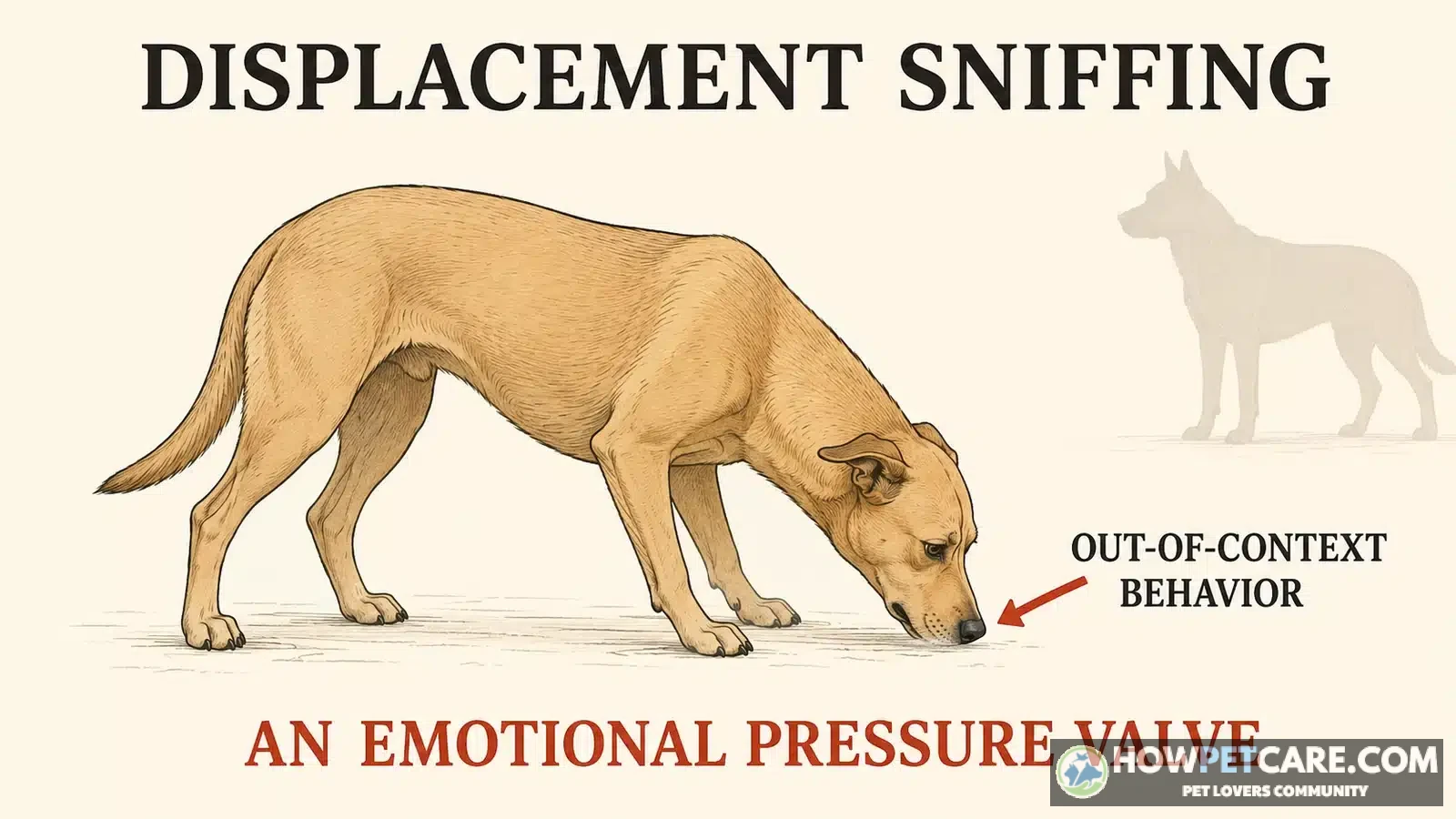
- Sudden Ground Sniffing: A dog that abruptly puts their nose into the grass and ignores an approaching person or dog may not be tracking a scent. They may be using an appeasement gesture to avoid direct eye contact.
- Abrupt Scratching or Self-Grooming: Sudden, frantic scratching at the neck or licking a front paw, when nothing is physically irritating the skin, often indicates rising social anxiety.
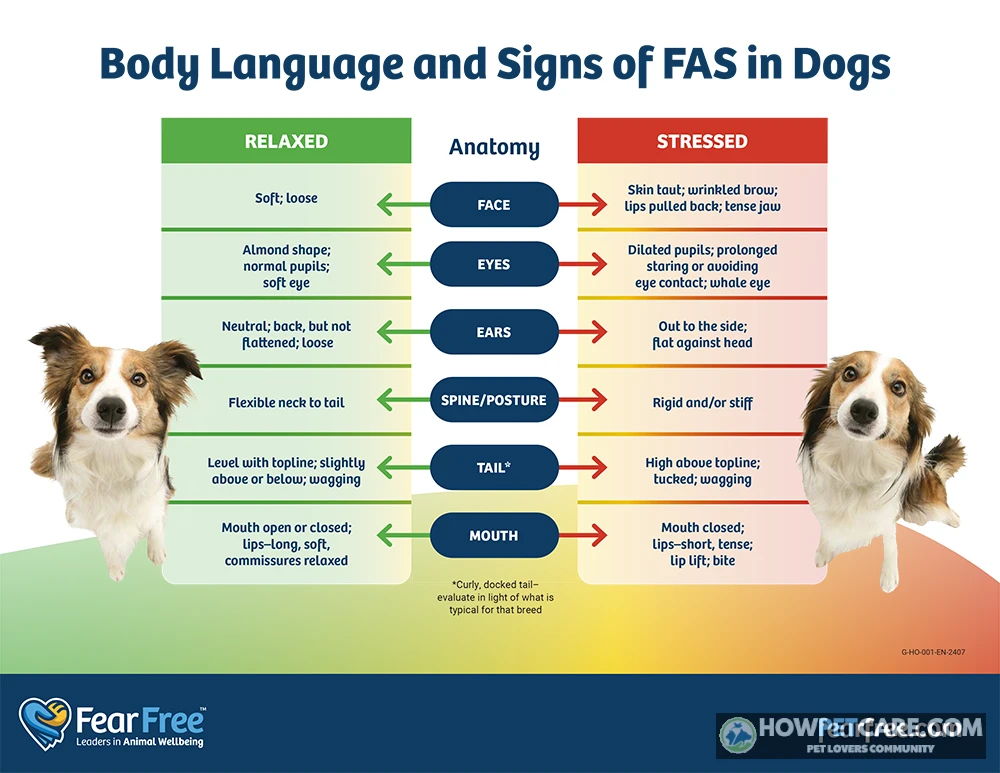
Stressed vs. relaxed posture, side by side
A still dog may look fine to an untrained eye. Look closer at the whole body: a relaxed dog is curved, fluid, and loose, while a stressed dog is angular, compressed, and rigid.
| Body Region | Relaxed Demeanor | Stressed Demeanor |
|---|---|---|
| Eyes | Soft, blinking, round pupils, relaxed brow | Hard stare or averted gaze, dilated pupils, visible sclera (whale eye) |
| Ears | Neutral carriage, loose base | Pinned flat against head, held rigid, or twitching rapidly |
| Mouth | Slightly open, loose tongue, soft lips | Clamped shut, tight commissures, rapid flicking tongue licks |
| Weight | Evenly balanced on all four paws, loose hip sway | Shifted backward onto rear legs, crouched low to ground, or frozen stiff |
| Tail | Loose wagging at spine level, broad sweep | Tucked tightly between rear legs against groin, or raised high, rigid, and vibrating |
| Respiration | Slow, regular belly breathing | Rapid shallow panting, held breath, or frequent vocal whining |
Obvious Signs of Stress: Panting, Pacing, Whining, Hiding and Destructive Behavior
When a trigger persists despite subtle signals, stress can escalate into obvious physical and behavioral signs. The dog’s autonomic nervous system takes over, triggering a surge of adrenaline and cortisol that changes heart rate, digestive function, and motor control.
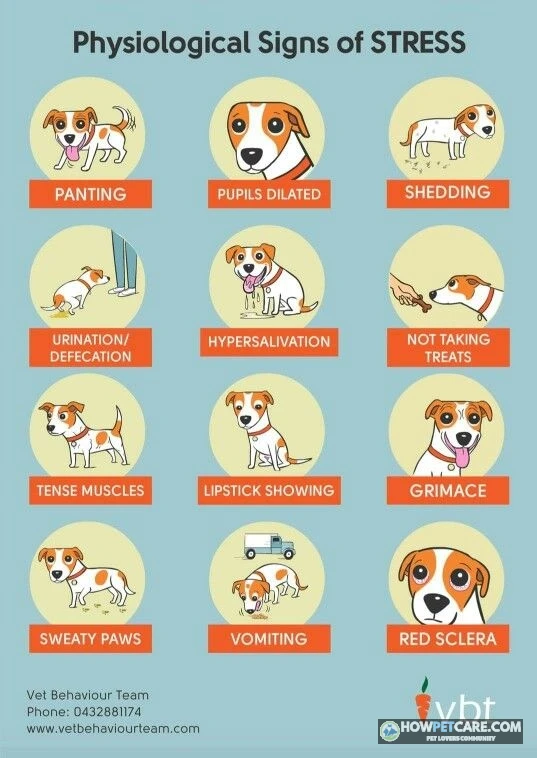
- Unprovoked Panting: Heavy panting in a cool room when the dog hasn’t exercised is an unmistakable sign of acute stress. The tongue often looks tense, with curled edges.
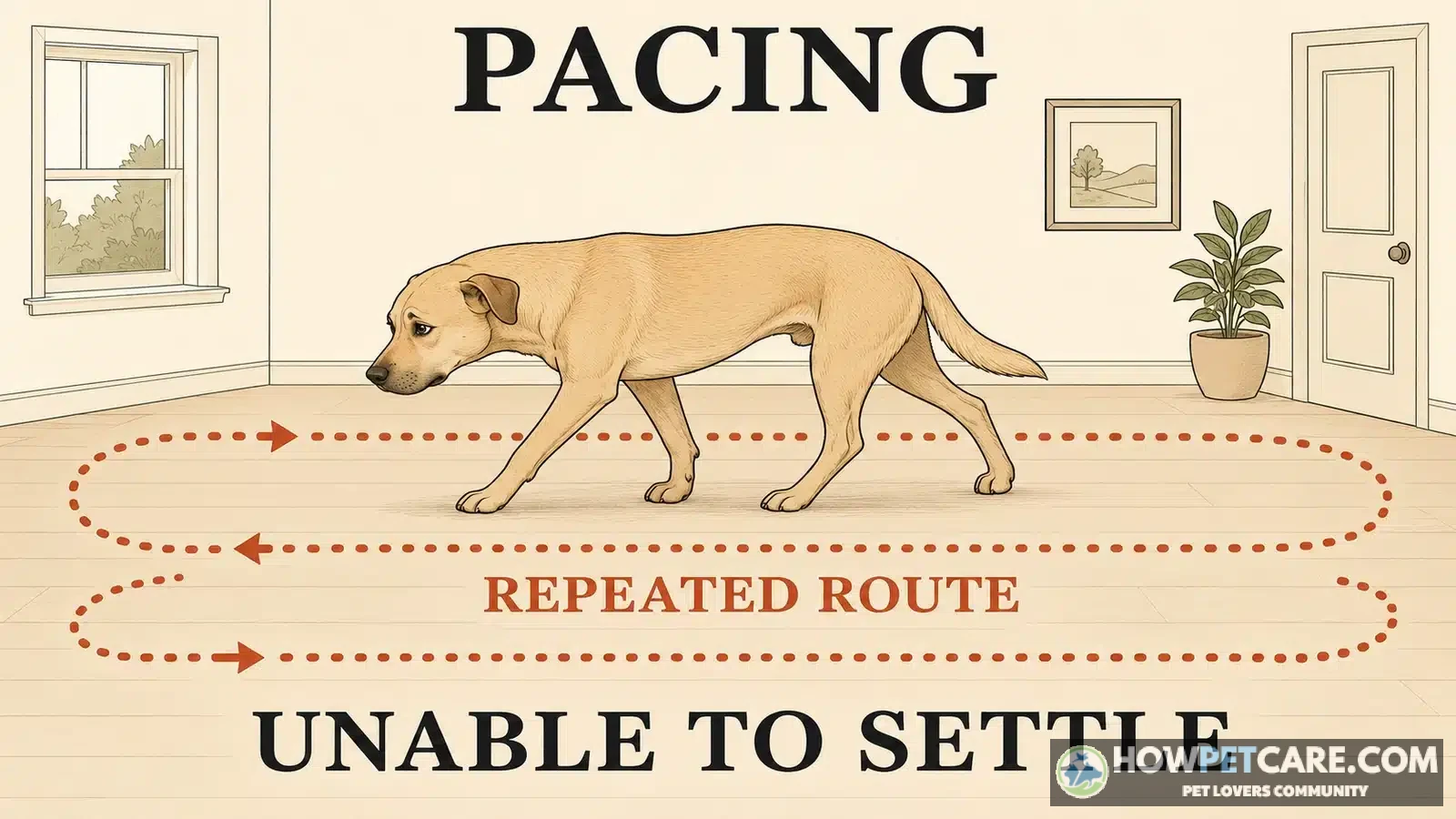
- Pacing and Whining: An anxious dog may pace back and forth along fence lines, windows, or hallways, unable to lie down or stay at rest. High-pitched whining or repetitive yelping signals distress and difficulty self-soothing.
- Hiding and Inappropriate Clinginess: A frightened dog may seek refuge behind furniture, under beds, or in tight closets. Other dogs become suddenly hyper-attached, pressing against their owner’s legs, trembling, and following every footstep.
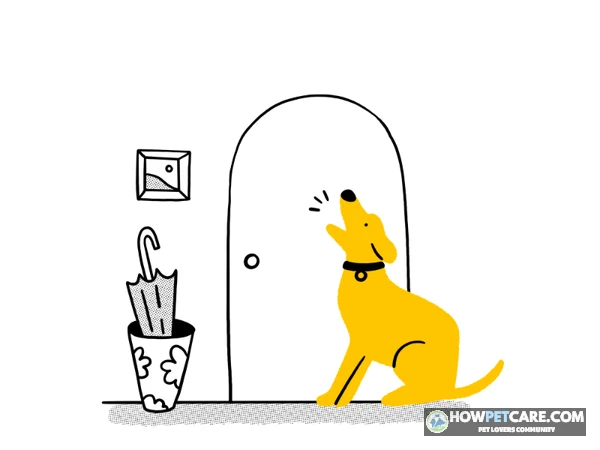
- Destructive Chewing and Digging: Frantic scratching at exit doors, tearing window blinds, or chewing door frames are common signs of acute panic. These are attempts to escape or relieve overwhelming physical arousal, not acts of spite or revenge.
- Trembling and Drooling: Thick strings of drool around the lips combined with uncontrollable muscle tremors across the shoulders and hindquarters indicate severe anxiety.
Physical and digestive signs: shedding, appetite loss, stress colitis
Stress affects a dog’s internal physiology as well as their visible posture. Physical signs can include:
- Sudden "Blowing Coat" and Dandruff: Acute fear, such as stepping onto a veterinary examination table, triggers sudden systemic vasoconstriction, causing a dog to shed a significant amount of fur within minutes. Epinephrine release can also cause rapid epidermal dehydration, producing visible white dandruff flakes along the spine.
- Sweaty Paw Prints: Dogs sweat through merocrine glands in their foot pads. In a high-stress setting, an anxious dog may leave damp footprints on a linoleum clinic floor or examination table.
- Complete Loss of Appetite (Anorexia): High cortisol levels suppress digestion. If a food-motivated dog refuses high-value treats such as roasted chicken, hot dogs, or cheese, their emotional arousal has risen past the learning threshold.
- Stress Colitis and Diarrhea: Sudden changes, boarding, or panic episodes commonly trigger acute inflammation of the large intestine. The result is stress colitis: frequent straining followed by the sudden passage of semi-formed, soft stool containing clear jelly-like mucus or specks of fresh blood.
Nighttime restlessness and pacing
Nighttime anxiety can be challenging for a household. If your dog sleeps soundly during the day but starts pacing, panting, whining, or pawing at bedroom doors after sunset, several factors may be at work. In young adult dogs, nighttime anxiety often stems from sound sensitivity—infrasound or ultrasonic disturbances from outdoor wildlife, appliances, or distant weather that humans can’t hear.
In older dogs (generally ages eight and above), sudden nighttime distress is a hallmark of Canine Cognitive Dysfunction (CCD), commonly known as dog dementia. Cognitive decline disrupts circadian rhythms, leading to sundowning, aimless wandering in dark hallways, getting stuck behind open doors, and vocalizing at bare walls.
Newly adopted rescue dogs can show distinct patterns during their initial weeks in a new home. Many exhibit complete shutdown—curling into a tight ball, avoiding eye contact, hoarding kibble in bedding, or showing hypervigilance (startling awake at the slightest floorboard creak). Respect the 3-3-3 rule for rescue dogs: expect 3 days of feeling overwhelmed, 3 weeks of learning your routine, and 3 months to build genuine trust.
 You might be wonderingCost of akita dogAkita Dog Cost: Puppy Price, First-Year & Lifetime CostsRead the answer
Stress vs. Fear vs. Anxiety: Which One Is Your Dog Dealing With?
Owners often use stress, fear, and anxiety interchangeably, but animal behaviorists distinguish between them. The distinction helps determine whether a dog needs environmental management, systematic behavior modification, or veterinary intervention. When the pattern is a dog scared of everything all the time, treat it as chronic anxiety rather than a one-off trigger.
- Acute Stress: A physiological response to a present, temporary external change. When a delivery truck rumbles past the window, your dog’s heart rate rises and their ears perk. Once the truck leaves, the stressor is gone, cortisol levels subside, and normal behavior resumes within minutes.
- Fear: A focused, self-protective emotional response to a specific, identifiable threat occurring right now. Examples include a thunderstorm, an aggressive approaching off-leash dog, or buzzing grooming clippers. Fear triggers fight, flight, freeze, or fidget responses.
- Chronic Anxiety: Anticipation of an imagined or future threat, often without a specific trigger in the immediate environment. An anxious dog lives in a persistent state of apprehension, constantly scanning doorways, holding high muscle tension, and reacting strongly to tiny stimuli.
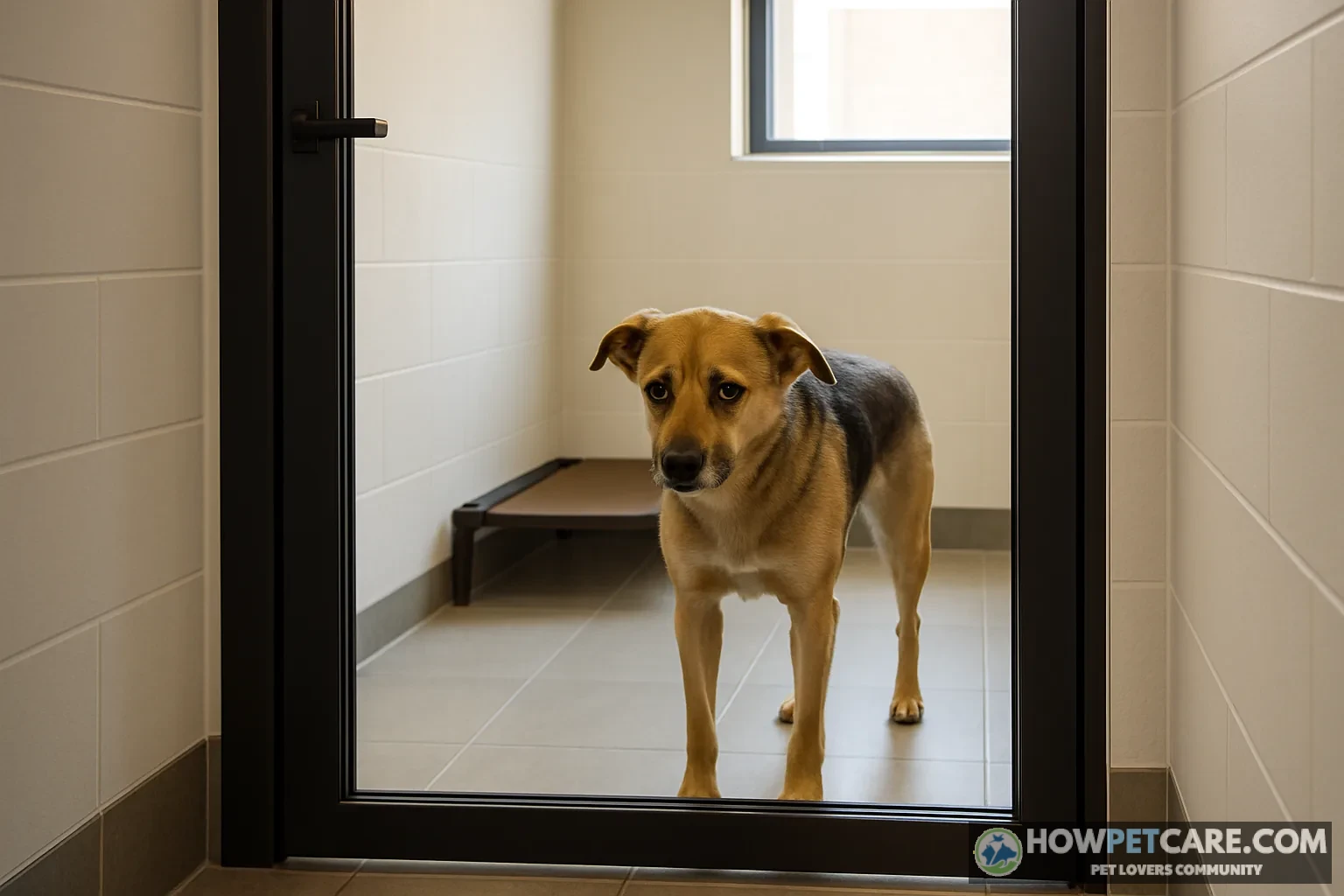
[Trigger Appears] ──> Acute Stress / Fear ──> [Trigger Removed] ──> System Recovers to Baseline
                                                                          │ (Fails to recover)
                                                                          ▼
                                                             Chronic Anxiety & Cortisol Elevation
What causes stress in dogs, and why it may start suddenly
When a dog suddenly seems stressed, the root cause typically falls into one of three buckets: a change in schedule or environment, lack of early developmental exposure, or undiagnosed physical discomfort.
Common triggers include:
- Novelty and Social Changes: Moving home, the arrival of a newborn baby, introducing a new pet, long-term houseguests, or sudden changes in your work-from-home schedule.
- Sensory Overload: High-frequency electrical hums, nearby road or residential construction, loud thunderclaps, and fireworks celebrations.
- Inadequate Socialization: Dogs under-socialized during their critical developmental window (weeks 3 through 14) often lack coping strategies for unfamiliar surfaces, uniforms, moving bicycles, or dog breeds.
- Undiagnosed Pain: Sudden anxiety or irritability without an obvious environmental change is frequently a response to hidden physical pain, such as canine hip dysplasia, dental abscesses, or spinal arthritis.
At a biological level, chronic stress keeps the hypothalamic-pituitary-adrenal (HPA) axis perpetually activated. Instead of spiking and falling, systemic cortisol remains elevated. Over weeks and months, that elevation wears down the immune system, causes muscle wasting and digestive issues, and lowers the dog’s threshold for fear-based reactivity.
Separation anxiety vs. boredom
Separation anxiety is a distinct psychological condition marked by extreme panic when an attachment figure leaves. Owners sometimes mistake it for juvenile boredom or under-stimulation, which can lead to the wrong training response.
| Observation Factor | Boredom / Under-Stimulation | True Separation Anxiety |
|---|---|---|
| Timing of Destructive Action | Occurs intermittently throughout the day, often after hours alone | Spikes within the first 5 to 20 minutes of the owner’s departure |
| Target of Destruction | Chews random items (shoes, cushions, remote controls, trash) | Targets barrier exits (clawing front doors, chewing window sills) |
| Vocalization Pattern | Intermittent barking directed at outdoor stimuli; pauses to sleep | Continuous high-pitched whining, howling, and pacing without breaks |
| Appetite When Left Alone | Gladly eats stuffed food toys, chews, or left-out kibble | Refuses even the highest-value treats until the owner walks back in |
| Physical Distress Signs | None; dog settles comfortably into sleep after chewing | Heavy drooling, sweaty paws, rapid panting, and dilated pupils |
The Stress Triage Ladder: How Severe Is It and How Close Is a Bite?
A severely stressed dog is capable of biting, and overlooking that risk can be dangerous. Fear-based aggression is the leading cause of dog bites to family members and strangers. Dogs almost never bite without warning; they usually show a series of physiological signs first.
Score your dog at the highest rung where any marker fits. When in doubt, use the higher level—underreacting is riskier than giving your dog space.
| Level | What you actually see | Bite risk | Urgency | Right next action |
|---|---|---|---|---|
| 1 — Mild | Single out-of-context calming signals: a lip lick, one yawn, a quick head turn, brief ground-sniffing. Dog still eats, plays, and recovers in seconds once the trigger passes. | Very low | Monitor | Note the trigger, add distance, let the dog move away. Log it—repetition is what matters. |
| 2 — Moderate | Clustered signs that persist: sustained panting, pacing, pinned ears plus tucked tail, won’t settle, refuses food or toys, clingy or hiding. | Low, but real if cornered | Act today | Remove or mute the trigger, offer a quiet retreat, don’t force contact. If this repeats, start a desensitization plan. |
| 3 — Severe | Trembling, drooling, escape attempts, destructive panic, stress diarrhea, whale eye plus freezing, cannot be redirected by anything. | Moderate-to-high—a scared dog may snap defensively | Same week | Minimize handling. Book a vet exam (rule out pain) and a certified behaviorist. Manage the environment so the trigger can’t surprise the dog. |
| 4 — Emergency | Stiff body, hard stare, lip lift, growl or snap; unresponsive shutdown; self-injury; or physical red flags (pale gums, collapse, head pressing). | Imminent | Now | Stop all interaction, clear people and pets, do NOT touch or leash-pull. Emergency vet if any physical red flag exists; otherwise isolate the dog safely and get professional help before the next exposure. |
Early warning signs of escalation toward aggression
Learn the escalation ladder to help protect your household. Dogs show a behavioral progression before delivering a defensive bite:
[Calming Signals] ──> [Freeze / Stiff Body] ──> [Hard Stare] ──> [Lip Lift] ──> [Growl] ──> [Snap / Bite]
   (Level 1)               (Level 2-3)             (Level 3-4)       (Level 4)    (Level 4)     (Level 4)
The critical transition is from subtle movement to stillness. When a stressed dog abruptly stops panting, pins their ears, and goes statue-still ("freezing"), they have reached peak defensive arousal. If someone continues to approach, hug, or reach into their space, the dog will proceed through a hard stare, an upward curl of the muzzle (lip lift), a low growl, an air snap, and finally a contact puncture bite.
Never scold, yell at, or physically punish a dog for growling. A growl is an important warning: your dog is saying, "I am terrified and pushed to my limit; please step back." Punishing the growl doesn’t cure the underlying fear; it removes the audible alarm. A dog trained not to growl may eventually snap and bite without warning.
What to do right now at each level
- At Level 1 (Mild): Increase the distance from whatever your dog noticed. Let them turn away or retreat behind you. Don’t force them to engage, greet, or perform tricks.
- At Level 2 (Moderate): Protect your dog from the trigger. Politely ask a stranger to stop approaching, turn off a loud appliance, or gently guide your dog on a loose leash into a quiet, darkened room. Offer a safe haven such as a crate with an open door or a secure dog bed.
- At Level 3 (Severe): Stop all physical handling. Don’t pet, hug, or lean over the dog to comfort them—stressed dogs can perceive physical restraint as trapping. Keep the lights low, play low-volume brown noise or classical music, and consult a veterinary professional.
- At Level 4 (Emergency): Stop moving. Avert your eyes and drop your shoulders. If a child or another animal is present, calmly and quietly instruct them to walk slowly out of the room. Leave an open exit route for the dog. Never grab a collar, lunge for a leash, or try to corner a Level 4 dog.
Is It Stress or Sickness? Ruling Out Pain, GI Illness, Heat and Neurological Causes
Before assuming a problem is behavioral, assess your dog’s physical health. Signs of stress and illness overlap extensively. Behavioral counter-conditioning won’t resolve an underlying physical ailment.
| Look-alike condition | Signs shared with stress | Clues it’s NOT just stress | Objective check | Next step |
|---|---|---|---|---|
| Pain or injury | Panting, restlessness, reluctance to be touched, sudden "grumpiness" | Guards a limb or body part, won’t jump on furniture, no identifiable trigger, snapped when you touched one spot | Video the dog walking and playing—note limp or stiffness | Vet exam within days; pain-driven "anxiety" won’t respond to training |
| GI illness | Soft stool, lip licking (nausea), appetite dip, hiding | Vomiting, blood or black tarry stool, bloated hard belly, symptoms past 24 hours | Photo the stool; check if the dog eats a favorite treat | Vet within 24h; same day if blood, vomiting, or puppy/senior |
| Heat stress | Heavy panting, drooling, pacing, seeking cool floors | Happened during heat or exercise, brick-red or very pale gums, panting that doesn’t ease in shade | Count resting breaths 30 sec x2; rectal temp if possible | Under ~30 breaths/min resting is typical. Temp at or above 104°F = emergency; 103°F + symptoms = cool down and call vet |
| Neurological issue | Staring into space, disorientation, hiding, new clinginess | Head pressing, circling one direction, wobbling, seizure, sudden onset in a senior dog | Film the episode—footage is useful for diagnosis | Urgent vet visit; do not wait for a second episode |
| Cognitive decline (seniors) | Nighttime pacing, whining, anxiety at night | Sundown pattern, house-soiling after years of being trained, getting stuck in corners | Keep a 1-week log of when episodes cluster | Vet workup for cognitive dysfunction—it’s manageable, not just "old age" |
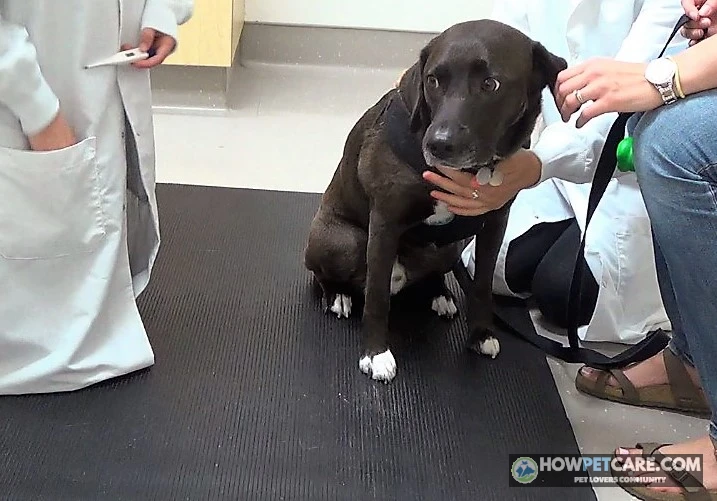
The two fastest tiebreakers: First, is there a clear trigger, and does the dog recover when it ends? With emotional stress, the answer to both is yes. Second, will the dog take high-value food? A dog too stressed to eat fresh chicken is either deeply distressed or physically sick—both need immediate human attention.
Panting: stress or heat? An objective check
Distinguishing stress-related panting from hyperthermia (heat exhaustion) is vital, especially in warm weather or after exercise.

-
Step 1: Check Environmental Context
Did the heavy breathing begin during outdoor heat, high humidity, or intense play? If so, treat for heat first.
-
Step 2: Inspect Gum Color
Gently lift the upper lip. Healthy canine gums are slick, wet, and bubblegum pink. In heat distress, gums become bright brick-red or dry and tacky; in severe shock or internal distress, they turn pale gray or blue.
-
Step 3: Measure Resting Respiratory Rate
Once your dog lies down in a cool space, watch the chest rise and fall. Count breaths for 30 seconds and multiply by 2. A typical sleeping or deeply resting dog breathes between 10 and 30 times per minute. If a resting dog’s rate stays above 35 to 40 breaths per minute without physical exertion, contact your veterinarian.
-
Step 4: Check Core Body Temperature
A dog’s normal body temperature ranges between 101.0°F and 102.5°F. If a digital rectal thermometer reads 103.0°F to 103.9°F alongside panting, begin active cooling (fans, cool wet towels on paws and groin). A reading of 104.0°F or higher is a life-threatening emergency requiring immediate veterinary stabilization.
Stress diarrhea vs. a vet emergency
Stress colitis typically clears within 24 to 48 hours once a dog returns to a calm environment and eats a bland diet, such as boiled chicken breast and white rice or veterinary GI canned food. Loose stool can, however, signal a deeper medical emergency.
Contact an emergency veterinary hospital immediately if:
- The diarrhea is accompanied by repeated vomiting or retching.
- The stool is black, sticky, and tarry (melena), indicating digested upper GI blood, or contains large volumes of dark red blood (hematochezia).
- The dog shows severe lethargy, weakness, or pale gums.
- The dog is an unvaccinated puppy (high risk for canine parvovirus) or an immunocompromised senior.
How to Calm a Stressed Dog Down in the Moment, Including When They Freeze
When a dog is in acute panic, you may instinctively want to pull them close, hug them, stroke their face, and say "it’s okay." To the dog, that well-meant affection can feel restrictive and threatening.
Instead, use this mechanics-first sequence:
- Add Distance: As soon as you see Level 1 or 2 signs, turn and increase the gap between your dog and the stimulus. Distance is a powerful de-escalation tool in animal handling.
- Lower Your Posture and Voice: Don’t tower over your dog. Stand sideways to reduce your profile, soften your shoulders, lower your voice to a quiet, level pitch, and avoid direct eye contact.
- Provide an Unobstructed Retreat: Open bedroom or crate doors. Never block a frightened dog into a corner, narrow hallway, or against furniture.
- Offer Lick and Sniff Decompression: Once your dog is out of direct sight of the stressor, scatter several tiny, fragrant treats in the grass or across a rug. Sniffing and foraging naturally slow canine heart rates and lower physical arousal. Licking releases calming endorphins; a lick mat spread with plain Greek yogurt or wet food helps reset an overstimulated nervous system.
Freeze and shutdown: the step-by-step response
A dog that goes statue-still, rigid, or completely unresponsive is at peak fear. Many defensive bites happen at this point because well-meaning owners try to comfort, pick up, or leash-drag the dog. Follow this protocol instead:
-
Step 1: Freeze yourself
Stop walking toward the dog, talking, and reaching out. Moving toward a frozen dog reads as immediate escalation.
-
Step 2: Cease all physical contact
Don’t pet, pick up, grab the collar, or hug the dog. Physical contact with a shut-down dog can instantly trigger a defensive bite reflex.
-
Step 3: Remove the trigger, not the dog
Turn off the noisy vacuum cleaner, ask the visiting stranger to step outside, or place a physical barrier (like a baby gate, large cushion, or your own body held at a safe distance) between the trigger and the dog. If moving the dog is necessary for immediate safety, toss high-value treats to lure them forward—never drag or lift them.
-
Step 4: Provide a pressure-free exit route
Make sure there’s a clear path to a quiet room or crate the dog already chooses to use. Turn your body sideways and look away—an indirect posture signals that you pose no physical threat.
-
Step 5: Wait 10 to 20 minutes
Allow the dog’s adrenaline wave to clear. Watch for small signs of unfreezing: a spontaneous blink, a soft head turn, shifting body weight, or a full-body shake-off. A dry shake-off is a strong signal that the dog is releasing muscular tension.
-
Step 6: Re-engage softly with food
Once the dog moves voluntarily, gently scatter a few treats on the floor several feet away from you. Give no verbal commands, start no training sessions, and avoid high-intensity handling for the rest of the day.
When to escalate to a veterinarian: If your dog remains totally catatonic or unresponsive beyond 30 minutes, shuts down repeatedly throughout the week without an identifiable trigger, or shows physical weakness, skip at-home management and book an urgent veterinary evaluation.
Calming tools compared: wraps, pheromones, supplements, medication
Many pet products promise instant relief from stress. Some can offer support, but none is a magic wand. Evaluate each with realistic expectations.
| Option | How it works | Evidence strength | Trade-offs and risks | Best used for |
|---|---|---|---|---|
| Pressure Wraps (e.g., ThunderShirt) | Applies sustained, gentle acupressure across the torso, thought to release calming hormones. | Moderate; some clinical studies show modest reductions in heart rate during noise distress. | Dogs can acclimate over time; must be sized correctly; does not resolve root panic. | Mild thunderstorm phobia, travel anxiety, short grooming sessions. |
| Pheromone Diffusers (e.g., Adaptil) | Releases a synthetic analog of Dog Appeasing Pheromone (DAP), naturally secreted by nursing mother dogs. | Moderate; helpful in clinic and shelter studies for reducing vigilance. | Ineffective for high-intensity panic or outside enclosed spaces; diffusers require monthly refills. | New puppy transition, shelter dog decompression, general background household stress. |
| Oral Supplements (L-Theanine, Ashwagandha, Colostrum Calming Complex) | Amino acids and botanical extracts designed to modulate GABA and cortisol neurochemistry. | Variable/Moderate; ingredients like L-Theanine show measurable anti-anxiety benefits in veterinary trials. | Takes 30 to 60 minutes to take effect; mild effects that rarely overcome acute panic spikes. | Anticipated mild stressors: car rides, mild weather fronts, holiday visitors. |
| Prescription Medications (e.g., Trazodone, Sileo, Fluoxetine, Gabapentin) | Pharmaceutical-grade neurotransmitter modulation (serotonin, norepinephrine, GABA) managed by a vet. | High; proven clinical efficacy backed by rigorous veterinary pharmacological trials. | Requires veterinary prescription, baseline bloodwork, and careful dose titration; potential side effects (sedation, ataxia). | Severe separation anxiety, acute noise phobias, moderate-to-severe aggression, Level 3-4 distress. |
Long-Term Fixes: Desensitization Plans for Thunderstorms, Vet Visits and Strangers, Plus Puppy, Senior and Rescue Differences
Short-term calming tools help manage acute episodes, while resolving chronic fear requires changing how your dog’s brain perceives the world. The approach combines systematic desensitization (gradual exposure to an extremely weak version of the trigger) with counter-conditioning (changing the emotional response by pairing the trigger with an extraordinary reward).
The Universal Rule of Thresholds: Always work below threshold. If your dog shows Level 2 signs—refusing treats, panting, or scanning frantically—the trigger is too close, too loud, or too intense. Treat refusal is a useful speedometer: if your dog won’t swallow roasted chicken, you’re moving too fast.
Thunderstorm protocol
Sound phobias respond well to recorded audio training when you start long before stormy weather arrives.
- Set Up the Audio: Find a high-definition recording of thunderclaps and heavy rain. Play it through a phone or Bluetooth speaker across the room at the lowest audible volume (10% to 15% loudness).
- Run Trigger-Reward Pairing: During a 5-minute training session, scatter a few bits of high-value meat whenever a thunder rumble plays. The order matters: sound first, food immediately after.
- End While Relaxed: Cap the session at five minutes while your dog is still loose, calm, and happily chewing. Conduct one to two short sessions daily.
- Raise Volume Incrementally: Increase the volume by a single notch only after your dog completely ignores the current level for three consecutive training days.
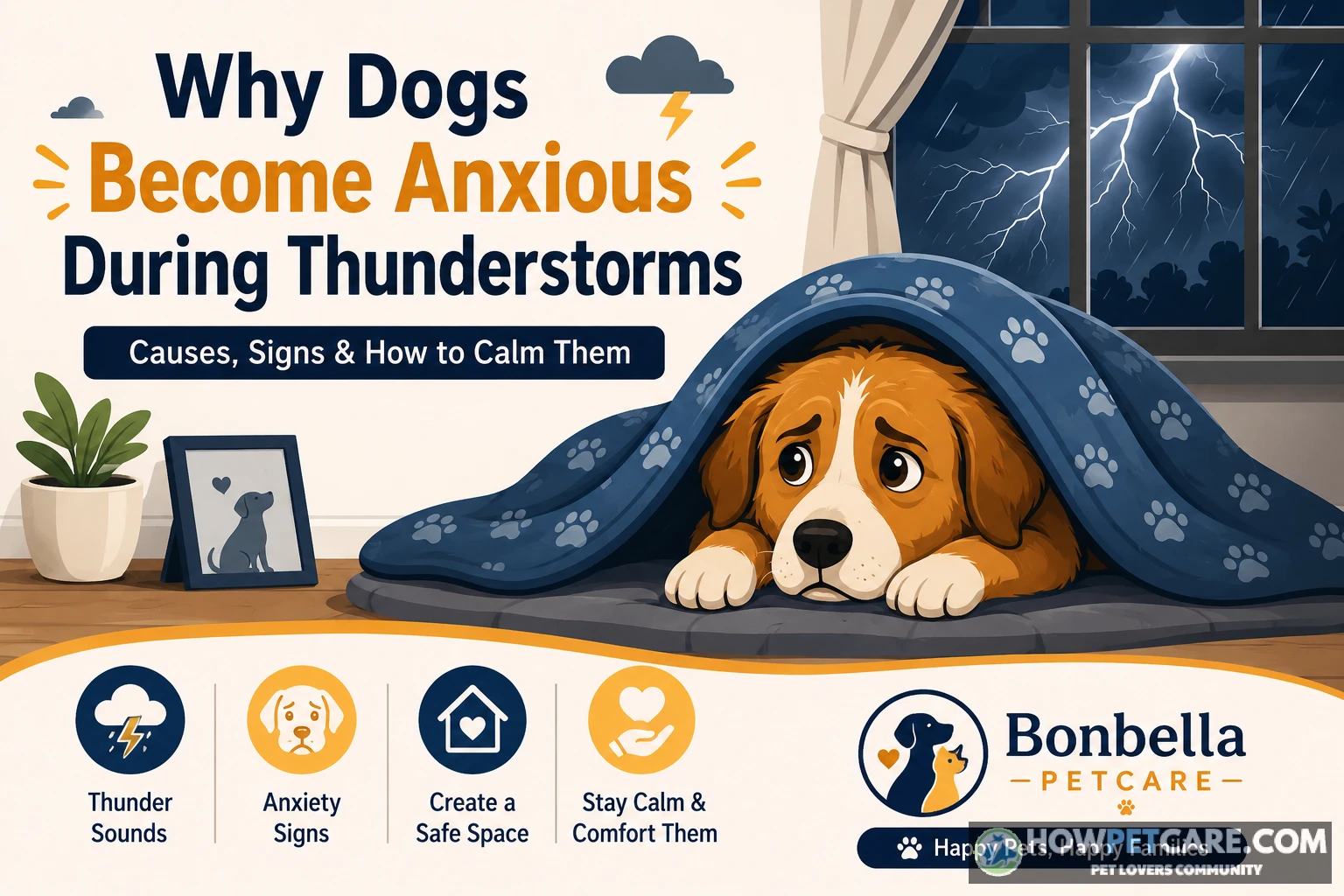
- Live Weather Management: During a real storm, keep your dog in their chosen safe room with white noise, close the blinds, and play the same high-value treat games. Real storms bring barometric pressure drops and static electricity that audio can’t mimic, so continue supportive management throughout.
Signs you are moving too fast: Stopping mid-chew, scanning the speakers, panting, or leaving the room. Drop two volume notches for the next session.
Vet visit protocol
A single traumatic experience can teach a dog to fear the veterinary hospital. Low-stress handling visits, often called "happy visits," rebuild associations with safety.
- Phase 1 (The Parking Lot): Drive to the veterinary clinic, park for five minutes, feed treats in the vehicle without getting out, and drive home. Repeat twice weekly.
- Phase 2 (The Lobby Dash): Walk into the clinic lobby on a loose leash. Ask the reception team to gently toss treats on the floor. Stay for under two minutes, take no physical measurements, and leave.
- Phase 3 (Home Mock Exams): Add low-stress handling drills to your daily routine. Touch a front paw for two seconds, then give a treat; lift an ear flap, then give a treat; touch the side of the ribcage with a spoon to mimic a stethoscope, then give a treat.
- Phase 4 (The Real Exam): Book appointments with clinics certified in low-stress handling techniques. Tell staff in advance that your dog needs minimal physical restraint, treats throughout procedures, and exams on the floor rather than an elevated table.
Signs you are moving too fast: Balking at the car door, refusing treats in the lobby, or trembling in the parking lot. Back up one stage and shorten the visit.
Stranger protocol
Fear of strangers often escalates when guests try to win a dog over with direct eye contact, high baby voices, or leaning in for pets.
- Create a Safe Physical Distance: Place your dog behind a secure baby gate or on a loose lead at a comfortable distance from the entryway (typically 15 to 25 feet).
- Instruct the Guest to Disengage: The visitor enters while completely ignoring the dog. Ask them to avoid eye contact, not speak to the dog, and stand angled sideways rather than face the dog directly.
- The Treat-Toss Game: The guest gently tosses high-value treats behind the dog without looking at them. This lets the dog retreat to eat instead of having to approach the scary person for food.
- Zero Forced Contact: Let the dog choose whether to approach. For the first two or three visits, enforce a strict "no petting" rule, even if the dog sniffs the guest’s pant legs. First physical contact must always be the dog’s explicit choice.
Signs you are moving too fast: Barking, stiffening, lunging, or freezing. Immediately double the distance between the dog and the visitor.
If your dog’s progress stalls for 3 to 4 consecutive weeks, or you observe any Level 3 or 4 behaviors (growling, freezing, air-snapping, extreme panic), pause independent training. Hire a qualified, force-free professional certified through the International Association of Animal Behavior Consultants (IAABC) or a board-certified veterinary behaviorist (DACVB). Never hire trainers who use choke chains, prong collars, or shock devices on an anxious dog—adding pain to fear drastically increases bite risk.
Puppies, senior dogs and rescue dogs: what changes
Age and background shape how stress develops and how you should respond.
- Puppies (8 to 16 weeks): Puppies go through sensitive developmental fear periods when a single terrifying event can leave lasting behavioral scars. Keep socialization positive, controlled, and brief. Never force a frightened puppy to be held by crowds of strangers or pushed into chaotic dog parks. If a puppy cowers, provide an exit immediately.
- Senior Dogs: Older dogs experience sensory decline (failing eyesight, loss of hearing) and chronic joint pain that can sharply lower their tolerance for noise, rough handling, or lively children. A senior with sudden agitation often needs pain management or cognitive support rather than behavior modification.
- Rescue Dogs: Shelter dogs arrive with unknown triggers and complex histories. Use a mandatory two-week quiet decompression period: keep routines predictable, limit neighborhood walking routes, avoid introducing outside visitors, and let the dog establish safe resting territories without intrusion.
Your Next-Step Checklist: Calm at Home, Start a Plan, or Call the Vet
Use this practical framework to assess your dog’s stress level now.
The 60-Second Stress Self-Check
Run these three quick checks using a simple phone timer:
- ☐ Breath count (20 seconds): While your dog rests or sleeps, watch the chest rise and fall. Count breaths for 30 seconds and multiply by 2. A range of 10 to 30 breaths per minute is typical at rest. A count persistently above 35 to 40 breaths while resting points toward a medical issue and warrants a vet call.
- ☐ Posture scan (20 seconds): Look from head to tail and tally what you see: whale eye/whites showing, ears pinned flat, lips pulled tight, weight shifted backward, tail tucked against the groin. 0–1 markers = likely relaxed. 3+ markers = active stress cluster.
- ☐ Trigger audit (20 seconds): Review your household calendar over the past 48 hours. Look for a loud thunderstorm, outside construction, houseguest, schedule disruption, or missed exercise. Stress without an identifiable trigger points to a medical cause rather than a behavioral one.
Reading your results and choosing the right path
- Path 1: Calm at Home (Mild Signs + Clear Trigger + Fast Recovery)
- Your dog showed isolated calming signals during a known event, such as a delivery driver knocking, and returned to normal play within 10 to 15 minutes.
- Action: Provide distance, offer a chew or lick mat, note the trigger in a behavior journal, and let your dog rest.
- Path 2: Start a Plan (Moderate Signs + Clustered Signals + Recurring Pattern)
- Your dog consistently pants, whines, hides, or refuses food during recurring events such as thunderstorms, grooming, visits, or departures.
- Action: Stop exposing your dog to full-strength triggers. Use environmental management (crates, barriers, sound masking), purchase baseline calming aids if appropriate, and begin the structured desensitization protocols above.
- Path 3: Seek Professional Help (Severe Distress, Pain Suspected, or Bite Risk)
- Your dog shows sudden unexplained behavior changes, severe panic (trembling, destructive attempts to escape, self-injury), nighttime pacing with house-soiling, or warnings on the aggression ladder (freezing, hard staring, growling).
- Action: Take short smartphone video clips of the behavior at home (dogs often mask symptoms in a clinical setting) and schedule a comprehensive veterinary exam to rule out pain, systemic illness, or neurological dysfunction. If medical issues are ruled out, work directly with an IAABC-certified behavior consultant.
Learning your dog’s stress signals helps you respond before distress escalates. Give them space, address the trigger, and seek professional help when their signs call for it.
 You might be wonderingHyperthyroidism in dogsHyperthyroidism in Dogs: Signs, Treatment, and OutlookRead the answer
FAQ
Why is my dog stressed all of a sudden?
Sudden stress often follows a change such as a move, new person or pet, schedule shift, loud noises, or pain or illness. If there is no clear trigger or the behavior is intense, have a vet rule out a medical cause.
Can dogs show stress by shedding more?
Yes, sudden heavy shedding can accompany stress, often alongside dandruff or sweaty paw prints. Because skin conditions, allergies, and hormonal problems can look similar, check with your vet if it persists.
Do dogs yawn and lick their lips only when stressed?
No. Dogs also yawn when tired and lick their lips around food. These are stress signals when they occur out of context, such as during a vet exam or when someone approaches, or appear alongside other cues.
How long does it take a stressed dog to calm down?
After a short stressor, many dogs settle within minutes to an hour once the trigger is gone. If your dog stays tense for hours or recovers more slowly over time, it may be chronic anxiety worth discussing with a vet.
Can I use calming supplements or pheromones instead of training?
They may help some dogs take the edge off, but evidence varies and they do not teach new responses to triggers. They work best alongside desensitization and management, and your vet can advise on options.