

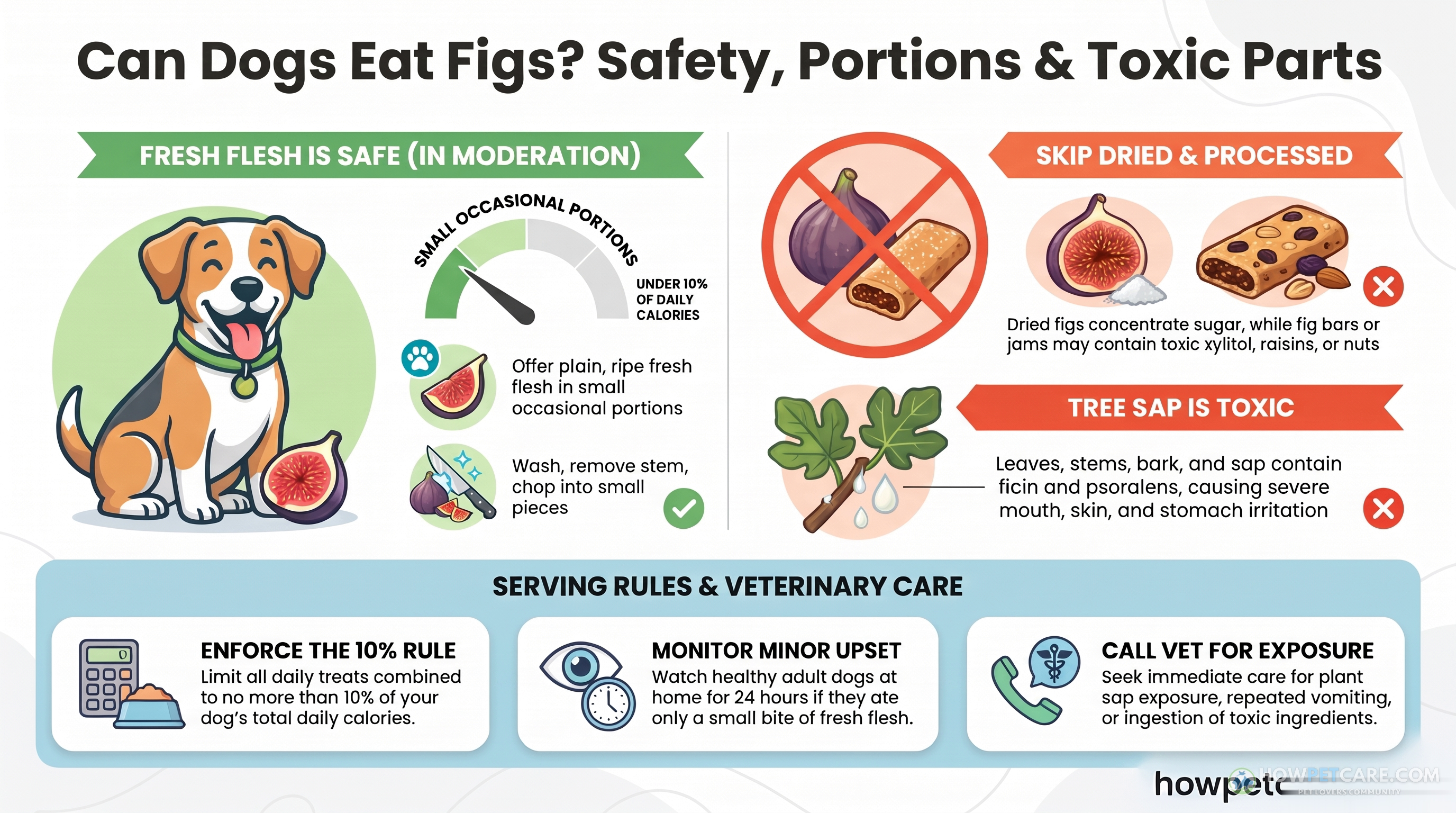
Yes, most healthy dogs can eat a small amount of ripe, fresh fig flesh as an occasional treat. Skip dried figs, fig bars, and jam, which concentrate sugar and may contain harmful ingredients. Fig leaves, stems, bark, and milky sap are irritating—call a vet if your dog is exposed.
Yes. Most healthy dogs can have a small amount of ripe, fresh fig flesh as an occasional treat. The flesh isn’t considered toxic, but too much can upset a dog’s stomach. Fig leaves, stems, bark, and milky sap are different: They contain irritating compounds, so call your veterinarian or a pet poison control service if your dog is exposed.
Dried figs have concentrated sugar and calories. Fig Newtons, jam, and other processed products may contain ingredients that are harmful to dogs. Skip these as treats, and check the label if your dog has eaten one.
If your dog ate plant material, has symptoms, or swallowed a product containing xylitol, follow the triage steps below instead of waiting to see what happens. This guide offers general information, not a substitute for veterinary advice.
Fresh Figs for Dogs: Nutrition per Fig and What the Flesh Offers
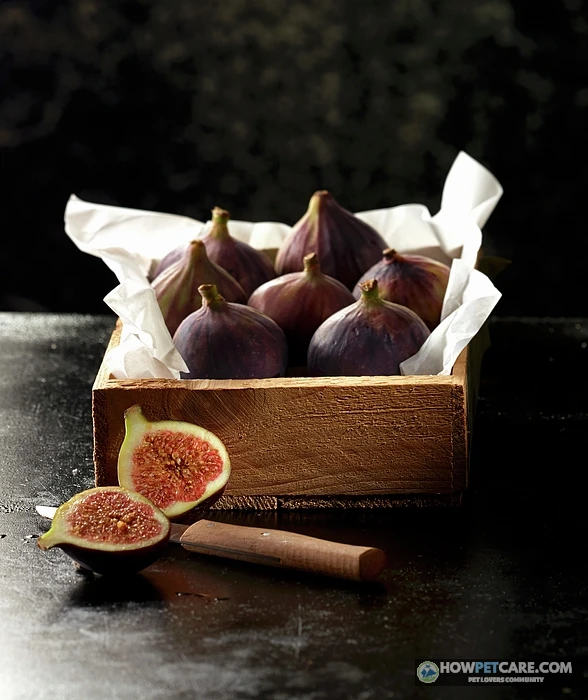
Fresh fig flesh provides dietary fiber and minerals, including potassium. But dogs eating a complete and balanced diet don’t need figs for nutrition. Offer them for variety — figs land on the safe side of the fruits dogs can and can’t eat list — not to treat constipation or another health problem.
Calories and sugar in one fresh fig vs. one dried fig
These are approximate food-composition estimates, not guaranteed values for every fruit. Fig size and moisture content vary. Weigh the fruit or check the package if a precise calorie count matters.
| Serving | Approximate weight | Calories | Sugar | Fiber |
|---|---|---|---|---|
| Small fresh fig | 40 g | 30 kcal | 6.5 g | 1.2 g |
| Medium fresh fig | 50 g | 37 kcal | 8 g | 1.5 g |
| Large fresh fig | 65 g | 48 kcal | 10.5 g | 1.9 g |
| One dried fig | 9 g | 22 kcal | 4.3 g | 0.9 g |
A small fresh fig at roughly 30 calories matches the estimate cited by Great Pet Care. Drying removes water, concentrating calories and natural sugars by weight. In these estimates, dried figs have a little over three times the calories per gram of fresh figs. A single dried fig may still have fewer calories than a much larger fresh one.
Too much fruit can upset the digestive tract. Sugar and fiber are good reasons to keep portions small, even though ripe fig flesh itself isn’t poisonous.
Fresh figs vs. dates: Which has more sugar and calories?
Dried dates, like dried figs, pack sugar and calories into a small serving. Fresh figs generally contain more water and fewer calories per gram. Dates aren’t a necessary dog treat either; their pits can cause choking or an obstruction. The lower-calorie alternatives at the end of this guide are easier to fit into a small treat budget.
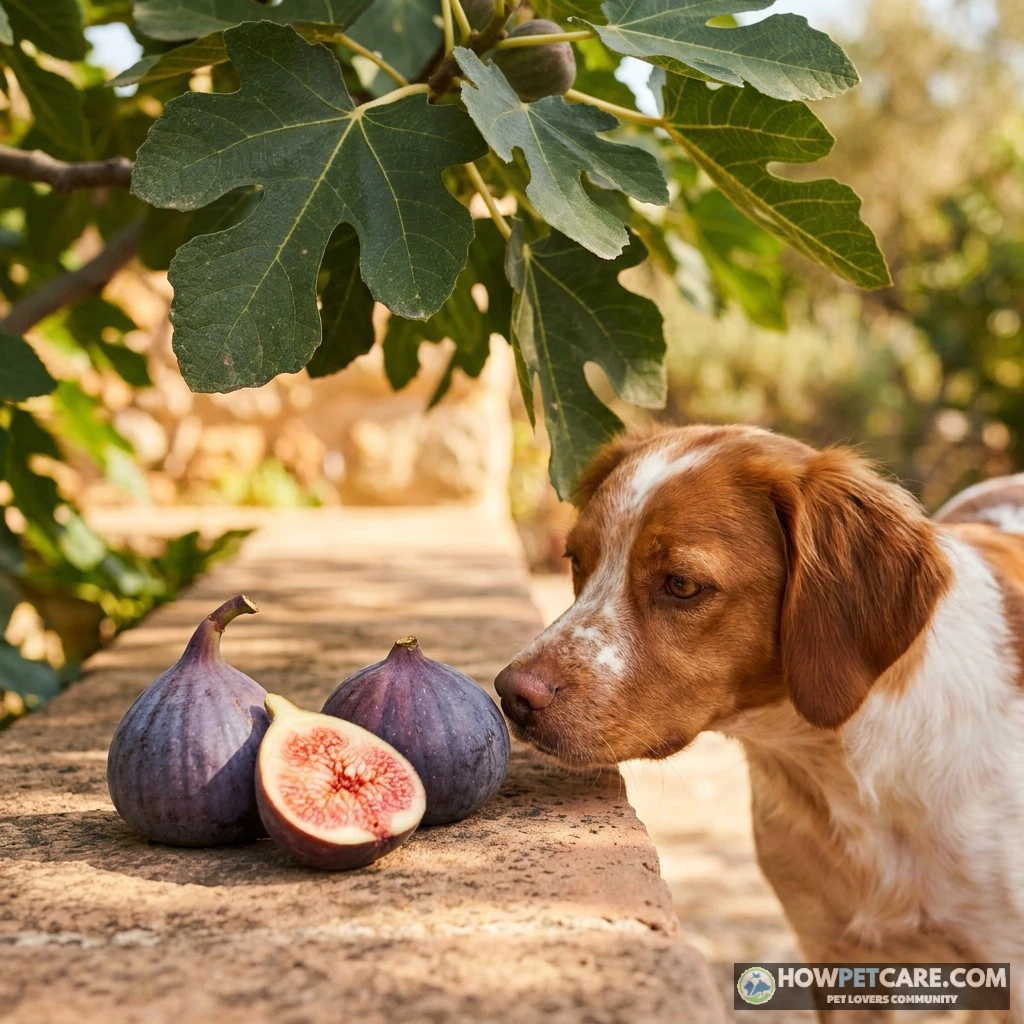
Fig Forms Compared: Fresh, Dried, Fig Newtons, Jam, Leaves, Sap
The form matters more than the word fig on the label. Ripe flesh and fig plant material pose different risks.
| Fig form | Safety verdict | Main hazard | Approximate calories and sugar | What to do |
|---|---|---|---|---|
| Fresh, ripe flesh | Small occasional portion is generally OK | Excess may upset the stomach | Small 40 g fig: about 30 kcal and 6.5 g sugar | Wash, remove stem, cut up, and count as a treat |
| Dried figs | Best skipped; a plain tiny taste is not automatically an emergency | Concentrated sugar and calories; choking | About 22 kcal and 4.3 g sugar per 9 g fig | Check for other ingredients; call for a large amount or symptoms |
| Fig Newtons or fig bars | Avoid as a regular treat | Added sugar and calories; some products contain hazardous ingredients | Varies by brand and size; check the label | Identify the product and ingredients; call promptly about hazardous ingredients |
| Fig jam or preserves | Skip | Added sugar; possible hazardous sweeteners or other ingredients | Varies by recipe; check the label | Check ingredients and amount; call if xylitol is present or suspected |
| Leaves, stems, bark, or branches | Poisoning concern | Irritating plant compounds and sap | Not applicable | Remove access and call a vet or poison control |
| Milky sap | Irritant; call for advice | Mouth, skin, and digestive irritation | Not applicable | Rinse exposed skin and call a vet or poison control |
| Unripe or fallen figs | Depends on what was eaten | Possible sap, attached plant parts, spoilage, or mold | Varies | Remove access; call if unripe fruit, sap, plant material, or mold may be involved |
The ASPCA toxic plants list identifies the fig plant as a concern for dogs. The distinction between plant material and ripe flesh matters.

Can dogs eat dried figs or Fig Newtons?
A small piece of plain dried fig isn’t the same as a poisonous plant exposure. Still, dried figs are easy to overfeed and may pose a choking risk, especially for small dogs. If your dog stole one, check the ingredient list and how much was eaten before deciding what to do.
Fig Newtons and similar cookies aren’t suitable routine treats. Recipes vary, and other fig bars may contain ingredients dangerous to dogs. Check for xylitol, sometimes labeled birch sugar, as well as chocolate, raisins, and macadamia nuts. If any are present or suspected, contact a veterinarian or poison control immediately. Don’t wait for symptoms.
Fig jam, preserves, and other processed fig products
Skip jam, syrup-packed figs, fig yogurt, and fig cookies. Added sugar and other ingredients don’t benefit your dog, and sugar-free products need particular scrutiny for xylitol. If your dog licked a small amount, keep the label and ask your vet about any ingredient you’re unsure of.
How Many Figs Can a Dog Eat? A Reconciled Serving Chart by Weight
There isn’t a proven fig-specific portion or weekly schedule that suits every dog. The chart below is a cautious starting point for healthy adult dogs, not a feeding target or a guarantee that every serving is safe. If your dog has never tried fig, start with one tiny piece.
The 10% treat rule applied to figs
Treats combined should make up no more than about 10% of daily calories. These estimates assume an adult dog at average activity, use an approximate daily need of 1.6 times resting energy requirement, and count a 40 g fresh fig as 30 calories. Actual needs can differ substantially.
| Dog weight | Approximate daily calories | 10% treat budget | Fresh fig per serving | Suggested frequency | Dried fig guidance |
|---|---|---|---|---|---|
| 5 lb | 200 kcal | 20 kcal | Up to 1/8 small fig | Occasionally, no more than 1–2 times weekly | Best skipped |
| 10 lb | 350 kcal | 35 kcal | Up to 1/4 small fig | Occasionally, no more than 1–2 times weekly | Best skipped |
| 20 lb | 590 kcal | 59 kcal | Up to 1/2 small fig | Occasionally, no more than 1–2 times weekly | Best skipped; a plain sliver is not automatically toxic |
| 30 lb | 790 kcal | 79 kcal | Up to 3/4 small fig | Occasionally, no more than 1–2 times weekly | Best skipped |
| 60 lb | 1,330 kcal | 133 kcal | Up to 1 small fig | Occasionally, no more than 1–2 times weekly | Best skipped |
| 90 lb | 1,800 kcal | 180 kcal | Up to 1 1/2 small figs | Occasionally, no more than 1–2 times weekly | Best skipped |
Cut the suggested portion into pieces suited to your dog’s size. These portions and frequency are cautious editorial suggestions, not clinically established fig doses. The calorie budget is a ceiling for all treats, not a recommendation to fill it with figs.
For example, a 30 lb dog with an estimated 790-calorie daily need has a roughly 79-calorie treat budget. Dividing 79 by 30 gives about 2.6 small figs as a mathematical calorie ceiling if the dog gets no other treats. The suggested serving is much smaller—up to 3/4 fig, or about 23 calories—because calorie math alone can’t predict digestive tolerance.

A 10 lb dog with a 35-calorie treat budget shows why other treats count: A 25-calorie dental chew leaves only about 10 calories. A quarter of a small fig adds roughly 7.5 calories; half a fig would exceed what’s left. If the dog needs fewer calories than estimated, even the quarter may be too much; lower-calorie picks like blueberries for dogs leave more room in the budget.
Why portion guidance varies across sources
Some guidance gives weekly, weight-based limits; other sources note that no fig-specific serving schedule has been established. Daily treat-calorie math and occasional servings address different questions. The first sets a general dietary ceiling; the second offers a cautious way to introduce an optional food.
Reduce or skip the fig if your dog gets training treats, chews, or other extras. Ask your vet for an individual calorie plan if your dog is on a weight-loss diet or has a medical condition.
Why Fig Plants Are Toxic: Ficin, Psoralens, and Latex Sap Explained
The common fig tree, Ficus carica, contains milky latex sap. Plant material and sap contain ficin and psoralens, compounds associated with irritation and toxicity in dogs.
Ficin is a protein-digesting enzyme that can irritate exposed tissue. Psoralens can make skin more sensitive to sunlight. Sap on the mouth or skin can cause irritation, and swallowed plant material can upset the digestive tract. Effects depend on the plant part, exposure route, amount, and individual dog.
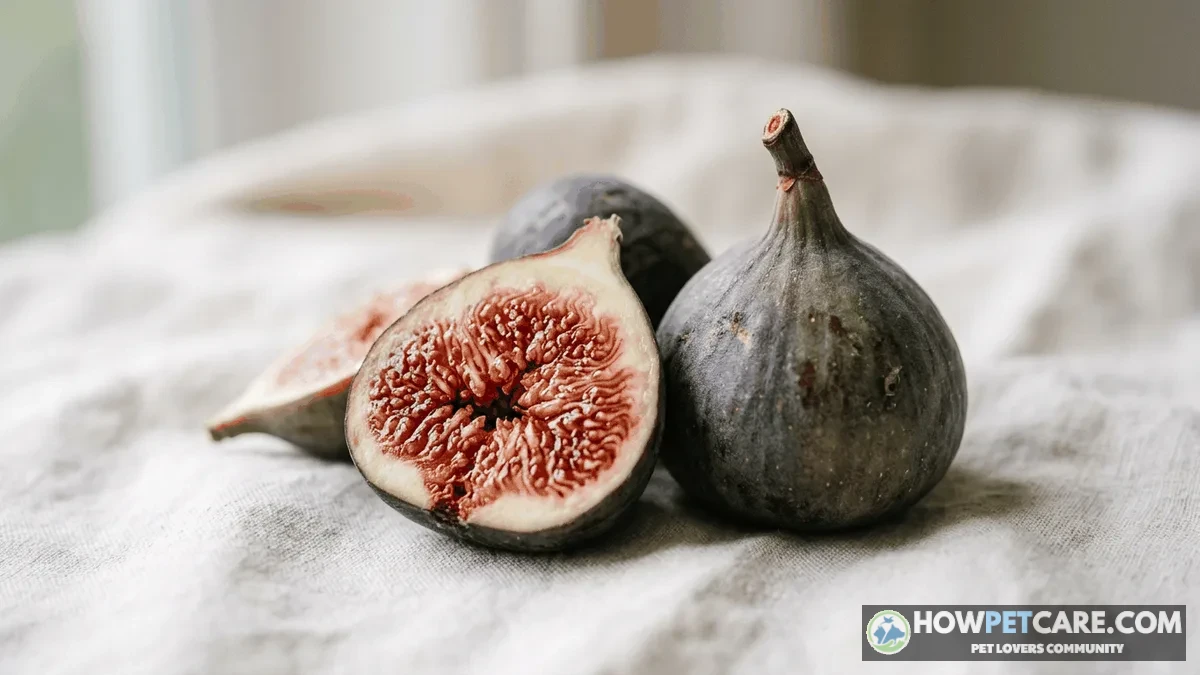
Are fig leaves toxic to dogs?
Yes. Leaves, stems, bark, and branches are harmful and shouldn’t be offered. Drooling, mouth irritation, vomiting, diarrhea, or skin redness are reasons to seek advice promptly. Effects vary, and the amount alone can’t reliably tell you how serious an exposure is.
Can dogs eat figs from a fig tree?
Ripe fig flesh differs from leaves and stems, but a dog eating directly from a tree may also contact sap or swallow plant parts. Unripe or damaged fruit may expose the dog to sap; fallen fruit may be spoiled or moldy. Keep your dog away and call your vet if plant material, sap, unripe fruit, or mold may be involved.

Dog Ate Figs? Monitor-at-Home vs. Call-the-Vet Thresholds
Monitor at home if a healthy dog ate only one or two small pieces of ripe flesh, has no concerning symptoms, and is acting normally. Provide fresh water, skip more treats, and keep an eye on your dog over the next 24 hours. You can monitor one soft stool or a single vomiting episode in an otherwise bright adult dog, but call your vet if it recurs, gets worse, or you’re unsure. Use a lower threshold for puppies and dogs with health conditions.
Call your veterinarian or poison control now if any of the following apply:
- Your dog chewed or swallowed leaves, stems, or bark, or had sap exposure.
- Your dog ate a large or uncertain quantity of figs, or several dried figs or bars, especially if your dog is small. Note roughly how much was eaten and when.
- The product contains xylitol, chocolate, raisins, or macadamia nuts, or you can’t verify the ingredients.
- Your dog has repeated vomiting or diarrhea, bloody stool, drooling, mouth or skin irritation, lethargy, a hunched posture, abdominal pain, or refuses to eat.
- Your dog has diabetes, a history of pancreatitis, or another condition for which your vet has restricted treats.
Go to an emergency veterinary clinic immediately for trouble breathing, facial swelling, collapse, severe abdominal pain, or persistent vomiting. Call the clinic on the way if possible.

Call your veterinarian or an emergency clinic, ASPCA Animal Poison Control at 888-426-4435, or Pet Poison Helpline at 855-764-7661. Consultation fees may apply. Do not wait for symptoms if a product contains or may contain xylitol.
What happens if my dog eats a fig: Symptom timeline
A healthy dog that eats a little ripe flesh may have no ill effects. If stomach upset develops, watch for vomiting, loose stool, reduced appetite, or a change in behavior. Contact a vet if signs recur or are more than mild.
Rich, fatty foods can contribute to pancreatitis risk in susceptible dogs; sugar alone doesn’t mean a dog will develop pancreatitis. After a rich bar or other fatty food, watch for vomiting, belly pain, hunching, and lethargy over the next 24–72 hours. Call promptly if these signs appear.
Scenario: Dog ate figs off the tree or chewed fallen leaves
Move your dog away from the area. If you can do so safely, remove any remaining plant material from the mouth. Gently rinse sap from the skin with water; don’t force water into the mouth or risk a bite. Keep irritated skin out of direct sun, and contact your vet or poison control for instructions. Save a photo or sample of the plant and note roughly when and how much was eaten.
Scenario: Stolen fig bars or Fig Newtons
Keep the wrapper. Note the brand, ingredients, number missing, and your dog’s weight, then call if the product contains a hazardous ingredient, the amount is substantial, or your dog is unwell. Don’t induce vomiting unless a veterinary professional specifically tells you to.
Which Dogs Should Skip Figs: Diabetic, Overweight, Allergic, Puppy, and Senior Dogs
- Dogs with diabetes: Ask your vet before offering figs. Their natural sugars need to fit the dog’s glucose-management plan.
- Overweight dogs or dogs on a weight-loss plan: Avoid calorie-dense extras unless the vet has included them in the plan. Dried figs are a poor fit for a small treat budget.
- Dogs with previous pancreatitis or sensitive stomachs: Avoid unfamiliar or rich extras unless the vet approves them. Fig bars may contain ingredients beyond fruit that complicate the decision.
- Dogs with a suspected food allergy: Don’t retry a food that caused a reaction without veterinary guidance. Stop feeding it and call about itching, hives, vomiting, or swelling. Facial swelling or breathing trouble requires emergency care.
- Puppies and senior dogs: Ask the vet before introducing figs, especially if your dog is very small, has dental trouble, or has a medical condition. Age alone doesn’t make figs toxic, but an individual dog may need a more restrictive plan.
- Dogs on prescription diets: Check with the prescribing vet before adding any food; extras can interfere with the diet’s purpose.

How to Serve a Fig Safely and Lower-Calorie Alternatives
Step-by-step: How to feed a fig to your dog
-
Choose the fruit
Select a ripe, plain, fresh fig. Skip unripe fruit and fruit packed in syrup.
-
Prepare it
Wash the fig, remove the stem and any attached plant material, and serve a little of the soft interior cut into pieces suited to your dog’s size.
-
Introduce slowly
Offer one tiny piece first. Watch for stomach upset or a reaction over the next 24 hours.
-
Count the calories
Include the fig and every other treat in the day’s allowance. Stop offering it if your dog develops symptoms, and call your vet for advice.
Unlike watermelon for dogs, where the rind and seeds come off first, you don’t need to remove the tiny seeds inside a fresh fig for a small serving. Keep your dog away from the tree, pick up fallen fruit and leaves, and keep pruned branches out of reach.
Safer fruit swaps lower in calories than figs
These approximate comparisons are for plain food; actual values vary by size and preparation. Portions still need to fit your dog’s individual treat budget — light swaps like strawberry portions for dogs come in around 3 calories per 10 g.
| Food | Calories per serving | Sugar per serving | Dog suitability | Notes |
|---|---|---|---|---|
| Fresh fig | About 30 kcal per 40 g | About 6.5 g | Occasional small portion | Remove stem; cut the flesh into pieces |
| Dried date | About 20 kcal per small 8 g date | About 5 g | Not an ideal routine treat | Remove the pit; calorie and sugar content varies by variety |
| Blueberries | About 6 kcal per 10 g | About 1 g | Generally suitable in small amounts | Size pieces appropriately for small dogs |
| Watermelon flesh | About 3 kcal per 10 g | About 0.6 g | Generally suitable in small amounts | Remove rind and seeds |
| Strawberries | About 3 kcal per 10 g | About 0.5 g | Generally suitable in small amounts | Wash and cut up |
| Cucumber | About 2 kcal per 10 g | About 0.2 g | Generally suitable in small amounts | Cut into manageable pieces |
| Apple flesh | About 5 kcal per 10 g | About 1 g | Generally suitable in small amounts | Remove core and seeds |

Before offering a treat, consider its form and amount, along with your dog’s health needs. If your dog has already eaten something and you’re unsure whether it included plant material or a hazardous ingredient, keep the packaging or take a photo and call your vet or poison control.
FAQ
Are figs bad for dogs?
Ripe fresh fig flesh is generally not toxic in small amounts, but too much can cause diarrhea or vomiting. The bigger concerns are fig leaves, stems, and sap, plus sugary dried or processed fig products.
Can puppies eat figs?
It’s best to avoid figs for puppies or ask your vet first. Their stomachs are more sensitive, and even a small amount of a sugary or fibrous food can cause upset.
Can dogs eat fig seeds?
The tiny seeds inside fresh figs are usually harmless in small portions. The concern is quantity and the fruit’s sugar and fiber, not the seeds themselves.
Can dogs eat fig-flavored products like fig yogurt or fig cookies?
It’s better to skip them. They often contain added sugar, dairy, or other ingredients that can upset a dog’s stomach, and some may contain xylitol or chocolate, so always check the label.
Can dogs eat figs every day?
Daily figs are not recommended. Treat them as an occasional extra that stays within the 10% treat limit, and skip them completely if your dog is diabetic, overweight, or prone to pancreatitis.