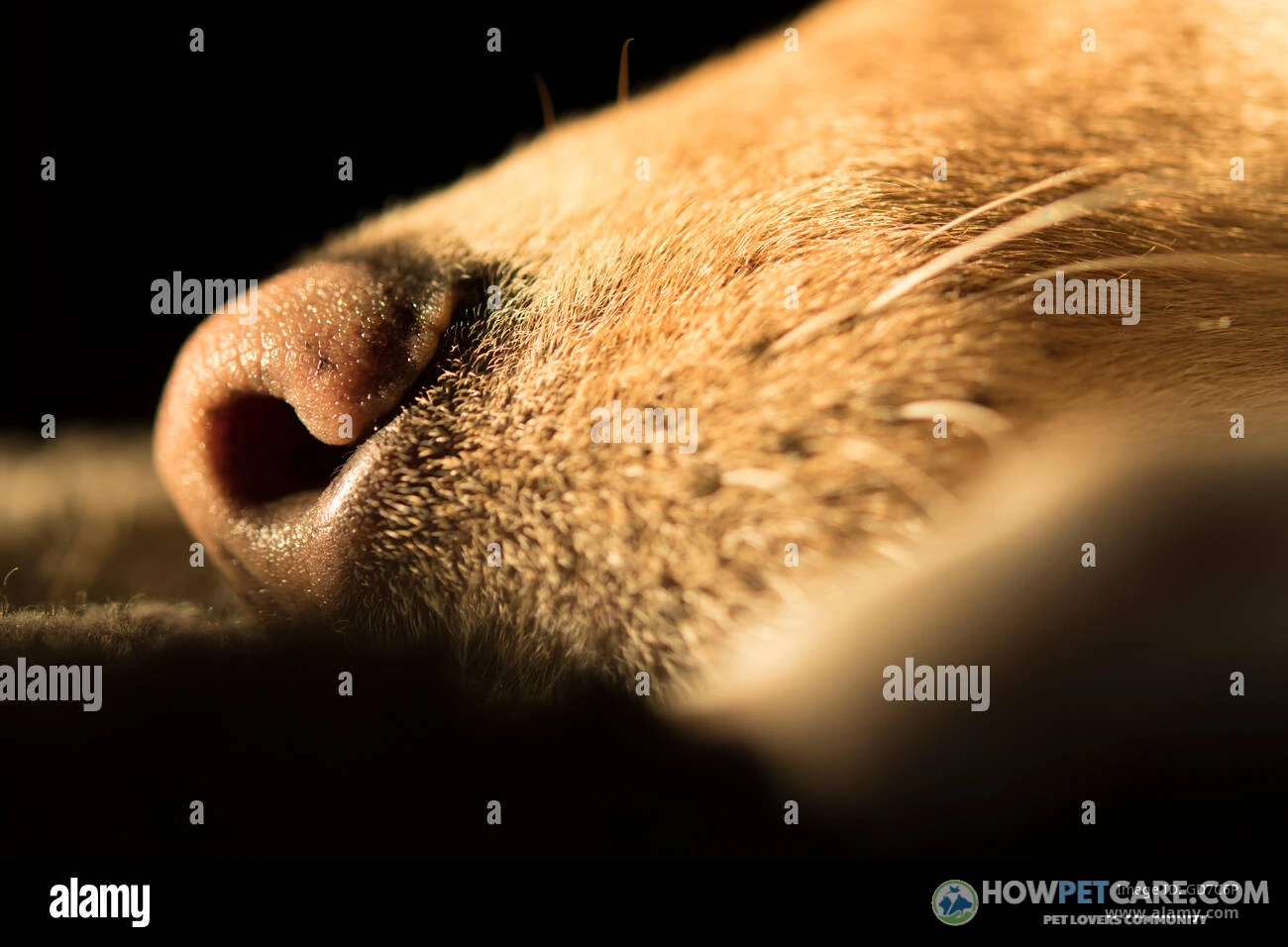

Dog whiskers are specialized tactile hairs called vibrissae that detect air currents, nearby objects, and spatial changes. They support navigation, protect the eyes and face through blink reflexes, and should be preserved rather than trimmed or plucked.
Dog whiskers are not decorative hairs. They are specialized tactile hairs called vibrissae, rooted in deep follicles packed with blood vessels and nerves, and they work as a dog’s built-in proximity and air-current sensors. Every dog has them from birth, and they detect touch, air movement, and nearby objects to support spatial awareness, protective reflexes, and navigation. For owners, the practical takeaway is simple: preserve whiskers, and treat them as functional equipment rather than hairs to be trimmed away.
Why Dogs Have Whiskers and What They Actually Do
What are dog whiskers?
Dog whiskers are coarser, thicker hairs whose roots sit about three times deeper than those of regular coat hair. They are present from birth and located above the eyes, on the chin, and above the upper lip, with patterns that vary by breed. Unlike ordinary fur, each whisker is a vibrissa: a stiff, deeply embedded hair with touch-sensitive neurons at its base. Whiskers do not feel directly. Instead, they transmit vibrations to sensory cells when air or objects move them.

Core functions of dog whiskers
The primary purpose of dog whiskers is to detect air currents, nearby objects, and spatial changes, supporting navigation and spatial awareness. They act as feelers that help prevent collisions with objects and protect the face and eyes. Whiskers support spatial awareness, object detection, communication, protection of sensitive areas, and swimming navigation. Because whisker follicles are packed with blood vessels and nerves, whiskers are about as sensitive as human fingertips.
Gently tapping a dog’s vibrissae triggers a blink and head turn on the same side, a protective reflex that guards the eyes. Dogs with removed whiskers appear more uncertain and move more slowly in dim light. Whiskers are functional sensory equipment tied to canine anatomy and survival instincts, not cosmetic trim.
Never treat whiskers as decorative. They are deeply rooted, nerve-rich structures that help a dog navigate and protect its face.
Where Dog Whiskers Grow and What Each Location Does
Whiskers above the eyes and their protective job
Whiskers above the eyes, often called eyebrows, trigger protective blink reflexes and warn about overhead or close objects. When something approaches the face, these whiskers help initiate a blink that shields the eyes. Watch for redness, repeated blinking, or rubbing after a dog bumps a doorway or low object.
Muzzle whiskers and close-range object detection
Muzzle whiskers on the sides of the nose detect objects directly in front of the nose, especially in dim light. This is the location most likely to be accidentally shortened during grooming, so it deserves careful attention. Watch for shortened, split, or missing whiskers after a grooming visit.
Cheek and chin whiskers for spatial awareness
Cheek whiskers help a dog sense nearby walls, furniture, and spatial boundaries during movement. Chin whiskers help judge food-bowl distance and surfaces under the jaw. Watch cheek whiskers for uneven breakage on one side, which can signal rubbing or skin irritation, and chin whiskers for swelling at the follicle base, crusting, or discharge.
Breed and location variations in whisker patterns
Whisker placement varies by facial location and can differ subtly by breed and head shape. Exact whisker counts and patterns are not consistently quantified in accessible veterinary literature, so treat any specific count claim with caution. What matters for care is knowing the four main locations and what each one does.
| Whisker location | Primary function | What to watch for |
|---|---|---|
| Above the eyes (eyebrows) | Triggers blink reflexes and warns about overhead or close objects | Redness, repeated blinking, or rubbing after bumping a doorway |
| Muzzle (sides of the nose) | Detects objects directly in front of the nose, especially in dim light | Shortened, split, or missing whiskers after grooming |
| Cheeks | Senses nearby walls, furniture, and spatial boundaries during movement | Uneven breakage on one side, which can signal rubbing or skin irritation |
| Chin | Helps judge food-bowl distance and surfaces under the jaw | Swelling at the follicle base, crusting, or discharge |

Note: Exact whisker counts and patterns vary subtly by breed, head shape, and individual dog.

Dog Whiskers vs Cat Whiskers: What Owners Should Know
Similarities in whisker structure
Dogs and cats both have vibrissae: thick, rigid tactile hairs connected to sensitive nerve endings. The underlying structure is similar, with deep follicles rich in sensory input.
Key differences in dog versus cat use
Dog whiskers serve similar tactile purposes but are less central to narrow-gap testing than cat whiskers. Cat whiskers support balance, hunting distance judgment, mood signaling, dark navigation, and wind detection, while dog whiskers support spatial awareness, object detection, communication, protection of sensitive areas, and swimming navigation. Feline whiskers are generally more prominent and tuned to different hunting behaviors. The comparison is worth knowing, but the rest of this guide stays dog-focused because canine care decisions are the priority.

Damaged, Broken, or Missing Dog Whiskers: What to Expect
Normal whisker loss versus breakage
Whiskers can break, fall out naturally, or be damaged without injuring the dog. A single broken or shed whisker is usually not a cause for alarm. Whiskers are thick and rigid, so they can snap when a dog brushes against furniture or a crate edge.
Expected regrowth timeline
Lost whiskers usually grow back if the follicle is intact. Regrowth often takes several weeks to a couple of months, depending on the dog and the individual follicle. Because timelines vary and are not guaranteed, monitor rather than assume a fixed schedule. Dogs can still walk and stand if whiskers are missing, because balance is managed by the inner ear and proprioception, not by whiskers. Whiskers support spatial awareness and close-range object detection rather than equilibrium.
When whisker loss signals a health problem
Whisker follicles are densely innervated, so repeated loss, swelling, crusting, or discharge at the base can signal inflammation or infection. Whiskers do not feel directly but transmit vibrations to sensory cells, so damage to the follicle rather than the hair itself is what matters most.

A single broken whisker is usually normal. Whiskers falling out in clusters, or follicles that stay swollen beyond 48 hours, warrant a veterinary check.
- Photograph the affected side in good light so you can compare regrowth later.
- Do not pull, pluck, or trim the remaining whisker stump; let it shed naturally if it is loose.
- Check the follicle base daily for 7 days for redness, swelling, crusting, discharge, or odor.
- Keep the muzzle and chin area clean with lukewarm water and a soft cloth; avoid harsh shampoos near the follicles.
- Prevent rubbing by pausing tight collars, head halters, or cone contact until the area settles.
- Recheck at 2 weeks, 4 weeks, and 8 weeks; note whether new whiskers are straight, tapered, and similar in length to neighbors.
- Contact a veterinarian if a follicle stays swollen beyond 48 hours, the dog paws at the face, or whiskers fall out in clusters.
Should You Trim or Cut Dog Whiskers? Grooming Boundaries
Why trimming whiskers is usually unnecessary
Trimming whiskers is not recommended because it can disorient pets and reduce spatial awareness. Whiskers should not be trimmed or plucked for cosmetic reasons. Plucking is painful and should be avoided because follicles are densely supplied with sensory nerve endings. Routine grooming should work around tactile hairs rather than remove them.
Medical exceptions and veterinarian guidance
Trimming may only be considered in specific veterinary-directed situations, not as standard pet grooming. If a veterinarian identifies a medical reason, that guidance overrides general care advice. Owners should discuss whisker concerns with a groomer or veterinarian before any trimming.
Safe grooming techniques around the muzzle and eyes
Groomers should work in bright, direct light and keep the dog’s head still with calm handling, not force. Use blunt-tipped scissors or a guarded clipper blade, keeping blades parallel to the skin rather than pointed at the whisker base. Trim only the hair you can clearly see moving separately from the stiff whisker; if unsure, leave it. Avoid shaving the muzzle short enough to remove or nick tactile hairs. Never pluck whiskers. Pause grooming if the dog flinches, turns away, or shows stress signals. After grooming, inspect both sides of the muzzle, cheeks, chin, and above the eyes for accidental cuts.

If whiskers are accidentally cut, monitor for 24 to 72 hours for confusion, hesitation in tight spaces, or repeated face rubbing, and call the veterinarian if signs persist.
-
Work in bright light
Keep the dog’s head still with calm handling and use blunt-tipped scissors or a guarded clipper blade.
-
Cut only loose coat hair
Trim only hair that moves separately from the stiff whisker; if unsure, leave it.
-
Never pluck
Follicles are densely supplied with sensory nerve endings, so plucking is painful and avoidable.
-
Inspect and monitor
Check all whisker locations after grooming and watch for 24 to 72 hours for confusion or face rubbing.
Whisker Sensitivity, Puppy Development, and Age Changes
What research says about whisker sensitivity
Whisker follicles are highly sensitive structures with sensory receptors that transmit touch and air-current information. Whiskers are about as sensitive as human fingertips because their follicles are packed with blood vessels and nerves. Vibrissae are stiff, deeply embedded hairs with touch-sensitive neurons at their bases.
Well-supported: dog whiskers are specialized tactile hairs rooted in deep, nerve-rich follicles; they detect touch, air currents, and nearby objects and support spatial awareness and protective reflexes. Cautious: exact sensitivity thresholds, precise dim-light navigation benefits, and breed-specific whisker counts are not consistently quantified in accessible veterinary literature. Treat claims about superior night navigation or exact nerve-response numbers as provisional unless tied to a specific study. The practical takeaway is to preserve whiskers and avoid routine trimming; the evidence supports their sensory role even where precise measurements are limited.
Whiskers in puppies and development
Whiskers are present from birth. From birth to 2 weeks, whiskers are short and fine; puppies rely heavily on touch and warmth, and whiskers help with nursing and close contact. From 3 to 8 weeks, whiskers lengthen and stiffen as the puppy explores, and owners may notice whiskers brushing food bowls or crate walls. From 3 to 6 months, the whisker pattern becomes more defined by location, and cheek and muzzle whiskers are easier to tell apart from regular coat hairs. From 6 to 18 months, adult whisker length and placement are usually established, and regular coat grooming should not shorten or nick them.

Age-related whisker changes
In senior years, some dogs show more breakage, color change, or thinner-looking whiskers. Inspect follicles during grooming and report sudden cluster loss to a veterinarian. Whisker input also ties into mood and communication signals, so changes in whisker condition can sometimes mirror broader health or behavioral shifts.
Dog Whisker Care Checklist: Next Steps for Owners
- Do: keep whiskers intact during grooming and work around them carefully.
- Do: inspect whisker locations regularly for breakage, swelling, or discharge.
- Do: photograph both sides of the muzzle so you have a baseline for comparison.
- Do: keep the muzzle and chin area clean with gentle methods.
- Do not: trim, cut, or pluck whiskers for cosmetic reasons.
- Do not: shave the muzzle short enough to nick tactile hairs.
- Do not: ignore repeated whisker loss or follicle inflammation.
Decision path for damaged, broken, or missing whiskers: monitor the follicle for 7 days, keep the area clean, prevent rubbing, recheck at 2, 4, and 8 weeks, and contact a veterinarian if swelling persists beyond 48 hours, the dog paws at the face, or whiskers fall out in clusters. Preserve whiskers to support safe navigation, protective reflexes, and comfort.
When to call a veterinarian: pain, bleeding, repeated whisker loss, or behavior changes such as hesitation in tight spaces or new face rubbing after grooming. These signs indicate that a professional should evaluate the follicles and surrounding skin.
Just as owners ask whether dogs have belly buttons, whiskers are another normal feature worth understanding rather than treating as decorative.
FAQ
Do dogs need whiskers to balance?
No. Whiskers support spatial awareness and close-range object detection, but balance is managed by the inner ear and proprioception. A dog can still walk and stand if whiskers are missing.
Are dog whiskers sensitive?
Yes. Whisker follicles contain many sensory receptors, making whiskers highly responsive to touch and air currents. Exact sensitivity measurements are limited, so general claims should be treated with caution.
Why do dogs have whiskers on their face?
Facial whiskers help dogs detect nearby objects, navigate tight spaces, and protect the eyes by triggering blink reflexes when something approaches the face.
Do dog whiskers grow back if cut or damaged?
Usually yes, if the follicle is not damaged. Regrowth often takes several weeks to a couple of months, depending on the dog and the individual follicle.
Should you cut dog whiskers during grooming?
Generally no. Whiskers should not be trimmed or plucked for cosmetic reasons; groomers should work around them, and any medical exception should be directed by a veterinarian.