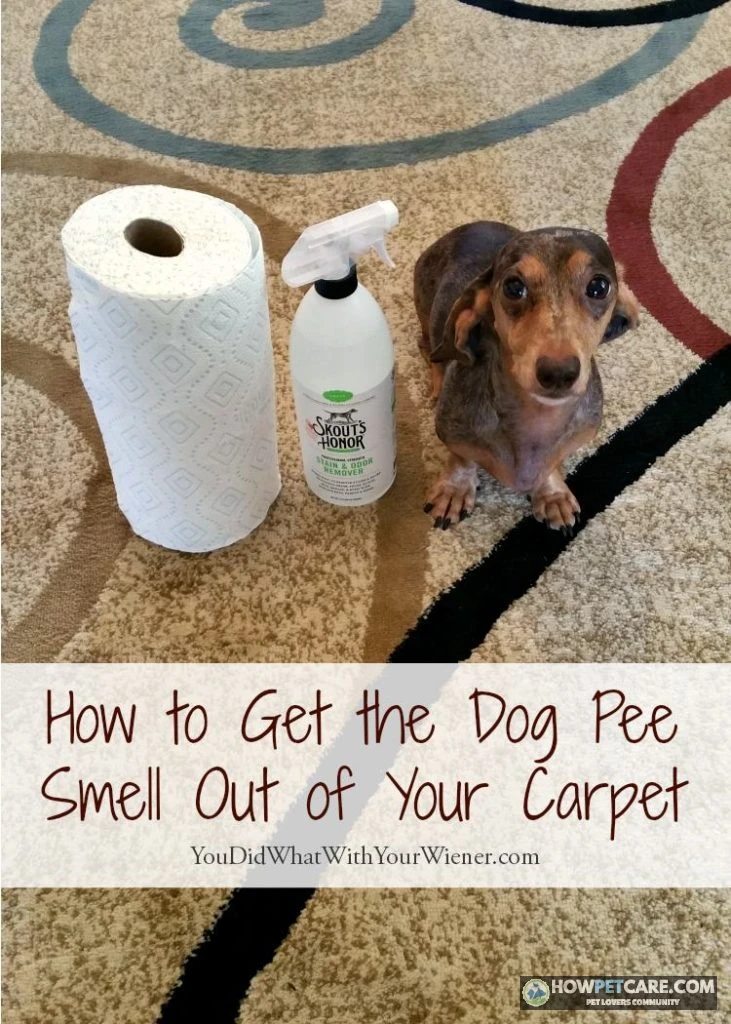

To get rid of dog pee smell for good:
- Blot fresh urine with towels — don’t rub.
- Apply an enzymatic pet urine cleaner suited to the surface, using enough to reach the contamination.
- Let it sit for the label’s full dwell time, then blot.
- Dry the area completely with airflow before judging results.
- If odor returns, check the padding, subfloor, or foam — the source is below the surface.
Blot fresh dog urine with absorbent towels instead of rubbing it. Then use a pet urine cleaner labeled for the affected surface. On carpet and other absorbent materials, the cleaner needs to reach the contamination, not just the visible spot, and stay in contact for the time specified on its label. Let the area dry completely before deciding whether the smell is gone.
If the odor returns, look for missed spots or urine in the carpet pad, subfloor, furniture foam, or another hidden layer. A stronger fragrance won’t remove a source that’s still there.
How to Get Rid of Dog Pee Smell: The Core Method That Works on Any Surface
The basic method is to remove as much urine as you can, choose a cleaner the material can tolerate, and give it enough contact time. How much liquid you use matters. Carpet may need deeper treatment, while too much moisture can damage wood, laminate, and foam.
The 60-second fresh-accident protocol
- Blot immediately. Press clean towels or paper towels onto the urine. On carpet, stand on the towels and replace them until little moisture transfers. Rubbing can spread the urine and damage carpet fibers.
- Remove residue where safe. On water-tolerant carpet or fabric, apply a little cool water and blot again. On wood or laminate, wipe the surface rather than wetting it.
- Apply a suitable pet stain remover. Follow the label for the surface and stain. On an absorbent carpet spot, use enough to reach the affected fibers and backing, but don’t flood materials that can’t dry safely.
- Wait and dry. Keep the product in contact for its stated dwell time, then blot or rinse if directed. Ventilate the area and let it dry fully before checking for odor.

Which situation are you in? A quick triage
- Fresh, small accident: Blot now, then use the appropriate surface method below.
- Old, visible spot: Find the full affected area and use a compatible enzymatic cleaner according to its label.
- Smell without a visible spot: Start with the blacklight and smell-map search.
- Odor that returns after drying or during humid weather: Check for missed areas and contamination below the surface.
Do Vinegar and Baking Soda Remove Dog Urine Odor, or Do You Need an Enzymatic Cleaner?
Vinegar and baking soda can help with a small, fresh surface accident, but neither reliably treats old urine embedded in padding or porous material. For stubborn organic residue, an enzymatic cleaner formulated for pet urine is a more practical choice, provided it’s compatible with the surface and can reach the contamination.
Why urine smell comes back: uric acid crystals and humidity
As urine ages, compounds in it can produce an ammonia-like smell. Residues, including uric acid and its salts, can remain in absorbent materials after the visible stain disappears. Changes in moisture and humidity can make residual odor more noticeable, but a returning smell doesn’t identify a particular compound or prove exactly where it’s located.
Homemade solution to remove dog urine smell and its limits
For a small fresh spot on a water-safe, colorfast surface, mix equal parts white vinegar and cool water. After blotting, lightly apply the mixture, leave it for 5–10 minutes, and blot again. Avoid vinegar on natural stone, and check floor and fabric care instructions first. Dry the area thoroughly and reassess. If urine has soaked in or the odor returns, use a suitable pet urine cleaner instead.
Once a compatible carpet or mattress surface is dry, a light application of baking soda can help absorb residual surface odor. Leave it for 20–30 minutes, then vacuum thoroughly. Keep pets and children away from the powder, and don’t use it where the manufacturer advises against it. Don’t mix vinegar and baking soda expecting a stronger treatment: they react with each other.
| Method | What it targets | Works best on | Limits | Safety notes |
|---|---|---|---|---|
| White vinegar and water | Some surface residue and ammonia-like odor | Small, fresh spots on compatible surfaces | Does not reliably remove deeply embedded urine | Can damage stone or some finishes; test first |
| Baking soda | Light surface odor and moisture | Dry, vacuumable materials | Does not reach contaminated padding or subfloors | Keep loose powder away from pets and children |
| Hydrogen peroxide | Some stains and odor-causing compounds through oxidation | Only surfaces and products that permit it | Not a dependable fix for deep contamination | Can bleach fabric or carpet; never combine with vinegar |
| Pet urine enzymatic cleaner | Organic urine residue targeted by the formula | Old or recurring spots the cleaner can reach | Results depend on formulation, contact, and drying | Follow label directions; do not mix with other cleaners |

Why enzymes are useful on old stains
Enzymatic products use enzymes, sometimes alongside bacteria, to help break down organic material in urine. Formulas differ: not every product contains an enzyme that acts on uric acid, and a cleaner can’t work where it can’t reach. Physical removal and some oxidizing products can also remove or reduce urine residue. No single ingredient guarantees success on every surface.
Choose by the label, not by a claim that one bottle works everywhere. Look for pet urine as a stated use, compatibility with your material, clear dwell and drying directions, and enough product for the area. A small spray may suit a chair cover; a larger container may be more economical for several carpet spots. Check the cost per ounce as well as the purchase price.

How to Find Old or Hidden Dog Urine Stains That Still Smell
Finding all the sources matters more than repeatedly treating the one stain you can see. Photograph suspected areas before cleaning, particularly if you rent.
Using a black light correctly
A black light urine detector can reveal dried spots that are hard to see in normal light. Fluorescence is a lead, not proof: detergents and other residues can glow too, and urine may not fluoresce clearly on every material.
Use this blacklight sweep and smell-map protocol:
- Darken the room and slowly scan the floor in overlapping rows. Try holding the light about a foot above the surface, adjusting the distance until marks are easiest to see.
- Mark each suspicious glow with painter’s tape. Check corners, baseboards, furniture legs, rug edges, and behind doors.
- Confirm likely spots by smell and context. Check beneath removable rugs and behind furniture; look at dog beds and low curtain hems too.
- Sketch a simple room map and mark each suspect area. As a starting margin, plan to inspect and treat about 2 inches beyond a visible carpet stain, because urine can spread underneath. That doesn’t guarantee you’ve found the full extent.
- Photograph the map and marked spots before treatment. If a suspect area smells stronger in naturally humid weather, record that too rather than wetting a moisture-sensitive floor to test it.

Smell with no visible stain
Work through the room in zones, sniffing close to—but not directly touching—carpet edges, upholstery, and washable items. Check the car if your dog rides in it. If nothing stands out, wash soft goods and inspect around HVAC returns. The whole-room section explains how to reduce lingering airborne odor while you continue the search.

Surface-by-Surface Guide: Carpet, Couch, Mattress, Hardwood and More
Before applying any cleaner, test it in an inconspicuous area for the label’s recommended time. Blot with a white cloth and check for color transfer or finish damage. When in doubt, follow the furniture or flooring manufacturer’s care instructions.
| Surface | Best approach | Key precaution | Dry/dwell guidance | Escalate if |
|---|---|---|---|---|
| Carpet and rugs | Blot, then use a carpet-safe pet urine cleaner | Wool, natural fibers, dyes, and rug backings can be sensitive | Follow product dwell time; use airflow until fully dry | Odor remains after two complete treatments or the pad is affected |
| Couch and upholstery | Check the care code; treat removable covers or compatible fabric | Avoid soaking cushion foam | Observe label contact time and air-dry fully | Odor comes from inside the cushion |
| Mattress | Blot and use a mattress-compatible product sparingly | Foam holds moisture; avoid saturation | Allow full drying on both sides before remaking the bed | Deep odor remains or the mattress cannot dry |
| Bedding and clothing | Use a fabric-safe enzyme presoak, then launder | Check care labels and avoid premature heat drying | Follow presoak and wash directions; air-dry to check | Odor survives repeat washing |
| Hardwood and laminate | Wipe promptly; use a finish-safe cleaner sparingly | Standing liquid can damage finish or swell seams | Follow the compatible product’s directions, then dry promptly | Darkening, raised grain, swollen seams, or persistent odor appear |
| Concrete and patio | Use an outdoor/concrete-labeled urine cleaner | Porous surfaces can hold residue below the surface | Keep in contact for label time; rinse if directed | Odor returns after repeat treatment |

Carpet and rugs
To get dog pee smell out of carpet, start by blotting thoroughly. Apply a carpet-compatible enzymatic cleaner across the affected area, including the surrounding margin. Use enough to reach the contaminated depth, but avoid soaking the entire floor or adding more liquid than you can dry. Follow the label’s dwell time; some products require the area to remain damp while they work.
If the label permits covering the treatment, a damp towel or loose plastic may slow drying during the specified contact period. Remove it afterward, blot as directed, and run a fan. Don’t leave wet carpet covered indefinitely. Old dog urine smell in carpet may need a second complete treatment, but if the odor persists, inspect below the carpet rather than repeatedly adding more liquid.
For valuable rugs, wool, silk, or unstable dyes, consult a rug-cleaning professional before treatment. Avoid steam cleaning fresh or untreated urine: heat can make urine stains harder to remove.

Couches and upholstered furniture
Check the care tag before attempting to remove dog urine smell from a couch. W generally permits water-based cleaning; S calls for solvent-based cleaning; WS permits either; and X generally means vacuuming only. Follow the manufacturer’s instructions if they’re more specific. Many enzyme products are water-based and aren’t appropriate for S- or X-coded fabric.
For compatible upholstery, blot the cover and apply the product as directed without driving liquid farther into the cushion. If the cover is removable, check whether you can wash it separately. Position cushions for airflow and leave them until fully dry. If urine reached the foam core, surface treatment may not reach the source; professional upholstery cleaning or foam replacement may be necessary.
Mattresses, bedding, clothing and car seats
To get dog pee smell out of a mattress, remove the bedding and blot the mattress. Use only a product labeled for the material, applying it in controlled passes rather than soaking the core. Observe its dwell time, then blot as directed. Prop the mattress safely so air reaches both sides, and don’t replace the bedding until it’s completely dry. Take particular care with memory foam because trapped moisture is difficult to remove. If the core remains odorous or damp, consider professional assessment or replacement.
For washable bedding, clothing, and dog beds, use a fabric-safe enzyme presoak according to its label, then wash according to the item’s care label. Air-dry and smell-check before using a dryer; heat can make remaining stains harder to remove. Repeat or replace the item if the odor persists.
For car seats, blot first and use a cleaner labeled for the upholstery. Keep liquid away from electrical controls, seat heaters, and connectors. Ventilate with doors open where safe, and dry with airflow. A persistent smell from seat foam or carpet padding may need an automotive detailer.
Hardwood, laminate and tile
To get dog pee smell out of hardwood floors, promptly wipe the accident, including the seams, and use a cleaner approved for the floor’s finish. Avoid a long vinegar soak or puddles of enzyme solution. Urine can damage a wood finish and reach the layers below. Dark stains or raised grain warrant a flooring professional’s assessment; sanding, refinishing, or board replacement may be needed.
Treat laminate even more sparingly: liquid entering seams can swell the core. On sealed tile, clean the surface and grout with a compatible product; porous grout may retain odor and require more attention. Don’t assume a product suitable for ceramic tile is safe for natural stone.
Why the Dog Pee Smell Keeps Coming Back After Cleaning
Why it smells worse on humid days
Humidity can make residue in carpet, padding, wood, or other porous material smell more noticeable. Uric acid and its salts are among the residues that can remain, but a humid-day smell is a clue to investigate, not a test proving that crystals are the only cause. Urine may also have spread farther through padding or into the subfloor than the surface stain suggests.
Cleaning mistakes that make odor harder to remove
Work through this checklist before buying another product:
- Smell returns when the area is damp: Look for remaining residue and inspect the pad or subfloor if the spot is carpeted.
- The same spot smells after treatment: Check whether the product reached the affected area and remained in contact for its full label time. Don’t compensate by soaking moisture-sensitive materials.
- Other spots fluoresce: Investigate and treat confirmed sources rather than assuming every glowing mark is urine.
- The dog urinates there again: Clean promptly, restrict access while the area dries, and reinforce normal house training. Avoid ammonia-based cleaners; their odor can be confused with urine.
- The room smells but no spot is obvious: Check washable soft goods, furniture, carpet edges, and the areas around vents.
- Heat was used before the stain was removed: Reassess the material and try a compatible treatment, but don’t assume a fixed number of additional applications will solve it.

If indoor accidents are sudden or frequent, contact a veterinarian. Treating the odor alone won’t stop a new accident from recontaminating the area.
When Urine Has Soaked Into Carpet Padding or the Subfloor
Signs the odor lives below the surface
Suspect deeper contamination when the smell remains after two complete, correctly performed treatments, returns after drying, or is strongest near a carpet edge. Stiffness, discoloration, or a large affected area are further reasons to inspect. A blacklight can help locate surface clues, but it can’t confirm how deeply urine has penetrated.
If you rent, contact the landlord before lifting fitted carpet or cutting padding. For an owned floor, lift an accessible corner only if you can do so safely without damaging the installation. Look and smell for contamination on the carpet backing, pad, and subfloor. Tack strips are sharp; wear gloves and avoid disturbing suspect mold.

Extract, replace the pad, or seal the subfloor?
- Extract when the carpet is salvageable and the contamination is accessible. Rent a carpet extractor and use only solutions approved for that machine and carpet. A cool-water rinse and extraction can remove loosened residue; use an enzyme treatment separately if its label calls for it. Don’t put an incompatible product in the machine. Make extraction passes as directed and dry thoroughly with fans and ventilation.
- Replace saturated padding. A heavily contaminated pad can retain odor after the carpet surface has been cleaned. Remove the affected pad and inspect the layer underneath before installing a replacement.
- Treat the exposed subfloor. Clean compatible wood or concrete with a product labeled for that surface, following dwell and drying instructions. Don’t seal in wet material. If a sound, fully dry subfloor still needs odor control, use an odor-blocking primer or sealer rated for that substrate and intended floor assembly.
- Replace damaged material or call a professional. Swollen, crumbling, or structurally compromised plywood or OSB may need removal rather than sealing. Extensive dampness or suspected mold warrants professional assessment before rebuilding.
Do not install new padding over a damp subfloor or leave wet carpet sealed under plastic beyond a product’s labeled dwell time. If you cannot dry the assembly promptly, stop adding liquid and seek professional help.
Removing Dog Pee Smell Outside: Concrete, Patios, Grass and Yard Soil
Concrete, patios and pavers
Porous concrete and paver joints can hold urine below the surface. Remove debris, rinse the area if local water and drainage rules permit, and apply an enzymatic cleaner labeled for outdoor concrete or masonry. Scrub as directed and keep it in contact for the label’s dwell time; rinse only if the label calls for it. Old areas may need repeat treatment.
Check product restrictions for brick, pavers, grout, and wood decks. Test a hidden spot, avoid runoff into storm drains or ponds, and keep pets away during application and until the label says the area is safe. If repeated cleaning fails, a masonry professional can assess whether deeper cleaning or a compatible sealer makes sense. Sealing a dirty or damp slab can trap the problem.

Grass, lawn and soil
For a fresh spot on grass, water promptly to dilute the urine. For persistent yard odor, remove and replace heavily contaminated mulch or a small amount of affected loose soil where practical. Use a treatment on grass or soil only if the label specifically permits that use and gives pet and plant precautions. Watering, dwell time, and rinsing requirements vary by product.
Reseed dead patches as appropriate. A designated, well-drained potty area that can be flushed or maintained regularly may make future cleanup easier; gravel or artificial turf still needs routine cleaning and drainage. Don’t use bleach or ammonia on a place your dog will revisit.
How to Remove Dog Pee Smell From a Whole Room When You Can’t Find the Source
Ventilation, charcoal and air purifiers
Open windows and create a cross-breeze when outdoor conditions allow. Wash compatible curtains, throws, rugs, and dog beds. Activated charcoal can help reduce some lingering odor gases; an air purifier with an activated carbon filter may help, depending on its filter and airflow. HEPA filters capture airborne particles, not odor gases by themselves.
These measures support source removal; they don’t clean urine out of a pad or floor. Fragrance sprays and candles can mask an odor without removing it. Check the HVAC filter and the area around returns, and replace a dirty filter according to the system’s instructions. If odor appears to originate inside the system, arrange an inspection rather than spraying cleaner into vents.

A zone-by-zone search method
Divide the room into manageable sections. In each zone, inspect floor edges and furniture, perform a dark-room blacklight sweep, and note confirmed or suspected spots on your map. Clean washable items from that zone, let treated surfaces dry, then return and smell-check. If the room still smells but no source is apparent, consider an inspection of carpet backing, padding, and adjacent rooms.
DIY, Rental or Professional: Costs, Thresholds and Renter Protection
What each option costs and when it makes sense
These are illustrative US planning ranges, not verified quotes or guarantees. Location, job size, material, product quantity, and labor can change the bill substantially; subfloor replacement or extensive remediation can cost much more.
| Tier | Typical cost range | Best for | Limits | Escalate when |
|---|---|---|---|---|
| Pantry supplies | Roughly $5–15 | A fresh, small, compatible surface | May reduce odor without removing embedded residue | Odor persists or the spot is old or deep |
| Enzymatic cleaner | Roughly $15–30 | A limited number of accessible spots | Must suit the surface and reach contamination | Two complete treatments fail or the pad is affected |
| Extractor rental | Roughly $30–50 per day, plus solution | Larger areas of salvageable carpet | Does not automatically fix saturated padding or subfloors | Odor remains or inspection shows damaged layers |
| Pad replacement and subfloor sealing | Materials can start around $50–150 for a small DIY area | Confirmed contamination beneath carpet | Labor, carpet refitting, and replacement wood add cost | Damage is extensive, material is unsound, or moisture persists |
| Professional service | Roughly $100–500 or more | Repeated failures, large areas, upholstery cores, or subfloor concerns | Scope and prices vary widely; major repairs can exceed this range | Request an inspection and written scope before work |

Ask for two or three written estimates when practical. Check whether each quote includes inspection, extraction, pad removal, subfloor treatment, drying, and carpet reinstallation. A low carpet-cleaning quote may not include any work below the carpet.
Chemicals never to mix, and pet-safe choices
Never apply bleach to urine or mix bleach with ammonia or vinegar: dangerous gases can result. Don’t mix vinegar with hydrogen peroxide, and don’t combine cleaning products unless their labels expressly permit it. Rinse or remove a prior product as its instructions allow, let the surface dry if required, and check compatibility before switching treatments.
Test each product on a hidden area for color or finish damage before treating the whole stain, and don’t run a steam cleaner over a fresh or untreated urine spot: heat can make residue harder to remove. Ventilate, wear any protective equipment the label recommends, and keep children and pets out of the area during treatment and until the product’s re-entry directions are met. Strong urine odor can irritate the eyes, nose, and throat, especially in an enclosed space; leave the area and seek appropriate help if fumes cause symptoms. A product described as pet-friendly still needs to be used as directed.
Protecting your security deposit as a renter
Photograph the affected area and keep dated notes, your spot map, receipts, and any professional invoices. Review your lease and local deposit rules; cleaning an area doesn’t guarantee a particular deposit outcome. Notify the landlord promptly if urine has reached fixed flooring, if moisture or mold is suspected, or if work requires lifting carpet. Obtain permission before altering flooring or hiring repairs that affect the property.
Your action checklist: find it, treat it, confirm it, escalate if needed
- Find it: Map visible and suspected spots; verify blacklight findings with smell and context.
- Treat it: Choose a product for the material, test it, and follow its contact-time and drying directions.
- Confirm it: Recheck after the area is fully dry and again if the odor returns in humid weather.
- Escalate: After two unsuccessful treatments, or sooner if the pad is saturated, investigate the layers below. Replace damaged padding, assess the subfloor, or request professional help rather than repeatedly soaking the same spot.
1What is the primary physical reason to blot fresh dog urine on a carpet rather than rubbing it?
Blotting absorbs liquid vertically, whereas rubbing spreads urine across a larger area and pushes it into backing while fraying carpet material.
2If an upholstered couch cushion features an 'S' care code, how does this affect pet odor treatment?
Care code 'S' specifies solvent-based cleaning only, meaning standard water-based enzyme formulas can damage the fabric.
3Why is a glowing spot under a blacklight considered a lead rather than definitive proof of dried urine?
Fluorescence indicates the presence of compounds that react to ultraviolet light, which includes soap residues alongside biological fluids.
4Why should white vinegar and baking soda NOT be mixed together in a single step to clean urine?
As an acid and a base, combining them causes a neutralizing chemical reaction that cancels out their individual deodorizing properties.
5Why should steam cleaners be avoided on fresh or untreated dog urine stains?
Heat causes organic proteins in urine to coagulate and bind to material fibers, making stains and smells much harder to extract.
6Which chemical combination is hazardous and must never be used when treating pet urine?
Bleach reacts with ammonia (found in urine and cleaners) or acids (like vinegar) to release dangerous toxic gases.
7What critical condition must be satisfied before applying an odor-blocking primer to an exposed wooden subfloor?
Sealing over a wet or contaminated subfloor traps moisture and odor below the sealer, leading to structural damage and recurring smells.
8Why does dog urine odor often become more noticeable in a room during warm, humid weather?
Uric acid salts and deep residues absorb moisture from humid air, releasing gaseous odor compounds back into the room.
9When treating dog urine on laminate flooring, what is the primary risk of using excess liquid cleaner?
Laminate flooring consists of wood fiber cores that readily absorb standing liquid at the seams, leading to permanent swelling.
10What immediate action should be taken when a dog urinates on outdoor lawn grass to minimize damage?
Diluting fresh urine reduces the concentration of salts and nitrogen, preventing severe lawn burn and deep soil saturation.
| Surface | Best approach | Key precaution | Dry/dwell guidance | Escalate if |
|---|---|---|---|---|
| Carpet and rugs | Blot, then use a carpet-safe pet urine cleaner | Wool, natural fibers, dyes, and rug backings can be sensitive | Follow product dwell time; use airflow until fully dry | Odor remains after two complete treatments or the pad is affected |
| Couch and upholstery | Check the care code; treat removable covers or compatible fabric | Avoid soaking cushion foam | Observe label contact time and air-dry fully | Odor comes from inside the cushion |
| Mattress | Blot and use a mattress-compatible product sparingly | Foam holds moisture; avoid saturation | Allow full drying on both sides before remaking the bed | Deep odor remains or the mattress cannot dry |
| Bedding and clothing | Use a fabric-safe enzyme presoak, then launder | Check care labels and avoid premature heat drying | Follow presoak and wash directions; air-dry to check | Odor survives repeat washing |
| Hardwood and laminate | Wipe promptly; use a finish-safe cleaner sparingly | Standing liquid can damage finish or swell seams | Follow the compatible product's directions, then dry promptly | Darkening, raised grain, swollen seams, or persistent odor appear |
| Concrete and patio | Use an outdoor/concrete-labeled urine cleaner | Porous surfaces can hold residue below the surface | Keep in contact for label time; rinse if directed | Odor returns after repeat treatment |
FAQ
How do I stop my dog from peeing in the same spot again?
Clean the spot thoroughly with an enzymatic cleaner so no scent cue remains, and avoid ammonia-based products. Then take your dog out more often, reward outdoor elimination right away, and limit access to the area until the habit changes. If accidents are sudden or frequent, check with a vet for a medical cause.
Is dog urine odor harmful to breathe?
Strong or long-lasting urine odor comes from ammonia and other compounds that can irritate the eyes, nose and throat, especially in enclosed spaces. Ventilate while cleaning and deal with heavy contamination promptly. If the area is damp, also watch for mold.
How long does an enzymatic cleaner take to work?
Most need to stay wet for the time on the label, often 10 to 15 minutes at minimum, and old stains may need longer plus repeat applications. The odor should keep fading as the area dries, so judge results only after it’s fully dry.
Can I use a steam cleaner on dog pee?
Avoid it on fresh or untreated urine, because heat can bond the proteins and odor into the fibers. Treat the stain with an enzymatic cleaner first and rinse; steam is better as a later step once the urine source is removed.
Is it safe to use bleach on dog urine?
No. Bleach doesn’t eliminate urine odor on porous surfaces, can damage materials, and reacts with ammonia in urine to create toxic gases. Use an enzymatic cleaner instead.