

A pet-quality Akita puppy from a reputable US breeder typically costs $1,800–$3,500, while show or breeding prospects run $3,500–$5,000. Budget $6,500–$10,500 for the first year and roughly $22,000–$45,000 over a 10–13-year lifespan.
A pet-quality Akita puppy from a reputable US breeder costs between $1,800 and $3,500. Show- or breeding-quality dogs reach $3,500 to $5,000. Total first-year ownership costs typically range from $6,500 to $10,500, including initial veterinary care, containment, supplies, and high-protein food. Over an average 10- to 13-year lifespan, lifetime expenses generally run between $22,000 and $45,000, easily exceeding $50,000 if major health emergencies occur.
Online marketplace averages across mixed listings sit around $963 to $1,500, but these lower figures reflect unvetted backyard sources rather than health-tested stock. The Akita is a powerful, heavy-boned guardian breed, and its purchase price accounts for only a fraction of ownership costs. Major ongoing expenses include food, secure containment, and medical care.
This guide breaks down the akita dog cost in 2026, from purchase prices across acquisition channels to the difference between American Akitas and Japanese Akita Inus. It also itemizes first-year setup costs and looks at expenses such as bloat surgery, fencing, and behavior training.
How Much Does an Akita Dog Cost? Puppy Price, First-Year and Lifetime Totals

How Much Does an Akita Dog Cost? Puppy Price, First-Year and Lifetime Totals
,800–,500. (Source: abposters)
An Akita’s purchase price is just the start of the budget. A typical purebred puppy from an established breeder requires an initial outlay of $1,800 to $3,500. Setup costs, veterinary care, and containment can add substantially to that amount during month one.
First-year expenses for a standard pet Akita puppy frequently range between $6,500 and $10,500. Premium expenses, including private behavior modification or comprehensive property fencing, can push first-year totals past $20,000. Across an Akita’s 10- to 13-year lifespan, routine care, food, and standard veterinary visits total between $22,000 and $45,000.
Three factors help explain why an Akita can cost more over its lifetime than many other breeds:
- Nutrition for Rapid Growth: A mature male American Akita often reaches 100 to 130 pounds and needs specialized large-breed nutrition costing between $80 and $180 every month.
- Breed-Specific Medical Vulnerabilities: Akitas are prone to serious conditions including gastric dilatation-volvulus (GDV or bloat), hip dysplasia, and autoimmune disorders, which routinely require four-figure interventions.
- Physical and Behavioral Management: Strong guarding instincts, high prey drive, and common same-sex aggression call for heavy-duty 6-foot physical fencing and professional training support.
Akita Puppy Price by Source: Reputable Breeder vs Backyard, Marketplace and Rescue
An Akita puppy’s price varies considerably by source. Knowing what each price includes can help you weigh the risk of unexpected medical and behavioral expenses later.
| Acquisition route | Typical upfront price | Health testing and paperwork usually included | What the price does not guarantee | True-risk note |
|---|---|---|---|---|
| Reputable breeder — American Akita | $1,800–$3,500 pet quality; $3,500–$5,000 show or breeding quality | OFA or equivalent hip, elbow, thyroid and eye results for the parents; pedigree; AKC registration; vaccinations; microchip; written contract | Adult temperament, freedom from orthopedic problems, or a bloat-proof dog | Highest upfront cost, but usually the lowest risk of buying a sick or poorly socialized puppy |
| Backyard breeder | $800–$1,500 | Often only a vet check and first shots; pedigree or verifiable parent testing may be absent | Genetic health, stable temperament, a return contract, or accurate lineage | A $1,000 saving can disappear quickly if hip surgery, thyroid care or behavior training is needed |
| Online marketplace or broker | $1,200–$3,000 advertised, plus $400–$1,500 delivery | Commonly limited to claimed vaccination records; health-test claims are difficult to verify | Direct access to the breeder, a facility visit, or proof that the listed puppy exists | Highest scam and puppy-mill exposure; treat a price under $1,500 as a warning sign |
| Akita rescue or shelter | $150–$700; puppies may run $400–$800 | Usually spay or neuter, vaccines, microchip and a basic behavior assessment | Complete genetic history, early-socialization details, or a health guarantee | Lowest acquisition cost, but may require a secure fence, training budget and experience with guarding behavior |
| Japanese Akita Inu breeder or import | $2,500–$5,500 US-bred; approximately $5,000–$10,000 landed from overseas | Export pedigree, rabies documentation, health certificate, transport arrangements and registry papers; parent testing varies by country | Automatic AKC breeding rights or identical US health-testing standards | Most expensive route; confirm registry status, importer reputation, quarantine or paperwork requirements and return terms before paying |
The price gap reflects the investment responsible breeders make before a litter is conceived. Producing a healthy, stable Akita litter routinely costs an ethical breeder between $7,000 and $15,000. Expenses include:
- Comprehensive Parental Health Testing: Orthopedic Foundation for Animals (OFA) evaluations for hips and elbows, thyroid panels, and annual exams by a board-certified veterinary ophthalmologist.
- Stud and Breeding Costs: Stud fees often match the cost of one or two puppies, with additional costs for progesterone monitoring, artificial insemination, and ultrasound diagnostics.
- Neonatal Care and Emergencies: Emergency surgical deliveries (C-sections) cost upwards of $2,000 to $4,000. Breeders also invest in intensive early socialization protocols.
What a reputable breeder’s Akita price includes (AKC registration, health testing, first vaccinations, microchip)
When you buy from a preservation breeder associated with the Akita Club of America or recognized as an AKC Breeder of Merit, the $1,800 to $3,500 purchase price typically includes:
- Official American Kennel Club (AKC) registration paperwork, typically limited registration for companion pets.
- Verified multi-generation pedigrees documenting titles, longevity, and clear health histories.
- First rounds of core puppy vaccines, broad-spectrum deworming, and physical health clearance certificates.
- ISO-compliant microchip implantation and lifetime database enrollment.
- A legally binding purchase contract with health guarantees against debilitating hereditary conditions (often 24 months) and a lifetime take-back clause.
Pet-quality vs show or breeding-quality Akita puppy: the price gap and what the extra money buys
Two puppies in the same litter can have a $1,500 to $2,000 price difference. The distinction between "pet quality" and "show or breeding prospect" rests entirely on conformation aesthetics relative to the official AKC breed standard, not foundational health or temperament.
A pet-quality Akita ($1,800–$3,500) has the same stable temperament, structural soundness, and parent health testing as its littermates. It may, however, have minor cosmetic departures from the standard, such as a pinto color pattern with asymmetrical markings, a slightly looser tail curl than preferred, or a marginally wide ear set. Pet puppies are sold on limited AKC registration, meaning any offspring they produce cannot be registered, and contracts require spaying or neutering.
A show- or breeding-quality Akita ($3,500–$5,000+) exhibits near-flawless physical conformation, exceptional bone density, correct head planes, and distinct show presence. This tier grants full AKC registration with breeding rights, often conditioned on the owner earning conformation championships and completing post-maturity OFA health clearances at two years of age.
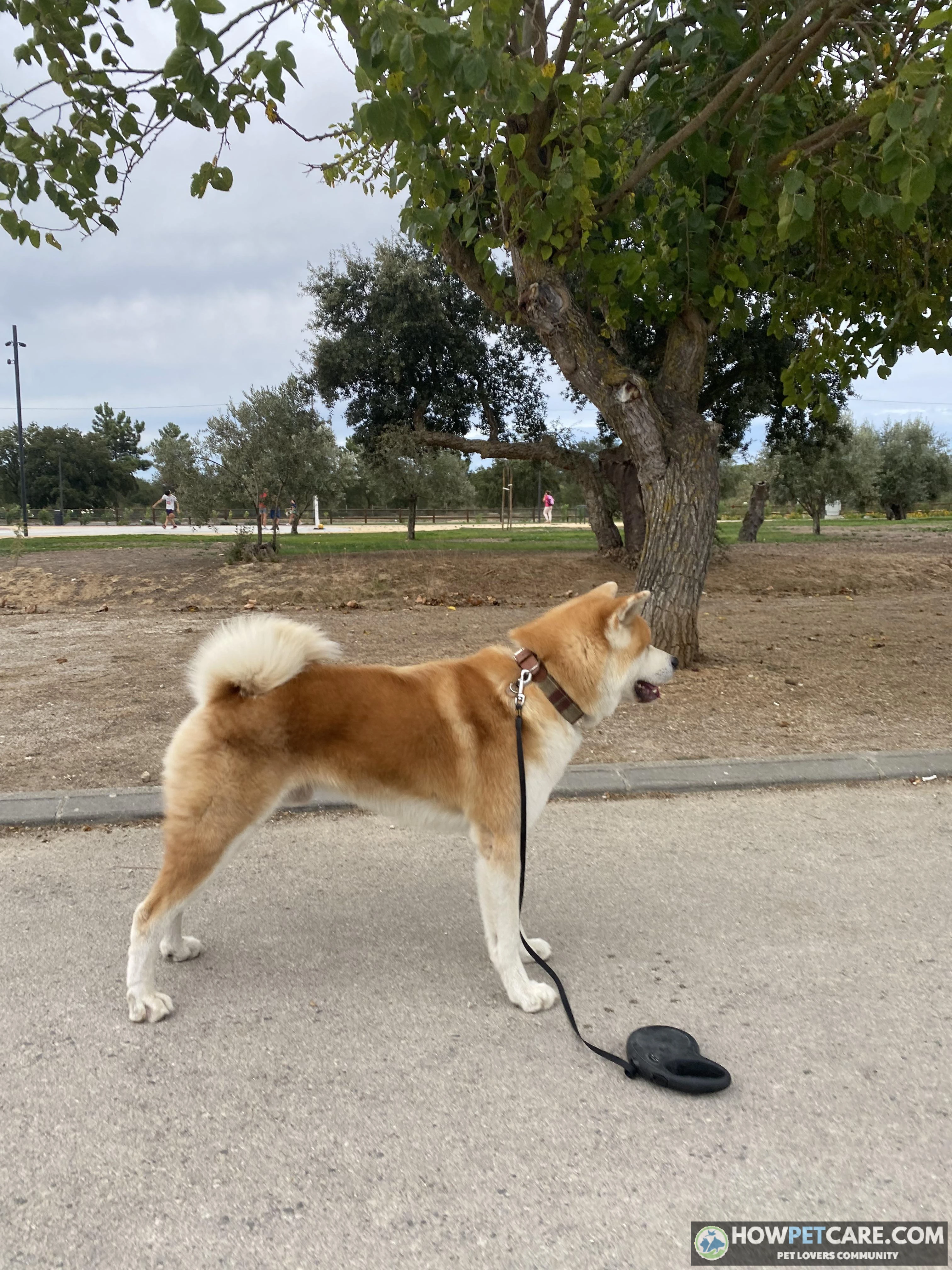
Akita puppy price by US region and what transport adds (ground transport, in-cabin flight nanny)
Puppy prices vary with regional economics. Breeders in high-overhead metropolitan centers, such as the Northeast corridor, the Pacific Northwest, and Southern California, frequently price pet puppies between $2,500 and $3,500. In the Midwest, portions of the South, or rural areas, breeders may list companion puppies between $1,800 and $2,400.
If a reputable breeder is outside your driving area, budget for professional transportation:
- Ground Transport Services: Pet transport companies run climate-controlled vans along established interstate routes, typically costing $400 to $900 depending on mileage.
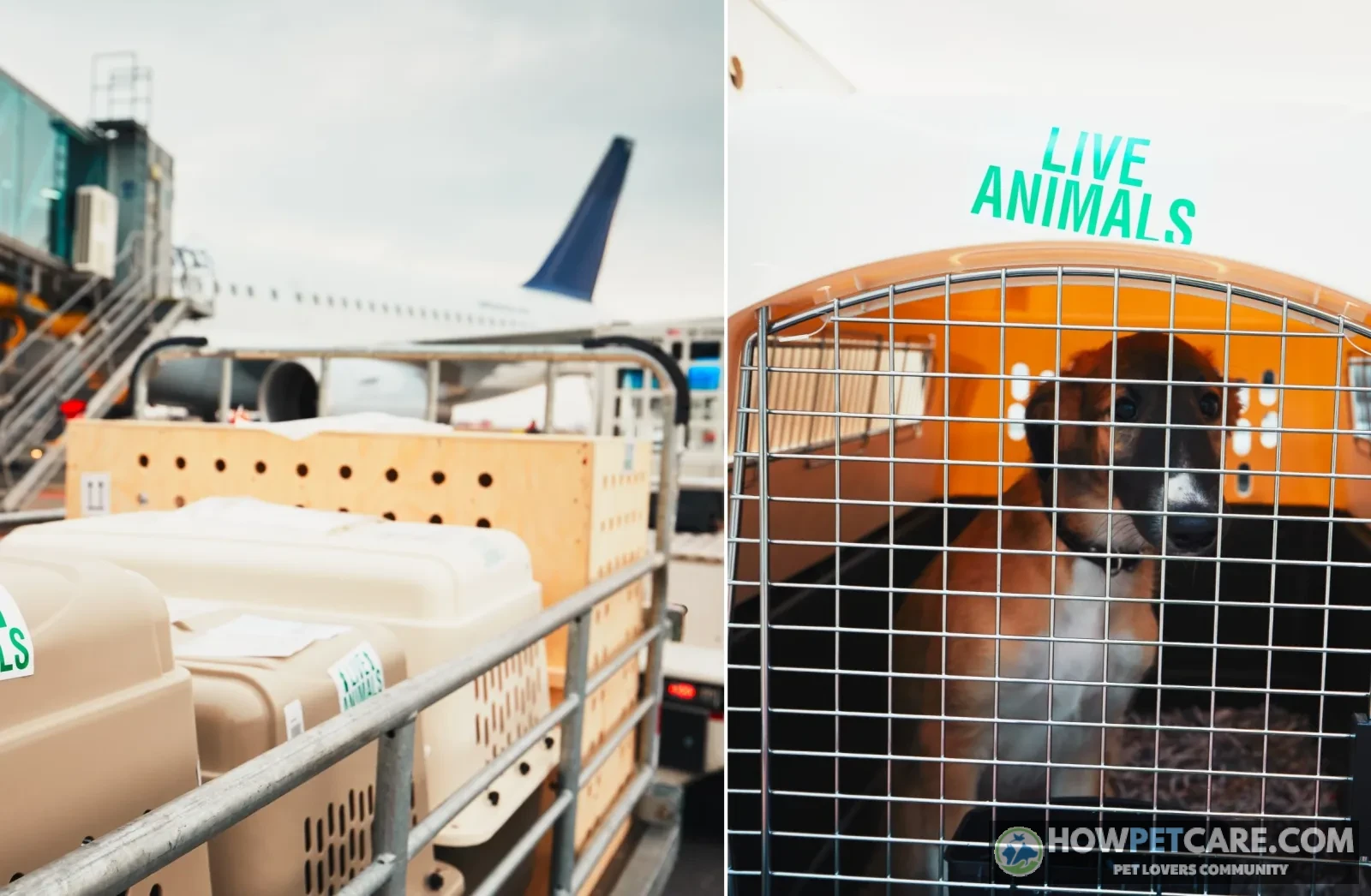
- Flight Nanny Services: A flight nanny for a puppy flying in-cabin under supervision costs between $800 and $1,800. That covers the courier fee, domestic passenger ticket, and airline pet-carry-on fee ($125–$150 each way).
- Cargo Air Shipping: Generally not recommended or permitted for brachycephalic or sensitive breeds, and increasingly restricted by major airlines for giant guardian breeds.
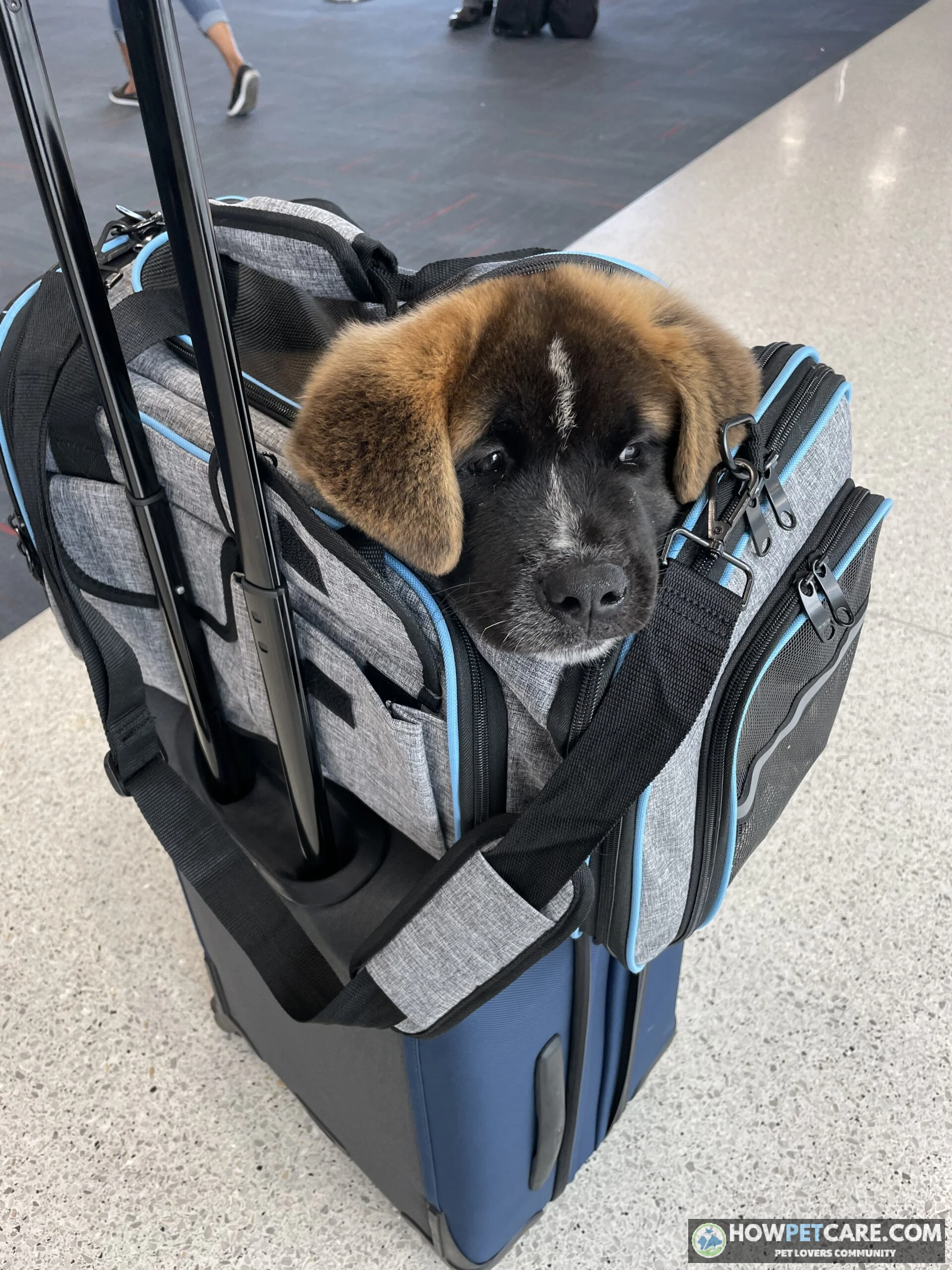
- Ground Transport Services: Pet transport companies run climate-controlled vans along established interstate routes, typically costing $400 to $900 depending on mileage.
- Flight Nanny Services: A flight nanny for a puppy flying in-cabin under supervision costs between $800 and $1,800. That covers the courier fee, domestic passenger ticket, and airline pet-carry-on fee ($125–$150 each way).
- Cargo Air Shipping: Generally not recommended or permitted for brachycephalic or sensitive breeds, and increasingly restricted by major airlines for giant guardian breeds.
,800 depending on ground service or flight nanny. (Source: apexxakitas)
Akita Adoption Fees: What Rescues Charge for Adult and Retired Dogs
Adopting through a breed-specific rescue or animal welfare shelter costs less upfront and gives an Akita a second home. Shelter listings may cite general fees, while a specialized rescue can offer important breed expertise.
Akita rescue fees by age: puppy, adult, and retired dog
Rescue fees offset veterinary care, rehabilitation, and housing for dogs in the organization’s network. They vary by age:
- Akita Puppies (under 1 year): $400 to $800. Puppies are in higher demand and need complete multi-shot vaccination protocols and spay/neuter operations.
- Adult Akitas (1 to 6 years): $250 to $500. This is the largest group entering rescues, often because of landlord restrictions, family moves, or a lack of preparation for the breed.
- Senior or Retired Dogs (7+ years): $150 to $300, with fees occasionally waived or reduced for senior adopters or dogs needing palliative care.
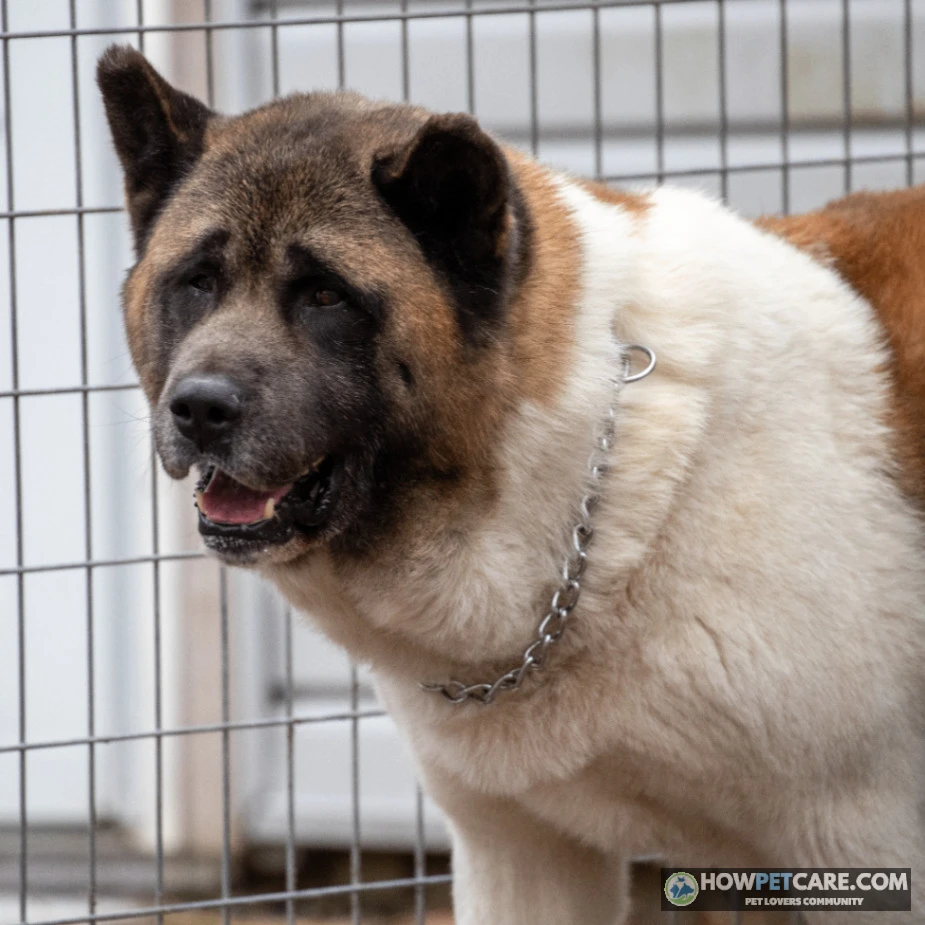
What is and is not included in the adoption fee
An adoption fee can cover substantial upfront veterinary expenses. It almost always includes:
- Full surgical spay or neuter.
- Core vaccinations (Rabies, DHPP, Bordetella).
- Heartworm screening and initial preventative treatments.
- Microchip implantation and registration transfer.
- A multi-week behavioral assessment in a foster environment.
Rescue fees don’t cover everything, though. Adopters should also budget for post-adoption expenses:
Rescue dogs frequently require specialized support: private behavioral rehabilitation for leash reactivity or containment anxiety ($500–$1,500), immediate veterinary workups for untreated chronic allergies or ear infections ($300–$600), and custom physical fencing required by rescue placement contracts.
Rescue organizations enforce strict adoption guidelines for Akitas. Expect extensive home checks, a requirement for a secure, high-walled fenced yard (often mandatory 6-foot minimum), and frequent restrictions against homes with other same-sex dogs, small pets, or very young children.
American Akita vs Japanese Akita Inu: Price and Ownership Cost Compared
US kennel registries once grouped them as one, but the American Akita and Japanese Akita Inu are distinct breeds with different builds, availability, and ownership costs.
| Cost factor | American Akita | Japanese Akita Inu | Why the difference matters |
|---|---|---|---|
| US pet-quality purchase | $1,800–$3,500 | $2,500–$5,500 | Japanese Akita Inu breeders are less common and may have smaller litters or longer waitlists |
| Show or breeding prospect | $3,500–$5,000 | $4,000–$7,500 | Bloodline, registry pathway and breeding rights can raise the premium |
| Overseas landed cost | Usually $4,000–$8,000 when imported | Commonly $5,000–$10,000 | Purchase price, export health papers, crate, airfare or shipper fees and paperwork all stack on top |
| US availability | Moderate | Limited | Waiting months is normal; unusually fast availability of an alleged import deserves scrutiny |
| Registry and paperwork | AKC Akita registration is standard for US-bred dogs | May involve JKC, FCI, UKC or AKC Foundation Stock Service documentation | Registration affects breeding rights, showing options and resale claims; it does not prove health quality by itself |
| Monthly food budget | About $80–$180 | About $60–$140 | Japanese Akita Inu are generally smaller, so food and some medication doses may cost less |
| Insurance estimate | About $50–$120 monthly for a puppy or young adult | About $60–$140 monthly | Some insurers classify the breeds differently or may not have a separate Japanese Akita Inu category |
| Emergency reserve needed | $5,000–$7,500 | $5,000–$7,500 | Both share large-breed risks such as GDV, orthopedic disease and autoimmune conditions |
The American Akita is a substantially heavier guardian dog with a broad, bear-like head, dropped mastiff-influenced muzzle, and heavy bone structure. Males routinely reach 100 to 130 pounds, while females average 70 to 100 pounds. The Japanese Akita Inu has more refined Spitz characteristics, a fox-like head plane, tight almond-shaped eyes, and lighter bone density. Males weigh 65 to 85 pounds and females average 50 to 65 pounds.
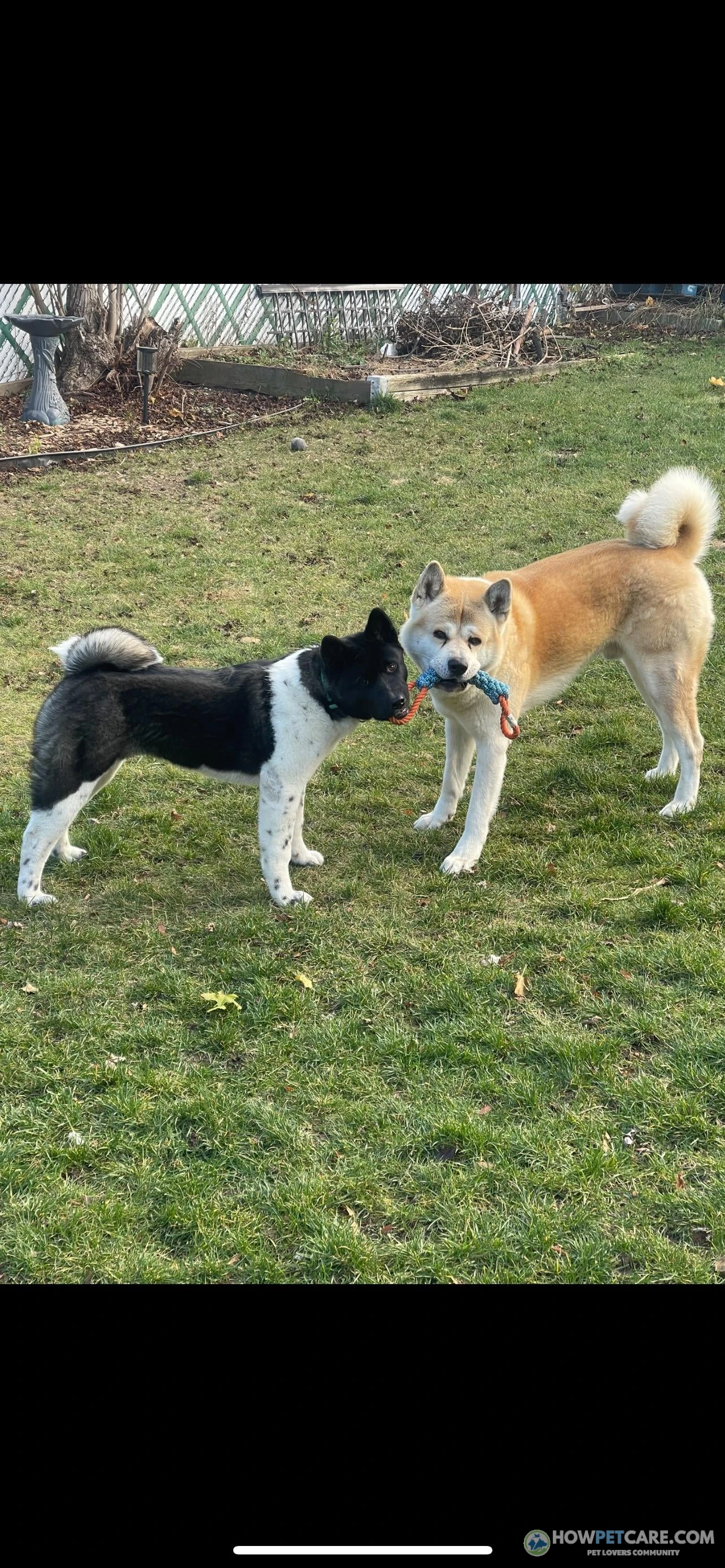
The Japanese Akita Inu import premium
A pure Japanese Akita Inu costs more in the United States primarily because the breed is scarce. A small base of domestic preservation breeders means waitlists of 6 to 18 months. Many prospective owners therefore choose to import directly from Japan or reputable European kennels.
Import expenses can quickly bring the landed cost to $5,000 to $10,000:
- Overseas Kennel Purchase Price: $2,000 to $4,500 paid to the international breeder.
- Export Pedigree & Microchipping: $200 to $400 for Japan Kennel Club (JKC) or export-certified Federation Cynologique Internationale (FCI) documentation.
- International Air Cargo & Customs Clearance: $1,800 to $3,500 for specialized international pet transport brokers, international air waybills, and customs clearing agents.
- Government Veterinary Certification: $300 to $600 for rabies titer testing, bilingual USDA-compliant health endorsements, and port-of-entry veterinary inspections.
Ongoing ownership differences
Daily costs tend to be slightly lower for the Japanese Akita Inu because of its lighter frame. An adult Japanese Akita Inu weighing 65 pounds consumes roughly 25% to 35% less food than a 120-pound American Akita, saving $30 to $50 each month on quality kibble. Prescription doses for routine preventatives (flea, tick, and heartworm) also cost less in lower weight brackets.
Both dogs share vulnerabilities to serious autoimmune conditions, including Sebaceous Adenitis (SA) and Vogt-Koyanagi-Harada-like syndrome (Uveodermatologic Syndrome), as well as progressive retinal atrophy (PRA) and hip dysplasia. Insurance carriers price both variants in higher risk tiers than average family companions.
Pay the Japanese Akita Inu premium only if the breed type, pedigree, and registry pathway genuinely matter to you. For a typical pet owner, spending an extra $1,000 to $4,000 upfront does not buy lower health risk. Those funds are better allocated toward pet insurance, professional training, and an emergency medical reserve.
First-Year Cost of an Akita Dog: Itemized Low, Average and High Budgets
First-year costs include more than the purchase price. Setup expenses, medical procedures, and management equipment all add to the bill as a puppy grows rapidly.
| First-year cost item | Lean | Typical | Premium | Notes |
|---|---|---|---|---|
| Acquisition fee or purchase price | $500 | $2,500 | $6,000 | Rescue adult at the low end; imported or Japanese Akita Inu can exceed the premium figure |
| Crate, bed, bowls, leash, harness and starter supplies | $250 | $450 | $800 | Buy an adult-size crate or one with a divider to avoid replacing it |
| Puppy vaccine series or catch-up vet care | $150 | $400 | $700 | Includes exams and core vaccines; wellness plans can alter the total |
| Spay or neuter | $0 | $600 | $1,200 | Often included in rescue fees; giant-breed private-clinic surgery can exceed $1,200 |
| Microchip and registration | $0 | $75 | $100 | Frequently bundled by rescues or breeders |
| Large-breed food | $720 | $1,080 | $1,800 | Roughly $60–$150 per month depending on food tier and adult size |
| Grooming tools or professional grooming | $75 | $200 | $500 | Coat-blowing seasons may justify several professional deshedding visits |
| Puppy classes and behavior-training fund | $150 | $600 | $2,500 | Private help for reactivity or guarding behavior raises the high end |
| Pet insurance | $360 | $720 | $1,200 | Assumes $30–$100 per month; premiums vary by location and coverage |
| Fence or yard readiness | $0 | $1,500 | $6,000 | Zero only if a secure 6-foot fence already exists; include dig barriers or gate repairs |
| License, parasite prevention and miscellaneous | $50 | $150 | $300 | Local license fees and preventive products vary |
| Estimated first-year total | $2,255 | $8,275 | $21,100 | Excludes a major emergency such as GDV or orthopedic surgery |
| Monthly equivalent | About $188 | About $690 | About $1,758 | Divide the annual figure by 12 to test it against household cash flow |

One-time setup costs vs recurring costs in year one
First-year costs are higher in part because equipment must accommodate an adult Akita’s size and strength. Flimsy puppy gear may need replacing quickly when an 80-pound eight-month-old puts it to the test.
- Heavy-Duty Crates: Skip lightweight wire crates. Mature Akitas need heavy-gauge metal wire enclosures with dual latches or reinforced aluminum crates (costing $150 to $500). Models measuring 42 to 48 inches with removable dividers let a puppy grow safely into adulthood without replacement gear.
- Orthopedic Beds: Fast-growing joints benefit from support. A high-density memory foam bed capable of handling a 120-pound frame costs $80 to $200.
- Hardware and Restraints: Heavy leather leashes, load-bearing tactical harnesses, and stainless steel non-tip food and water bowls add $100 to $180.
The timing of surgical sterilization also affects a large-breed budget. Veterinary consensus recommends delaying the spay or neuter of heavy-boned dogs like the American Akita until growth plates fully close—typically between 14 and 24 months of age. Waiting means operating on a fully grown adult dog weighing over 100 pounds. Higher anesthesia doses, longer operating times, and larger prescription packages drive costs from a standard $300 puppy rate to between $600 and $1,200.
Large breed puppy food: how much an Akita eats and what it costs per month
An Akita puppy’s diet needs careful monitoring. Regular high-density puppy kibble can trigger rapid bone growth that outpaces soft tissue and joint development, increasing the risk of structural disorders like hip dysplasia.
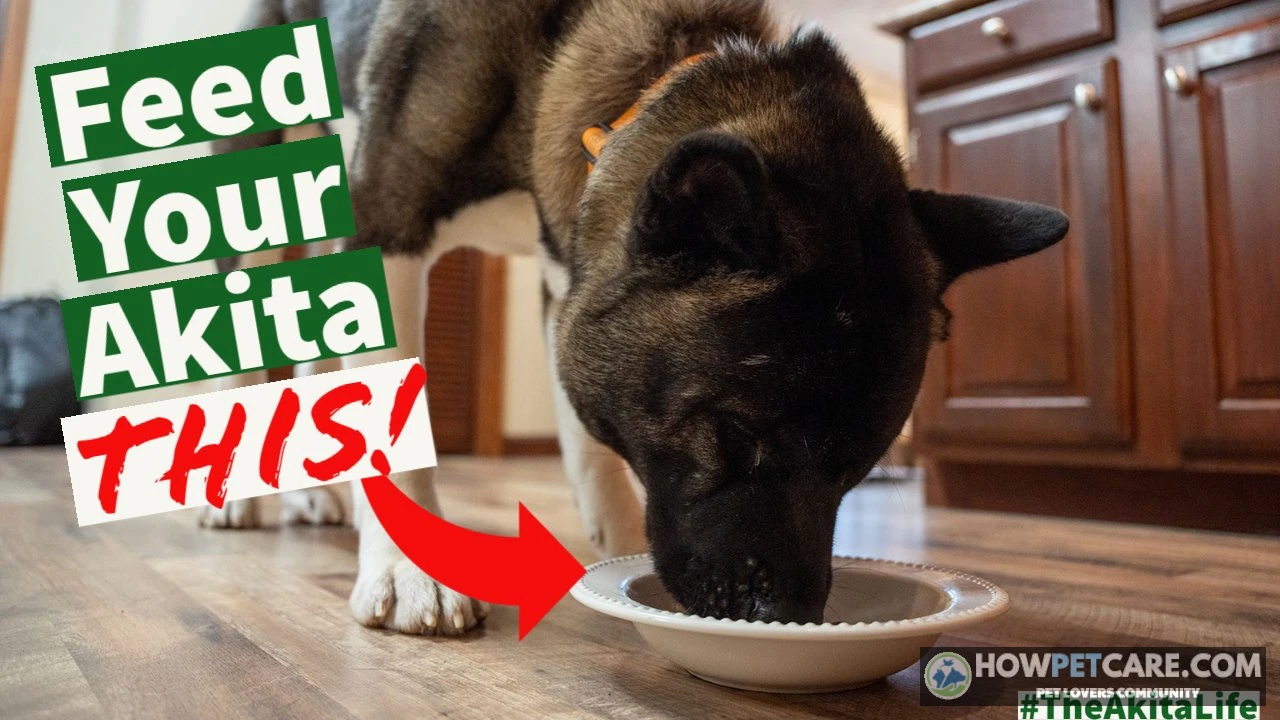
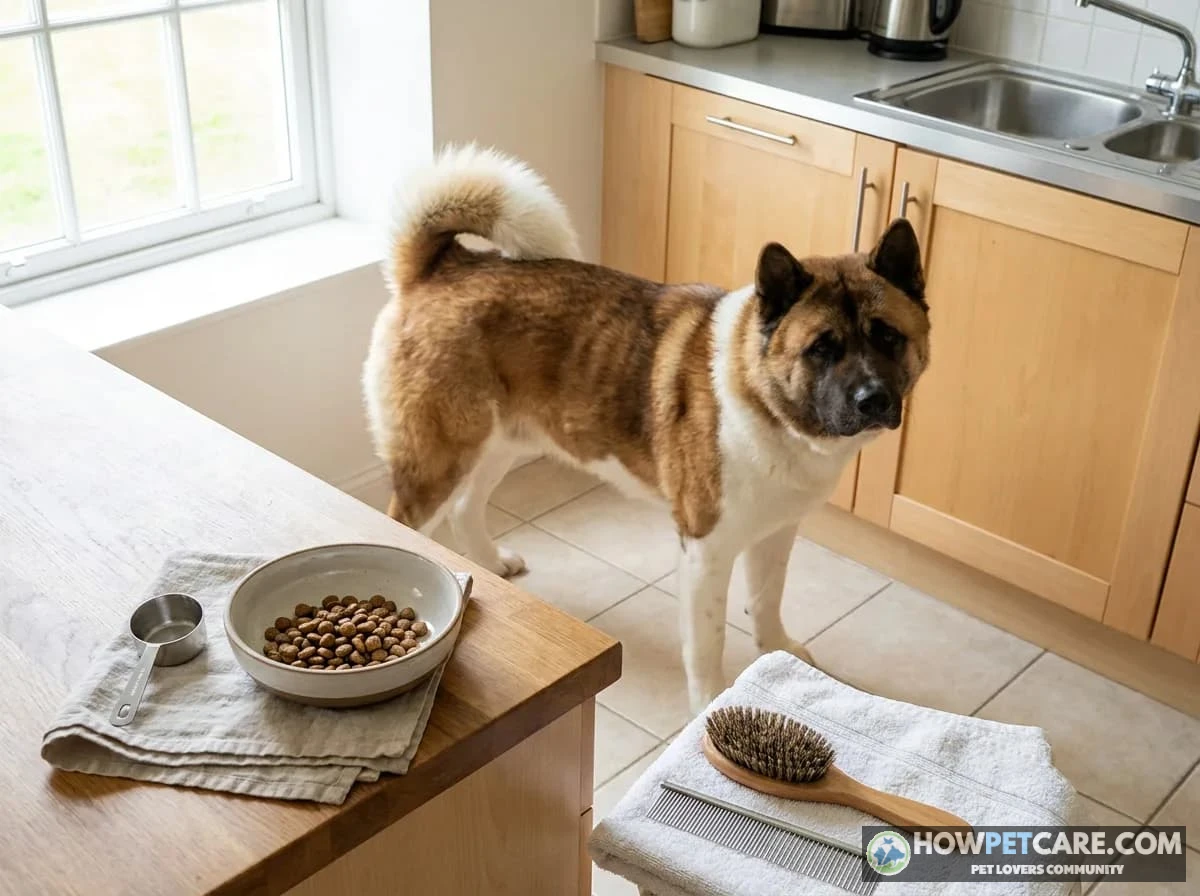
Akita owners should feed quality, age-appropriate large-breed formulations with calibrated calcium-to-phosphorus ratios (typically 1.1:1 to 1.3:1) and controlled energy density.
- 4 to 8 Months of Age: A rapidly growing American Akita puppy consumes 4 to 6 cups of premium large-breed kibble daily, going through a 30-pound bag in approximately 20 to 25 days ($80–$110 monthly).
- Adulthood (Year One onward): A mature dog consumes 3.5 to 5.5 cups daily depending on metabolic activity and gender, translating to $90 to $150 monthly for premium dry kibble.
- Fresh or Raw Regimens: High-end commercially prepared frozen raw or gently cooked meals can bring monthly food bills to $250 to $450.
Akita-Specific Hidden Costs: Bloat Surgery, Fencing, Training and Hip Problems
Generic dog budgets can leave buyers unprepared for the breed-specific bills common to Akitas. These four major scenarios can turn an affordable puppy into a five-figure financial strain.
| Breed-specific cost | Typical US price range | What drives the total | Practical planning number |
|---|---|---|---|
| Emergency bloat or GDV surgery | $2,500–$7,500+ | Overnight emergency care, X-rays, stabilization, surgery, complications and ICU monitoring | Keep at least $5,000 accessible or carry insurance before bringing the dog home |
| Preventive gastropexy | About $400–$1,200 when added to spay or neuter; roughly $800–$2,500 as a standalone procedure | Surgeon, clinic type, anesthesia and whether it is laparoscopic | Ask the vet to quote it at the same time as spay or neuter rather than treating it as an afterthought |
| 6-foot wood fence | About $25–$60 per linear foot | Terrain, gates, removal of old fencing and local labor rates | A 150-linear-foot yard can cost approximately $3,750–$9,000 |
| 6-foot chain-link fence | About $15–$35 per linear foot | Height, coating, gates and post depth | Approximately $2,250–$5,250 for 150 feet |
| 6-foot vinyl fence | About $35–$75 per linear foot | Panels, gates, labor and reinforcement | Approximately $5,250–$11,250 for 150 feet |
| Dig barrier or buried footer | About $8–$20 per linear foot | Concrete, welded wire, rocks or professional installation | Add $1,200–$3,000 to a 150-foot perimeter if the dog digs |
| Private trainer for reactivity or guarding behavior | $100–$200 per session; $500–$1,600 for a 4–8 session package | Trainer credentials, severity of the behavior and whether in-home work is needed | Reserve at least $1,000 before assuming group classes will be enough |
| Board-and-train program | $2,500–$6,000 | Program length, follow-up sessions and behavior complexity | Use only after checking methods, credentials and post-program support |
| Hip-dysplasia diagnostics and conservative care | $250–$600 for imaging; $30–$100 monthly for medication or supplements | Sedated X-rays, specialist review and medication dose | Budget $500–$1,200 for a diagnostic work-up |
| Hip surgery | About $1,500–$3,500 per hip for FHO; $4,000–$8,000 per hip for total hip replacement | Surgeon, imaging, rehabilitation and postoperative care | A bilateral orthopedic problem can become a five-figure expense |
Bloat (GDV) emergency surgery vs preventive gastropexy
An Akita’s deep, narrow chest puts the breed at high risk for Gastric Dilatation-Volvulus (bloat/GDV). In GDV, the stomach fills with gas and twists on its mesenteric axis, cutting off circulation and triggering systemic shock. Without intervention, it can cause death within hours.
Emergency GDV treatment requires fast surgical derotation, partial stomach resection if necrosis has started, splenectomy in severe cases, and multi-day intensive care monitoring. Emergency surgical center bills routinely land between $3,500 and $7,500, easily exceeding $9,000 if complications occur.
Many Akita owners choose an elective preventive gastropexy. The surgeon permanently tacks the stomach wall to the abdominal margin, preventing torsion if bloat occurs.
When scheduled concurrently with an adult spay or neuter, a preventive gastropexy typically adds just $400 to $1,200 to the bill. Performing gastropexy later as an independent, standalone surgery requires a dedicated round of anesthesia, operating facilities, and recovery time, driving costs to $1,200–$2,500. Discuss this timing with your veterinarian before your puppy’s sterilization date.
6-foot fencing for an Akita: installation costs by material
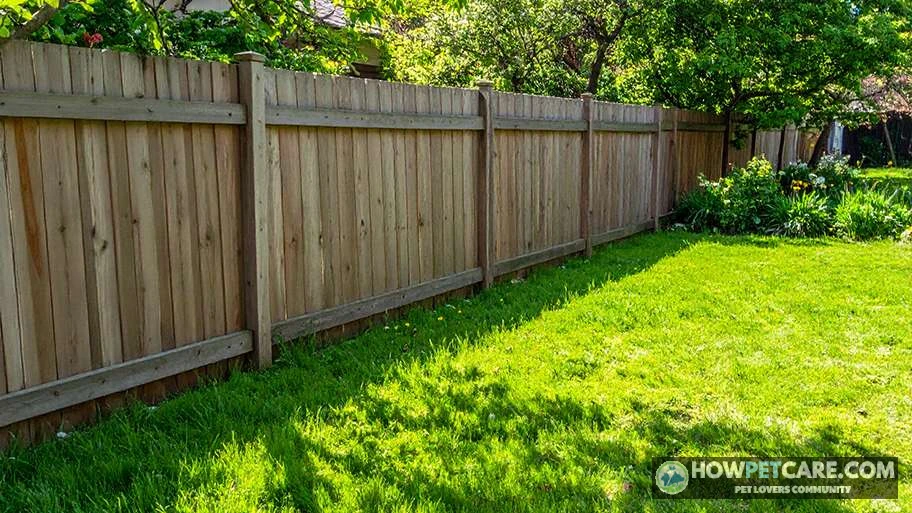
Secure property fencing is essential for Akita ownership. Akitas are territorial and protective, with strong prey instincts. Invisible underground electric fences are unsafe for this breed: an Akita may breach an electric shock line to pursue a perceived threat, and an underground fence won’t keep strange dogs or people off your property.
Most reputable rescues and breeders require a secure physical barrier at least six feet tall. Enclosing an average suburban perimeter (150 linear feet) with a 6-foot fence costs:
- Chain-Link: $2,250 to $5,250 installed ($15–$35/foot).
- Cedar/Pressure-Treated Wood: $3,750 to $9,000 installed ($25–$60/foot).
- Privacy Vinyl: $5,250 to $11,250 installed ($35–$75/foot).
Akitas can also be determined diggers when tracking small animals under a perimeter. An anti-dig footer, such as buried galvanized hardware wire or poured concrete curbing, adds $8 to $20 per linear foot ($1,200–$3,000 for a 150-foot perimeter). Padlocks for access gates add another $40 to $80 and help prevent accidental openings.
Training for same-sex aggression and guarding behavior: what trainers charge
Basic puppy obedience courses ($120–$250 for a six-week community package) are a good start. They rarely prepare owners, however, for the instinctual shifts that occur as an Akita reaches social maturity between 18 and 36 months of age. Same-sex dog intolerance, intense prey drive, and territorial wariness often require targeted behavioral intervention.
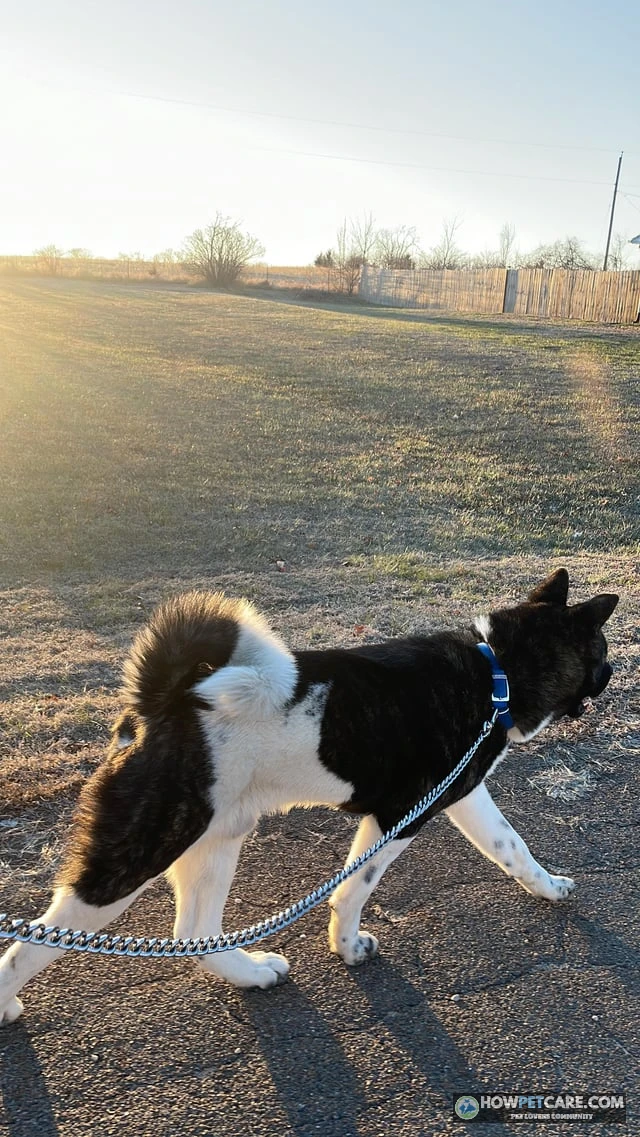
- Certified Professional Private Trainers: Certified behavior consultants charge $100 to $200 per individual hour. Resolving intense leash reactivity or barrier guarding typically requires a four- to eight-session program ($500–$1,600).
- Board-and-Train Immersion Programs: Three- to four-week comprehensive residency programs cost between $2,500 and $6,000. Make sure the trainer uses positive, force-free methods. Aversive, heavy-handed techniques can backfire with an Akita’s sensitive guardian temperament.
- Certified Professional Private Trainers: Certified behavior consultants charge $100 to $200 per individual hour. Resolving intense leash reactivity or barrier guarding typically requires a four- to eight-session program ($500–$1,600).
- Board-and-Train Immersion Programs: Three- to four-week comprehensive residency programs cost between $2,500 and $6,000. Make sure the trainer uses positive, force-free methods. Aversive, heavy-handed techniques can backfire with an Akita’s sensitive guardian temperament.
,600. (Source: reddit/r/akita)
Hip dysplasia and joint care costs
Even with health screenings by ethical breeders, the Akita’s fast growth and substantial weight leave it vulnerable to hip dysplasia, elbow dysplasia, and cranial cruciate ligament (CCL) tears.
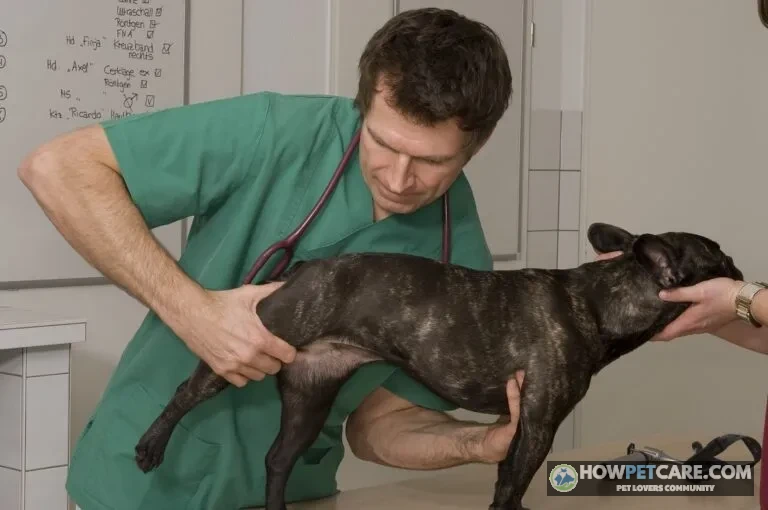
Diagnostics, including sedated multi-view radiographs and orthopedic specialist consults, run between $400 and $900. Conservative management costs $60 to $150 per month and can include daily prescription non-steroidal anti-inflammatories (NSAIDs), Adequan injections, and high-dose omega-3 joint supplements. If structural failure requires surgery, a femoral head ostectomy (FHO) costs $1,500 to $3,500 per hip, while a full total hip replacement (THR) runs $5,000 to $9,000 per joint.
Monthly Cost of Owning an Akita, Pet Insurance by Age, and Lifetime Total
After setup purchases, budget for ongoing adult care as well as veterinary reserves that change with age.
Monthly budget breakdown (Years 2 through 7)
A healthy adult American Akita in its prime needs approximately $160 to $385 each month in essential care:
- Premium Large-Breed Kibble: $80 to $160.
- Monthly Preventatives (Heartworm, Flea, and Tick): $30 to $55 (scaled to 100+ lb dosages).
- Grooming and Coat Care: $15 to $70 (DIY bathing tools vs. quarterly professional deshedding blow-outs).
- Toys, Heavy-Duty Chews, and Incidentals: $20 to $50.
- Municipal Dog Licensing and Annual Vet Prorations: $15 to $50.
Akita pet insurance premiums: puppy, adult, and senior
Medical treatment for large, heavy-set breeds is costly, making pet insurance a practical financial tool for an Akita owner. Premiums rise with the dog’s age and vary with local veterinary costs.
- Puppyhood (Under 1 Year): $45 to $85 per month for an 80% reimbursement plan with a $500 deductible.
- Adult Akita (Ages 2 to 6): $65 to $130 per month.
- Senior Akita (Ages 7 to 10+): Premiums climb to $140 to $300+ per month. Many providers restrict coverage caps or raise deductibles for senior dogs.
As policies age, insurers raise premiums to account for age-related risks, including chronic arthritis, osteosarcoma, cutaneous T-cell lymphoma, and thyroid disease.
If you decide against pet health insurance, set up a dedicated, untouchable high-yield savings account on day one. Deposit $100 to $150 monthly until you reach a balance of at least $6,000 to cover emergency bloat, orthopedic surgeries, or critical care needs.
Senior Akita costs: what changes after age 7
An Akita officially enters its senior life stage around age seven. The dog’s final three to six years typically bring higher annual costs than the adult baseline:
- Semi-Annual Senior Blood Panels: Full geriatric chemistry screens, urinalysis, and thyroid monitoring cost $250 to $450 twice per year.
- Prescription Mobility Support: Managing degenerative joint disease with daily Galliprant, Gabapentin, or monthly Librela injections costs $80 to $180 every month.
- End-of-Life Care: Palliative care, in-home euthanasia services, and private individual cremation run between $350 and $800.
Lifetime total ownership cost (10- to 13-year projection)
| Lifetime Cost Scenario | Low-Spend Profile | Average Typical Profile | Premium High-Spend Profile |
|---|---|---|---|
| First-year costs | $2,255 | $8,275 | $21,100 |
| Adult years (Ages 2–7; 6 years) | $10,800 ($150/mo) | $17,280 ($240/mo) | $28,800 ($400/mo) |
| Senior years (Ages 8–11; 4 years) | $9,600 ($200/mo) | $15,360 ($320/mo) | $26,400 ($550/mo) |
| Unplanned medical contingencies | $1,500 | $4,500 | $10,000 |
| Total Estimated Lifetime Cost | $24,155 | $45,415 | $86,300 |
Assumptions: Lean profile assumes adoption, DIY grooming, low medical incidence, and existing fencing. Typical profile assumes pet-quality breeder purchase, steady insurance coverage, basic professional training, and balanced senior care. Premium profile includes imported stock, full yard fencing installation, board-and-train support, and comprehensive emergency medical management.
Why Cheap Akita Puppies Are a Red Flag: Price Thresholds and Scam Signs
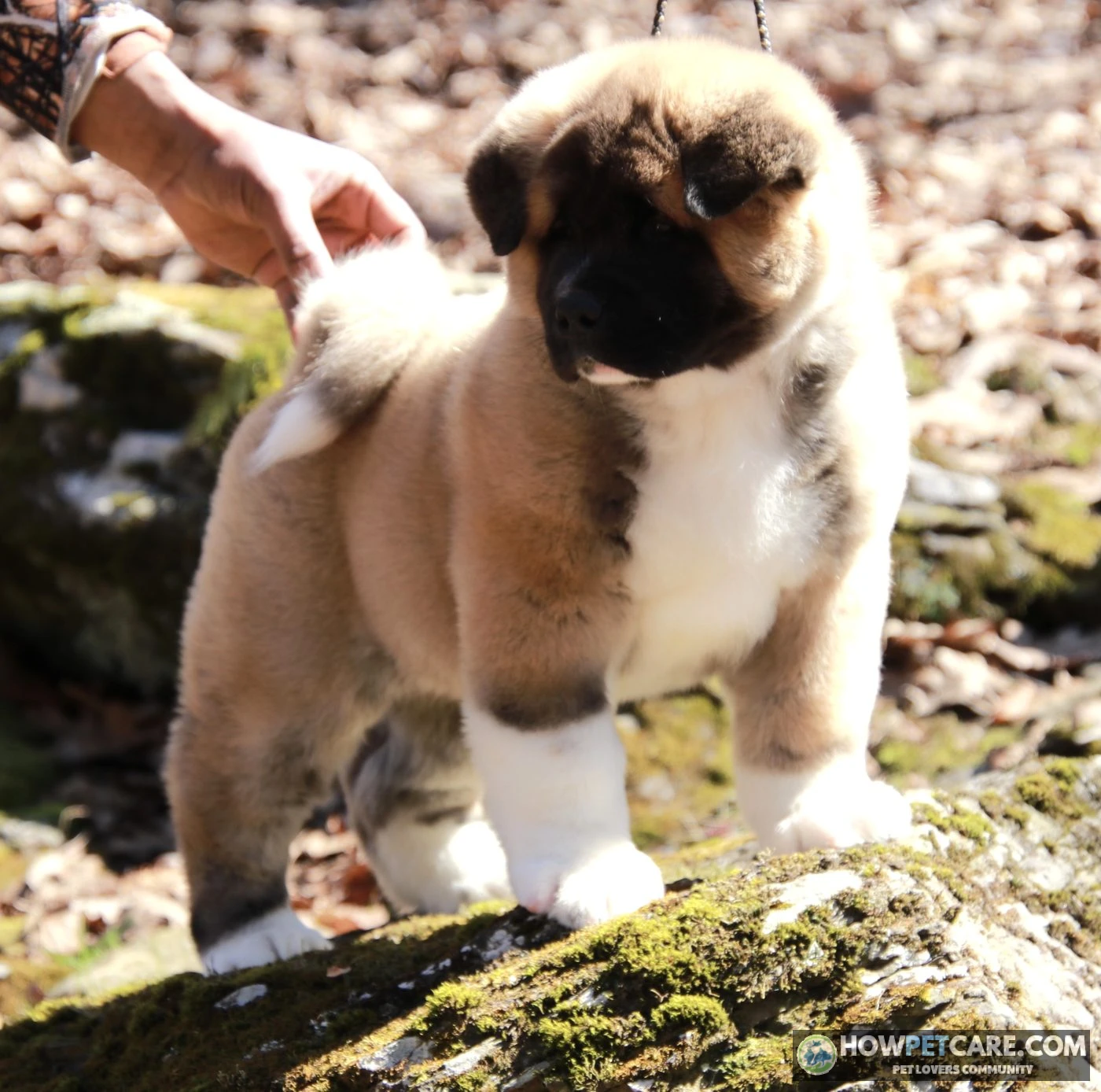
Purebred Akita puppies listed online for $500 to $1,000 can be tempting. But a price below the actual cost of ethical breeding usually points to a backyard operation, high-volume puppy mill, or outright wire fraud.
Price-threshold rules of thumb for Akita listings
- Under $1,000: Almost certainly an online puppy scam or an abusive commercial breeding facility. Parent dogs are rarely screened for hereditary disease, early socialization is neglected, and health guarantees are often unenforceable.
- $1,000 to $1,500: Backyard breeders cutting critical corners. The puppy might exist, but the parents rarely have completed OFA hip, elbow, and eye certifications. The risk of early orthopedic breakdown and thyroid conditions is high.
- $1,800 to $3,500: The legitimate baseline for a structurally sound, pet-quality companion from a preservation breeder adhering to parent-club health testing requirements.
- $5,500+ with "Rare" Labels: Be wary of backyard breeders charging $4,000 to $6,000 for non-standard "all-white," "extreme blue," or "giant-sized woolly" Akitas. Responsible breeders price litters based on pedigree depth and health clearances, not cosmetic fads.
Red flags in online Akita listings
Watch for these warning signs when researching listings:
- Digital Escrow and Untraceable Payments: The seller insists on payment via Zelle, Venmo, Western Union, cash cards, or cryptocurrency.
- No Direct Parent Interaction: The seller refuses an in-person kennel visit or a live video call showing the mother nursing the puppies.
- Stock or Reused Visuals: Reverse-image searches reveal that puppy photos were copied from social media accounts or established show kennel galleries.
- "Shipping Only" Constraints: The seller claims personal pick-up is unavailable due to "quarantine safety," then makes last-minute demands for specialized "temperature-controlled thermal crate" delivery fees.
- Universal Availability: A breeder always has multiple litters ready to ship immediately and offers several unrelated breeds at the same time.
- Digital Escrow and Untraceable Payments: The seller insists on payment via Zelle, Venmo, Western Union, cash cards, or cryptocurrency.
- No Direct Parent Interaction: The seller refuses an in-person kennel visit or a live video call showing the mother nursing the puppies.
- Stock or Reused Visuals: Reverse-image searches reveal that puppy photos were copied from social media accounts or established show kennel galleries.
- "Shipping Only" Constraints: The seller claims personal pick-up is unavailable due to "quarantine safety," then makes last-minute demands for specialized "temperature-controlled thermal crate" delivery fees.
- Universal Availability: A breeder always has multiple litters ready to ship immediately and offers several unrelated breeds at the same time.
,000 often signal scams or unscreened commercial breeding. (Source: apexxakitas)
What a reputable Akita breeder provides
A preservation Akita breeder should be open and thorough throughout the screening process:
Expect a transparent paper trail: open OFA or CHIC certification records for both parents on the public database, an itemized contract with health guarantees, and a mandatory clause requiring the dog to return to the breeder if you can no longer care for it.
Your Akita Budget Checklist: Decide Your Route and Confirm You Can Afford It
Bringing an Akita home calls for an honest assessment of your finances and living situation. Use this framework to choose a route and check your budget before paying a deposit.
Which route fits your budget and experience
- The Breed-Specific Rescue Path: Best for experienced dog owners who want to bypass early puppy development, can handle unknown adult genetics, and have a secure fenced yard. Budget: $400 to $700 upfront, with $2,000 reserved for behavior and medical needs.
- The Reputable American Akita Breeder Path: Best for families seeking predictable structural health and early environmental exposure from certified working or conformation bloodlines. Budget: $2,000 to $3,500 purchase price, plus $6,000 to $8,000 in first-year setup costs.
- The Japanese Akita Inu Preservation Path: Best for experienced Spitz enthusiasts who want classic physical conformation and are prepared for long breeder waitlists and higher import fees. Budget: $3,000 to $6,000 upfront, with $6,000+ for transport and early care.
Pre-purchase budgeting checklist
Review this checklist to make sure you’re financially prepared:
-
Establish your primary acquisition cap
Set your target upfront cost: $150 to $700 for adoption, $1,800 to $3,500 for a companion American Akita, or $2,500 to $6,000+ for an import or Japanese line.
-
Inspect your property's perimeter fencing
Confirm your property has a secure 6-foot physical fence with functional latches. If you need new fencing, obtain written quotes ($2,500–$8,000+) before putting down a puppy deposit.
-
Fund your baseline emergency medical reserve
Set aside an emergency fund of $5,000 to $7,500 for unexpected bloat (GDV) or orthopedic surgeries, or establish an insurance policy with clear coverage caps.
-
Audit monthly household cash flow
Make sure your monthly budget can comfortably absorb $150 to $350 in ongoing expenses for large-breed food, preventive medications, grooming, and insurance.
-
Set up your behavior training fund
Reserve $500 to $1,500 for private training sessions to address instinctual same-sex aggression and guardian reactivity during the transition to social maturity.
Questions to ask a breeder or rescue before paying a deposit
Before transferring funds or signing a contract, get clear written answers to these questions:
- What is the total purchase or adoption price, and what specific vaccines, microchips, and health exams are included?
- Can you provide the registered names or OFA certification numbers for both parents to verify their hip, elbow, thyroid, and eye clearances?
- What specific congenital and hereditary conditions are covered under your health warranty, and for how long?
- What is your return policy if life circumstances prevent me from keeping this dog at any point in its life?
- (For rescues) What specific behavior patterns has this dog shown around strange humans, other dogs, and small animals during foster care?
If you have a secure yard, stable household cash flow, and an emergency medical reserve in place, contact two or three recognized breed-club rescues or preservation breeders. Request their current placement timelines and begin the application process.
1Why do show- or breeding-quality Akita puppies cost significantly more than pet-quality puppies from the same litter?
Show prospects closely adhere to official AKC conformation standards regarding bone density, head planes, and overall presence, granting them full registration and breeding rights.
2Why do veterinary experts recommend delaying the spay or neuter procedure for American Akitas until 14 to 24 months of age?
Delaying surgical sterilization until 14 to 24 months ensures joint cartilage and skeletal growth plates reach full closure in heavy-boned breeds.
3How does the physical build of an adult male Japanese Akita Inu typically compare to an adult male American Akita?
American Akitas are substantially heavier guardian dogs with broad bear-like heads, while Japanese Akita Inus exhibit lighter bone structures and fox-like Spitz traits.
4What is a primary safety limitation of using an invisible underground electric fence for an Akita?
Akitas possess strong guarding instincts and high prey drive that can override electric shocks, while underground wires fail to prevent strange animals or people from entering.
5Which anatomical characteristic puts the Akita breed at a high risk for Gastric Dilatation-Volvulus (GDV or bloat)?
A deep, narrow chest creates space for the stomach to fill with gas and twist on its mesenteric axis, causing life-threatening GDV.
6How does scheduling an elective preventive gastropexy concurrently with a spay or neuter surgery affect overall costs?
Combining preventive gastropexy with sterilization allows the surgeon to utilize a single round of facility setup, operating time, and anesthesia.
7According to industry price thresholds, why should an advertised Akita puppy price under 1,000 be treated as a major red flag?
Producing a healthy Akita litter involves significant breeding and health-testing expenses, making prices under 1,000 a signal of unvetted commercial sources or wire fraud.
8What dietary consideration is critical when feeding a growing Akita puppy to reduce the risk of joint disorders like hip dysplasia?
Large-breed puppy diets contain balanced calcium-to-phosphorus ratios and controlled energy density to promote steady, safe skeletal development without overloading soft tissue.
9At what age range do Akitas typically reach social maturity, during which instinctual traits like same-sex aggression and guardian reactivity often surface?
Social maturity in Akitas occurs between 18 and 36 months, which is when instinctual guarding behaviors and same-sex dog intolerance typically peak.
10What added financial factor contributes to the higher overall landed cost (5,000–10,000) when importing a Japanese Akita Inu from overseas?
Landed import expenses stack international flight cargo, export paperwork, customs clearance brokers, and official government health certifications on top of the kennel purchase price.
| Acquisition Route | Typical Upfront Price | Health Testing and Paperwork Included | What the Price Does Not Guarantee | True-Risk Note |
|---|---|---|---|---|
| Reputable breeder — American Akita | 1,800–3,500 pet quality; 3,500–5,000 show or breeding quality | OFA or equivalent hip, elbow, thyroid and eye results for parents; pedigree; AKC registration; vaccinations; microchip; written contract | Adult temperament, freedom from orthopedic problems, or a bloat-proof dog | Highest upfront cost, but usually the lowest risk of buying a sick or poorly socialized puppy |
| Backyard breeder | 800–1,500 | Often only a vet check and first shots; pedigree or verifiable parent testing may be absent | Genetic health, stable temperament, a return contract, or accurate lineage | A $1,000 saving can disappear quickly if hip surgery, thyroid care or behavior training is needed |
| Online marketplace or broker | 1,200–3,000 advertised, plus 400–1,500 delivery | Commonly limited to claimed vaccination records; health-test claims are difficult to verify | Direct access to the breeder, a facility visit, or proof that the listed puppy exists | Highest scam and puppy-mill exposure; treat a price under $1,500 as a warning sign |
| Akita rescue or shelter | 150–700; puppies may run 400–800 | Usually spay or neuter, vaccines, microchip and a basic behavior assessment | Complete genetic history, early-socialization details, or a health guarantee | Lowest acquisition cost, but may require a secure fence, training budget and experience with guarding behavior |
| Japanese Akita Inu breeder or import | 2,500–5,500 US-bred; approximately 5,000–10,000 landed from overseas | Export pedigree, rabies documentation, health certificate, transport arrangements and registry papers; parent testing varies by country | Automatic AKC breeding rights or identical US health-testing standards | Most expensive route; confirm registry status, importer reputation, quarantine or paperwork requirements and return terms before paying |
FAQ
How do I find a reputable Akita breeder?
Start with the Akita Club of America breeder referral and the AKC Marketplace, then ask for health test results for both parents (hips, thyroid, eyes) and a written contract. A good breeder asks you questions too, offers a visit or video call, and takes the dog back if you cannot keep it.
Can I save money by buying an Akita puppy without AKC papers?
You may pay several hundred to over a thousand dollars less, but you usually lose verified pedigree and health testing. That tends to cost more later in vet bills and behavior problems, so a lower price without papers is rarely a real saving.
Do Akita breeders require a deposit, and is it refundable?
Most reputable breeders take a deposit to hold a spot on the waitlist, and the terms vary. Get the deposit amount, what it applies to, and the refund conditions in writing before paying.
How long do Akitas live, and how does that affect lifetime cost?
Akitas typically live about 10 to 13 years. Each extra year adds a full year of food, care, and insurance, and senior years usually cost more because of higher premiums and more vet visits.
Are Akitas expensive to own compared with other large breeds?
Their food and routine care costs are similar to other large breeds, but breed-specific risks add to the budget. These include bloat, orthopedic problems, secure fencing, and training for same-sex aggression and guarding behavior.