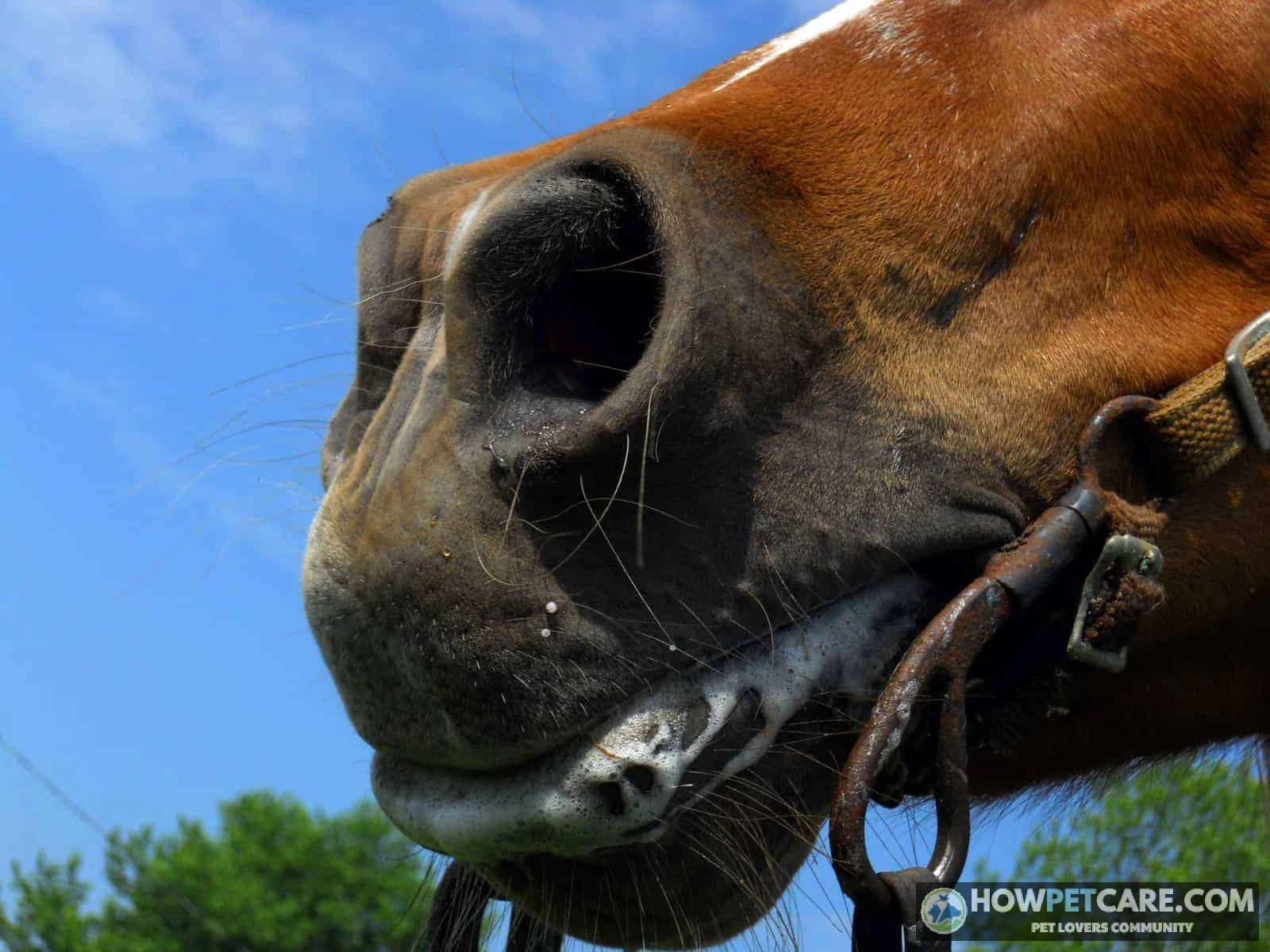

Call an emergency vet now if your horse has labored breathing at rest, flared nostrils, open-mouth breathing, blue or gray gums, collapse, or heavy nosebleeds. Call the vet today for fever above 101.5°F, thick colored discharge, or a persistent cough. Otherwise, monitor and book a routine visit.
If your horse is coughing, breathing hard, or has nasal discharge, you need to know whether to call an emergency vet, arrange a same-day visit, or monitor the signs. This guide walks owners and barn managers through triage and stable management without prescribing drugs or doses.
If you aren’t sure which tier below fits your horse, treat it one level higher. A phone call costs nothing compared to a missed respiratory emergency.
Is Your Horse’s Breathing Problem an Emergency? Triage Before You Read Further
Perhaps your horse is standing with flared nostrils, coughing at every bite of hay, or has thick yellow discharge. Start with this table. It helps you decide whether to call an emergency vet now, call the vet today, or monitor and book a routine visit. Horses are obligate nasal breathers, meaning they cannot breathe effectively through their mouths, so open-mouth breathing is a true emergency.
| What you see | Urgency | Why it matters | What to do now |
|---|---|---|---|
| Hard work to breathe at rest: flared nostrils, belly push (dyspnea) | Call an emergency vet now | The horse cannot get enough air | Stop work, move to fresh air, keep calm, call |
| Blue/gray gums; open-mouth breathing; neck stretched, unwilling to move | Call an emergency vet now | Severe oxygen shortage or airway blockage | Do not force walking; call and describe gum color |
| Collapse; heavy bleeding from one or both nostrils | Call an emergency vet now | Could be cardiac, neurologic, or severe airway failure; guttural pouch bleeding can recur | Keep quiet and standing; do not let head lower; call |
| Feed/saliva from nostrils, neck stretching, retching | Call the vet now — choke | Feed lodged in esophagus; inhaled feed can cause pneumonia | Remove feed and water; do not flush; call |
| Fever above 101.5°F (38.6°C) with depression or fast breathing | Call the vet today | Fever with respiratory signs suggests flu, EHV, strangles, or pneumonia | Record temperature; isolate; call for same-day visit |
| Thick yellow/green/foul nasal discharge; swollen glands under jaw | Call the vet today | Suggests bacterial infection, especially strangles | Isolate horse and equipment now |
| New cough >1–2 days, off feed, resting breathing rate >16–20/min | Call the vet today | Needs diagnosis, not waiting | Record rate and temp twice daily |
| Occasional cough at start of exercise or while eating; clear discharge; bright, normal temp | Monitor — book routine | Early equine asthma or dust irritation | Log timing; count breathing rate; book routine visit |
Call an emergency vet now
Call if your horse has labored breathing at rest with flared nostrils, a heave-like belly push, open-mouth breathing, or blue or gray gums. A horse stretched out and unwilling to move, a collapse, or heavy nosebleeds also calls for emergency care. Don’t medicate or ride; if the horse is bleeding from the nose, keep its head up and keep it quiet.
Call the vet today
Signs that warrant a same-day call include fever above 101.5°F (38.6°C) with cough or discharge, thick colored discharge, swollen jaw glands, a cough lasting more than a day or two, going off feed, or a resting breathing rate staying above 16–20 per minute. These signs often point to strangles, influenza, EHV, or bacterial pneumonia. Start isolation.
Monitor and schedule a routine visit
A routine appointment is usually appropriate for an occasional cough at the start of work or while eating, or a small amount of clear discharge in a bright horse with a normal temperature and no appetite change. These patterns often reflect early equine asthma or dust irritation.
How to check breathing rate and temperature correctly
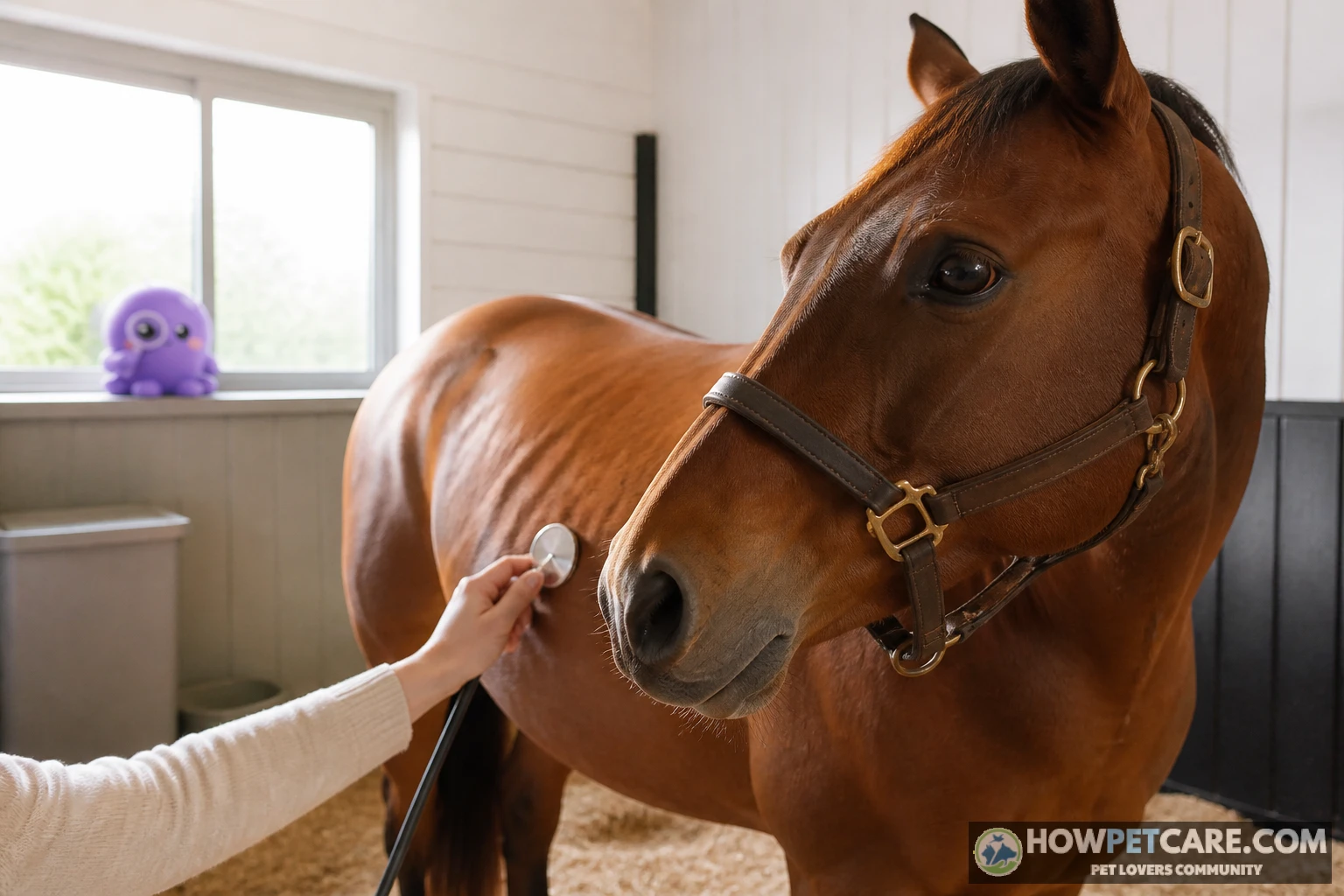
Take three numbers in two minutes. Watch the flank rise and fall for 30 seconds and double it. A healthy adult at rest takes roughly 8–16 breaths per minute, with many references citing about 10–15. Hold a lubricated digital thermometer against the rectal wall until it beeps; normal is about 99–101°F (37.2–38.3°C). A reading at or above 101.5°F (38.6°C) is a fever. Resting heart rate is about 28–44 beats per minute. Give the vet numbers, not impressions. Keep the horse in fresh air, away from dust and separated from others. Don’t give medication unless the vet says so.
If you’d like to listen while you walk the barn, use the audio overview.
Signs of Respiratory Problems in Horses: What You See at Rest and Under Saddle
Respiratory disease is the second most common cause of lost training days and poor performance in sport horses, behind only musculoskeletal problems. Even a single cough is worth investigating.
Signs at rest
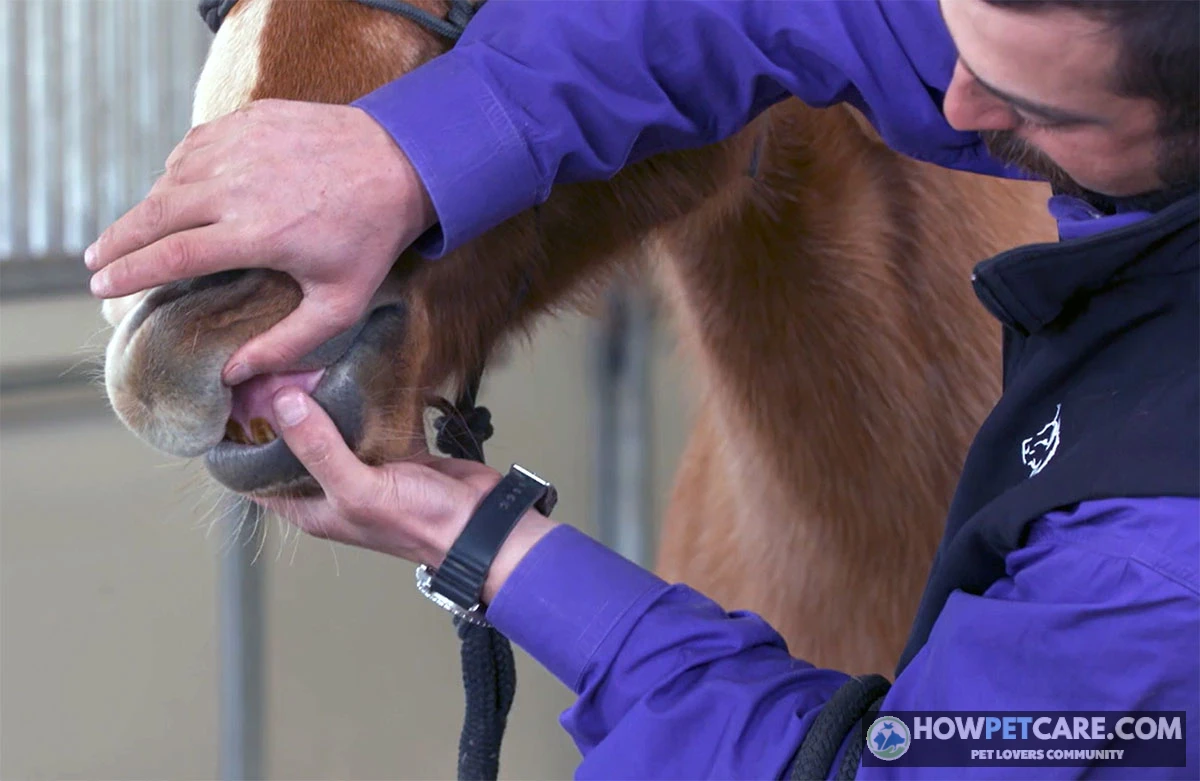
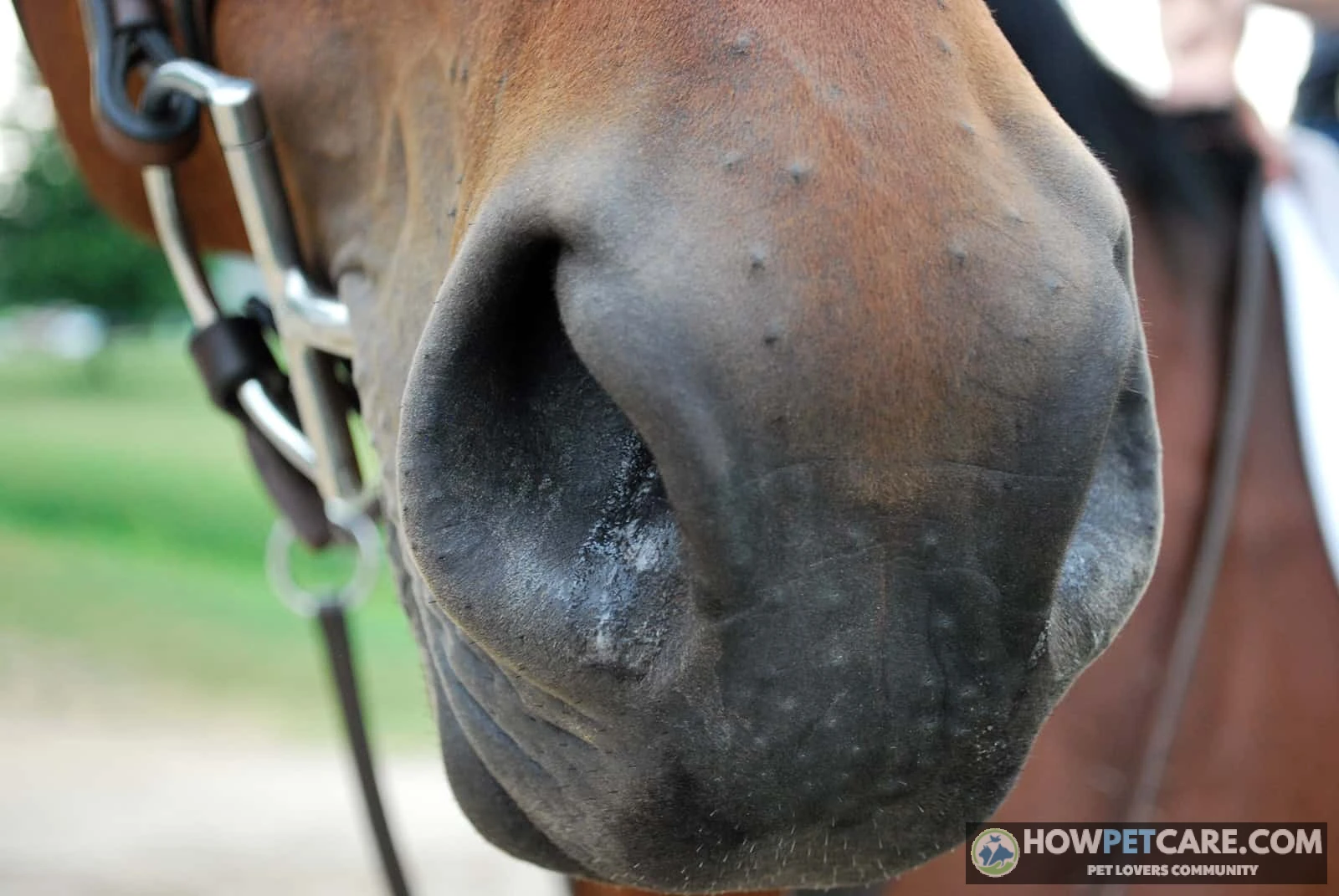
Look for a dry or moist cough, and note when it occurs. Other signs include nasal discharge, fast or effortful breathing, flared nostrils, a visible abdominal ‘heave line,’ fever, low energy, reduced appetite, and swollen lymph nodes. Clear, watery discharge after exercise or on a cold morning can be normal; thick, yellow, green, foul-smelling, or bloody discharge is not. Discharge from one nostril can point to a sinus, guttural pouch, or dental issue. Discharge from both more often reflects lower-airway disease, but it’s only a clue.
Dyspnea means difficult breathing; tachypnea means fast breathing; pyrexia is fever. A heave line is the abdominal ridge that develops when a horse must push harder to exhale, classically seen in severe equine asthma. An exam at the stall can narrow the list of possibilities, but it cannot name the disease.
Signs that appear only during exercise
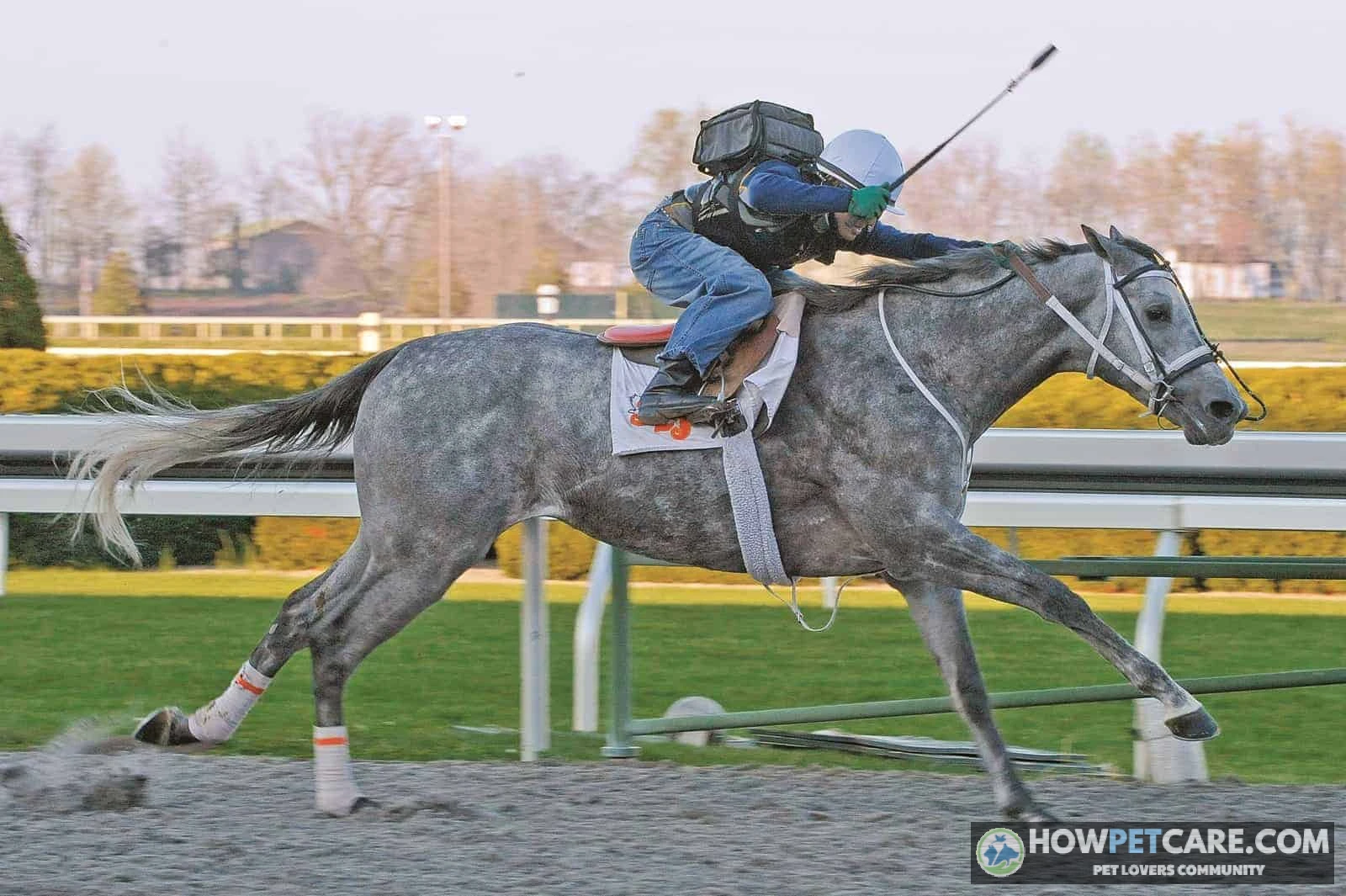
Some horses are quiet in the stall but roar, whistle, or cough under saddle. Watch for abnormal noise, a drop in performance, a long recovery after work, or nosebleeds after intense exertion. Dynamic upper-airway collapse, in which the airway narrows during work, includes conditions such as laryngeal hemiplegia (‘roaring’) and displaced soft palate. It affects an estimated 10–20% of sport horses. EIPH, or exercise-induced pulmonary hemorrhage, is bleeding in the lungs during hard work. It can affect up to 95% of Thoroughbred racehorses and up to 87% of Standardbreds, though many cases show no visible blood.
Nasal discharge: what the color and side can suggest
Clear, watery discharge after work or in cold air is often normal. Thick, colored, or foul-smelling discharge points to infection. Discharge from one nostril can mean a sinus, guttural pouch, or dental problem. Blood after hard work can come from EIPH; blood at rest, especially heavy bleeding, can come from the guttural pouch or lungs and needs urgent assessment. A foul odor can signal a guttural pouch infection or sinus abscess. Treat discharge as a clue, not a diagnosis.
 You might be wonderingCastrated male horseCastrated Male Horse: It’s a Gelding — Age, Cost and RecoveryRead the answer
Infectious or Non-Infectious? A Symptom-to-Cause Comparison for Equine Respiratory Disease
Start with the horse’s temperature and recent history. A fever, several sick horses, recent travel or a new arrival may point toward infection. A cough that’s worse in a dusty barn and better at pasture suggests an environmental cause, while signs that appear only under saddle may point to an exercise-linked upper-airway problem.
| Condition | Infectious? | Fever | Cough and discharge | Typical trigger | Exercise link | Contagious? | Urgency |
|---|---|---|---|---|---|---|---|
| Strangles (Streptococcus equi) | Yes | Usually yes, often first sign | Thick yellow discharge; swollen/painful jaw glands may abscess | New arrivals, shows, shared gear | Sick horses should rest | Yes — isolate immediately | Call vet today; isolate now |
| Equine influenza | Yes | Sudden high fever | Dry, harsh cough; watery discharge | Travel, events | No work until cleared; airways take weeks to heal | Yes — isolate and check temps | Call vet today |
| Equine herpesvirus (EHV) | Yes; reportable in some areas | Often yes | Mild cough, clear-to-white discharge | Shows, sales, breeding sheds | No work during illness | Yes — risk to pregnant mares and neurologic cases | Call vet today; tell barn manager |
| Bacterial pneumonia/pleuropneumonia | Sometimes (after stress, travel, viral infection) | Yes, with depression | Moist cough, colored discharge, painful rapid breathing | Transport, anesthesia, choke, viral illness | Strict rest | Isolate until diagnosed | Call vet today |
| Severe equine asthma (heaves, RAO) | No | No — key clue | Chronic cough, mucus, breathing effort at rest, heave line | Dusty hay, closed barn, poor ventilation | Poor performance, long recovery | No | Call during a flare; routine otherwise |
| Mild-to-moderate equine asthma (IAD) | No | No | Occasional cough, especially at start of work; little discharge | Dusty hay, bedding, arena, poor ventilation | Early fatigue, below-par performance | No | Routine visit |
| EIPH (bleeding in lungs during hard work) | No | No | No cough at rest; blood from nostrils after galloping | Maximal exertion | Defining feature | No | Vet before next hard work; emergency if heavy |
| Upper-airway disorders (roaring, DDSP) | No | No | No cough/discharge; whistling/roaring during exercise | Increasing fitness | Noise + performance drop at work; normal at rest | No | Routine visit; ask about dynamic endoscopy |
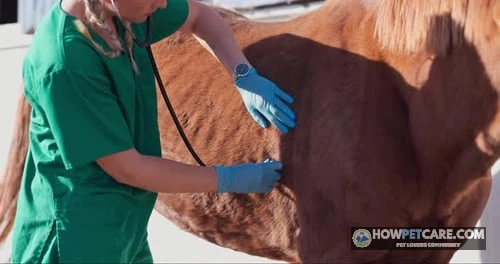
Quick read: fever and multiple sick horses suggest infection, so isolate first. A normal temperature and chronic cough tied to dust suggest equine asthma. A horse that’s fine at rest but noisy or bleeding under saddle may have an upper-airway problem or EIPH.
Clues that point to infection
Fever is the strongest clue. Infectious respiratory disease usually arrives suddenly, may affect more than one horse, and can follow travel or a new arrival. Strangles spreads through respiratory droplets, pus, and shared gear; some horses become persistent carriers when bacteria remain in the guttural pouch as hardened masses called chondroids. Antibiotics are not usually used for uncomplicated strangles because they can delay abscess rupture and prolong illness. Equine influenza causes sudden high fever and a harsh cough that spreads fast. EHV can look mild but is dangerous to pregnant mares and can rarely cause neurologic disease.
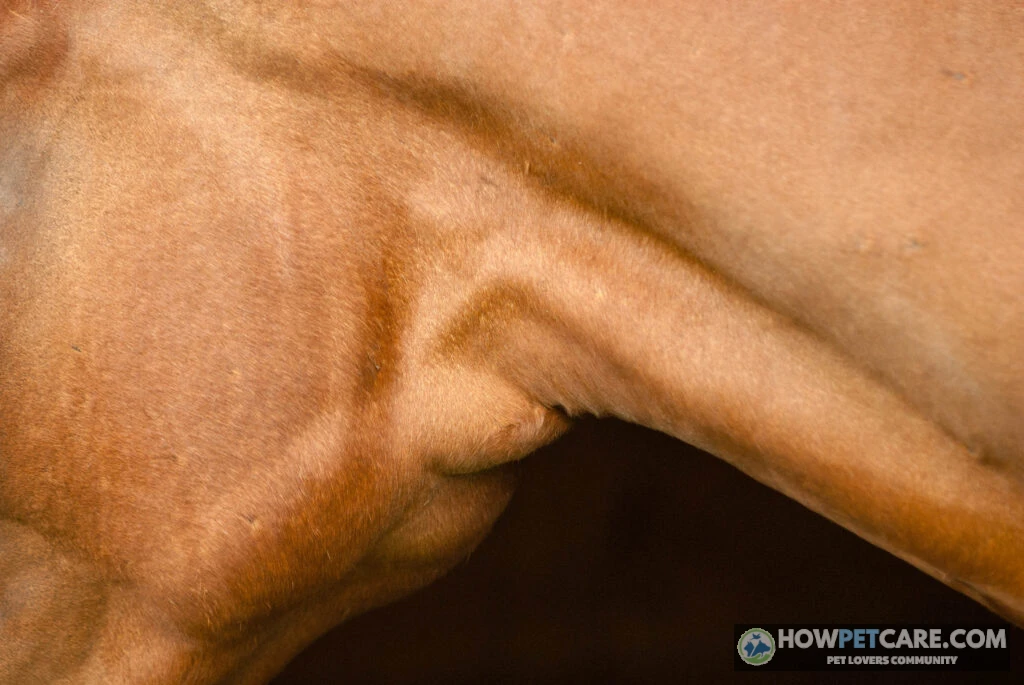
Bacterial pneumonia and pleuropneumonia, often called shipping fever, usually follow transport, general anesthesia, or a viral infection. They have a survival rate around 90%, but need prompt care. In foals between one and six months, Rhodococcus equi pneumonia comes from inhaling dust-contaminated soil.
Clues that point to asthma or an environmental cause
A chronic cough with a normal temperature is a hallmark of equine asthma. Severe equine asthma affects an estimated 15% of adult horses. Flares are often seasonal: worse in winter in dusty, closed barns, or in summer because of pasture pollens and molds. Mild-to-moderate asthma may show up only as an occasional cough at the start of work or below-par performance.
Clues that point to an upper-airway or exercise problem
A horse that’s quiet in the stall but noisy or poor-performing under saddle likely has dynamic upper-airway collapse. Laryngeal hemiplegia creates a roaring noise on the intake of breath during fast work; a displaced soft palate causes gurgling and sudden slowing. EIPH usually shows as blood from the nostrils after maximal exertion or reduced performance without visible blood. These problems are often invisible at rest, so dynamic or overground endoscopy—filming the airway while the horse works—is the key test.
Equine Asthma, Heaves, RAO and COPD: What the Terms Mean and How It’s Managed
Equine asthma is the current umbrella term for a spectrum from mild airway inflammation to severe, life-limiting breathing trouble. Older names still come up around barns: heaves and recurrent airway obstruction (RAO) for the severe form, and inflammatory airway disease (IAD) for the mild-to-moderate form. COPD is an older label that has fallen out of favor.
Old names versus new: heaves, RAO, COPD and equine asthma
Heaves describes the visible abdominal push a horse uses to exhale. RAO emphasizes that obstruction returns with dust, mold, or poor air. IAD is the earlier, milder stage. Modern practice uses ‘equine asthma’ as the umbrella term and grades severity as mild-moderate or severe.
Mild-to-moderate versus severe equine asthma
Mild-to-moderate asthma is mostly a performance issue. You may notice an occasional cough, mucus, slower recovery, or a horse that feels off under saddle. Severe asthma brings breathing effort at rest, chronic cough, nasal mucus, weight loss, and the classic heave line. A severely affected horse can look normal in clean air and relapse within days of exposure to dusty hay. Pasture-associated asthma works differently: some horses do better in the barn in summer because grass pollens and molds trigger them.

Medication types explained plainly
Vets treat flares with corticosteroids, which reduce airway inflammation; bronchodilators, which relax airway muscle for fast relief; and nebulizer therapy, which delivers medication as a fine mist into the lungs. Inhaled drugs can reduce whole-body side effects compared with systemic steroids, but the drug, dose, and duration are veterinary decisions. Medication without environmental change is the most common reason asthma management fails.
Do respiratory supplements help?
Omega-3 fatty acids (especially DHA), spirulina, and jiaogulan are the supplements most discussed for airway support. Evidence is supportive but limited: some studies show reduced inflammatory markers or improved clinical scores, while others are inconclusive. None replace changes to hay quality or bedding, or veterinary treatment. Ask your vet for an appropriate dose, and don’t expect supplements to fix a horse standing in dusty hay.
Caring for a Sick Horse at Home: Isolation, Twice-Daily Temperatures and Barn-Wide Biosecurity
Treat any horse with fever plus respiratory signs as contagious until a vet says otherwise. Non-infectious equine asthma is not contagious. The goal is to protect the rest of the barn while you gather information.
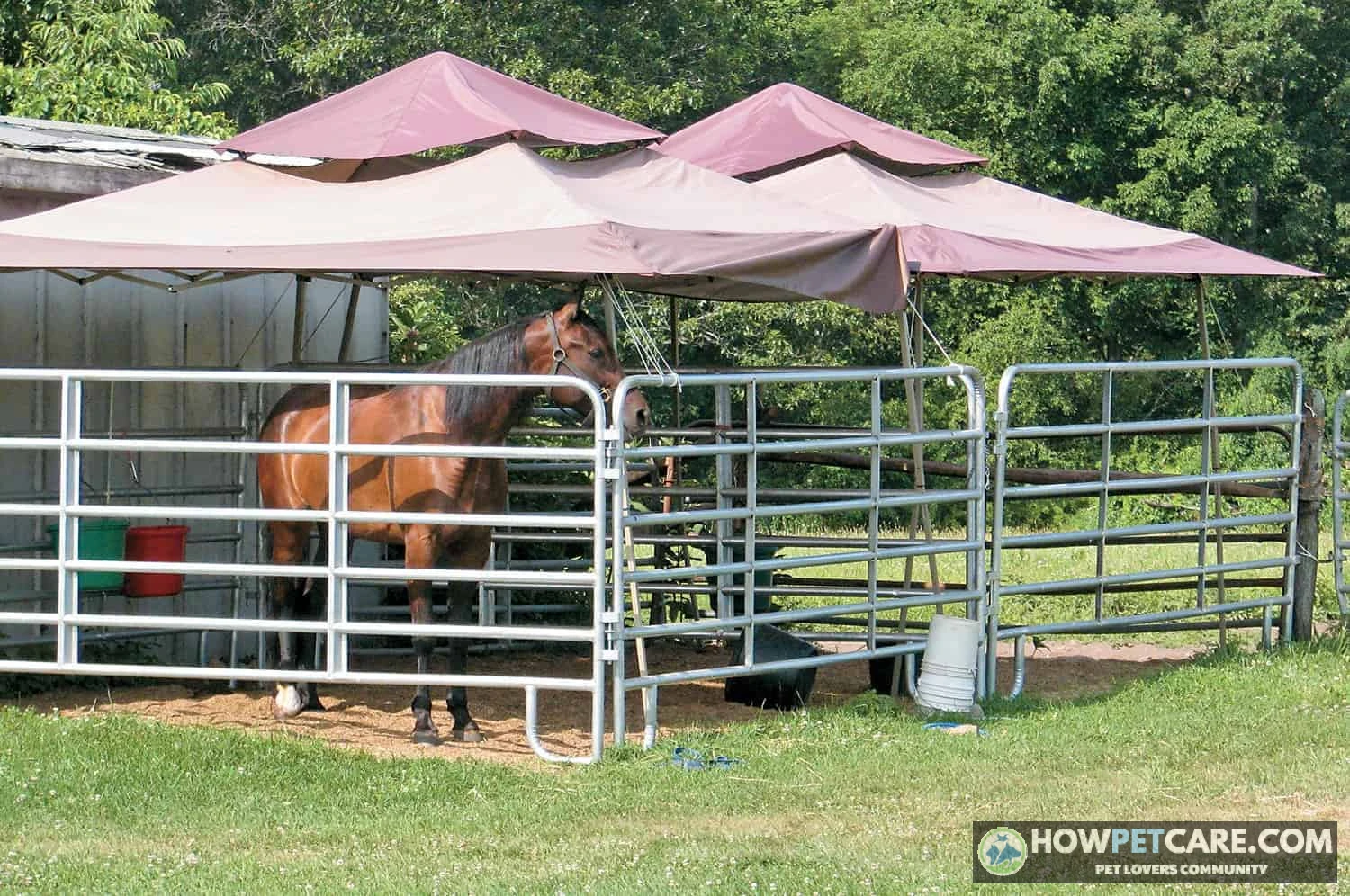
How to isolate a horse in a shared barn
Move the horse to a stall or paddock with no nose-to-nose contact, ideally downwind and away from shared airspace. Label its buckets, tools, halter, and lead rope as dedicated to that horse. Don’t share water troughs. Stop movement on and off the property until the vet advises. Strangles and EHV can be reportable in some regions, so tell the barn manager and every owner immediately.
Step-by-step twice-daily temperature monitoring
Take temperatures at the same two times each day. Lubricate a digital thermometer, insert it fully, and hold it against the rectal wall until it beeps. Normal is about 99–101°F (37.2–38.3°C). Call the vet at 101.5°F (38.6°C) or higher, or if the temperature is climbing. Keep a written log for the suspect horse and every exposed contact; it will be the first thing the vet or animal-health official asks for.
Protecting the other horses in the yard
Handle healthy horses first and the quarantined horse last. Change or sanitize boots, gloves, and clothing between groups. Set a disinfectant footbath and hand sanitizer at the quarantine stall, and use them on exit. Avoid sweeping, mucking, or feeding in the quarantine area before caring for healthy horses. If one horse in a paddock becomes sick, the whole paddock is exposed until the vet says otherwise.
When can the horse rejoin the herd?
The commonly cited quarantine window is 21–28 days, but the actual release date depends on the disease and testing. Strangles usually requires negative test results—often a guttural pouch wash or repeated nasal PCR, a test for bacterial genetic material—before a horse rejoins the herd. A horse can look recovered and still shed bacteria. Don’t give antibiotics or fever-reducers unless the vet approves; a fever-reducer can hide worsening illness and compromise the temperature log everyone relies on. Provide fresh water, soft or dampened feed, rest, and daily notes on appetite and manure.
Pin this at the barn entrance before the vet arrives.
RESPIRATORY QUARANTINE PROTOCOL — POSTED [DATE]
Suspect horse: __
| Stall/paddock: __ |
Vet contacted: __ on [date]
ISOLATION RULES
- Suspect horse in separate stall/paddock; no nose-to-nose contact; downwind from shared air.
- Dedicated buckets, tools, halter, and tack for the suspect horse.
- Healthy horses FIRST; quarantined horse LAST. Change/sanitize boots, gloves, and clothing between.
- Footbath and hand sanitizer at the quarantine stall — use on exit every time.
- No shared water troughs; no horses on/off property until vet advises.
- Strangles and EHV may be reportable — vet will guide notification. Tell boarders and barn manager today.
TEMPERATURE LOG — same two times daily; lubricated digital thermometer held against rectal wall. Normal 99–101°F (37.2–38.3°C). Call vet at or above 101.5°F (38.6°C) or on a rising trend. Keep a written daily log for the suspect horse and all exposed contacts.
QUARANTINE LENGTH AND RELEASE
- Common window: 21–28 days, but disease and testing decide the real release date.
- Strangles usually requires negative test results before release — recovered horses can still shed bacteria.
- No antibiotics or fever-reducers without vet approval.
What the Vet Will Do: Diagnostics, Typical Costs and Recovery Timelines
A respiratory workup usually starts with a history and physical exam, followed by targeted testing. Costs vary widely by region, clinic, and farm-call fees. The ranges below are typical 2026 U.S. estimates to help you plan, not fixed quotes. Ask your vet for a written estimate.
Exam, endoscopy and BAL: what each one tells you
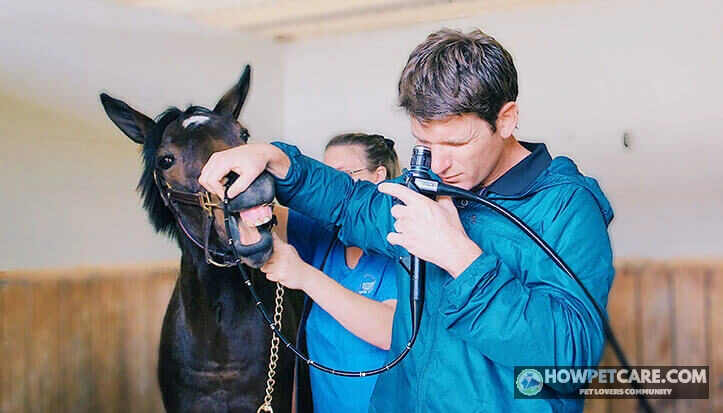
The vet listens to the lungs and may do a rebreathing exam, briefly holding a bag over the nose so deeper breaths make quiet sounds easier to hear. For resting endoscopy, the vet passes a camera through the nose into the airway to look for mucus, pus, blood, or structural problems. Bronchoalveolar lavage (BAL) washes saline into the lower lung to retrieve cells; it helps distinguish equine asthma from infection and grades inflammation. A tracheal wash samples mucus and cells lower in the windpipe, often for bacterial culture. Nasal or guttural pouch swabs tested with PCR can detect strangles, influenza, and EHV before symptoms peak and help clear a horse after strangles. Bloodwork, chest ultrasound, and radiographs round out pneumonia or pleuropneumonia workups.
Rough costs and how to plan for them
| Diagnostic or treatment | What it shows | When it’s used | Typical 2026 U.S. cost range (varies) | Typical recovery/follow-up |
|---|---|---|---|---|
| Physical exam + rebreathing | Temp, heart/lung sounds; bag deepens breathing | First step at almost every visit | $100–$300 with farm call | Same visit; guides next tests |
| Resting endoscopy | Mucus, pus, blood, guttural pouches, upper-airway structure | Coughs, discharge, suspected EIPH, screening | $200–$500 | Same-day results |
| Dynamic/overground endoscopy | Airway filmed during work | Exercise noise or unexplained performance drop | $400–$900 | Same-day; guides surgery/management |
| BAL | Lung cell types — distinguishes asthma from infection | Chronic cough, suspected asthma, poor performance | $250–$600 + lab | Lab results in days; mild sedation recovery |
| Tracheal wash | Mucus/cells for culture | Suspected bacterial airway infection | $200–$450 | Lab results in 2–5 days |
| Nasal/guttural pouch PCR | DNA test for strangles, flu, EHV | Contagious cases, carrier checks, outbreaks | $50–$150 per pathogen/panel | 1–3 days; may need repeat for clearance |
| Bloodwork (CBC/chemistry) | Infection/inflammation markers; organ function | Fever, pneumonia, pre-treatment baseline | $75–$200 | Same day to 48 hours |
| Chest ultrasound | Fluid around lungs, abscesses, consolidated tissue | Suspected pneumonia/pleuropneumonia | $200–$500 | Guides drainage; repeated to track healing |
| Chest radiographs (X-rays) | Lung pattern and severity | Persistent pneumonia, non-responding cases | $300–$700 | Compared over rechecks |
| Laryngeal tie-back | Holds paralyzed larynx open | Confirmed laryngeal paralysis blocking airflow | $3,000–$6,000 | ~60–90 days to return to work; outcomes vary |
| Tracheostomy | Surgical airway opening in neck | Emergency airway blockage or failed surgery | $500–$1,500 | Daily tube care; temporary or permanent |
Plan for a sequence of tests rather than one test alone. A typical asthma workup—exam, endoscopy, and BAL—often runs roughly $600–$1,400. A strangles investigation may require several PCR swabs across multiple horses.
Horses that struggle only under saddle
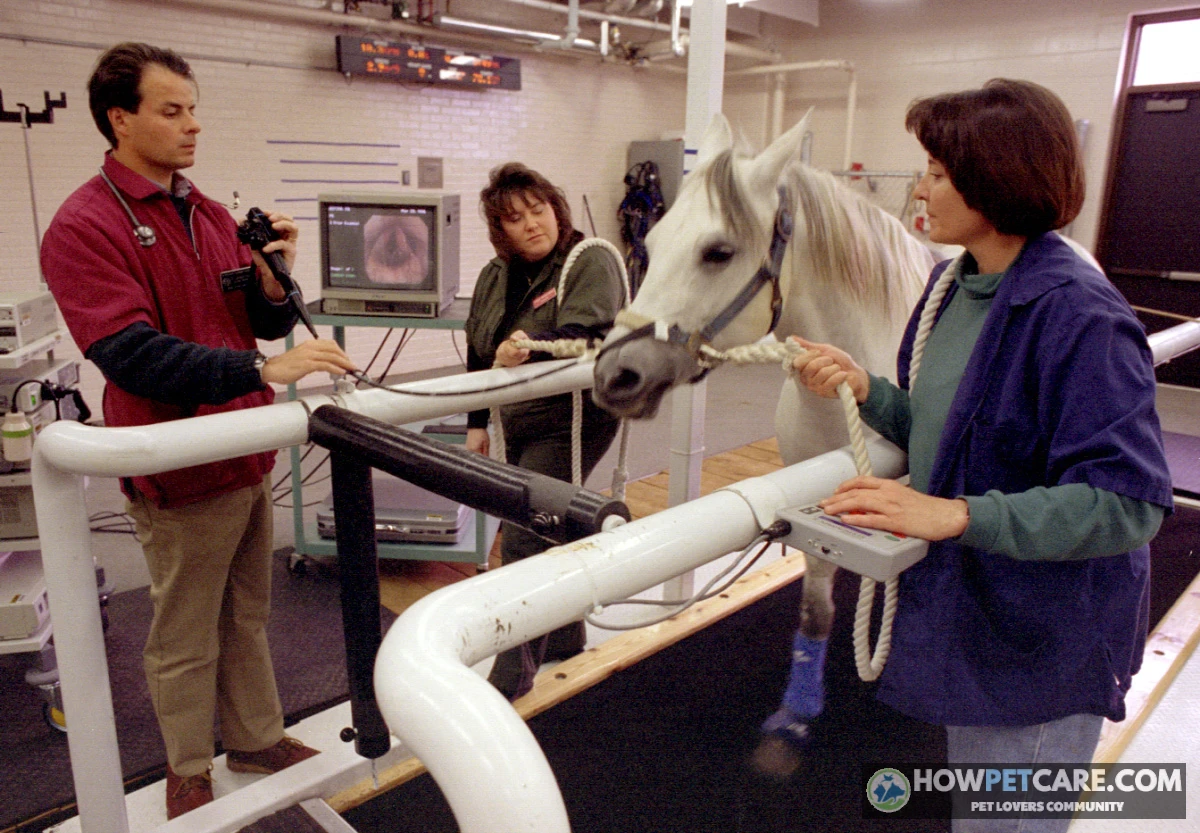
A normal exam at rest can miss roaring, displaced soft palate, and intermittent pharyngeal collapse, where part of the throat narrows during work. Dynamic endoscopy films the horse while it works, on a treadmill or overground with a rider, and catches the moment the airway collapses. EIPH is diagnosed by endoscopy within minutes of hard work or by BAL showing hemosiderophages, the cells that clean up old blood in the lungs.
Tie-back and tracheostomy: when surgery is considered
Laryngoplasty (tie-back) is used for confirmed laryngeal paralysis when one side of the larynx blocks airflow during fast work. Return to work usually takes roughly 60–90 days. Results aren’t always perfect: some noise can remain, and performance may not fully return. A tracheostomy makes an opening in the neck to bypass a blocked upper airway in emergencies or when other surgery has failed. It requires daily tube care and may be temporary or permanent.
Stable Changes to Make Tonight: Hay, Bedding, Ventilation and Ammonia Step by Step
Dust and ammonia are the biggest triggers you can control. Most changes below take under an hour.
How to soak or steam hay
Hay is the largest source of respirable dust in most barns. Soaking or steaming cuts the particles and allergens your horse inhales.
-
Submerge the hay completely
Place hay in a clean tub or net and cover with clean water. No dry patches should stick out.
-
Soak for about 30 minutes
Most barn protocols use roughly 30 minutes; ask your vet, especially if sugar/mineral balance matters.
-
Drain thoroughly
Lift and let water run out before feeding.
-
Feed immediately, especially in warm weather
Wet hay ferments and molds fast. Dump used water away from the barn.
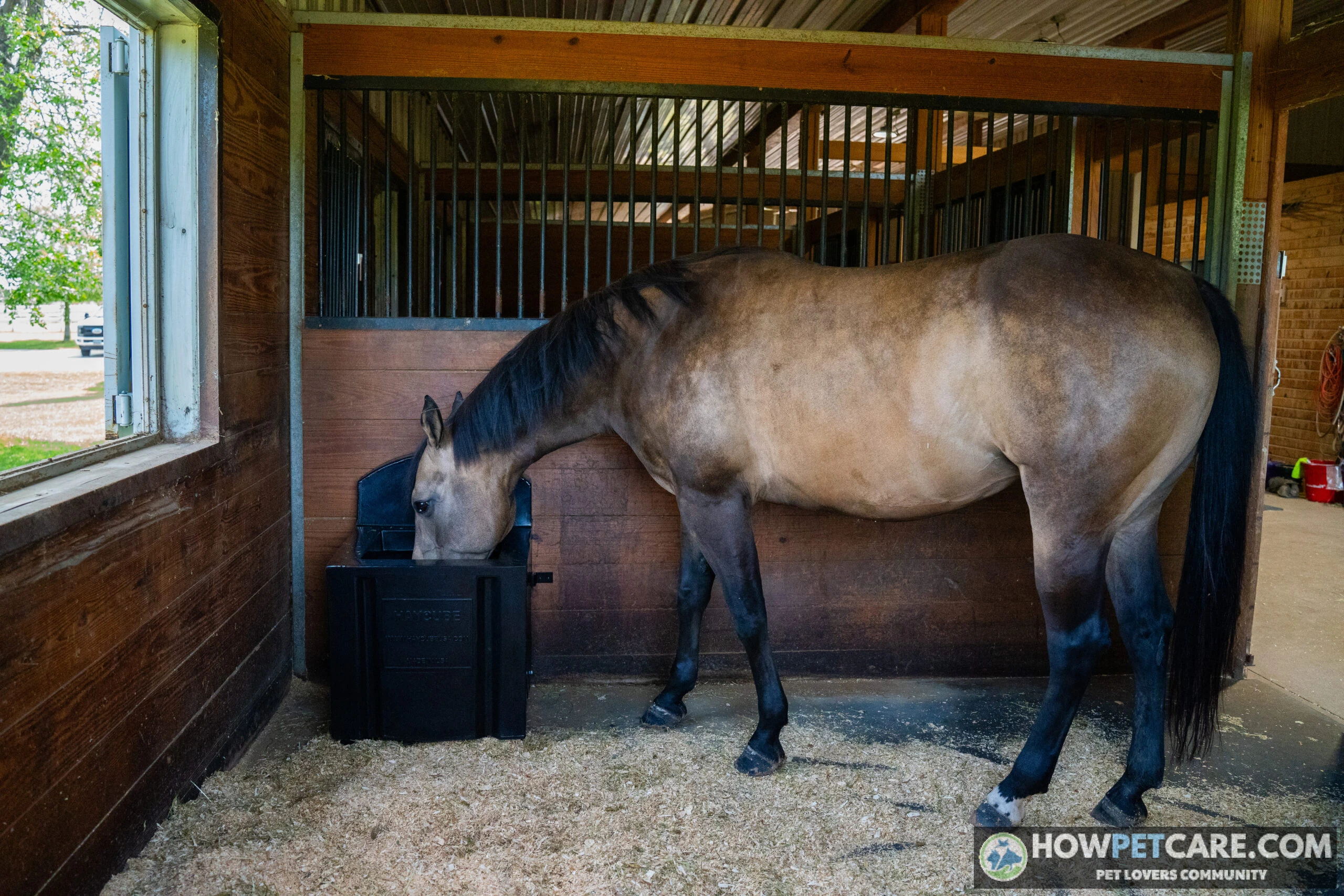
Use a purpose-built steamer for hay; improvised warm-water methods can increase mold. Steaming preserves more nutrients than soaking in cold weather, but it’s not a substitute for clean, mold-free hay. Consider haylage or pelleted/cubed forage dampened before feeding. Feed from the floor when possible; a lowered head lets mucus drain naturally.
Low-dust bedding and mucking-out routine
Swap dusty straw or fine shavings for large-flake shavings, paper, or cardboard bedding. Bed deep enough that the horse stands dry; a thin wet bed releases ammonia fastest. Remove wet bedding and droppings daily, strip stalls regularly, and avoid sweeping aisles, emptying wheelbarrows, or filling hay nets while the horse is inside.
Crouch to horse-head height in the stall and breathe. If you smell ammonia, ventilation or cleaning is inadequate. Ammonia irritates the airway lining and worsens every respiratory condition.
Ventilation and ammonia: a quick barn audit
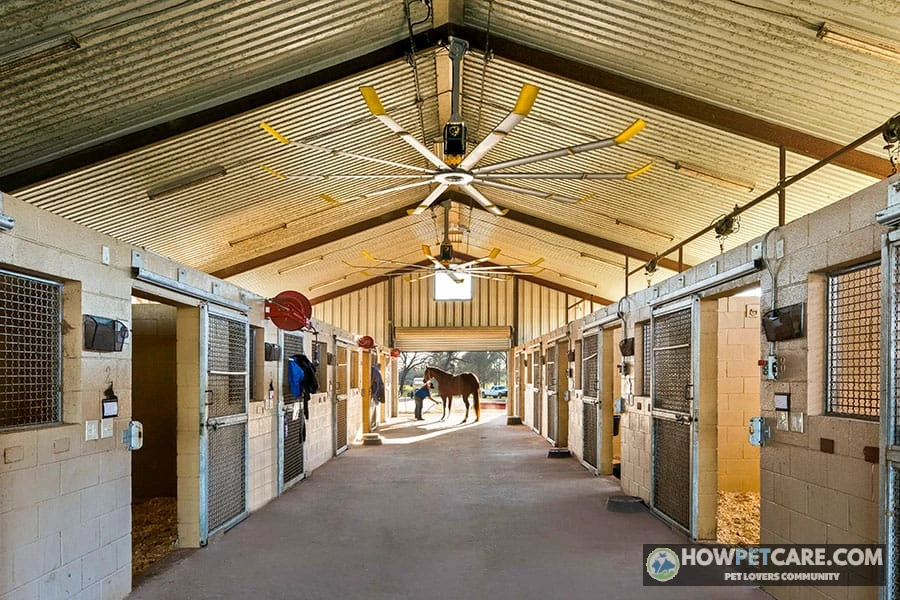
Check that upper vents and windows are open. Sealing the barn in winter is a major asthma trigger. Use fans or open doors to move air without blowing a cold draft directly on the horse. Move the horse away from hay storage, indoor arena dust, and aisle sweeping. Keep feed and water stations away from dusty corners. Maximize turnout; even a few extra hours outside cuts dust exposure.
Printable stable-management action checklist
Work through this list once, then make the daily items part of your routine.
Hay
- ☐ Inspect each new bale: reject dust clouds, mold patches, or musty smell.
- ☐ Soak hay: submerge in clean water ~30 minutes, drain, feed immediately, dump water away from barn.
- ☐ In warm weather, feed soaked hay within a few hours to prevent mold.
- ☐ Steam only with a purpose-built steamer; improvised warming adds moisture and mold.
- ☐ Ask your vet/nutritionist whether soaking leaches needed sugars/minerals.
- ☐ Consider haylage or dampened pellets/cubes for very sensitive horses.
- ☐ Feed from the floor, not a high net, to let mucus drain.
Bedding and mucking out
- ☐ Swap dusty straw/fine shavings for large-flake shavings, paper, or cardboard bedding.
- ☐ Bed deep enough that the horse stands dry.
- ☐ Remove wet bedding and droppings daily.
- ☐ Strip and dry stalls on a regular schedule.
- ☐ Do not sweep aisles or fill hay nets while your horse is inside.
Ventilation and ammonia
- ☐ Crouch to horse-head height; if you smell ammonia, fix ventilation or cleaning.
- ☐ Keep upper vents and windows open; do not seal the barn in winter.
- ☐ Use fans or open doors to move air without cold drafts.
- ☐ Keep stalls away from hay storage, arena dust, and aisle sweeping.
Turnout and routine
- ☐ Maximize turnout hours.
- ☐ If the horse is pasture-affected, work with your vet on turnout timing.
- ☐ Move feed and water away from dusty corners.
- ☐ Note the date of each change so you can tell what helped.
Wildfire Smoke, Dusty Arenas and Winter Stabling: Managing Environmental Triggers
Smoke, indoor arena dust, and sealed winter barns can turn a manageable cough into a flare.
Riding on smoky days: AQI guidelines and judgment calls
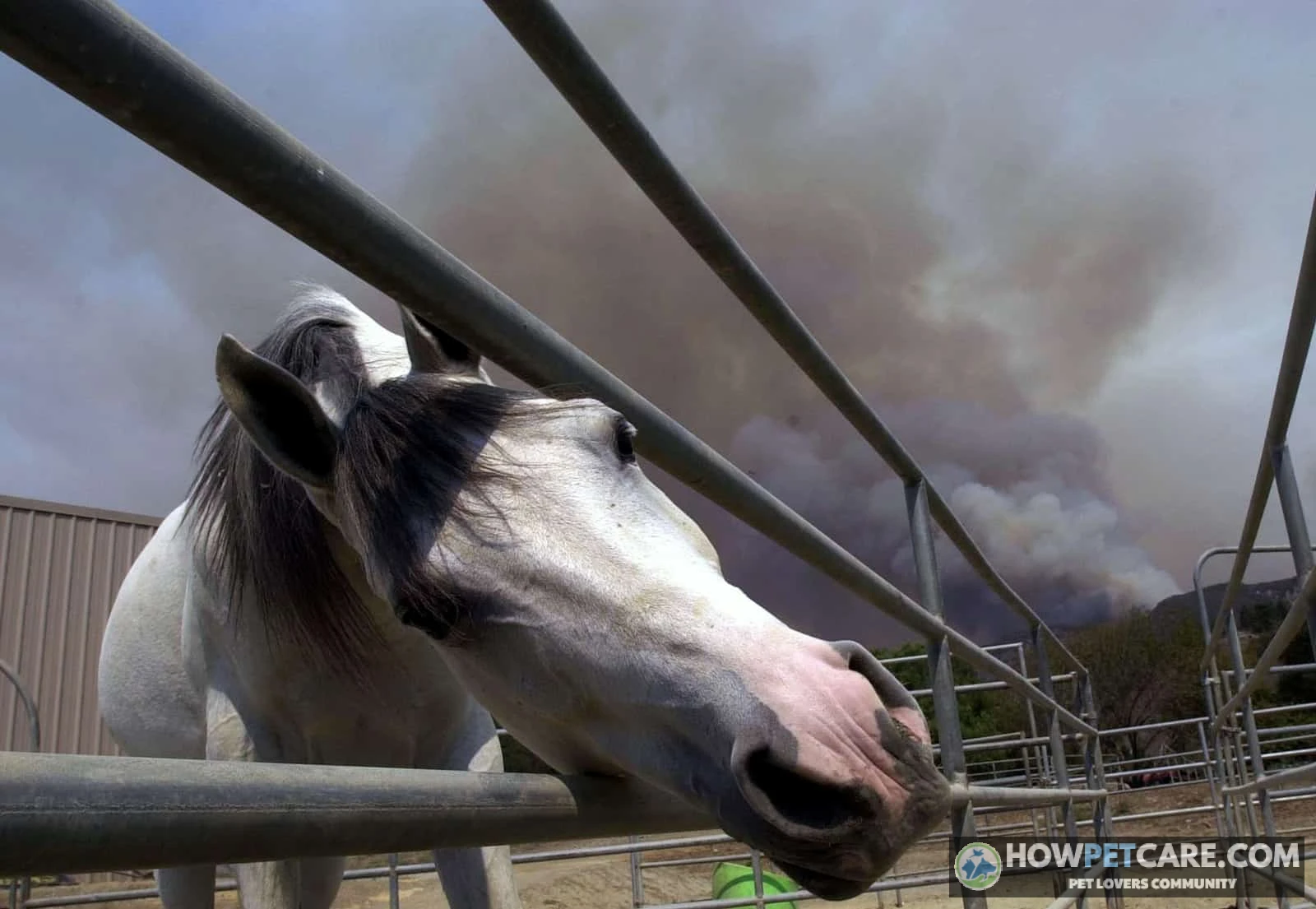
Wildfire smoke particles inflame the airways, and asthmatic horses are especially sensitive. Check the local Air Quality Index. Many equine veterinarians advise light work only or full rest once AQI reaches the ‘unhealthy for sensitive groups’ range, around 101 and above. Hard exercise should stop at higher readings. Confirm the threshold with your vet.
On smoky days, keep the horse in the best-ventilated area, wet down dusty ground, provide plenty of water, and avoid hard work. Watch breathing rate and cough for several days afterward because symptoms can lag. A sealed barn without airflow can be worse than a shaded paddock.
Indoor arenas and winter stabling
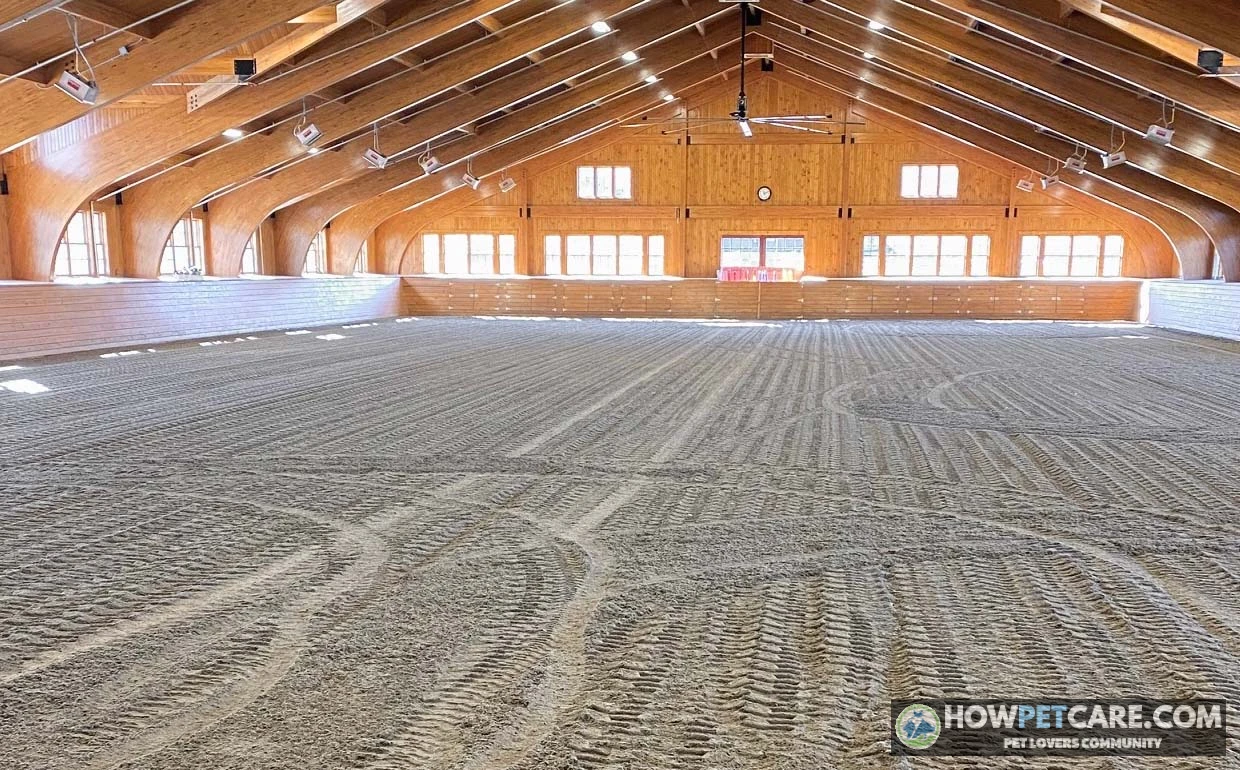
Water or treat arena footing to keep dust down, ride outside when possible, and avoid working the horse right before returning it to a dusty stall. In winter, don’t close every window and door. Blanket appropriately and keep air moving; a warm, airtight barn is a classic asthma setup. Keep a log with the date, weather, AQI, hay batch, and any cough or discharge. Triggers differ between horses, and patterns are the fastest way to find them.
Your Next-Steps Plan: Tonight, This Week and Long Term
Tonight
- Take temperature, breathing rate, and heart rate.
- Match signs to the triage table and call the appropriate tier of vet care.
- Separate the horse from others, especially with fever or colored discharge.
- Move the horse to fresh air and stop work.
- Do not give medication unless the vet has told you to.
This week
- Arrange the veterinary workup.
- Keep twice-daily temperature logs for the sick horse and exposed contacts.
- Start the hay, bedding, ventilation, and ammonia changes.
- Notify the barn manager and other owners if contagion is possible.
- Ask your vet: the likely cause, whether the horse is contagious, what tests cost, when work can resume, and what signs would change the plan.
Long term
- Build an equine asthma management plan: low-dust forage, bedding, turnout, and medication only during flares under veterinary direction.
- Keep vaccinations and biosecurity current.
- Schedule recheck exams and track triggers in a simple log.
- If the main signs are nasal discharge or nosebleeds, your vet may focus on nose-specific conditions in horses or guttural pouch problems rather than lung disease.
Horse respiratory problems range from a dust cough to a life-threatening airway blockage, and waiting to see what happens is rarely the right response. Take the numbers, use the triage table, and make the stable changes. Your vet can use those clues to reach a diagnosis and treatment plan.
 You might be wonderingHolsteiner horseHolsteiner Horse Guide: Traits, Costs, Bloodlines & FitRead the answer
FAQ
Can I ride a horse that has a cough?
Not if the horse has a fever, nasal discharge, labored breathing or is off its feed, because exercise can worsen the illness and spread infection. For a mild, occasional cough in a bright horse with a normal temperature, ask your vet before resuming work.
What is strangles and how does it spread?
Strangles is a contagious bacterial infection (Streptococcus equi) that causes fever, thick nasal discharge and swollen, sometimes abscessed glands under the jaw. It spreads through nose-to-nose contact and through shared buckets, hands, tack and clothing.
Is heaves curable?
No, severe equine asthma (heaves) cannot be cured, but most horses can be kept comfortable. Lowering dust exposure is the foundation, and medication is used during flare-ups under veterinary direction.
Does nasal discharge always mean my horse is sick?
No. A small amount of clear, watery discharge can be normal, especially after exercise. Thick, yellow or green discharge, discharge from only one nostril, blood, a bad smell, or any discharge with a fever warrants a vet call.
How long does it take a horse to recover from a respiratory infection?
A mild viral infection often needs a couple of weeks of rest, and returning to full work can take longer. Bacterial infections and pneumonia often take longer, so follow your vet’s recheck and return-to-work advice.