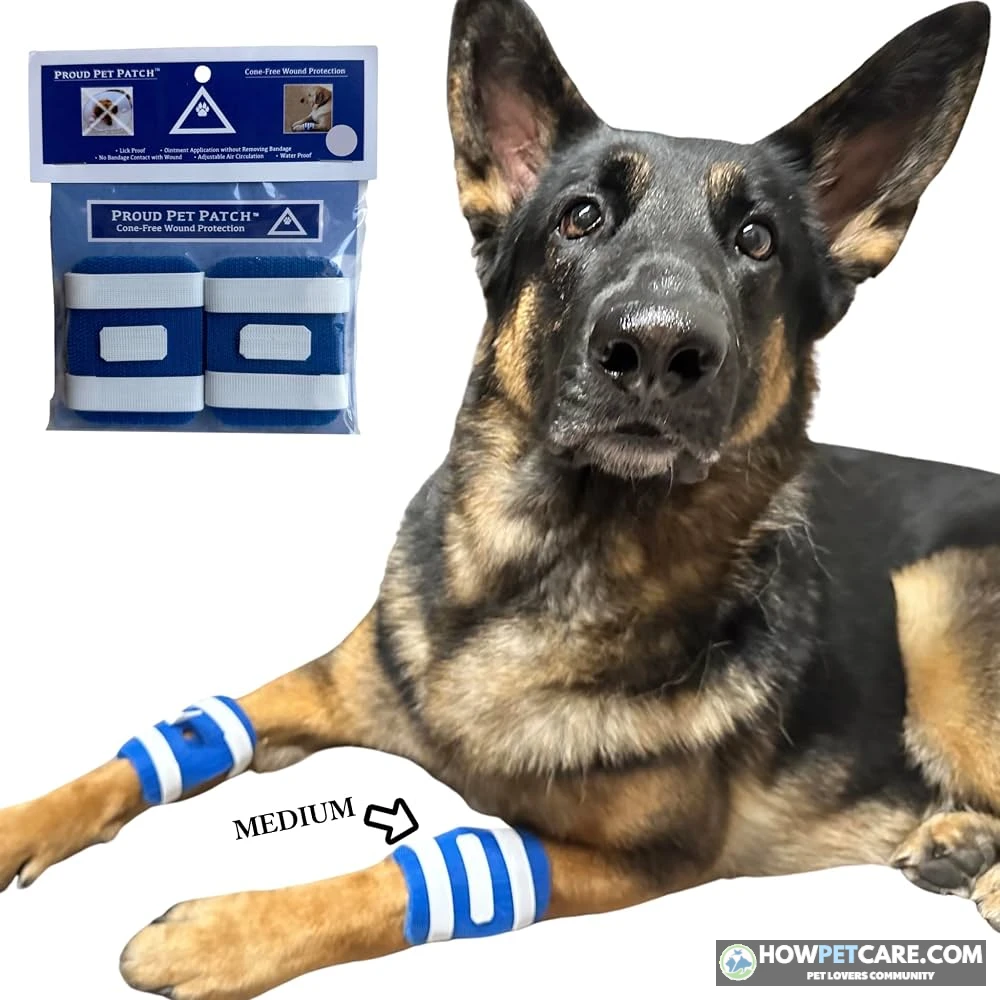

For a minor, clean dog wound that’s safe to treat at home:
- Stop bleeding by pressing clean gauze firmly on the wound for 5 minutes.
- Rinse gently with sterile saline or lukewarm water — never hydrogen peroxide or rubbing alcohol.
- Pat dry and fit an e-collar right away to prevent licking; add a light non-stick bandage if the spot needs protection.
- Check the wound daily for heat, swelling, pus, foul odor, or reopening.
- Skip home care and see a vet now for deep or gaping wounds, bites, uncontrolled bleeding, or signs of shock.
Can you treat this wound at home? Use this quick triage check
| What you see | Recommended action | Why it matters |
|---|---|---|
| Bleeding that doesn’t slow after 5 minutes of firm pressure, spurts, or soaks through gauze | Go to an emergency veterinary clinic immediately; don’t delay to clean or bandage. | Uncontrolled bleeding can lead to shock and is life‑threatening. |
| Wound is deep or gaping, exposes fat, muscle, or bone; or involves the chest, abdomen, neck, eye, or genitals | Go to an emergency veterinary clinic immediately. | These wounds often require surgical debridement, suturing, or internal treatment. |
| Bite or puncture wound with swelling, crushed tissue, an existing bad odor, or inability to bear weight on the limb | Go to an emergency veterinary clinic immediately. | Bite wounds can hide extensive damage and carry a high risk of infection. |
| Hard breathing, pale or gray gums, collapse, shaking or signs of shock, severe pain, repeated vomiting | Go to an emergency veterinary clinic immediately. | These are signs of a systemic emergency, not an isolated wound. |
| Cut longer than about 1 inch, edges gap open, or it sits near a joint, paw pad, ear tip, face, or tail | Call a veterinary clinic for same‑day triage. | These wounds may need stitches, infection prevention, or specialized care. |
| Bleeding restarted after the initial clot, nail base looks damaged, ear edge is split, or debris won’t rinse out | Call a veterinary clinic for same‑day triage. | Persistent bleeding or retained debris indicates a need for professional cleaning. |
| Puppy, senior, toy breed, diabetic, immunocompromised, pregnant, or on steroids/blood thinners | Call a veterinary clinic for same‑day triage, even if the wound looks minor. | These dogs have a reduced ability to fight infection or heal. |
| You’re unsure after looking at the wound | Call a veterinary clinic and send a clear photo for triage. | A professional assessment can help prevent mistakes in care. |
| Shallow scrape or cut, small clean edges, bleeding stopped within 5 minutes; no bite or puncture, no embedded object, no eye involvement; dog is bright and moving normally | Home care may be reasonable if you can prevent licking and recheck daily. | Minor clean injuries can be managed at home with proper technique. |
Decision rule: Any GO NOW item true = emergency; any CALL TODAY item true with no GO NOW = phone triage today; only all HOME boxes true = start gentle cleaning. If you’re uncertain, call your veterinary clinic for guidance.
Emergency, same‑day vet, or home care?
First, decide whether your dog’s wound is suitable for home care, needs a prompt veterinary visit, or is an emergency. The table above can help you assess the visible signs. If any “GO NOW” condition is present—including a bite wound such as a dog snake bite—take your dog to an emergency veterinary clinic without trying to clean or bandage the wound. Doing so can worsen bleeding or introduce contamination. If a “CALL TODAY” condition is present without a “GO NOW” sign, contact your veterinary clinic, describe the wound, and arrange a same‑day evaluation. The clinic may ask you to monitor your dog closely or bring them in for assessment. If none of the red‑flag items apply and your dog is bright and active, home care may be appropriate as long as you can keep the wound clean, watch for changes, and prevent licking or chewing.
How to approach a frightened or painful dog safely
A dog who is frightened or in pain may react unpredictably. Before you begin dog wound care, protect yourself and help your dog stay calm.
- Use a muzzle or a makeshift one (e.g., a soft gauze strip) if your dog is likely to snap; a muzzle allows examination without blocking breathing.
- Speak in a low, soothing voice and move slowly.
- If possible, ask another person to gently restrain your dog by wrapping a towel around the body (the burrito method), keeping the head exposed.
- Never place your face directly over the wound; approach from the side.
- If your dog becomes highly agitated, stop and contact your veterinary clinic for guidance.

Clean a minor dog wound and stop bleeding step by step
If bleeding, control it first
Place a clean gauze pad or cloth directly over the bleeding wound and apply steady, firm pressure. Don’t lift the gauze repeatedly to check it; holding it in place for at least 5 minutes allows a clot to form. If the gauze becomes soaked, add another layer on top instead of removing the first. This maintains continuous pressure. If bleeding continues or soaks through after 5 minutes of steady pressure, seek veterinary care. The wound may need professional treatment to stop the bleeding.

Rinse the wound gently
Once bleeding has slowed or stopped, gently rinse away dirt, debris, and bacteria. Use sterile saline or, in a pinch, clean lukewarm tap water. Carefully part the surrounding fur and let the water flow over the wound rather than scrubbing or probing inside it. Don’t use cotton swabs or balls inside the wound; fibers can linger and irritate the tissue.

When to use a diluted antiseptic
A diluted antiseptic solution can help reduce surface bacteria, but it isn’t always necessary and can irritate some tissues if used incorrectly. Chlorhexidine diluted to approximately 0.05% is often safe for skin and wound edges; follow label directions or veterinary guidance for proper dilution. Povidone‑iodine can be diluted to a weak‑tea color for surrounding skin or minor wounds, but avoid it on deep punctures, thyroid‑affected dogs, or areas where your dog may lick it off extensively.
Never use hydrogen peroxide or rubbing alcohol on a dog wound. Hydrogen peroxide foams on contact and can damage healthy tissue, slowing healing; rubbing alcohol burns, dries tissue, and is very painful if licked.
Pat dry and protect
After rinsing, pat the skin around the wound dry with a clean towel. Prevent your dog from licking or chewing the area; an Elizabethan collar (e‑collar) is the most reliable method. Don’t try to close the wound with household glue, adhesive strips, or any non‑sterile adhesive.
Safe and unsafe wound‑cleaning products
| Product or substance | Use or avoid | Key guidance |
|---|---|---|
| Sterile saline / wound rinse | Use first | Safest default for flushing dirt; sterile saline is best, and clean lukewarm water is acceptable in a pinch. |
| Chlorhexidine | Use diluted, carefully | Often used around 0.05% for skin and wound edges; follow label or vet dilution guidance, keep out of eyes/inner ear, and stop if irritation appears. |
| Povidone‑iodine | Use diluted, short‑term | Dilute to a weak‑tea color for surrounding skin/minor wounds; avoid deep punctures, thyroid problems, repeated use, and licking. |
| Hydrogen peroxide | Avoid | Foaming damages healthy tissue and can slow healing; not a routine wound cleaner. |
| Rubbing alcohol | Avoid | Burns, dries tissue, is very painful, and is unsafe if licked. |
| Triple antibiotic ointment such as Neosporin | Usually avoid unless a vet approves | A vet may advise small amounts for some superficial wounds, but licking/ingestion and contact allergy make casual use a poor default. |
| Medical‑grade honey | Vet‑directed only | Can help selected wounds when dressings are managed correctly; grocery honey and DIY smearing aren’t equivalent. |
| Household glue, adhesive strips, butter, oils, powders | Avoid | These can trap bacteria, irritate tissue, complicate clipping or closure, or be harmful if licked. |

Bandage or leave it open? Protect the wound without causing harm
When bandaging helps
Small, superficial wounds that stay clean may be left uncovered. Wounds on paws, ears, or areas exposed to dirt, other pets, or frequent licking often benefit from a protective dressing. A bandage can keep the wound clean, absorb mild drainage, and prevent self‑trauma.
How to apply a safe bandage
- Place a non‑stick pad directly over the wound (such as a Telfa pad or a clean gauze pad that won’t adhere to the wound surface).
- Wrap a light, even layer of self‑adherent veterinary wrap (e.g., VetWrap) around the area. The wrap should be snug but not tight—you should be able to slide a finger underneath.
- Make sure the bandage covers the wound and a small margin of healthy skin without restricting movement or circulation.

Change dressings at least daily, or sooner if the bandage becomes wet, dirty, loose, or soiled, unless a veterinarian specifies a different schedule. Inspect the wound each time you change the bandage. Look for signs that the bandage may be too tight: swelling of the paw or limb, cold toes, discoloration (blue or pale), increased pain, or the dog limping more than before. If any of these warning signs appear, loosen or remove the bandage immediately and contact your veterinarian.
Bandage changes and coverage checks
- Stick to at least one dressing change per day—sooner whenever the wrap gets wet, dirty, loose, or soiled—unless your veterinarian has given you a different schedule.
- Inspect the wound at every change, and check the limb below the wrap for tightness clues: swelling of the paw or limb, cold toes, discoloration (blue or pale), increased pain, or more limping than before.
- If any of those signs show up, loosen or remove the bandage right away and call your veterinarian.
- How long a wound needs covering depends on its location, drainage, and healing progress. Generally, superficial wounds may be kept covered for 3–5 days, while deeper or contaminated wounds may need longer veterinary‑guided care.
Prevent licking while the wound heals
- An Elizabethan collar (e‑collar) is the most effective way to stop a dog from reaching the wound with its tongue or teeth. Choose a size that extends beyond the nose tip.
- If your dog refuses an e‑collar, a clean, supervised T‑shirt or onesie can protect body wounds. Make sure it doesn’t rub or trap moisture against the skin.
- For paw wounds, a loosely wrapped bandage combined with an e‑collar often works best. Avoid leaving the paw wrapped tightly for extended periods without checks.

Match care to the injury: paw pads, ears, punctures, hot spots, and nails
Wounds need different care depending on their location, contamination risk, and how they heal. The table below covers first‑aid principles for common injuries, from paw pad cuts to a bleeding broken nail.
| Wound type | Clean it with | Bandage or leave open? | Unique vet‑trip trigger |
|---|---|---|---|
| Paw pad cut | Rinse grit out with saline; pat dry; limit walking | Usually protect for walks or outdoors, then keep dry | Gaping edges, bleeding that restarts with steps, limping beyond mild soreness, or a flap of pad |
| Ear‑flap tear | Apply gentle pressure for bleeding; wipe around, not deep into canal | Don’t wrap the head tightly; use an e‑collar and keep head‑shaking minimal | Persistent bleeding, split edge, swelling/hematoma, foul odor, or repeated head shaking |
| Puncture or bite | Don’t probe; rinse only the surface if your dog allows while arranging care | No tight home bandage; cover loosely for transport if needed | Any bite/puncture deserves prompt assessment even if the hole looks tiny; sooner with swelling, pain, heat, or discharge |
| Hot spot | Don’t scrub; clip only if safe, keep dry, prevent licking | Usually leave open under an e‑collar; bandaging traps moisture | Rapid spread, pus/cloudy ooze, strong odor, marked pain, feverish behavior, or face/neck involvement |
| Broken nail | Protect the paw; control bleeding with pressure; avoid pulling loose nail parts | Temporary pad for walking only if your dog won’t chew it | Bleeding past pressure, exposed quick with severe pain, damaged nail base, or the nail is torn/loose |

Age, size, and location adjustments: Puppies, senior dogs, small breeds, and dogs with fragile skin or underlying health conditions need gentler restraint and more frequent monitoring. Bandage difficult locations (e.g., joints, tail, face) only under veterinary guidance. Use an e‑collar or recovery cone whenever there’s a risk your dog will lick or chew the site.
Track dog wound healing day by day—and act when progress reverses
Normal healing pattern
Healing varies with wound depth, location, contamination, licking, and your dog’s overall health. A general day‑by‑day pattern can help you judge whether the wound is making progress.
- Days 0‑1: The fresh wound is tender and mildly red. Bleeding should have stopped with pressure. A thin scab may begin to form.
- Days 2‑3: Redness and swelling should start to settle. The wound may look pinker and less inflamed, and a scab can become more pronounced.
- Days 4‑7: The wound typically looks cleaner and less swollen. The scab may contract, and your dog may bother the site less. New, pink tissue (granulation) may appear at the edges.
- Days 8‑14: Superficial wounds often close or become a small, dry scab. Deeper wounds may still be healing but should show gradual improvement.

| Approximate stage | Possible normal progress | Stop‑home‑care sign | What to do |
|---|---|---|---|
| Days 0‑1 | Fresh wound is tender and mildly red; bleeding should stop with pressure | Bleeding keeps restarting, wound gapes, severe pain, embedded object, chest/abdomen/eye involvement | Treat as triage failure: call same‑day or go now depending on severity |
| Days 2‑3 | Redness and swelling should start settling; edges may look pink; a thin scab can form | Increasing heat, swelling, pain, pus/cloudy discharge, foul odor, spreading redness, dog becomes quiet or off food | Prevent licking, stop non‑prescribed products, call vet within 24 hours or sooner if systemic signs |
| Days 4‑7 | Wound looks cleaner and less swollen; scab contracts; dog bothers it less | Wound reopens, oozes after dry days, scab lifts to reveal raw tissue, new swelling under or around it | Send a photo to the clinic; arrange an exam if discharge, odor, or reopening is present |
| Days 8‑14 | Superficial wounds often close or become a small dry scab; deeper wounds still need a plan | Still open with no clear improvement, edges thicken or darken, drainage persists, licking cannot be controlled | Book a veterinary check rather than restarting random products; bring dates/photos of change |
Escalation shortcut: Monitor mild pinkness only if the trend improves; call within 24 hours for pus, odor, heat, spreading swelling, pain, lethargy, appetite drop, or feverish behavior; go now for breathing trouble, collapse, uncontrolled bleeding, or a wound near vital structures.
What to do when home care is not working
Contact your veterinary clinic if the wound shows no clear improvement after several days of gentle cleaning and monitoring, or if it worsens. Bring a description (or photos) of how the wound looked when you first noticed it, the date you started home care, and any changes you’ve observed. The veterinarian can assess whether the wound needs debridement, antibiotics, suturing, or other treatment. Don’t restart random products or home remedies; delaying professional care can allow infection to spread.
Prepare a dog first‑aid kit and know what a vet visit may involve
First‑aid kit essentials and typical price ranges
A dedicated kit saves you from hunting for supplies in an emergency. Prices are rough U.S. retail ranges for 2026 and vary by region and pack size; choose sterile, correctly sized supplies over brand names.
Must‑have — about US$35‑75 total
- Sterile gauze pads plus a roll: about $5‑15 — for pressure and padding.
- Non‑stick wound pads: about $5‑12 — keep dressings from tearing new tissue.
- Sterile saline or wound rinse: about $4‑12 — the default cleaning fluid.
- Disposable gloves: about $4‑10 — for hygiene and safer handling.
- Blunt‑tip scissors: about $5‑12 — to clip hair around, not inside, wounds.
- Self‑adherent wrap: about $6‑15 — for a light, even hold without pins.
- E‑collar/recovery cone: about $10‑30 — helps prevent wounds from being licked open.
- Clean towel plus a leash or slip lead: use what you own — for restraint and transport.

Nice‑to‑have — about US$25‑90 extra
- Digital thermometer and lube: about $8‑20 — only if you know safe use and normal ranges.
- Saline refill pods/eyewash for travel kit: about $5‑15 — for convenient flushing.
- Antiseptic for vet‑directed dilution such as chlorhexidine: about $8‑20 — ask about concentration and dilution.
- Small flashlight/phone magnifier and marker for edge tracking: $0‑15 — to document changes daily.
- Soft recovery shirt or boot for selected body/paw wounds: about $10‑35 — use only if dry, loose, and supervised.
Don’t stock or use human painkillers, leftover antibiotics, steroid creams, or household disinfectants unless your vet specifically prescribes or approves them.
What the veterinarian may do
At the clinic, the veterinarian will tailor treatment to the wound’s severity and location and your dog’s overall health. Care may include:
- Clipping fur around the wound to improve visibility and access.
- Flushing the wound with sterile saline or a prescribed antiseptic solution to remove debris and bacteria.
- Examining the wound depth, checking for foreign material, and assessing tissue loss.
- Providing pain relief; sedation may be needed for a safe examination, especially if the wound is painful or your dog is highly stressed.
- Deciding whether to close the wound with sutures or skin staples, or leave it open to heal by second intention; drains may be placed if there is significant dead space or fluid accumulation.
- Prescribing appropriate medications, such as topical antiseptics, systemic antibiotics, or anti‑inflammatory pain relievers (e.g., carprofen, meloxicam, or deracoxib, as directed by a vet), based on the wound type and infection risk.

Cost context: Examination and basic wound cleaning typically cost less than procedures requiring sedation, wound closure, or drain placement. Ask the clinic for a rough estimate before proceeding. Final fees vary by region, your dog’s size, and the complexity of care.
| Product or Substance | Recommendation Status | Usage Guidelines and Precautions |
|---|---|---|
| Sterile saline / wound rinse | Use first | Safest default for flushing dirt out of wounds; sterile saline is best, but clean lukewarm water is acceptable in a pinch. |
| Chlorhexidine | Use diluted, carefully | Often used around 0.05% for skin and wound edges. Follow label or vet dilution guidance, keep out of eyes and inner ears, and discontinue if irritation appears. |
| Povidone‑iodine | Use diluted, short‑term | Dilute to a weak-tea color for surrounding skin and minor wounds. Avoid deep punctures, thyroid problems, repeated long-term use, and ingestion by licking. |
| Triple antibiotic ointment (e.g., Neosporin) | Usually avoid unless vet approved | A vet may advise small amounts for specific superficial wounds, but potential for contact allergy and ingestion from licking make casual use a poor default. |
| Medical‑grade honey | Vet‑directed only | Can benefit selected wounds when applied under correct dressing management. Grocery store honey and DIY smearing are not equivalent treatments. |
| Hydrogen peroxide | Avoid | Foaming action damages healthy tissue and slows healing. Should not be used as a routine wound cleaner. |
| Rubbing alcohol | Avoid | Causes burning, dries tissue, causes severe pain, and is unsafe if licked. |
| Household glue, adhesive strips, butter, oils, or powders | Avoid | Can trap bacteria, irritate tissue, complicate hair clipping or surgical closure, and be harmful if licked. |
| Human painkillers (e.g., ibuprofen, acetaminophen) | Avoid | Can be extremely dangerous or fatal to dogs. Never administer for wound pain unless specifically prescribed or approved by a vet. |
| Leftover antibiotics, steroid creams, or household disinfectants | Avoid | Do not stock, apply, or administer unless specifically prescribed or approved by a vet for the specific situation. |

FAQ
Can I use Neosporin on my dog’s wound?
Do not use Neosporin or other human antibiotic ointments unless your veterinarian says to. Dogs may lick the product, and some wounds need a different treatment or should not be covered with ointment.
Can I clean a dog wound with hydrogen peroxide?
Hydrogen peroxide is generally not recommended for wound cleaning because it can damage healing tissue and irritate the area. Use sterile saline or clean water for a minor wound, and ask a veterinarian about antiseptics.
How often should I clean a minor dog wound?
For a minor wound being managed at home, gently rinse it when it becomes dirty and check it at least daily; avoid repeated scrubbing. Follow a veterinarian’s instructions if the wound needs ongoing cleaning or a dressing.
How can I tell whether a scab is normal?
A dry scab with gradually decreasing redness and tenderness can be part of healing. Increasing heat, swelling, pain, foul odor, pus, or a wound that reopens warrants veterinary advice.
Can I give my dog a human pain reliever for a wound?
No. Human painkillers such as ibuprofen and acetaminophen can be dangerous for dogs and should never be given for wound pain. A veterinarian can prescribe a dog-safe option such as an approved NSAID if pain relief is needed.