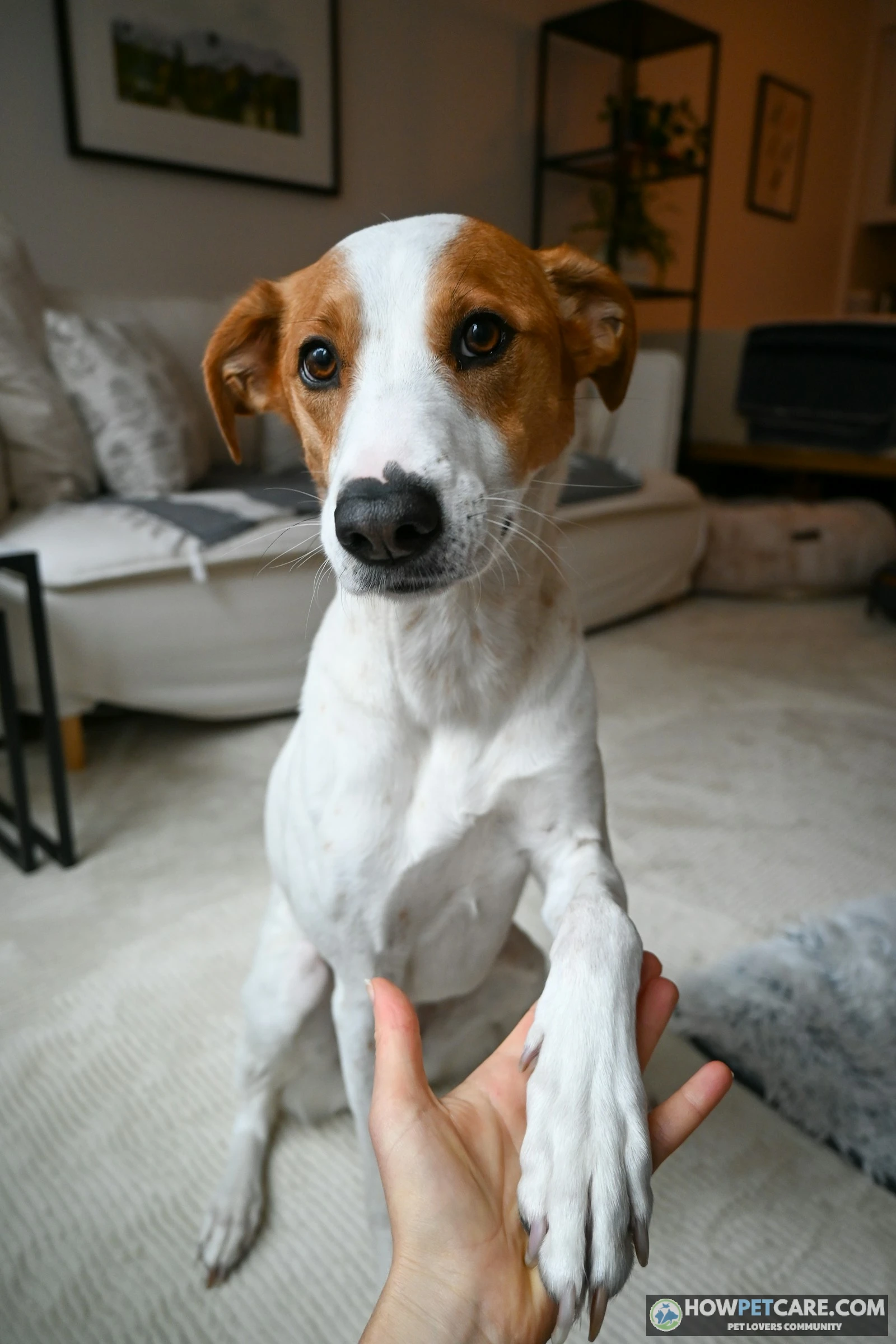

Dogs put their paw on you mainly to communicate—asking for attention, food, a walk, or for you to keep petting them. A soft paw with a relaxed body signals affection or connection; repeated hard taps are a demand; tense or out-of-character pawing can signal anxiety, pain, or a medical need.
When a dog puts a paw on you, they are usually asking for attention, asking you to keep petting them, seeking comfort, or signaling that something feels off. Context and body language reveal the difference. A relaxed, gentle touch often signals affection. Rapid, repeated tapping usually means a demand. A stiff posture points toward stress, and sudden, out-of-character pawing may reflect an underlying physical issue.
Dogs use pawing as nonverbal communication to request things such as food, a bathroom trip, attention, or comfort. Reaching out isn’t an inherent behavioral flaw; dogs also touch people they trust simply to maintain connection. The answer to “why do dogs put their paw on you” depends on what happened right before the touch, what their posture communicates, and what outcome the paw secures.
Why paws work so well: learned behavior and reinforcement
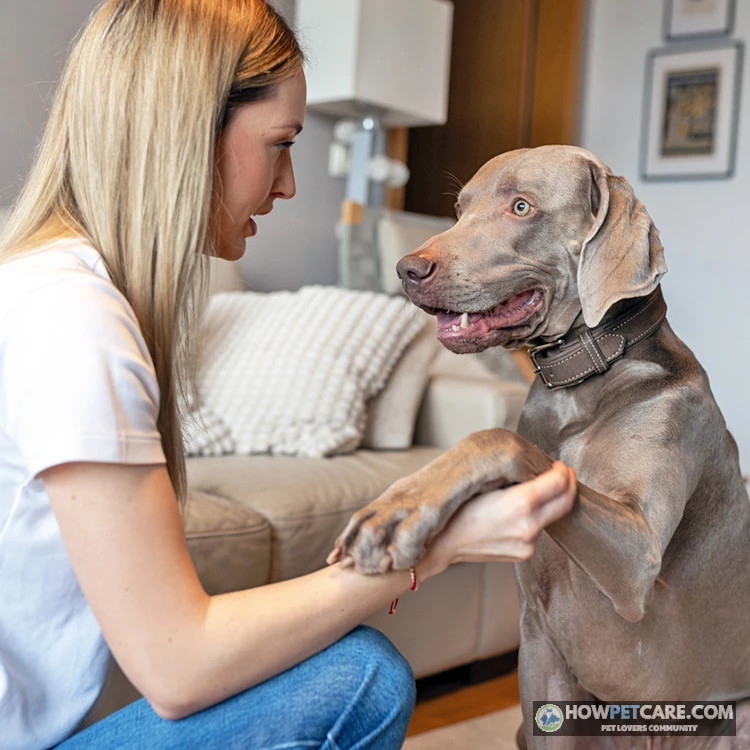
A paw offers dogs an easy, direct way to make physical contact. If your dog lifts a paw and you respond by petting them, talking, laughing, or offering food, you reinforce that action. The dog may then try it again because pawing has worked before.
Behavior professionals sometimes call a learned request for attention or petting “manding.” A paw that began as a gentle touch can become more frequent or forceful if it reliably gets a response. That does not mean your dog is being spiteful or manipulative; it means the behavior has a payoff.
Why Your Dog Paws You While You Pet Them, and Why They Paw When You Stop
If your dog paws you while you are petting them, they might be enjoying the contact, asking you not to stop, or nudging you to scratch a different spot. Soft eyes, a loose body, and slow, steady breathing confirm that the interaction feels good. If their body stiffens, their gaze hardens, or they show signs of discomfort, pause immediately rather than assuming they want more.
The “don’t stop” paw versus the “give me more” paw
A paw during petting is usually a “give me more” request; a paw the instant you stop is a “don’t stop” request, asking you to continue something they already enjoyed. That is a specific request, but it is still a request: if you want to teach polite behavior, decide whether and when you will respond rather than automatically restarting every time the paw lands.
Try a brief pause of about 3–5 seconds. If your dog stays loose and relaxed, then settles or offers one light touch, you can choose to resume petting. If the pawing gets harder or faster, or your dog adds whining or barking, the behavior is escalating into a demand. Wait for a moment with paws off, then invite a calmer behavior such as sitting before petting resumes.
This pause is a practical observation, not a definitive test of affection. Some dogs ask insistently even when they are happy; other dogs paw because they are uncomfortable. Watch the whole body and stop if your dog moves away, stiffens, or otherwise seems uneasy.
Why dogs paw you when you sit down
Sitting on a couch or at a desk puts you within easy physical reach and signals that you are available for attention. A paw on your arm or lap can be an invitation to interact, especially if it happens at the same time each day or while you are looking at a screen. If the dog looks toward a leash, bowl, toy, or door, that target may provide a clue about what they want.
How to Tell Affectionate, Demanding, Anxious, and Urgent Pawing Apart
No single cue proves what a paw means. Use the table as a pattern check: look for several cues together, then consider timing and whether this behavior is new for your dog.
The Paw Decoder: Read the Whole Dog, Not Just the Paw
| Pawing type | Tail and body posture | Eyes and gaze | Breathing and mouth | Paw pressure and timing | Likely cause | Best response |
|---|---|---|---|---|---|---|
| Affectionate | Loose or relaxed; tail neutral or gently wagging | Soft eyes, blinking, comfortable glances away | Slow, even breathing; relaxed mouth | One light touch or brief rest, often during calm time | Contact, comfort, or a request to continue | Enjoy it if you want to; quietly reward calm behavior |
| Demanding | May lean toward you or become still and intent | Hard stare or glances between you and a target | Usually normal; may include whining or barking | Repeated or escalating taps, often when you are busy | A learned request for attention or access | Avoid rewarding the paw; prompt and reward a replacement such as sit |
| Anxious | Tense, lowered, or clinging; tail may be low or tucked | Darting glances, lip licking, or visible eye whites | Panting without exertion, tight mouth, or trembling | Pawing with following or clinging; may rise during storms or departures | Stress or fear; contact may be reassuring | Reduce the trigger and offer calm support; seek help if persistent |
| Urgent | Restless, pacing, unable to settle, or guarding an area | Distressed or fixed gaze | Panting at rest, whining, or other signs of discomfort | New or out-of-character pawing, sometimes focused on one spot | A possible health, bathroom, or other immediate need | Check basic needs and look for other warning signs; contact a vet when it persists or is severe |
Run this three-question check when the meaning is unclear:
- What happened just before the paw—did you stop petting, sit down, pick up the leash, or hear thunder?
- What does the rest of the body show—relaxation, tension, panting, trembling, or restlessness?
- What did the dog get the last time they pawed—petting, food, eye contact, a walk, or reassurance?
Affectionate pawing
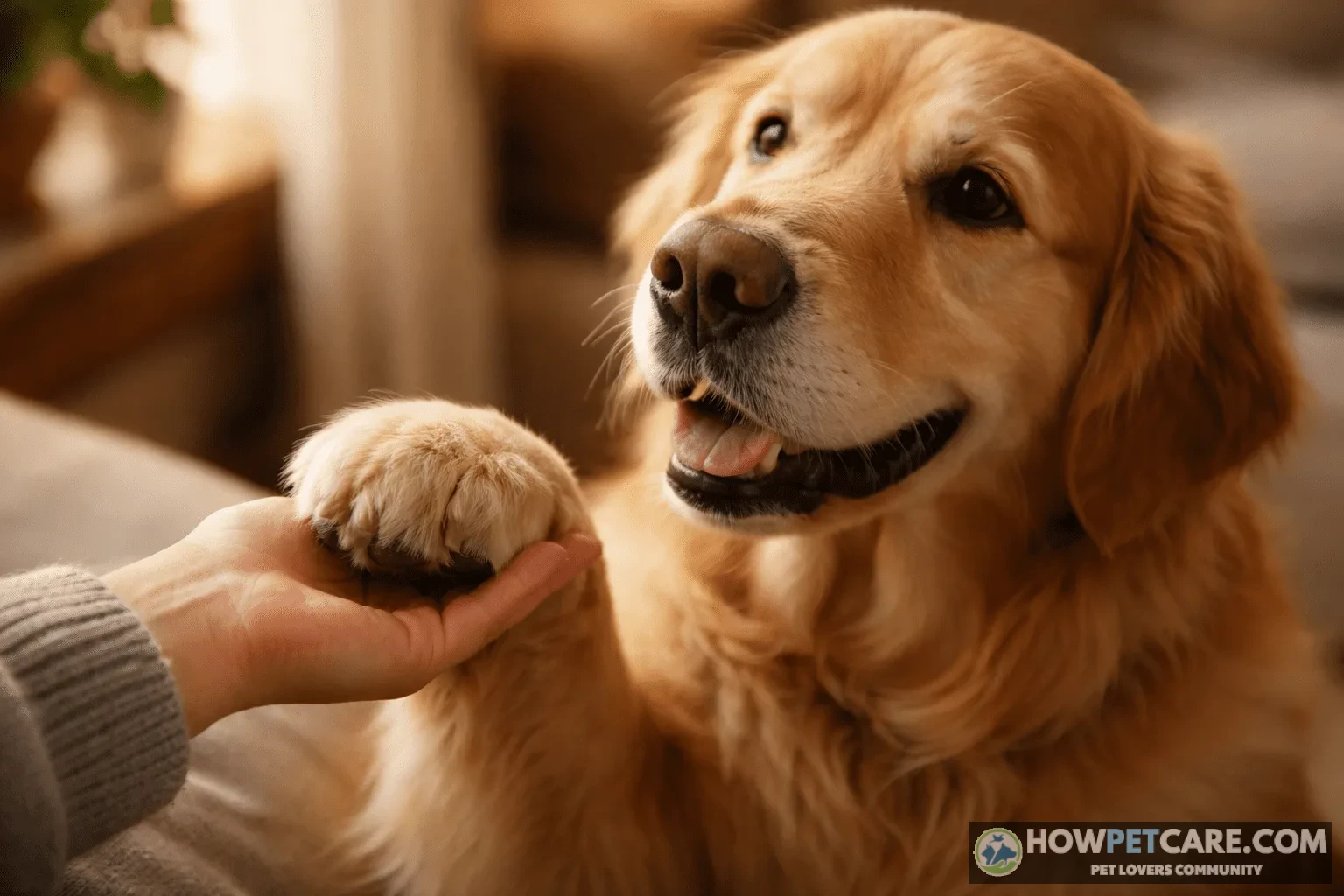
A light paw that rests briefly on you while your dog is settled may be a comfortable way to maintain contact. If you enjoy it and your dog appears relaxed, there is usually no need to stop it. You can also reward calm closeness with gentle attention rather than waiting for a paw.
Demanding (attention-seeking) pawing
Repeated taps while you are working, eating, or looking at your phone can mean your dog has learned that pawing gets a response. A wagging tail alone does not establish that the dog is relaxed or that the behavior is affectionate. If the dog is focused on a bowl, leash, door, or your hand, consider what they may be requesting and choose a consistent, polite way for them to ask.
Anxious pawing
Pawing that appears during a storm, loud noise, departure, or other stressful event may be a request for reassurance. Watch for a cluster of stress signals, such as trembling, a tucked or lowered posture, panting when the dog has not been exercising, or persistent following. Lower the trigger where possible and comfort the dog calmly. If the pattern is frequent or intense, speak with your veterinarian.
Urgent pawing
Sudden, unusual pawing paired with pacing, repeated trips to the door, vocalizing, or guarding a body part deserves a closer look. Check whether your dog needs to go outside, has access to water, or appears injured. If the behavior persists, escalates, or occurs with signs of pain or illness, contact a veterinarian rather than trying to train it away.
Paw on Your Arm, Hand, Face, Chest, or Lap: What Each Placement Usually Means
Where the paw lands can suggest what your dog wants, but placement alone cannot tell you the reason. Use it as a clue and confirm it with body language and context.
| Where the paw lands | Most likely meaning | Confirming cues | When it may be a concern | What to do |
|---|---|---|---|---|
| Arm | “Stay with me” or a request for attention | One gentle rest with a relaxed body | Repeated tapping while you work may be a learned demand | Pet briefly if you want to; for repeated tapping, prompt a sit and reward that instead |
| Hand | “Keep petting” or a request for something in your hand | It happens when petting pauses, or the dog looks toward food or a toy | Increasing force, whining, or a tense stare | Pause for 3–5 seconds and assess the whole dog; reward calm behavior, not escalating taps |
| Face or near the eyes | A bid to wake you, get your attention, or meet a need | Happens at waking or alongside a glance toward the door | Scratches can injure eyes or skin; a new nighttime pattern may warrant a check | Calmly block access and check for a practical need; keep nails trimmed |
| Chest | Closeness or comfort-seeking | The dog leans in or settles against you | Trembling, tension, or a large dog’s weight may make contact unsafe | Offer calm reassurance if the dog seems worried; redirect to paws on the floor if needed |
| Lap | Contact, a place beside you, or reassurance | The dog settles or curls up after reaching you | Clinging during storms or departures may accompany anxiety | Allow calm contact if comfortable; address the trigger if the dog seems distressed |
| Foot or leg | A request to move, go out, eat, or check in | The dog looks toward the door or bowl, or approaches during stress | Pawing with pacing may signal an unmet need | Check where the dog is looking and respond to a real need; teach a sit for routine requests |
A useful rule of thumb: the paw is the knock; the dog’s gaze and the situation often point to what they want. If the dog is tense or the behavior is new, body language and health signs matter more than paw placement.
Is Pawing Dominance? Why the Dominance Explanation Doesn’t Hold Up
A paw on you is not, by itself, good evidence that your dog is trying to establish rank. Attention, access, reassurance, and a history of being rewarded for pawing are more useful explanations to consider. Some sources have framed pawing as dominance, but that claim should not be treated as a settled explanation for this behavior.
The broader “alpha wolf” story has also been challenged. Wildlife biologist L. David Mech, whose early work helped popularize the term, later described wild wolf packs as family groups rather than unrelated animals competing for rank. The American Veterinary Society of Animal Behavior’s position statement on dominance theory advises against using dominance as a general explanation or a basis for treating pet behavior problems.
For your dog, ask what they may want, what happened just before the paw, and what response has followed it in the past. Treating a paw as a challenge can lead to punishment, which does not teach the dog what to do instead and may add fear or conflict. Rewarding a calmer alternative gives the dog a clearer way to communicate.
Puppy, Adult, and Senior Dog Pawing: What Changes at Each Life Stage
Age can shape how you respond, but it cannot tell you the meaning of a paw on its own. A change from your individual dog’s usual behavior matters more than a simple comparison with other dogs.
- Puppies: Pawing may be part of exploration, play, and bids for attention. Teach a polite alternative early: reward a sit or four paws on the floor, and avoid turning every paw into a game if you do not want the behavior to continue.
- Adult dogs: The behavior may be well established. Look at what usually follows the paw—petting, food, a walk, or conversation—and use a consistent replacement behavior when the paw is unwanted.
- Senior dogs: New or increased pawing, especially at night, deserves attention to possible discomfort, changes in vision or hearing, or confusion. Arrange a veterinary check rather than assuming it is simply an old habit.
When Pawing Is a Red Flag: Anxiety and Medical Warning Signs
There is no validated clinical cutoff for how many pawing episodes per day are abnormal. One clinical account describes 10–15 episodes a day in anxious dogs; treat that figure as a rough reason to look more closely, not a diagnostic threshold. Your dog’s baseline and accompanying signs matter more than a number by itself.
How much pawing is too much?
Occasional pawing at predictable moments—such as when you pause petting or sit down—may be ordinary communication if your dog remains relaxed and can disengage. Consider contacting your veterinarian if pawing is new or increasing, is frequent and paired with stress signals, or continues despite a consistent, gentle response.
Signs that pawing may signal pain
Pawing can accompany pain or irritation, but it cannot identify the cause. Ask your veterinarian for guidance if the behavior is sudden or persistent, especially alongside flinching when touched, guarding, limping, stiffness, restlessness, appetite or sleep changes, panting at rest, or repeatedly licking one area. Pawing at the face or mouth may also warrant a check of the eyes, ears, teeth, or mouth. Sudden pawing directed at the dog’s own body can also be a sign of a medical or skin problem that needs assessment.
Signs that pawing may signal anxiety
Pawing that spikes during storms, departures, or other predictable stressors is more concerning when paired with pacing, destruction, trembling, panting, or persistent clinginess. A veterinarian can help assess possible medical contributors and discuss whether a qualified behavior professional is appropriate.
Use this checklist as a guide to the next step:
| Warning sign | What it may point to | Threshold or pattern to watch for | Urgency | Action |
|---|---|---|---|---|
| New or rapidly increasing pawing | A change in health, stress, or routine | New behavior or a clear increase over roughly 1–2 weeks | Routine appointment unless severe signs are present | Track when it happens and book a veterinary visit |
| Frequent pawing with stress signals | Possible anxiety or distress | About 10 or more episodes a day with signs such as panting at rest, trembling, or persistent following; a rough guide, not a clinical cutoff | Routine appointment | Share a brief log and discuss the full pattern |
| Pawing focused on one body area | Possible pain or irritation | Repeatedly targets the same place, especially with licking or guarding | Prompt veterinary advice | Note the location and avoid pressing on a painful area |
| New nighttime pawing in a senior | Possible discomfort, sensory change, or confusion | A new or worsening pattern, especially with disorientation or vocalizing | Routine appointment; sooner if severe | Arrange an evaluation and note sleep or behavior changes |
| Sudden frantic pawing at the mouth or throat | A potentially serious oral or breathing problem | Sudden onset, distress, or trouble breathing or swallowing | Emergency | Seek emergency veterinary care |
| Pawing with a swollen or hard abdomen, repeated unproductive retching, or collapse | A possible life-threatening emergency | Any of these signs | Emergency | Go to an emergency veterinarian immediately |
How to Stop a Dog From Pawing at You: A Step-by-Step Redirection Protocol
This protocol is for unwanted demand pawing. First consider pain, anxiety, or another unmet need; training alone will not resolve those causes. If your dog seems frightened, injured, or unwell, prioritize calm support and veterinary guidance.
Step-by-step: no-reward timing and the sit or down replacement
- Check for a health or stress concern. Review the red flags above. If the pawing is new, escalating, directed at a body part, or paired with distress, contact your veterinarian before treating it as a manners problem.
- Stop rewarding the paw. When the paw lands, keep your hands still and avoid eye contact, talking, touching, or reaching toward the dog. Wait for the paw to come off. “No reward” means not giving even a scolding or quick glance, since those can still be attention.
- Teach a replacement behavior. Choose “sit” or “down.” Practice in a calm setting and reward the behavior with a treat or petting so your dog understands it before you use it during a pawing episode.
- Prompt before the paw starts. At predictable times—when you sit down, prepare food, or pick up your phone—cue the replacement first. Reward the sit or down as soon as it happens, before the paw arrives.
- If the paw returns, stay consistent. Pause interaction again and wait for a brief moment with paws off. Then cue the replacement and reward that behavior. Pawing may briefly intensify when a familiar response stops working; avoid giving in to a harder paw, which can teach the dog that persistence pays.
- Use a calm reset for scratching. If the paw hurts, stand up or step away briefly without pushing, grabbing, or yelling. Keep nails trimmed, and restart interaction when your dog is calm and has four paws on the floor.
- Meet the underlying need on a schedule. Provide predictable opportunities for walks, play, attention, and enrichment rather than letting pawing set the schedule. Ask everyone in the household to follow the same rule.
Expect an established habit to take time to change; consistency matters more than reacting perfectly once. If the behavior does not improve after a few weeks of consistent practice, or it escalates to frantic behavior or aggression, consult a qualified force-free trainer or veterinary behavior professional.
Will teaching “shake” or “high five” fix pushy pawing or make it worse?
It can go either way. A paw trick may give the behavior a clear cue, but rewarding unprompted pawing while teaching it can strengthen the very behavior you want to reduce. If you teach “shake” or “high five,” reward it only when you ask for it and have everyone follow that rule. If your dog already paws insistently or the household is unlikely to keep the distinction clear, teach sit or down instead.
Your Next Step: A Quick Decision Checklist for Reward, Redirect, or Respond
The next time your dog paws you, use this order:
- Is the behavior new, escalating, or paired with signs of pain or illness? Contact your veterinarian; seek emergency care for severe signs such as collapse, trouble breathing, or repeated unproductive retching.
- Does your dog look tense, tremble, pant at rest, or cling during a clear trigger? Reduce the trigger and offer calm support. Ask your veterinarian for help if the pattern is persistent or intense.
- Is the paw light and the body relaxed? If you welcome the contact, enjoy it. You can also reward calm closeness without waiting for the paw.
- Is the paw repeated, aimed at a target, or escalating to get a response? Avoid rewarding the paw and prompt a sit or down instead.
For three days, jot down the time, location, what happened just before the paw, where it landed, accompanying body-language cues, and what happened afterward. This short log can show whether the behavior follows a predictable trigger or is changing. Bring the log and a few short videos to a veterinarian or trainer; include when the behavior started and any changes in sleep, appetite, movement, or routine.
1What behavioral term is used by professionals to describe a dog's learned action of requesting attention, food, or petting through a physical gesture like pawing?
This term refers to a learned request that persists because it reliably yields a specific payoff or outcome for the animal.
2Why is attributing a dog's pawing behavior to 'dominance' considered flawed according to modern behavioral science?
Veterinary behavior organizations and wildlife research show that pawing is driven by reinforcement history, comfort-seeking, or unmet needs rather than rank-seeking.
3If a dog places a paw on your hand immediately after you stop petting them, what request are they most likely making?
Pawing the instant petting ceases directly asks the human to resume an activity the dog was currently enjoying.
4In the step-by-step redirection protocol for demand pawing, what action should you take during the 'stop rewarding the paw' phase?
Even negative responses like scolding or looking at the dog can act as attention reinforcement, so total disengagement is required.
5Which set of symptoms alongside pawing indicates a medical emergency requiring immediate veterinary attention?
These specific signs point toward potential severe, life-threatening internal distress that demands emergency care.
6What is the recommended approach if an owner decides to teach a trick like 'shake' or 'high five' to a dog prone to pushy pawing?
Enforcing strict rule clarity ensures the dog learns that pawing only yields rewards on request, avoiding accidental reinforcement of pushy habits.
7Why should a sudden onset of nighttime pawing in a senior dog be evaluated by a veterinarian rather than treated as a simple habit?
New or worsening behavioral patterns in aging dogs often stem from medical issues, joint pain, or vision/hearing changes requiring clinical care.
8What brief diagnostic step is recommended during petting to check whether a dog is making a gentle request or escalating a demand?
A short pause lets you observe whether the dog settles calmly or escalates into pushy taps, whining, or barking.
9How should an owner respond to anxious pawing that occurs during a thunderstorm or loud noise event?
Providing quiet support to a fearful dog helps soothe their anxiety and does not worsen or 'reinforce' the underlying emotion of fear.
10According to the body language decoder, which cluster of signals identifies demanding pawing?
Persistent taps combined with intent eye contact toward an outcome (like food or a door) characterize learned attention-seeking.
| Pawing type | Tail and body posture | Eyes and gaze | Breathing and mouth | Paw pressure and timing | Likely cause | Best response |
|---|---|---|---|---|---|---|
| Affectionate | Loose or relaxed; tail neutral or gently wagging | Soft eyes, blinking, comfortable glances away | Slow, even breathing; relaxed mouth | One light touch or brief rest, often during calm time | Contact, comfort, or a request to continue | Enjoy it if you want to; quietly reward calm behavior |
| Demanding | May lean toward you or become still and intent | Hard stare or glances between you and a target | Usually normal; may include whining or barking | Repeated or escalating taps, often when you are busy | A learned request for attention or access | Avoid rewarding the paw; prompt and reward a replacement such as sit |
| Anxious | Tense, lowered, or clinging; tail may be low or tucked | Darting glances, lip licking, or visible eye whites | Panting without exertion, tight mouth, or trembling | Pawing with following or clinging; may rise during storms or departures | Stress or fear; contact may be reassuring | Reduce the trigger and offer calm support; seek help if persistent |
| Urgent | Restless, pacing, unable to settle, or guarding an area | Distressed or fixed gaze | Panting at rest, whining, or other signs of discomfort | New or out-of-character pawing, sometimes focused on one spot | A possible health, bathroom, or other immediate need | Check basic needs and look for other warning signs; contact a vet when it persists or is severe |
FAQ
Is it bad if my dog puts his paw on me?
Usually not. A light, occasional paw touch with a relaxed body is normal communication. It becomes a concern if it is new, frequent, hard enough to scratch, or comes with signs of stress or pain.
Does a dog putting a paw on you mean they love you?
Sometimes. A soft paw with relaxed eyes and body can express comfort and closeness. Dogs also paw to ask for things, so check the context and body language before reading it as affection.
Why does my dog paw me and then stare?
A paw followed by a direct stare is usually a request. The dog wants something such as food, a walk, play or petting, and is checking whether you noticed.
Why does my dog scratch me hard with his paw?
Hard or scratchy pawing is usually an escalated demand, because lighter touches did not work, or a sign of excitement or anxiety. Keep nails trimmed, avoid rewarding the scratch, and redirect to a sit.
Should I comfort my dog when he paws me because he’s scared?
Yes, calmly. Comforting a frightened dog does not make the fear worse. Keep your tone quiet, reduce the trigger if you can, and ask your vet about the pawing if anxiety is frequent.