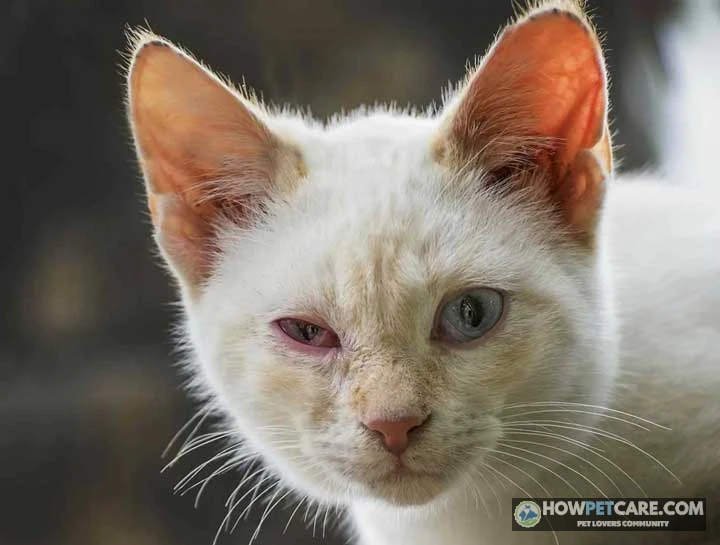

Cat pink eye (conjunctivitis) is inflammation of the tissue lining the eyelids and covering the white of the eye. Mild redness or discharge without pain or cloudiness warrants a vet call within 24 hours; cloudiness, visible injury, severe pain, a bulging eye or an eye held shut needs emergency care now.
A red, swollen or watery eye may be cat pink eye, but it could also be a scratch, ulcer or another problem that puts vision at risk. If your cat’s eye looks cloudy, is visibly injured or bulging, or is held tightly shut, seek emergency veterinary care now. For mild redness or discharge without obvious pain or vision changes, contact your veterinarian within 24 hours. While you wait, gently clean away discharge.
Cat pink eye, or conjunctivitis, is inflammation of the tissue lining the eyelids and covering the white of the eye. The term describes what’s inflamed, not what caused it. This guide can help you decide what to do next, but it can’t replace a veterinary diagnosis.
Cat pink eye: symptoms and when to seek urgent care
Common signs of cat conjunctivitis include redness, swollen eyelids or pink tissue around the eye, extra blinking, squinting and discharge. Discharge may be watery or thick. The third eyelid—the pale membrane at the inner corner of the eye—may also look more prominent or swollen. One eye or both can be affected.

A cat eye infection is one possible cause, but an irritated-looking eye isn’t necessarily infected. Several eye conditions look alike, so use the checklist below to decide how quickly to seek help. Don’t try to diagnose the cause by appearance alone.
Go now: signs that threaten vision
Take your cat to an emergency veterinarian now if you notice any of these signs:
- The normally clear surface of the eye looks cloudy, milky or bluish.
- You see a spot, dent, scratch or other suspected corneal ulcer on the eye’s surface.
- Your cat holds an eye tightly shut, paws at it persistently or seems to be in marked pain.
- The eye looks bulging, or the pupils are noticeably different sizes—a possible sign of Horner’s syndrome in cats.
- Your cat has had a fight, scratch, chemical splash or other eye injury.
- Your cat suddenly seems unable to see normally, bumps into objects or misjudges jumps.
- Swelling is severe, especially if the eye can’t open normally.
- A very young kitten has a swollen or sealed eye.

If a chemical splashes into the eye, call an emergency veterinarian immediately for instructions while arranging care. Don’t delay the call to look for a home remedy.
Call within 24 hours: mild signs without red flags
Contact your regular veterinarian within 24 hours if your cat has mild redness, occasional squinting or watery discharge, but the eye opens normally, stays clear and has no visible injury. Your cat should also be eating, drinking and acting normally. Tell the clinic what you’re seeing and ask whether your cat needs an appointment sooner.
You can watch very brief watering after a known irritant, such as dust, if it’s clearly improving and no warning signs are present. Don’t wait if redness persists, squinting continues or discharge worsens. If you’re unsure which category fits, call a veterinarian for advice. Seek emergency care if a go-now sign appears.

What causes cat conjunctivitis, and can symptoms distinguish them?
Infections commonly cause feline conjunctivitis, and viral causes are more common than bacterial ones. Irritation and injury can inflame the eye, too. The pattern may give your veterinarian clues, but it can’t reliably identify the cause at home.
| Possible cause | Common clues | One or both eyes | Why signs are not diagnostic |
|---|---|---|---|
| Viral infection | Watery discharge, blinking, sneezing or nasal discharge; signs may recur | Either or both | Respiratory signs occur with several infections, and discharge can change as inflammation increases. |
| Bacterial infection | Swollen tissue and discharge that may be thick or colored | Either or both | Thick discharge doesn’t prove bacteria started the problem; bacteria may accompany another cause. |
| Allergy or irritant | Watery eyes, redness or rubbing; an exposure may be apparent | Often both, though local irritation can affect one | Infections can cause similar signs, and an irritating particle can also injure the eye. |
| Injury or foreign material | Sudden tearing, squinting or pawing, sometimes after a known scratch | Often one | A small scratch, ulcer or trapped particle may not be visible without an examination. |
A sudden problem in one eye makes a local irritant, foreign object or injury worth considering, but infection is still possible. Discharge color alone can’t tell you which medication is appropriate.

Infectious causes: viruses and bacteria
Feline herpesvirus-1, often shortened to FHV-1, is an important cause of conjunctivitis. Feline calicivirus can also cause eye signs and an upper respiratory infection, which may bring sneezing or nasal discharge. More than one problem can be present at a time.
Bacteria associated with feline conjunctivitis include Chlamydia felis, also known by its older name, Chlamydophila felis, and Mycoplasma species. Bacterial infection can occur on its own or alongside another disease. In selected cases, a veterinarian may recommend testing rather than assume thick discharge identifies the organism.
Non-infectious causes: allergies, irritants and injury
Dust, smoke, cleaning products, foreign material and injuries can irritate an eye. Allergies are another possibility, but don’t assume watery eyes are allergic just because both eyes are involved.
An eyelid that rolls inward, called entropion, can irritate the eye; some flat-faced breeds are predisposed. A corneal ulcer—a defect in the clear surface at the front of the eye—is especially important to rule out when there’s pain, cloudiness or a possible scratch.
Safe home care for cat pink eye while you wait for the vet
Gentle cleaning can make your cat more comfortable and remove crusts, but it won’t cure an infection or repair an injury. Use these measures only while following the triage guidance and waiting for veterinary advice.
Clean discharge without irritating the eye
- Wash your hands and get a clean, soft cloth or gauze pad.
- Dampen it with sterile saline eye rinse or clean lukewarm water. It should feel comfortably warm, not hot.
- Hold it gently against dried discharge to soften the crust. Don’t press on the eyeball.
- Wipe discharge outward from the inner corner without rubbing. Use a separate clean pad or cloth for each eye.
- Stop if your cat resists, the eye seems painful or you’d have to force the eyelids open. Call the veterinarian instead.

If your cat is rubbing the eye, a properly fitted Elizabethan collar can help prevent further self-injury while you arrange care. It isn’t a substitute for an examination. Keep your cat indoors while the eye is irritated and until the veterinarian advises otherwise.
Human products and home remedies to avoid
Don’t put skin-formulated Neosporin in your cat’s eye. It isn’t an ophthalmic product, and some topical antibiotics containing neomycin or polymyxin B have been associated with rare, severe allergic reactions in cats. Some ophthalmic products containing these ingredients are used under veterinary supervision, but that doesn’t make a skin ointment or an old tube safe to use without advice.
Steroid eye medications, including products containing dexamethasone or prednisolone, can delay healing and worsen an undiagnosed corneal ulcer. A painful red eye may have an ulcer even if you can’t see one. Don’t reuse medication from an earlier episode unless your veterinarian tells you to.
Avoid human redness-relief drops, contact-lens cleaning solutions, herbal preparations and other medicated products unless your veterinarian specifically recommends them. There’s no universal best over-the-counter eye drop for cats; the right treatment depends on the examination and the cause. Ask the clinic before buying a medicated product.
How vets diagnose and treat feline conjunctivitis
Your veterinarian will look beyond the redness. The examination helps show whether the problem is limited to the conjunctiva or also involves the cornea, eyelids or other structures. Tell the clinic when the signs began, whether one or both eyes are affected, and whether your cat has been sneezing, fighting or exposed to an irritant.
Eye examination and diagnostic tests
A fluorescein stain uses dye to help reveal damage to the corneal surface, including many ulcers. A Schirmer tear test measures tear production when the veterinarian needs to assess it. Depending on the findings, the clinic may suggest other tests.
A PCR test looks for genetic material from selected infectious agents. It may help in recurrent, severe or multi-cat cases, but not every first visit requires one. Results also need to be interpreted alongside the examination; they aren’t a complete diagnosis on their own.
Prescription treatment and kitten care
Treatment depends on the examination findings. For a suspected bacterial infection, the vet may prescribe antibiotic cat eye drops or ointment. Selected herpesvirus cases may need antiviral treatment, while an injury or another source of inflammation calls for its own treatment plan.
Terramycin ophthalmic ointment is an antibiotic product used for certain eye infections, not a universal remedy. Antibiotics don’t cure viral infections. Availability and suitability vary, so ask your veterinarian instead of choosing a product based on another cat’s prescription. Other antibiotics, including Vetropolycin, may also be used under veterinary direction.
Kittens need prompt attention. Contact a veterinarian about a kitten with eye discharge or swelling; a very young kitten with a sealed or swollen eye needs emergency assessment. Don’t force a kitten’s eyelids apart or use medication left over from an adult cat. Young cats are at increased risk of conjunctivitis.

How to give prescribed cat eye drops or ointment

Ask the clinic to demonstrate if you’re unsure. Before you start, check the label for the correct eye, amount and schedule. If the eye seems too painful to handle or your cat struggles intensely, stop and call the clinic rather than forcing treatment.
-
Prepare the supplies
Wash your hands and have the prescribed medication, a clean damp pad and a towel within reach. Gently wipe away discharge first, without pressing on the eye.
-
Position your cat
Place your cat on a stable surface. Loosely wrap the body in a towel with the head free, or ask a helper to provide gentle restraint. Do not put pressure on the eye.
-
Steady the head
Approach from the side or above and gently support the head. Resting the hand holding the medication against the head can help it move with your cat rather than toward the eye.
-
Make a lower-lid pocket
Gently pull down the lower eyelid with a finger. Do not force the eye open if your cat resists or appears painful.
-
Apply the medication
Place the prescribed number of drops or prescribed ribbon of ointment into the lower-lid pocket. Keep the applicator tip from touching the eye, lashes, skin or fur.
-
Let your cat blink
Release the eyelid and let your cat close the eye naturally. Recap the medication and wash your hands. If the tip touched a surface, ask the clinic how to handle it before the next dose.
-
Follow the plan
Give each dose for the duration on the label. If using more than one eye product, ask the clinic about the order and spacing; ask what to do if a dose is missed.
Don’t stop a prescribed course just because the redness disappears. If you suspect a reaction, contact the veterinarian for instructions. Severe swelling, breathing difficulty or collapse after medication requires emergency care.
Cat eye infection vet costs in the United States
The cost depends on where you live, the clinic, how urgent the visit is, which tests are needed and the medication selected. Emergency or specialist visits may cost more than routine appointments. Before non-emergency services, ask for an itemized estimate that includes any examination, sample collection, laboratory and medication charges.
Reliable, independently supported US price ranges for the services below weren’t available to cite here. The table lists what to ask about rather than presenting unverified figures as quotes.
| Service or prescription | Source-supported price range | When it may be needed | Cost caveats |
|---|---|---|---|
| Routine veterinary exam | Not verified | To assess a red or discharging eye | Ask whether the quoted exam includes basic eye tests. |
| Fluorescein stain | Not verified | To check for corneal surface damage | It may be billed separately or included in an examination package. |
| Schirmer tear test | Not verified | When the veterinarian needs to assess tear production | Ask whether the test is included in the examination fee. |
| PCR panel | Not verified | Selected recurrent, severe or multi-cat cases | Ask whether the quote includes collection and outside laboratory charges. |
| Prescribed eye medication | Not verified | When the examination supports medication | Price varies with the drug, formulation, quantity and dispensing clinic. |

If money is tight, tell the clinic when you call. Ask which examination and tests matter most first, whether there are alternatives, and what payment options are available. If you see an emergency sign, explain your budget as you arrange immediate care; don’t delay the call.
Recovery, recurrence and contagiousness in multi-pet homes
Healing time and herpesvirus flare-ups
Recovery depends on the cause, any corneal injury and the prescribed treatment. Some antibiotic eye treatments are given for approximately two to three weeks, but that doesn’t guarantee every cat will heal on that schedule. Redness or discharge may improve before healing is complete, so follow the prescribed course and attend any recommended recheck.
Ask your veterinarian when your cat should start to improve and when to return for a recheck. Contact the clinic sooner if signs worsen or don’t improve within the timeframe it gives you. New cloudiness, marked pain or vision changes call for emergency care.
Feline herpesvirus can remain inactive in the body for life and become active again, sometimes around stress or illness. A flare can bring another episode of eye or respiratory signs, but not every recurring red eye is herpes. Even an indoor cat can develop conjunctivitis or have a herpesvirus flare. Have a new episode assessed rather than automatically reusing an old prescription.
Protecting other cats, dogs and people
Other cats: Infectious causes can spread between cats. If infection is suspected, separate the affected cat from other cats where practical, avoid sharing bowls and bedding, and wash your hands after handling discharge or medication. Ask your veterinarian when normal contact can resume.

Dogs: Feline herpesvirus is species-specific and doesn’t infect dogs. Other causes rarely spread from cats to dogs, but the risk depends on the organism. Tell your veterinarian if another pet develops eye or respiratory signs, including teary eyes in dogs.
People: Feline herpesvirus doesn’t infect humans. Human infection associated with feline Chlamydia felis is considered rare but possible. Wash your hands after handling your cat or cleaning discharge, and avoid touching your own eyes. Someone who is immunocompromised can ask their health care professional about appropriate precautions.
Your next steps for a cat with a red or swollen eye
- Check for emergency signs. Seek emergency care now for cloudiness, significant pain, an eye held shut, injury, severe swelling or sudden vision changes.
- Call about mild signs. If redness or discharge is mild and there are no red flags, contact your veterinarian within 24 hours. Seek urgent reassessment if the eye worsens.
- Keep interim care gentle. Wipe away discharge with a clean damp cloth, prevent rubbing with a properly fitted collar if needed, and avoid unapproved eye products. Separate the affected cat from other cats if infection is suspected.
- Prepare for the call. Note when signs started, which eye is affected, any sneezing or possible injury, and any medication already used. Ask for an estimate and a follow-up timeframe.
| Possible Cause | Common Clues | Affected Eyes | Diagnostic Limitations |
|---|---|---|---|
| Viral infection | Watery discharge, blinking, sneezing or nasal discharge; signs may recur | Either or both | Respiratory signs occur with several infections, and discharge can change as inflammation increases. |
| Bacterial infection | Swollen tissue and discharge that may be thick or colored | Either or both | Thick discharge doesn't prove bacteria started the problem; bacteria may accompany another cause. |
| Allergy or irritant | Watery eyes, redness or rubbing; an exposure may be apparent | Often both, though local irritation can affect one | Infections can cause similar signs, and an irritating particle can also injure the eye. |
| Injury or foreign material | Sudden tearing, squinting or pawing, sometimes after a known scratch | Often one | A small scratch, ulcer or trapped particle may not be visible without an examination. |
FAQ
Can a cat with pink eye go outside?
Keep the cat indoors while the eye is irritated and until a veterinarian advises otherwise. This limits exposure to irritants and potential contact with other cats if the cause is infectious.
Can an indoor cat get conjunctivitis?
Yes. Indoor cats can develop conjunctivitis from infections, allergies, irritants or injury; a latent feline herpesvirus infection can also flare up later in life.
Should I stop my cat’s eye medication when the redness disappears?
Follow the veterinarian’s prescribed duration rather than stopping as soon as the eye looks better. Contact the clinic if you suspect a side effect or are unsure how long to continue.
Can stress cause a cat’s pink eye to return?
Stress can trigger a flare-up of latent feline herpesvirus, which may cause conjunctivitis. A recurring red eye can have other causes too, so a veterinarian should assess it rather than assume it is herpes.
Can cat pink eye go away on its own?
Very mild watering after a known irritant, such as dust, may clear without treatment if it is clearly improving. Persistent redness, worsening discharge or any warning sign needs veterinary assessment rather than a wait-and-see approach.