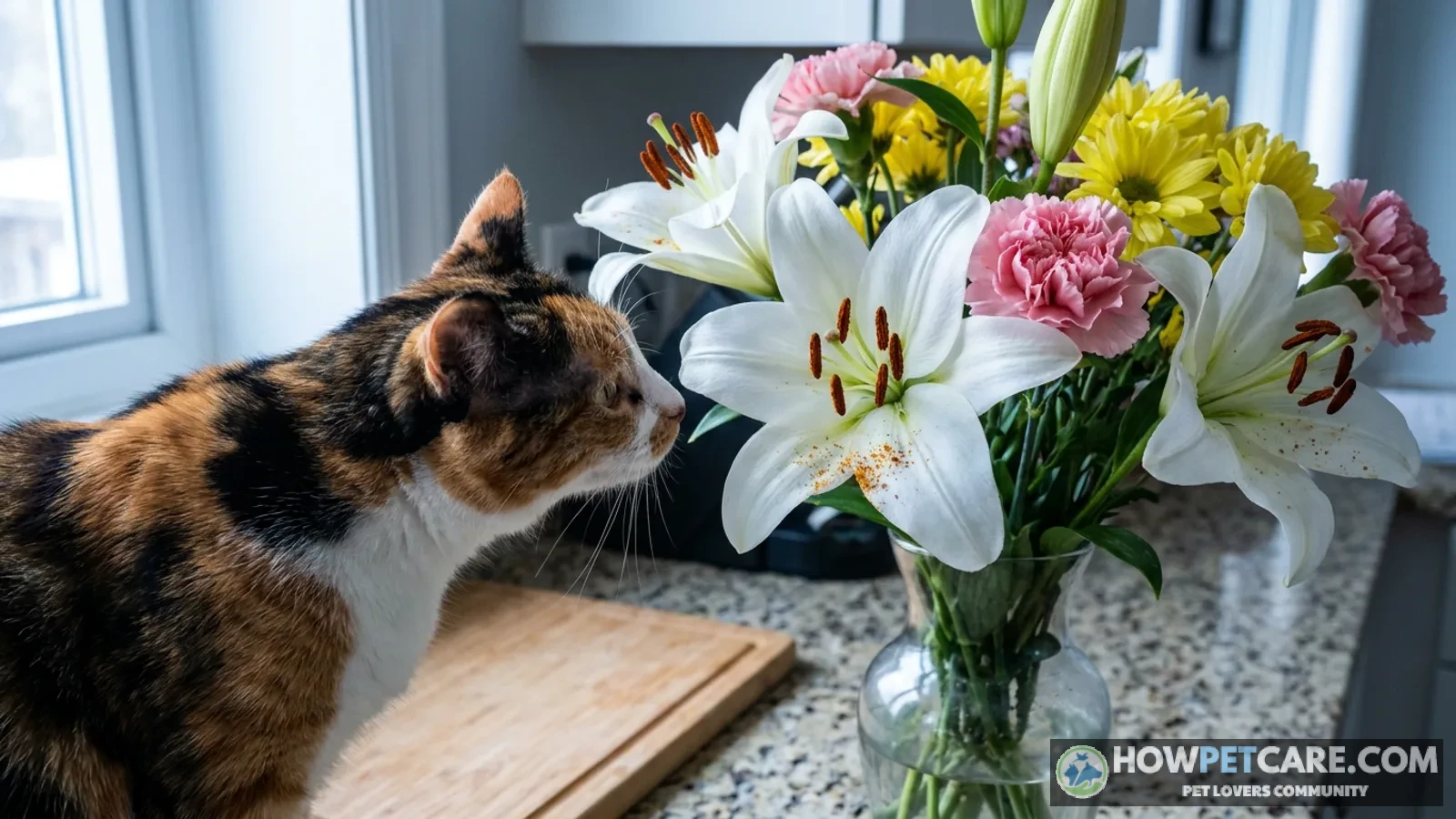

True lilies (Lilium and Hemerocallis) are the most dangerous flowers for cats—every part, including pollen and vase water, can cause acute kidney failure. Tulips, daffodils, azaleas, oleander, sago palm, hyacinth, and chrysanthemums are also toxic to cats. Roses, sunflowers, orchids, and gerbera daisies are generally safer alternatives.
True lilies are the emergency exception. Every part of a true lily—the petals, leaves, pollen, and even the vase water—can cause acute kidney failure in cats, sometimes from a very small exposure. Common toxic flowers include tulips, daffodils, azaleas, oleander, and sago palm. Roses are generally not toxic to cats, though thorns and pesticide residues can still cause injury.
This guide gives you a cat-specific, veterinarian-cited reference. It ranks toxic flowers by severity, shows you how to tell true lilies apart from safe look-alikes, audits mixed-bouquet greenery and vase water, lists safe alternatives, and provides a time-based emergency plan for the first 1 to 36 hours after possible exposure.
Toxic Flowers for Cats: Fast Answer and Lilies Warning
Flowers toxic to cats at a glance
If your cat has nibbled a flower or you are checking a bouquet before it enters your home, start here. This article covers cats only; do not merge dog and cat plant lists because toxicity differs sharply between species.
The most dangerous flowers for cats are true lilies in the Lilium and Hemerocallis groups, such as Easter lily, tiger lily, stargazer lily, and Asiatic lily. Every part is toxic—pollen, leaves, petals, and vase water—and even tiny amounts can trigger acute kidney injury.
Other flowers that can poison cats include whether tulips are toxic to cats, daffodils, whose bulbs and roots carry the highest concentration of toxins; azaleas and rhododendrons; oleander; sago palm; hyacinth bulbs; and chrysanthemums, which contain pyrethrins. Baby’s breath is a low-level irritant that can cause mild vomiting or diarrhea.
Why true lilies are the emergency exception
True lilies stand apart because they can cause rapid, life-threatening kidney failure in cats from minimal exposure. Dogs may develop only mild stomach upset from lilies, but cats are uniquely vulnerable. Do not assume a bouquet is safe because a lily stem looks tucked away. Pollen can fall onto fur, be groomed off, and still poison the cat.
Cat-Specific Toxicity Table: Severity, Symptoms, and Toxic Parts
The table below ranks toxic flowers specifically for cats by severity, symptoms, toxic parts, and typical onset. It is not an alphabetical list mixed with dog plants. Dose thresholds appear only where veterinary sources support them.
Toxic Flowers for Cats by Severity, Symptoms, and Toxic Parts
| Flower | Severity for cats | Toxic parts | Key symptoms | Typical onset |
|---|---|---|---|---|
| True lily (Lilium, Hemerocallis) | Life-threatening | All parts, including pollen, leaves, petals, and vase water | Vomiting, lethargy, drooling, reduced urination | 0–6 hours |
| Tulip / daffodil bulb | Moderate to high | Bulb and roots most concentrated; leaves and flowers lower risk | Vomiting, diarrhea, drooling, abdominal pain | 15 minutes–2 hours |
| Azalea / rhododendron | High | Leaves, nectar, flowers | Vomiting, diarrhea, weakness, abnormal heart rate | 2–6 hours |
| Oleander | High | Leaves, stems, flowers, sap | Vomiting, diarrhea, drooling, arrhythmia, collapse | 30 minutes–2 hours |
| Sago palm | Life-threatening | Seeds most dangerous; also leaves and roots | Vomiting, diarrhea, liver failure, bleeding | 15 minutes–12 hours |
| Chrysanthemum | Low to moderate | Leaves, flowers, stems | Drooling, vomiting, skin irritation, ataxia | 1–4 hours |
| Hyacinth | Moderate | Bulb most concentrated; flowers and leaves lower risk | Vomiting, diarrhea, tremors in large exposures | 15 minutes–2 hours |
| Baby’s breath | Low irritant | Flowers and foliage | Mild vomiting or diarrhea, throat irritation | 1–4 hours |
High-risk flowers
True lilies and sago palm are life-threatening. Oleander and azalea are high-risk because they can affect the heart and cause collapse. Tulip, daffodil, hyacinth, and chrysanthemum exposures are moderate to high depending on which part was eaten and how much.

Moderate-risk flowers
Baby’s breath and some filler flowers are low-level irritants. They rarely cause life-threatening illness, but they can still make a cat vomit or develop throat irritation. Treat any unexplained vomiting after flower contact as a reason to call a veterinarian.
How to Visually Identify True Lilies vs Safe Look-Alikes
This section answers how a cat owner can visually tell true lilies apart from safer look-alike flowers before bringing a bouquet inside.
True lily identification cues
Use this home identification checklist to audit any flower you receive or buy.
- Count the petals: true lilies usually show 6 large, showy tepals in a trumpet or bowl shape.
- Check the center: true lilies have 6 prominent stamens with large, pollen-heavy anthers.
- Look for pollen: orange, yellow, or brown pollen that brushes onto fur or surfaces is a major exposure risk.
- Inspect stems and leaves: true lilies often have whorled or scattered lance-shaped leaves along an upright stem.
- Check the bulb or root: true lilies grow from scaly bulbs; remove and discard bulb debris, soil, and water.
- Confirm the exact name: only Lilium and Hemerocallis are true lilies; Easter lily, tiger lily, stargazer, daylily, and Asiatic lily are all high-risk.
- Do not rely on common names: calla lily, peace lily, and lily of the valley are not true lilies but can still be harmful.
- Audit hidden material: break open bouquets and check for stray lily buds, petals, pollen dust, and stems tucked among fillers.
- Safer look-alikes to compare: orchids have waxy blooms and a central column; roses have layered petals and thorny stems; calla lilies have a single spathe and spadix.
- If any item is uncertain, treat the flower as a lily until a florist or veterinarian confirms the species.

Safer look-alike flowers
Orchids, roses, sunflowers, gerbera daisies, zinnias, snapdragons, lisianthus, and alstroemeria are generally considered safer for cat households than true lilies. Alstroemeria, often called Peruvian lily, is not a true lily but may still cause mild stomach upset, so keep it out of reach.

Mixed-Bouquet Ingredient Audit: Greenery, Fillers, and Vase Water
Competitor guides often ignore everything except the blooms. This section audits bouquet greenery, fillers, dried and treated flowers, and vase water.
Greenery and filler checklist
Use this checklist for store-bought and gifted bouquets before they enter cat-accessible areas.
- Read the full ingredient list, including greenery, fillers, accents, and preservatives.
- Flag baby’s breath: usually a mild irritant, but remove it from cat-accessible arrangements.
- Flag eucalyptus: treat as toxic; avoid in homes with cats.
- Flag ivy and trailing vines: treat as toxic; avoid or place completely out of reach.
- Flag ferns: asparagus fern and some decorative ferns can irritate skin or cause GI upset; verify the exact species.
- Check for dried, preserved, dyed, or bleached flowers: these may carry added chemicals, fragrances, or dyes.
- Inspect for glitter, paint, floral foam, wire, and adhesive: these are choking, ingestion, or chemical hazards.
- Remove fallen petals, pollen, and leaf debris daily; cats can ingest residue while grooming.
- Empty and wash the vase every 1–2 days; do not let a cat drink vase water.
- Keep all bouquet components, including wrappers and tags, away from cats until disposal.
- For gifted bouquets, photograph the arrangement and ask the sender or florist for the ingredient list before bringing it indoors.

Common bouquet greenery such as baby’s breath and eucalyptus are poisoning risks that buyers often overlook. Baby’s breath contains saponin and can irritate the throat and stomach. Eucalyptus should be treated as toxic for cats.
Dried, preserved, and treated flowers
Drying does not reliably remove plant toxins. Dried, preserved, dyed, or chemically treated flowers may still contain toxic plant material plus added fragrances, dyes, or preservatives. Treat them with the same caution as fresh flowers. Vase water can hold pollen, fallen petals, and leaf toxins, so never let a cat drink it. Florist preservatives can cause stomach upset and add risk if the water also contains toxic plant material.
Safe Flower Alternatives for Cat Homes
Safe bouquet swaps
Replace toxic ingredients with cat-safer options that still look attractive in arrangements.
Safe Flower Substitution Guide for Cat Homes
| Safe alternative | Best use | Visual substitute for | Notes for cat homes |
|---|---|---|---|
| Rose | Centerpiece or gift bouquet | Lily trumpet shape is not matched, but adds classic volume | Remove thorns; avoid pesticide-treated florist roses if the cat chews stems |
| Orchid | Tabletop display | Long-lasting elegant bloom | Not a true lily; still discourage chewing and remove fallen blooms |
| Sunflower | Large focal flower | Bold daisy-like focal point | Petals and seeds are generally low risk, but pesticides and moldy seeds matter |
| Gerbera daisy | Bright mixed bouquet | Colorful focal flower | Use as a safer substitute for tulip color; remove damaged petals promptly |
| Zinnia | Garden-style arrangement | Filler color and texture | Generally considered cat-safer; avoid treated plants |
| Snapdragon | Vertical accent | Height in mixed bouquets | Safer vertical accent than lily stems; still monitor for chewing |
| Lisianthus | Romantic bouquet | Soft ruffled petals | Not a true lily; verify species and avoid unknown mixed filler |
| Alstroemeria | Lily-like look | Visual lily substitute | Often called Peruvian lily but is not a true lily; may still cause mild GI upset |

Indoor cat-safe flowers
Flowers generally considered non-toxic for cats include roses, sunflowers, orchids, gerbera daisies, snapdragons, zinnias, asters, and alstroemeria. No plant is completely risk-free if pesticides, thorns, or treated soil are present. Keep all arrangements out of chewing reach and monitor your cat after any new flower enters the home. For a broader household review, see our guide to plants safe for cats.
Time-Based Lily Emergency Plan: 1, 6, and 12 to 36 Hours
If you suspect your cat has been exposed to a true lily, treat it as an emergency immediately. Do not wait for symptoms to appear.
Lily Exposure Emergency Decision Tree
- 0–15 minutes: Remove the cat from the flowers, stop grooming by gently wiping pollen from fur with a damp cloth, and remove plant debris from the mouth if safely possible.
- 0–15 minutes: Do not induce vomiting unless a veterinarian or poison-control professional directs you to.
- 0–30 minutes: Call ASPCA Animal Poison Control at (888) 426-4435 or Pet Poison Helpline at (855) 764-7661; fees may apply.
- 0–1 hour: Contact your emergency veterinarian and state that a true lily exposure is suspected; ask whether to come in immediately.
- 0–2 hours: Bring the flower, label, photo, vase water sample if available, and a timeline of exposure.
- 1–6 hours: Expect veterinary decontamination, such as emesis when appropriate, activated charcoal, IV fluids, and baseline kidney values.
- 6–12 hours: Ask about continued IV fluids, urine output monitoring, and repeat kidney testing.
- 12–36 hours: Kidney injury can progress; prognosis depends on how quickly fluids and monitoring began.
- If ingestion is unknown but pollen is on fur, treat it as a possible exposure and contact poison control.
- Save all receipts and records; emergency treatment can range from a few hundred dollars for decontamination to several thousand dollars for hospitalization.

First hour actions
In the first hour, remove the cat from the source, prevent grooming, wipe pollen from the coat with a damp cloth, and call poison control or an emergency vet. Lily-specific emergency signs include vomiting, lethargy, drooling, and reduced urination. Kidney failure can begin within 12–36 hours after lily ingestion. Do not induce vomiting unless a veterinary professional instructs you to do so.
6-hour veterinary window
Between 1 and 6 hours, a veterinarian may induce vomiting when appropriate, administer activated charcoal, start IV fluids, and take baseline kidney values. Bringing the flower, label, photo, or vase water sample helps the clinic identify the plant quickly.
12 to 36 hours and kidney monitoring
From 12 to 36 hours, kidney injury can progress. Continued IV fluids, urine output monitoring, and repeat kidney testing may be needed. Prognosis depends heavily on how quickly treatment began. Costs can range from a few hundred dollars for decontamination to several thousand dollars for hospitalization.
Dose Thresholds and Symptom Timelines for Non-Lily Toxic Flowers
Bulb and root toxins
Tulip, daffodil, and hyacinth toxins concentrate most in bulbs and roots. Symptoms such as vomiting, diarrhea, drooling, and abdominal pain can begin within 15 minutes to 2 hours. Large bulb exposures may cause tremors. Small ingestions can still matter for cats because of their small body size and grooming habits.

Cardiac and gastrointestinal toxins
Azalea and rhododendron can cause vomiting, diarrhea, weakness, and abnormal heart rate within 2 to 6 hours. Oleander can cause vomiting, diarrhea, drooling, arrhythmia, and collapse within 30 minutes to 2 hours. Chrysanthemum exposure can cause drooling, vomiting, skin irritation, and ataxia within 1 to 4 hours. Distinguish irritants from life-threatening toxins rather than calling every flower deadly.
Cat Household Bouquet Inspection Checklist and Florist Script
Step-by-step inspection before flowers enter the home
- Break open the bouquet and separate greenery, fillers, and blooms.
- Check for true lily traits: trumpet-shaped blooms, pollen-heavy stamens, and lance-shaped leaves.
- Flag eucalyptus, ivy, baby’s breath, and unknown ferns.
- Inspect for glitter, paint, floral foam, wire, and adhesive.
- Empty and wash the vase; keep vase water away from cats.
- Place arrangements in a room the cat cannot access, preferably with a closed door.
- Record the flower names and purchase date in case of later exposure.
Questions to ask florists and online flower delivery services
Ask whether the arrangement contains any Lilium or Hemerocallis lilies, including Easter, tiger, stargazer, Asiatic, or daylily. Ask for the full greenery and filler list. Request that lily stems be omitted entirely for cat households. Ask whether flowers have been treated with pesticides, dyes, or preservatives that could harm a cat if chewed.
Safe placement, cleanup, and disposal rules
Keep bouquets behind closed doors or on high shelves cats cannot jump to. Remove fallen petals, pollen, and leaf debris daily. Empty and wash vases every 1–2 days. Dispose of wrappers, tags, and plant debris in a covered trash can.
Emergency contacts and information to record after exposure
Save ASPCA Animal Poison Control at (888) 426-4435 and Pet Poison Helpline at (855) 764-7661. Both are available 24/7. Record the flower name, time of exposure, amount eaten, symptoms, and your veterinarian’s contact information before you call.
If you suspect your cat has eaten any toxic flower or been exposed to lily pollen, contact a veterinarian or poison control center immediately. Do not rely on home remedies or induced vomiting without professional direction.

| Flower | Severity for cats | Toxic parts | Key symptoms | Typical onset |
|---|---|---|---|---|
| True lily (Lilium, Hemerocallis) | Life-threatening | All parts, including pollen, leaves, petals, and vase water | Vomiting, lethargy, drooling, reduced urination | 0–6 hours |
| Sago palm | Life-threatening | Seeds most concentrated; leaves and roots | Vomiting, diarrhea, liver failure, bleeding | 15 minutes–12 hours |
| Azalea / rhododendron | High | Leaves, nectar, flowers | Vomiting, diarrhea, weakness, abnormal heart rate | 2–6 hours |
| Oleander | High | Leaves, stems, flowers, sap | Vomiting, diarrhea, drooling, arrhythmia, collapse | 30 minutes–2 hours |
| Tulip / daffodil bulb | Moderate to high | Bulb and roots most concentrated; leaves and flowers | Vomiting, diarrhea, drooling, abdominal pain | 15 minutes–2 hours |
| Hyacinth | Moderate | Bulb most concentrated; leaves and flowers | Vomiting, diarrhea, tremors in large exposures | 15 minutes–2 hours |
| Chrysanthemum | Low to moderate | Leaves, flowers, stems | Drooling, vomiting, skin irritation, ataxia | 1–4 hours |
| Baby's breath | Low irritant | Flowers and foliage | Mild vomiting, diarrhea, throat irritation | 1–4 hours |
FAQ
Can a cat be poisoned by lily pollen on its fur?
Yes. Cats can ingest pollen while grooming, so even small amounts on fur can be dangerous. Wipe the coat carefully and contact a veterinarian or poison control center promptly.
Should I make my cat vomit after it eats a flower?
Do not induce vomiting unless a veterinarian or poison control professional specifically instructs you to do so. Some exposures require in-clinic care, and home vomiting can worsen the situation.
Are florist preservatives in vase water dangerous to cats?
They can cause stomach upset and may add risk if the water also contains toxic plant material. Treat spilled or accessible vase water as a possible exposure and clean it promptly.
Do all lilies cause kidney failure in cats?
True lilies in the Lilium and Hemerocallis groups are the primary concern for acute kidney injury in cats. Other plants called lilies may cause different symptoms, so identification matters.
What should I do if I suspect my cat has been exposed to a lily?
Remove your cat from the flowers, wipe pollen from its fur, and contact your emergency veterinarian or poison control immediately. Do not wait for symptoms to appear.