
To care for clownfish successfully:
- Choose captive-bred ocellaris or percula, and keep either a single fish or a bonded pair.
- Provide a fully cycled tank of at least 20 gallons, kept at 76–80°F, SG 1.023–1.026, with 0 ppm ammonia and nitrite.
- Quarantine every new fish for 4–6 weeks before adding it to the display.
- Feed a varied marine diet once or twice daily, in portions finished within 1–2 minutes.
- Skip the anemone — clownfish don’t need one to stay healthy.
A clownfish can be a good first saltwater fish, but the aquarium—not the fish—is the demanding part. If you’re a beginner, choose captive-bred ocellaris, prepare a cycled tank of at least 20 gallons for a pair, and quarantine the fish before adding it to the display. Clownfish don’t need an anemone to survive in captivity. A stable, tested saltwater aquarium and a sensible stocking plan matter more than recreating a reef scene.
The two mistakes to avoid are adding fish before the tank is cycled and skipping quarantine. This clownfish care guide covers choosing a species, setting up the tank, feeding, tank mates, disease response, and routine maintenance.
Clownfish Care at a Glance: What a Healthy Beginner Setup Requires
Clownfish are hardy once settled, but “hardy” doesn’t mean they can tolerate an uncycled tank or careless changes in salinity. Captive-bred ocellaris and percula are the most practical choices for a new marine aquarist. A 20-gallon tank is a practical minimum for a pair; a larger tank gives water conditions more room to remain stable. One care source recommends a 20–30 gallon setup and notes that larger tanks can improve oxygenation and reduce water-change frequency.
| Parameter | Beginner target |
|---|---|
| Tank size | 20 gallons minimum for a pair; 30 gallons or more is more forgiving |
| Temperature | 76–80°F; keep it stable |
| Specific gravity (SG) | 1.023–1.026 |
| pH | 8.1–8.4 |
| Alkalinity | About 8–12 dKH |
| Ammonia | 0 ppm |
| Nitrite | 0 ppm |
| Nitrate | Below 20 ppm; aim below 10 ppm when practical |
Published care recommendations vary slightly: one source gives a broader temperature range of 74–82°F and SG of 1.020–1.025, while another recommends 24–26°C and SG 1.024–1.026. Use a consistent target within the ranges above rather than chasing tiny day-to-day fluctuations. Measure salinity with a calibrated refractometer and test ammonia, nitrite, nitrate, and pH with marine-appropriate kits.
Are clownfish easy to care for?
They’re among the more approachable saltwater fish, especially when captive-bred, but they still need a fully cycled marine tank, stable salinity, appropriate filtration, and a quarantine plan. One source rates ocellaris clownfish as easy to care for, with a minimum 20-gallon tank and a broad temperature tolerance. A hardy fish can withstand some stress better than a delicate species; it cannot make toxic ammonia safe.
A clownfish can live alone. A pair is also a common choice, but avoid adding a third fish or mixing clownfish species in a small aquarium. Established pairs can become territorial.
Target water parameters for clownfish at a glance
Keep the tank within the table’s targets and avoid rapid swings. Top off evaporation with fresh RO/DI water, not saltwater: water evaporates while the salt remains behind, so topping off with saltwater raises salinity. When changing water, prepare replacement saltwater in advance and match its temperature and specific gravity to the aquarium.
Ammonia or nitrite above zero in an established aquarium requires prompt attention. Confirm the reading, check that the filter and circulation are working, stop feeding temporarily if needed, and make a water change with properly matched saltwater. Don’t add fish to “test” whether a tank is ready.
Ocellaris vs. Percula vs. Maroon vs. Tomato: Which Clownfish Species Should a Beginner Buy?
For most first-time keepers, captive-bred ocellaris is the straightforward choice: it stays relatively small, is less aggressive than the larger species in this comparison, and is widely available. Ocellaris and percula are the two most common clownfish in the trade. The comparison below is a practical shopping guide; adult temperament varies among individuals, and a pair may become more territorial as it matures.
| Species | Adult size | Temperament | Minimum tank size (pair) | Beginner difficulty | Typical price range (USD) | Best for |
|---|---|---|---|---|---|---|
| Ocellaris (Amphiprion ocellaris) | About 3 in | Usually the least aggressive of these choices | 20 gal | Easiest | $15–$30; designer morphs often cost more | First marine tank and smaller community setups |
| Percula (Amphiprion percula) | About 3 in | Mildly territorial, especially as a pair | 20 gal | Easy | $25–$60 | Keepers who prefer the “true” clownfish appearance |
| Maroon (Premnas biaculeatus) | About 5–6 in | Aggressive; females can be especially assertive | 55 gal or more | Advanced | $25–$50 | Experienced keepers with a dedicated larger tank |
| Tomato (Amphiprion frenatus) | About 5 in | Can become pushy with age | 30–55 gal | Intermediate | $20–$40 | Mid-size tanks with carefully chosen tank mates |
A 20–30 gallon tank points toward a captive-bred ocellaris or percula pair. Maroon and tomato clownfish grow larger and can be aggressive; don’t choose them for a small first aquarium. One source specifically warns that maroon clownfish are larger and aggressive. Price ranges are estimates and vary by location, coloration, and seller. Designer morphs such as Snowflake, Black Ice, and Picasso are color varieties, not a guarantee of easier care.
Ocellaris and percula look similar. Percula clownfish commonly have thicker black edging; counting dorsal spines is less useful for a casual buyer than confirming the species with a knowledgeable seller. Care requirements overlap enough that appearance, availability, and temperament are more practical deciding factors than trying to identify a fish by one visual feature.
Choosing a healthy fish at the store: what to check before you buy
Look for a fish that swims upright, responds to activity, and breathes without obvious strain. Check for intact fins, clear eyes, and a body without spots, patches of excess mucus, sores, or a pinched appearance. Ask whether it’s captive-bred, what it eats, how long it has been at the store, and whether it has been treated or quarantined.
Watch the fish eat if possible. A fish that accepts prepared foods is easier to settle than one that only takes live prey. Don’t buy a fish simply because it’s available that day; have the display tank cycled and the quarantine tank ready first.
Clownfish Tank Setup: Size, Equipment, and an Itemized Beginner Budget
A 10-gallon tank is sometimes cited as a bare minimum for a single small clownfish, but it leaves little room for error. Choose at least 20 gallons for a pair, with 30 gallons or more preferable for a beginner. Larger water volume dilutes waste and makes temperature and salinity changes less abrupt. One care source also recommends a 75-liter minimum for a pair of ocellaris or percula.
How big a tank do clownfish need?
For two clownfish, plan on a 20-gallon long aquarium as a practical minimum, not an invitation to overstock it. A 30-gallon tank gives you more flexibility for maintenance and carefully selected tank mates. A larger species such as a maroon needs substantially more space and a plan for its adult aggression.
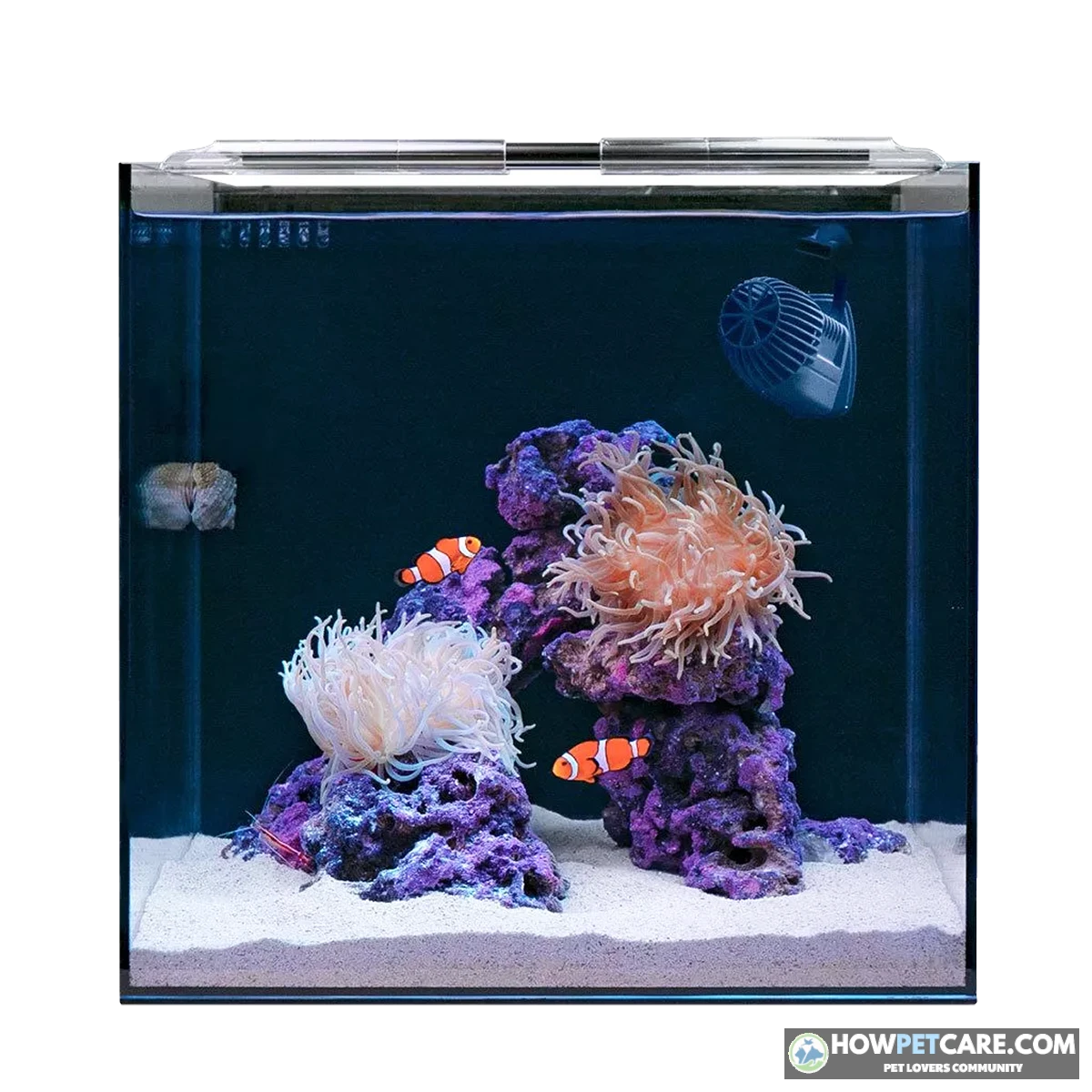
Use a secure lid: clownfish can jump, especially when startled. Arrange rockwork with stable caves and open swimming space. Live rock provides surface area for beneficial bacteria and shelter; dry rock can also be used, but it must become biologically established during cycling. Avoid stacking rock precariously or creating dead spots where debris accumulates.
Equipment that matters and what you can skip
The essential equipment is functional rather than brand-specific:
- A tank and stand rated for the filled aquarium’s weight.
- A reliable heater, ideally monitored by a separate thermometer or controller.
- A return pump or powerhead to circulate water and support oxygen exchange.
- A refractometer for specific gravity; calibrate it regularly.
- Marine test kits for ammonia, nitrite, nitrate, and pH. Add alkalinity testing as your system needs it.
- A filter or live rock with adequate biological filtration. A protein skimmer can help export waste, but it isn’t mandatory for every fish-only setup if water changes and feeding are managed well. One source describes a skimmer as optional and recommends regular water changes.
- A basic light for viewing and a covered tank. High-output reef lighting isn’t required for clownfish alone.
- RO/DI water, premixed saltwater, a dedicated bucket, siphon, and algae scraper.
Mix marine salt with RO/DI water according to the salt manufacturer’s instructions. Aim for about 1.025 SG, then verify the reading and temperature before adding it to the aquarium. Never use untreated tap water if its composition is unknown.
Build in this order: position the tank on a level, rated stand; rinse sand if using it; arrange rock securely; add saltwater; start the heater and circulation; and verify temperature and salinity over the next 24–48 hours. Then begin the fishless cycle. Don’t add a clownfish during setup.
Setup cost breakdown and shopping checklist (USD)
These are planning estimates, not fixed 2026 prices. Costs depend on whether you already own suitable furniture, buy water by the gallon, choose used equipment, or build a reef-capable system. A basic fish-only setup costs less than a reef-ready one, but testing and quarantine shouldn’t be treated as optional luxuries.
| Item | Budget estimate | Mid-range estimate | Needed now or later | Notes |
|---|---|---|---|---|
| 20-gallon tank | $45–$80 | $120–$200 | Now | A stable, appropriately sized display |
| Stand or rated surface | $0–$40 | $80–$150 | Now | Must safely support the filled tank |
| Rock and sand | $85–$100 | $100–$120 | Now | Amount and price vary by type and source |
| Salt mix | $30–$50 | $40–$60 | Now | Buy enough for setup and water changes |
| RO/DI water or unit | $15–$30 initially | $80–$150 | Now | Store water avoids buying a unit at first |
| Heater and thermometer | $25–$40 | $50–$80 | Now | Verify actual water temperature |
| Refractometer | $25–$35 | $45–$60 | Now | Include calibration fluid if needed |
| Pump or powerhead | $25–$40 | $50–$100 | Now | Provides circulation |
| Protein skimmer | $0 | $100–$200 | Optional | Can be skipped in some fish-only systems |
| Light | $35–$60 | $60–$180 | Now | A basic light is enough without photosynthetic livestock |
| Test kits | $45–$70 | $70–$100 | Now | Test ammonia, nitrite, nitrate, and pH |
| Quarantine tank and basics | $50–$70 | $60–$100 | Before fish arrive | Bare tank, sponge filter, heater, lid, PVC cover |
| Captive-bred clownfish pair | $30–$60 | $40–$80 | After cycle and quarantine | Species and morph affect cost |
| Siphon, bucket, net, scraper | $30–$50 | $50–$80 | Now | Keep aquarium tools dedicated |
| Approximate total | About $440–$700 | About $900–$1,500 | — | Estimates; sales and existing supplies change totals |
Ongoing costs may be roughly $15–$30 per month for food, salt, water, and replacement media, excluding electricity, replacement equipment, and unexpected veterinary care. A skimmer can be postponed in a fish-only tank if you maintain water quality through sensible feeding and water changes. Don’t postpone the refractometer, test kits, or a quarantine plan.
Need now: tank, rated stand, heater, thermometer, circulation, saltwater, refractometer, test kits, rock, lid, and basic maintenance tools. Before fish arrive: quarantine tank, sponge filter, PVC hiding places, and fish food. Can wait: reef lighting, coral equipment, and an anemone.
How to Cycle a New Saltwater Tank Before Adding Your Clownfish (and Acclimate Them When They Arrive)
Cycling establishes bacteria that process fish waste. The basic sequence is ammonia to nitrite to nitrate. During a fishless cycle, don’t add animals to produce waste. A cycle commonly takes several weeks, and testing—not a calendar date or a bottled-bacteria claim—determines readiness.
Fishless cycle timeline, week by week
- Prepare the system. Run the heater, circulation, and filtration. Check salinity and temperature, and make sure all equipment works.
- Add an ammonia source. Use an aquarium-appropriate ammonia source according to its directions. Fish food or a small piece of raw shrimp can also decompose and supply ammonia, but they’re less precise and can make the tank messy.
- Test every few days. Record ammonia, nitrite, and nitrate. Ammonia may rise first, followed by nitrite; nitrate appears as the cycle develops. Don’t add a fish because one test reads zero while another remains elevated.
- Keep the system running. Maintain circulation and temperature. Bottled bacteria or seeded filter media may help establish bacteria, but neither proves that the tank is ready.
- Confirm the finish line. The tank is ready only when ammonia and nitrite both return to 0 ppm within 24 hours after an ammonia dose. If either remains detectable, continue cycling and retest.
- Lower nitrate and stabilize. Once the cycle is complete, perform a substantial water change with matched saltwater to bring nitrate down. Recheck temperature, salinity, ammonia, nitrite, and nitrate over the following days.
- Add the first fish carefully. Add only the planned clownfish pair, not several species at once. Quarantine them first whenever possible.
Expect a cycle to take roughly 3–6 weeks, sometimes longer. A longer cycle isn’t a failure; adding fish too early creates avoidable risk.
Drip acclimation steps for a new clownfish
Acclimate a fish to the quarantine tank, not directly to the display. Keep the lights dim and avoid exposing the fish to store water.
- Turn off or dim aquarium lights and prepare the quarantine tank at a stable temperature.
- Float the sealed transport bag briefly so its temperature moves toward the tank temperature.
- Open the bag and transfer the fish and shipping water to a clean container. Avoid splashing water into the tank.
- Use airline tubing with a controlled drip to add quarantine water gradually over about 30–60 minutes, while keeping the fish secure and the container temperature stable.
- Net or gently transfer the fish into quarantine. Discard the shipping water; don’t pour it into the aquarium.
- Leave the lights dim and allow the fish to settle. Offer a small amount of food later rather than repeatedly disturbing it.
Hiding or refusing food briefly can follow shipping and acclimation. Check the water and observe breathing and swimming. Labored breathing, visible spots, excess mucus, or continued refusal to eat warrants prompt investigation rather than waiting it out.
Setting up a quarantine tank before the fish arrives
A 10–20 gallon bare-bottom tank is a workable quarantine space for a clownfish. Equip it with a heater, lid, seeded sponge filter, and clean PVC elbows or short pipe sections for shelter. Avoid sand and live rock if you may need medication, because porous materials can complicate treatment. Keep a dedicated net and bucket for quarantine.
A quarantine tank needs its own ammonia monitoring. A seeded sponge filter can help, but it may not handle a sudden load immediately. Test daily at first, remove uneaten food, and make appropriately matched water changes if ammonia rises. A symptom-free observation period of 4–6 weeks is more cautious than a short hold; the exact approach depends on whether the fish receives preventive treatment and on the disease risk.
What Do Clownfish Eat in Captivity? Diet, Portions, and Feeding Schedule
Clownfish are omnivores. Use a quality marine pellet or flake as a convenient staple, then rotate frozen mysis shrimp, brine shrimp, and finely chopped marine seafood. Choose food small enough for the fish to swallow. A varied diet helps avoid reliance on one food, while overfeeding adds waste and can drive nitrate upward.
How much and how often to feed
Feed once or twice daily, offering only what the fish finish in about 1–2 minutes. Start with a small portion; it’s easier to add a little more than to remove food that has sunk into the rockwork. Remove uneaten food when practical.
New arrivals may take time to accept prepared foods. Try a small amount of the food the seller was using, then gradually introduce pellets or frozen foods. Thaw frozen food in a small cup of aquarium water and offer a modest portion. If one fish in a pair dominates, feed on opposite sides of the tank or target-feed the smaller fish.
Healthy adult clownfish can miss a meal during a short absence, but don’t rely on an automatic feeder unless you’ve tested it and confirmed it dispenses a small, consistent amount. A malfunctioning feeder can foul a small aquarium quickly.
Sample weekly feeding plan
| Day | Main food | Optional variation |
|---|---|---|
| Monday | Marine pellet | — |
| Tuesday | Frozen mysis | Small portion only |
| Wednesday | Marine flake or pellet | — |
| Thursday | Frozen brine shrimp | Rotate with mysis rather than using it as the only food |
| Friday | Marine pellet | Vitamin-enriched food if appropriate |
| Saturday | Frozen mysis or chopped seafood | Remove leftovers |
| Sunday | Pellet or a light feeding | Skip if fish are well-fed and water quality needs support |
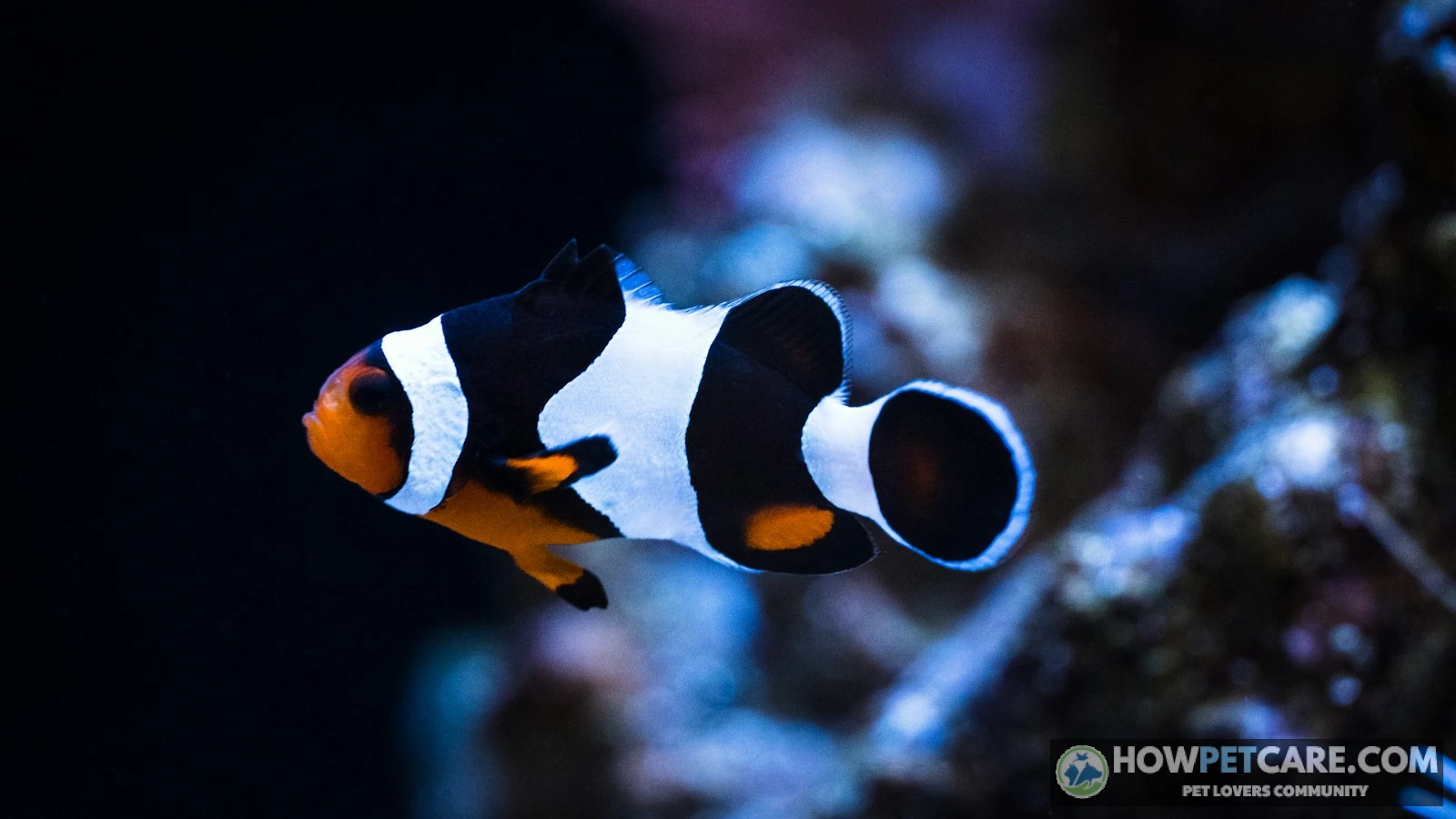
Treat the schedule as a menu, not a requirement to feed every listed item. Watch body condition and water quality. If nitrate rises, reduce portions and check whether food is being left uneaten before making major changes to the filtration system.
Do Clownfish Need an Anemone? What Hosting Actually Requires
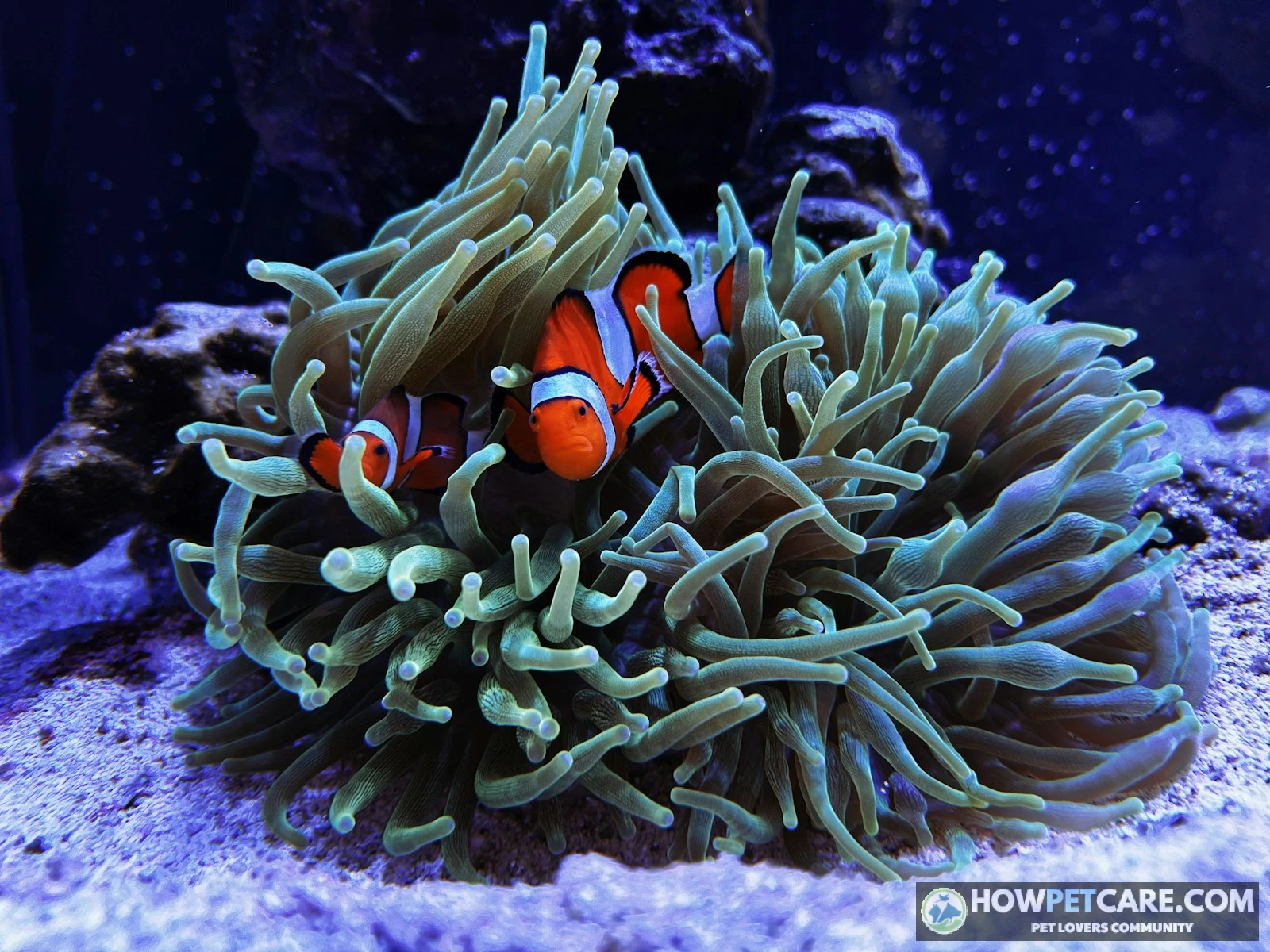
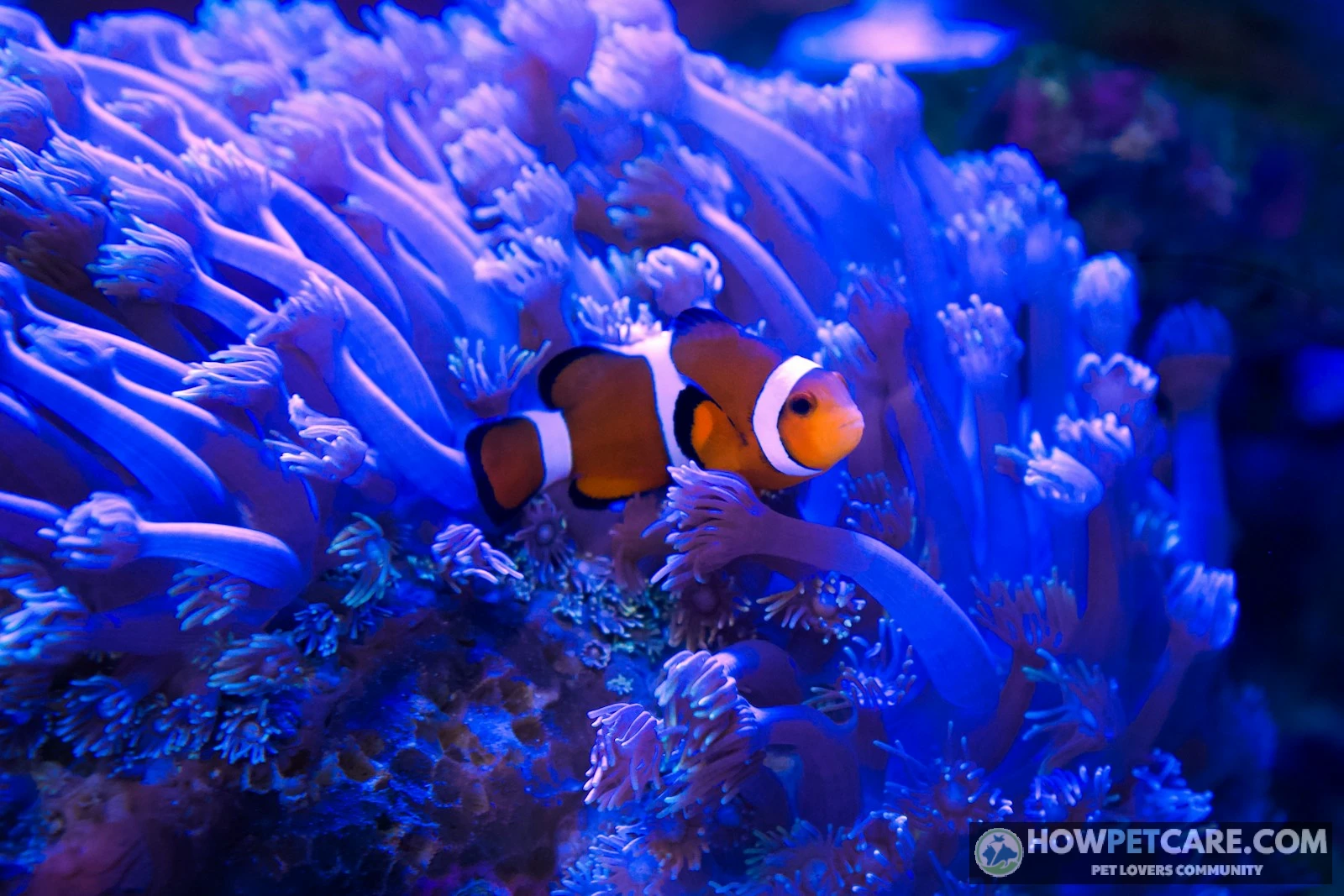
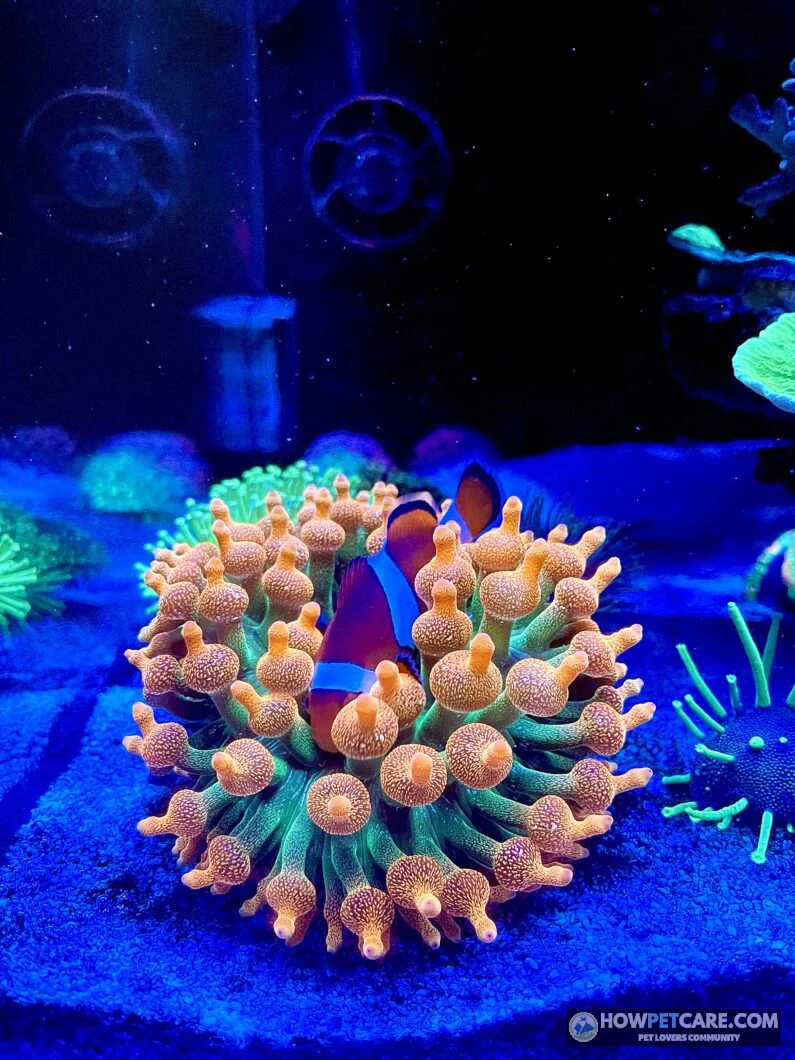
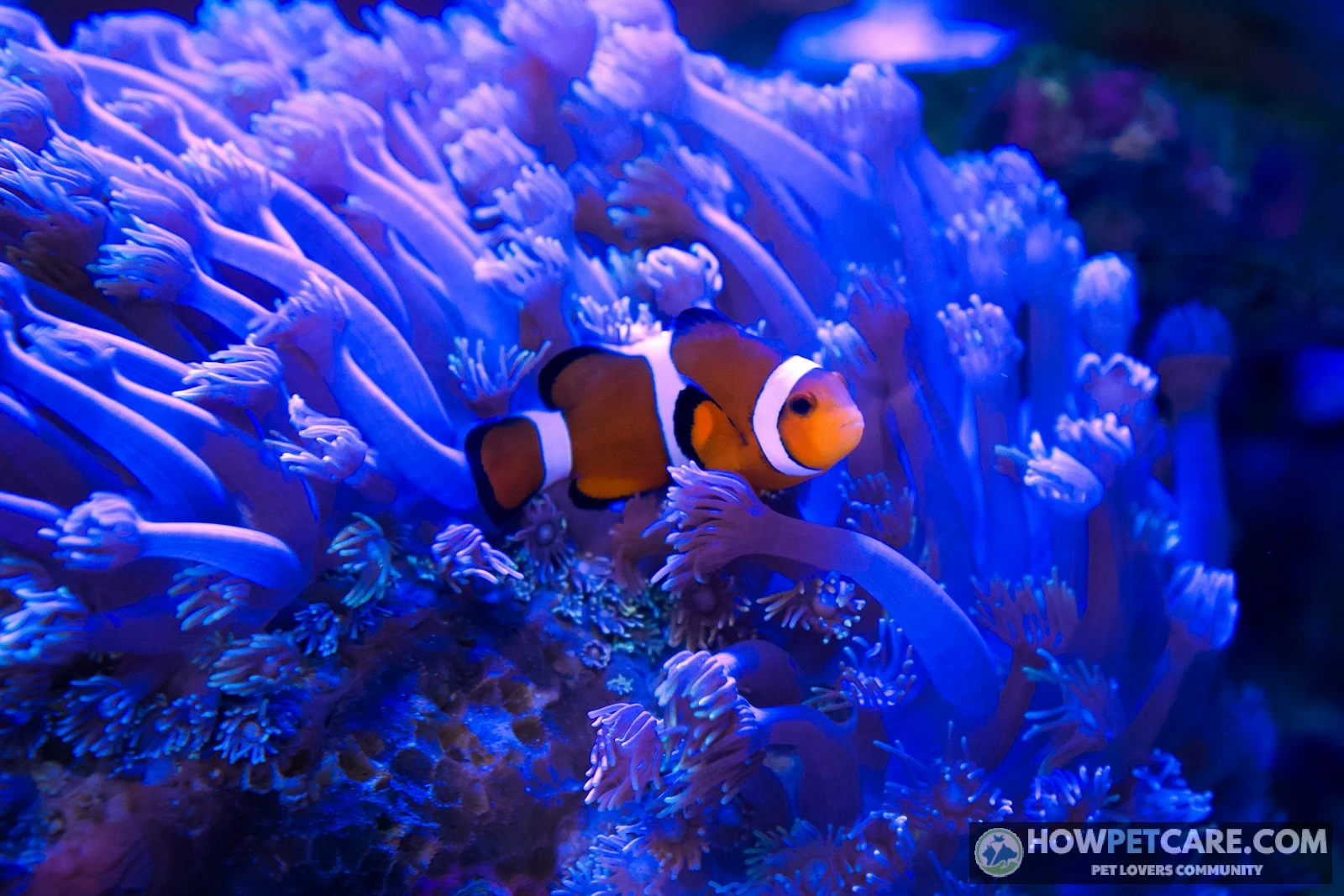
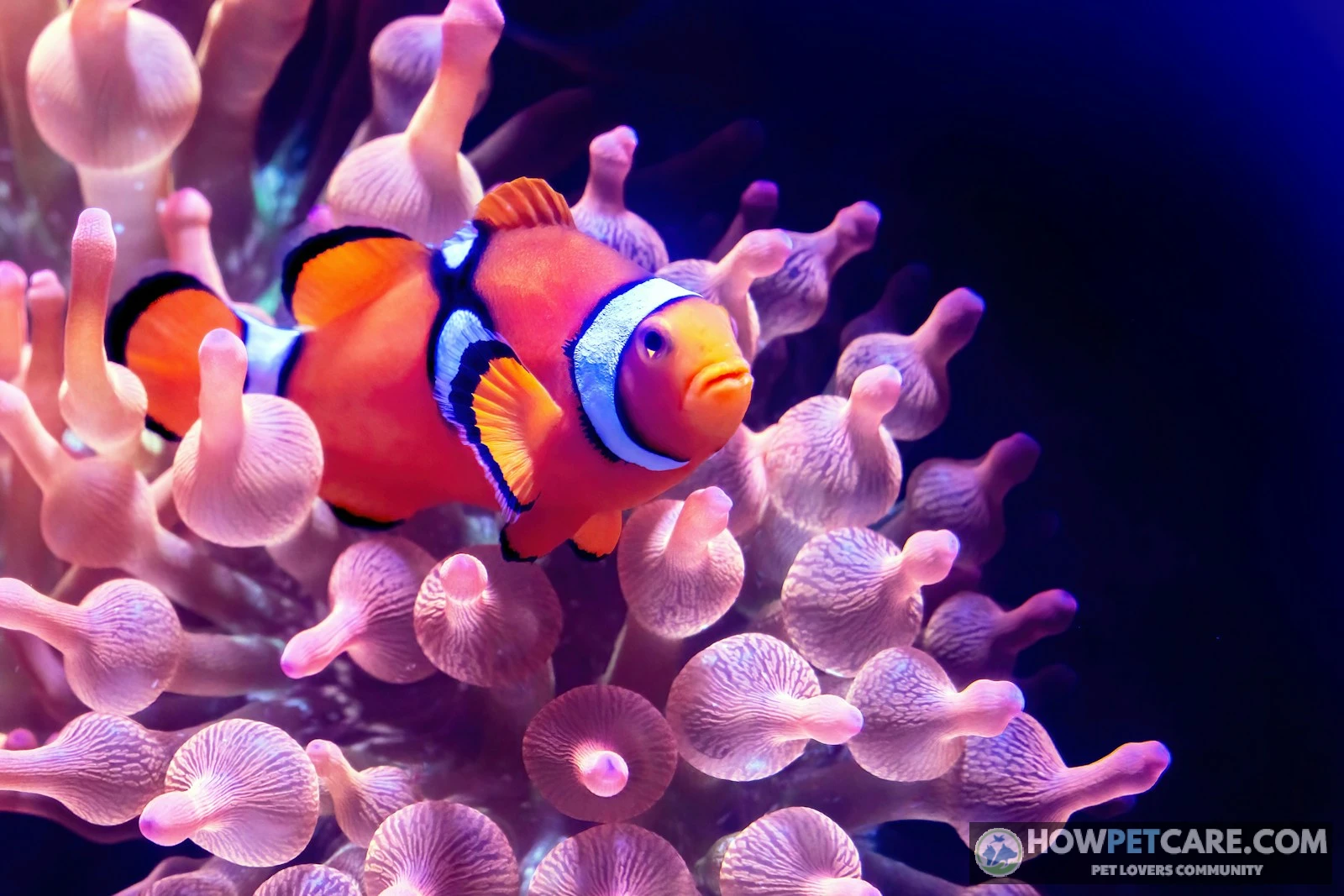
No. Clownfish don’t need an anemone to survive or remain healthy in a home aquarium. Captive-bred fish may never host one, and some settle near a coral, rock, or even a pump. One source also notes that clownfish don’t need an anemone and may adopt corals or powerheads instead. Don’t buy an anemone as a condition of keeping clownfish.
If you want one later, wait until the aquarium is mature and stable—commonly at least six months, according to one care source. An anemone isn’t a beginner decoration: it can move, sting corals, or be injured by an exposed pump intake. Guard intakes and leave space around its likely resting area.
Lighting and flow for a bubble tip anemone
The bubble tip anemone (Entacmaea quadricolor) is a common host-anemone choice, but it still needs appropriate conditions. A working lighting range is roughly 150–250 PAR, but requirements vary with the individual animal, placement, and fixture; verify the light’s output and acclimate the anemone gradually. Use moderate-to-strong, indirect flow rather than blasting it with a powerhead.
A bubble tip may wander until it finds a suitable location. Protect pump and overflow openings before introducing one, and be prepared to move or shield corals it contacts. Stable salinity and temperature are essential; a new tank that is still cycling isn’t an appropriate home.
Alternatives to anemones that clownfish will host
A clownfish may choose a coral or another sheltered part of the aquarium, but hosting behavior isn’t guaranteed and shouldn’t be forced. Never try to push a fish into an anemone or confine it with one. If the fish ignores the anemone, leave it alone and focus on keeping both animals healthy.
Best Tank Mates for Clownfish: A Named Compatibility Chart (and How Many Clownfish You Can Keep)
Choose tank mates for the aquarium’s size and the clownfish’s adult behavior, not just for their appearance at the store. Add less territorial fish first and clownfish later when practical. Quarantine each addition. A compatible species can still be a poor match in an undersized or newly established tank.
| Fish or invertebrate | Compatibility | Minimum tank size | Notes and risks |
|---|---|---|---|
| Royal gramma | Good | 30 gal | Peaceful cave-dweller; provide rock shelter |
| Firefish | Good | 20 gal | Shy and easily outcompeted; secure lid because it may jump |
| Yellow watchman goby | Good | 20 gal | Bottom-dweller; may associate with a pistol shrimp |
| Tailspot blenny | Good | 20 gal | Perches on rock and benefits from suitable grazing opportunities |
| Banggai cardinalfish | Good | 30 gal | Slow eater; make sure it gets food |
| Green chromis | Usually suitable | 30 gal | Group behavior and tank size matter; monitor for chasing |
| Cleaner shrimp | Good | 20 gal | Invertebrate; never expose it to copper medication |
| Hermit crabs | Usually suitable | Any appropriate marine tank | May kill snails for shells; provide spare shells |
| Nassarius snails | Good | Any appropriate marine tank | Scavengers; need suitable food availability |
| Trochus snails | Good | Any appropriate marine tank | Algae grazers; check that they are not being harassed |
| Dottyback | Caution | 30 gal | Territorial; research the exact species and provide caves |
| Mandarin dragonet | Caution | Mature tank | Requires an established supply of copepods and is not for a new tank |
| Larger wrasses | Caution | 50 gal or more | Needs depend on species; some may outcompete smaller fish |
| Triggerfish | Avoid | — | Can injure or eat smaller fish and invertebrates |
| Large angelfish | Avoid in a small clownfish setup | — | Size and assertiveness can make the pairing unsafe |
| Groupers and lionfish | Avoid | — | Predatory fish may treat clownfish as prey |
| Aggressive damsels, such as domino or three-stripe | Avoid | — | Can relentlessly harass tank mates |
| Another clownfish species or a third clownfish | Avoid in a typical beginner tank | — | Clownfish pairs may attack newcomers; do not mix species casually |
| Mantis shrimp | Avoid | — | A predator that can injure or kill fish and other invertebrates |
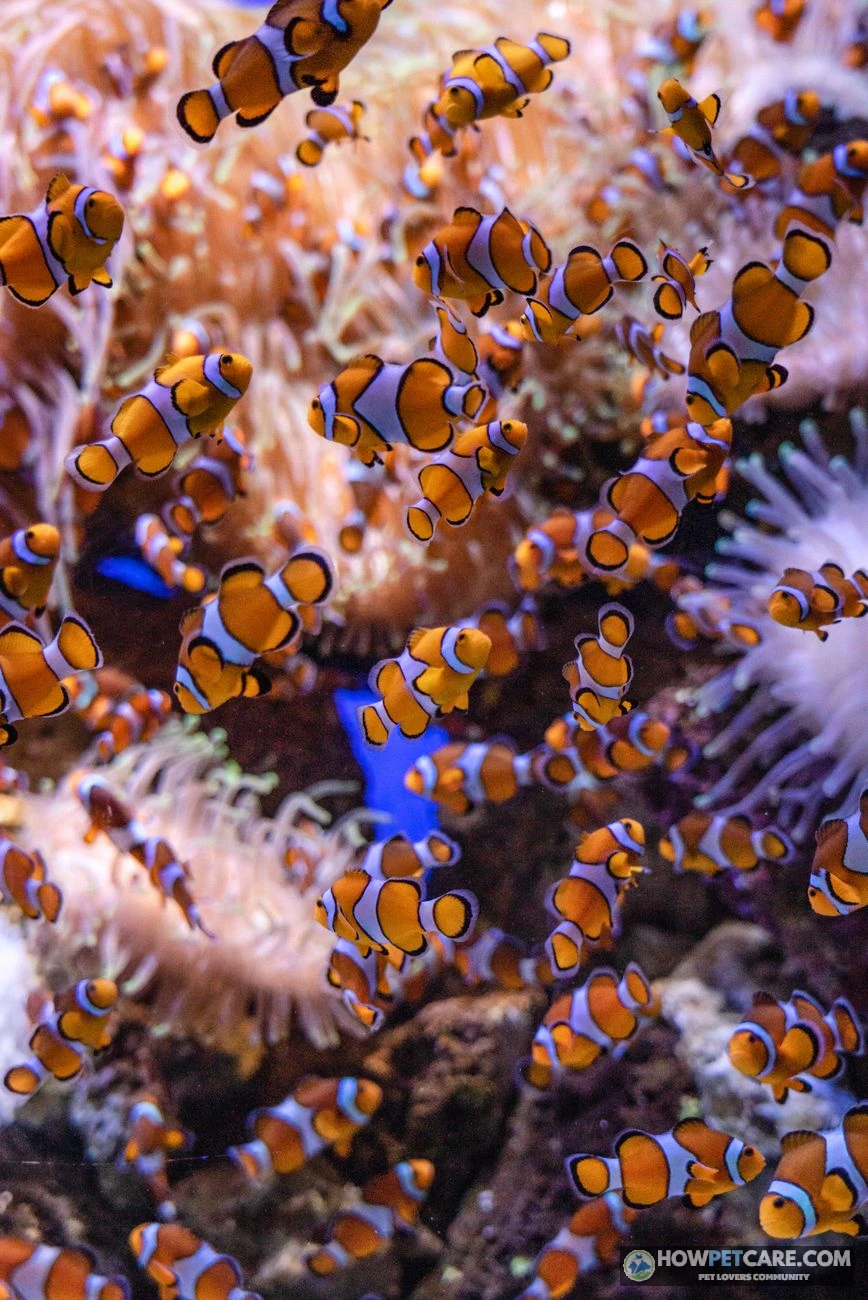
In most beginner tanks, keep a single clownfish or a bonded pair. Groups are risky because clownfish establish a dominance order and may injure or kill subordinate fish. Larger tanks and fish raised together can improve the odds, but don’t treat extra space as a guarantee. Don’t add a third clownfish to an established pair, and don’t mix species in hopes they’ll form a peaceful group.
Compatible and incompatible fish and inverts
The chart names compatible choices such as royal grammas, firefish, watchman gobies, tailspot blennies, cardinalfish, cleaner shrimp, and common cleanup snails. It also identifies predators and aggressive fish to avoid. These are starting points, not a substitute for checking the exact adult size, diet, and behavior of a species before purchase.
Can you keep more than two clownfish together?
A single clownfish or a pair is the safer plan for a first aquarium. Groups need a much larger, carefully structured system and still carry a substantial aggression risk. If you’re new to saltwater keeping, don’t attempt a group. A pair should be the only clownfish in the tank.
When your pair spawns: what to do with the eggs and fry
A pair may lay eggs on a flat surface and the male may guard them. If eggs appear, you don’t need to intervene if your goal is simply to keep the adult fish healthy. Leave the eggs in place and maintain normal water quality.
Raising fry is a separate project, not a simple extension of routine clownfish care. It requires a dedicated larval setup, an appropriate live-food supply such as rotifers, and frequent attention during the early stages. The display aquarium isn’t set up to reliably feed and protect newly hatched fry. If you don’t already have the equipment and live-food cultures, let the eggs remain in the display and focus on the adults rather than improvising a rearing setup.
Quarantine and Treat Clownfish Disease: Step-by-Step Ich and Brooklynella Protocols
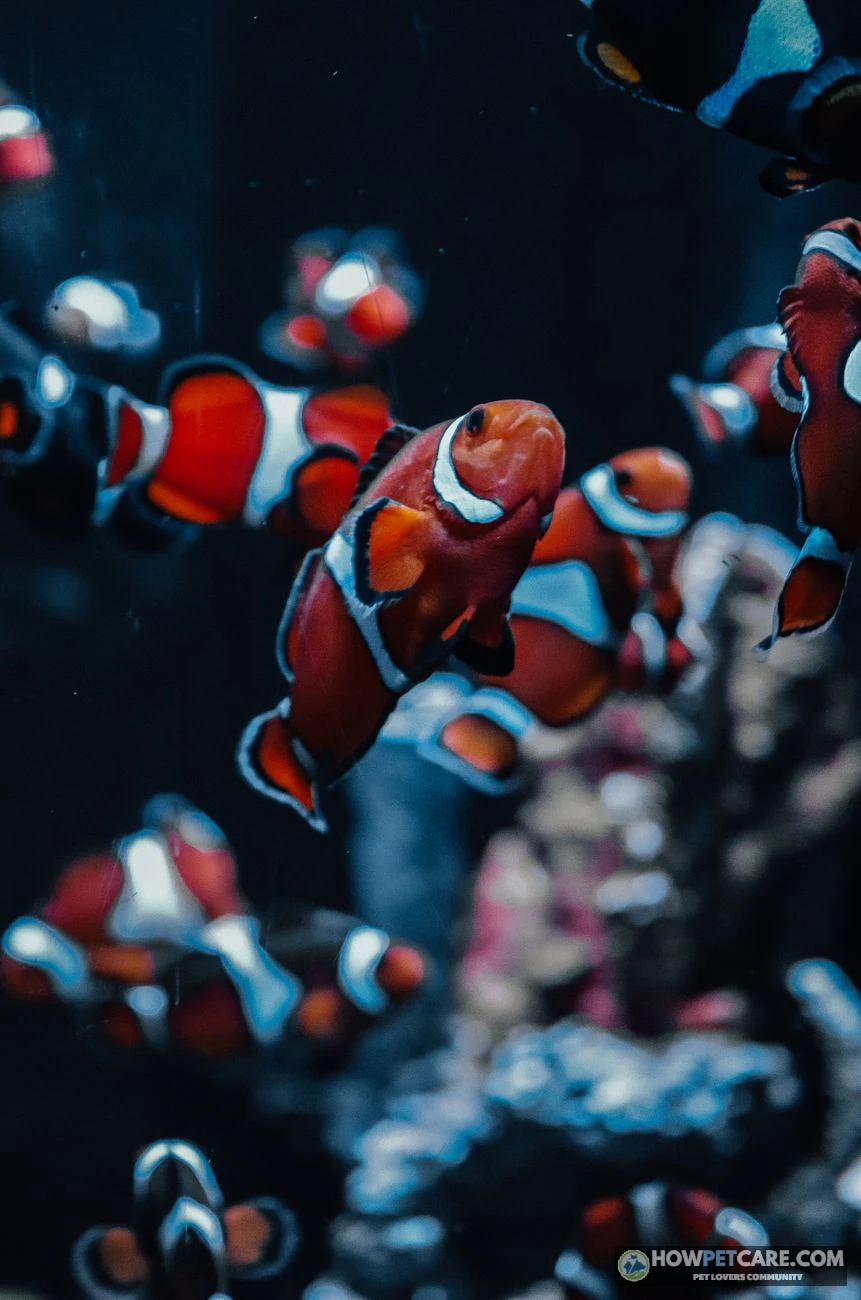
Quarantine helps keep disease and parasites out of the display and lets you observe a fish in a controlled setting. A bare-bottom 10–20 gallon tank with a heater, lid, seeded sponge filter, and PVC hiding places is a practical starting point. Don’t put copper or formalin in a display aquarium containing invertebrates; copper is harmful to shrimp, snails, and corals.
How to set up and run a quarantine tank
- Prepare the bare tank with stable temperature, matched saltwater, a heater, an air-driven sponge filter, and PVC shelter. Keep a lid on it.
- Use dedicated nets, buckets, and siphons so water and equipment don’t move between quarantine and display tanks.
- Acclimate the fish to quarantine water and observe it in dim light. Record appetite, breathing, swimming, and visible marks each day.
- Test ammonia daily, especially during the first days. A seeded sponge filter helps, but don’t assume it’s fully mature. Change water promptly if ammonia becomes detectable, matching replacement water carefully.
- Observe for several weeks. Four to six weeks is a cautious quarantine period; extend it if symptoms appear or treatment is needed. A short symptom-free period doesn’t rule out every parasite.
- If disease signs appear, identify the likely problem and use a treatment suitable for that diagnosis. Follow the product label and obtain advice from an aquatic veterinarian or experienced marine fish clinician when possible.
- After treatment, continue observation and confirm the fish is eating and breathing normally before moving it to the display.
Marine ich: treatment steps
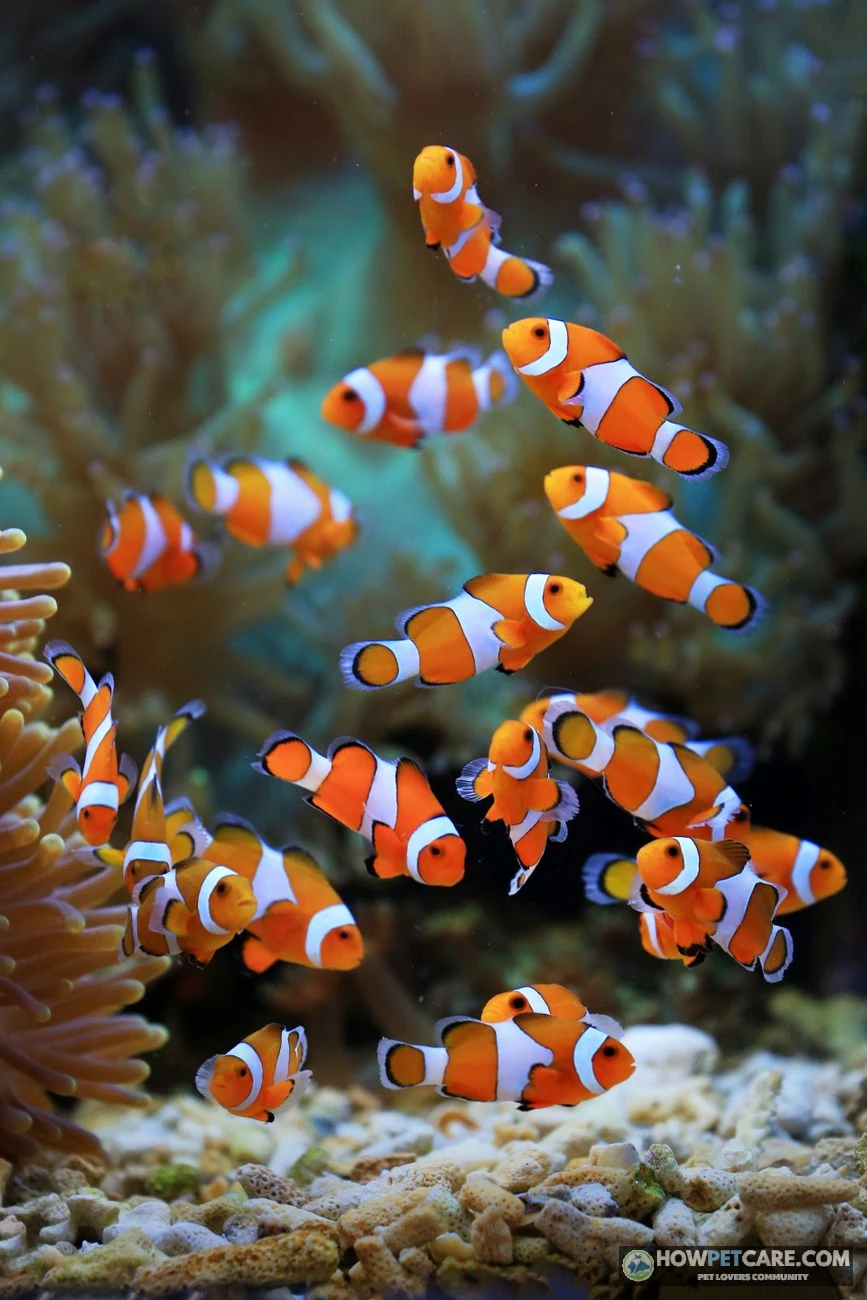
Marine ich (Cryptocaryon irritans) can appear as salt-grain-like white spots, scratching or flashing, and faster breathing. Spots may disappear temporarily while the parasite continues its life cycle, so don’t stop treatment simply because the fish looks clearer.
- Move the affected fish to a quarantine or treatment tank if it isn’t already isolated. Don’t medicate the display.
- Confirm the likely diagnosis. White spots can have other causes; seek an aquatic veterinarian’s advice if the signs are unclear or the fish is deteriorating.
- Choose one established treatment approach, such as a copper-based medication maintained at its labeled therapeutic concentration with a compatible copper test kit, or hyposalinity managed by someone able to monitor salinity accurately.
- Follow the medication label exactly. Copper products differ, so there is no safe universal dose. Don’t combine medications or guess a dose.
- Continue the full course specified by the treatment protocol and monitor water quality and fish behavior closely. Don’t move the fish back to the display early.
- Keep the display free of fish for an appropriate fallow period if ich has been introduced. A commonly used interval is 6–8 weeks, but consult a fish-health professional for a plan suited to the suspected parasite and system.
Hyposalinity isn’t a casual shortcut: it requires a calibrated way to measure salinity, careful adjustment, and a treatment period appropriate to the parasite. Avoid it if you can’t reliably control and test the water. Never use copper in a tank with invertebrates or porous display rock.
Brooklynella: emergency treatment steps
Brooklynella (“clownfish disease”) may cause heavy gray-white mucus, rapid breathing, lethargy, and rapid decline. Treat it as urgent, especially if breathing is labored. A freshwater dip may offer temporary relief in some cases, but it isn’t a complete cure.
- Move the fish to a separate treatment tank and increase aeration. Keep the water temperature stable.
- If advised and the fish is stable enough, use a short freshwater dip matched as closely as possible for temperature and pH. Watch continuously and remove the fish immediately if it loses balance or becomes severely distressed.
- Use a formalin bath or other appropriate formalin treatment only according to the exact product label and with strong aeration. Formalin is hazardous to handle and isn’t appropriate for improvised dosing.
- Continue treatment and repeat baths only as the product label directs. Don’t mix formalin with other medications unless a qualified professional explicitly directs it.
- Monitor ammonia, breathing, appetite, and skin condition. Seek an aquatic veterinarian’s advice quickly; Brooklynella can progress rapidly.
- Keep the fish isolated after symptoms improve and observe for recurrence before returning it to the display.
A freshwater dip and formalin aren’t interchangeable with a complete diagnosis. Never invent a dose based on a different product or online anecdote; formulations and instructions differ. If the fish is severely distressed, prioritize urgent professional guidance over prolonged handling.
Other common problems: fin rot, pop-eye, and stress
Frayed fins or cloudy eyes can follow injury, poor water quality, or infection. First test water, inspect for aggression, and correct the environment. Don’t automatically medicate a display tank: many medications affect biological filtration or harm invertebrates. Persistent swelling, ulcers, loss of balance, or worsening breathing calls for veterinary advice.
Stress can look like hiding, refusing food, rapid breathing, or unusual swimming. Check temperature, salinity, ammonia, and nitrite before assuming the fish needs medication. Correct the cause and avoid sudden parameter changes.
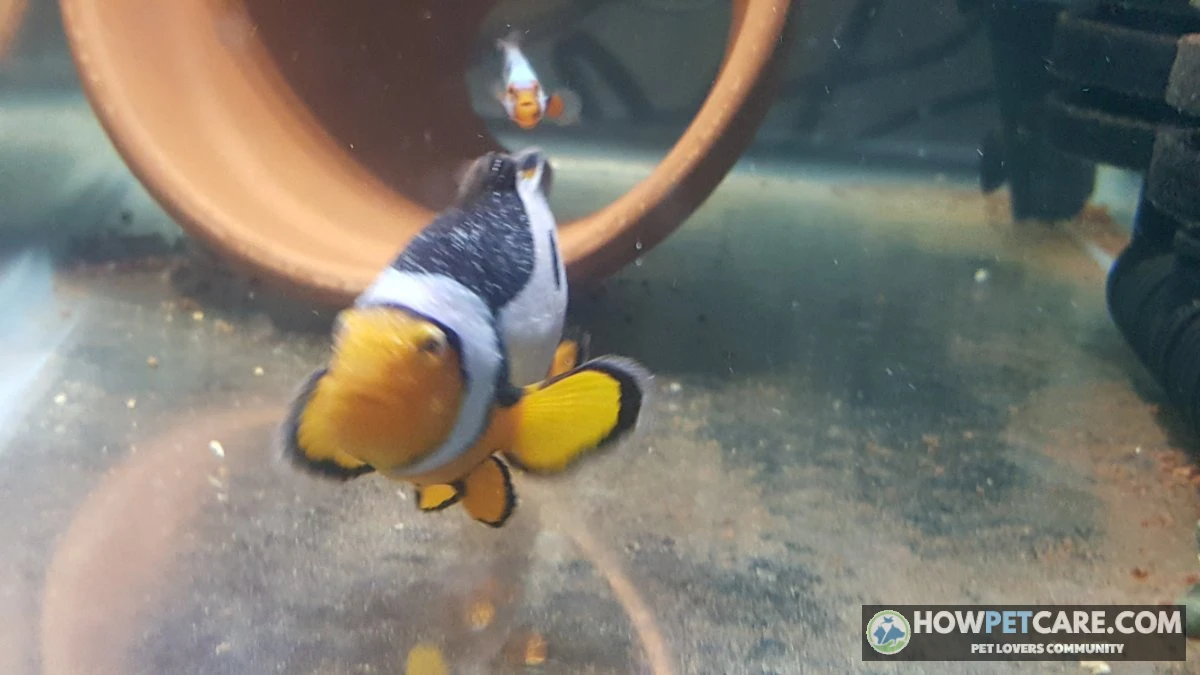
Use fish medications only in a separate treatment tank unless the product is explicitly safe for every animal and material in the system. Follow the label, use the matching test kit where required, and consult an aquatic veterinarian when symptoms are severe or diagnosis is uncertain.
Clownfish Tank Maintenance Schedule: Daily, Weekly, and Monthly Checklist (Plus Your First 30 Days)
A short, repeatable routine catches trouble before it becomes an emergency. Keep a log of test results, water changes, new livestock, and unusual behavior. Test more often during cycling, after adding fish, or whenever a fish appears unwell.
Daily, weekly, and monthly care routine
Daily
- Feed once or twice, in portions the fish finish within 1–2 minutes.
- Confirm every fish is present, breathing normally, and behaving normally.
- Check the temperature and confirm the heater and circulation are operating.
- Top off evaporation with fresh RO/DI water, not saltwater.
Weekly
- Test and log ammonia, nitrite, nitrate, and pH. Targets are 0 ppm ammonia, 0 ppm nitrite, nitrate below 20 ppm, and pH 8.1–8.4.
- Check specific gravity with a refractometer; aim for 1.023–1.026.
- Change about 10–20% of the water using pre-mixed saltwater matched for temperature and salinity. One source recommends 10–15% changes every other week, while weekly changes can be a practical routine for a small beginner tank. Adjust frequency to test results and stocking.
- Clean the glass, remove visible waste, empty the skimmer cup if fitted, and check the heater, pump, and lid.
Monthly
- Test alkalinity, especially if keeping corals; check calcium when coral needs make it relevant.
- Rinse mechanical filter media in removed aquarium water or replace it according to the filter’s design.
- Clean pump and powerhead intakes, and inspect cords and tubing.
- Calibrate the refractometer using its manufacturer’s procedure and calibration solution.
- Compare the tank thermometer with another reliable thermometer.
If nitrate climbs, check feeding, remove uneaten food, confirm filtration and maintenance, and consider a water change. If salinity drifts high from evaporation, top off with fresh RO/DI water gradually; don’t make an abrupt correction. If ammonia appears, test again, check for dead animals or a failed filter, reduce feeding, and make an appropriately matched water change. Any detectable ammonia in an established tank deserves prompt attention.
Your first 30 days: a checklist to follow
The first month is a start, not a promise that every new tank will be ready for fish by day 30. Cycling may take longer.
- Setup period: assemble the tank, add rock and saltwater, start the heater and circulation, and verify stable temperature and salinity.
- Cycling period: add an ammonia source and test ammonia, nitrite, and nitrate every few days. Continue until ammonia and nitrite both return to zero within 24 hours of an ammonia dose.
- After the cycle: reduce nitrate with a water change, confirm the system remains stable, and prepare the quarantine tank.
- Arrival and quarantine: acclimate the captive-bred clownfish to quarantine, observe appetite and breathing, and monitor ammonia closely.
- Before display transfer: complete the observation or treatment period, verify the display remains stable, and acclimate the fish to the display water.
- After transfer: keep the routine simple; don’t add an anemone or several new tank mates while the fish are settling in.
Gasping at the surface, rapid breathing, visible spots or gray mucus, loss of balance, or ammonia above zero calls for action that day. Test the water first, correct obvious equipment or water-quality problems, and isolate a sick fish when appropriate. For severe symptoms, contact an aquatic veterinarian rather than waiting for the next scheduled maintenance day.
1When replacing water lost to evaporation in a marine clownfish aquarium, which type of water should be used?
Water evaporates while salt remains in the aquarium, so topping off with fresh RO/DI water maintains stable salinity levels.
2What is the recommended practical minimum tank size for housing a single bonded pair of captive-bred ocellaris clownfish?
A 20-gallon setup provides the practical minimal water volume needed to dilute waste and support a stable environment for a pair.
3Which visual characteristic commonly helps distinguish a percula clownfish from an ocellaris clownfish?
Percula clownfish standardly display wider, more prominent black borders along their white vertical bars compared to ocellaris.
4During a fishless tank cycle, which milestone indicates that biological filtration is fully established and ready for livestock?
Rapid processing of an ammonia source into nitrate demonstrates that sufficient nitrifying bacteria exist to handle biological waste.
5Why should porous substrates like sand and live rock be excluded from a disease treatment quarantine tank?
Porous materials can bind active chemical treatments like copper, dropping effective drug concentrations and trapping residues.
6Which protocol is recommended when acclimating a newly purchased clownfish to a quarantine tank?
Gradual water exchange minimizes osmotic shock, and discarding store water prevents external contaminants from entering your quarantine system.
7What is the primary host-requirement relationship between clownfish and sea anemones in captivity?
Captive clownfish do not rely on anemones for biological survival and will readily adopt rockwork, powerheads, or corals instead.
8Which fish or invertebrate species is considered incompatible in a standard beginner clownfish tank?
Triggerfish are predatory or aggressive species capable of injuring or consuming smaller marine fish like clownfish.
9If a clownfish pair successfully lays eggs on display tank rockwork, what is the best immediate response for a general aquarist?
Raising fry requires specialized live food cultures and larval tanks; display tanks are not built to raise fry, but adults will care for eggs naturally.
10What emergency signs specifically point toward a potential Brooklynella infection rather than mild acclimation stress?
Severe mucus hyperproduction and respiratory distress are classic symptoms of Brooklynella, requiring fast therapeutic intervention.
| Species | Adult Size | Temperament | Minimum Tank Size (Pair) | Beginner Difficulty | Typical Price Range (USD) | Best For |
|---|---|---|---|---|---|---|
| Ocellaris (Amphiprion ocellaris) | About 3 in | Usually the least aggressive of these choices | 20 gal | Easiest | 15–30; designer morphs often cost more | First marine tank and smaller community setups |
| Percula (Amphiprion percula) | About 3 in | Mildly territorial, especially as a pair | 20 gal | Easy | 25–60 | Keepers who prefer the “true” clownfish appearance |
| Tomato (Amphiprion frenatus) | About 5 in | Can become pushy with age | 30–55 gal | Intermediate | 20–40 | Mid-size tanks with carefully chosen tank mates |
| Maroon (Premnas biaculeatus) | About 5–6 in | Aggressive; females can be especially assertive | 55 gal or more | Advanced | 25–50 | Experienced keepers with a dedicated larger tank |
FAQ
How long do clownfish live in a home aquarium?
With stable water quality and a good diet, captive clownfish commonly live 10 years or more, and some reach well over a decade. Most early deaths come from poor water conditions, disease from skipped quarantine, or stress, not old age.
Can a clownfish live alone?
Yes. A single clownfish does fine alone and avoids the aggression that can come with pairing. If you want two, buy them together as juveniles or choose a tank of at least 20 gallons, and do not add a second adult to an established one.
Why is my new clownfish hiding and not eating?
Hiding and skipping meals for the first day or two is common after the stress of shipping and acclimation. Keep the lights dim, offer small amounts of food, and check water parameters. If it still refuses food after about 3 days or shows spots, labored breathing, or excess slime, treat it as illness.
Do clownfish change gender?
Yes. Clownfish are born male, and the dominant, largest fish in a group becomes the female. If the female dies, the breeding male typically changes sex and the next-largest fish takes over as male.
Can clownfish live in a nano tank?
A single ocellaris or percula can live in a well-maintained 10-gallon, but 20 gallons is a more practical minimum for a pair. Small tanks swing in temperature and salinity faster, so they leave less room for beginner errors.