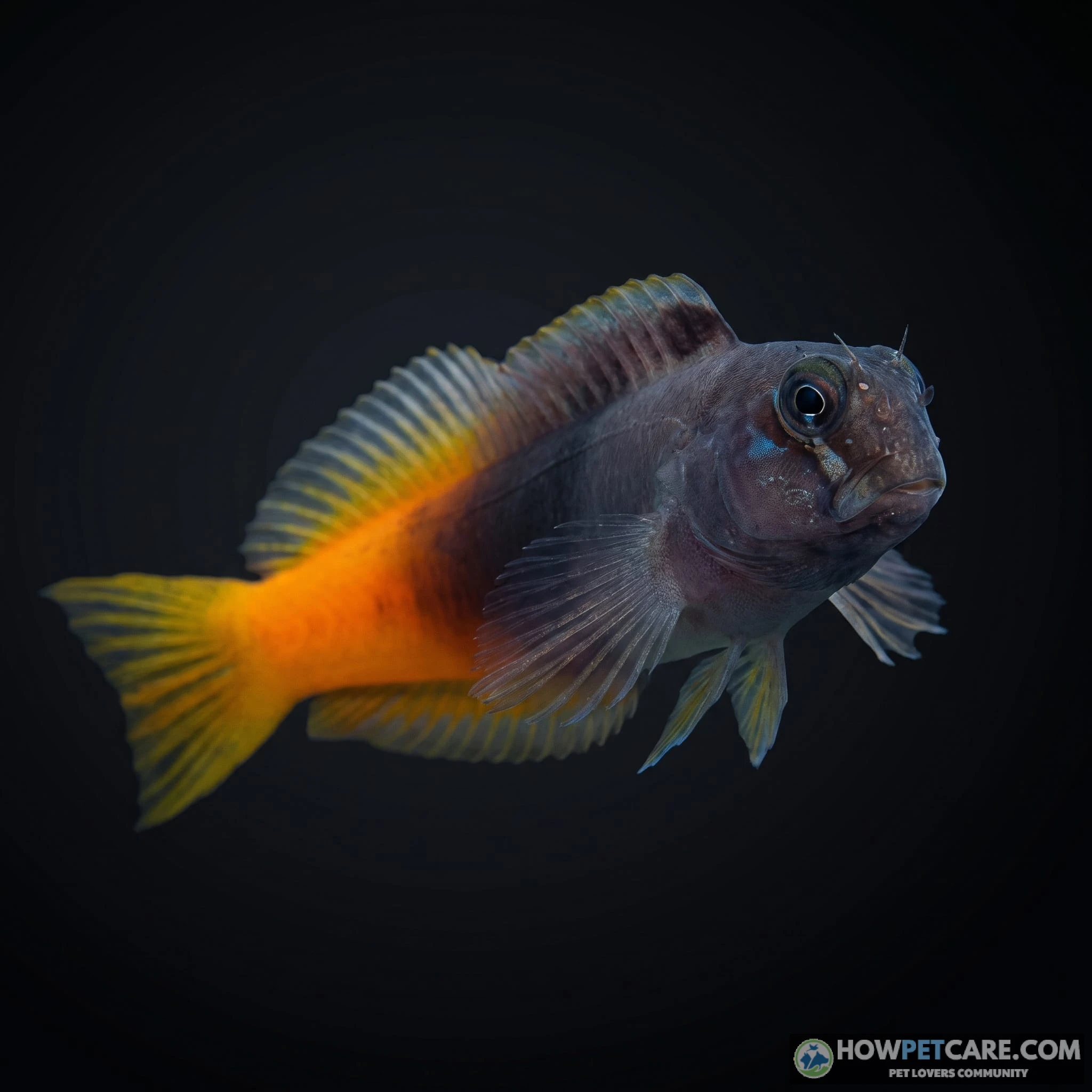

The best blenny fish for a beginner depends on tank size and diet:
- Tailspot blenny — a peaceful, roughly 2.5-inch pick for a mature 20-gallon nano reef.
- Bicolor blenny — a classic rock-percher for 30+ gallons without a rival blenny.
- Lawnmower blenny — an algae grazer for a mature 30+ gallon tank with a backup food plan.
- Midas blenny — a peaceful open-water planktivore that needs small meaty foods.
- Striped fang blenny — an active swimmer for a covered, peaceful 30+ gallon community.
A blenny can be a good addition to a beginner’s saltwater aquarium if its adult size, diet, and temperament suit the tank. For a small, peaceful reef, consider a tailspot blenny. A lawnmower blenny may fit a larger, mature tank if you can provide enough food. Neither replaces a feeding plan, and no blenny is guaranteed to leave every coral or clam alone.
Is a Blenny Right for Your Tank?
Blenny at a glance: saltwater, size, temperament, reef safety
A blenny is a typically small, elongated fish. Many aquarium species belong to the combtooth blenny family, Blenniidae, and spend much of their time resting on rocks or slipping into crevices. Many have small appendages called cirri on their heads. Most blennies offered for marine aquariums need saltwater, though a few true blennies live in freshwater in the wild.
Many popular aquarium blennies reach roughly 2–6 inches, although some grow larger. Temperament varies: a fish that ignores a clownfish may defend its favorite hole against another similarly shaped bottom dweller. Many species are considered reef safe, but individual grazers can nip corals or clam mantles.

Quick fit test: who should and shouldn’t buy a blenny
A blenny is a reasonable choice if your aquarium is cycled, stable, covered, and furnished with rockwork and hiding places. For an algae grazer, an established tank with natural film algae is especially helpful. You’ll also need a plan for supplemental food and peaceful, compatible tankmates.
Wait if the tank is newly set up and unstable, you can’t quarantine the fish, or you’re relying on it to solve an algae outbreak. Choose according to the species’ needs rather than assuming every fish labeled “blenny” eats the same diet.
Blenny Fish Species Compared Side by Side by Tank Size and Experience
The following minimums are conservative starting points for one fish, not guarantees of compatibility. A larger, mature aquarium gives territorial fish and their tankmates more room. Adult sizes are approximate. Retailer guidance identifies the lawnmower as an algae grazer, the starry as territorial, and the Midas as an open-water zooplankton feeder.
The price bands are rough planning estimates from the supplied retail context, not verified 2026 quotes. Prices, availability, shipping, fish size, and captive-bred premiums vary, so check current listings before budgeting. One retailer’s blenny selection includes common species as well as much more expensive rarities.
| Species | Adult size | Temperament | Diet | Reef safety | Minimum tank size | Approx. price range | Beginner suitability |
|---|---|---|---|---|---|---|---|
| Tailspot (Ecsenius stigmatura) | About 2.5 in | Generally peaceful | Algae grazer; varied prepared foods | Generally safe; monitor | 20 gal | $25–$40 | Good for a mature, peaceful nano reef |
| Bicolor (Ecsenius bicolor) | About 4 in | Territorial with similar fish | Algae and prepared foods, including some meaty food | Caution: may nip polyps or clams | 30 gal | $15–$25 | Good with suitable tankmates |
| Lawnmower (Salarias fasciatus) | About 4–5 in | May challenge similar grazers | Film algae and vegetable-based foods | Caution: occasional coral or clam nipping | 30 gal, mature | $15–$30 | Good only with a reliable food plan |
| Midas (Ecsenius midas) | About 4–5 in | Generally peaceful; may defend a shelter | Zooplankton and meaty prepared foods | Generally safe; monitor | 30 gal | $20–$35 | Good if fed as a planktivore |
| Starry (Salarias ramosus) | About 5–6 in | Territorial, especially with other grazers | Algae and vegetable-based foods | Caution: may sample corals | 55 gal | $20–$35 | Moderate; needs space and food |
| Striped fang (Meiacanthus grammistes) | About 4–4.5 in | Generally peaceful, active swimmer | Small meaty foods | Generally safe with fish-compatibility caution | 30 gal | $40–$70 | Good if comfortable with its defensive bite |
| Canary fang (Meiacanthus oualanensis) | About 4–5 in | Generally peaceful; may defend itself | Small meaty foods | Generally safe with fish-compatibility caution | 55 gal | $80–$150 | Moderate; check feeding before purchase |
| Redlip (Ophioblennius atlanticus) | About 7–8 in | Territorial toward other grazers | Algae and vegetable-based foods | Caution: monitor corals and clams | 75 gal | $15–$25 | Better for experienced keepers |
| Leopard (Exallias brevis) | About 6 in | Can be territorial | Specialized coral-polyp feeder | Not reef safe | Specialist setup | $20–$40 | Avoid as a beginner |
A retailer lists the lawnmower for tanks of at least 30 gallons and describes redlips reaching about 7.5 inches. The larger redlip minimum here is a cautious recommendation based on its adult size and territorial behavior.
Best blenny fish for a nano reef tank
The tailspot is a practical candidate for a mature 20-gallon nano reef tank with peaceful occupants, rock holes, and accessible food. Its smaller size is useful, but it still needs daily observation: a larger fish can monopolize its shelter or meals.

Best blenny for a beginner reef tank: 30 gallons and up
A bicolor offers the classic rock-perching behavior if there’s no competing blenny or similarly shaped territorial fish. Choose a Midas instead if you prefer an active swimmer and can feed small meaty foods. Neither is a dependable algae-control tool.
A striped fang blenny is another option in a covered, peaceful community. Fang blennies are open-water swimmers and have different feeding needs from lawnmowers.

Blennies for larger or algae-heavy tanks
A mature 30-gallon or larger aquarium can suit a lawnmower when the fish has established grazing surfaces and accepts supplemental food. For a starry, allow more space and watch its interactions with other bottom dwellers. A redlip’s eventual size makes it a poor impulse purchase for a small display.
Identify the Mid-Atlantic blenny carefully rather than treating it as a standard tropical-reef recommendation. Regional blennies include the Chesapeake Bay’s striped blenny, Chasmodes bosquianus, and feather blenny, Hypsoblennius hentz; they use oyster-reef crevices and eat small invertebrates. Common names can overlap with tropical species, so confirm the scientific name and the animal’s temperature and salinity needs before buying.
Lawnmower Blenny vs. Bicolor Blenny vs. Fang Blenny: Which Fits Your Setup
A lawnmower blenny spends time scraping growth from hard surfaces. That grazing can be useful, but it won’t reliably clear every kind of nuisance algae or correct excess nutrients. A visibly dirty tank doesn’t prove the right food is available. Watch the fish eat and offer suitable prepared foods.

A bicolor blenny is smaller and combines grazing with a varied diet. It can work in a community reef, but its chosen rock hole may become a territory. Consider its neighbors before adding another fish that perches in the same part of the aquascape.
A fang blenny, such as a striped Meiacanthus, needs small meaty foods rather than a lawn of algae. Fang blennies have a venomous defensive bite. They’re generally peaceful, but avoid handling one with bare hands and don’t house it with fish likely to swallow or harass it. Their coloration can resemble that of other fishes, making a verified scientific name important.

Choose by tank maturity, available food, and tankmates—not by the fish’s color or a promise that it will clean the glass.
A lawnmower blenny can run out of suitable grazing even while nuisance algae remains in the aquarium. Make sure it accepts supplemental food before natural growth becomes scarce.
Blenny Tank Size, Aquascaping, and a Step-by-Step Setup Sequence
Minimum tank size by species
Use the comparison table as a starting point. Floor area, rock territory, swimming behavior, and the number of occupants matter alongside gallons. A tailspot and a Midas may both fit a modest tank, but the tailspot makes more use of rock perches while the Midas spends more time in open water.
Aquascaping and live rock layout
Build stable live rock structures with holes of different sizes, sheltered perches, and breaks in the line of sight. Leave open swimming space for Midas and fang blennies. Secure rocks so a fish moving underneath can’t dislodge them.

Fit a tight lid and cover gaps around cables and plumbing: blennies can jump. Keep temperature, salinity, and other water parameters stable for the chosen species, and verify that ammonia and nitrite are undetectable before adding livestock. Don’t assume a standard tropical-reef temperature suits every regional blenny.
Week-by-week setup order
-
Cycle and stabilize
Set up the saltwater aquarium and finish the nitrogen cycle. Confirm stable conditions before acquiring fish.
-
Build habitat
Add secure rock, hiding holes, and a fitted lid. For a grazer, allow the display to mature and develop natural film algae.
-
Plan the community
Check adult sizes and territorial overlap. Establish peaceful inhabitants first where appropriate, but do not add a blenny to a tank already dominated by an aggressive fish.
-
Prepare quarantine
Run a separate, covered quarantine tank with a cycled biological filter and suitable food before purchasing the fish.
-
Observe, then transfer
Quarantine the new arrival, confirm it is eating and healthy, and match water conditions before moving it into the display.
Maturity isn’t just a date on a calendar: a cycled tank can still lack the established grazing surfaces a lawnmower needs. Even in an older system, be ready to supplement.
What Blenny Fish Eat: A Real Weekly Feeding Schedule
Herbivorous blennies: lawnmower and similar grazers
Lawnmower and starry blennies spend much of the day grazing. Along with natural growth, offer marine algae sheets, often called nori, and algae-based prepared foods such as spirulina pellets or flakes. Not every individual recognizes a clip or pellet immediately, so ask the seller what the fish actually eats. Secure food near a favored perch and remove uneaten portions before they foul the water.

Omnivores and fang blennies
Bicolors benefit from a varied diet with plant material and appropriately sized prepared foods. Midas blennies are plankton feeders, while fang blennies need small meaty offerings such as mysis and suitable marine pellets. Brine shrimp can provide variety, but shouldn’t be the only food.

Sample 7-day feeding schedule
This schedule is a starting point for a healthy adult, not a fixed ration. Offer small portions once or twice daily and adjust to body condition, competition, and water quality. Grazers need access to food throughout the day; don’t withhold needed food merely because the glass looks green.
| Day | Herbivorous blennies | Omnivores and fang blennies | Notes |
|---|---|---|---|
| Monday | Natural grazing plus nori or algae-based pellet | Mysis or a suitable marine pellet | Confirm each fish gets food |
| Tuesday | Grazing plus spirulina-based food | Small meaty food; add plant-based food for bicolors | Watch for a pinched belly |
| Wednesday | Nori and natural grazing | Mysis or another small frozen marine food | Remove uneaten nori |
| Thursday | Algae-based pellet or wafer plus grazing | Marine pellet and a little meaty food | Feed near the fish’s shelter if needed |
| Friday | Nori plus grazing | Mysis; vary the food when possible | Check that tankmates are not stealing the meal |
| Saturday | Spirulina food plus grazing | Small meaty food or suitable pellet | Inspect body condition |
| Sunday | Nori or another accepted algae food plus grazing | Varied marine pellet or meaty food | Adjust portions after checking water quality |
A persistently sunken belly, shrinking body, or inability to compete for food calls for action. Target-feed cautiously, reassess the menu, and seek aquatic-veterinary advice if the fish continues losing weight. If water quality deteriorates, remove leftovers and address filtration and maintenance rather than routinely starving the fish.
Blenny Compatibility: Tankmates, Multiple Blennies, and Blenny vs. Goby
Blenny vs. goby: how to tell them apart and which suits you
Blennies and gobies can both be small, elongated bottom dwellers, so shape alone isn’t a reliable way to identify them. Many blennies perch on rocks and have separate pelvic fins near the throat; many gobies have pelvic fins joined into a suction disc. There are exceptions to broad visual rules, so the scientific name is more useful than any single feature.
Some gobies sift sand or share burrows with shrimp, while many blennies favor holes and exposed rock perches. A blenny and a peaceful goby can coexist if their territories and food needs differ, but a small tank leaves less room to escape conflict.

Peaceful clownfish and other nonaggressive community fish may make suitable tankmates. Avoid predators large enough to swallow a blenny and fish that relentlessly defend the same holes. Watch corals and clams as well: reef-safe means a lower risk, not a promise that an individual will never nip.
Keeping two blennies: when it works and when it doesn’t
For a beginner, one blenny per tank is the safer default. Similar-looking blennies and competing algae grazers can fight over shelters and food. A larger aquarium with separated rock territories may allow a carefully researched combination, but tank size alone doesn’t guarantee success; a compatible established pair is different from two strangers.
Look for repeated chasing, blocked access to food, torn fins, or a fish pinned in one corner. Separate the aggressor or the target promptly if the behavior persists. Rearranging rock may help break sightlines, but it isn’t a substitute for removing an endangered fish.
Blenny Health: Lifespan, Common Diseases, Quarantine, and Acclimation
Many aquarium blennies live for several years; one general care source gives a range of about 2–5 years, though species and individual care vary. Consistent feeding, a covered tank, stable water, and early attention to illness improve the chances of keeping a fish beyond its first year.
Quarantine and acclimation step by step
A practical first-month plan starts before purchase. Quarantine reduces the chance of introducing disease, but observation alone can’t guarantee that a fish is pathogen-free.
- Before purchase: Set up a covered quarantine tank sized for the fish, with a heater, aeration, established biological filtration, and inert hiding places such as PVC. Have water-test supplies and a way to make water changes. Offer grazers food independently of the display’s algae.
- Arrival day: Ask the seller about shipping and acclimation instructions. Dim the lights and float the closed bag briefly to equalize temperature. Compare bag and quarantine salinity; match them closely before transfer. For shipped fish, avoid a prolonged open-bag drip because water chemistry can change after the bag is opened. Transfer the fish gently without adding shipping water to quarantine.
- Days 1–3: Provide shelter and offer the food the seller reports it is eating. Hiding at first can be normal; monitor breathing and whether food disappears. If it refuses food beyond the first day or two, check water quality and contact the seller or an aquatic veterinarian rather than waiting indefinitely.
- Weeks 1–4: Observe daily for appetite, body condition, breathing, spots, scratching, and abnormal swimming. Test water frequently and change it as needed. A roughly 4-week observation period is a useful conservative starting point; a veterinarian may recommend a different protocol or longer isolation.
- After quarantine: Move only a fish that is eating and behaving normally, with no unresolved signs of disease. Match quarantine and display conditions and transfer gently. Continue to watch feeding and aggression during the first week in the display.

If salinity differs substantially, prepare quarantine water closer to the transport water before arrival and adjust gradually afterward with species-appropriate guidance. Don’t add medication simply because the fish is hiding: identify the problem and check that any treatment is appropriate for the species and quarantine setup.
Signs of a sick blenny and what to do
Marine ich and other parasites can affect blennies; shipping stress, poor water, injury, and inadequate feeding are also concerns. White spots, rapid breathing, clamped fins, persistent rubbing, a worsening sunken belly, or refusal to eat warrant investigation. A change in color or hiding alone can also reflect stress, so assess the whole picture.
Check ammonia, nitrite, temperature, and salinity immediately, then correct unsafe conditions carefully. Isolate an affected fish when practical and consult an aquatic veterinarian for diagnosis and treatment. Avoid adding medication to a reef display without confirming its safety for invertebrates and biological filtration.
White spots and rapid breathing can have different causes. A diagnosis matters because treatments, doses, and their safety for a particular fish or aquarium can differ.
Breeding blennies at home: what it realistically takes
Some blennies lay eggs in shelters, and a parent may guard the clutch. Producing eggs isn’t the same as raising young: larvae can require separate rearing space, appropriately sized live foods, and close water-quality management. Research the exact species and arrange a larval-food culture before attempting a breeding project.
Buying a Blenny: Price Ranges, Captive-Bred vs. Wild-Caught, and Mislabeled Fish
Blenny price ranges and what drives them
The table’s indicative bands put several common blennies in the tens of dollars, with some fang blennies higher. They aren’t a current price survey; verify 2026 prices and availability with more than one seller. Budget separately for quarantine equipment, appropriate food, and any shipping or veterinary care.
A captive-bred fish may already accept prepared food and can reduce collection pressure on wild populations, but captive-bred doesn’t automatically mean disease-free or appropriate for every tank. Availability varies by species. A healthy, well-acclimated wild-caught fish can also do well; ask how long either fish has been held and what it eats.
The mislabeled-fish trap: dragonets, scooters, and sailfin “blennies”
Common names aren’t a substitute for identification. Ask for the scientific name, check a reliable species profile, and confirm the pictured fish matches the listing.
| Fish sold as “blenny” | Actual group or family | How to tell before buying | Care difference to know |
|---|---|---|---|
| Scooter “blenny” | Dragonet, family Callionymidae | Look for a Synchiropus scientific name | Often depends heavily on small live prey; confirm sustained prepared-food acceptance and prey supply |
| Mandarin “blenny” | Dragonet, typically Synchiropus splendidus | Verify the scientific name rather than relying on color | Specialized feeding makes it a poor substitute for an ordinary community blenny |
| Sailfin “blenny” | Name can refer to different fish; Atrosalarias fuscus is a true blenny | Request the scientific name; a tall dorsal fin is not enough | Adult size, diet, and habitat depend on the identified species |
| “Freshwater blenny” | May be a true blenny, goby, or another fish | Verify the scientific name and native habitat | Do not assume freshwater, brackish, or marine requirements from the label |
| Unidentified “algae blenny” | May be a true blenny, but species is unclear | Ask for the full scientific name and adult size | A small juvenile may become a larger, more territorial grazer |

A few true blennies, including some Salaria species, occur in fresh water; they’re uncommon aquarium offerings. Most blennies a US marine hobbyist encounters are saltwater fish. For any freshwater listing, verify the species and its actual salinity and temperature requirements before purchase rather than assuming the label is wrong—or that it’s safe in a freshwater tank.
Blennies beginners should avoid
- Leopard blenny: Its specialized coral-polyp diet makes it unsuitable for a typical community reef and difficult to feed responsibly.
- Redlip bought for a nano tank: It grows much larger than many popular blennies and can be territorial toward competing grazers.
- An unidentified scooter or mandarin “blenny”: These are dragonets, not combtooth blennies, and their feeding requirements need separate research.
- Any visibly thin grazer that will not eat: Even a normally suitable lawnmower is a risky purchase if the seller cannot demonstrate feeding.
Where to buy blenny fish online or locally
A local fish store may let you see the fish eat and inspect its belly and fins. An online seller may offer a wider selection, but ask for the exact species, source, current diet, shipping procedure, and health or arrival policy. In either case, clarify what the seller means by “quarantined”; holding a fish for observation isn’t necessarily a complete disease-prevention protocol.

Pass on a listing without a scientific name or a seller who can’t answer basic feeding questions. A fish that’s breathing hard, badly damaged, or persistently unable to reach food needs attention, not an impulse purchase.
Your Pre-Purchase Checklist and Next Steps
Before buying, work through these decisions:
- ☐ Match the species to the tank. For a peaceful 20-gallon mature reef, investigate a tailspot. At 30 gallons, consider a bicolor, Midas, striped fang, or—if feeding is secure—a lawnmower. Give larger, territorial species more room.
- ☐ Check the aquarium. The cycle is complete, water is stable, the rockwork is secure, and the lid has no escape gaps.
- ☐ Check food availability. A grazer has established surfaces and accepted supplemental foods; a Midas or fang blenny has an appropriate meaty-food plan.
- ☐ Review the community. Existing fish will not monopolize the same shelter, outcompete the newcomer, or treat it as prey. You have a separation plan if aggression develops.
- ☐ Verify the fish. Confirm its scientific name, adult size, source, condition, and observed diet. Recheck current price and availability before ordering.
- ☐ Prepare quarantine. Have the covered, filtered tank running, along with test supplies and the foods the fish already accepts.
- ☐ Plan the first month. Record appetite and behavior daily, resolve health concerns before transfer, and watch the new fish closely when it joins the display.
If any box remains unchecked, wait. The right blenny is the one your existing aquarium can house and feed—not simply the one available today.
1Which blenny species is identified as a practical option for a mature 20-gallon nano reef tank due to its small adult size and peaceful temperament?
Reaching an adult size of roughly 2.5 inches, this species fits well within a mature 20-gallon setup with peaceful tankmates.
2Unlike herbivorous grazers, what primary diet does a Midas blenny (Ecsenius midas) require in a display aquarium?
As an open-water planktivore, this species feeds on small suspended meaty items rather than scraping surface algae.
3What anatomical feature helps distinguish many true combtooth blennies (Blenniidae) from gobies?
Combtooth blennies typically feature separate pelvic fins near the throat and lack fused pelvic discs.
4Why should aquarists exercise caution when purchasing fish commercially labeled as 'scooter blennies' or 'mandarin blennies'?
These species are mislabeled dragonets rather than true combtooth blennies and frequently starve without established live micro-prey.
5What defense mechanism separates fang blennies, such as Meiacanthus species, from typical combtooth blennies?
Members of the genus Meiacanthus possess venomous teeth used defensively when threatened or swallowed.
6Why is adding a lawnmower blenny an unreliable single solution for fixing a nuisance algae outbreak?
A blenny can consume available film algae while ignoring specific nuisance strains, leading to starvation if supplemental food is omitted.
7Which blenny species should beginners avoid due to its obligate diet of coral polyps?
This species feeds specifically on coral polyps, rendering it non-reef-safe and unsuitable for typical home aquariums.
8Why is a prolonged open-bag drip acclimation discouraged when receiving shipped marine fish?
Opening a sealed bag allows accumulated carbon dioxide to escape, raising pH and converting non-toxic ammonium into toxic free ammonia.
9What essential hardware precaution should be taken when aquascaping and securing an aquarium for blennies?
Blennies are energetic jumpers, especially when startled or introduced to a new environment, requiring sealed covers.
10How do regional North American blennies, such as the Chesapeake Bay's striped blenny (Chasmodes bosquianus), differ from standard tropical reef species?
Estuarine regional species adapt to localized temperate conditions and invertebrate diets rather than tropical reef parameters.
| Species | Adult size | Temperament | Diet | Reef safety | Minimum tank size | Approx. price range | Beginner suitability |
|---|---|---|---|---|---|---|---|
| Tailspot (Ecsenius stigmatura) | About 2.5 in | Generally peaceful | Algae grazer; varied prepared foods | Generally safe; monitor | 20 gal | $25–$40 | Good for a mature, peaceful nano reef |
| Bicolor (Ecsenius bicolor) | About 4 in | Territorial with similar fish | Algae and prepared foods, including some meaty food | Caution: may nip polyps or clams | 30 gal | $15–$25 | Good with suitable tankmates |
| Lawnmower (Salarias fasciatus) | About 4–5 in | May challenge similar grazers | Film algae and vegetable-based foods | Caution: occasional coral or clam nipping | 30 gal, mature | $15–$30 | Good only with a reliable food plan |
| Midas (Ecsenius midas) | About 4–5 in | Generally peaceful; may defend a shelter | Zooplankton and meaty prepared foods | Generally safe; monitor | 30 gal | $20–$35 | Good if fed as a planktivore |
| Starry (Salarias ramosus) | About 5–6 in | Territorial, especially with other grazers | Algae and vegetable-based foods | Caution: may sample corals | 55 gal | $20–$35 | Moderate; needs space and food |
| Striped fang (Meiacanthus grammistes) | About 4–4.5 in | Generally peaceful, active swimmer | Small meaty foods | Generally safe with fish-compatibility caution | 30 gal | $40–$70 | Good if comfortable with its defensive bite |
| Canary fang (Meiacanthus oualanensis) | About 4–5 in | Generally peaceful; may defend itself | Small meaty foods | Generally safe with fish-compatibility caution | 55 gal | $80–$150 | Moderate; check feeding before purchase |
| Redlip (Ophioblennius atlanticus) | About 7–8 in | Territorial toward other grazers | Algae and vegetable-based foods | Caution: monitor corals and clams | 75 gal | $15–$25 | Better for experienced keepers |
| Leopard (Exallias brevis) | About 6 in | Can be territorial | Specialized coral-polyp feeder | Not reef safe | Specialist setup | $20–$40 | Avoid as a beginner |
FAQ
Are there freshwater blenny fish?
A few true freshwater blennies exist in the wild, such as some Salaria species in Europe, but they are very rare in the hobby. Nearly all blennies sold for home aquariums are marine fish, and any ‘freshwater’ listing should be verified by scientific name.
How long do blennies live?
With stable water, a mature tank, and a proper diet, many aquarium blennies live several years. Lifespan varies by species and is mostly limited by starvation, stress, and disease early on.
Do blennies hide or perch all day?
Blennies spend much of the day perched on rocks and darting in and out of holes, which is normal. Hiding constantly, refusing food, or clamped fins can signal stress or illness.
Will a blenny jump out of my tank?
Yes, blennies are known jumpers, especially when stressed or newly added. Use a tight-fitting lid or cover any gaps around equipment.
Can blennies be kept in a nano reef tank?
Smaller species such as the bicolor blenny can work in nano reef tanks if the tank is mature and tankmates are peaceful. Check adult size and territorial behavior before buying.
Do blennies eat coral?
Most blennies leave hard corals alone, but some may nip at soft corals, clam mantles, or polyps. Risk varies by species and individual, so observe closely after adding one.