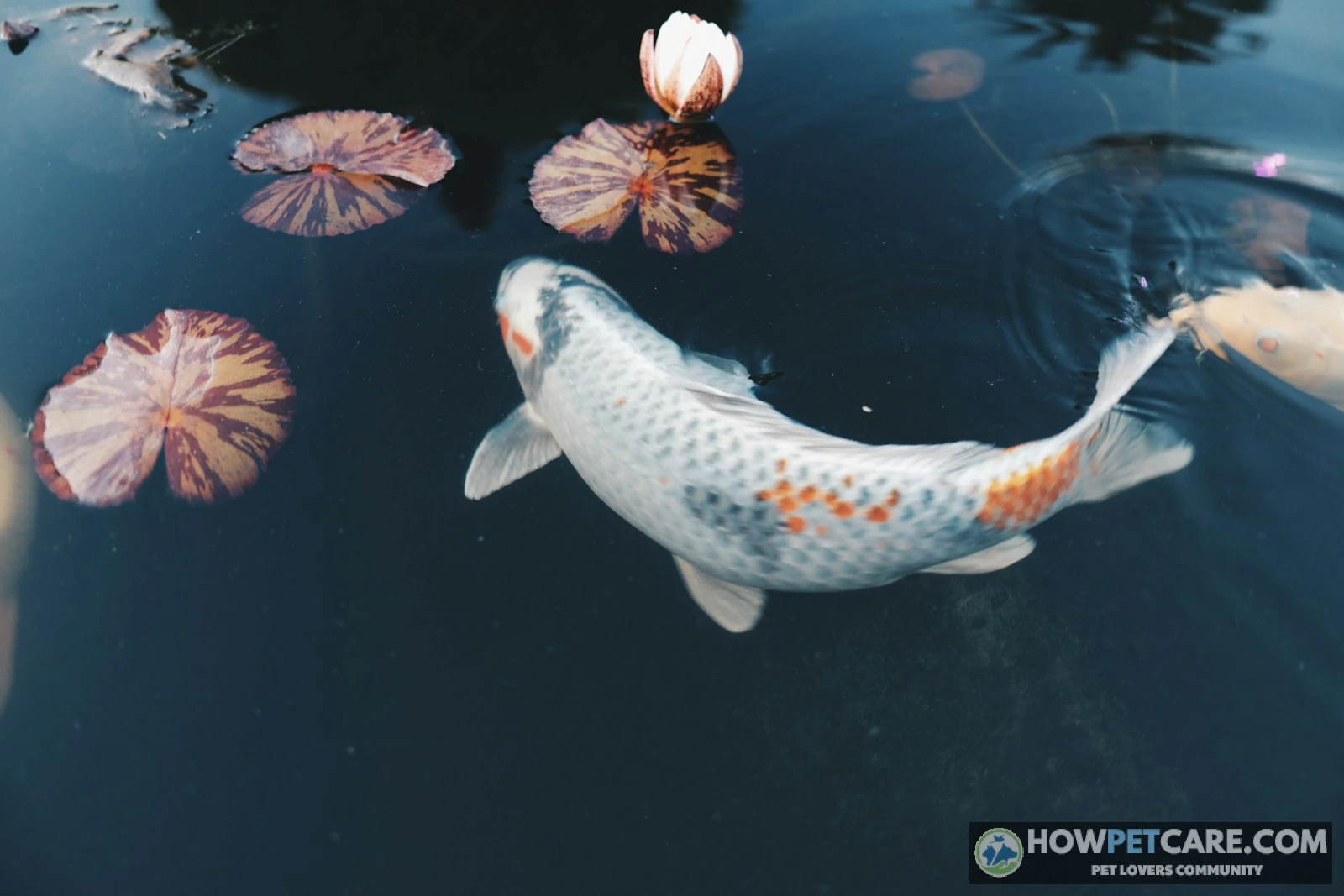

Koi fish typically live 25 to 35 years in a well-maintained outdoor pond, and optimally kept fish routinely reach 40 to 50 years. In neglected, overcrowded, or undersized ponds, lifespan drops sharply to just 3 to 5 years. Indoor tanks are unsuitable long-term.
Koi fish (Cyprinus rubrofuscus) kept in an outdoor pond typically live 25 to 35 years with good care. In well-managed setups, fish routinely reach 40 or even 50 years. That potential depends on proper husbandry: in neglected, overcrowded, or undersized ponds, average life expectancy drops sharply to just 3 to 5 years.
The answer to how long do koi live depends directly on their environment. A dedicated backyard pond, an indoor aquarium, and a wild river present very different conditions for a fish. Historical claims describe koi surviving beyond 100 or even 200 years, most famously the Japanese koi named Hanako. Those figures are unverified historical anomalies, not realistic benchmarks for pet keepers. Before buying koi, plan for a pet that may live for decades and easily outlast typical household animals.
Koi Lifespan by Environment and Condition: Pond vs. Tank vs. Wild
Where and how you house a koi sets the upper boundary of its lifespan. Water volume, biological filtration capacity, and temperature stability can determine whether a fish lives for decades or suffers premature organ failure within a few years.
| Environment | Best-case lifespan | Typical lifespan | Neglected or poor-condition lifespan | Main limiting factors | Confidence in figure |
|---|---|---|---|---|---|
| Backyard pond (1,000+ gal, 3–4+ ft deep, filtered, aerated) | 40–60+ years | 25–35 years | 3–10 years | Water quality, winter depth, stocking density, predator protection | Moderate — consistent practitioner and vet consensus |
| Indoor tank or aquarium | 10–15 years (very large, well-filtered system) | 5–10 years | Under 2 years | Water volume, ammonia/nitrite swings, stunting from crowding; suitable long-term only for juveniles | Low–moderate — little formal data, mostly dealer/vet experience |
| Wild or feral populations | Unknown; likely decades for survivors | Poorly documented (estimate: under 20 years) | Under 5 years | Predation, food scarcity, temperature extremes, spawning stress | Low — almost no reliable aging studies on feral koi specifically |
| Pond without filtration | 15–25 years only if very lightly stocked and heavily planted | 5–10 years | Under 3 years | Oxygen levels, waste buildup, seasonal crashes | Low — highly dependent on stocking and climate |

How to read this table: The gap between best-case and poor-condition lifespans shows how much care can matter. The same fish can perish at 4 years old or survive past 40 depending on its enclosure and management. The figures reflect vet and specialist literature; rows marked with "Low" confidence represent informed practitioner estimates rather than controlled longitudinal studies.
Backyard pond lifespan
A properly built backyard pond offers koi an ideal domestic environment. A lifespan of 25 to 35 years requires meeting basic biological needs: a minimum pond size of 1,500 gallons, at least 250 gallons of water per individual adult koi (increasing to 500 gallons for breeding females), and an overall pond depth of 3 to 5 feet.
Deep water provides insulation against intense summer heat and freezing winter surface layers. Koi also need dedicated mechanical and biological pond filtration, effective aeration that maintains dissolved oxygen levels of at least 5.0 mg/L, and a stable pH between 6.8 and 8.2. Together, these conditions help prevent chronic physiological stress that weakens immune function and shortens life expectancy.

Indoor tank or aquarium lifespan
A standard home aquarium is not suitable as a permanent koi habitat. Hobbyists often place juvenile 3-inch koi in 55-gallon tanks, but koi grow quickly. They can reach 12 to 15 inches within their first two to three years and ultimately exceed 24 to 36 inches.
In an indoor tank, koi rarely live beyond an average of 5 to 10 years, and in small systems their lifespan often falls under 2 years. Carp produce a heavy waste load, so ammonia and nitrite can rise rapidly in confined volumes of water. Keeping large-bodied fish in limited space can also cause skeletal stunting, spinal deformities, and muscular atrophy. Reserve tanks for temporary quarantine, medical treatment, or brief holding of young fingerlings.

Wild and feral koi
When domesticated koi escape or are released into public waterways, they revert to wild carp habits. Feral populations in rivers and lakes face pressures largely absent from private ponds: heavy juvenile predation by bass, pike, and birds; scarce winter forage; industrial pollution; and infectious pathogens carried by wild fish.
Rigorous longitudinal aging data on wild ornamental carp is scarce. Field biologists estimate that hardy survivors may reach 15 to 20 years, but heavy seasonal mortality and spawning exhaustion keep the median wild lifespan far below that of koi in managed, protected domestic ponds.

Best case vs. worst case side by side
The contrast in how long koi live comes down to the margin of error in their care. Under best-case conditions—a 3,000-gallon, heavily filtered, aerated pond with professional biosecurity, balanced seasonal feeding, and a dedicated winter strategy—koi regularly surpass 40 years of age.
At the other extreme are shallow, unfiltered "water features" under 500 gallons. Owners of these setups frequently overfeed low-grade commercial pellets, skip water testing, and top off with tap water without dechlorinator. In such neglected environments, koi live an average of just 3 to 5 years. They die not of old age, but from cumulative toxicosis, asphyxiation, or secondary bacterial septicemia.
Why Japanese Koi Often Outlive Domestic Koi
A persistent observation in the hobby is that Japanese-bred koi tend to live longer than domestic koi bred in the West. Industry data indicates an average lifespan of roughly 40 years for koi in Japan, compared with approximately 15 years for standard domestic specimens raised in average Western garden ponds. To understand the gap, it’s necessary to separate genetic and environmental advantages from marketing hype.
| Factor | Japanese-bred koi | Domestic-bred koi | Evidence quality |
|---|---|---|---|
| Bloodline selection | Centuries of selective line breeding from robust Cyprinus parent stock | Shorter breeding timelines, often selecting purely for juvenile color over longevity | Moderate — documented lineage records from established Niigata farms |
| Early rearing conditions | Raised in expansive, mineral-rich mountain mud ponds | Predominantly raised in closed concrete, liner, or fiberglass commercial vats | High — observable differences in early skeletal frame and organ growth |
| Culling and biosecurity | Strict culling of weak fry; farm-wide diagnostic screening | Variable biosecurity; commercial volume often favored over rigorous culling | Moderate — based on certified import/export veterinary protocols |
| Climate adaptation | Four distinct seasons enforcing winter metabolic rest | Often raised in regions without seasonal dormancy or under constant warm feeding | High — physiological data on carp metabolic slowdown |

Is the difference genetics or husbandry?
Imported bloodlines such as Asagi and Yamabuki Ogon have documented genetic stability that allows them to reach over 50 years of age under skilled management. Even so, husbandry during a fish’s first two years plays the decisive role. Japanese mud ponds provide millions of gallons of natural runoff water rich in trace minerals, natural micro-crustacean forage, and deep seasonal temperature swings.
During cold-water winter dormancy, a koi’s metabolic rate drops substantially, giving its internal organs a period of regenerative rest. Domestic koi in heated, continuously fed ponds, by contrast, experience unbroken cellular turnover and accelerated aging. Origin isn’t destiny, though. A domestic koi kept in an expansive, properly designed pond with clean water and winter dormancy can comfortably live 25 to 30 years, while an imported champion fish placed in an uncycled, shallow pond will succumb in months.
How long do butterfly koi live?
Butterfly koi, also known as longfin koi or dragon carp, were developed by crossing traditional koi with long-finned Indonesian river carp. Their average lifespan is comparable to that of standard koi: roughly 25 to 35 years under good pond conditions.
There is no verified scientific evidence that the longfin mutation reduces natural lifespan. Butterfly koi do, however, have delicate, elongated fin tissue that is more prone to fin rot, tearing against rough pond rocks, and predator strikes. Their internal longevity matches that of traditional standard-fin varieties, but their vulnerability to physical damage calls for extra vigilance from the pond keeper.

 You might be wonderingHow long do bunnies live?How Long Do Bunnies Live? Detailed Pet Rabbit Lifespan by BreedRead the answer
Do Koi Really Live 100 Years? A Critical Look at Hanako’s 226-Year Claim
Hanako, a scarlet female Higoi koi from Japan’s Gifu Prefecture, reportedly lived to 226 years. According to legend, she hatched in 1751 during the Tokugawa Shogunate and died on July 7, 1977. The story is widely repeated as fact, but the claim deserves scientific skepticism.

The claim: Hanako died in 1977 at age 226, scientifically verified as the oldest freshwater fish in history.
The reality: The estimate rested entirely on growth-ring analysis of two scales performed in 1966 by Dr. Masayoshi Hiro. The fish had no verified birth or chain-of-custody documentation.
The scientific consensus: Scale aging in very old fish is notoriously inaccurate. Compression, resorption, and secondary ring formation make growth rings on a multi-decade fish highly prone to overestimation. While koi can reach 40 to 60+ years, claims exceeding a century remain scientifically unverified folklore.
What the Hanako record actually rests on
Hanako’s final owner, Dr. Komei Koshihara, publicized her age in an address broadcast on Nippon Hoso Kyokai (NHK) radio in 1966. To verify the family heirloom’s age, Dr. Masayoshi Hiro of the Laboratory of Animal Science at Nagoya Women’s College extracted two scales from Hanako’s body. After examining concentric growth rings under a microscope over two months, Dr. Hiro calculated that the fish was roughly 215 years old at the time.
Several gaps undermine the record’s validity:
- No initial documentation: No eighteenth-century written hatchery records link the fish that died in 1977 to the pond’s original stock from 1751.
- Extremely small sample size: Only two scales were pulled from an animal weighing 16.5 pounds and measuring 30 inches, leaving zero margin for localized scale regeneration anomalies.
- Absence of independent peer review: The methodology and scales were never subjected to modern blind verification or radiometric dating techniques.
How scale rings and otoliths estimate fish age, and their error margins
Estimating a koi’s age relies on cycloid scale analysis or otolith examination. Both methods depend on the fact that fish grow quickly during warm summer months and slowly during cold winter periods, laying down alternating wide and narrow bands of calcified material called circuli.
-
Scale Collection
Two or three scales are removed from the lateral line region just below the dorsal fin, where rings are most uniform.
-
Preparation and Mounting
The scale is gently cleaned of exterior mucus and mounted dry between two glass microscope slides.
-
Magnification Analysis
Under 10x to 40x magnification, tight band groupings (annuli) representing winter growth cessations are identified and counted outward from the focus.
-
Error Adjustment
Practitioners must account for false annuli caused by spawning stress, nutritional deprivation, or severe temperature fluctuations during summer.
Scale reading becomes highly unreliable in geriatric fish. Once a koi passes 20 to 30 years of age, its somatic growth slows drastically. The outer margins of the scales crowd together, compressing individual annual rings into indistinguishable masses. During periods of physical stress or illness, carp also resorb minerals from the edges of their scales, effectively erasing years of growth records.
The gold standard for aging teleost fish is the analysis of otoliths, calcium carbonate ear stones located within the fish’s neurocranium. Otoliths continue to lay down distinct layers regardless of somatic growth and do not undergo calcium resorption. Extracting an otolith, however, requires sacrificing the animal, making the method unviable for living ornamental pets. For living koi, verified purchase documentation remains the only dependable measure of age.

What Shortens a Koi’s Lifespan: The Most Common Causes of Early Death
Koi have naturally durable immune systems, yet thousands die prematurely every year. These deaths rarely result from old age. More often, they trace back to preventable management mistakes, some of which can become lethal quickly.
Water quality and chemistry
Water chemistry failures are the leading cause of premature koi death. Carp produce copious metabolic waste and excrete toxic ammonia directly through their gills. Without an established population of Nitrosomonas and Nitrobacter bacteria in the pond filtration system, ammonia and nitrite levels rapidly climb to lethal concentrations.
The single most common clinical cause of sudden mortality in older, prized backyard koi is accidental chlorine toxicity. When pond levels drop from evaporation, owners often use a garden hose to top off the water and forget it’s running. Chlorine and chloramines in municipal tap water destroy the fragile gill lamellae within hours, leading to swift asphyxiation. Always use a dedicated carbon hose-filter or dose a heavy-duty dechlorinator to neutralize the entire pond volume.
Chronic poor water quality also causes sub-lethal stress. Examples include allowing pH to drift outside the safe 6.8 to 8.2 window or dissolved oxygen to dip below 5.0 mg/L. This suppresses leukocyte production and opens the door to systemic bacterial infections such as ulcer disease (Aeromonas and Pseudomonas), which can kill fish over weeks or months.

Disease and quarantine gaps
Adding new fish directly to an established pond without isolation can introduce disease. Pathogens can wipe out an entire collection of decades-old fish in less than two weeks:
- Koi Herpesvirus (KHV): A highly contagious viral infection causing gill necrosis, sunken eyes, and 80–100% mortality in water temperatures between 60°F and 77°F. There is no cure.
- Parasitic Outbreaks: Microscopic protozoans such as Ichthyophthirius multifiliis (Ich), Costia, and Chilodonella multiply rapidly in crowded water, lacerating skin tissue and destroying gill filaments.
- Bacterial Septicemia: Internal bacterial blooms triggered by physical abrasions or unquarantined carrier fish.
All new fish, regardless of the source’s credibility, need strict quarantine in a separate, aerated holding tank for a minimum of 3 to 4 weeks before joining the main pond.
Predators and pond design
Many backyard koi never reach maturity because of predatory wildlife. Great blue herons, raccoons, river otters, and domestic cats can treat a garden pond as a feeding station. Shallow, beach-like sloping edges give wading predators easy hunting platforms. Vertical walls dropping straight to at least 3 feet deep, combined with surface decoys, perimeter netting, or motion-activated water deterrents, eliminate the vast majority of predator-related losses.
Cold-climate winter losses
Winter poses serious physiological hazards in northern USDA hardiness zones. As water drops below 50°F, a koi’s digestive tract shuts down as the fish enters winter dormancy. If an owner continues feeding high-protein pellets during this period, the food sits undigested in the gut, rotting and producing fatal internal bacterial infections.
Ice covering the entire pond surface creates another danger. Hazardous gases from organic sludge decaying at the bottom cannot escape into the atmosphere, and oxygen cannot dissolve into the water. Unless an aerator or pond de-icer maintains a continuous opening in the ice, the entire pond population will suffocate beneath the frozen crust within days.

How to Tell How Old a Koi Is (and Spot Signs of Late Life)
Without hatchery documentation, determining a koi’s precise chronological age is difficult. Many pond owners assume size corresponds directly to age, but that’s a physiological misconception.
Why size lies
A koi’s growth rate depends on environmental space, water temperature, genetics, and feeding frequency, not the calendar. A 3-year-old koi raised in a spacious, warm Japanese mud pond and fed high-protein diets multiple times per day can easily reach 24 inches.
A genetically identical 10-year-old koi kept in a cramped, 300-gallon garden pond with limited rations, on the other hand, might remain permanently stunted at 12 inches. Carp exhibit indeterminate growth that is heavily influenced by their surroundings, so physical length is useless for determining age.
Aging signs vs. illness signs
As koi enter advanced age (typically past 25 to 30 years), subtle changes in their appearance and behavior distinguish them from younger fish:
- Spinal Curvature and Body Depth: Senior koi often develop a pronounced drop in the dorsal line directly behind the head, along with a thicker, deeper caudal peduncle.
- Color Softening: The vibrant, crisp edges (kiwa) of red (beni) and black (sumi) patterns gradually fade, blur, or develop localized melanophores (freckling).
- Reduced Activity: Older koi cruise the lower water column with deliberate, measured fin movements rather than the frantic darting seen in juveniles.
- Skin Texture: The skin loses some of its youthful luster and translucent sheen, taking on a heavier, more opaque appearance.

Distinguish healthy aging from acute illness. A senior koi moves steadily and maintains neutral buoyancy. A fish that rests listlessly on the bottom with clamped pectoral fins, floats sideways, or isolates itself near the filter return may have swim bladder dysfunction, a parasite infestation, or systemic organ failure. Those aren’t signs of natural aging. Any sudden behavioral shift calls for immediate water quality testing and veterinary isolation.
What a 25–50 Year Pet Fish Really Means: Cost, Maintenance, and Succession
Keeping koi requires the same long-term commitment as bringing home a horse or an exotic parrot. Koi routinely live 25 to 35 years and can exceed 50 under excellent care. Buying them means taking on more than an aesthetic garden feature; it can be a generational responsibility.
| Years of ownership | Owner life-stage example | Typical care and maintenance milestones | Planning decision to make |
|---|---|---|---|
| Years 1–5 | Age 35: Young professional / new homeowner | Pond cycling, rapid fish growth, filter upgrades, troubleshooting water parameters | Establish stable routine; budget for unexpected equipment failures |
| Years 6–15 | Age 45: Established pond keeper | Fish reach 24–30+ inches; high bioload requires heavy mechanical maintenance; pump/UV replacements | Assess pond density; rehome excess offspring or cull to maintain gallon-per-fish ratios |
| Years 16–30 | Age 55–65: Pre-retirement / retirement | Liner degradation, infrastructure overhaul; senior fish care; cold-climate winter prep | Decide if physical maintenance (hauling filter media, netting) remains viable long-term |
| Years 31–50+ | Age 70+: Senior hobbyist | Decreased physical mobility; potential property downsizing or moving into care facilities | Execute succession plan: rehoming via koi clubs, dealer surrender, or estate allocation |
Koi vs. goldfish lifespan and commitment
Prospective keepers often compare koi with common comet or Shubunkin goldfish (Carassius auratus). Typical pond goldfish have a healthy lifespan of 10 to 15 years (occasionally reaching 20), but their space and equipment demands are a fraction of those of koi. Goldfish rarely exceed 10 to 12 inches and don’t require multi-thousand-gallon setups or heavy-duty external vortex filters. If a 30-year commitment or a 3,000-gallon excavation is impractical, goldfish offer vibrant color and interaction with far less lifetime liability.
Winter dormancy and how long koi can go without food
Long-term koi care includes adjusting feeding to the fish’s metabolism. Koi are poikilothermic (cold-blooded), so their digestive enzyme production tracks environmental water temperature.
During peak summer (70°F–80°F), koi need frequent feeding to fuel growth and immune reserves. During winter dormancy in water below 45°F, however, healthy koi can comfortably go 2 to 3 months without food. In warm water, mature koi can safely fast for 7 to 10 days if an owner is traveling. For prolonged summer absences, automated solar-powered feeders or a trained pond sitter are needed to prevent starvation and monitor pump operations.
Planning for absence, moving, or death
A serious failure in koi care occurs when owners downsize or pass away without a plan for their fish. Ponds can’t be packed into moving trucks, and prospective home buyers frequently see an outdoor koi pond as an unwanted liability rather than an asset. Some fill it with dirt.
Every koi keeper needs a concrete succession plan:
- Document the Collection: Maintain a dedicated binder with photographs, estimated ages, bloodlines, and health records for each fish.
- Partner with Local Clubs: Connect with regional chapters of the Associated Koi Clubs of America (AKCA) or local pond societies. These networks routinely organize rescues and adoptions for aging owners.
- Include Koi in Estate Planning: Specify instructions and reserve funds in your legal will to cover maintenance, transport, or humane rehoming by a qualified aquatic dealer.
How to Help Your Koi Live Longer: A Practical Checklist and Decision Guide
Giving koi the best chance of reaching the upper end of their lifespan requires consistent, proactive husbandry.
Before-you-buy checklist
Before digging a trench or buying a single juvenile fish, assess honestly whether your infrastructure can meet the species’ biological needs:
Infrastructure and Volume
- ☐ Can my property accommodate an excavation of at least 1,500 to 3,000 gallons?
- ☐ Is the design planned for a vertical depth of at least 3 to 4 feet to protect against freezing and heat stress?
- ☐ Have I budgeted for an external commercial filtration system rated for twice my actual pond volume?
Financial and Time Investment
- ☐ Am I prepared to budget $50 to $150 per month in continuous electrical costs to run high-volume external pumps, UV clarifiers, and aerators 24 hours a day, 365 days a year?
- ☐ Do I have 30 to 60 minutes every single week to perform routine filter backwashing and water testing?
- ☐ Am I financially equipped to replace major mechanical hardware (water pumps, aerator diaphragms, UV bulbs) every 3 to 7 years?
Commitment and Safety
- ☐ Do local zoning ordinances allow a deep, uncovered water feature, or will fencing be required for safety?
- ☐ Do I have a documented succession plan if I move, experience illness, or pass away over the next 30 years?
Ongoing care habits that matter most
Once your pond is operating, these maintenance habits can directly extend your koi’s lives:
- Perform Routine Water Changes: Change 10% to 15% of the water every week. Siphoning out waste-laden water removes refractory nitrates, heavy metals, and growth-inhibiting pheromones that mechanical filtration cannot extract.
- Dechlorinate Consistently: Never allow unconditioned municipal tap water into the pond. Treat every top-off with sodium thiosulfate or a commercial chloramine binder.
- Maintain Oxygen Saturation: Run heavy-duty pond aerators with ceramic diffuser stones year-round, maintaining dissolved oxygen at or above 5.0 mg/L. Warm water holds less oxygen, so extra aeration during summer heatwaves is vital.
- Feed by Water Temperature: Adjust your koi’s diet with the seasons. Feed high-protein growth diets only when water exceeds 65°F. Switch to easily digestible wheat-germ pellets between 50°F and 60°F, and stop feeding entirely when pond water drops below 48°F–50°F to respect natural winter dormancy.
- Quarantine Every Acquisition: Never add a new fish, snail, or live plant directly to your primary pond. Keep new arrivals in a bare-bottom 100-gallon quarantine tank with dedicated filtration for a full 30 days, watching for unusual behavior, sores, or parasitic flashing.
- Secure Winter Gas Exchange: In cold climates, never allow winter ice to freeze the pond solid. Run a pond aerator set a few inches below the surface or install a floating 100- to 300-watt de-icer to maintain a continuous vent hole for toxic gases to escape.

A pond that meets the physiological needs of Cyprinus rubrofuscus gives your koi the chance to live well past the median statistics and remain a colorful part of your home for decades.
 You might be wonderingHow long do dogs live?How Long Do Dogs Live? Lifespan by Breed, Size, and Life StageRead the answer
FAQ
How long do koi live in a tank or aquarium?
Koi are not well suited to tanks because they grow large and produce heavy waste, so ammonia and nitrite problems and stunting are common. In small tanks lifespans are often far shorter than in ponds, and tanks are best used only for juveniles, quarantine, or temporary holding.
How long can koi go without food?
Healthy koi can go for days to weeks without feeding, and in cold water they naturally eat little or nothing during winter dormancy. Extended fasting in warm water is riskier, so arrange feeding help or use an automatic feeder for longer absences.
Do koi live longer than goldfish?
Generally yes. Well-kept koi commonly reach 25-35 years, while typical pond goldfish more often live about 10-20 years, though both depend heavily on care and conditions.
How long do butterfly koi live?
Butterfly (long-fin) koi are generally reported to live roughly as long as standard koi under good care, though reliable variety-specific data is lacking. They may be slightly more sensitive to injury and water problems.
What is the oldest koi fish ever recorded?
Hanako, a Japanese scarlet koi, is said to have lived 226 years until 1977. That age came from counting scale rings, which is an unreliable method for very old fish, so the record is considered unverified.
Can koi survive winter in a frozen pond?
Yes, if the pond is deep enough and has an opening for gas exchange, such as an aerator or de-icer. Koi become dormant in cold water, but shallow ponds that freeze solid or seal over completely can kill them.