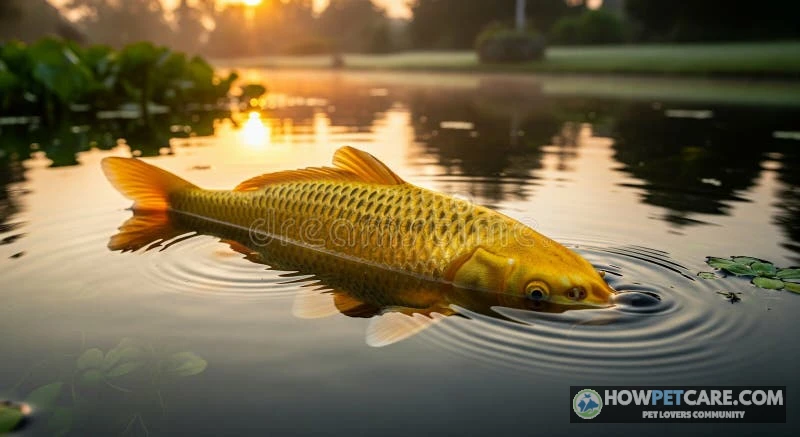

Koi fish and pond care involves maintaining stable water chemistry (pH 7.4‑8.2, ammonia < 0.02 ppm, DO > 7 mg/L), providing at least 1,500 gal with 3‑ft depth, using adequate filtration and aeration, testing daily, feeding according to temperature, and winterizing the system.
Koi Fish and Pond Care: The Essential Safety Targets
Safe, Alert, and Toxic Water Chemistry Thresholds
Healthy koi depend on water chemistry that remains within defined limits. Use this reference as a practical guide beside the pump:

| Parameter | Preferred Range | Alert Range | Dangerous Range | Recommended Test Method | Testing Frequency | Immediate Response |
|---|---|---|---|---|---|---|
| pH | 7.4 – 8.2 | 7.0 – 7.3 or 8.3 – 8.6 | < 6.8 or > 9.0 | Liquid‑reagent kit or calibrated pH meter | Daily in new ponds; weekly thereafter | Add sodium bicarbonate (½ cup/1,000 gal) to raise pH; never shift >0.2 units/24 h |
| Free Toxic Ammonia (NH₃) | 0.00 ppm | 0.02–0.05 ppm | >0.05 ppm | Ammonia test kit with temperature correction | Daily in unstable systems; weekly once cycled | Stop feeding, boost aeration, 25 % water change, consider ammonia binder |
| Total Ammonia Nitrogen (TAN) | <0.25 ppm | 0.50–1.00 ppm | >2.00 ppm (pH ≥ 8.0) | Same kit as above (calculates TAN) | Daily until zero, then weekly | Lower temperature if possible, add binder, water change |
| Nitrite (NO₂⁻) | 0.00 ppm | 0.15–0.50 ppm | >0.50 ppm | Liquid‑reagent nitrite strip or drop test | Weekly; immediate after spikes | Add 0.12‑0.15 % NaCl (1.0‑1.2 ppt), 20 % water change |
| Nitrate (NO₃⁻) | <20 ppm | 40‑80 ppm | >100 ppm | Test strips or spectrophotometer | Weekly to monthly | Increase partial changes (15‑20 %), vacuum bottom, improve flow |
| Carbonate Hardness (KH) | 105‑180 ppm (6‑10 dKH) | 70‑90 ppm (4‑5 dKH) | <50 ppm (<3 dKH) | Alkalinity test kit | Weekly | Add sodium bicarbonate 1 lb/1,000 gal to raise ~70 ppm |
| Dissolved Oxygen (DO) | 7.0‑10.0 + mg/L | 5.5‑6.9 mg/L | <5.0 mg/L | Digital DO meter or Winkler kit | Daily | Increase aeration, surface agitation, consider water change |
These values come from peer‑reviewed aquaculture guidelines and USDA‑extension data.
How Often to Test an Established or Newly Cycled Pond
- New or recently stocked ponds – test pH, ammonia (TAN & free), nitrite, temperature, and DO daily for the first 30 days. Act immediately if ammonia rises suddenly or DO falls.
- Fully cycled, stable ponds – test ammonia, nitrite, pH, and DO weekly; test nitrate once every 1‑4 weeks. Test more often after heavy rain, feed spikes, or equipment failure.
- Storm or power‑outage events – repeat the full panel within 2 hours of power restoration.

Equipment tip: Liquid‑reagent kits provide dependable ammonia and nitrite readings. Pair them with a calibrated digital thermometer and handheld DO meter for an accurate daily snapshot.
The Five‑Minute Daily Pond Inspection
A brief visual check can prevent most pond emergencies. Do it at the same time each morning:
- Observe swim pattern – koi should glide normally, surface for gas exchange, and not gasp at the surface.
- Check pump and aerator run‑time – make sure both are running and water returns without excessive bubbles.
- Remove any uneaten feed – skim the surface after 5 minutes; excess feed fuels ammonia spikes.
- Inspect for leaks or predator damage – check for torn netting, missing stones, or footprints.
- Record temperature and DO – note any change from the previous day’s log.

Never skip the 5‑minute inspection; it is the first line of defense against hidden ammonia spikes and predator intrusion.
Koi Fish Pond Requirements: Gallons, Depth, and Stocking Density
Adult Koi Versus Juvenile Gallon Requirements
Juvenile koi (under 8 in) are often sold in 10‑gallon containers, but they outgrow that space quickly. Start with a baseline minimum of 1,500 gal before adding koi. For adult, 24‑inch specimens, allow 350‑400 gal per fish; the safer end of the range (500 gal per adult) gives more margin in warm climates and with lower‑efficiency filters.

Minimum Depth and Volume Calculations
Depth quietly regulates temperature. Three feet is the absolute minimum for koi; four to six feet is better for large adults and wintering because the deeper layer stays near 50‑55 °F (10‑13 °C) while the surface may freeze.
Volume formulae (use the one that matches your shape):
- Rectangular: Length (ft) × Width (ft) × Average Depth (ft) × 7.48 = Gallons.
- Circular: π × (Radius ft)² × Depth (ft) × 7.48 = Gallons.
- Irregular: Divide pond into measurable sections, calculate each, then sum.

Confirm the result with a calibrated water meter during fill‑up. Small errors become significant when sizing filtration.
Planning for 24‑Inch Adults Before Buying Juveniles
The Worked example (see case example below) shows how a pond planned for six adult koi reaches ≈5,400 gal at a 4.5‑ft depth. Planning at adult size avoids rebuilding the basin once juveniles reach 24 in.

Exceeding the 10‑fish/100‑gal rule leads to chronic ammonia spikes, reduced oxygen, and rampant disease. Always size for the future adult, not the current juvenile.
Stocking Density and Water Volume Sizing Model
| Fish Size or Pond Scenario | Gallons per Fish | Recommended Depth | Target Turnover | Aeration Priority | Planning Notes |
|---|---|---|---|---|---|
| Juvenile <8 in (grow‑out) | 100‑150 gal | ≥3 ft | 1.5 h turnover | Moderate (surface diffusers) | Re‑calculate when fish reach 12‑in |
| Adult 18‑20 in | 250‑350 gal | 4‑5 ft | 1.0‑1.2 h turnover | High (deep diffusers) | Include buffer for summer heat |
| Adult 22‑24 in (max) | 350‑500 gal | 4.5‑6 ft | ≤1.0 h turnover | Very high (multiple aerators) | Plan for winter refuge & predator barriers |
Case Example: Stocking Density and Water Volume Sizing Model
Formula: Length‑Mass Equivalent Capacity
Baseline Minimum Capacity: 1,500 gal + 350 gal per adult fish (target 20‑24 in).
Surface Area Factor: 10 sq ft per adult fish.
Turnover Multiplier: Gross Pond Volume ÷ Filter Turnover (target 1.0‑1.5 h).
Worked Example – 6 Mature Adults
- Gallons Required: 1,500 gal + (6 × 350 gal) = 3,600 gal (minimum).
- Surface Area: 6 × 10 sq ft = 60 sq ft. A 10 ft × 16 ft rectangle gives 160 sq ft – well above minimum.
- Depth for Volume: 3,600 ÷ (10 ft × 16 ft × 7.48) = 3.0 ft minimum. Add safety buffer → 4.5 ft depth.
- True Volume: 10 ft × 16 ft × 4.5 ft × 7.48 = 5,385 gal.
- Filter Flow: 5,385 gal ÷ 1.25 h = 4,308 gph minimum.
- Oxygen Allocation: 40‑50 L /min air pump dedicated to deep diffusers.
The model explains why a pond that appears “big enough” on paper can still be under‑perfused when depth and turnover are overlooked.
Water Filtration, Beneficial Bacteria, and Emergency Aeration
Mechanical, Biological, and UV Filtration Roles
- Mechanical filtration removes solids (uneaten feed, feces, plant debris) before they decompose.
- Biological filtration contains beneficial bacteria that nitrify: ammonia → nitrite → nitrate. Established bio‑media can reduce toxic ammonia to safe levels within 24‑48 hours of a spike.
- UV clarification eliminates free‑floating algae and parasites but does not remove ammonia or nitrite. Use UV as a final polish once the bio‑filter is stable.

Pump Flow and Pond Turnover Calculations
Industry standards call for a pump to circulate 1.5‑2.0 × the pond volume per hour for effective aeration and bio‑media contact. Calculate actual flow after accounting for:

- Vertical head (height the pump pushes water).
- Pipe friction (length, diameter, elbows).
- Filter resistance (media depth, screen clogging).
- UV or heater load (adds pressure drop).
Example: A 5,000‑gal pond with a 2,500 gph pump (50 % of volume) will not meet the turnover rule; upgrade to a 3,800‑4,200 gph unit or add a secondary pump.
What to Do During a Pump or Power Failure
-
Stop Feeding
Immediately cease all feeding to reduce metabolic oxygen demand.
-
Activate Backup Aeration
Switch on a battery‑powered air pump or portable generator‑driven diffuser. Place diffusers in the shallow zone (1‑2 ft deep) to keep the surface free of ice while preserving the deep‑water thermal refuge (≈39°F/4°C) untouched.
-
Agitate Surface
Manually stir the surface with a net or paddle to break the stagnant film and increase gas exchange.
-
Test DO & Ammonia
Use handheld meters; if DO falls below 5 mg/L or ammonia rises above 0.05 ppm, perform a 25 % water change with de‑chlorinated water.
-
Preserve Bio‑Media
If the pump can be rescued, keep filter media wet and oxygenated; never rinse in chlorinated tap water.
-
Restore Flow
Repair or replace the pump, then ramp up flow slowly to avoid shocking the bio‑media.
Why timing matters: Warm water holds less oxygen, so a summer outage can become lethal within 2‑4 hours. In colder water (below 55 °F), the window extends to 6‑8 hours because metabolic demand is lower.
Rinsing filters with tap water destroys the beneficial bacteria colony, triggering a secondary ammonia spike that can kill koi within days.
Koi Fish Diet and Feeding by Water Temperature
Temperature‑to‑Protein and Feeding Frequency Matrix
| Water Temperature | Metabolic Stage | Feed Type | Protein & Carbohydrate Emphasis | Feeding Frequency | Portion Guidance |
|---|---|---|---|---|---|
| Below 48°F (<9°C) | Dormancy (torpor) | NO FOOD | 0 % protein | 0 feedings | Feeding below 48°F leads to gut impaction and lethal bacterial putrefaction. |
| 48‑54°F (9‑12°C) | Severely depressed | Cold‑water wheat‑germ pellets (high carbs) | 28‑32 % protein, 3‑4 % fat | 1‑2× per week (once every 2‑4 days) | Offer a pin‑size pinch during warmest daylight; skim leftovers after 3 minutes. |
| 55‑64°F (13‑18°C) | Moderate recovery | Wheat‑germ blend + maintenance staples | 32‑36 % protein, 4‑6 % fat | 1‑2× daily | Feed only what is consumed in 5 minutes; monitor nitrite closely. |
| 65‑74°F (19‑23°C) | Peak assimilation | High‑protein growth formula (often with spirulina) | 38‑42 % protein, 6‑10 % fat | 2‑4× daily | Max growth phase; keep DO >7 mg/L. |
| 75‑82°F (24‑28°C) | Accelerated, stress‑prone | High‑digestibility staple (reduce heavy colorants) | 35‑38 % protein, 4‑6 % fat | 2‑3× daily, small portions | Warm water holds less O₂; cut rations by 50 % if DO <6.5 mg/L. |
| Above 85°F (>29°C) | Acute heat stress | NO FOOD | 0 % protein | 0 feedings | Shade pond, maximize bottom aeration, avoid feeding. |
Use the matrix instead of calendar‑based schedules: feeding decisions should follow the thermometer. Keep a digital water‑temperature probe permanently mounted near the surface and record every feeding.

When to Use Wheat‑Germ or High‑Protein Feed
- Wheat‑germ (high carbohydrate, low protein) suits water ≤64°F because koi digest carbs more efficiently at lower metabolism.
- High‑protein diets (38‑42 % protein) are safe ≥65°F when the bio‑filter can process the added nitrogen load.
Portion rule: No more than 2 % of body weight per day in feed. For a 20‑lb koi, that equals 0.4 lb (≈180 g) total across all feedings. Over‑feeding is the #1 cause of ammonia spikes and algal blooms.
The Exact Temperature for Stopping Food
Research shows koi enter true winter torpor below 48°F (9°C) and cease gut motility entirely. Stop all feed once the water thermometer reads 48°F or lower for three consecutive readings.

Place a waterproof probe at mid‑depth (½ pond depth) to avoid surface temperature fluctuations caused by sunlight.
Seasonal Pond Maintenance and Winter Koi Care
Weekly and Monthly Pond Maintenance
Weekly tasks
- Test pH, ammonia, nitrite, DO, and temperature.
- Purge settlement/vortex by opening bottom drain for 15 seconds.
- Back‑wash mechanical pre‑filter (never with chlorinated water).
- Top‑off with de‑chlorinated water; verify float valve action.
Monthly tasks
- Vacuum subsurface substrate and dead‑water pockets.
- Scrub air diffuser discs to remove bio‑film.
- Disassemble pump impeller, clean string algae and grit.
- Audit bio‑media churn – ensure uniform bubbling throughout the chamber.
- Service UV clarifier (clean quartz sleeve, replace lamp after 8,000‑9,000 h).
Temperature‑Based Autumn Transition
- Monitor water temperature daily. When it drops to 65°F, shift from high‑protein growth feed to wheat‑germ blend.
- Reduce feed frequency by 25 % for each 5°F drop until you reach the 48‑°F threshold.
- Increase partial water changes to 15‑20 % to flush accumulated organics before the cold season.
Winterization Workflow for Filters, Pumps, and Aerators
-
Debris Removal
Drain all visible organic matter from skimmers, waterfall trays, and pump reservoirs.
-
Filter Drainage or Bypass
If the filter housing is submersible, drain to 1‑inch above the media bed; if it is a moving‑bed system, keep media wet and oxygenated by running a low‑flow bypass pump.
-
Pump Protection
Close all inlet and outlet valves, then add antifreeze (propylene glycol) to the pump housing to 5 % of the pump volume only if the pump is not rated for freeze‑back.
-
Aerator Placement
Suspend the diffuser on a shallow shelf (12‑18 in below the surface) to keep the ice‑free gas‑exchange window while preserving the deep‑water refuge (≈39°F/4°C) untouched.
-
Ice‑Free Opening
Install a floating de‑icer or low‑power heater set to melt a 2‑inch hole at the surface continuously.
-
Final Check
Verify that the backup aerator is running, DO stays >5 mg/L under ice, and all valves are sealed to prevent water loss.
Key winter note: Never smash ice to create an opening; shock waves can fracture koi spines and cause traumatic injuries.
Keep the diffuser off the pond floor; placing it on the bottom mixes the cold surface layer with the warmer bottom refuge, causing temperature shock and reduced oxygen solubility.
Koi Disease Diagnosis: Ich, Ulcers, Dropsy, and Swim Bladder Signs
Water‑Quality Emergency or Infectious Disease?
Before using medication, re‑test the full chemistry panel. Ammonia or nitrite spikes often resemble disease symptoms, including lethargy and clamped fins. Address the water first; many “ill‑looking” fish recover after parameters return to normal.
Immediate Triage for Ich, Bacterial Ulcers, and Dropsy
- Isolate any fish showing lesions, white spots, or abnormal swelling in a bare‑bottom quarantine tank equipped with a 40‑LPM air pump.
- Confirm ich by microscopic wet‑mount; ulcers require bacterial culture from a veterinary lab.
- Apply salt dip if a parasite is confirmed (see salt‑dip matrix below).

Quarantine and Salt‑Dip Calculations Without Guesswork
| Condition / Pathogen | Key Physical Indicators & Behavior | Confirmation Method | Target Salt (NaCl) Concentration | Primary Therapeutic Protocol | Hospital Tank Isolation Rule |
|---|---|---|---|---|---|
| Ichthyophthiriasis ("Ich") | Pinpoint white spots, flashing, clamped fins | Wet‑mount microscopy (horseshoe macronucleus) | 0.30‑0.50 % (3‑5 g/L) – raise gradually over 24 h | Maintain 0.5 % salt for 14‑21 days or use label‑rated formalin/malachite green if pond is salt‑free | Treat entire pond – ich is systemic; isolating one fish leaves others vulnerable. |
| Bacterial Ulcers (Aeromonas / Pseudomonas) | Open necrotic lesions, red halo, bleeding | Vet‑performed culture & sensitivity | 0.15‑0.30 % (1.5‑3 g/L) – helps osmoregulate skin | Debride with 3 % H₂O₂, apply povidone‑iodine; systemic antibiotics by prescription only | |
| Dropsy (Systemic Edema) | Pine‑cone scale protrusion, abdominal swelling, exophthalmia | Clinical diagnosis; ultrasound or coelomic tap by vet | 0.50‑0.60 % (5‑6 g/L) | Broad‑spectrum antibiotics + thermal support (maintain 78°F/25°C) |
Safety disclaimer: The above protocols are first‑aid steps. Always consult an aquatic‑veterinarian before administering antibiotics or high‑dose salts.
Koi Fish and Goldfish, Tank Mates, and Predator‑Proof Design
Can Koi Fish and Goldfish Live Together in a Pond?
Yes, provided the pond meets adult koi requirements (≥1,500 gal, ≥3‑ft depth) and the combined bio‑load is calculated for the largest fish present. Koi outgrow goldfish quickly; a 24‑in koi will dominate feed and space, potentially starving smaller goldfish. Choose large comet or common goldfish (10‑12 in) if you want to share the habitat.
Bio‑load tip: Add 0.5 % extra turnover (e.g., 1.2 × instead of 1.0 ×) when mixing species because goldfish excrete more ammonia per pound of body mass.
Compatible Fish and Mixed‑Pond Bio‑Load
- Suitable companions: large comet goldfish, other robust Cyprinus varieties, or non‑aggressive ornamental catfish.
- Unsuitable companions: small fancy goldfish, tropical cichlids, or any species that prefers significantly warmer water (≥78°F).
- Hybrid risk: koi and goldfish can interbreed, producing sterile offspring with unpredictable coloration—avoid mixed breeding if you value true Nishikigoi lines.
Difference Between Standard Koi and Butterfly Koi
Butterfly koi are Nishikigoi with elongated fins. They need the same water quality and space as standard koi. Their delicate fins can snag on rough edges, so keep all fittings smooth and provide multiple feeding zones to reduce aggressive competition.
Vertical Walls and Ledge Design That Deter Predators
Predator protection works best when it is part of the pond’s structure:
- Straight vertical walls (90°) remove shallow wading zones where herons stand.
- Immediate deep drop (≥3‑ft) after the perimeter wall keeps raccoons from reaching the water’s edge.
- Limit shallow ledges to <6 in; if aesthetic planting is desired, use raised islands that are inaccessible without a ladder.
- Overhead cover – a simple shade sail or low fence reduces aerial predator visibility.
Physical deterrents (netting, decoys) should be secondary; they lose efficacy after a few weeks.
Your Koi Pond Audit and 30‑Day Action Plan
Immediate Safety Corrections
| Day | Action |
|---|---|
| 1 | Measure actual pond volume (use the formula above) and count every fish with length. Record current temperature, pH, ammonia, nitrite, nitrate, DO, and KH. |
| 1 | Verify pump flow (gph) and aerator output; note any power‑backup capacity. |
| 2‑3 | If any parameter is in the Alert or Dangerous range, execute the corrective actions from the chemistry table immediately. |
| 4‑7 | Set up a written testing log (paper or spreadsheet) and schedule daily 5‑minute inspections. |
| 8‑14 | Install a quarantine tank (minimum 100 gal) and locate an emergency air pump. |
| 15‑30 | Service mechanical filtration (back‑wash), confirm bio‑media turnover, and begin the temperature‑based feeding matrix. |
Seven‑Day Stabilization Checklist
- ☐ All water‑quality tests within Preferred Range.
- ☐ Pump flow ≥ 1.5 × pond volume per hour.
- ☐ Aeration delivering ≥ 40 L/min to deep zone.
- ☐ Predator barriers (vertical walls, netting) inspected for gaps.
- ☐ Backup power source tested for at least 2 hours of aeration.
Monthly Records and Reassessment Triggers
| Trigger | Re‑audit Needed |
|---|---|
| Adding new fish | Immediately after stock‑addition and 48 h later |
| Major weather event (storm, freeze) | Within 24 h |
| Filter upgrade or cleaning | After 72 h of stable flow |
| Visible algae bloom or nitrate >80 ppm | Weekly until nitrate <40 ppm |
| Fish showing lethargy, flashing, or abnormal swimming | Immediate water‑quality test and possible disease triage |
Follow this 30‑day roadmap to shift from reactive to preventive pond management and reduce the risk of ammonia crashes, oxygen loss, and predator loss.
Quick Reference Summary Tables
Koi Pond Water Chemistry: Critical Limits and Corrective Actions
| Parameter | Safe Baseline | Alert Threshold | Critical Danger | Direct Corrective Action |
|---|---|---|---|---|
| Free Toxic Ammonia (NH₃) | 0.00 ppm | 0.02‑0.05 ppm | > 0.05 ppm | Dose liquid ammonia binder, stop feeding, increase aeration, 25 % water change |
| Total Ammonia Nitrogen (TAN) | < 0.25 ppm | 0.50‑1.00 ppm | > 2.00 ppm (pH ≥ 8.0) | Cross‑reference pH/temperature toxicity chart; binder, cease feeding, lower temperature if feasible |
| Nitrite (NO₂⁻) | 0.00 ppm | 0.15‑0.50 ppm | > 0.50 ppm | Add 0.12‑0.15 % NaCl (1.0‑1.2 ppt) salinity; 20 % water change |
| Nitrate (NO₃⁻) | < 20 ppm | 40‑80 ppm | > 100 ppm | Increase weekly partial water changes (15‑20 %), vacuum bottom, optimize mechanical flush |
| pH | 7.4‑8.2 | 7.0‑7.3 or 8.3‑8.6 | < 6.8 or > 9.0 | Add sodium bicarbonate ½ cup/1,000 gal; never shift >0.2 units/24 h |
| Carbonate Hardness (KH) | 105‑180 ppm | 70‑90 ppm | < 50 ppm | Dose pure sodium bicarbonate 1 lb/1,000 gal to raise ~70 ppm |
| Dissolved Oxygen (DO) | 7.0‑10.0 + mg/L | 5.5‑6.9 mg/L | < 5.0 mg/L | Deploy high‑output air diffusers, surface agitation, optional water change |
5‑Tier Water Temperature Feeding Matrix
| Water Temperature | Metabolic Activity | Feed Formulation Profile | Protein / Fat Ratio | Daily Frequency & Sizing | Management Rules |
|---|---|---|---|---|---|
| Below 48°F (<9°C) | Dormancy (Torpor) | NO FOOD | 0 % Protein | 0 feedings | Complete digestive arrest. Gut compaction occurs if fed. |
| 48‑54°F (9‑12°C) | Severely Depressed | Cold‑water wheat‑germ pellets | 28‑32 % Protein / 3‑4 % Fat | 1‑2× per 2‑4 days | Skim leftovers after 3 min; stop if koi appear lethargic. |
| 55‑64°F (13‑18°C) | Moderate Recovery | Wheat‑germ + maintenance blend | 32‑36 % Protein / 4‑6 % Fat | 1‑2× daily | Observe nitrite; reduce if spikes appear. |
| 65‑74°F (19‑23°C) | Peak Assimilation | High‑protein growth blend (spirulina) | 38‑42 % Protein / 6‑10 % Fat | 2‑4× daily | Ensure DO >7 mg/L; monitor growth. |
| 75‑82°F (24‑28°C) | Accelerated, stress‑prone | High‑digestibility staple | 35‑38 % Protein / 4‑6 % Fat | 2‑3× daily, small portions | Cut rations 50 % if DO <6.5 mg/L. |
| Above 85°F (>29°C) | Acute Heat Stress | NO FOOD | 0 % Protein | 0 feedings | Shade pond, maximize bottom aeration. |
Final Checklist: Winter‑Ready, Predator‑Proof, Disease‑Resilient Koi Pond
- Water chemistry: All parameters in Preferred Range before freeze.
- Depth: Minimum 4‑ft with no vertical ledges <6‑in.
- Aeration: Diffuser on shallow shelf, backup air pump ready.
- Filtration: Filter media wet, turnover ≥1 × hour, pump insulated or drained per manufacturer.
- Feeding: Cease below 48°F; maintain temperature‑triggered matrix.
- Predator barriers: 90° walls, overhead cover, motion‑activated sprinkler.
- Emergency plan: Pump‑failure steps (see above), power‑backup test quarterly.
- Health protocol: Daily observation, quarantine tank ready, salt‑dip recipes on hand.
Audit the pond today, put the 30‑day action plan in place, and follow the seasonal routines to maintain predictable water quality, healthy koi growth, and peace of mind throughout the year.

| Parameter | Safe Baseline | Alert Threshold | Critical Danger | Recommended Test Method | Testing Frequency | Direct Corrective Action |
|---|---|---|---|---|---|---|
| pH | 7.4 – 8.2 | 7.0 – 7.3 or 8.3 – 8.6 | < 6.8 or > 9.0 | Liquid-reagent kit or calibrated pH meter | Daily in new ponds; weekly thereafter | Add sodium bicarbonate (½ cup/1,000 gal) to raise pH; never shift > 0.2 units/24 h |
| Free Toxic Ammonia (NH₃) | 0.00 ppm | 0.02 – 0.05 ppm | > 0.05 ppm | Ammonia test kit with temperature correction | Daily in unstable systems; weekly once cycled | Stop feeding, boost aeration, perform 25% water change, consider ammonia binder |
| Total Ammonia Nitrogen (TAN) | < 0.25 ppm | 0.50 – 1.00 ppm | > 2.00 ppm (pH ge 8.0) | Liquid-reagent ammonia test kit (calculates TAN) | Daily until zero, then weekly | Lower temperature if possible, add binder, perform water change |
| Nitrite (NO₂⁻) | 0.00 ppm | 0.15 – 0.50 ppm | > 0.50 ppm | Liquid-reagent nitrite strip or drop test | Weekly; immediate after spikes | Add 0.12 – 0.15% NaCl (1.0 – 1.2 ppt), perform 20% water change |
| Nitrate (NO₃⁻) | < 20 ppm | 40 – 80 ppm | > 100 ppm | Test strips or spectrophotometer | Weekly to monthly | Increase partial water changes (15 – 20%), vacuum bottom, improve flow |
| Carbonate Hardness (KH) | 105 – 180 ppm (6 – 10 dKH) | 70 – 90 ppm (4 – 5 dKH) | < 50 ppm (< 3 dKH) | Alkalinity test kit | Weekly | Add sodium bicarbonate 1 lb/1,000 gal to raise ~ 70 ppm |
| Dissolved Oxygen (DO) | 7.0 – 10.0+ mg/L | 5.5 – 6.9 mg/L | < 5.0 mg/L | Digital DO meter or Winkler kit | Daily | Increase aeration, surface agitation, consider water change |
FAQ
Is it hard to maintain a koi fish pond?
A properly sized pond with adequate filtration and aeration is manageable, but koi produce more waste than a typical water garden can process. Consistent testing, controlled stocking, and preventive equipment maintenance make care far easier than reacting to repeated water-quality emergencies.
How long does it take koi to settle into a new pond?
Many koi begin behaving normally within several days, while cautious fish may take two weeks or longer. Stable water chemistry, hiding cover, low disturbance, and quarantine before introduction reduce stress; persistent isolation, clamped fins, flashing, or refusal to eat warrants testing and examination.
How do I keep koi pond water clear?
Remove suspended and settled solids with correctly sized mechanical filtration, control feeding, maintain biological filtration, and use a properly sized UV clarifier for green water if needed. Clear water is not proof of safety, so ammonia, nitrite, nitrate, pH, and dissolved oxygen still require testing.
What is the difference between koi fish and butterfly koi?
Butterfly koi are long-finned koi, not a separate pond species, and require essentially the same water quality, diet, and space. Their extended fins make smooth pond fittings and low-competition feeding areas especially important.
What do koi fish mean in Japanese culture?
Koi, or Nishikigoi, are commonly associated with perseverance, strength, good fortune, and success, drawing partly on stories of carp overcoming powerful currents. Color and artistic context can add further meanings, but symbolism does not change their substantial husbandry requirements.