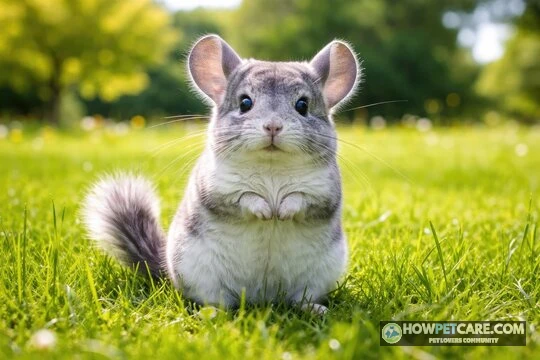

Chinchilla care centers on five basics: a spacious multi-level cage kept at 60–70°F with low humidity, unlimited timothy hay plus a small measured portion of pellets, dust baths two to three times weekly, supervised out-of-cage exercise, and an exotic vet for wellness exams and emergencies such as heatstroke or dental disease.
Is a Chinchilla Right for You? Quick Facts, Lifespan and Honest Difficulty
A chinchilla can be a rewarding pet for a beginner with reliable air conditioning, access to an exotic vet, and time for a long commitment. The daily routine is manageable, but mistakes involving heat, food, falls, or handling can have serious consequences. Expect an active evening companion, not necessarily a pet that wants to cuddle.
Chinchillas commonly live 10–20 years in captivity, so plan for a commitment at the 15–20 year end of that range rather than the minimum. Their ideal room temperature is 60–70°F; take action before the room reaches 75°F. They need unlimited grass hay, fresh water, a spacious multi-level cage, and regular dust baths.
Before committing, budget for a suitable cage, cooling, and an exotic-vet visit. The price examples later in this chinchilla care guide are illustrative planning allowances, not verified quotes. Call local suppliers and clinics before relying on them.
For early planning, the illustrative figures below put one-time setup around $335–$950, ongoing consumables around $30–$85 a month, and routine yearly costs around $470–$1,320, plus an emergency reserve of $500–$1,000 or more. The full itemized breakdown appears in the costs section.
Quick facts at a glance
- Size: An adult’s body is roughly 9–14 inches long, with an additional 3–6 inches of tail.
- Activity: Most active around dusk and dawn, with activity overnight; expect some nighttime noise.
- Food: Unlimited timothy or other appropriate grass hay, making up roughly 75–80% of the diet, plus a measured portion of plain chinchilla pellets and fresh water.
- Temperature and humidity: Aim for 60–70°F and roughly 40–50% relative humidity; don’t wait until a hot room becomes dangerous to cool it.
- Dust baths: Usually 2–3 times a week; offer a chinchilla-specific dust bath for approximately 10–15 minutes, adjusting with veterinary advice if the skin or eyes become irritated.
- Habitat: For one adult, plan around a cage approximately 3 feet wide by 2 feet deep by 4 feet high, with secure, solid levels and daily supervised exercise. This is a practical setup target, not a universally established minimum.
- Company: A compatible companion can be valuable, but a single chinchilla can also live alone with suitable enrichment and daily attention. Never assume two unfamiliar animals will get along.

Chinchilla vs other small pets
All four animals need species-specific housing and veterinary care. The space descriptions below are starting points for planning, not interchangeable minimum standards. Actual costs depend heavily on location, housing, and the number of animals.
| Pet | Typical lifespan | Space to plan for | Monthly cost range | Temperature sensitivity | Handling tolerance | Beginner considerations |
|---|---|---|---|---|---|---|
| Chinchilla | Often 10–20 years | Tall, multi-level cage plus safe exercise space | Illustrative: $30–$85 | High; reliable cooling is essential | Often dislikes restraint | Moderate routine; heat and injury risks require care |
| Rabbit | Often around a decade | Large exercise pen or rabbit-proofed room | Varies; obtain local estimates | Heat-sensitive | Many dislike being lifted | Considerable space, enrichment, and vet needs |
| Guinea pig | Several years | Broad, single-level enclosure; plan for compatible company | Varies; obtain local estimates | Heat-sensitive | Individuals differ; gentle support is essential | Social care, hay, and regular cleaning are important |
| Hamster | Usually a shorter commitment | Large, secure floor area with deep digging substrate | Varies; obtain local estimates | Needs a stable, appropriate room temperature | Many prefer limited handling | Often active at night; generally housed alone |

A guinea pig isn’t automatically a cuddly children’s pet, and a hamster isn’t a low-effort substitute. Compare each species’ full care needs before deciding.
Households where a chinchilla is a poor fit
Think twice if your home gets hot and you can’t run dependable air conditioning, your lease doesn’t permit the enclosure, or you can’t find a vet who treats chinchillas. An animal that jumps and chews overnight may also be difficult for a light sleeper to live with.
Young children need close adult supervision, and an adult must remain responsible for the animal. Cats, dogs, and other predators should never have direct access to the chinchilla, even during playtime. Another species may be a better match if you want a daytime lap pet or aren’t willing to plan for a decade or more.
Where to Get a Chinchilla: Breeder vs Rescue vs Pet Store, and a Healthy-Animal Checklist
Choose both the animal and its source carefully. A healthy appearance is reassuring, but it can’t rule out dental disease or other hidden problems. Arrange an exotic-vet examination soon after adoption.
Breeder, rescue or pet store: how they compare
- Rescue: Staff or foster carers may know an adult’s personality, previous diet, and compatibility with a companion. Ask what health information is documented and whether support is available if the placement fails.
- Responsible breeder: Ask to see the housing and learn about the animal’s age and health history, as well as the breeder’s return policy. Avoid anyone who can’t explain how the animal has been cared for.
- Pet store: Information about age, sex, origin, and prior care may be limited. Check conditions closely and ask who can answer health and feeding questions.
Adoption and purchase fees vary substantially. For a first budget, an illustrative allowance of $50–$250 for one animal is reasonable to investigate locally, but it isn’t a verified national average. Ask about the current food, recent weight or health records, sex, previous cage mate, and any signs of illness. Keep the existing diet initially and discuss gradual changes with your vet.
An established compatible pair can be a good choice if you have room and resources for both. Confirm sex with an experienced vet rather than relying solely on a seller’s label. Avoid an unsterilized mixed-sex pair; breeding isn’t a beginner-care project.
Healthy chinchilla inspection checklist
Look for the following without forcing an animal to be handled:
- Clear, bright eyes without crusting or discharge.
- A clean, dry nose and comfortable, quiet breathing.
- Dense, reasonably clean fur without obvious inflamed skin or unexplained bald patches.
- A clean, dry rear end and normal-looking droppings in the enclosure.
- Alert behavior appropriate to the time of day and an ability to move normally.
- A body that is neither visibly emaciated nor excessively heavy; ask for a recent weight.
- A clean mouth area without drool or wet fur under the chin.

Healthy adult incisors are normally yellow-orange rather than bright white, but checking the visible teeth can’t rule out problems farther back. Avoid buying from hot, crowded, dirty housing or from a seller who dismisses discharge, persistent sneezing, lethargy, or suspected dental problems.
 You might be wonderingHermit crab careHermit Crab Care: A Complete Beginner Setup and Care GuideRead the answer
Chinchilla Cage Setup: Size, Multi-Level Layout and Must-Have Items
Chinchillas need more than a large box. Their cage should provide secure footing, places to hide and chew, constant hay and water, and a layout that limits dangerous falls.
Step-by-step habitat setup
- Choose the room and cage. A practical target for one adult is approximately 3 by 2 by 4 feet, with secure doors and horizontal room to move. A pair needs more usable space and duplicate resources. Choose bar spacing that prevents escape or entrapment; roughly 1 inch or less is a planning ceiling, and smaller animals may need narrower spacing.
- Position it safely. Keep the cage indoors, out of direct sun, and away from radiators, cooking fumes, drafts, and persistent loud noise. Place a thermometer and hygrometer near the cage at animal level, out of chewing reach.
- Create solid levels. Cover wire floors and shelves with securely fitted, chew-safe solid surfaces. Arrange broad ledges so a missed jump can’t become a long fall. Avoid steep ramps and gaps where legs can catch.
- Add a hide and substrate. Supply a roomy, chew-safe hideout. Use suitable paper-based bedding, aspen, or well-maintained fleece liners; remove liners if your chinchilla chews and swallows them.
- Install food and water. Secure a hay holder that can’t trap the animal’s head, a stable pellet dish, and a water bottle with a working sipper. Put hay where it stays dry and reasonably clean.
- Add enrichment. Offer untreated, chinchilla-safe chew toys and appropriate wood. A solid-surface exercise wheel can be useful if it’s large enough for the animal to run without an arched back; choose one designed for chinchillas and avoid wire rungs and open spokes.

A commonly used wheel-size starting point is around 15 inches in diameter, but fit, construction, and veterinary advice matter more than the number alone. A wheel doesn’t replace supervised exercise.
Safe and unsafe materials
Suitable chewing materials can include verified untreated apple or willow wood and kiln-dried pine sold for small-animal use. Confirm that the wood hasn’t been treated with pesticides or finishes. Avoid cedar bedding, scented products, and unknown woods or finishes. Remove accessible plastic if it can be chewed: swallowed plastic can cause a dangerous intestinal blockage.
Check shelves, fasteners, and toys regularly for sharp edges, loose parts, and chewing damage. Don’t use a wire or mesh floor as the animal’s primary standing surface.
Out-of-cage playtime space
Once the animal is settled, offer supervised exercise in a cool, enclosed, chinchilla-proofed room or pen. Block access to wires, baseboards, houseplants, furniture cavities, and other pets. Close toilet lids and remove water containers. Never use an exercise ball: it limits the animal’s ability to regulate movement and avoid overheating.

Temperature, Humidity and Heatstroke: Safe Zones and What to Do
Chinchillas are highly heat-sensitive. An animal that looks cool can still be at risk in a warm enclosure, so use a thermometer rather than relying on how the room feels to you. Aim for 60–70°F and roughly 40–50% humidity.
Safe temperature zone chart
| Zone | Temperature | Humidity | Risk level | What to do |
|---|---|---|---|---|
| Target | 60–70°F, approximately 16–21°C | Aim for roughly 40–50% | Preferred range | Maintain cooling and check conditions at cage level. |
| Getting warm | Above 70°F, approaching 75°F | Aim below roughly 50% | Increasing concern | Restore the cooler target range; reduce activity and monitor. |
| Caution | Around 75°F and above, approximately 24°C | Any; humid air adds concern | Heatstroke risk | Move to effective air conditioning and watch closely for distress. |
| Dangerous | Around 80°F and above, approximately 27°C | Any | High | Move promptly to a cool environment; signs of illness require emergency veterinary care. |

Some sources use a higher temperature threshold than 75°F, but that’s not a reason to wait: individual animals and humid conditions differ, and heatstroke can be life-threatening. No humidity reading makes a hot cage safe. A dehumidifier may help manage dampness, but it doesn’t replace air conditioning.
Heatstroke response in the first 10 minutes
Warning signs include marked lethargy, drooling, rapid or labored breathing, weakness, and collapse. Hot or red ears can be a warning, but they don’t diagnose heatstroke on their own.
- Move the chinchilla immediately to an air-conditioned area and call an emergency clinic that treats chinchillas.
- Begin gentle cooling while arranging transport. Use a cool, not icy, surface or a lightly cool damp cloth as directed by the vet. Avoid soaking the dense fur, submerging the animal, or applying ice directly.
- Keep the carrier ventilated and cool during transport. Don’t force water or food into a weak animal’s mouth.
- Go to the vet even if the chinchilla appears to improve; heat illness can have consequences that aren’t visible at home.

If your chinchilla is weak, breathing with difficulty, or collapsing in a warm room, treat the symptoms as an emergency and call while you begin cooling and transport.
Cooling plan for summer and power outages
Air conditioning is the primary plan in a warm climate. A cool ceramic or stone tile can provide a resting surface, but it can’t cool an overheated room. Fans may improve airflow; they’re not a substitute for air conditioning.
Before a heat wave, identify a cool backup location, a safe way to transport the cage or carrier, and someone who can help if you’re away. Monitor the room during outages and leave for the backup location before temperatures become unsafe.
What Chinchillas Eat: Timothy Hay, Pellets, Treats and Unsafe Foods
A chinchilla’s digestive system and continuously growing teeth depend on a high-fiber chinchilla diet. Grass hay should be available at all times and make up approximately 75–80% of food intake.
Daily feeding amounts
Provide unlimited fresh timothy hay or another grass hay recommended by your vet. Replace damp or soiled hay promptly. For a healthy adult, a practical starting portion is approximately 1–2 tablespoons of plain, high-fiber chinchilla pellets daily; ask your vet to adjust that amount for body condition, age, and health. Don’t restrict hay to make an animal finish pellets.

Offer fresh water daily in a clean, secured water bottle. Check that the sipper releases water and isn’t leaking or blocked. Keep a familiar water source available when traveling.
Safe treats vs foods to avoid
The simplest approach for a beginner is to skip treats or use a piece of the animal’s usual pellet as a training reward. Avoid sugary treats, raisins and other dried fruit, nuts, seeds, dairy, and rich mixed feeds. Don’t make fresh fruit or vegetables a staple; guidance differs on whether small portions are appropriate, so ask an exotic vet before offering them.
A sudden diet change can upset digestion. If you’re changing pellets or hay, ask your vet how to introduce the new food gradually, especially if the chinchilla has a history of digestive trouble.
Why teeth never stop growing
Chewing hay helps wear teeth that grow continuously and supports normal digestion. Drooling, dropping food, choosing only soft foods, a wet chin, smaller droppings, or weight loss can signal a dental or digestive problem. Don’t try to trim teeth at home: contact an exotic vet promptly.

Chinchillas may eat some soft droppings directly from the body as part of normal digestion. A persistently dirty rear end or watery stool, however, isn’t something to dismiss as normal.
Dust Baths, Fur and Grooming: Frequency, Dust Type and Fur Ring Checks
How often and how long
Offer a bath with chinchilla-specific dust about 2–3 times a week for approximately 10–15 minutes. Put enough dust in a stable bath container for rolling, supervise, then remove it so it doesn’t become a toilet. Sift out debris and replace dirty dust; follow the product instructions.
Don’t substitute ordinary sand, talcum powder, or a water bath. The chinchilla’s dense fur holds moisture, making a full water bath difficult to dry and increasing the risk of skin problems. If fur is soiled, ask your vet how to clean the affected area safely.
Dry, flaky skin, irritated eyes, or a greasy-looking coat are reasons to review bath frequency, dust, and humidity with a vet. A frightened or grabbed chinchilla can release patches of fur, a defense called fur slip. Don’t pull loose fur or assume every bald patch is harmless; skin irritation, persistent chewing, or spreading hair loss needs assessment.

How to do a fur ring check on a male
A fur ring is hair caught around the penis that can restrict it. Ask your exotic vet to demonstrate whether and how your male should be checked. Don’t force the penis out, pull tissue, or attempt removal if the animal struggles.
If you notice swelling, discoloration, difficulty urinating, or a penis that remains exposed, call an exotic vet immediately. A vet can examine and remove a suspected ring safely; home manipulation can cause injury.
Handling and Taming: Week-by-Week Trust Timeline and Safe Pick-Up Technique
Taming takes time, and it doesn’t guarantee an animal will enjoy being held. Work during the chinchilla’s active evening period and stop before it becomes distressed. Weeks to months is a useful planning expectation, not a deadline.
Week-by-week taming schedule
- First few days: Keep the room quiet, maintain the familiar diet, and limit handling to essential care. Sit nearby and speak softly.
- First week: Open the cage during calm periods and offer your stationary hand for investigation. Let the chinchilla approach; don’t chase it around the cage.
- Following weeks: Reward voluntary approaches with a piece of its normal pellet. Encourage it to step onto your hand or into a small carrier without restraining it.
- After trust develops: Practice brief, low-to-the-ground handling only when the animal is comfortable. Some chinchillas will sit on a person; others may never choose to.
Barking, repeated attempts to escape, teeth chattering, urine spraying, or a sudden fur slip can indicate fear or agitation. Pause and give the animal space. A bite or nip may be a warning; don’t punish it.
Step-by-step safe pick-up and holding
- Prepare a low, secure surface and remove other pets from the room.
- Let the chinchilla approach, or guide it gently into a carrier if it doesn’t accept handling.
- Place one hand beneath the chest and use the other to support the hindquarters and feet. Hold it close to your body without squeezing.
- Keep the hold brief and low over a safe surface. If the animal struggles, lower it carefully rather than tightening your grip.

Never lift, swing, or restrain a chinchilla by the tail. The skin can be severely injured or stripped away. If tail skin is damaged, limit movement, cover the injury loosely with clean nonstick material if available, and seek emergency veterinary care. Don’t apply creams or pull loose tissue.
Bonding Two Adult Chinchillas: A Step-by-Step Introduction Protocol
Chinchillas are social, but adult introductions can lead to serious fights. Choose a same-sex pair or discuss a safely sterilized pairing with an experienced vet. Keep two complete cages available permanently: some animals can’t safely live together.
Quarantine and prep
House a newcomer in a separate room for a quarantine period agreed with your vet; 2–4 weeks is a practical discussion starting point, not a guarantee against disease. Arrange a health check before introductions. Wash hands and use separate equipment between cages during quarantine. If either animal shows illness, postpone contact and call the vet.
Stepwise introduction timeline
The following is a cautious starting framework. It may take several weeks or longer; move forward based on behavior, not the calendar.
- Separate cages within sight and smell. After quarantine, place cages in the same room with enough space between them that the animals can’t bite through the bars. Over several days or longer, watch whether both eat, rest, and behave normally. Exchange a small amount of bedding only after the vet has cleared both animals.
- Short neutral meetings. In a cool, chinchilla-proofed area neither animal claims, arrange a brief, fully supervised meeting. Have a towel or divider ready. Provide space to move away and avoid a hide with only one exit, where an animal could be trapped.
- Build duration slowly. If meetings remain calm, repeat them and gradually extend their length over days or weeks. Sniffing and brief investigation can be normal; don’t leave the animals together unattended just because one session went well.
- Prepare shared housing. Only after repeated calm sessions, thoroughly clean and rearrange a sufficiently large cage. Provide separate water bottles, hay stations, and multiple escape routes and hiding places so neither animal can monopolize resources.
- Supervise the transition. Plan a move when you can observe closely and separate them immediately if necessary. Don’t assume the pair is safe overnight without a realistic monitoring plan.

When to stop and separate
End the session immediately for sustained chasing, cornering, biting, fur pulled out in clumps, screaming, or blood. Use a towel or divider rather than putting bare hands between fighting animals. Return them to separate cages and contact a vet for any injury. If aggression recurs, get advice from an experienced exotic vet or qualified behavior professional; permanent separate housing may be the safest outcome.
Keep a fully equipped backup cage even after an introduction appears successful. Compatibility can change, and a fight can require immediate separation.
Exotic Vet Care, Warning Signs and Home First Aid
Find care before an emergency. This section offers general guidance, not a diagnosis or a substitute for an examination.
How to find and vet an exotic clinic
Search for an exotic-animal or small-mammal veterinarian and call the clinic. Ask:
- Does the vet regularly examine and treat chinchillas, including dental and digestive problems?
- Can the clinic provide a routine exam, appropriate imaging, and anesthesia if needed?
- What does an examination cost, and are estimates available before additional tests?
- Who handles chinchilla emergencies after hours, and should you call before traveling?
Save both clinic numbers and addresses. Ask your vet about a baseline exam and a suitable follow-up schedule; an annual wellness visit is a useful starting point. Fecal testing depends on history and risk rather than an automatic treatment schedule.
Chinchillas generally don’t receive routine vaccinations. Don’t give dog, cat, or over-the-counter parasite products without veterinary direction; testing and treatment depend on the individual animal. Spay or neuter isn’t automatically necessary for a single pet or a compatible same-sex pair. Surgery and anesthesia have risks, so discuss the reason, alternatives, recovery, and a written estimate with an experienced vet before proceeding.
Vet now, soon, or watch: a triage chart
| Urgency | Signs | Action |
|---|---|---|
| Emergency now | Labored breathing, collapse, suspected heatstroke, severe bleeding, suspected fracture, tail degloving, a swollen painful abdomen, or straining without producing urine | Call an emergency clinic and travel promptly. |
| Urgent: call today | Not eating or a marked decrease in appetite, few or no droppings, drooling, wet chin, obvious pain, watery diarrhea, or a penis that remains exposed | Call an exotic vet immediately for triage; do not wait overnight or for a fixed number of hours. |
| Prompt appointment | Mild new eye or nose discharge, gradual weight loss, coat changes, or a change in chewing while otherwise bright and eating | Call the clinic for timing; escalate if symptoms worsen or appetite falls. |
| Monitor | A brief, isolated change with normal eating, droppings, movement, and behavior | Observe closely and record it; call if it recurs, persists, or you are unsure. |

Chinchillas may hide illness. A reduced appetite or smaller droppings can become urgent before an animal looks severely ill. Advanced dental disease, including malocclusion, requires a veterinary examination and an individual plan; home tooth trimming is unsafe.
Emergency first aid steps
For suspected heatstroke, use the cooling and transport steps in the temperature section. For a suspected fracture, place the chinchilla in a small, ventilated carrier lined with a soft towel, keep movement minimal, and travel to the vet. Don’t splint or straighten a limb. Maintain a comfortable room temperature; don’t add heat to an overheated animal.
For bleeding or tail injury, apply gentle pressure with clean gauze to an accessible bleeding area while calling the clinic. If material sticks to a wound, leave it for the vet. For a seemingly minor scrape, contact the clinic for cleaning advice rather than applying human ointments. Never give human pain medicine, force-feed, or syringe water unless your vet specifically instructs you to do so.
Real Chinchilla Costs: Setup, Monthly, Yearly and Vet Fund
Prices vary by region, cage quality, clinic, climate, and whether you buy new or reuse suitable equipment. The following are illustrative US planning allowances, not verified market quotes. Get local prices before adopting. Monthly and annual figures below are separate from the one-time setup; an emergency reserve is money set aside, not a guaranteed treatment cost.
Setup cost breakdown
| Cost category | Item | Estimated range | Frequency | Notes |
|---|---|---|---|---|
| Setup | Adoption or purchase | $50–$250 | Once | Ask about health records and return support. |
| Setup | Multi-level cage | $150–$350 | Once | Check construction, solid footing, and bar spacing. |
| Setup | Suitable solid-surface wheel | $30–$100 | Once | Optional enrichment; size and safety matter. |
| Setup | Ledges, hide, bowls, bottle and hay holder | $40–$100 | Once | A pair needs duplicate resources. |
| Setup | Dust container and starter dust | $15–$30 | Once | Use chinchilla-specific dust. |
| Setup | Carrier | $20–$50 | Once | Choose a secure, ventilated carrier. |
| Setup | Initial hay, pellets, bedding and chews | $30–$70 | Once | Keep the animal’s existing diet during the transition. |
| Setup total | Items above | $335–$950 | Once | Includes the optional wheel; excludes vet visit and air conditioning. |
| Monthly | Hay and pellets | $20–$40 | Monthly | Varies with package size and waste. |
| Monthly | Dust, bedding and chew replacements | $10–$45 | Monthly | Reusable liners change the balance of costs. |
| Monthly total | Consumables above | $30–$85 | Monthly | Excludes cooling and veterinary care. |
| Annual | Routine exotic-vet exam | $80–$200 | Yearly | Illustrative allowance; tests may cost extra. |
| Annual | Replacement equipment | $30–$100 | Yearly allowance | Actual spending may be uneven. |
| Annual | Cooling electricity | Not estimated | Seasonal | Request a local estimate; climate and equipment matter. |
| Reserve | Emergency fund | $500–$1,000 or more | Set aside | A planning target, not a cap on treatment costs. |

These ranges are deliberately broad. An emergency examination, imaging, dental treatment, hospitalization, or surgery can exceed the reserve. Ask clinics for their examination and after-hours fees; request an individual estimate for fecal testing or spay/neuter rather than assuming a standard price.
Ongoing monthly and yearly budget
At the illustrative consumables range, $30–$85 a month equals $360–$1,020 a year. Adding the example routine exam and replacement allowances gives $470–$1,320 per year, before cooling, tests, medication, and emergencies. This calculation doesn’t include the one-time setup.
A pair adds food, bedding, dust, veterinary expenses, and potentially a second full setup if the animals can’t share safely. Save where appropriate by comparing hay sizes or using safe washable liners, but don’t economize on cooling, cage safety, or access to veterinary care.
Your Chinchilla Care Schedule and Starter Checklist
Use this chinchilla care schedule as a printable starting point. Adjust it with your vet for the individual animal, the season, and the type of bedding you use.
Daily, weekly, monthly care schedule
Daily
- ☐ Check the cage-level temperature and confirm cooling is working.
- ☐ Refill clean water and test the bottle’s sipper.
- ☐ Supply unlimited fresh hay and the measured pellet portion.
- ☐ Check appetite, droppings, breathing, movement, and behavior.
- ☐ Remove wet bedding, obvious waste, and spoiled hay.
- ☐ Offer interaction and supervised exercise during an active period.
Weekly
- ☐ Offer dust baths on approximately 2–3 days, adjusting for the animal’s skin and veterinary advice.
- ☐ Clean the cage, bottle, dishes, and accessories with a pet-safe method; rinse and dry thoroughly.
- ☐ Weigh the chinchilla on a kitchen scale and record the result. Call the vet about unexplained loss or a downward trend.
- ☐ Check chew toys, ledges, doors, and the wheel for damage.
Monthly and annually
- ☐ Monthly: Replace or thoroughly wash bedding and liners as needed; check hidden corners for dampness and damage.
- ☐ Monthly: Review thermometer and humidity readings, cooling arrangements, supplies, and emergency contacts.
- ☐ Annually, or on your vet’s schedule: Arrange a wellness examination and discuss dental assessment and whether fecal testing is appropriate.
- ☐ Annually: Review the emergency fund and the cost of cooling.
Pre-arrival checklist
Essential supplies:
- ☐ Secure, spacious multi-level cage with solid, safe footing: illustrative $150–$350.
- ☐ Hideout, ledges, hay holder, pellet dish, and working water bottle: illustrative $40–$100 combined.
- ☐ Chinchilla-specific dust and a stable bath container: illustrative $15–$30.
- ☐ Timothy or other approved grass hay, plain pellets, suitable bedding, and safe chew materials: illustrative $30–$70 for initial supplies.
- ☐ Secure, ventilated travel carrier: illustrative $20–$50.
- ☐ Thermometer and hygrometer; reliable air conditioning where needed. Price these locally.

Optional enrichment:
- ☐ Appropriately sized, solid-surface wheel: illustrative $30–$100.
- ☐ Additional safe ledges, hides, and chew toys suited to the individual animal.
Before bringing the chinchilla home, assemble the cage, check its temperature over a normal day, identify an exotic vet and emergency clinic, and save the travel route. Confirm the adoption source’s current diet and the animal’s sex. If adopting a pair, prepare a second cage in case separation becomes necessary.
Go or no-go decision guide
- Ready to proceed: Your home stays reliably cool, the enclosure and food are ready, a suitable vet is identified, and your household accepts the long commitment.
- Prepare first: You need to confirm emergency care, arrange backup cooling, secure permission from a landlord, or build the veterinary reserve.
- Consider another pet: You can’t keep the room cool, can’t access appropriate care, or need an animal that reliably enjoys frequent handling.
 You might be wonderingChicken care guideChicken Care Guide: Everything Beginners Need to KnowRead the answer
FAQ
How long do chinchillas live as pets?
With good care, chinchillas commonly live 10-20 years, with many reaching the low-to-mid teens. Proper temperature control, diet and vet care are the biggest factors in lifespan.
Do chinchillas need a companion, or can they live alone?
Chinchillas are social and often do well in compatible same-sex pairs, but some live happily alone with daily interaction. A poorly matched pair can fight, so introductions should be gradual.
Are chinchillas good pets for children?
They are generally better for older, gentle children with adult supervision. Chinchillas are fragile, nocturnal and often dislike being held, so they are not ideal as a first pet for young kids.
Do chinchillas bite?
Chinchillas rarely bite unless frightened, stressed or handled roughly. Nips are usually a warning, and patient taming reduces them.
Can chinchillas live in a hot climate?
Only with reliable air conditioning, since temperatures above about 75-80°F (24-27°C) risk heatstroke. Without consistent cooling, a chinchilla is not a safe pet.
Why is my chinchilla barking or chattering its teeth?
Barking usually signals alarm or annoyance, while teeth chattering can show displeasure or excitement. Check for stress, noise or handling issues, and watch for pain signs if it is new behavior.