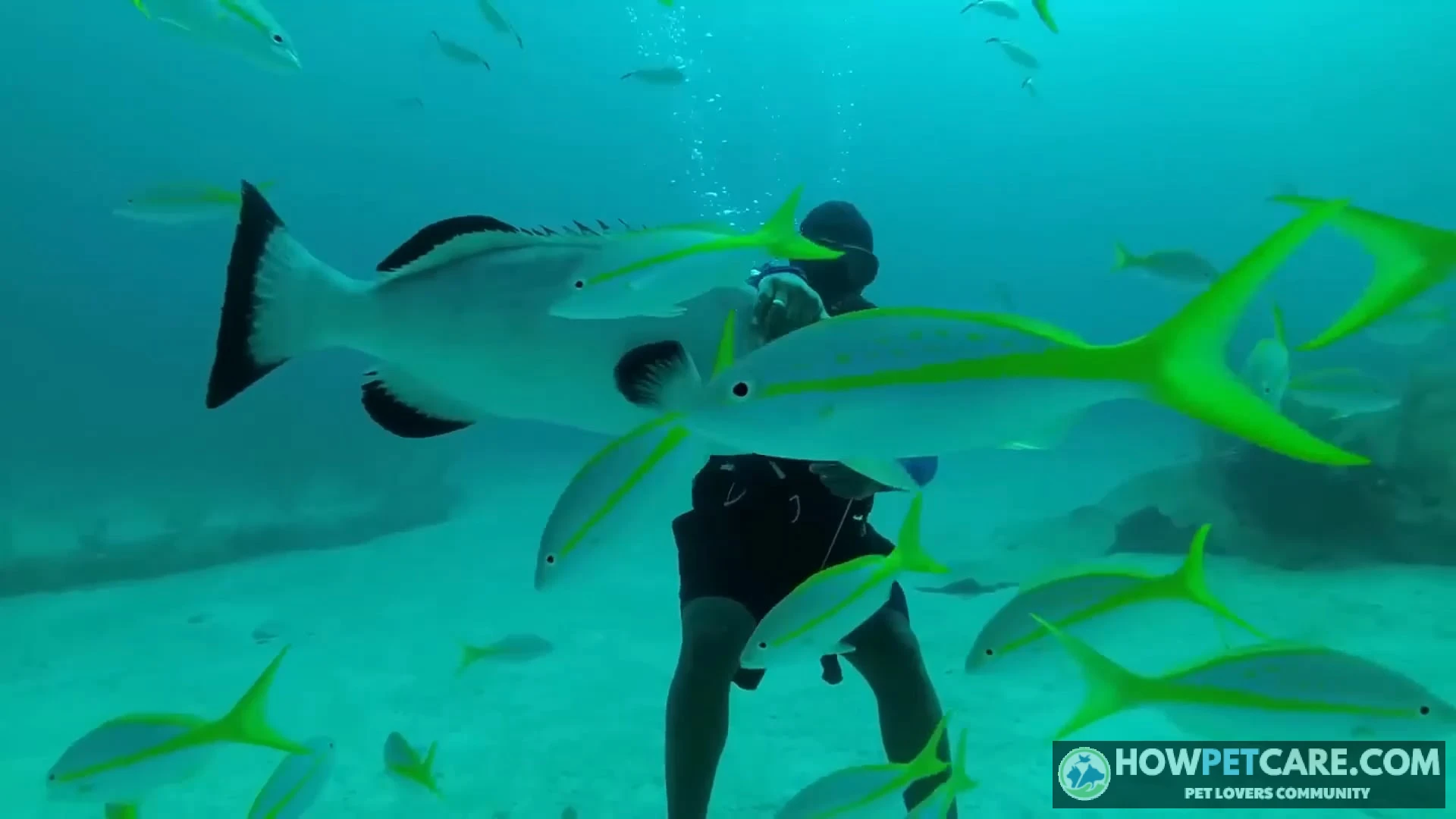

Yes—you can physically touch many aquarium fish, but only briefly, gently, and while fully submerged, with the fish initiating contact. Protect the slime coat, watch stress signals, and stop immediately at any sign of discomfort. Most fish thrive without any physical contact at all.
Can you pet fish? Yes—you can physically touch many aquarium fish, but whether you should depends on the species, the method, and the individual fish’s welfare. Touch is optional enrichment, not a care requirement, and most fish thrive without any physical contact at all. This guide treats petting as an occasional, consensual interaction: protect the slime coat, read stress signals, and stop at the first sign of discomfort.
Can You Pet Fish? What Touch Means in an Aquarium
Petting fish means direct or indirect physical contact with a fish’s body, scales, or slime coat. It ranges from a light fingertip touch while the fish remains submerged to lifting, chasing, or restraining a fish—the latter should never happen. Gentle, water-supported contact is very different from removing a fish from water or cornering it in a net.
Most fish do not need touch to be healthy. Whether a fish tolerates contact depends on species, temperament, and tank history. Some curious individuals may approach a hand; others will dart away every time. Individual variation matters more than species reputation, so no fish should be assumed to enjoy petting.
This article takes a safety-first framing: protect the fish’s slime coat, watch for stress, prioritize fish health over owner curiosity, and treat contact as rare rather than routine.
Is Petting a Fish Safe for the Fish and for You?
Fish welfare risks of handling
A fish’s slime coat is a protective barrier against pathogens, parasites, and water-borne irritants. Direct hand contact can strip or damage this coating, leaving the fish vulnerable to infection. Handling can also cause stress in fish, visible through rapid gill movement, darting, hiding, or clamped fins.
Research notes that some species, such as Midas Cichlid, surgeonfish, and eels, react positively to touch, and that stressed surgeonfish may spend more time with an automatic stroking device than non-stressed fish. Fish can also recognize familiar people. These findings do not mean all fish enjoy petting; they show that response varies widely by species and individual.
Human oils, lotions, soap residue, perfume, and sunscreen can contaminate aquarium water and irritate fish skin. Because direct hand contact increases the risk of slime-coat damage or scale injury, touch should be brief, gentle, and only when the fish initiates it.
Human health and zoonotic context
Aquarium water and fish can carry bacteria such as Aeromonas and Mycobacterium, which causes Fish Tank Granuloma. Salmonella is another potential concern. Direct contact with fish or tank water increases exposure risk compared with no contact, though routine tank maintenance carries comparable exposure.
People with open cuts, hangnails, active skin infections, or weakened immune systems should avoid handling fish or tank water. Children under five should not clean or handle aquarium equipment.
Before touching a fish, wash your hands with mild, unscented soap, rinse thoroughly, and remove all lotions, perfumes, sanitizer, sunscreen, and cleaner residues. After contact, wash your hands again. These steps protect both the fish and the person.
Aquarium-kept fish can recognize familiar people and may learn to associate a person with feeding, but that recognition is not the same as affection in the mammalian sense.
 You might be wonderingFish tank setupFish Tank Setup: Best Starter Kits and Beginner Buying GuideRead the answer
Which Fish Can You Pet? Species Touch Tolerance and Slime-Coat Sensitivity
Betta fish handling considerations
Betta fish are often curious and may approach a finger at the water’s surface. However, their fins are delicate and their slime coat is thin, so contact should be gentle, brief, and only if the betta initiates it while remaining in the water. Avoid touching the tail and fin edges.

Koi, goldfish, and pond species
Koi and large goldfish in ponds may tolerate gentle, water-supported touch more than small aquarium species. Common goldfish vary widely by individual temperament and tank history, so treat contact as occasional enrichment rather than routine handling.
Fish you should not touch
Do not touch scaleless or reduced-scale fish such as Corydoras and loaches, nocturnal fish such as some catfish and knifefish, venomous species, or fish that are easily stressed. Never touch fish with visible wounds, white patches, clamped fins, rapid breathing, or during acclimation, medication, breeding, or transport recovery.
| Species | Touch tolerance | Slime-coat sensitivity | Recommendation |
|---|---|---|---|
| Betta | May approach fingers; individual-dependent | High; delicate fins and thin coating | Only brief, voluntary, submerged contact; avoid tail and fin edges |
| Koi | Often tolerates gentle pond contact | Moderate; large body but coating still protective | Short sessions only after voluntary approach; keep in water |
| Common goldfish | Variable by temperament and tank history | Moderate to high | Treat as occasional enrichment, not routine handling |
| Small community fish (tetras, rasboras, guppies) | Low; easily startled | High relative to body size | Avoid touching; use visual enrichment and feeding routines |
| Corydoras and loaches | Low; scaleless or reduced-scale bodies | Very high | Do not touch; protect bottom-dwelling behavior |
| Plecos and other armored catfish | Low despite tough exterior | High at exposed areas and fins | Avoid handling; risk to fins, eyes, and stress response |
| Nocturnal fish (e.g., some catfish, knifefish) | Very low | High | No contact; respect rest and hiding periods |
| Fish with wounds, disease signs, or during acclimation | None | Critical | No contact until fully recovered and stable |

Evidence on slime-coat damage is consistent: direct hand contact can strip the coating or scratch scales. Survey data from aquarium communities shows mixed opinion, with a substantial share of respondents unsure or opposed to petting fish, which reinforces the need for caution rather than assumption.
How to Pet a Fish Safely: Step-by-Step Instructions
This is the practical how-to many guides omit. Follow it every time, and stop immediately at the first stress signal.
Hand washing and preparation
- Wash your hands with mild, unscented soap for 20 seconds.
- Rinse for 20 seconds under running water to remove all soap film.
- Dry on a clean towel and wait two minutes.
- Recheck for fragrance, sticky residue, or lotion.
- Never introduce hand sanitizer, soap residue, or lotion into aquarium water.
Approach and contact technique
- Turn off strong filter outflow near the contact area if possible; keep aeration running.
- Rest your hand at the water surface for 30–60 seconds without moving.
- Let the fish approach your finger or palm; do not chase, cup, or corner it.
- Keep contact submerged, light, and fingertip-level. Support the body without squeezing.
- Never lift the fish out of the water.
- Stop at the first stress sign, or after 10–15 seconds, whichever comes first.
- Remove your hand slowly.
- Observe the fish for five minutes: swimming, fin posture, and gill rate should return to normal.
- Wash your hands again after tank contact.
- Log the date, species, duration, and fish response.

Tools and alternatives to bare hands
Wet, clean gloves or soft aquarium-safe tools can reduce direct skin contact, but they do not eliminate slime-coat risk. Feeding routines, target training, and visual enrichment are safer alternatives that let you interact without touching.

How Do You Know If a Fish Wants to Be Petted?
Voluntary interaction indicators
A fish that wants contact may swim toward your hand, hover near your fingers for several seconds, return after a brief pause instead of hiding, keep fins relaxed and spread normally, maintain stable color, and breathe at a normal rate for its species.
Stress and fear warning signs
Stop immediately if you see darting, sudden turns, repeated escape attempts, rapid gill movement, hiding, clamped fins, pressing into corners, pale coloration, dark stress bars, rubbing against tank objects, or freezing in place. Stillness can be fear, not enjoyment. Any withdrawal after initial approach ends the session.

One stress sign ends the session immediately. Never interpret stillness as enjoyment.
How Often Can You Pet a Fish Without Harming It?
There is no published quantitative safety threshold for petting frequency that preserves the slime coat, so this guide sets conservative practical limits: no more than one brief interaction per day, and only if the fish seeks it out. Keep contact under 10–15 seconds per session while the fish stays submerged. Treat touch as occasional, consensual contact rather than daily routine.
Reduce or stop contact during illness, breeding, tank changes, or water-quality issues. Track the individual fish’s response over time and adjust frequency based on observed behavior.
Slime-Coat Damage: Recognition and Recovery Steps
Possible slime-coat damage appears as dull patches, white areas, increased mucus, or secondary infection signs such as redness or fin fraying. If you suspect damage:
- Stop all petting and netting immediately; move to observation-only care.
- Test ammonia, nitrite, nitrate, pH, and temperature within one hour of suspected damage.
- Correct any parameter outside the species’ stable range before adding products.
- Perform a small, conditioned water change if ammonia or nitrite is elevated; avoid large swings.
- Reduce feeding slightly for 24–48 hours if appetite drops, but do not starve a recovering fish.
- Watch for dull patches, excess mucus, white film, redness, fin fraying, or fuzzy growth twice daily.
- Keep lighting and tank activity calm; avoid rearranging decor during recovery.
- Use an aquarium-safe stress-coat product only if appropriate for the species and compatible with tank inhabitants.
- Do not combine multiple medications or additives without checking compatibility.
- Contact an aquatic veterinarian if signs persist beyond seven days or worsen within 48 hours.

Do Not Touch: Clear Boundaries and Safer Alternatives
Do not touch fish during acclimation, medication, illness, or breeding. Avoid handling scaleless, delicate, venomous, or highly stressed species. Never remove a fish from water to pet it.
Safer alternatives include feeding routines, target training, and visual enrichment. Prioritize tank maintenance and water quality over physical contact for long-term fish health.
Your Fish-Petting Decision Checklist
- Species is generally tolerant of gentle, submerged contact; avoid scaleless, nocturnal, venomous, or highly skittish fish.
- Fish has no visible wounds, white patches, clamped fins, rapid breathing, or recent illness.
- Fish is not in acclimation, medication, breeding, or transport recovery.
- Tank water is stable: no recent large water change, ammonia/nitrite spike, or temperature swing in the last 48 hours.
- Fish approaches the hand voluntarily during normal feeding or enrichment time.
- Human hands are washed with unscented soap, rinsed completely, and free of lotion, perfume, sanitizer, sunscreen, or cleaner residue.
- No open cuts, hangnails, or active skin infection on hands.
- A 10–15 second timer and a clear stop rule are set before contact begins.
- A recovery plan is ready: water test kit, observation log, and no-contact period if stress appears.
If every item checks out, you may attempt one brief, voluntary, submerged touch. If any item fails, do not pet the fish. Choose a no-touch interaction instead, and revisit the decision only when conditions improve.
Voluntary Approach vs. Stress Signal Checklist
Voluntary approach signs:
- Fish swims toward your hand rather than away from it.
- Fish hovers near fingers for several seconds without fleeing.
- Fish returns after a brief pause instead of hiding.
- Fins are relaxed and spread normally.
- Body color remains stable; no rapid color paling.
- Breathing and gill movement look normal for that species.
Stop-contact stress signs:
- Darting, sudden turns, or repeated escape attempts.
- Rapid gill movement or heavy breathing.
- Hiding, clamped fins, or pressing into corners.
- Pale coloration or dark stress bars.
- Rubbing against gravel, decor, or tank walls.
- Freezing in place; stillness can be fear, not enjoyment.
- Any withdrawal after initial approach.
Rule: one stress sign ends the session immediately.
Slime-Coat Recovery Checklist
- Stop all petting and netting immediately; move to observation-only care.
- Test ammonia, nitrite, nitrate, pH, and temperature within one hour of suspected damage.
- Correct any parameter outside the species’ stable range before adding products.
- Perform a small, conditioned water change if ammonia or nitrite is elevated; avoid large swings.
- Reduce feeding slightly for 24–48 hours if appetite drops, but do not starve a recovering fish.
- Watch for dull patches, excess mucus, white film, redness, fin fraying, or fuzzy growth twice daily.
- Keep lighting and tank activity calm; avoid rearranging decor during recovery.
- Use an aquarium-safe stress-coat product only if appropriate for the species and compatible with tank inhabitants.
- Do not combine multiple medications or additives without checking compatibility.
- Contact an aquatic veterinarian if signs persist beyond seven days or worsen within 48 hours.
 You might be wonderingWhat do fish eat?What Do Fish Eat? Natural Diets, Pond and Aquarium Feeding GuideRead the answer
FAQ
Can you pet a betta fish?
Some bettas will approach a finger, but their fins and slime coat are delicate, so any contact should be extremely gentle, brief, and only if the fish initiates it while remaining in the water.
Is petting fish bad for them?
It can be if it removes the slime coat, causes stress, or introduces contaminants; whether it is bad depends on species, method, frequency, and the individual fish’s response.
Can petting fish make you sick?
Aquarium water and fish can carry bacteria such as Aeromonas and Mycobacterium, so wash hands before and after contact and avoid touching fish if you have open cuts or a weakened immune system.
How often can you pet a fish?
No more than one brief interaction per day, and only if the fish seeks it out, keeping contact under 10–15 seconds while the fish stays submerged.
What are the signs a fish does not want to be touched?
Darting, clamped fins, rapid gill movement, hiding, pale coloration, dark stress bars, freezing, or withdrawal after an initial approach all mean you should stop immediately.