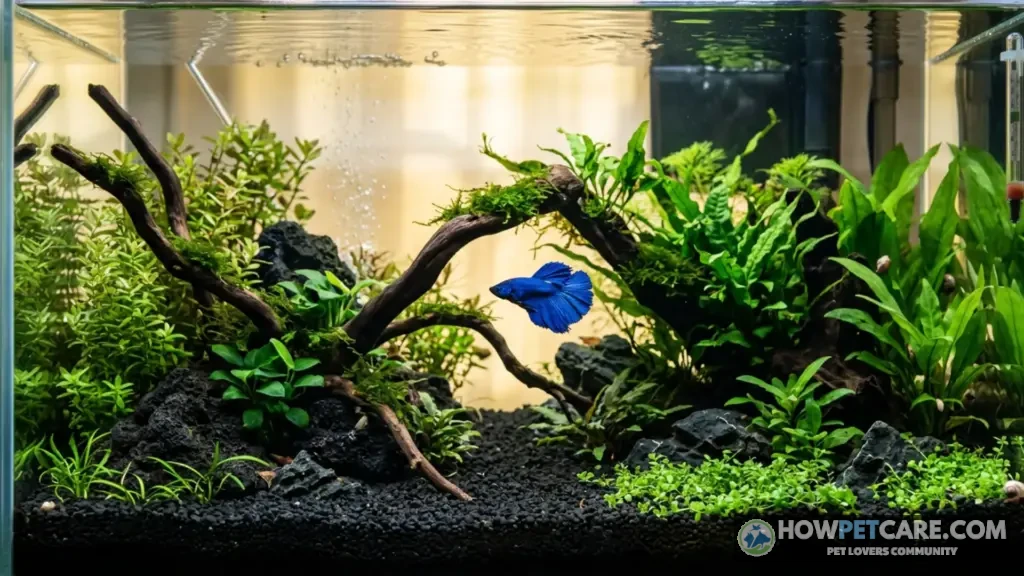

Pet betta fish typically live about 2–5 years in total, with roughly 3 years a sensible planning expectation for a properly housed fish. Store-bought bettas are often 6–12 months old, so owners may have about 1–4 years together. Claims of 5–7 years are exceptional, not a dependable average.
A pet betta fish typically lives about 2–5 years in total, and roughly 3 years is a sensible planning expectation for many properly housed fish. Claims of 5–7 years describe exceptional outcomes, not a dependable average, while 10-year reports are outliers. Most store-bought bettas are already 6–12 months old, so the realistic time after purchase is often 1–4 years, with plenty of variation. The sections below explain how to estimate that remaining time, which water-quality targets support longevity, and what to check when a fish begins to decline.
How Long Do Betta Fish Live as Pets?
The typical betta fish lifespan in captivity is about 2–5 years total, with roughly 3 years serving as a reasonable planning expectation for many properly housed pet bettas. Some Siamese fighting fish live beyond 5 years, but claims of 5–7 years describe exceptional cases rather than a dependable average. Bettas often live about two to four years, with five years considered old age and an achievable upper limit with good care.

Typical lifespan versus exceptional longevity
Treat 2–4 years as a realistic minimum planning range for a betta you buy today and house properly. For a healthy betta in a heated, cycled tank, 3–5 years is a reasonable expectation. Five to seven years is an outlier, not an average you should plan on. Good conditions reduce disease and illness that can substantially shorten a fish’s life.

Why published betta lifespan ranges conflict
Credible sources report ranges such as 2–4, 3–5, or 5–7 years because they may measure age from birth rather than purchase, describe different care standards, or focus on unusually long-lived fish. Separate total biological age from time spent with an owner; a store-bought betta may not have its entire reported lifespan ahead of it.
| Reported lifespan | What it may represent | How a beginner should interpret it |
|---|---|---|
| 2–4 years | Likely measures time from purchase under average pet-store or beginner care | Treat as a realistic minimum planning range for a betta you buy today and house properly |
| 3–5 years | Likely measures total age from birth under good, stable aquarium conditions | Treat as a reasonable planning expectation for a healthy betta kept in a heated, cycled tank |
| 5–7 years | Often describes exceptional fish, sometimes measured from birth under dedicated long-term care | Treat as an outlier outcome, not an average lifespan you should expect |

Check whether a number measures age from birth or from purchase before comparing sources.
Betta Lifespan in Captivity Compared With the Wild
Wild bettas face predation, parasites, food scarcity, drought, competition, and unstable habitat conditions, all of which can shorten survival. A stable, heated, cycled aquarium can support a longer life by providing regular food, consistent water quality, and protection from predators. Reliable data on wild longevity are limited, and wild Betta splendens ecology should not be reduced to the myth that bettas naturally thrive in tiny, dirty puddles. Captivity improves betta fish life expectancy only when the tank is maintained properly; poor conditions can cause death much earlier than natural hazards would.

Estimate a Store-Bought Betta’s Age and Remaining Lifespan
Many pet-store bettas are approximately 6–12 months old when sold, although age varies with breeder, sex, growth rate, shipping time, and time spent in the store. Subtract the fish’s estimated current age from a realistic total-lifespan range, then adjust for current health and previous care. That gives you a planning estimate, not an exact death date. A healthy betta estimated to be 6–12 months old might have roughly 1–4 years remaining within a typical 2–5-year total lifespan, though the uncertainty is substantial. Appearance cannot establish an exact age, so ask the seller for the arrival date, breeder date, health history, and whether the fish was sold as a juvenile or mature adult.

A simple age-at-purchase calculation
Use the framework below to plan, not to predict. For a betta already mature at purchase (over 12 months), assume possibly less than 1–2 years remaining. For an unknown age, use 1–3 years as a cautious planning estimate.
| Estimated age at purchase | Typical total-lifespan framework | Possible remaining range | Important uncertainty |
|---|---|---|---|
| 6–12 months | 2–5 years total | Roughly 1–4 years remaining | Health, genetics, and prior care can shorten or extend this by a year or more |
| Already mature adult (over 12 months) | 2–5 years total | Possibly less than 1–2 years remaining | Exact age is usually unknown; assume less remaining time rather than more |
| Unknown age | 2–5 years total | Treat as 1–3 years remaining as a cautious planning estimate | Appearance cannot establish an exact age or remaining lifespan |
What appearance can and cannot reveal about age
Body size, fin development, activity, coloration, eye clarity, and purchase records may offer weak clues, but appearance cannot establish an exact age. Adult bettas reach about 2.5 inches long excluding the tail and vary widely in tail shape, so size alone is not a reliable clock.
Tank Size, the Nitrogen Cycle, and Water-Quality Targets
A 5-gallon or larger heated, filtered aquarium is a practical baseline for one betta. Greater water volume is generally more stable and gives the fish room for normal movement and enrichment. A 1-gallon tank does not create a predictable lifespan, but it increases the risk of rapid ammonia accumulation, temperature swings, limited swimming space, and maintenance errors. House bettas in at least a five-gallon tank with a heater and low-flow filter rather than a bowl or vase.
Why tank volume changes risk, not lifespan by a fixed number
Do not assign a precise lifespan to any tank size, especially 1-gallon setups. Judge smaller tanks by their risks: water conditions swing faster, waste accumulates sooner, and there is less room for error.
Numeric targets for a cycled betta aquarium
The nitrogen cycle is the process in which beneficial bacteria convert toxic ammonia to nitrite and then to less-toxic nitrate. Set measurable targets: ammonia 0 ppm, nitrite 0 ppm, and nitrate preferably below about 20 ppm. Use stable, dechlorinated water, and avoid abrupt pH swings. This article recommends a tank of at least 10 gallons, with about 5 gallons per fish, rather than a bowl, while other guidance centers on at least five gallons for a single betta.
| Parameter | Practical target | Why it matters | Action if outside target |
|---|---|---|---|
| Temperature | 78–80°F (25.5–26.5°C) | Supports digestion, immune function, and activity | Adjust heater gradually; avoid rapid swings |
| Ammonia | 0 ppm | Toxic to fish and beneficial bacteria | Perform partial water change; check filter and feeding |
| Nitrite | 0 ppm | Toxic; indicates incomplete cycling | Partial water change; reduce feeding; re-test |
| Nitrate | Preferably below about 20 ppm | Less toxic but accumulates over time | Partial water change; increase plant uptake |

New-tank risks versus established-tank risks
Fishless cycling is the preferred setup method. Fish-in cycling carries more risk and requires frequent testing, partial water changes, and close monitoring. Use liquid tests and track trends rather than assuming clear-looking water is safe. Maintain water at 76–81°F, use deionized water, avoid distilled water, and always dechlorinate and test tap water for heavy metals.
-
Choose the tank
Choose a tank of 5 gallons or larger for one betta.
-
Add filtration and heat
Install a gentle, low-flow filter and a submersible heater set to about 78–80°F (25.5–26.5°C).
-
Dechlorinate
Fill with dechlorinated water using a conditioner that neutralizes chlorine and chloramine.
-
Cycle fishless
Add an ammonia source and run the filter continuously; test every 1–2 days.
-
Confirm safety
Wait until ammonia reads 0 ppm, nitrite reads 0 ppm, and nitrate is present and preferably below about 20 ppm before adding the betta.
-
Monitor after stocking
Test ammonia, nitrite, and nitrate at least twice per week for the first month.
-
Maintain
Perform partial water changes (about 20–30%) whenever ammonia or nitrite is detectable or nitrate climbs above about 20 ppm.
-
Protect the cycle
Clean filter media only in removed tank water, never under tap water, and never replace all media at once.
Temperature, Filtration, Water Changes, and Stress Reduction
A stable water temperature around 78–80°F (25.5–26.5°C) is a useful target. Chronically cool water can suppress activity, appetite, digestion, and immune function. Overheating and rapid temperature changes can cause stress as well. Use gentle aquarium filtration because long-finned bettas may struggle against strong currents. Unfiltered tanks require more intensive monitoring.
Base partial water changes on test results and tank conditions; routine full replacements can disrupt stability. Dechlorinate replacement water, match its temperature, clean media in removed tank water, and never replace all filter media at once. Reduce chronic stress with cover, plants or hides, a consistent light cycle, gentle handling, and compatible tank mates instead of constant flaring or crowding.
Keep conditions stable rather than chasing perfect numbers
Stability matters more than chasing exact values. Match replacement-water temperature, dechlorinate fully, and avoid large sudden shifts.
Use filtration and water changes without disrupting the cycle
Partial water changes based on test results are better than routine full replacements. Never replace all filter media at once; clean it in removed tank water.
Feeding and Body Condition: Longevity Without Overfeeding
Choose a nutritionally complete, betta-appropriate staple food. Suitable frozen or live foods can add controlled variety, but they should not become an unbalanced sole diet. Portion needs vary with food size, fish size, age, activity, and body condition, so fixed pellet counts are less useful than watching the individual fish.
Overfeeding can lead to obesity, bloating, constipation-like symptoms, uneaten food, and poorer water quality. Underfeeding can cause progressive weight loss, a hollow abdomen, weakness, and reduced resilience to illness. Track appetite and body shape over time, and investigate persistent changes instead of treating routine fasting as a cure-all.
Build a balanced betta diet
Use a high-quality betta staple and treat frozen or live foods as occasional variety, not the entire diet. Buy a healthy betta that isn’t discolored, has undamaged fins, and comes from a clean tank with no sick fish.
Use body condition instead of rigid portion rules
Follow this body-condition guide instead of relying on a fixed pellet count:
- Pick one nutritionally complete betta staple, such as high-quality pellets, and use frozen or live foods only as occasional variety.
- Offer 2–4 small pellets at a time, or an amount the betta can eat in about 60 seconds.
- Watch the fish eat. Stop offering food if it ignores pellets, spits them out, or lets them sink uneaten.
- Remove uneaten food within a few minutes with a turkey baster or small net.
- Check body condition weekly from the side. A healthy betta has a slightly rounded abdomen behind the gills, not a sunken hollow or a swollen, egg-shaped belly.
- If the abdomen looks hollow or the fish is losing weight, increase portions slightly or add one small feeding per week.
- If the abdomen looks very rounded or the fish is lethargic and bloated, reduce portions and skip feeding for one day, then resume smaller amounts.
- Adjust portions as the fish ages, grows, or becomes more or less active. Do not use one fixed pellet count forever.

Do Male, Female, or Different Fin Types Live Longer?
There is not enough strong, controlled evidence to assign reliably different lifespan ranges to male and female bettas. Husbandry, genetics, age at purchase, disease exposure, and individual health make sex-based comparisons difficult. Very long fins may impair swimming, suffer more damage, and face greater exposure to fin rot, but that does not mean every long-finned variety has a specific shorter lifespan. Short-finned plakats may swim more efficiently, but this does not establish a guaranteed longevity advantage.
Breeding history and poor genetic selection may matter more than labels such as male, female, crowntail, halfmoon, or plakat. Evidence on lifespan differences by fin variety remains limited, and no source establishes a reliable comparison.
What the evidence says about sex
No strong, controlled evidence assigns different lifespan ranges to male and female bettas. Individual health and care have a greater influence than any demonstrated sex effect.
Long fins, swimming effort, and evidence limits
Very long fins may impair swimming and increase exposure to fin damage and fin rot, but that does not guarantee a shorter lifespan for any variety. Adult bettas vary widely in tail shape.
Act on Warning Signs: A Betta Longevity Checklist
Urgent warning signs include gasping, loss of balance, inability to reach the surface, severe lethargy, persistent refusal of food, rapid breathing, pineconing, open sores, major swelling, or rapidly worsening fin damage. In a new tank, start by testing ammonia and nitrite, checking temperature and dechlorination, and performing an appropriate partial water change when parameters are unsafe.
In an established tank, check for equipment failure, missed maintenance, contamination, aggression, injury, and newly introduced livestock or plants before assuming a specific disease. Isolate a fish only if you can provide stable heat and clean water; an unheated, uncycled container may add risk. Document symptoms and test results, correct environmental problems first, and contact an aquatic veterinarian or experienced fish-health professional for severe or unexplained decline. No specific medication dosages are provided here; seek professional guidance for treatment decisions.
Immediate triage for a new or unstable tank
- Gasping at the surface, rapid breathing, or inability to stay upright → test ammonia and nitrite immediately; check temperature and heater; perform a partial water change if parameters are unsafe.
- Severe lethargy, persistent refusal of food, or pineconing scales → do not start medication without advice; document symptoms and test results, correct water issues first, and contact an aquatic veterinarian or experienced fish-health professional.
- Open sores, major swelling, or rapidly worsening fin damage → isolate only if you can provide stable heat and clean water in the isolation container; otherwise keep the fish in its established tank while seeking professional guidance.
- New tank showing decline → prioritize testing ammonia and nitrite, verifying dechlorination and temperature, and doing an appropriate partial water change before assuming disease.
- Established tank showing decline → check for equipment failure, missed water changes, contamination, aggression, injury, or new livestock or plants before treating for a specific illness.

Troubleshooting decline in an established aquarium
Before treating for a specific illness, verify equipment function, recent maintenance, possible contamination, aggression, injury, and any new additions.
Weekly care actions that support a longer life
Verify temperature, test water, remove waste, complete needed partial water changes, inspect fins and body condition, monitor appetite, and confirm gentle filter flow.
Contact an aquatic veterinarian or experienced fish-health professional for severe or unexplained decline; do not medicate without guidance.
| Parameter | Practical Target | Why It Matters | Action If Outside Target |
|---|---|---|---|
| Temperature | 78–80°F (25.5–26.5°C) | Supports digestion, immune function, and activity | Adjust heater gradually; avoid rapid swings |
| Ammonia | 0 ppm | Toxic to fish and beneficial bacteria | Perform partial water change; check filter and feeding |
| Nitrite | 0 ppm | Toxic; indicates incomplete cycling | Perform partial water change; reduce feeding; re-test |
| Nitrate | Preferably below about 20 ppm | Less toxic but accumulates over time | Perform partial water change; increase plant uptake |

FAQ
How long can a betta fish live without food?
A healthy adult betta may survive for several days without food, but survival is not the same as safe care. For longer absences, arrange a responsible person to provide measured portions rather than using an untested vacation feeder.
Is it better to keep one betta fish or two?
One betta is the safest default. Male bettas should not be housed together, and keeping females together requires substantial space, experience, close monitoring, and a backup separation plan.
Do betta fish become less active as they age?
Older bettas may rest more and swim less, but a sudden activity change should not be dismissed as aging. Check water quality, temperature, appetite, breathing, buoyancy, and other symptoms first.
Can a betta fish live in tap water?
Yes, if the tap water is treated with an appropriate conditioner and its chemistry is suitable and stable. Untreated chlorine or chloramine can injure the fish and damage the beneficial bacteria in the aquarium.