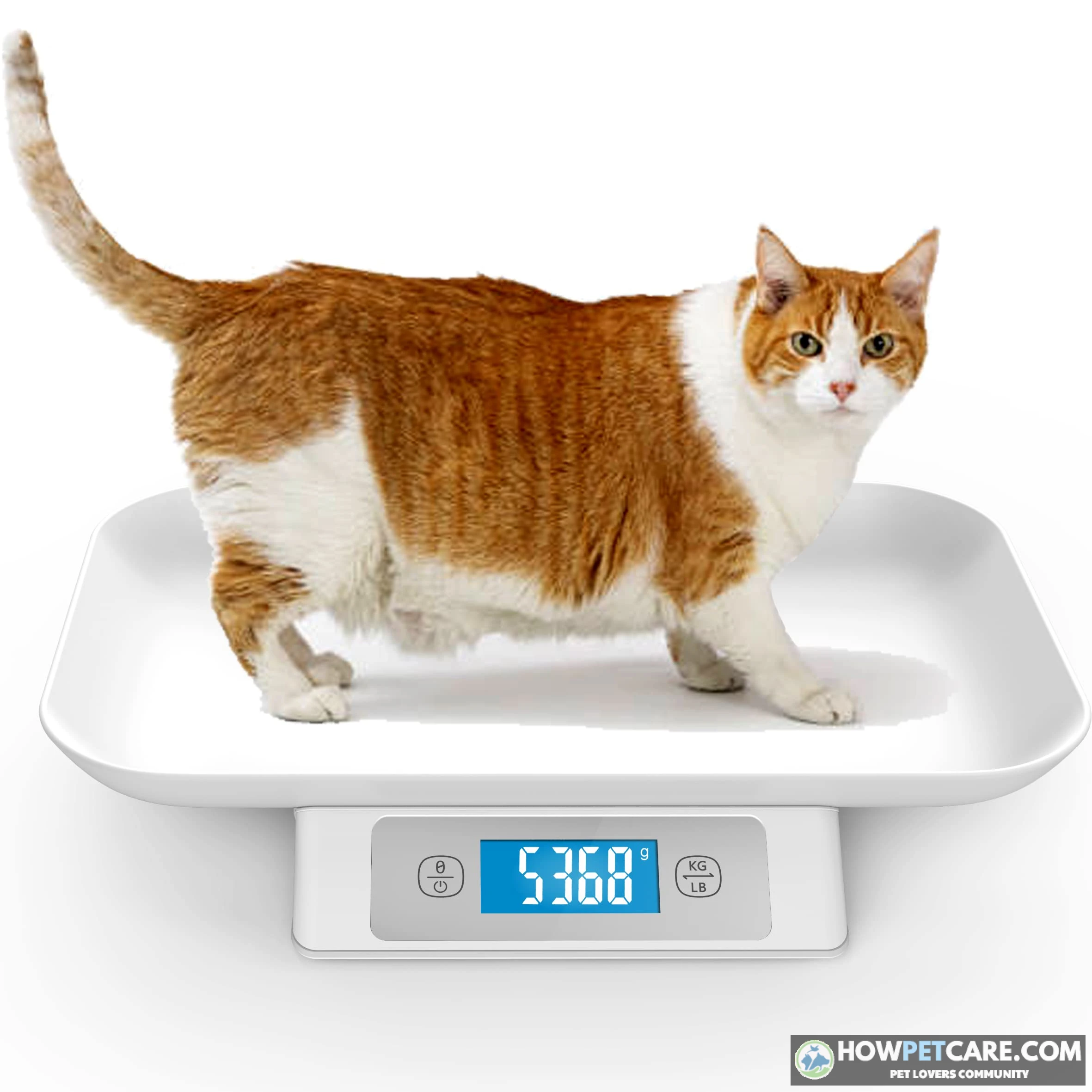

Most healthy adult domestic cats weigh 8–12 lb (3.6–5.4 kg), with many near 10 lb (4.5 kg). Breed, frame, sex, and age shift the range—small Siamese can be healthy under it and large Maine Coons above it. Confirm health with a body condition score, not the scale alone.
Average Cat Weight: 8–12 lb (3.6–5.4 kg) for Most Adult Cats
Most healthy adult domestic cats land somewhere around 8–12 lb (3.6–5.4 kg), and many sit close to 10 lb (4.5 kg). Treat that as a starting point, not a universal goal: a small Siamese and a large Maine Coon can both be healthy outside it.
Males are often larger than females, though their ranges overlap. Kittens need a growth curve, not an adult target; a senior cat can lose muscle even when the scale looks normal. Breed, frame, age, activity and spay/neuter status all help explain the number.
To assess your own cat, weigh them the same way each time, feel the ribs and waist, and compare the result with their history. A body condition score, or BCS, describes how much fat the body carries; it’s more useful than comparing weight with an average alone. A veterinarian can pair that score with a muscle assessment to set an individual target.
Where the 8–12 lb Average and Obesity Thresholds Come From
The 8–12 lb (3.6–5.4 kg) figure comes from general healthy-weight ranges in consumer veterinary guidance. It isn’t a measured population mean for every domestic cat. A population mean is an arithmetic average from a particular sample. An ideal weight is an estimate for one cat at an appropriate body condition and muscle mass. The two answer different questions.
Vets often use a nine-point BCS scale along with a physical exam. Healthy-condition cues include ribs that are easy to feel and a visible waist or tuck. A cat is usually called overweight or obese based on how far it sits above its estimated ideal weight, but that estimate depends on the exam—not on a scale number by itself.

How to read the ranges in this article
Breed ranges describe size; they don’t guarantee health. A cat can sit inside a breed range and still carry excess fat, or fall outside it with a healthy body condition. Mixed-breed cats have no single breed standard, so their own frame, BCS, muscle and weight history matter most.
Source and update transparency
The supplied sources support the broad adult range, body-condition cues and selected breed examples. They don’t establish reliable sex-specific ranges for every breed, kitten milestone or individual calorie multiplier. Where a precise figure can’t be supported, this guide uses a practical assessment method instead of an invented average. The calorie calculations later are illustrative starting estimates, not prescriptions.
Male vs Female Cat Weight: Averages by Sex and Neuter Status
Male vs female averages in lb and kg
Males commonly have larger frames, but sex alone can’t tell you whether a particular cat is healthy. One source lists males at roughly 10–15 lb (4.5–6.8 kg) and females at 8–12 lb (3.6–5.4 kg); those broad ranges overlap and aren’t individual targets.
Take a spayed indoor female and an intact outdoor male that both weigh 10 lb (4.5 kg). If the female has a small frame and her ribs are hard to feel, she may carry excess fat. If the male has easily felt ribs and a waist, the same weight may suit him. The reverse can happen too, so assess each cat instead of assuming from sex or lifestyle.

How spaying and neutering shift weight
After neutering or spaying, a cat’s appetite and energy needs can change. Ask your vet when to reassess portions, and track weight and body condition during recovery and afterward. Don’t assume every cat needs the same percentage reduction, and don’t restrict a growing kitten without veterinary guidance; early feeding choices, such as when kittens start eating solid food, deserve veterinary input too.
Indoor vs outdoor cats
An indoor cat may have fewer chances to move around, though routines vary. An outdoor cat’s exercise and access to food elsewhere are hard to measure, and outdoor access brings other risks. Go by measured intake, weight trends and BCS instead of assuming either lifestyle determines a healthy weight.

Average Cat Weight by Breed: Full Chart in Pounds and Kilograms
Breed-by-sex weight chart
The available evidence supports the selected breed examples below, but not separate male and female figures for each one. A dash means the supplied sources don’t establish a sex-specific range; it doesn’t mean the cat has no healthy range. General ranges apply to adults and must be checked against BCS.
| Breed or type | Male weight (lb) | Male weight (kg) | Female weight (lb) | Female weight (kg) | Frame and interpretation notes |
|---|---|---|---|---|---|
| Maine Coon | Some healthy males exceed 20 lb | Some exceed 9.1 kg | — | — | A large frame can be healthy; check ribs and waist rather than assuming a heavy cat is overweight. |
| Siamese | — | — | — | — | A general adult example is 6–10 lb (2.7–4.5 kg), without a sex-specific breakdown. |
| Ragdoll | — | — | — | — | A general adult example is 10–20 lb (4.5–9.1 kg), without a sex-specific breakdown. |
| Abyssinian | — | — | — | — | Healthy adults can be about 6–8 lb (2.7–3.6 kg); individual frames vary. |
| Persian | — | — | — | — | Feel through the coat when assessing condition; ask your vet for an individual target. |
| British Shorthair | — | — | — | — | A broad build is not proof of excess fat; check the ribs and waist. |
| Bengal | — | — | — | — | Assess frame, muscle and body fat together. |
| Sphynx | — | — | — | — | A visible body shape helps, but palpation still matters. |
| Norwegian Forest Cat | — | — | — | — | Long fur can obscure the waist; use your hands. |
| American Shorthair | — | — | — | — | A medium build is common; assess BCS rather than expecting a single breed number. |
| Birman | — | — | — | — | A pointed, medium-large build is typical; confirm condition by palpating through the coat. |
| Bombay | — | — | — | — | A compact, muscular body can weigh more than its outline suggests. |
| Burmese | — | — | — | — | Compact and muscular; the scale number can surprise, so check the waist and ribs. |
| Chartreux | — | — | — | — | A dense, solid build is normal for the breed; verify ribs and waist before judging. |
| Cornish Rex | — | — | — | — | A slender, fine build is typical; easily felt bones still warrant a veterinary check if new. |
| Devon Rex | — | — | — | — | Light and fine-boned; judge condition by feel rather than by the small frame. |
| Exotic Shorthair | — | — | — | — | A stocky body under a dense coat can mislead the eye; palpate. |
| Himalayan | — | — | — | — | The long coat can hide the waist; use your hands. |
| Manx | — | — | — | — | A rounded, compact shape is typical; look for an abdominal tuck from the side. |
| Oriental Shorthair | — | — | — | — | Naturally lean and angular; a visible waist and easy-to-feel ribs are expected. |
| Russian Blue | — | — | — | — | A dense double coat can mask the true outline; feel the ribs. |
| Scottish Fold | — | — | — | — | Medium build; keeping this breed lean can reduce strain on the joints. |
| Siberian | — | — | — | — | Large and heavily coated; the silhouette overestimates size, so palpate. |
| Turkish Angora | — | — | — | — | Fine-boned and light-framed; small size alone is not a health warning. |
| Domestic Shorthair or mixed breed | — | — | — | — | Use individual frame, BCS, muscle and weight history rather than a breed target. |
| Domestic Longhair or mixed breed | — | — | — | — | Same approach as domestic shorthairs: frame, BCS, muscle and history over a breed number. |
A 15 lb (6.8 kg) cat isn’t automatically overweight: a large-framed cat can be healthy at that weight. A smaller cat can also carry excess body fat at a lower weight. No chart can settle that without a hands-on assessment.

Estimating ideal weight for a mixed or unlisted breed
Start with the cat’s frame: leg length and the size of the rib cage, head and paws. These are context clues, not a formula. Parentage and a kitten’s growth history may add context when known, but neither replaces a body-condition assessment.
Record current weight, age, sex, neuter status and activity. Score the ribs, waist and belly with the steps below, then ask a veterinarian to assess muscle. If the cat is above ideal condition, your vet can estimate the percentage of excess weight and use it to propose a target. Recheck that target as the cat loses fat: a calculated number is a starting point, not proof the cat has reached ideal condition.

How to Weigh a Cat at Home Accurately
A baby or pet scale that can resolve small changes works well for a cat willing to sit still. Put a box or carrier on the scale, zero or tare it, then gently place the cat inside. If the scale can’t be zeroed, subtract the empty container’s weight.
A bathroom scale is a simpler option: weigh yourself, then weigh yourself holding the cat. Subtract the first number from the second. Repeat the measurement. Small changes can disappear in a bathroom scale’s rounding, so use a more precise scale or a clinic weigh-in if the result is uncertain.

Best method for cats that resist the scale
If the cat is comfortable entering a carrier, weigh it in the carrier and subtract the empty carrier’s weight. Use the same bedding both times. Encourage entry with a familiar routine or a small treat, and count that treat in the day’s food. Don’t force a frightened cat onto a scale; a veterinary team can help establish a reliable baseline.
Building a weekly weight log
Use the same scale and setup at roughly the same time, ideally before a meal. Record the displayed precision instead of implying the scale is more accurate than it is. Convert with 1 kg ≈ 2.2 lb, and note appetite, treats and any activity changes. During a supervised weight plan, a weekly trend is more useful than a single reading.

Body Condition Score: Check Your Cat’s Weight by Hand and Eye
BCS is a practical way to describe body fat on a nine-point scale. A score of 4–5 out of 9 is generally considered ideal; some clinics use a five-point scale instead, so always record which scale you’re using. A home score is a screening estimate, not a diagnosis.

Step-by-step: ribs, waist, and belly check
Choose a calm moment, preferably before a meal, and look in good light. Feel the cat, not just the fur:
- Sweep the ribs. Run flat fingers over both sides of the rib cage. Individual ribs should be easy to feel under a thin covering, without pressing hard. Prominent, sharp ribs suggest the cat may be too thin; ribs that are hard to find suggest excess covering.
- Feel the spine and hips. Bony landmarks should be findable without being sharply prominent. Sharp bones can also signal muscle loss, especially in a senior cat.
- Look from above. A modest inward waist behind the ribs is an ideal-condition cue. A straight or rounded outline may point to excess fat; a pronounced hourglass can mean too little body tissue.
- Look from the side. Look for a gentle abdominal tuck behind the ribs. Loose skin that forms a primordial pouch isn’t proof of obesity by itself.
- Feel the tail base. Notice whether there’s a substantial fat pad, and weigh it alongside the other findings rather than scoring from this area alone.
- Choose a score band. Compare your observations with the table, then ask your veterinary team to confirm if the result is unclear.

Long fur, a large frame and a pouch can all mislead the eye. A light senior cat isn’t necessarily healthy either if muscle over the spine and hips is disappearing.
What each BCS score looks and feels like
| BCS (9-point) | Category | Rib feel | Waist and belly view | Estimated % from ideal weight | Action |
|---|---|---|---|---|---|
| 1–3 | Too thin | Ribs may feel prominent with little covering | Marked waist or visible bony areas | Not reliably calculated from a home score | Arrange a veterinary assessment, particularly if weight loss is new. |
| 4–5 | Ideal | Ribs easy to feel under a thin covering | Visible waist and gentle tuck | Reference condition | Maintain measured feeding and monitor. |
| 6–7 | Overweight | Ribs harder to feel | Waist less distinct; abdomen may be rounded | Vet can estimate excess after examination | Discuss a target and feeding plan. |
| 8–9 | Obese | Ribs difficult to feel under substantial covering | Little or no waist; rounded abdomen | Vet can estimate excess after examination | Arrange a veterinary weight-management plan. |
Overweight vs obese: thresholds and health risks
Excess weight can make movement harder and is linked to health problems including diabetes and joint disease. A veterinarian may call a cat overweight at roughly 10–20% above ideal and obese at 20% or more above ideal. Those are estimates based on an individual ideal weight, not cutoffs for every cat of a given breed.
BCS estimates fat; a muscle condition assessment checks muscle over areas such as the spine and hips. A cat can have excess fat and diminished muscle at the same time. If the scale and your hands disagree, ask for both assessments.

Kitten, Adult, and Senior Cat Weight: Life-Stage Milestones and Red Flags
Kitten weight at 4, 5, 6, and 12 months
A kitten’s expected weight depends on age, frame and growth history. The milestones below are rough orientation points—not cutoffs for deciding whether a kitten is healthy. Follow the kitten’s own growth curve with your veterinary team — our guide to when cats stop growing explains how long that can take — and don’t use an adult weight-loss plan for a growing cat.
| Age | Typical weight (lb) | Typical weight (kg) | Growth note | When to call a vet |
|---|---|---|---|---|
| Birth | Varies | Varies | Newborns need close monitoring and frequent feeding. | Promptly if weak, cold, not nursing or failing to gain. |
| 4 months | Around 4–5 lb | Around 1.8–2.3 kg | Individual growth varies. | If gain stalls, body condition deteriorates or appetite or energy falls. |
| 5 months | Around 5–6 lb | Around 2.3–2.7 kg | Compare consecutive weights rather than one reading. | If growth stalls or diarrhea or poor appetite develops. |
| 6 months | Around 6–7 lb | Around 2.7–3.2 kg | Many kittens are still growing rapidly. | If weight falls, gain stalls or the kitten seems unwell. |
| 12 months | Varies by frame and breed | Varies by frame and breed | Some cats are near adult size; larger cats may continue to mature. | If there is unexplained loss or an abrupt change in growth. |
| Adult | Often 8–12 lb | Often 3.6–5.4 kg | Stability and BCS matter more than matching the range. | If weight changes without an obvious explanation. |
The month-by-month numbers are rough rules of thumb, not measurements validated for every breed or sex. A small kitten that’s growing steadily may be healthy; one within a listed range can still need care. Weigh growing kittens regularly and contact a vet if expected gain stops, especially when appetite, stool or energy changes too.

Senior weight change vs disease-related loss
Sarcopenia means muscle loss associated with aging. A caregiver may notice a sharper spine, hips or hindquarters even when weight changes little. At home, that observation can’t reliably separate age-related muscle loss from early illness. Ask the veterinarian to assess muscle and investigate unexplained loss instead of assuming it’s normal aging. A cat years to human years conversion adds context, but it can’t diagnose the cause.
Changes in thirst, urination, appetite, vomiting, activity or grooming make an appointment more important. A cat that loses weight despite a normal or increased appetite still needs an exam; possible causes include conditions affecting metabolism or digestion.

When sudden weight gain or loss needs a vet
Calculate percentage change as: weight change ÷ starting weight × 100. For example, a fall from 10 lb to 9.5 lb (4.5 kg to about 4.3 kg) is a 5% loss. Repeat a questionable measurement, but don’t delay care for a cat that seems ill.
- Call promptly for unexplained loss of about 5% over a few weeks, about 10% over a few months, or a clear continuing downward trend. These are practical escalation triggers, not diagnostic thresholds.
- Seek same-day veterinary advice for rapid gain with a swollen belly, lethargy, pain or new hiding. Breathing difficulty is an emergency.
- Contact a vet urgently if an overweight cat has stopped eating for about 24 hours, or sooner if the cat is otherwise unwell. Cats can develop serious fatty liver disease when they stop eating.
- Call promptly for a kitten that is not gaining, is bony, has diarrhea, eats poorly or lacks energy; a weak or non-nursing newborn needs urgent help, and if you’re unsure of a young kitten’s age, milestones such as when a kitten’s eyes open offer a rough guide.
- Recheck in about a week if a small change may reflect scale variation and the cat is otherwise completely well. Continue the log and call sooner if symptoms appear.
Special cases: underweight, pregnant, and nursing cats
An underweight cat needs an assessment before a calorie increase is treated as the whole solution. Dental pain, illness, inadequate intake and other issues can affect weight. Pregnant and nursing cats have different nutritional demands; ask a veterinarian for a diet and feeding schedule suited to the stage. Don’t put them, or growing kittens, on a weight-loss plan without veterinary direction.

Your Cat’s Target Weight, Calories, and Portions: A Worked Plan
Step 1: Set the target weight
Use this worksheet to prepare for a veterinary discussion:
- Current weight: lb / kg; age: ; breed or type:
- Sex and spay/neuter status: ; indoor/outdoor routine:
- Frame: small / medium / large; home BCS: ___ / 9
- Muscle or recent weight-change concerns: ___
- Vet-confirmed estimated excess, if applicable: %; proposed target: lb / ___ kg
For an overweight adult, one way to turn an estimated percentage above ideal into a starting target is:
Estimated ideal weight = current weight ÷ (1 + estimated excess as a decimal).
Suppose a veterinarian assesses a 12.0 lb (5.4 kg) neutered indoor domestic shorthair at BCS 7/9 and estimates the cat is 20% above ideal. The calculation is 12.0 ÷ 1.20 = 10.0 lb, or approximately 5.4 ÷ 1.20 = 4.5 kg. That target is a starting estimate to reassess as fat and muscle change; BCS alone can’t provide an exact percentage.
For an adult mixed-breed cat at BCS 5/9 with appropriate muscle and stable weight, current weight may be a reasonable maintenance reference. An underweight senior needs a veterinary muscle and medical assessment before you calculate a gain target. Don’t assume each point below ideal corresponds to a precise percentage deficit.
Step 2: Calculate daily calories
Resting energy requirement, or RER, estimates the energy a cat needs at rest. A commonly used calculation is 70 × body weight in kg raised to the power of 0.75. That isn’t the same as an individual cat’s daily feeding requirement: age, body condition, activity, neuter status, illness and the intended rate of weight change all affect the plan.
For the example target of approximately 4.5 kg (10.0 lb), RER is about 217 kcal per day. A veterinarian might use a fraction of target-weight RER as an initial weight-loss estimate, then adjust for the cat’s history and response. For illustration only, 0.8 × 217 is about 174 kcal per day. That isn’t a recommended starting prescription for every 12 lb (5.4 kg) cat; a clinician should confirm the target, food, nutritional adequacy and safe transition.
A lean, stable adult’s maintenance intake can be higher than its RER, but the right multiplier varies. Kittens, pregnant or nursing cats and underweight seniors need individualized plans, not the adult weight-loss example. For any cat with a medical condition or a large gap between current and calculated intake, get veterinary input before changing portions.
Step 3: Convert calories to measured portions
Read the food label for kcal per cup, gram, can or pouch. The daily budget includes meals, treats and any food used in puzzles or medication. Keep treats to no more than about 10% of daily calories unless your veterinarian advises otherwise; the main diet still has to meet nutritional needs.
If the vet-approved budget in the example is 174 kcal per day and 14 kcal are reserved for treats, 160 kcal remain for food. A hypothetical food with 80 kcal per can would provide that allowance in two cans. A dry food with 400 kcal per cup would provide 160 kcal in 0.4 cup. These are alternatives, not amounts to feed together.
For mixed feeding, divide the food-calorie budget first. For example, 80 kcal from the hypothetical wet food plus 80 kcal from the hypothetical dry food equals 160 kcal. Weighing dry food in grams can improve repeatability; use the calorie information on the actual package to calculate the gram portion.

Wet vs dry food for weight control
| Food format | What to check | Portion implication |
|---|---|---|
| Wet | Kcal per can or pouch and whether the food is complete and balanced | Contains more water; the calorie content still varies by recipe and container. |
| Dry | Kcal per cup or gram | A small measuring error can add calories; a gram scale can help. |
| Mixed | Calories in each food | Allocate a share of the budget to each; do not add wet food on top of the full dry allowance. |
Neither format guarantees weight loss. Choose a complete diet the cat will eat and your veterinarian considers suitable, then measure the total and monitor the response. If the calculated portion is much smaller than what the cat currently gets, discuss the change before making it.

Safe Cat Weight-Loss Protocol: Weekly Schedule, Food Transition, and Gentle Exercise
Never withhold food to speed weight loss. A cat that stops eating can become seriously ill; contact your veterinarian urgently if an overweight cat has not eaten for about 24 hours, or sooner if the cat seems unwell.
A commonly used supervised goal is roughly 0.5–2% of current body weight per week, though your veterinarian may choose a different pace. For a 12 lb (5.4 kg) cat, that’s approximately 1–4 oz (34–109 g) in the first week. Recalculate against current weight as the cat loses, and read small changes cautiously if your scale is imprecise. Faster loss or poor intake warrants a call, not tighter restriction.
Week-by-week monitoring schedule
- Week 0: Arrange a veterinary check. Record weight, BCS, muscle condition, current intake, treats and a proposed target. Agree on calories and whether a diet change is needed.
- Week 1: Start the agreed measured portions. If you’re changing food, introduce it gradually: for a cat accepting the change, try about 25% new food for the first few days, then 50%, then 75%, reaching the new food over roughly 7–10 days. Mix based on the vet’s calorie plan, not equal volumes of foods with different calorie densities.
- Weeks 2–4: Weigh weekly and record appetite, stool, activity and the actual food and treats eaten. Compare the trend with the agreed rate. Contact the vet if loss is too fast, the cat refuses food or other symptoms appear.
- After week 4: Continue weekly checks during active loss. At the target, ask the vet how to increase intake gradually for maintenance, and keep monitoring for regain.
If the cat refuses the mixture, don’t let them go hungry to force a transition. Contact the veterinary team for a slower approach or an alternative plan.
| Week | Date | Weight lb / kg | BCS / 9 | Waist seen? | Food and treat kcal/day | Play and notes |
|---|---|---|---|---|---|---|
| 0 | ___ | / | ___ | ___ | ___ | Vet check and target: ___ |
| 1 | ___ | / | ___ | ___ | ___ | Transition and appetite: ___ |
| 2 | ___ | / | ___ | ___ | ___ | Stool and energy: ___ |
| 3 | ___ | / | ___ | ___ | ___ | ___ |
| 4 | ___ | / | ___ | ___ | ___ | ___ |
Low-impact exercise for arthritic or obese cats
Begin with short, gentle play sessions the cat chooses to join. A wand toy moved along the floor, a food puzzle or measured food placed in accessible spots can encourage movement. For a cat with arthritis, don’t force jumps or strenuous activity; ramps and low steps can make favorite places easier to reach. Ask the vet about pain control and a suitable activity plan if movement looks uncomfortable.

In a multi-cat home, feed separately and pick up leftovers so you can measure the cat’s intake. A controlled-access feeder may help, but separating feeding areas is another option.
Troubleshooting a plateau
If the trend is flat for two to three weeks, check the scale setup, food label, actual portions, treats and access to another cat’s meals. Then review the log with your veterinarian. The team may adjust the calorie allowance—by around 10%, for example—or reassess the target and muscle condition. Don’t keep cutting food on your own, especially if the cat is eating poorly or losing muscle.
If weight rises for two weeks, audit intake before making changes. If the spine or hips feel sharper despite stable weight, arrange a muscle-condition check instead of assuming the plan is working.
Your Next Steps: A Cat Weight Check Checklist and Decision Guide
- Weigh: Record a reliable baseline in pounds and kilograms; repeat an uncertain reading.
- Score: Feel the ribs, spine and hips, and inspect the waist and belly. Record your estimated BCS out of 9.
- Compare: Use breed, sex, age and frame as context, not as a verdict. Note any change from the cat’s own history.
- Set a target: If the cat seems too thin or too heavy, ask your veterinarian to confirm BCS, assess muscle and agree on a target and feeding plan.
- Log: During an active plan, record weight and intake weekly. At an apparently ideal condition, keep feeding measured and recheck regularly, such as monthly.
If your cat is at an ideal condition and weight is stable, keep the current routine and watch for change. If the cat appears overweight, seek veterinary input before starting the measured plan. If the cat appears underweight or is losing muscle, arrange an examination rather than simply adding food. If weight changes suddenly or the cat isn’t eating, use the escalation guidance above and contact a veterinarian promptly.
The 8–12 lb (3.6–5.4 kg) average is context; your cat’s body condition, muscle and trend are the evidence to bring to the appointment.
| Breed or Type | Male Weight (lb) | Male Weight (kg) | Female Weight (lb) | Female Weight (kg) | Frame and Interpretation Notes |
|---|---|---|---|---|---|
| Maine Coon | Some healthy males exceed 20 lb | Some exceed 9.1 kg | Not in source | Not in source | A large frame can be healthy; check ribs and waist rather than assuming a heavy cat is overweight. |
| Siamese | Not in source | Not in source | Not in source | Not in source | A general adult example is 6–10 lb (2.7–4.5 kg), without a sex-specific breakdown. |
| Ragdoll | Not in source | Not in source | Not in source | Not in source | A general adult example is 10–20 lb (4.5–9.1 kg), without a sex-specific breakdown. |
| Abyssinian | Not in source | Not in source | Not in source | Not in source | Healthy adults can be about 6–8 lb (2.7–3.6 kg); individual frames vary. |
| Persian | Not in source | Not in source | Not in source | Not in source | Feel through the coat when assessing condition; ask your vet for an individual target. |
| British Shorthair | Not in source | Not in source | Not in source | Not in source | A broad build is not proof of excess fat; check the ribs and waist. |
| Bengal | Not in source | Not in source | Not in source | Not in source | Assess frame, muscle and body fat together. |
| Sphynx | Not in source | Not in source | Not in source | Not in source | A visible body shape helps, but palpation still matters. |
| Norwegian Forest Cat | Not in source | Not in source | Not in source | Not in source | Long fur can obscure the waist; use your hands. |
| American Shorthair | Not in source | Not in source | Not in source | Not in source | A medium build is common; assess BCS rather than expecting a single breed number. |
| Birman | Not in source | Not in source | Not in source | Not in source | A pointed, medium-large build is typical; confirm condition by palpating through the coat. |
| Bombay | Not in source | Not in source | Not in source | Not in source | A compact, muscular body can weigh more than its outline suggests. |
| Burmese | Not in source | Not in source | Not in source | Not in source | Compact and muscular; the scale number can surprise, so check the waist and ribs. |
| Chartreux | Not in source | Not in source | Not in source | Not in source | A dense, solid build is normal for the breed; verify ribs and waist before judging. |
| Cornish Rex | Not in source | Not in source | Not in source | Not in source | A slender, fine build is typical; easily felt bones still warrant a veterinary check if new. |
| Devon Rex | Not in source | Not in source | Not in source | Not in source | Light and fine-boned; judge condition by feel rather than by the small frame. |
| Exotic Shorthair | Not in source | Not in source | Not in source | Not in source | A stocky body under a dense coat can mislead the eye; palpate. |
| Himalayan | Not in source | Not in source | Not in source | Not in source | The long coat can hide the waist; use your hands. |
| Manx | Not in source | Not in source | Not in source | Not in source | A rounded, compact shape is typical; look for an abdominal tuck from the side. |
| Oriental Shorthair | Not in source | Not in source | Not in source | Not in source | Naturally lean and angular; a visible waist and easy-to-feel ribs are expected. |
| Russian Blue | Not in source | Not in source | Not in source | Not in source | A dense double coat can mask the true outline; feel the ribs. |
| Scottish Fold | Not in source | Not in source | Not in source | Not in source | Medium build; keeping this breed lean can reduce strain on the joints. |
| Siberian | Not in source | Not in source | Not in source | Not in source | Large and heavily coated; the silhouette overestimates size, so palpate. |
| Turkish Angora | Not in source | Not in source | Not in source | Not in source | Fine-boned and light-framed; small size alone is not a health warning. |
| Domestic Shorthair or mixed breed | Not in source | Not in source | Not in source | Not in source | Use individual frame, BCS, muscle and weight history rather than a breed target. |
| Domestic Longhair or mixed breed | Not in source | Not in source | Not in source | Not in source | Same approach as domestic shorthairs: frame, BCS, muscle and history over a breed number. |
FAQ
Is 15 pounds too heavy for a cat?
Not always. A large-framed Maine Coon can be healthy at 15 lb (6.8 kg), but for most domestic cats it signals obesity. Check body condition score: if you can’t feel the ribs easily and there’s no visible waist, your cat is likely overweight.
What is the average weight of a house cat in pounds?
The average adult house cat weighs about 10 lb (4.5 kg), with a healthy range of roughly 8-12 lb (3.6-5.4 kg). Smaller or larger frames can be healthy outside this range.
Do indoor cats weigh more than outdoor cats?
On average, yes. Indoor cats tend to be less active and are more prone to weight gain, especially after spaying or neutering. Outdoor cats are often leaner but face other health risks.
How fast can an overweight cat safely lose weight?
Aim for about 0.5-2% of body weight per week, roughly 1-2 oz (30-60 g) for a 12 lb cat. Faster loss raises the risk of hepatic lipidosis (fatty liver disease).
Why is my cat losing weight but eating normally?
Possible causes include hyperthyroidism, diabetes, kidney disease, dental pain, or parasites. Unexplained loss of more than about 5% of body weight over a few weeks warrants a vet visit.