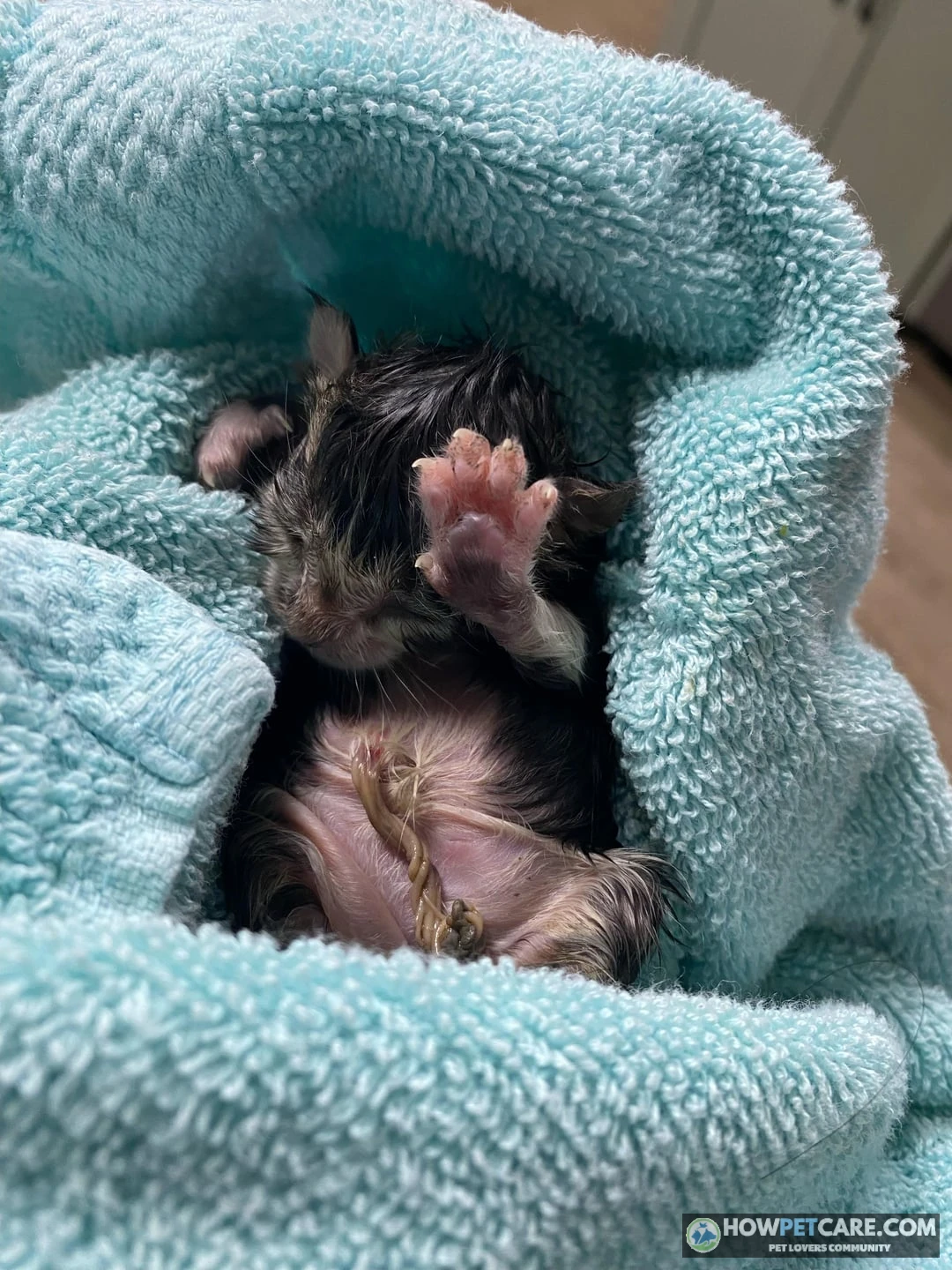

Fading kitten syndrome describes rapid deterioration in newborn kittens, most often during the first two weeks of life. Warning signs include poor nursing, weakness, low body temperature, dehydration, and failure to gain weight. It is a veterinary emergency: contact an emergency clinic immediately and never force-feed a cold or unresponsive kitten.
Fading kitten syndrome (FKS) is a rapid, often fatal decline in newborn kittens, typically during the first two weeks of life. Its hallmark signs—hypothermia, hypoglycemia, and dehydration—create a vicious cycle that can overwhelm even an otherwise healthy litter unless it is interrupted immediately. If a kitten is limp, cold to the touch, and not nursing, stop all oral feeding until its core temperature reaches at least 97°F (36°C), then apply a tiny amount of glucose to the gums. Continue warming the kitten, provide a carefully measured fluid bolus, and reach a veterinarian as quickly as possible. The steps that follow provide an actionable plan for a 2 AM crisis, precise fluid‑therapy calculations, safe DIY feeding options, and realistic cost expectations.
Immediate 2 AM Emergency Protocol: How to Triage a Fading Kitten
Goal: Give a breeder or foster parent a rapid, life‑saving checklist to follow before the kitten reaches a clinic.
Never give oral fluids or food to a kitten whose rectal temperature is below 97°F (36°C). Feeding a hypothermic kitten can cause aspiration, paralytic ileus, and sudden death.
-
Step 1: Core Rewarming Protocol (Target 97 °F–100 °F)
Wrap the kitten in a dry towel. Place a warm‑water bottle (≈104°F/40°C), wrapped in another towel, beside the kitten rather than underneath it. A low‑setting heating pad covered with a towel also works. Warm only half the container so the kitten can be moved away if it becomes too hot. Check the temperature every 5–10 minutes, aiming for an increase of 1°F (0.5°C) per 10 minutes. Do not exceed 100°F (37.8°C) before veterinary assessment.
-
Step 2: Mucosal Glucose Administration for Hypoglycemia
Once the kitten reaches ≥97°F (36°C) and appears alert enough to protect its airway, rub one small drop of 50% dextrose solution, Karo syrup, or a veterinary‑approved glucose gel onto the gums. Do not squirt in the liquid; allow it to absorb. Repeat once after 3–5 minutes only if the kitten remains lethargic and a veterinarian has approved another dose.
-
Step 3: Safe Stabilization for Veterinary Transport
Set the kitten in an insulated carrier with a half‑warm towel underneath. Add a second warm‑water bottle wrapped in a towel to maintain temperature during the journey. Record the kitten’s weight, rectal temperature, time of glucose administration, and any changes you observe. Call the emergency clinic with these details so the staff can prepare fluids and a possible intra‑osseous (IO) line.
Heat‑Before‑Sweet, Sweet‑Before‑Meat: 30‑Minute Triage Sequence
Print this quick walkthrough and keep it beside the whelping box.
-
Minute 0 – Stop feeding
If the rectal temperature is <97°F (36°C), or the kitten cannot swallow, give nothing by bottle, syringe, or tube. Call an emergency vet immediately.
-
Minutes 0–10 – Heat
Wrap the kitten in a dry towel and place it next to a towel‑wrapped warm‑water bottle or low‑heat pad. Warm only half the container. Recheck the temperature every 5 minutes.
-
Minute 10 – Reassess
Check the kitten’s temperature, gum color, breathing, and responsiveness. If breathing is labored, the gums are blue/gray, or the kitten remains limp, stop heating and rush to the clinic.
-
Minutes 10–20 – Gradual warming
Aim for a rise of ≈1°F (0.5°C) per 10–15 minutes. Do not exceed 100°F (37.8°C) during this phase.
-
After ≥97°F – Sweet
If the kitten appears awake, rub one drop of corn syrup or glucose gel onto the gums. Do not squirt it into the mouth. Repeat once after 3–5 minutes only if a vet advises it.
-
After glucose – Transport, not a meal
Put the kitten in a pre‑warmed carrier with indirect heat. Record its weight, temperature, glucose time, and last nursing attempt. Take these notes to the clinic.
-
Meat comes last
Offer kitten formula only after the animal is warm, responsive, and able to suckle. Forcing a meal on a weak, cold kitten can trigger aspiration pneumonia.
Early Warning Signs: Normal Neonate Behavior vs. Fading Symptoms
Goal: Help caregivers spot decompensation within the first 24‑48 hours and distinguish normal reflexes from signs of illness.
Weight gain, muscle tone, and reflex integrity are the three pillars of neonatal health. Any departure from the expected pattern should trigger the emergency protocol above.
Distinguishing Activated Sleep Twitching from Lethargy and Seizures
Newborn kittens show brief facial and limb twitches during “activated sleep.” These movements are short (1‑2 seconds) and occur while the kitten is otherwise still; it quickly returns to a relaxed posture. By contrast, lethargy appears as a limp, continuously low‑tone state with little movement. Seizure‑like activity lasts longer than a few seconds, may include whole‑body paddling, and does not stop when the kitten is handled.

Daily Weight Gain Benchmarks and Hydration Skin Turgor Testing
A healthy kitten gains 7–10 g per day during the first two weeks. Weigh every kitten twice daily—morning and evening—using a calibrated gram scale. Zero gain or any loss over a 12‑hour window is a red flag. To assess skin turgor, gently pinch the dorsal skin. It should snap back within 1‑2 seconds; a delayed return suggests dehydration.
| Assessment Category | Healthy Neonate Milestone | Fading Kitten Red Flag | Immediate Action Required |
|---|---|---|---|
| Posture and movement | Curls into a flexed posture, resists gentle repositioning, and crawls toward warmth or the queen | Lies flat or stretched out, feels limp, cannot right itself, or separates repeatedly from the litter | Check rectal temperature and begin indirect warming; arrange emergency assessment |
| Rooting reflex | Turns toward a finger brushed along the cheek and searches with the mouth | No head turn, weak mouth opening, or rooting that stops after seconds | Do not force‑feed; check temperature and glucose risk, then contact a veterinarian |
| Suck reflex | Forms a firm seal and produces rhythmic suck‑swallow‑breathe cycles | Cannot latch, milk leaks from the nose, coughing occurs, or swallowing is absent | Stop feeding immediately; nasal milk or coughing is an aspiration emergency |
| Weight trajectory | Gains about 7–10 g per day; two daily readings trend upward | No gain or any loss across a 12‑hour interval, or more than 10% loss from birth weight | Reweigh to confirm, observe a nursing session, and obtain same‑day veterinary guidance |
| Vocalization | Brief cries when handled or separated, then settles when warm and nursing | Continuous, weak, or high‑pitched crying; sudden silence in a previously vocal kitten | Check warmth, maternal access, abdomen, and umbilicus; escalate urgently |
| Sleep movement | Small twitches of the face and limbs during activated sleep; body remains warm and flexed | Flaccidity while awake, repetitive whole‑body jerking, paddling, or episodes that do not stop when touched | Record a short video if it does not delay care and seek emergency evaluation |
| Mucous membranes | Tongue and gums are moist and pink | Pale, white, blue‑gray, yellow, or tacky membranes | Treat blue‑gray or white membranes as an immediate emergency |
| Umbilicus | Drying normally without spreading redness, discharge, or odor | Redness extending onto the abdomen, swelling, pus, bleeding, or foul odor | Keep the area clean and dry; seek urgent sepsis evaluation |
| Abdomen | Softly rounded after nursing and comfortable when touched | Hard distension, marked tenderness, persistent diarrhea, or no stool with progressive bloating | Stop additional feeding until a veterinarian advises; do not massage a painful abdomen |

Clinical Fluid Therapy: Routes, Dosages, and Warming Prerequisites
Goal: Provide veterinarian‑grade fluid calculations and administration routes that most consumer articles leave out.
Never inject fluids colder than the kitten’s body temperature. Cold fluids can cause fatal iatrogenic hypothermia. Warm all crystalloids to 98°F–100°F (36.7‑37.8°C) before use.
Fluid Volume Calculations: ml/100 g Guidelines
Neonatal kittens have a total body water percentage of roughly 70 % and need 120–180 ml/kg/24 hr of maintenance fluid during the first two weeks. In practical terms, that means 1–2 ml per 100 g every 2–4 hours for sub‑cutaneous (SC) boluses, with adjustments for ongoing losses.
| Kitten Body Weight (g) | Subcutaneous Bolus Volume (ml) | Daily Maintenance (ml/24hr) | Maximum Syringe Size / Needle Gauge |
|---|---|---|---|
| 60 | 0.6–1.2 | 3.6–10.8 | 1 ml syringe / 25–27G |
| 75 | 0.75–1.5 | 4.5–13.5 | 1–3 ml syringe / 25–27G |
| 100 | 1–2 | 6–18 | 3 ml syringe / 25–27G |
| 125 | 1.25–2.5 | 7.5–22.5 | 3 ml syringe / 25–27G |
| 150 | 1.5–3 | 9–27 | 3 ml syringe / 25–27G |
| 200 | 2–4 | 12–36 | 3–5 ml syringe / 25G |
| 250 | 2.5–5 | 15–45 | 5 ml syringe / 25G |
Key points:
- The SC route is suitable for mildly dehydrated kittens with stable reflexes. Use a 25‑27 G needle and inject into the loose tissue at the scruff of the neck.
- Intra‑osseous (IO) or intravenous (IV) access is necessary for kittens in shock, with severe hypovolemia, or with a temperature below 97°F. Only a veterinarian should place an IO line in the tibia or femur, but knowing the route will help you communicate the urgency.
- Infusion rate: for a 100 g kitten, a typical bolus is 1 ml SC over 1‑2 minutes. Once a vein or IO line is secured, continuous IV/IO fluids are given at 5–10 ml/kg/hr (0.5–1 ml per 100 g per hour).
- Avoid rapid boluses beyond 2 ml/kg, which can cause intracranial hemorrhage or pulmonary edema in fragile neonates.

Root Causes of Neonatal Failure: Genetics, Infection, and Isoerythrolysis
Goal: Explain the underlying causes so breeders can take preventive measures.
Neonatal Isoerythrolysis (NI) in Purebred Catteries
NI develops when a type B queen (or type A) produces antibodies that destroy the red blood cells of a type A (or B) kitten after its first colostrum feeding. Hemolysis peaks within the first 24 hours and causes abrupt anemia, jaundice, and rapid collapse. Blood‑typing the queen and kittens before breeding, combined with a colostrum bank from a compatible donor, reduces this risk.
Bacterial Sepsis and Umbilical Cord Care
The most common septic agents are Escherichia coli and Streptococci, which enter through an unhealed umbilical stump or contaminated bedding. Signs include fever, lethargy, and a painful, swollen umbilicus. Prompt antibiotics (e.g., amoxicillin‑clavulanic acid) and supportive fluids markedly improve survival.

Congenital Defects and Low Birth Weight Complications
Kittens weighing less than 75 g are considered low‑birth‑weight. Their limited glycogen stores put them at greater risk of hypothermia and hypoglycemia. Structural anomalies, including cleft palate or pectus excavatum, can interfere with nursing and thermoregulation and may initially look like fading syndrome.
| Category | Typical Presentation | Primary Preventive Action |
|---|---|---|
| Neonatal Isoerythrolysis | Rapid pallor, jaundice, dark urine within 12‑24 h after first nursing | Blood‑type queen and kittens; use colostrum from compatible donor if mismatch detected |
| Bacterial Sepsis | Fever or hypothermia, lethargy, swollen umbilicus, foul odor | Keep nesting area sterile, dry umbilical stump, monitor for discharge, vaccinate queens against common pathogens |
| Congenital Anomalies | Inability to latch, persistent cough, abnormal chest shape | Pre‑breeding health screening, ultrasound, and immediate veterinary assessment of any structural abnormality |
Emergency Nutrition: Commercial Formula vs. Safe Off‑Hours DIY Replacer
Goal: Provide a vetted short‑term feeding alternative for a night‑time gap when commercial kitten milk replacer (KMR) is unavailable.
These ingredients can cause osmotic diarrhea, bacterial contamination, or botulism, any of which can kill a neonate.
Safe 24‑Hour Emergency Bridge Formula
If commercial KMR is genuinely unavailable, use this only as a veterinarian‑approved temporary bridge; it is not a validated substitute for commercial replacer:
- Boil 240 ml (1 cup) of water and allow it to cool to ~100°F (37.8°C).
- Add 1.5 level teaspoons of plain, unflavored Pedialyte (or equivalent feline‑approved electrolyte concentrate) – it supplies sodium, potassium, and chloride without excess carbs.
- Mix in 1 large pasteurized egg yolk (approximately 17 g) – a source of essential lipids and protein.
- Stir thoroughly. The solution should be iso‑osmotic (~300 mOsm/L). Prepare only what is needed and discard it after 12 hours.
- Only administer it once the kitten’s core temperature is ≥97°F and a single drop of glucose has confirmed its ability to swallow.
Why This Works (and Why It’s Not a Long‑Term Solution)
Pedialyte helps correct electrolyte loss, while the pasteurized egg yolk supplies calories and essential fatty acids. Because this formula lacks the precise whey‑protein profile of KMR, it should never replace a proper milk replacer for more than a few hours. Ask an emergency veterinarian for an alternative if pasteurized ingredients or exact measurement are unavailable.
Tube Feeding vs. Syringe Feeding Mechanics
- Oral (tube) gavage: Use a 3‑Fr feeding tube inserted 1‑2 cm past the epiglottis (measure from the tip of the nose to the last rib). Check placement by aspirating a tiny amount of air; if you see milk‑colored fluid, the tube is in the esophagus.
- Syringe feeding: Attach a 22‑G catheter to a 1‑ml syringe. Give 4 ml/kg of warmed formula over 5‑10 minutes, pausing so the kitten can swallow.
- Never force a limp kitten to swallow. Do not exceed 5 ml/kg per feeding session because over‑distension can lead to gastric rupture.

Veterinary Stabilization: Diagnostic Workup and Realistic Cost Breakdown
Goal: Set clear financial expectations and explain what happens during an emergency clinic visit.
In‑Clinic ICU Triage and Diagnostic Steps
- Primary exam – temperature, weight, heart rate, respiratory effort.
- Point‑of‑care blood glucose (hypoglycemia defined as <50 mg/dL).
- PCV/TP to assess anemia and dehydration.
- Venous blood gas to check acid‑base status, if available.
- Blood typing when NI is suspected.
- Imaging – abdominal ultrasound to evaluate the gut gas pattern and fluid accumulation.
- Culture of any umbilical discharge.
Itemized Cost Breakdown (U.S. self‑pay, 2026 estimates)
| Care Level / Service | Included Procedures & Diagnostics | Estimated Cost Range (USD) | Typical Stay Duration |
|---|---|---|---|
| Emergency intake and stabilization | ER examination, temperature and weight, warming, initial oxygen or glucose support | $150–$400 | 1–2 hours |
| Point‑of‑care diagnostic screen | Blood glucose, PCV/total protein, blood smear, lactate or venous blood gas as available | $100–$350 | During initial workup |
| Expanded infectious or congenital workup | CBC/chemistry when sample size permits, blood typing, fecal testing, imaging, cultures, or pathogen testing | $200–$800 | Same day to several days for send‑outs |
| Outpatient stabilization | Examination, warmed SC fluids when appropriate, dextrose support, first medications, feeding plan, and recheck instructions | $300–$800 total | Usually 2–6 hours |
| Incubator and oxygen support | Temperature‑controlled enclosure, humidified oxygen, repeated vital checks | $200–$600 per 24 hours | Commonly 12–48 hours |
| IV or IO access and continuous therapy | Catheter placement, warmed crystalloids, dextrose infusion, infusion pump, serial glucose checks | $300–$900 in addition to exam | Commonly 12–48 hours |
| Sepsis‑directed treatment | Injectable antibiotics, cultures when feasible, fluid/glucose support, repeated perfusion monitoring | $400–$1,200 in addition to exam | Often 24–72 hours |
| Full neonatal ICU hospitalization | Incubator, oxygen, IV/IO therapy, frequent glucose monitoring, assisted nutrition, nursing care, and repeat diagnostics | $1,000–$2,500+ per 24 hours | Often 1–3 days |
| Planned outpatient recheck | Weight, temperature, hydration, glucose recheck, and treatment adjustment | $50–$200 | 20–60 minutes |

Questions to ask the clinic:
- “What is required in the first hour?”
- “What is the deposit and what can be done outpatient?”
- “Which result would change treatment?”
- “At what clinical or financial threshold will you call me before proceeding?”
Prognosis and Survival Rates
Most fading‑kitten deaths happen within the first two weeks. Early, aggressive treatment improves survival to 20‑60 %, with the best outcomes linked to prompt warming, glucose correction, and identification of an underlying cause such as NI or sepsis. Persistent hypothermia, unresolved anemia, or multi‑organ failure lowers survival to below 15 %.
Breeder & Foster Action Checklist: Preventing Litter Losses
Goal: Establish a proactive protocol designed to stop fading kitten syndrome before it starts.
Weigh each kitten twice daily and chart its temperature trends. Any drop >10 % of birth weight within 48 hours requires immediate veterinary evaluation.
Maternal Blood Typing and Colostrum Banking
- Blood‑type the queen and every kitten within 24 hours of birth.
- If testing identifies a mismatch, replace the first nursing session with screened colostrum from a compatible donor bank.
- Freeze colostrum in 5‑ml aliquots and thaw it in a water bath at 100°F before feeding.
Environmental Thermoregulation Standards by Neonatal Week
| Age (Weeks) | Ambient Temperature (°F) | Humidity | Recommended Heating Method |
|---|---|---|---|
| 0‑1 | 85‑90 | 55‑65 % | Heating pad on low underneath a towel‑wrapped incubator; monitor with a calibrated thermometer |
| 1‑2 | 80‑85 | 50‑60 % | Warm water bottles rotated every 2 hours; ensure ventilation to avoid condensation |
| 2‑3 | 75‑80 | 45‑55 % | Gradual taper of supplemental heat; allow kittens to self‑regulate under the queen |

Twice‑Daily Tracking Protocol
- Weigh every kitten on a digital gram scale and record the result to the nearest gram.
- Rectal temperature using a soft‑tip thermometer; record any reading <97°F.
- Observe nursing – note time at the teats, suckling vigor, and any milk leakage.
- Check umbilicus for discharge or redness.
- Log every finding on a neonate monitoring sheet and flag any change for immediate action.
Off‑Hours Nutrition Decision Card
- ☐ Temperature first: Do not give oral fluid or food below 97°F (36°C). Rewarm the kitten gradually and verify its temperature with a rectal thermometer.
- ☐ Swallow check: Do not bottle-, syringe-, or tube‑feed a limp kitten, one with labored breathing, or one without a coordinated suck‑swallow. These kittens require emergency veterinary care.
- ☐ Best option: Use a commercial kitten milk replacer prepared exactly according to its label. Do not concentrate it to “add calories”; excessive osmolality makes dehydration and diarrhea worse.
- ☐ If KMR is unavailable for only a few hours: Call an emergency clinic, shelter neonatal coordinator, or veterinary poison service for a product‑specific bridge plan. Use an unflavored pediatric electrolyte product only when a veterinarian approves the brand and amount. Electrolyte products differ in sodium, sweeteners, and additives; they support hydration but are not complete nutrition.
- ☐ Last‑resort electrolyte bridge when professional help confirms oral fluids are appropriate: Dissolve 1.5 level teaspoons of table sugar and 1/8 level teaspoon of table salt in 1 cup (240 ml) of freshly boiled water. Cool it to approximately 100°F (37.8°C). Measure carefully, discard the mixture after 12 hours, and give only the volume and schedule specified by the veterinarian. It does not replace kitten formula and should not continue beyond the immediate off‑hours gap.
- ☐ Never improvise with: cow’s or goat’s milk, evaporated or sweetened condensed milk, honey, raw egg, sports drinks, or a recipe containing unspecified “drops” or “pinches.” These may cause osmotic diarrhea, electrolyte errors, bacterial exposure, or—for honey—botulism risk.
- ☐ Stop immediately if: fluid comes from the nose, coughing or clicking starts, the abdomen becomes tight, breathing changes, or the kitten grows less responsive. Keep the kitten warm and transport it for emergency care.
- ☐ Record for handoff: body weight in grams, rectal temperature, product or recipe used, exact volume offered, time given, urine/stool observations, and whether the kitten swallowed normally.
Final Thoughts for Caregivers
Fading kitten syndrome is a medical emergency, not a “normal” stage of kitten development. Changes in temperature, weight, and reflexes during the first 24‑48 hours provide the earliest opportunity to intervene. Follow the Heat‑Before‑Sweet protocol, calculate fluids carefully, and seek professional veterinary care without delay. Vigilant monitoring, appropriate colostrum management, and a practiced off‑hours triage plan give breeders and foster parents the best chance of helping newborn kittens survive the critical early weeks.

| Category or Topic | Clinical Signs and Assessment | Underlying Causes and Risk Factors | Recommended Actions and Triage Steps | Veterinary Interventions and Costs |
|---|---|---|---|---|
| Early Triage & Physical Assessment | Limpness, cold to touch, not nursing, flaccidity while awake, repetitive whole-body jerking, paddling, continuous low-tone state with little movement, pale/white/blue-gray/yellow/tacky mucous membranes. | Inability to self-regulate temperature, low glycogen stores, rapid decompensation in first 24–48 hours / first 2 weeks of life. | Follow 'Heat-Before-Sweet, Sweet-Before-Meat' 30-minute triage sequence; stop oral feeding if core temp is <97°F (36°C); apply glucose drop to gums only after reaching 97°F; gently warm indirectly; record short video of jerking/paddling if it doesn't delay care; seek immediate emergency veterinary assessment. | Emergency intake and stabilization (ER exam, temperature, weight, warming, initial O_2 or glucose support): 150–400 (1–2 hrs); Outpatient stabilization: 300–800 (2–6 hrs); Incubator and oxygen support: 200–600 per 24 hrs. |
| Posture & Reflexes | Lies flat or stretched out, feels limp, cannot right itself, separates repeatedly from litter; no head turn or weak mouth opening on rooting reflex; cannot latch, milk leaks from nose, coughing, or absent swallowing during suck reflex. | Neonatal weakness, hypothermia, hypoglycemia, structural/congenital defects. | Check rectal temperature; begin indirect warming; do not force-feed or oral-feed a limp/non-swallowing kitten; stop feeding immediately if milk leaks from nose or coughing occurs (aspiration emergency); contact veterinarian. | Point-of-care diagnostic screen (blood glucose, PCV/TP, blood smear, lactate/venous blood gas): 100–350. |
| Weight Trajectory & Hydration | No weight gain or weight loss over 12-hour window; >10% loss from birth weight; delayed return of dorsal skin turgor (>1–2 seconds). Healthy benchmark is 7–10 g gain per day. | Inadequate nursing/lactation, dehydration, energy depletion, high total body water percentage (~70%). | Weigh twice daily (morning and evening) using a calibrated digital gram scale; gently pinch dorsal skin to check turgor; reweigh to confirm loss, observe nursing, obtain same-day veterinary guidance. | Warmed subcutaneous (SC) fluid boluses (1–2 ml/100g every 2–4 hrs for mild dehydration); IV or IO access and continuous fluids (5–10 ml/kg/hr) for shock/hypovolemia/temp <97°F (300–900 + exam); Planned outpatient recheck: 50–200. |
| Vocalization, Umbilicus & Abdomen | Continuous, weak, or high-pitched crying, or sudden silence; umbilical redness extending onto abdomen, swelling, pus, bleeding, foul odor; hard abdominal distension, marked tenderness, persistent diarrhea, no stool with progressive bloating. | Sepsis, omphalophlebitis, bacterial pathogens (E. coli, Streptococci), gastrointestinal obstruction/distension. | Check warmth, maternal access, abdomen, umbilicus; keep umbilicus clean/dry; escalate urgently for sepsis evaluation; stop additional feeding if abdomen is tight/distended; do not massage a painful abdomen. | Umbilical discharge culture; Sepsis-directed treatment (injectable antibiotics, cultures, fluid/glucose support, perfusion monitoring): 400–1,200 (24–72 hrs); Expanded infectious workup: 200–800. |
| Neonatal Isoerythrolysis (NI) | Rapid pallor, jaundice, dark urine, and rapid collapse within 12–24 hours after first colostrum nursing. | Maternal-fetal blood type mismatch (e.g., type B queen producing anti-A antibodies destroying red blood cells of type A kitten). | Blood-type queen and kittens prior to or within 24 hours of birth; avoid nursing mismatch; use donor colostrum bank from compatible donor. | In-clinic blood typing; PCV/TP to assess severe anemia; ICU support. |
| Bacterial Sepsis | Fever or hypothermia, lethargy, swollen umbilicus, foul odor, umbilical pus or spreading abdominal redness. | Bacterial entry (Escherichia coli, Streptococci) through unhealed umbilical stump or contaminated bedding. | Keep nesting area sterile and clean; dry umbilical stump; monitor for discharge; vaccinate queens against common pathogens. | Injectable antibiotics (e.g., amoxicillin-clavulanic acid), supportive fluids, sepsis-directed ICU care (400–1,200). |
| Congenital Defects & Low Birth Weight | Inability to latch, persistent cough, abnormal chest shape, failure to thrive; birth weight <75 g. | Cleft palate, pectus excavatum, structural anomalies, limited glycogen stores in low-birth-weight neonates. | Pre-breeding health screening; ultrasound; immediate veterinary assessment of any structural abnormality upon birth. | Expanded infectious/congenital workup (imaging, ultrasound, CBC/chemistry): 200–800. |
| Emergency Off-Hours Nutrition Protocols | Hypoglycemia (<50 mg/dL), lack of commercial Kitten Milk Replacer (KMR) during off-hours. | Fast glycogen depletion, starvation, dehydration. | Verify temp ≥97°F and swallow reflex before any oral fluids; use commercial KMR as primary choice. 24-hr emergency bridge recipe (if approved by vet): 240 ml boiled/cooled water (~100°F), 1.5 tsp unflavored Pedialyte, 1 large pasteurized egg yolk; discard after 12 hrs. Alternative last-resort electrolyte bridge: 1.5 tsp table sugar + 1/8 tsp table salt in 240 ml boiled/cooled water. Never use cow's/goat's milk, honey, condensed milk, or sports drinks. | Tube feeding (3-Fr gavage tube, 4 ml/kg over 5–10 min) or syringe feeding under guidance; Full neonatal ICU hospitalization (incubator, O_2, IV/IO therapy, frequent glucose monitoring, assisted nutrition): 1,000–2,500+ per 24 hrs. |
| Preventative Protocols & Environmental Standards | Hypothermia risk, dehydration, infectious exposure across litter. | Inability to self-regulate temperature in weeks 0–3, improper ambient humidity. | Maintain ambient standards: Wk 0–1 (85–90°F, 55–65% humidity using towel-wrapped heating pad on low); Wk 1–2 (80–85°F, 50–60% humidity using rotated warm water bottles); Wk 2–3 (75–80°F, 45–55% humidity). Implement twice-daily weight/temp logging and umbilical checks. | Pre-breeding screening, colostrum banking, outpatient recheck (50–200). |
FAQ
What is the typical age range for fading kitten syndrome?
Fading kitten syndrome describes failure to thrive between birth and weaning, most commonly during the first two weeks of life. During this period, kittens are particularly vulnerable to problems regulating body temperature and blood sugar.
Can a kitten recover from fading kitten syndrome?
Yes, recovery is possible, but it depends on the underlying cause and how quickly veterinary treatment begins. Early correction of hypothermia, hypoglycemia, and dehydration offers a better chance than treatment after organ failure or severe septic shock develops.
Is fading kitten syndrome caused by caregiver error?
Fading kitten syndrome does not automatically indicate caregiver error. Congenital defects, low birth weight, blood type incompatibility, and infections can contribute, while feeding and environmental problems can also play a role.