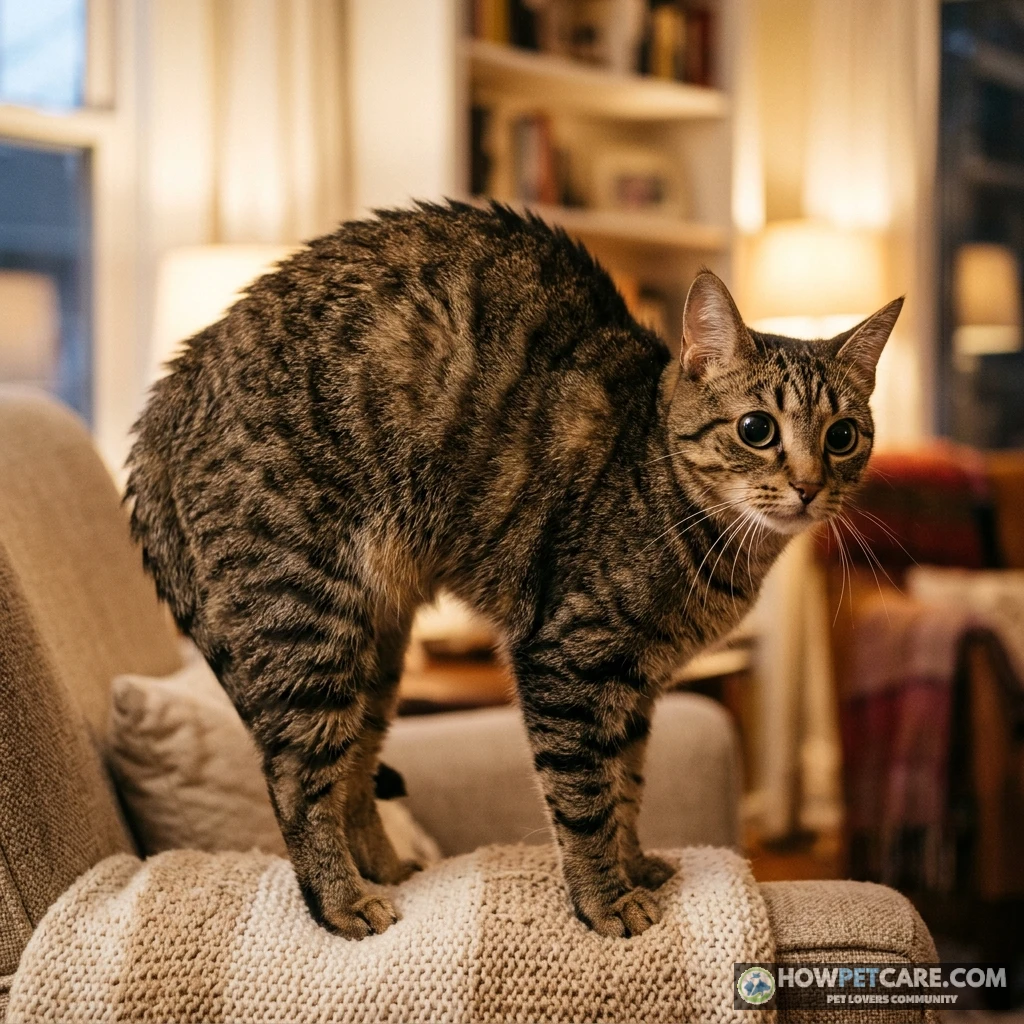

Feline Hyperesthesia Syndrome is a neuro‑dermatological disorder causing sudden dorsal skin rippling, tail‑chasing, and autonomic arousal. Episodes last seconds to minutes and can lead to self‑mutilation; prompt de‑escalation and targeted medications help control signs and prevent injury.
By Dr. Elizabeth Vance, DVM, DACVIM (Neurology) — Clinical Veterinary Advisor
Feline Hyperesthesia Syndrome (FHS)—often called twitchy cat syndrome, rolling skin disease, or feline shuddering syndrome—is an enigmatic feline neuromuscular disorder. It features sudden bouts of hypersensitivity along the dorsal spine, rippling cutaneous trunci muscle contractions, frantic self-grooming, and unpredictable vocalizations or behavioral outbursts. When an affected cat bolts across the room, hisses at its own flank, or chews its tail tip until it bleeds, the event can easily look like a psychiatric crisis, severe flea infestation, or focal seizure.
Clinically, veterinary neurologists define FHS as an exclusion-based neuro-dermatological or neurobehavioral syndrome marked by sensory dysregulation, autonomic nervous system arousal, and localized paresthesia. While its exact origin is still under study, current consensus views it as an overlap of neuropathic pain (such as spinal nerve root irritation or dorsal horn sensitization), atypical focal seizure activity, and compulsive behaviors fueled by chronic stress. Pinpointing triggers, diagnostic pathways, medication timelines, and emergency de‑escalation protocols helps protect an affected cat from severe self‑injury and preserves its quality of life at home.
Feline Hyperesthesia Syndrome: Clinical Definition and Hallmark Signs
Feline Hyperesthesia Syndrome represents a state of sensory hyperarousal where ordinary, non‑painful environmental and physical touch triggers abnormal neurosensory firing. In human medicine, this state mirrors allodynia (pain evoked by stimuli that do not normally hurt) and hyperalgesia (an exaggerated response to mildly painful stimuli). When an affected cat’s autonomic nervous system fires, the cutaneous trunci muscle—the thin sheet beneath the skin of the back—undergoes rapid, involuntary twitches. This produces the classic "rolling skin" look.
Because the feline autonomic nervous system drives involuntary responses, these sensory surges cause immediate distress. Cats cannot understand why their dorsal dermatomes suddenly feel like they are tingling, burning, or carrying an electric current. As a result, the animal tries to flee or attack the sensation by turning on its own body.

Hallmark Characteristics of an Active Episode
An active FHS paroxysm typically lasts from 20 to 90 seconds, though severe cluster episodes can recur over several hours. Caregivers usually notice a clear pattern of clinical signs:
- Dorsal skin rippling: Noticeable waves of twitching or shuddering traveling down the lumbar spine toward the base of the tail.
- Frantic caudal self‑mutilation: Sudden spinning to bite, lick, or chew aggressively at the tail base, tail tip, flanks, or hind paws.
- Sudden autonomic arousal: Wide pupil dilation (mydriasis), rapid swishing or thumping of the tail, fast breathing, and sudden vocalizations like shrieking, growling, or yowling.
- Phantom running or frantic fleeing: Bolting through the house or scaling cat trees at high speed to escape an unseen trigger, often followed by sudden freezing or staring blankly.
- Seizure‑like episodes: In advanced cases, episodes transition into focal or generalized epileptiform activity, including facial twitching, jaw champing, drooling, or brief paddling.
Breed Predispositions and Typical Age of Onset
While this cat nervous system disorder can manifest in domestic shorthairs and mixed breeds of any age, clinical surveillance shows a clear breed correlation. Purebred cats of Oriental descent—especially Siamese, Burmese, Abyssinian, and Persian breeds—have a statistically higher incidence of FHS. Onset usually happens in early adulthood, between one and five years of age, matching the window of social maturity. Juvenile cases are uncommon. When kittens show twitching or tail‑chasing behaviors, veterinarians first evaluate them for congenital spinal malformations, physical trauma, or heavy parasitic loads before considering FHS.

Distinguishing FHS from Zoomies, Flea Allergies, and Psychogenic Alopecia
Because many feline behaviors look similar on the surface, caregivers often confuse playful bursts with real neurobehavioral distress. Normal cats have short energetic spells, and skin conditions cause real discomfort. Telling these mimics apart is vital for picking the right treatment.
Normal Play and Zoomies vs. Pathological Episodes
Frenetic Random Activity Periods (FRAPs), or "the zoomies," are normal outlets for pent‑up energy. During standard zoomies, a cat stays oriented to its surroundings, tracks toys, keeps normal pupil responses, and stops for food or an owner’s voice.
An FHS episode involves acute panic, autonomic dysregulation, and an inability to break focus. Many behaviors linked to FHS also appear in healthy cats, like spontaneous running or occasional tail swishing. The difference is that an FHS episode traps the cat in a sensory loop. Stroking the cat during an episode will not calm it down; physical touch usually worsens the flare‑up or triggers redirected aggression toward the caregiver.

Dermatological Triggers: Flea Allergies vs. Neuropathic Sensation
Flea allergy dermatitis (FAD) is the most frequent mimic of FHS. Flea bite hypersensitivity produces intense itching along the tail head and lumbar spine, prompting frantic biting and skin twitching. However, FAD creates visible, physical lesions: small, crusty bumps (miliary dermatitis), visible fleas, or flea dirt that turns reddish on wet paper towels.
FAD is a common cat allergies condition and the most frequent mimic of FHS. Flea bite hypersensitivity produces intense itching along the tail head and lumbar spine, prompting frantic biting and skin twitching.
FHS stems from neuropathic paresthesia—internal misfiring of sensory nerves—rather than epidermal inflammation. While self‑trauma during an episode can break the skin, there are no primary parasitic lesions unless an active flea infestation acts as a concurrent trigger.
Viral infections such as feline herpes can also produce ocular discharge, but they are unrelated to hyperesthesia.
Psychogenic Alopecia vs. Hyperesthesia‑Driven Trauma
Psychogenic alopecia is a displacement behavior. Stressed cats overgroom obsessively, creating symmetrical hair loss on the belly, inner thighs, and forelegs without physical pain. This grooming occurs during calm, repetitive sessions without autonomic panic.
In hyperesthesia syndrome, the behavior is episodic, violent, and asymmetric. The cat attacks its skin and tail in response to sudden, perceived burning or tingling sensations, rather than using licking as a soothing habit.
| Condition | Primary Underlying Cause | Back & Tail Behavior | Distractibility During Episode | Dermatological Signs |
|---|---|---|---|---|
| Feline Hyperesthesia Syndrome | Neuropathic pain, spinal sensory hypersensitivity, or focal seizure activity | Violent dorsal skin rolling, tail‑chasing, frantic biting of tail and flank | Very poor; cat cannot be diverted and may show redirected aggression | Clean skin initially; focal self‑inflicted ulcerations or broken tail skin secondary to trauma |
| Normal Zoomies (FRAPs) | Healthy release of pent‑up physiological energy | Running, sliding, tail held in high question‑mark curl, playful pouncing | High; easily diverted with a tossed toy, treat, or verbal cue | None; skin and coat remain intact and healthy |
| Flea Allergy Dermatitis (FAD) | Hypersensitivity reaction to flea salivary antigens | Constant scratching, rubbing against objects, rhythmic nibbling | Moderate; briefly interruptible with food or attention | Miliary crusts, excoriations, visible fleas or flea dirt at the dorsal tail base |
| Psychogenic Alopecia | Compulsive stereotypic displacement behavior driven by environmental stress | Repetitive, methodical licking of accessible areas (ventrum, thighs) | High to moderate; stops when engaged by owner or novel sound | Symmetrical alopecia with stubbly, broken hair shafts; skin appears uninflamed and intact |

Emergency De‑escalation Protocol: Halting Active Self‑Mutilation Safely
When a cat has a severe episode with frantic tail‑mutilation, caregivers often panic and try to hold or comfort their pet. Touching the cat during an episode is dangerous. Dorsal horn neurons are already firing at full capacity, and direct touch adds sensory overload that can trigger sudden, severe redirected bites.
Never attempt to scruff, hug, or hold down a cat during an active hyperesthesia flare‑up. Sensory overload shuts down normal social recognition, and even gentle touches along the caudal spine can trigger immediate, severe puncture wounds to your hands or arms.
Sensory Dampening and Immediate Environment Control
Managing an acute flare‑up begins by removing sensory input. Bright overhead lights, television noise, loud voices, and household traffic keep the cat’s autonomic system on high alert.
Darken the room right away by shutting blinds and switching off lights. Cut out background noise by closing the door to separate the cat from other pets and family members. Step back at least six feet so your movements leave the cat’s field of vision, giving its sympathetic nervous system time to settle.
Safe Interruption: The Towel Shield Technique
If the cat is actively biting its tail or flank, intervene using an indirect barrier rather than your bare hands.
-
Step 1: Retrieve a Heavy Barrier
Grab a thick bath towel, heavy fleece blanket, or dense winter jacket. Do not use thin sheets, which provide inadequate bite protection and lack the weight needed to disrupt the cat’s visual focus.
-
Step 2: Execute the Towel Drop
Approach calmly from behind or beside the cat. Drop the towel loosely over the cat’s entire torso, hindquarters, and tail. Do not wrap, press down, or bundle the animal; simply allow the loose weight of the fabric to create a visual and physical barrier between the cat’s mouth and its caudal body.
-
Step 3: Introduce an Auditory‑Spatial Diversion
While the cat’s vision is buffered by the fabric, slide or toss a soft, lightweight object (such as a rolled pair of socks) across the floor several feet away. Avoid loud handclaps, metal pans, or ultrasonic squeakers, which can precipitate a focal epileptic seizure.
-
Step 4: Back Away and Isolate
Step away quietly and leave the cat under the loose blanket in the dark room for 20 to 30 minutes to allow its nervous system to reset to baseline.
Keep this emergency checklist saved on your phone or posted near your cat’s resting area so family members can act safely during a flare‑up:
- ☐ 1. Kill all tactile input instantly: Stop petting, touching, or brushing immediately. Do not attempt to stroke the cat’s head or touch the caudal spine, as tactile summation will trigger redirected biting.
- ☐ 2. Neutralize sensory triggers (60‑second blackout):
- Turn off overhead lighting and draw window blinds.
- Mute televisions, speakers, and silence household noise.
- Step back at least 6 feet to remove human presence as an autonomic arousal source.
- ☐ 3. Deploy the Towel Drop Barrier:
- Do not grab, scruff, or restrain the cat with bare hands.
- Drop a thick bath towel or fleece blanket loosely over the cat’s torso and hindquarters from behind.
- Objective: This disrupts visual sensory looping and introduces a passive physical buffer between the cat’s teeth and its tail/flank without causing restraint panic.
- ☐ 4. Deploy acoustic/distractive interrupters:
- Toss a low‑value, soft object (e.g., a rolled pair of socks) 4–5 feet away to redirect focus.
- Avoid high‑pitch squeakers or sudden loud handclaps, which can trigger a focal seizure.
- ☐ 5. Time the episode & check triage red flags:
- Start a stopwatch. If violent self‑mutilation or severe thrashing exceeds 5 continuous minutes, prepare for transport.
- Inspect from a distance for bright red arterial spurting or severe laceration of the tail tip.
- ☐ 6. Post‑episode quiet zone:
- Once rippling subsides, leave the room dark and quiet for 30 minutes. Do not offer food or treats immediately, as the swallowing reflex and gastrointestinal tract can remain hyper‑reactive.
Emergency Triage: When to Seek Immediate Veterinary Intervention
Most FHS paroxysms end on their own within two minutes, but certain situations call for urgent veterinary care:
- Uncontrolled Hemorrhage or Severe Tail Trauma: If the cat bites through the skin of the tail, exposing subcutaneous tissue, tendons, or tail vertebrae, wound cleaning and surgical repair are needed promptly. Severe tail wounds carry a high risk of bacterial necrosis, which often leads to tail amputation.
- Status‑Like Cluster Episodes: When a cat suffers continuous episodes lasting more than five minutes without calming down in between, it may have entered focal status epilepticus.
- Systemic Seizure Activity: Progression to generalized tonic‑clonic convulsions (loss of consciousness, involuntary urination or defecation, paddling limbs) requires emergency anticonvulsant treatment.
Veterinary Diagnostic Pathways and Realistic Cost Breakdowns
Feline hyperesthesia syndrome is strictly a diagnosis of exclusion. No single blood test, genetic screen, or scan can confirm it outright. A veterinarian must rule out external parasites, underlying allergies, muscle diseases, spinal conditions, and central nervous system lesions before making a final diagnosis.
Diagnosing FHS follows a three‑tiered pathway. Clinical research shows that a cat’s response to spinal palpation in an exam room does not correlate reliably with the frequency or severity of signs seen at home. Exam stress skews clinic behavior, so veterinarians rely heavily on owner videos alongside hands‑on tests.
Tier 1: Primary Care Rule‑Out Workup ($200–$500)
The primary care evaluation targets the most common, accessible possibilities first. This tier includes complete physical and neurological exams, cranial nerve evaluations, spinal reflex tests, and a close skin workup.
Diagnostics typically involve skin scrapings and fungal cultures (to exclude Demodex mites and ringworm), flea combing, an 8‑week veterinary‑grade flea preventative trial, and baseline blood work. A Complete Blood Count (CBC), Serum Chemistry panel, hyperthyroidism in older cats, and urinalysis ensure internal organ disease, kidney pain, or liver issues are not causing the restlessness.
Tier 2: Orthopedic and Spinal Radiography ($250–$650)
If baseline lab work and skin exams come back clean, the veterinary team turns to the musculoskeletal and peripheral nervous systems. Pain along the lower back or tail base often presents as twitching or tail chasing.
Tier 2 diagnostics include orthogonal X‑rays of the thoracic, lumbar, and sacrococcygeal spine, usually taken under light sedation to ensure clean alignment. These images evaluate for intervertebral disc disease (IVDD), spondylosis deformans, lumbosacral stenosis (cauda equina compression), discospondylitis (spinal infection), or old tail fractures that have formed painful neuromas.

Tier 3: Neurologist Consultation, MRI, and CSF Analysis ($2,500–$4,500)
If a cat shows severe self‑trauma, progressive neurological deficits, or poor response to initial pain relief, referral to a board‑certified veterinary neurologist (DACVIM) is warranted.
Tier 3 diagnostics require general anesthesia for a high‑field (1.5T to 3.0T) MRI of the brain and spine, paired with a cerebrospinal fluid (CSF) tap from the lumbar or cerebellomedullary region. This workup rules in or out spinal cord compression, meningomyelitis, central nervous system tumors like lymphoma, Chiari‑like malformations, and brain lesions.
Budgeting for Lifelong Management and Monthly Expenses
Once secondary causes are eliminated, financial commitments shift from diagnostic tests to ongoing medical maintenance. Long‑term care involves planning for regular medications, routine blood panels to monitor liver and kidney function, and adjustments around the house.
| Diagnostic Tier | Tests Included | Diagnostic Purpose | Estimated Cost Range (USD) |
|---|---|---|---|
| Tier 1: Baseline Primary Care Rule‑Outs | Physical & neurological exam, skin scrapings, flea comb, CBC, full biochemistry, Total T4, urinalysis, initial flea trial | Rule out flea allergy dermatitis, external parasites, metabolic organ dysfunction, hyperthyroidism, systemic infection | $200 – $500 |
| Tier 2: Musculoskeletal & Spinal Imaging | Orthogonal spinal radiographs (thoracolumbar & lumbosacral), mild reversible sedation, targeted orthopedic palpation | Rule out IVDD, spondylosis deformans, cauda equina syndrome, discospondylitis, healed tail fractures | $250 – $650 |
| Tier 3: Advanced Neurological Specialty Care | Neurologist consultation, high‑field MRI (brain/spine), CSF tap and fluid analysis under general anesthesia | Rule out structural brain pathology, central nervous system neoplasia, spinal cord compression, meningomyelitis | $2,500 – $4,500 |
| Lifelong Monthly Maintenance | Compounded neuropathic/SSRI medications, periodic bi‑annual CBC/Chem monitoring panels, vet rechecks | Long‑term suppression of paroxysms, monitoring renal and hepatic drug clearance, managing flare‑ups | $40 – $120 / month |

| Medication | Drug Class & Primary Target | Typical Starting Dose Range | Latency to Clinical Effect | Common Adverse Reactions | Mandatory Taper & Discontinuation Protocol |
|---|---|---|---|---|---|
| Gabapentin | Alpha‑2‑delta ligand; reduces dorsal horn neuronal excitability | 5–10 mg/kg PO q8–12h (titrated up to 20 mg/kg q8h as needed) | 2 to 4 hours post‑administration (acute); 1–2 weeks for baseline stabilization | Transient ataxia, profound sedation, mild hypothermia at high doses | Taper by 25–50% every 5–7 days. Abrupt cessation risks acute rebound hyperalgesia and status‑like twitching. |
| Pregabalin | High‑affinity alpha‑2‑delta ligand; superior oral bioavailability over gabapentin | 1–2 mg/kg PO q12h | 1 to 3 hours post‑dose; systemic steady state reached in 48 hours | Marked hindlimb weakness, somnolence, increased appetite, mild weight gain | Reduce dose by 25% weekly over 3–4 weeks. Never stop abruptly due to seizure risk. |
| Fluoxetine | Selective Serotonin Reuptake Inhibitor (SSRI); downregulates compulsive motor routines | 0.5–1.0 mg/kg PO q24h | 1 to 3 weeks (median recovery 8 days) | Transient anorexia, lethargy, mild vomiting in first 10 days | Reduce dose by 25% every 14 days over 6–8 weeks. Rapid withdrawal causes severe behavioral rebound and autonomic instability. |
| Venlafaxine | Serotonin‑Norepinephrine Reuptake Inhibitor (SNRI); dual inhibition of neuropathic and affective pathways | 1.0–2.0 mg/kg PO q24h (often administered as compounded beadlets) | 1 to 3 weeks | Mydriasis, constipation, mild tachypnea, sedation | Taper by 20–25% every 10–14 days. SNRI discontinuation syndrome can provoke severe tremors and agitation if rushed. |
Evidence‑Based Medical Management: Dosing Timelines, Efficacy, and Tapering
The realistic goal in managing FHS is to lower the frequency, duration, and intensity of episodes while halting self‑inflicted wounds, rather than expecting an immediate cure. Because the condition spans neuropathic, behavioral, and seizure pathways, drug therapy depends on the cat’s primary signs.
First‑Line Neuropathic Agents: Gabapentin and Pregabalin
When sensory hypersensitivity, allodynia, or nerve root pain is suspected, alpha‑2‑delta ligands serve as the first‑line choice. These medications bind to voltage‑gated calcium channels in the central nervous system, curbing the release of excitatory neurotransmitters like glutamate and substance P in sensitized dorsal horn neurons.
- Gabapentin: Frequently used for initial medical trials. Dosed at 5–10 mg/kg orally every 8 to 12 hours (titrated up to 20 mg/kg depending on clinical response and side effects). Sedation often appears within 2 hours, though consistent control of nerve pain typically takes 7 to 14 days of regular use.
- Pregabalin: Binds with high affinity to alpha‑2‑delta subunits and provides more predictable oral absorption in cats than gabapentin. Given at 1–2 mg/kg orally every 12 hours, pregabalin works well for cats that fail to improve on gabapentin or experience heavy sedation.
Behavioral Modulators: Fluoxetine and Venlafaxine Clinical Evidence
When episodes involve compulsive motor habits, vocal distress, and frantic grooming, serotonergic therapies provide effective control.
Selective Serotonin Reuptake Inhibitors (SSRIs), particularly fluoxetine (0.5–1.0 mg/kg PO every 24 hours), increase synaptic serotonin levels and calm stereotypic behaviors. Retrospective clinical data demonstrate fluoxetine’s effectiveness in feline hyperesthesia.
- Fluoxetine monotherapy showed a rapid median recovery time of 8 days.
- In a study group of 28 affected cats, 82% had their paroxysmal episodes stop for at least 9 months.
- Over long‑term follow‑up, 94% of cats stayed episode‑free for at least 9 months on maintenance therapy.
- Overall, 93% of treated cats achieved complete resolution of clinical signs after one year of consistent administration.
- Only 1 cat experienced a relapse while staying on therapy.
- In severe cases involving tail mutilation, fluoxetine improved signs in 6 out of 7 cats, with 5 out of 7 achieving full remission of self‑trauma.
For resistant cases, Serotonin‑Norepinephrine Reuptake Inhibitors (SNRIs) like venlafaxine target both emotional distress and descending pain pathways via norepinephrine reuptake inhibition. In a multicenter study of venlafaxine in 176 cats with neurobehavioral and anxiety disorders, the drug proved effective for animals that did not respond to standard SSRIs.

NMDA Antagonists and Adjunct Options: Amantadine
For severe central sensitization (the "wind‑up" phenomenon), NMDA receptor antagonists offer helpful secondary control. Amantadine (3–5 mg/kg PO every 24 hours) is often combined with gabapentin to break centralized pain loops, particularly in cats with persistent lower‑back sensitivity.
| Medication | Drug Class & Primary Target | Typical Starting Dose Range | Latency to Clinical Effect | Common Adverse Reactions | Mandatory Taper & Discontinuation Protocol |
|---|---|---|---|---|---|
| Gabapentin | Alpha‑2‑delta ligand; reduces dorsal horn neuronal excitability | 5–10 mg/kg PO q8–12h (titrated up to 20 mg/kg q8h as needed) | 2 to 4 hours post‑administration (acute); 1–2 weeks for baseline stabilization | Transient ataxia, profound sedation, mild hypothermia at high doses | Taper by 25–50% every 5–7 days. Abrupt cessation risks acute rebound hyperalgesia and status‑like twitching. |
| Pregabalin | High‑affinity alpha‑2‑delta ligand; superior oral bioavailability over gabapentin | 1–2 mg/kg PO q12h | 1 to 3 hours post‑dose; systemic steady state reached in 48 hours | Marked hindlimb weakness, somnolence, increased appetite, mild weight gain | Reduce dose by 25% weekly over 3–4 weeks. Never stop abruptly due to seizure risk. |
| Fluoxetine | Selective Serotonin Reuptake Inhibitor (SSRI); downregulates compulsive motor routines | 0.5–1.0 mg/kg PO q24h | 1 to 3 weeks (median recovery 8 days) | Transient anorexia, lethargy, mild vomiting in first 10 days | Reduce dose by 25% every 14 days over 6–8 weeks. Rapid withdrawal causes severe behavioral rebound and autonomic instability. |
| Venlafaxine | Serotonin‑Norepinephrine Reuptake Inhibitor (SNRI); dual inhibition of neuropathic and affective pathways | 1.0–2.0 mg/kg PO q24h (often administered as compounded beadlets) | 1 to 3 weeks | Mydriasis, constipation, mild tachypnea, sedation | Taper by 20–25% every 10–14 days. SNRI discontinuation syndrome can provoke severe tremors and agitation if rushed. |
Monitoring Checkpoints, Side Effects, and Tapering Rules
Never stop psychotropic or neuropathic medications suddenly. Quitting gabapentin or pregabalin cold turkey can lead to intense rebound pain, tremors, or withdrawal seizures. Stopping fluoxetine or venlafaxine without tapering causes autonomic instability and sharp behavioral setbacks.
Run baseline blood panels before starting SSRIs, then recheck at 4 weeks, 6 months, and annually. Inappetence can happen early in fluoxetine therapy. If a cat goes without food for more than 48 hours, contact your veterinarian immediately to adjust the dose and prevent feline hepatic lipidosis.
| Medication | Drug Class | Primary Clinical Target | Typical Onset Timeline | Key Monitoring Parameters |
|---|---|---|---|---|
| Gabapentin | Alpha‑2‑delta calcium channel blocker | Neuropathic pain, allodynia, hyperalgesia | 2 to 4 hours acute; 7–14 days for steady chronic control | Ataxia, sedation, baseline renal function (BUN/Creatinine) |
| Pregabalin | High‑affinity alpha‑2‑delta ligand | Severe/refractory sensory neuropathic pain | 1 to 3 hours acute; 48 hours for steady state | Motor coordination, hindlimb weakness, body weight |
| Fluoxetine | SSRI | Compulsive motor pacing, autonomic anxiety, tail‑chasing | Median recovery 8 days; 3–6 weeks full effect | Daily food intake, body weight, liver enzymes (ALT/ALP) |
| Venlafaxine | SNRI | Refractory compulsive agitation and central pain | 1 to 3 weeks | Pupil dilation, heart rate, hydration/fecal consistency |
| Amantadine | NMDA receptor antagonist | Central neuropathic sensitization ("wind‑up") | 4 to 7 days chronic administration | Gastrointestinal upset, loose stools, agitation |
Multimodal Home Management: Environment Enrichment, Diet, and OTC Adjuncts
Prescription drugs rarely resolve FHS entirely if a cat lives in a stressful environment. Chronic anxiety lowers a cat’s sensory threshold, meaning small environmental stressors can spark clinical episodes. Pairing medical therapy with steady environmental changes creates a much calmer sensory baseline.
Stress Reduction and Structural Environmental Enrichment
Cats need predictability and a sense of territory. Caregivers can ease household stress through practical adjustments:

- Eliminate Sensory Irritants: Flare‑ups can be provoked by subtle household scents, including cigarette smoke, scented candles, aerosol sprays, and essential oil diffusers. Remove scented litter, heavy cleaners, and air fresheners from the cat’s primary spaces.
- Vertical Territory Optimization: In multi‑cat homes, conflict between pets drives sustained stress. Set up wall shelves, climbing trees, and quiet perches so your cat can cross rooms without running into other animals.
- Predictable Interactive Play: Avoid fast‑paced laser pointers that wind cats up without offering physical contact. Use feather wands moved at an even pace instead, and offer a meal directly afterward to finish the natural hunting cycle.
- Sensory Safe Havens: Set up a quiet, dim room with preferred bedding, hiding spots, and an accessible litter box away from household foot traffic.
Dietary Adjustments and Fatty Acid Supplementation
Subclinical systemic inflammation and underlying food allergies can heighten nerve sensitivity and skin twitching. Targeted feeding changes can help settle reactive nerve pathways:
- Hydrolyzed or Novel‑Protein Diet Trials: An 8‑ to 12‑week trial using a prescription hydrolyzed diet (like Royal Canin HP or Hill’s z/d) or a single novel protein (such as venison or rabbit) rules out food allergies that might amplify skin sensitivity.
- Therapeutic Omega‑3 Fatty Acids (EPA and DHA): High‑potency marine fish oil supports skin barrier health and nerve function. Work with your veterinarian to target 100–150 mg of combined EPA/DHA per kilogram of body weight each day.
Evaluating Pheromone Diffusers, Nutraceuticals, and CBD
Owners often turn to over‑the‑counter supplements to avoid prescription drugs. Clear clinical evidence helps separate helpful products from unproven options:
- Synthetic Feline Facial Pheromones (Feliway Classic / Optimum): Diffusers release synthetic markers that signal territorial safety. While they help reduce mild environmental anxiety, pheromones alone will not resolve active neuropathic episodes or severe tail biting.
- L‑Theanine and Alpha‑Casozepine: These nutraceuticals act mildly on GABA and serotonin pathways. They can help support situational stress management, but lack the clinical potency needed to control active FHS episodes.
- CBD and Hemp Extracts: No controlled, peer‑reviewed clinical trials show that Cannabidiol (CBD) monotherapy safely or effectively treats feline hyperesthesia syndrome. Cats lack certain liver glucuronidation pathways, making them vulnerable to cannabinoid toxicity and batch contaminants like trace THC. Stick with regulated veterinary drugs (such as gabapentin) that have clear safety profiles and established dosing.

Caregiver Action Plan: Flare‑Up Tracking and Long‑Term Prognosis
Caring for a cat with hyperesthesia requires adjusting expectations. Success does not mean you will never see another twitch; it means stopping self‑trauma, widening the time between episodes, and keeping your cat comfortable.
Myth vs. Clinical Reality: 4 Critical Misconceptions About FHS
Myth 1: "FHS is purely behavioral—it is just an extreme version of psychogenic overgrooming."
Clinical Reality: Neurological and electrodiagnostic evaluations classify FHS as a neuropathic pain syndrome or an atypical focal seizure disorder with autonomic signs, not a simple habit. While stress makes it worse, the primary trigger is nerve paresthesia or central epileptiform activity. Treating it as a behavioral issue without addressing underlying nerve pain will not resolve it.
Myth 2: "Feline Hyperesthesia Syndrome is universally progressive and eventually fatal."
Clinical Reality: FHS does not shorten life expectancy when secondary issues are managed. Deaths tied to FHS stem almost entirely from euthanasia over uncontrolled self‑mutilation or unmanaged distress. With a combined plan of environmental adjustments and medications like gabapentin, pregabalin, or SSRIs, most cats achieve solid control and live comfortable lives.
Myth 3: "If a cat has skin twitching, you should immediately brush or pet their back to soothe the itch."
Clinical Reality: Stroking the lower back overstimulates already sensitized dorsal horn neurons (allodynia). Physical contact during an active episode causes sensory overload, worsening the flare‑up and often sparking redirected bites to your hands or the cat’s own tail.
Myth 4: "Over‑the‑counter CBD oil is an effective, proven replacement for prescription pharmaceuticals."
Clinical Reality: There are zero peer‑reviewed clinical trials showing CBD monotherapy controls FHS episodes. Unregulated hemp products also carry fluctuating cannabinoid levels and trace THC, which cats struggle to metabolize. Proven prescription neuromodulators like gabapentin remain the veterinary standard.
The Daily Episode and Trigger Tracking Framework
Daily logging removes guesswork and helps your veterinarian see how medication schedules align with breakthrough episodes. Track your cat’s baseline stress and individual events using this template:
================================================================================
                      FELINE HYPERESTHESIA EPISODE LOG
================================================================================
Date: [ YYYY-MM-DD ]             Cat Name: [ _______________ ]
Daily Baseline Stress Rating (1-5; 1=Calm, 5=Hyper-Vigilant): [ ___ ]

MEDICATION ADMINISTRATION:
- Morning Dose: Drug: [ __________ ] Dose: [ _____ mg ] Time Given: [ ______ AM ]
- Evening Dose: Drug: [ __________ ] Dose: [ _____ mg ] Time Given: [ ______ PM ]

EPISODE LOG (Record each event separately):
--------------------------------------------------------------------------------
Event #1:
- Onset Time: [ ______ AM/PM ]   Duration: [ _____ minutes/seconds ]
- Preceding Trigger (Check all that apply):
  [ ] Petting along caudal spine / tail base   [ ] High-arousal play / hunting
  [ ] Loud domestic noise (vacuum, guests)    [ ] Litter box visit / defecation
  [ ] Grooming after meal                     [ ] Spontaneous / resting asleep
  [ ] Other: [ __________________________________ ]

- Primary Clinical Manifestations:
  [ ] Dorsal skin rippling / twitching          [ ] Frantic tail‑lashing
  [ ] Dilated pupils / vocal distress           [ ] Biting flank / tail mutilation
  [ ] Sudden phantom running / wall scaling      [ ] Freezing / vacant stare

- Severity Score (1 to 5):
  [1] Mild rippling; easily diverted by quiet floor distraction.
  [2] Moderate twitching and vocalization; distractible within 60 seconds.
  [3] Intense tail chasing/growling; requires blanket barrier; no skin broken.
  [4] Severe self‑biting; hair loss or minor superficial abrasions.
  [5] Uncontrolled self‑mutilation / deep skin tear / unresponsive to environment.

- De‑escalation Technique Used: [ ______________________________________________ ]
- Time to Return to Normal Baseline: [ _____ minutes ]
================================================================================
Long‑Term Life Expectancy and Quality‑of‑Life Outlook
The long‑term outlook for a cat with feline hyperesthesia syndrome is favorable when multimodal care is maintained. FHS is non‑terminal and does not shorten a cat’s natural lifespan. The primary danger comes from secondary injuries—especially chronic, infected tail wounds that turn septic or cause persistent pain that leads owners toward euthanasia.
Modern pharmacotherapy offers reliable stabilization. Published clinical research shows that over 90% of cats given tailored SSRI therapy reach substantial or complete remission after one year. Many cats live normal, active lives once their daily routine and medications are dialed in.
Next Steps: Veterinary Partnership Checklist
Use this checklist to prepare for your next veterinary visit:
- Capture Clear Video Footage: Record two separate smartphone videos of an active episode from 4 to 6 feet away, without touching or calling the cat. Good lighting helps your veterinarian examine pupil changes, skin rolling, and tail movements clearly.
- Assemble a 14‑Day Baseline Log: Bring two completed weeks of the standardized Episode Log shown above.
- Perform a Weight Check: Check your cat’s exact weight at home or at the clinic, since neuropathic and SSRI medications require precise weight‑based dosing.
- Review Current Blood Work: Confirm baseline liver (ALT, ALP) and kidney values (BUN, Creatinine, SDMA) were tested within the past six months.
- Establish a Primary Pharmacy Plan: Discuss whether your cat takes standard tablets, flavored liquids, or compounded mini‑chews best, keeping daily administration simple and low‑stress.
FAQ
Is Feline Hyperesthesia Syndrome painful for cats?
Yes, veterinary neurologists classify FHS as a neuropathic condition involving paresthesia, allodynia, or hyperalgesia, meaning normal light touch can feel intensely uncomfortable or burning along the cat’s spine and tail.
Can kittens develop Feline Hyperesthesia Syndrome?
True FHS is exceedingly rare in young kittens; it typically develops in mature adolescent and young adult cats between one and five years of age. If a kitten exhibits twitching or tail chasing, spinal trauma, congenital deformities, or parasites are far more likely.
Does Feline Hyperesthesia Syndrome affect a cat’s life expectancy?
FHS does not inherently shorten a cat’s natural lifespan. With proactive management to prevent secondary infections from self‑mutilation and consistent medical therapy, affected cats can live full, normal lives.
What should I do if my cat shows redirected aggression during an episode?
Do not attempt to pet, pick up, or scold the cat, as sensory overload can cause them to attack nearby hands or feet. Instead, place an opaque barrier like a cardboard box or thick blanket between you and the cat, turn off the lights, and leave the room to allow their nervous system to reset.