
Blood in cat stool needs emergency care when the stool is black and tarry, bleeding is heavy or ongoing, or your cat is weak, vomiting repeatedly, or in pain. One small red streak in an otherwise healthy adult cat may allow brief monitoring after you call your vet.
Blood in cat stool can signal an emergency. A single small red streak in an otherwise healthy, comfortable adult cat may allow brief monitoring after you call your vet. Black, sticky, tarry stool, substantial bleeding, or blood alongside weakness, repeated vomiting, pale gums, or severe pain needs emergency care.
Blood in cat stool: decide whether to seek emergency care now
Use these three tiers to choose your next step. They’re conservative guidelines, not validated medical cutoffs; your cat’s overall condition and your vet’s advice matter more than an exact number of drops or hours. If you’re unsure, call a vet.
Go to an emergency vet
- The stool is black, sticky, and tarry, rather than simply dark brown.
- Blood coats much of the stool, drips after defecation, or appears in several bowel movements. Don’t wait to measure it: a streak is different from a pool or ongoing bleeding.
- Your cat collapses, is markedly weak, has pale or white gums, vomits repeatedly, or has a swollen or painful abdomen.
- You suspect your cat swallowed an object or string, or got into a toxin or rodent poison.
- A kitten, senior, or chronically ill cat is bleeding and seems unwell.
Large amounts of blood, painful defecation, lethargy, and bleeding in very young animals need urgent veterinary attention. If possible, call the emergency clinic as you leave, but don’t delay the trip to collect a sample.

Call your vet promptly
Call today if a small amount of blood appears more than once, or if it comes with loose stool, mucus, or straining—even if your cat otherwise seems normal. Call, too, if bleeding starts after deworming, your cat is a kitten or senior, or you’re unsure how serious the situation is.
The clinic can help decide whether your cat needs an immediate examination or a scheduled appointment. If your cat becomes weak, painful, or significantly unwell while you wait, seek emergency care.
When brief monitoring may be reasonable
Brief monitoring may be reasonable only if an otherwise healthy adult cat has one small red streak in one stool and is eating, drinking, and behaving normally, with no vomiting, straining, or apparent pain. Contact your vet for advice tailored to your cat, then check the next litter-box visits over the next 24 hours. Call if blood returns or another symptom develops. Don’t wait several days to see whether a pattern emerges.

Identify the stool: bright red blood, black tarry stool, mucus, or normal
A photo taken in good light can help your vet assess what you saw. Stool appearance may hint at where bleeding starts, but it can’t establish the cause.
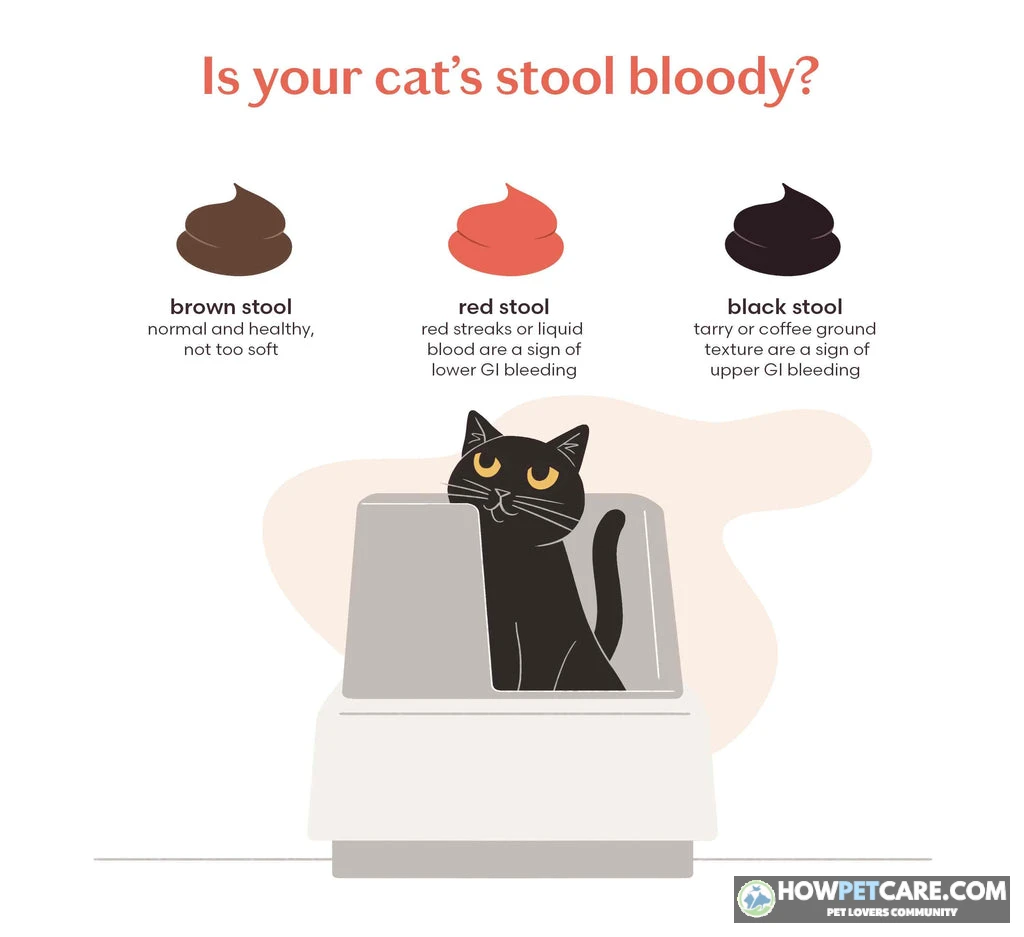
Bright red blood: hematochezia
Hematochezia means fresh red blood in stool. It’s often associated with bleeding near the end of the digestive tract, such as the colon, rectum, or anus. Straining can sometimes cause a few spots, but recurring blood still needs veterinary advice.
Black, tarry stool: melena
Melena is dark, tarry stool that contains digested blood. It can point to bleeding higher in the gastrointestinal tract. Treat suspected melena as an emergency, even if your cat seems comfortable at first.
Blood with mucus or foul-smelling diarrhea
Mucus may look clear, whitish, or jelly-like. Blood mixed with mucus, especially in particularly foul-smelling stool, can occur with colitis, or inflammation of the large intestine. It doesn’t identify the cause. A vet may consider parasites, infection, and food reactions, among other possibilities. Call your vet today. Seek emergency care sooner if your cat is weak, repeatedly vomiting, or otherwise very unwell.
| Appearance | Possible pattern | Recommended action |
|---|---|---|
| Formed, brown stool without visible blood or mucus | A typical-looking stool; appearance alone cannot rule out illness | Continue normal observation |
| Bright red streak or drops on formed stool | Fresh blood, sometimes associated with lower-bowel irritation or straining | Call for advice; a single streak in a well adult may permit brief monitoring |
| Red blood mixed with soft stool or diarrhea | Lower-bowel irritation or inflammation is possible | Call your vet today; seek emergency care if your cat is very unwell |
| Black, sticky, tarry stool | Possible digested blood, or melena | Seek emergency veterinary assessment |
| Slimy or jelly-like mucus, with or without red blood | Possible large-bowel irritation, including colitis | Photograph it and call your vet today |
| Unusual red or dark color without an obvious blood streak | Food, medication, or colored litter may alter appearance; bleeding is also possible | Ask your vet; treat a tarry appearance as urgent |

Why a cat may have blood in the stool but still act normal
A cat may keep eating and playing despite minor lower-bowel irritation, a diet-related problem, stress, or parasites. Normal behavior is reassuring, but it doesn’t rule out an underlying problem.
A cautious watch-and-record protocol
Use this plan only for the single small streak in an otherwise well adult described in the triage section. Your vet may suggest a different plan based on your cat’s history.
-
Record what you saw
Photograph the stool and note the time, consistency, amount of blood, and whether your cat strained.
-
Check the next visits
For the next 24 hours, watch litter-box visits and note appetite, drinking, and energy. In a multi-cat home, make sure you know which cat produced the stool.
-
Save a sample if practical
Place a fresh sample in a clean, sealed container. Ask the clinic how fresh it should be and how to store it; a photo is useful if you cannot collect one.
-
Keep the routine steady
Provide fresh water and the usual food. Avoid new treats or abrupt diet changes while you seek advice.
-
Escalate if anything changes
Call if blood reappears or your cat develops diarrhea, vomiting, straining, reduced appetite, pain, or unusual behavior. For black tarry stool or severe signs, go to an emergency vet.
A useful note might read: “8 a.m.: formed stool, one red streak, no straining; ate breakfast and behaved normally.” If you can’t confidently monitor your cat, call the clinic instead of extending the watch period.
When normal behavior is not reassuring
Repeated blood, bloody diarrhea, or mucus warrants a call, even if your cat seems fine. Contact a vet sooner if your cat has a chronic illness, is a kitten, or is a senior. If the first streak is followed by normal stool and your cat stays well, tell your vet and follow the clinic’s advice about whether to book an appointment.

Common causes of blood in cat poop, ranked by pattern
The best clues come from the full picture: stool appearance, recent changes, your cat’s age, and other symptoms. Common possibilities include lower-bowel inflammation, constipation, diet-related irritation, and intestinal parasites.
Blood with diarrhea, mucus, or straining
Colitis can cause mucus and fresh blood in or on stool. Diarrhea and straining may go along with lower-bowel irritation, while constipation can also cause a small amount of fresh blood. A strong smell doesn’t distinguish food intolerance from parasites or infection. Describe the whole pattern to your vet rather than guessing at the cause.
Parasites, diet, and stress
Intestinal parasites, including hookworms and giardia, can cause digestive signs. Your vet may also consider a sudden food change, dietary intolerance, or stress-related colitis. Diet shifts can also cause extra gas—if you’ve ever wondered whether cats normally fart, changes in odor or frequency may point back to food. Your cat’s history and examination help the vet decide which tests make sense.

Less common causes that need investigation
Other possibilities include inflammatory bowel disease, anal gland issues, swallowed material, clotting problems, polyps, and tumors. Their relevance depends on your cat’s history and examination. A single streak doesn’t mean your cat has cancer. Inflammatory bowel disease and foreign material are among the causes a vet may consider when investigating digestive signs.
| Pattern | Possibilities to discuss with the vet | What raises concern |
|---|---|---|
| One streak on formed stool in a well adult | Minor irritation or straining | Blood returns, or appetite or behavior changes |
| Blood, mucus, and soft or foul-smelling stool | Colitis, dietary upset, parasites, or infection | Repeated diarrhea, vomiting, lethargy, or poor appetite |
| Kitten or cat with outdoor exposure | Parasites or infection, among other causes | Poor growth, weakness, or signs of dehydration |
| Black, tarry stool | Possible digested blood; bleeding location and cause need investigation | Any suspected melena warrants emergency assessment |
| Senior cat with recurring blood | Constipation or inflammation; polyps and tumors may also be considered | Weight loss, appetite change, or worsening symptoms |
Some foods, medicines, or litter can change the appearance of stool. Tell your vet what your cat has eaten or taken, but don’t assume an unfamiliar color is harmless or stop a prescribed drug on your own.
How age changes the risk: kittens, adults, and senior cats
Kittens: Call your vet promptly about blood, including blood noticed after deworming. Don’t assume the dewormer caused it, and don’t give another dose without advice. Parasites and infectious illnesses such as feline panleukopenia may be factors. Kittens with diarrhea can deteriorate quickly, and a bleeding kitten that seems weak or unwell needs emergency assessment.
Healthy adults: One small streak with no other symptoms may be suitable for brief monitoring after you’ve sought veterinary advice. If blood returns or diarrhea or straining develops, call the vet today.
Senior cats: Call promptly, especially if blood recurs or you notice weight loss, appetite changes, or known chronic illness. Constipation, medication effects, chronic inflammation, polyps, and tumors may be relevant to the workup. Age alone doesn’t identify the cause. A senior cat who is unwell and bleeding needs emergency care.

What the vet visit involves: stool tests, bloodwork, imaging, and costs
What each diagnostic step can tell you
Your vet will ask when the bleeding started, how often it appears, what the stool looks like, and whether your cat is eating and acting normally. Be ready to discuss diet changes, medications, parasite prevention, and possible access to string, plants, toxins, or other objects. The physical exam helps guide what happens next.
| Test | What it can help assess | When it may be considered |
|---|---|---|
| Veterinary fecal exam | Evidence of intestinal parasites; additional tests may be needed for particular organisms | When parasites or infectious causes are possible |
| Bloodwork | Anemia and other signs of illness; results may also help assess hydration and organ function | When bleeding recurs, the cat seems ill, or the exam suggests a broader problem |
| X-rays | Possible obstruction, constipation, or other changes visible on imaging | When swallowing an object, significant straining, or another structural problem is suspected |
| Ultrasound | Abdominal organs and intestinal changes that may need closer assessment | When findings warrant further investigation |

A negative initial fecal result doesn’t rule out every parasite or cause of bleeding. Not every cat needs every test. Your vet may recommend more testing or a follow-up based on the findings.
How to prepare and ask about costs
Bring a fresh stool sample if the clinic asks for one, along with photos, a symptom timeline, and a list of medications and parasite treatments. If it’s an emergency, leave without the sample rather than delaying care.
US fees vary substantially by location, clinic, test, and whether the visit is an emergency. The exam, fecal testing, bloodwork, imaging, and treatment may be billed separately; the evidence available here doesn’t support a dependable dollar range. Before non-emergency testing, ask the clinic for its exam fee and a written estimate. If cost is a barrier, say so early. Ask which steps are most urgent, whether payment options are available, and whether a local low-cost clinic can help.
Treatment, recovery, and what to do next
Treatment depends on the diagnosis. Your vet may recommend parasite treatment, fluids, or care for inflammation or another underlying problem. A fecal test can help guide treatment, but it may not give the whole answer.
Minor irritation may improve once its trigger is addressed, but there’s no reliable at-home deadline that proves the cause was harmless. Follow your vet’s treatment and recheck instructions. Call back if bleeding persists, returns, or increases, or if your cat develops new symptoms. Seek emergency care for the serious signs listed earlier.

What not to do at home
Do not give human anti-diarrheals, pain medicines, laxatives, enemas, leftover prescriptions, or home remedies for unexplained bleeding. Do not stop or change prescribed medication without veterinary guidance. If your cat takes an anti-inflammatory drug and you see blood, contact a vet promptly for instructions.
Your next-step checklist
- Assess your cat first: Watch for weakness, pale gums, repeated vomiting, severe pain, or possible toxin or object ingestion.
- Choose the urgency: Go to an emergency vet for those signs, substantial or ongoing bleeding, or black tarry stool. Call today for recurring blood, mucus, diarrhea, or straining.
- Document only if safe: Take a photo, note episodes and other symptoms, and collect a fresh sample if practical.
- Follow the clinic’s advice: Ask when your cat should be seen and what to do if bleeding returns or your cat’s condition changes.
| Stool Appearance | Medical Term / Condition | Possible Causes | Recommended Action |
|---|---|---|---|
| Bright red streak or drops on formed stool | Hematochezia (fresh red blood in stool) | Fresh blood, lower-bowel irritation, straining, minor irritation | Call for advice; a single streak in a well adult may permit brief monitoring |
| Red blood mixed with soft stool or diarrhea | Hematochezia / bloody diarrhea | Lower-bowel irritation or inflammation (colitis, parasites, dietary intolerance, infection) | Call your vet today; seek emergency care if your cat is very unwell |
| Slimy or jelly-like mucus, with or without red blood | Colitis (inflammation of the large intestine) | Large-bowel irritation, parasites, infection, food reactions | Photograph it and call your vet today |
| Blood, mucus, and soft or foul-smelling stool | Colitis | Colitis, dietary upset, parasites, or infection | Discuss with vet (call today); seek emergency care if repeated diarrhea, vomiting, lethargy, or poor appetite occurs |
| Black, sticky, tarry stool | Melena (digested blood) | Digested blood, bleeding higher in the gastrointestinal tract; bleeding location and cause need investigation | Seek emergency veterinary assessment; any suspected melena warrants emergency assessment |
| Recurring blood in stool (Senior cat) | Constipation, inflammation, polyps, or tumors | Constipation or inflammation; polyps and tumors may also be considered | Seek vet care; raises concern if weight loss, appetite change, or worsening symptoms occur |
| One streak on formed stool in a well adult | Not in source | Minor irritation or straining | Call for advice; monitor closely; raises concern if blood returns, or appetite or behavior changes |
| Blood in stool (Kitten or cat with outdoor exposure) | Not in source | Parasites or infection, among other causes | Seek vet care; raises concern if poor growth, weakness, or signs of dehydration occur |
| Unusual red or dark color without an obvious blood streak | Not in source | Food, medication, colored litter, or bleeding | Ask your vet; treat a tarry appearance as urgent |
| Formed, brown stool without visible blood or mucus | Typical-looking stool; appearance alone cannot rule out illness | Typical-looking stool; appearance alone cannot rule out illness | Continue normal observation |
FAQ
Can a cat’s food or medication make stool look bloody when it is not?
Some foods, medicines, or other substances can change stool color, and color alone cannot confirm blood. Photograph the stool and tell your veterinarian about anything your cat ate or took rather than stopping prescribed medication on your own.
Should I bring a stool sample to the vet?
Yes, if it is easy and safe to collect, bring a fresh sample in a clean, sealed container and ask the clinic how recently it should have been collected. A photo can also help, especially if the stool has already been discarded.
Why does my cat have bloody diarrhea?
Bloody diarrhea can occur when the lower bowel is inflamed or irritated, including with colitis, parasites, dietary intolerance, or infection. Because causes and urgency vary, contact a veterinarian promptly, especially if it recurs or your cat seems unwell.
Can I use a home remedy for blood in my cat’s stool?
Do not give human medicines, laxatives, or enemas, and do not rely on home remedies to treat unexplained bleeding. Keep water available and contact your veterinarian for guidance based on the amount of blood and your cat’s other symptoms.