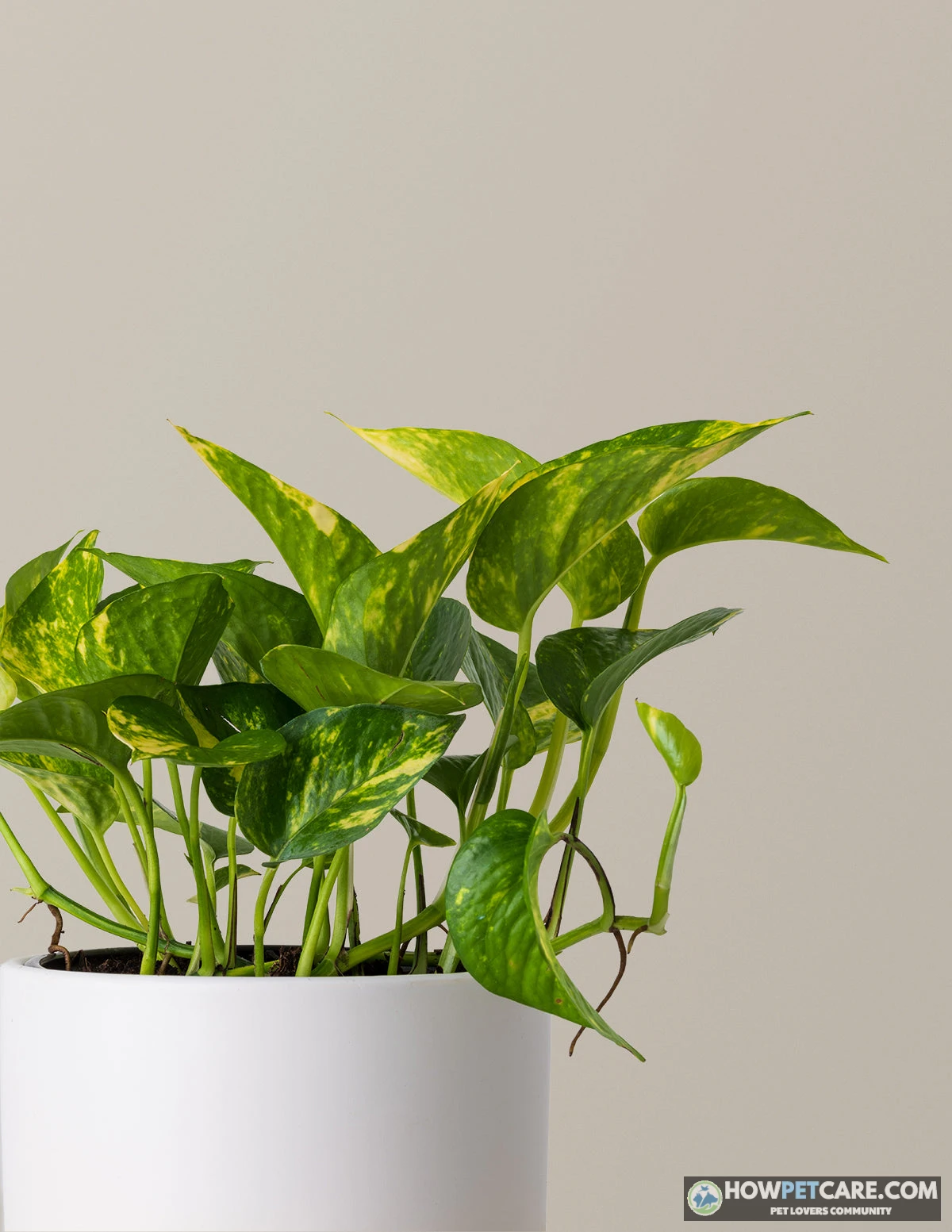

Choose a suitable pothos variety, provide bright indirect light (1,000–2,500 lux for most cultivars), water only when the top soil dries, use a well‑draining aroid mix, and monitor for pests or yellowing leaves to keep the plant healthy and vibrant.
A pothos plant is easier to grow when its variety suits the light, space, and routine you have. In most homes, that means bright indirect light, an airy growing mix in a pot with drainage holes, and watering only after the upper mix dries. Keep foliage away from pets that chew plants. Golden pothos and Jade pothos are forgiving choices for beginners and lower-light rooms. Marble Queen needs brighter light to preserve its cream variegation, while Cebu Blue does best with climbing support. This guide covers selection, identification, measurable indoor care, diagnosis, propagation, pests, long-term water culture, and pet safety.
Choose the Best Pothos Plant for Your Room and Routine
Start with the plant’s future location, not its label. Measure light at leaf height, decide whether the vine will trail or climb, and consider how often you can prune and inspect it. Low light may keep pothos alive indoors, but it usually slows growth, lengthens the spaces between leaves, and reduces variegation.
Best choices for low-light rooms and beginners
Golden pothos, Jade pothos, and many all-green plants tolerate less light than strongly variegated cultivars. Golden pothos combines vigorous growth with patterned foliage: its green, heart-shaped leaves carry irregular yellow markings, though new foliage may be greener when light is limited. Jade pothos is the simplest choice for a dim room where dependable growth matters more than color.
Low-light tolerance doesn’t mean a plant can grow well without enough light. Treat 500–800 lux, or about 50–75 foot-candles, as maintenance-level illumination rather than an ideal target. For active growth, move toward 1,000–2,500 lux.
If pets can reach and chew plants, factor toxicity into your choice. While pet owners often wonder whether spider plants are toxic to cats when choosing hanging greenery, true pothos contains insoluble calcium oxalate crystals and is toxic to cats, dogs, and children if ingested.

Best varieties for bright rooms and preserved variegation
Marble Queen pothos has heavily marbled cream and pale green foliage. It grows more slowly than many all-green plants and needs consistent bright indirect light to keep producing variegated leaves. Neon pothos has electric chartreuse foliage that becomes duller and darker in insufficient light. Golden pothos generally handles a wider range of conditions; Marble Queen is the least forgiving of a dim shelf.
| Variety | Identification | Suggested light conditions | Variegation risk in low light | Growth habit | Best placement | Experience level |
|---|---|---|---|---|---|---|
| Golden pothos (E. aureum) | Green heart-shaped leaves with irregular yellow streaks | 800–2,500 lux; tolerates lower light | Yellow areas may reduce and stems stretch | Fast trailing or climbing vine | Hanging basket, high shelf, or east-facing sill | Beginner |
| Marble Queen (E. aureum) | Cream-heavy marbling woven through green | 1,500–3,500 lux | Deep shade can cause browning and greener growth | Moderate, relatively slow growth | Bright east window or filtered window | Beginner with steady light |
| Neon pothos (E. aureum) | Uniform lime-to-chartreuse leaves | 1,000–3,000 lux | Color fades toward olive green | Moderately fast trailing or climbing vine | Bright desk or plant stand out of hot sun | Beginner |
| Cebu Blue (E. pinnatum) | Narrow blue-green leaves with a metallic cast | 1,500–4,000 lux | Leaves become dull and internodes stretch | Natural climber; mature leaves may split | Moss pole or trellis near bright filtered light | Confident beginner |
Best pothos for shelves, hanging baskets, and climbing poles
A trailing plant suits a shelf, bookcase, or hanging basket. Golden, Neon, and Jade pothos are practical choices because they recover well from pruning and quickly fill a container. For a moss pole, trellis, or board, choose a climber. Cebu Blue is especially well suited to climbing, and many pothos produce larger, more mature leaves when their aerial roots can attach to a consistently moist support.
To grow a bushier plant, group several rooted cuttings in one pot and prune long vines just above nodes. Pruning directs growth toward dormant points instead of leaving a thin stem with leaves only at its tip.


Identify Golden, Marble Queen, Neon, and Cebu Blue Pothos
Four common pothos varieties at a glance
Common pothos usually carries the botanical name Epipremnum aureum and is also called Devil’s Ivy. Not every plant sold as pothos belongs to that species. Cebu Blue is commonly identified as Epipremnum pinnatum. Its care overlaps with E. aureum, but its juvenile foliage looks different.
Look for irregular yellow splashes on Golden pothos rather than a uniform color pattern. Marble Queen has more extensive cream marbling and often grows more slowly. Neon pothos produces solid chartreuse leaves, though new leaves may emerge lighter than mature ones. Cebu Blue has narrow, elongated blue-green leaves. As a climbing plant matures, those leaves can grow larger and develop fenestrations.

Pothos vs. heartleaf philodendron
Don’t rely on leaf shape alone: both plants can have heart-shaped leaves. Pothos foliage is usually thicker, more textured, and less symmetrical, while heartleaf philodendron tends to have smoother, more uniform leaves.
Inspect the growth point, too. Pothos leaves emerge from a sheathing cataphyll that dries and becomes papery. Heartleaf philodendron also produces sheaths, but a close comparison reveals differences in form and texture. Pothos petioles are often grooved and fairly substantial, and prominent aerial roots commonly appear at nodes. Compare several traits rather than identifying a plant from a single leaf.

Juvenile leaves, mature leaves, and aerial roots
Juvenile leaves are often smaller and less divided than mature climbing foliage. Look for aerial roots as small brown or green nubs at nodes. These help a vine attach to a moss pole and access moisture, but they don’t guarantee that a cutting will root. The cutting must also include a viable node.
Indoor Pothos Care: Light, Water, Soil, Humidity, and Feeding
Best light conditions for pothos growth and variegation
Pothos prefers bright indirect sunlight, though it tolerates shade better than many houseplants. Prolonged direct sun through hot south- or west-facing glass can bleach or scorch leaves. Curtains, season, distance from the glass, and window cleanliness all affect how much light reaches the plant.
Measure at canopy height during representative daylight, ideally between late morning and early afternoon. Use these practical bands:
- 500–800 lux, or 50–75 foot-candles: maintenance, slow growth, and greater risk of lost variegation.
- 1,000–2,500 lux, or 100–250 foot-candles: active growth for Golden, Jade, and Neon pothos.
- 2,500–4,500 lux, or 250–450 foot-candles: useful for preserving strong variegation in Marble Queen and supporting Cebu Blue.
- More than 5,000 lux, or 500 foot-candles, through unshaded hot glass: increased scorch risk.
Treat these as targets, not guarantees. Meter accuracy, acclimation, exposure duration, season, cultivar, and heat all matter.
If a south-facing sill measures 7,500 lux, move the plant several feet back or filter the window, then remeasure. An interior shelf measuring only 250 lux calls for a spot closer to the window or a grow light. A full-spectrum LED above the foliage can provide supplemental light. Watch the leaves and raise the fixture if bleaching or paper-thin scorch marks appear.

How often to water a pothos plant
Don’t water by calendar alone. Check the upper substrate with a finger or wooden skewer, lift the pot to assess its weight, and inspect drainage. For many established plants, the upper portion of the mix should dry before watering. A small pot in bright light may need water sooner than a large pot in a dim room.
Once the mix is dry enough, water slowly until water runs from the drainage holes. Empty the saucer. Without a drainage hole, moisture becomes unnecessarily difficult to control. Pot size, root density, light, temperature, substrate composition, and season all affect the watering interval. Some Golden pothos care guides suggest weekly watering, but a calendar can’t replace a root-zone check. One commercial care recommendation gives seven to ten days as a starting interval, not a universal rule.

A well-draining aroid potting mix
Pothos roots need moisture and air. A useful all-purpose blend is:
- 2 parts quality potting soil or coco coir
- 1 part coarse perlite or pumice
- 1 part medium orchid bark
- 0.5 part horticultural charcoal, optional
For a humid home or a grower who tends to overwater, use 1.5 parts base, 1.5 parts perlite or pumice, 1.5 parts bark, and 0.5 part charcoal. For a dry, hot home, use 3 parts base, 1 part perlite, and 1 part bark. Start with these ratios and adjust as needed. The mix should remain lightly moist after watering without staying saturated.
Squeeze slightly damp mix in your hand. It should hold together briefly, then crumble when released. If it stays in a dense mud ball, add more coarse aeration material. Repotting is commonly needed every one to two years in spring, using a container one to two inches larger and fresh mix.

Humidity, temperature, fertilizer, and water quality
Ordinary household humidity is usually adequate as long as the plant isn’t exposed to drying heat or air‑conditioning blasts. Routine misting raises humidity only briefly and can leave foliage wet without addressing the underlying problem. Keep temperatures stable; a commonly recommended indoor range is 65–80°F.
During active growth, feed with a complete balanced fertilizer diluted according to its label. A cautious starting point is half‑strength feeding about monthly in spring and summer; reduce or stop when growth slows. Fertilizer won’t make up for poor light or damaged roots. White crust on the mix, brown margins, or stalled growth can indicate salt buildup. Flush the pot thoroughly with plain water and let it drain freely. Hold off on feeding a severely stressed plant until its roots recover.
Water pothos when its substrate, pot weight, and root condition show that it needs water—not because a particular weekday has arrived.
Diagnose Yellow Leaves, Brown Edges, Curling, and Wilting
An occasional old lower leaf turning yellow can be normal senescence. Several yellow leaves, repeated leaf loss, or changes in new growth need a closer look. Before choosing a treatment, check the soil, pot weight, roots, light, temperature, and pests.
Why pothos leaves turn yellow
| Visible symptom | Likely causes | Confirmation checks | How to distinguish similar causes | Corrective action | Expected recovery sign |
|---|---|---|---|---|---|
| Lower leaf turns uniformly yellow | Natural aging or overwatering | Check whether one old leaf or several leaves are affected; inspect wetness | Aging is isolated and gradual; overwatering spreads through multiple leaves | Remove fully yellow leaf; correct moisture and drainage if spread continues | New leaves remain firm and green |
| Whole plant wilts and looks dull | Underwatering or root rot | Lift pot and inspect roots | Dry, light pot and dry roots suggest thirst; heavy wet pot and soft dark roots suggest rot | Rehydrate dry plant thoroughly; remove rotten roots and repot wet plants | Dry plant perks up within hours; rot shows new roots over weeks |
| Brown tips or edges | Dry air, salt buildup, or inconsistent watering | Look for white crust and review fertilizer use | Salt burn often has a darker margin or yellow halo; dry air produces crisp edges | Flush salts; stabilize watering and improve humidity modestly | New leaves unfurl with intact edges |
| Leaves curl inward | Thirst, heat, or draft | Check mix and nearby vents or cold glass | Dry mix points to thirst; damp mix with heat exposure points to stress | Water if dry; move away from forced air and temperature extremes | Leaves regain firmness after conditions stabilize |
| Black or spreading spots | Persistently wet foliage, root stress, or disease | Check airflow, leaf wetness, roots, and spread pattern | Isolated old damage differs from rapidly expanding lesions | Remove badly damaged leaves, improve airflow, and correct moisture | New leaves emerge without expanding spots |
| Pale or bleached patches | Excessive direct light or heat | Measure light and inspect window-facing surfaces | Bleaching is often localized on the brightest side; nutrient issues affect broader growth | Filter light or move the plant; avoid abrupt exposure changes | New foliage retains normal color |
| Small new leaves and long gaps | Insufficient light or weak roots | Measure at leaf level and inspect roots | Low light preserves normal leaf shape but stretches stems; root problems may include poor drying or odor | Increase filtered light, prune leggy growth, and correct roots | New nodes become closer and leaves enlarge |
| Variegation fades | Low light or reversion | Compare newest leaves and measure light | Reduced light encourages greener growth; stable green stems may be natural reversion | Increase bright indirect light and prune solid-green sections if appropriate | New leaves retain more pattern |
Root rot vs. underwatering
Both problems can cause drooping and yellowing. Don’t automatically add water. A thirsty plant usually has a light pot, dry mix, and dry but firm white or tan roots. It may recover after a thorough soak followed by drainage. Suspect root rot when the pot remains heavy, the mix stays wet, and roots are brown or black, soft, slimy, or foul‑smelling.
To address rot, unpot the plant, remove mushy roots with clean shears, and move it into fresh airy mix in a clean pot with drainage. Don’t keep watering saturated soil. Hydrogen peroxide treatments can damage living tissue; they don’t replace removing decay, improving drainage, and managing moisture.
Brown edges, curling leaves, spots, and fading variegation
Work through the clues in order. Inspect moisture and roots first, followed by light and temperature. Then check leaf undersides, nodes, and new growth for pests. A dry brown edge doesn’t prove low humidity, and a curled leaf doesn’t prove thirst. You’ll reach a more reliable diagnosis when a confirmation check supports what the visible damage suggests.
What healthy and unhealthy pothos roots look like
Healthy roots are generally firm and light‑colored, though their exact color varies with substrate and water culture. Soft, dark, collapsing, or foul‑smelling roots are unhealthy. Remove only dead tissue, preserving firm roots. After repotting, track drying time and new growth rather than expecting damaged leaves to repair themselves.
How to Propagate Pothos in Water, Sphagnum, or Soil
Find the node and make the cutting
A node is the joint where a leaf, petiole, aerial root nub, and future growth point meet. Make a clean cut about one‑quarter to one‑half inch below it. A leaf without a node can’t produce a new vine. Choose a healthy stem cutting with at least one viable node and preferably one or two mature leaves. A longer cutting with several nodes roots more quickly as a vine. Single‑node cuttings use less material but need closer moisture control.
-
Prepare the cutting
Sterilize shears with 70% isopropyl alcohol, choose a healthy vine, and cut below the node.
-
Position the node
Keep the node in contact with the rooting medium and the leaf blades above water or soil.
-
Provide stable conditions
Provide warmth and bright indirect light. Avoid cold glass, harsh sun, and saturated media.
-
Wait for functional roots
Transfer once roots are established and branching, not simply because a certain number of days has passed.
Water propagation protocol
Place the node and any aerial root nub in clean room‑temperature water, keeping the leaf and petiole above the waterline. Set the cutting in a clean glass in bright indirect light and replace the water completely every five to seven days. Watch for slime, cloudiness, or soft tissue. Remove affected material promptly.
Move a water‑rooted cutting to potting mix when primary roots are about two inches long and lateral roots begin branching. Don’t wait until the roots become excessively long and tangled. Plant in pre‑moistened airy mix and keep it evenly moist, not constantly wet. Expect some adjustment as water‑grown roots transition to soil.

Sphagnum and direct‑soil rooting protocols
For sphagnum propagation, soak long‑fiber moss and squeeze it until damp rather than dripping. Place it loosely in a small container with drainage, then insert the node about an inch deep. Maintain even moisture and aeration; compact, waterlogged moss can suffocate the cutting. Pot when roots are visible and branching. Plant the moss along with the roots to avoid tearing fine hairs.
For direct soil propagation, use a lightly moistened airy mix, such as equal parts perlite and peat or a light aroid blend. Make a hole, insert the node, and secure the cutting. A clear vented cover can temporarily preserve humidity, but remove it if condensation stays excessive. Roots are harder to observe than in water. Check for gentle resistance instead of repeatedly pulling on the cutting.
When a rooted cutting is ready to pot
Look for firm, branching roots and a cutting that stays anchored. A single short root may not hold the plant securely. After potting, keep moisture more consistent than you would for a mature plant, without leaving the mix saturated.
How to keep pothos bushy and full
Prune just above a node, then root the removed pieces and plant several cuttings back into the original pot. Rotate the container so the light doesn’t always reach the same side. A moss pole encourages climbing and larger foliage, while a hanging basket naturally emphasizes trailing growth.

Identify and Treat Mealybugs, Spider Mites, and Fungus Gnats
Isolate an infested plant immediately. Inspect neighboring plants, pot rims, leaf undersides, and node joints. Follow every pesticide label, test products on a small area first, and keep treatments away from children, pets, and aquariums.
| Pest | Identification cues | Where to inspect | Immediate treatment | Repeat schedule | Isolation endpoint | Safety notes |
|---|---|---|---|---|---|---|
| Mealybugs | White cottony clusters and waxy residue | Nodes, petioles, leaf joints, roots | Remove accessible insects with an alcohol‑dampened swab; use labeled insecticidal soap if suitable | Reinspect and repeat according to label, commonly at about one‑week intervals during active infestation | No live insects or new clusters through repeated inspections | Alcohol can burn leaves; test first and ventilate |
| Spider mites | Fine webbing, pale stippling, dusty or bronzed leaves | Leaf undersides and sheltered joints | Rinse undersides, then apply a labeled product with thorough coverage | Repeat according to label and life cycle; one treatment rarely reaches every egg | No live mites, fresh stippling, or webbing after follow‑up checks | Avoid spraying in hot sun; protect pets and beneficial insects |
| Fungus gnats | Small flies near soil and larvae in damp mix | Soil surface and drainage zone | Sticky cards, drier intervals, and labeled BTI treatment for larvae | Refresh traps and repeat BTI according to product directions | Adult counts fall and no larvae are found | Do not use unapproved mixtures near aquariums |
Mealybug identification and treatment schedule
Mealybugs hide in creases, so wiping visible leaves alone isn’t enough. On day one, isolate the plant and remove cottony masses with a swab. Inspect again after several days and apply a labeled insecticidal soap or horticultural product if the plant tolerates it. Repeat at the label interval: newly hatched insects may escape the first treatment. Keep the plant separate until repeated inspections find no live insects.
Spider mite identification and treatment schedule
Spider mites leave fine webbing and stippled leaves, especially in hot, dry conditions. Rinse leaf undersides with lukewarm water, let the foliage dry with airflow, and apply a properly labeled treatment with complete coverage. Repeat according to the label and life cycle; several applications are often needed. Don’t assume a single spray eliminates eggs or hidden mites.
Fungus gnat identification and treatment schedule
Fungus gnats signal a moisture‑management problem as well as an insect problem. Place yellow sticky cards at soil level, allow the appropriate upper portion of the mix to dry, and treat larvae with a labeled product such as Bacillus thuringiensis israelensis where available. Avoid routine overwatering and remove dead plant material. Hydrogen peroxide mixtures aren’t a universal or risk‑free treatment. Follow product directions and keep chemicals away from aquatic systems.
Isolation, follow‑up inspections, and pet‑safe handling
Inspect on days one, seven, fourteen, twenty‑one, and thirty, adjusting treatment timing to the label. Check nodes, undersides, soil, and sticky‑card counts. End isolation only after at least ten days without live crawlers, webbing, new stippling, cottony residue, or rising adult counts. Never spray a product near an aquarium or a pet‑accessible surface unless its label explicitly permits that use.

Grow Pothos Long-Term in Water or an Aquarium
Long-term hydroponic nutrient and water‑change routine
Water propagation differs from permanent water culture. A cutting can root temporarily in plain water, but long‑term growth eventually requires a complete, appropriately diluted hydroponic nutrient. Follow the product label first, start conservatively, and watch for pale new growth, burned roots, or salt deposits.
Keep roots submerged, with leaves and most stem tissue above water. Choose a container large enough for the roots but not so large that water becomes stagnant. Base water changes on odor, cloudiness, algae, root condition, and nutrient buildup. A practical routine is to inspect weekly and top up with suitable water as needed. Change the water completely when it becomes cloudy, develops odor, accumulates algae, or shows signs of declining roots. Periodic full changes prevent salts from building to uncontrolled concentrations.
Water quality matters, too. Hard water can contribute minerals, while very pure water may require complete nutrient supplementation. Monitor pH and the plant’s response rather than chasing a number without a reliable test. Remove dead roots, clean the container, and block light from reaching the water if algae persists.
Healthy water‑grown roots and container maintenance
Healthy aquatic roots should stay firm and free of foul odor. Brown staining alone can occur in some conditions, but soft tissue, slime, and rapid decay need attention. Trim damaged sections with clean tools, improve oxygenation and cleanliness, and adjust nutrient concentration. Keep leaves and long sections of stem out of the water to reduce decay risk.
Using pothos safely in an aquarium
Pothos roots can take up nutrients from aquarium water. They don’t replace filtration, water testing, careful stocking, or appropriate aquatic‑plant planning. Keep foliage above the waterline and secure stems so fish and invertebrates can’t repeatedly chew them. Monitor nitrate and other parameters: fast‑growing pothos can remove nutrients that other aquarium plants or livestock depend on.
Don’t add soil, fertilizer intended for house‑plant containers, or unapproved pesticides to an aquarium. Evaluate any treatment used on the plant for its effects on fish, shrimp, snails, and beneficial microbes. An aquarium is an animal‑husbandry system first, not simply a vase for roots.

Pothos roots may help take up nutrients, but they never replace filtration, water testing, water changes, or care appropriate to the fish and invertebrates in the aquarium.
Pothos Toxicity: Protect Cats, Dogs, and Children
Symptoms of pothos exposure in pets
Pothos is toxic to cats and dogs because chewing releases insoluble calcium oxalate crystals. Likely signs include oral pain, drooling, pawing at the mouth, vomiting, and difficulty swallowing. Swelling that interferes with breathing, severe weakness, or significant breathing difficulty requires urgent veterinary attention.
The risk extends beyond the pot. Dropped leaves, trailing vines, water‑propagation jars, and aquarium roots can all come within reach of a curious animal.
Placement and cleanup precautions
Place pothos in a genuinely inaccessible room, a secure cabinet designed for plant ventilation, or a stable position that a climbing cat can’t reach. A high shelf alone may not work if vines hang down or furniture provides a launch point. Remove fallen leaves immediately. Keep cuttings, pruning waste, and propagation water away from pets and children.
If a household pet repeatedly chews plants, choose plants safe for cats rather than relying on training or an elevated display.

What to do if a cat or dog chews pothos
Move plant material out of reach and keep a sample or photograph for identification. If the pet is alert and you can do so safely, gently wipe or rinse plant fragments from its mouth. Don’t force water into the throat. Contact a veterinarian or an animal poison service promptly for exposure‑specific guidance. Don’t induce vomiting or give home remedies unless a veterinary professional directs you to do so. Seek emergency care for breathing difficulty, severe swelling, collapse, or worsening symptoms.
Your Pothos Setup and Maintenance Checklist
Before you buy
- Measure available light at the future leaf height rather than judging the room by its name.
- Choose Golden or Jade for easier lower‑light growing, Neon for bright color, Marble Queen for bright filtered light, or Cebu Blue for a climbing display.
- Decide whether the plant will trail from a basket or climb a pole or trellis.
- Check space for mature growth, how much pruning you can manage, and pet access before bringing it home. When toxicity is a concern, safe alternatives like an areca palm offer lush indoor foliage without the risk.
First‑day setup
- Use a container with drainage holes and an airy aroid mix.
- Place the plant in bright indirect light away from hot glass, heating vents, and cold drafts.
- Water thoroughly only if the root ball is dry enough to need it, then empty the saucer.
- Inspect leaves, nodes, and soil for pests before placing the plant near other greenery.
- Secure the plant where cats, dogs, and children can’t reach it.
Watering‑day checks
Before watering, check the upper mix, pot weight, leaves, drainage, and nearby temperature. If the plant is wilted, confirm that the root zone is dry rather than assuming thirst. Slow drainage or a pot that stays heavy for too long means you should improve the mix or inspect the roots.
Monthly and seasonal maintenance
During active growth, inspect leaf undersides and nodes, clean dust from foliage, rotate the pot for even growth, and assess whether it needs feeding. Seasonal changes can alter drying speed. Remeasure light and check actual substrate moisture instead of sticking to a fixed schedule. Prune leggy vines, root healthy cuttings, and add support if you want climbing growth.
Firm new leaves, healthy roots, stable variegation for the cultivar, and predictable drying between thorough waterings show that care is on track. If those signals change, measure and inspect before adjusting your routine. Check light, moisture, roots, pests, temperature, and pet safety to decide what needs attention next.
| Variety | Botanical Name | Identification | Suggested Light Conditions | Variegation Risk in Low Light | Growth Habit | Best Placement | Experience Level |
|---|---|---|---|---|---|---|---|
| Golden pothos | E. aureum | Green heart-shaped leaves with irregular yellow streaks | 800–2,500 lux; tolerates lower light | Yellow areas may reduce and stems stretch | Fast trailing or climbing vine | Hanging basket, high shelf, or east-facing sill | Beginner |
| Marble Queen | E. aureum | Cream-heavy marbling woven through green | 1,500–3,500 lux | Deep shade can cause browning and greener growth | Moderate, relatively slow growth | Bright east window or filtered window | Beginner with steady light |
| Neon pothos | E. aureum | Uniform lime-to-chartreuse leaves | 1,000–3,000 lux | Color fades toward olive green | Moderately fast trailing or climbing vine | Bright desk or plant stand out of hot sun | Beginner |
| Cebu Blue | E. pinnatum | Narrow blue-green leaves with a metallic cast | 1,500–4,000 lux | Leaves become dull and internodes stretch | Natural climber; mature leaves may split | Moss pole or trellis near bright filtered light | Confident beginner |
FAQ
What are the disadvantages of pothos?
Pothos is toxic if chewed, can become leggy in inadequate light, and may grow aggressively enough to require regular pruning. Overwatering also makes it vulnerable to root rot.
Is pothos a good indoor plant?
Yes. Pothos adapts to a range of indoor light levels, tolerates occasional missed watering, and is easy to prune and propagate, but it grows best with bright indirect light and must be kept away from pets that chew plants.
Should I mist my pothos?
Routine misting is usually unnecessary and raises humidity only briefly. If the air is very dry, a humidifier or grouping plants is more effective; avoid leaving foliage constantly wet where airflow is poor.
Why is my pothos growing slowly?
Common causes include insufficient light, cool temperatures, depleted nutrients, compacted or waterlogged soil, and an undersized root system after propagation. Check conditions before adding fertilizer, as feeding cannot compensate for poor light or unhealthy roots.
Should I cut off pothos aerial roots?
You can remove aerial roots for appearance without seriously harming the plant, but they help a climbing pothos attach to support and access moisture. Leave them intact if you want larger, more mature growth on a pole or board.