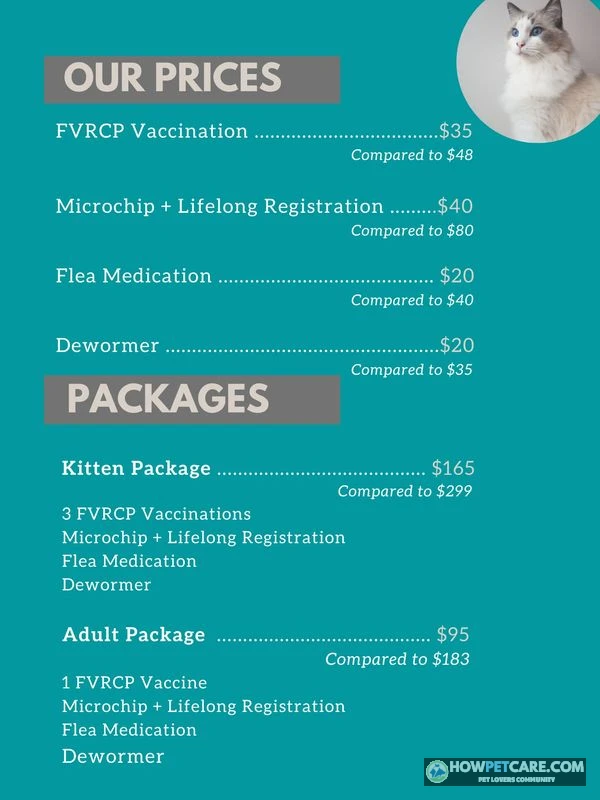

Every cat needs these core vaccines, plus risk-based additions depending on lifestyle:
- FVRCP (3‑in‑1) — core for all cats, indoor or outdoor; protects against herpesvirus, calicivirus, and panleukopenia.
- Rabies — core and legally required in most jurisdictions, often even for indoor‑only cats.
- FeLV — core for kittens through 12 months; then continue only if your adult cat has exposure to unfamiliar cats or the outdoors.
- Non‑core vaccines (Chlamydia felis, Bordetella) — reserved for high‑exposure settings like boarding, grooming, and shelters.
Which cat vaccinations does your cat actually need?
The short answer: every cat should receive the core 3‑in‑1 FVRCP vaccine, a rabies shot whenever state or local law requires it, and a feline leukemia virus (FeLV) vaccine at least through the first year of life. After the kitten period, FeLV moves to a risk‑based, non‑core recommendation for indoor‑only adults, while FVRCP remains core for all cats regardless of lifestyle.
Core vaccines: FVRCP and rabies
FVRCP protects against three of the most common and severe feline viral diseases: feline viral rhinotracheitis (herpesvirus), feline calicivirus, and feline panleukopenia (distemper). It is classified as a core vaccine, meaning it is recommended for every cat, indoor or outdoor, because the pathogens spread easily through airborne droplets, contaminated objects, and even a brief encounter with an infected stray.
Rabies is also a core vaccine, but its mandatory status is driven by law rather than pure medical necessity. All 50 states have rabies laws, and most municipalities require a licensed rabies certificate for cats that could potentially be exposed, which includes indoor cats that might escape, be boarded, or live in a home with wildlife like bats. The vaccine is given at the product’s licensed minimum age—usually 12 weeks—and then boosted according to the label (often 1 year, then every 1–3 years).

Why FeLV is core for kittens but risk‑based for adults
FeLV is a contagious retrovirus that can cause severe anemia, immunosuppression, and lymphoma. The 2020 AAHA/AAFP (now FelineVMA) consensus lists FeLV as a core vaccine for kittens and cats up to 12 months because young animals are most vulnerable and future exposure is impossible to predict. After the first year, the recommendation shifts to non‑core: an adult whose lifestyle includes contact with unknown‑status cats, outdoor access, or shelter work should stay protected, while a strictly indoor cat with no such exposure can safely forgo further FeLV doses.
Core vaccines protect every cat; non‑core vaccines are chosen based on exposure risk. Always discuss your cat’s lifestyle with the veterinarian before skipping a non‑core shot.
Core vs non‑core cat vaccines by age and exposure
| Vaccine | Diseases covered | Cats younger than 1 year | Low‑risk indoor adults | Adults with exposure risk | Legal or clinical caveat |
|---|---|---|---|---|---|
| FVRCP (3‑in‑1) | Herpesvirus, Calicivirus, Panleukopenia | Required (core) | Required (core) | Required (core) | None – recommended for all cats |
| Rabies | Rabies virus | Required where law mandates (often ≥12 wk) | May be legally required even if indoor | Required by law in most jurisdictions; exemptions vary | Municipal ordinances override indoor status |
| FeLV | Feline leukemia virus | Core – two‑dose series + 12‑mo booster | Usually non‑core – optional | Core for outdoor, shelter, multi‑cat homes | Risk‑based after 12 mo |
| Chlamydia felis | Conjunctivitis, respiratory disease | Non‑core – only if exposure to infected cats | Non‑core – rarely needed | Non‑core – boarding, catteries, shelters | Not part of routine schedule |
| Bordetella bronchiseptica | Upper respiratory infection | Non‑core – high‑risk environments | Non‑core – rare indoor need | Non‑core – boarding, grooming, multi‑cat facilities | Often given as intranasal |
Cat immunization schedule: kitten series through senior care
A clear, chronological timeline removes guesswork. Below is the complete schedule most U.S. practices follow, based on the AAHA/FelineVMA 2020 guidelines. Remember that maternal antibodies wane between 4 and 16 weeks, so multiple FVRCP doses are needed to bridge the gap.

Kitten vaccinations from 6 weeks through the first year
| Age or time since initial series | FVRCP | Rabies | FeLV | Timing and risk considerations |
|---|---|---|---|---|
| 6‑8 weeks | First dose | Not usually licensed yet | Not before 8 weeks | Begin FVRCP while maternal antibodies may still interfere; additional doses follow |
| 8 weeks | Continue on the 3‑4 week plan | Product‑ and law‑dependent; usually wait | Dose 1 after a negative FeLV test (if vaccination is planned) | FeLV is recommended for kittens because later exposure cannot be predicted |
| 10‑12 weeks | Next dose, 3‑4 weeks after the first | First dose if the selected product is licensed at 12 weeks and local rules allow | Dose 2, 3‑4 weeks after dose 1 | Ask the clinic which rabies product is used and when its certificate becomes valid |
| 14‑16 weeks | Next dose; continue until the final kitten dose is given at 16 weeks or older | Give if not already given and the cat meets the product’s minimum age | Complete the two‑dose starter series if timing began later | A dose given only at 14 weeks may be too early to close the maternal‑antibody gap |
| 16‑20 weeks, when higher risk | Final kitten dose if needed, especially for shelter, foster, outdoor, or outbreak exposure | As required by product label and local law | No extra dose routinely after the two‑dose starter series | Higher‑risk kittens may receive FVRCP through 20 weeks; the veterinarian sets the final timing. |
| About 6 months | Discuss an FVRCP revaccination; 2020 guidelines say this may be considered | No routine extra dose unless the label or law requires it | No routine extra dose | This optional FVRCP checkpoint is not the same as every vaccine having a 6‑month booster. |
| 12 months after the initial series | Booster, then commonly every 3 years for low‑risk adults using an appropriate product | Booster timing follows the rabies label and local law | Booster if ongoing protection is appropriate | Reassess FeLV based on contact with cats of unknown or positive status, escape risk, and outdoor access. |
| Adult and senior care | Often every 3 years for low‑risk cats after the booster; individual plan applies | Follow the rabies certificate, product label, and jurisdiction | Continue only while exposure risk justifies it; interval follows the product label | Senior age alone is not a reason to stop; health status and exposure determine the plan. |
Adult booster shots, overdue doses, and senior cats
- FVRCP – For low‑risk adults, the next dose is at 3 years after the 12‑month booster; high‑risk cats (e.g., multi‑cat households) may stay on a 1‑year interval.
- Rabies – Must follow the label (often 1 year, 3 years, or 5 years) and any local ordinance. Even indoor cats need the certificate if the law applies.
- FeLV – If the cat remains at risk, give a booster 12 months after the previous dose; otherwise, no further shots are needed.
- Senior cats – Immunosenescence can lower vaccine response. Discuss serologic testing for panleukopenia or a tailored schedule with the vet; do not skip core vaccines solely because the cat is “old.”

Print the table above and keep it on the fridge. Mark the due dates with a calendar reminder a week before each appointment.
Cat vaccine side effects: what is normal and what is urgent?
Most cats bounce back within a day or two. Knowing the difference prevents panic and ensures prompt care when truly needed.
Expected effects during the first 24–48 hours
- Mild lethargy – A sleepy cat is common and usually resolves within 24 hours.
- Reduced appetite – May last a few meals; encourage with favorite treats.
- Localized soreness – The injection site can feel a bit tender; a gentle massage is fine but avoid aggressive rubbing.
- Low‑grade fever – Body temperature may rise slightly; monitor for >103 °F lasting more than 24 hours.
Symptoms that require immediate veterinary care
Call the clinic right away if any of the following appear within minutes to a few hours after a shot:
- Facial swelling or rapid swelling of the injection area.
- Difficulty breathing, wheezing, or choking sounds. These may signal an anaphylactic reaction.
- Collapse, limp, or inability to stand.
- Persistent vomiting or diarrhea lasting more than 12 hours.
- Severe pain that makes the cat vocalize constantly.

If the cat shows worsening or persistent symptoms after the initial 24‑hour window—such as not eating for >24 hours, continuous lethargy, or a growing lump—contact the vet for a re‑evaluation.
Never give ibuprofen, acetaminophen, or other over‑the‑counter pain relievers to a cat without veterinary direction. These drugs are toxic to felines.
Indoor‑only cats: rabies laws versus actual exposure risk
Many owners wonder whether a cat that never leaves the house can skip the rabies shot. The answer blends legal reality with medical judgment.
When local rabies requirements override indoor lifestyle
- Statutory mandates – Every state has rabies laws, and most municipalities add their own ordinances. Where a cat vaccination requirement applies, it generally covers all cats, regardless of indoor status, unless a formal medical exemption is granted.
- Medical exemptions – Some states allow a veterinarian‑signed exemption for cats with severe allergic histories, but the paperwork must comply with local regulations; it is not a simple “I don’t want the shot.”
- Real‑world exposure routes – Even indoor cats can encounter rabies through escaped outings, a bat entering a window, or during boarding/grooming where they share space with other animals. These low‑probability events still satisfy legal definitions of “potential exposure.” In mixed-species facilities, you can also ask how dog illnesses are handled, including each site’s canine flu shot policy.
When an indoor adult may still need FeLV protection
- No contact with unknown cats – If the cat lives alone, never goes outside, and you never introduce new cats, the risk of FeLV is negligible. In that case, after the initial kitten series and 12‑month booster, you can safely stop FeLV vaccinations.
- Changes in lifestyle – Adding a new kitten, using a cattery, or allowing occasional outdoor “catio” time re‑opens the exposure window. Discuss a FeLV booster with the vet before the change. A puppy in the same home should follow a separate puppy vaccination schedule, not the cat chart.
- Shelter or rescue work – Even occasional volunteer work at a shelter warrants continued FeLV protection.
Visit your city or county website (or call the health department) to confirm whether indoor‑only cats are exempt from rabies vaccination in your area.
Indoor Cat Risk Matrix: decide what to discuss at the visit
| Exposure question | Mark one | What it means for the vaccine discussion |
|---|---|---|
| Is your cat fully indoors, with no patio or balcony access? | Yes / No | FVRCP remains recommended. Rabies may still be legally required. |
| Does your cat use a screened patio, catio, or open‑window area? | No / Screened and secure / Screened but escape is possible | A truly secure enclosure is lower risk, but any escape potential raises rabies considerations. |
| Has your cat escaped, slipped through doors, or been difficult to contain in the last year? | No / Once / More than once | Escape history raises the value of rabies compliance and may change FeLV risk discussions. |
| Does your cat meet unfamiliar cats through boarding, fostering, rescue work, grooming, or new household cats? | No / Known tested cats only / Untested or unknown‑status cats | Unknown‑status contact is a key reason to revisit FeLV vaccination for adults. |
| Will a kitten or young cat enter the household this year? | No / Yes | Test and introduce new cats carefully; ask whether FeLV protection is appropriate for each cat. |
| Are bats or other wildlife ever found inside the home? | No / Yes / Unsure | Treat this as a rabies‑law and exposure‑planning question, even for an indoor cat. |
Read your marks
- Low exposure – Fully indoors, secure home, no unfamiliar‑cat contact, no escape history. Discuss FVRCP and legally required rabies; ongoing adult FeLV is usually not needed after the initial series.
- Changing exposure – Secure indoor life but a planned new cat, boarding, or a catio. Keep FVRCP current, verify rabies requirements, and ask for a specific FeLV recommendation before the exposure begins.
- Meaningful exposure – Repeated escape, outdoor access, or contact with untested cats. Discuss FVRCP, rabies compliance, FeLV testing, and continuing FeLV vaccination on the product’s labeled interval.
Cat vaccination cost: shots, exam fees, and realistic totals
Many clinics list a “vaccine price” of $25‑$40, but that figure rarely includes the mandatory wellness exam, administration supplies, and possible testing. Below is a transparent budgeting framework for 2026 U.S. pricing.
Per‑shot prices versus the full vet‑visit bill
| Vaccine, service, or package | Estimated USD range | Billing unit or dose count | Included services | Additional fees or exclusions | Example total and assumptions |
|---|---|---|---|---|---|
| Private veterinary clinic: FVRCP | $20‑$50 | Per dose | Vaccine only | May add $5‑$10 for administration and waste disposal | – |
| Private veterinary clinic: rabies | $20‑$50 | Per dose | Vaccine only | Certificate fee ($10‑$20) and exam may be required | – |
| Private veterinary clinic: FeLV | $20‑$50 | Per dose | Vaccine only | FeLV/FIV testing ($30‑$45) often required before vaccination | – |
| Private veterinary clinic: wellness exam | $50‑$90 | Per appointment | Physical exam, basic vitals | Required for most vaccine visits; some clinics charge separately for labs | – |
| Private clinic example: adult FVRCP + rabies visit | $90‑$190 before testing or extra fees | 2 vaccines + 1 exam | Two vaccines plus one exam | Add any lab or certificate fees | Low end: $20 + $20 + 50 =90. High end: $50 + $50 + 90 =190. |
| Nonprofit or municipal vaccine clinic | $15‑$35 per vaccine; packages vary | Per vaccine or package | Often no exam fee; veterinarian on‑site for oversight | May require proof of residence or low‑income status | Example two‑vaccine event: $30‑$70 if FVRCP and rabies are $15‑$35 each and no exam is charged. |
| Kitten series at a private clinic | $250‑$650+ before testing, parasite care, or spay/neuter | Multiple doses across 3‑4 visits | All FVRCP doses, rabies, two FeLV doses, repeat exams | Excludes FeLV/FIV testing, deworming, spay/neuter | Example: 4 × FVRCP + 1 × rabies + 2 × FeLV at $20‑$50 each = $180‑$350; 3‑4 exams at $50‑$90 each = $150‑$360; total $330‑$710 before additional services. |
| Advertised kitten package | Varies | One package, sometimes split across visits | May include every vaccine, exam, and testing | Verify exactly which doses, exams, and certificates are covered | A $180 package is not comparable to a $250 package unless both include the same vaccines, dose counts, and exams. |

First‑year kitten packages and affordable vaccination options
- Private‑clinic bundles – Often advertised as “kitten starter” packages (e.g., $199 for FVRCP × 3 + rabies + FeLV + exam). Scrutinize the fine print: does the price include the exam fee, FeLV testing, and the final booster at 12 months? If any component is omitted, the out‑of‑pocket cost will rise.
- Non‑profit clinics – Animal shelters, humane societies, and veterinary schools frequently run low‑cost vaccination days where the vaccine is $15‑$25 and the exam is waived. Eligibility may be limited to residents of the county or owners with proof of income.
- Pet insurance – Some plans reimburse preventive care, including vaccines. Check the policy’s “wellness” rider and the deductible.
- Pharmacy‑based veterinarians – Emerging tele‑vet services can prescribe vaccines that you purchase at a pharmacy and have administered by a licensed vet during a brief office visit. Costs can be lower, but ensure the provider follows state law for rabies certification.

Ask the clinic to give you an itemized estimate before the appointment. A written quote that lists each vaccine, exam, and any ancillary fees protects you from surprise charges.
The 3:2:1 rule for post‑vaccine lumps
Injection‑site sarcoma (FISS) is a rare soft‑tissue tumor linked to certain injectable agents, including some vaccines. While the overall risk is low, owners should monitor injection sites for abnormal lumps.
Three thresholds that warrant veterinary assessment
- 3 months – If a mass is still present three months after injection, it must be examined.
- 2 cm – Any lump that measures larger than two centimeters in diameter should be evaluated.
- 1 month growth – If the lump is still increasing in size one month after the shot, call the vet.
- Any pain, ulceration, rapid change, or systemic illness – Seek care sooner, regardless of the 3:2:1 thresholds.
These criteria prompt a biopsy or advanced imaging, not a definitive cancer diagnosis. Early veterinary assessment improves treatment options.
Why injection location and records matter
Veterinarians now often place vaccines distally (e.g., on the hind limb) rather than the interscapular region. If a tumor does develop, a distal location can make surgical removal less invasive and may preserve more healthy tissue. Record the exact site, date, and vaccine name in a notebook or on a pet‑care app.
3:2:1 lump log: measure, photograph, call
- ☐ Write down the injection date, vaccine name if known, and injection location before leaving the clinic.
- ☐ If you notice a lump, take one dated photo with a ruler beside it; record the widest measurement in centimeters.
- ☐ Recheck visually about once a week. Do not squeeze, massage, or repeatedly poke the area.
- ☐ Call the veterinarian for assessment if any one 3:2:1 trigger applies: the lump is still present 3 months after the injection; it is larger than 2 cm across; or it is still getting larger 1 month after the injection.
- ☐ Call sooner rather than waiting for 3:2:1 if the area is painful, hot, ulcerated, rapidly enlarging, or your cat seems unwell.
- ☐ Use this note when you call: "My cat received an injection on [date] at [location]. The lump is [measurement] cm today. It has [shrunk/stayed the same/grown] since [date]. I have dated photos."

Your next vaccine visit: preparation and take‑home checklist
Preparing in advance reduces stress for both you and your cat and ensures you get the most value from the appointment.
What to bring
- Vaccination records – Include dates, vaccine names, and any prior reaction notes.
- Health history – Recent illnesses, medications, allergies, and any upcoming travel or boarding plans.
- Lifestyle summary – Indoor‑only, occasional outdoor, catio access, recent escapes, contact with other cats, bat sightings, etc.
How to prep your kitten or cat for the appointment
- Use a secure carrier with a familiar blanket.
- Keep the carrier covered to reduce visual stress.
- Offer a small treat before the ride; avoid feeding a large meal right before the visit.
- Ask the clinic whether fasting is required – most vaccinations do not need an empty stomach.
Conversation points for the vet
- “Which vaccines are due today, and are any legally required?”
- “Do we need a FeLV test before giving the FeLV vaccine?”
- “Can you provide an itemized estimate for today’s services?”
- “What is the best injection site to reduce FISS risk for my cat?”
- “When should I schedule the next booster or check‑up?”
After‑visit take‑aways
- Vaccine names, dates, and sites – Write them in a notebook or pet‑care app.
- Rabies certificate – Keep a copy for travel, boarding, or municipal records.
- Next‑due dates – Mark them on a digital calendar with reminders 2 weeks ahead.
- After‑hours contact – Note the clinic’s emergency phone number in case of an adverse reaction.

Ongoing care
Even in years when no vaccine is due, continue regular wellness exams, dental care, and parasite prevention. Vaccines are one piece of a comprehensive health plan; staying on top of routine check‑ups keeps you ahead of any emerging health issues. For dogs in the household, keep a separate dog DHPP booster schedule rather than combining reminders.

-
Gather records
Print or download the most recent vaccination chart and bring it to the appointment.
-
Ask about costs
Request an itemized quote that separates vaccine price, exam fee, and any ancillary fees.
-
Confirm injection sites
Clarify with the vet whether they will use distal limbs to minimize FISS risk.
-
Set reminders
Enter the next vaccine due dates into your phone calendar with alerts.

| Vaccine | Diseases covered | Cats younger than 1 year | Low‑risk indoor adults | Adults with exposure risk | Legal or clinical caveat |
|---|---|---|---|---|---|
| FVRCP (3‑in‑1) | Herpesvirus, Calicivirus, Panleukopenia | Core (required) | Core (required) | Core (required) | None – recommended for all cats |
| Rabies | Rabies virus | Core where law mandates (often ge12 wk) | Core where legally required (even if indoor) | Core (required by law in most jurisdictions; exemptions vary) | Municipal ordinances override indoor status |
| FeLV | Feline leukemia virus | Core (two‑dose series + 12‑mo booster) | Non‑core (optional) | Core for outdoor, shelter, multi‑cat homes | Risk‑based after 12 mo |
| Chlamydia felis | Conjunctivitis, respiratory disease | Non‑core (only if exposure to infected cats) | Non‑core (rarely needed) | Non‑core (boarding, catteries, shelters) | Not part of routine schedule |
| Bordetella bronchiseptica | Upper respiratory infection | Non‑core (high‑risk environments) | Non‑core (rare indoor need) | Non‑core (boarding, grooming, multi‑cat facilities) | Often given as intranasal |
FAQ
Can a cat receive multiple vaccines at the same appointment?
Many healthy cats can receive more than one indicated vaccine during a visit, administered at separate documented sites. Your veterinarian may adjust the plan for a cat with previous reactions or other health concerns.
Can my cat get vaccinated while sick?
Tell the veterinarian about any symptoms before the appointment. They will assess whether to vaccinate or postpone based on the illness, the cat’s overall health, and exposure risk.
Can vaccine antibody tests replace cat booster shots?
Antibody testing can help assess protection against feline panleukopenia in selected situations, but it is not an equally reliable substitute for every feline vaccine. Rabies antibody results generally do not replace legally required vaccination.
Are cats protected immediately after vaccination?
No. Protection takes time to develop and may require completion of an initial vaccine series; ask your veterinarian when your cat can safely enter higher-exposure settings.
Is a cat vaccination schedule the same as a dog’s?
No. Some appointment ages may overlap, but cats and dogs need different disease protection and species-specific vaccine products, so a puppy schedule should not be used for a kitten.