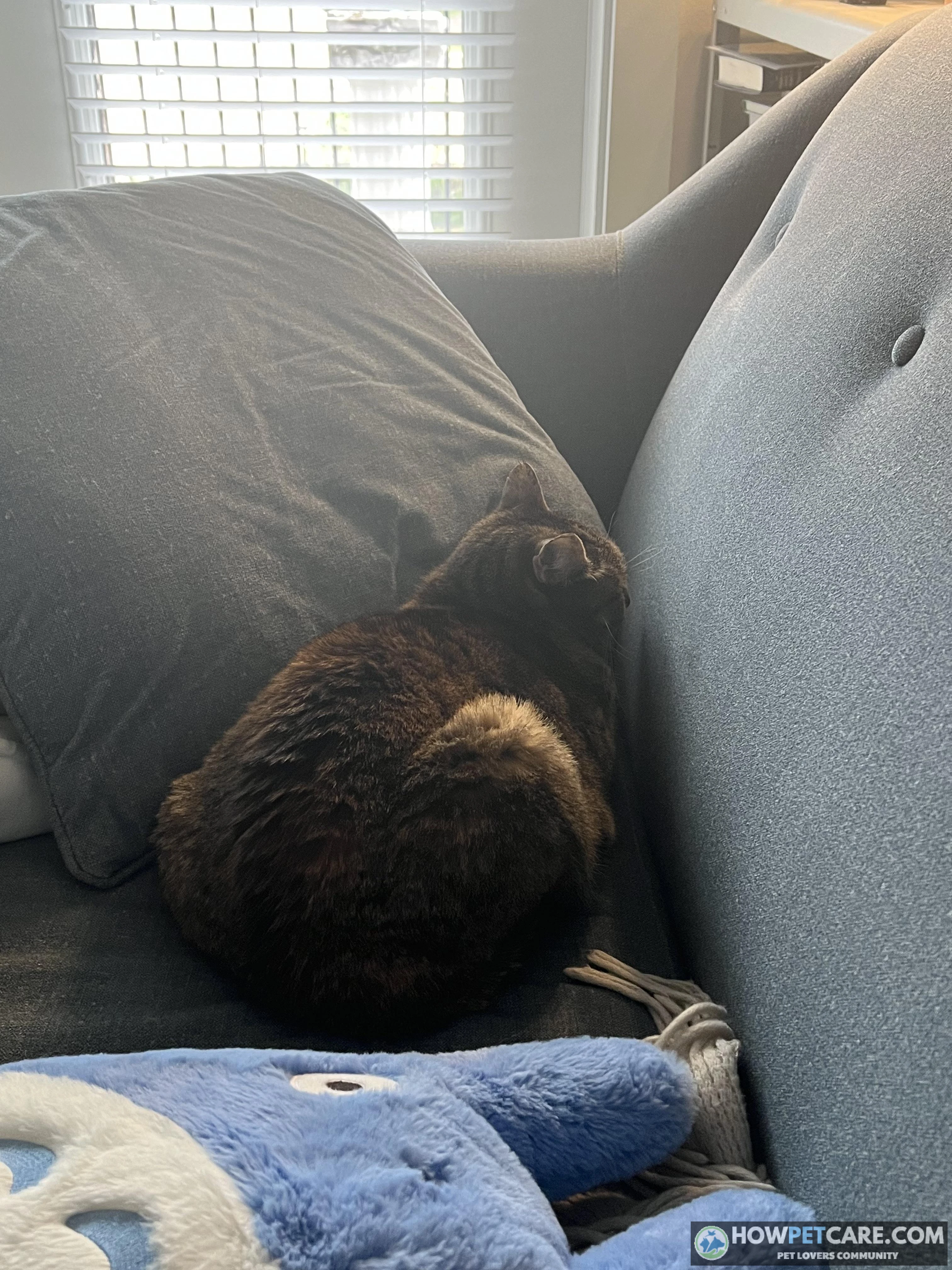

A cat loaf usually means your cat is resting comfortably, conserving warmth, or staying mildly alert with its paws tucked beneath its body. Look for soft eyes, relaxed muscles, quiet breathing, and normal habits. A rigid or hunched loaf with hiding, poor appetite, limping, or breathing changes needs veterinary attention.
Cat Loaf Meaning: Usually Comfort, Sometimes a Health Clue
A cat loaf is a sitting position where a cat tucks its paws—and often its tail and lower legs—beneath its body, creating the rounded shape of a loaf of bread. Cats often use this posture to rest, conserve body heat, protect their paws, and remain mildly alert while feeling safe.
If your cat loafs with relaxed muscles, soft or partly closed eyes, neutral ears, quiet breathing, and normal eating, grooming, movement, and litter-box habits, the position is usually a sign of comfort. Still, a cat loaf position alone can’t confirm that a cat is happy or healthy. A tense body, lowered head, guarded abdomen, hiding, or other sudden behavior changes may point to discomfort and warrant veterinary advice.

This article explains cat loaf behavior, but it isn’t a medical diagnosis. Posture is one cat health sign and should be considered alongside your cat’s usual behavior.
Are Cats Happy When They Are Loafing?
Often, yes—but “often” matters. A relaxed loaf can suggest comfort, trust, and a sense of safety at home. It also allows a cat to rest while staying somewhat ready to react to movement or a perceived threat. A cat loafing beside you while you work may simply feel secure enough to rest nearby while keeping an eye on the room.
Why the Position Is Called a Cat Loaf
The rounded back and broad body resemble a loaf of bread, while the hidden paws appear tucked beneath it. “Cat loaf,” “loafing cat,” and “meatloaf” are informal terms used by owners and online communities, not standardized veterinary diagnoses.
A useful rule of thumb: a soft loaf paired with normal daily behavior is usually reassuring; a rigid loaf with new symptoms calls for a closer look.
How Cats Tuck Their Paws Without Straining Their Joints
The Joints Involved in the Tuck
During a normal cat loaf, the shoulder, elbow, wrist, hip, knee, and ankle joints flex, folding the limbs close to the torso. Cats also have mobile shoulder blades and compact limb proportions, which let the front paws and hind legs rest under or alongside the body.

Weight is spread across the chest, abdomen, folded limbs, and resting surface rather than focused on the paws. For a healthy cat, this is a normal sitting position, not an extreme stretch.
What Smooth Entry and Exit Look Like
A comfortable cat can settle into a loaf without obvious hesitation and get out of it smoothly when food, play, or movement catches its interest. Stiffness, repeated repositioning, favoring one limb, or reluctance to stand may indicate discomfort. Those signs don’t identify a specific disease, but they support having a veterinary conversation, especially for a senior cat.
A balanced loaf differs from a guarded crouch. In a guarded posture, the abdomen may look compressed, the head may hang low, and the cat may hold its muscles ready to move instead of resting evenly.
Relaxed Cat Loaf vs Pain-Related Loafing
Cats can mask pain, so compare the posture with your own cat’s normal baseline instead of judging a single photograph. A change in loafing frequency combined with unusual behavior may be linked to pain or illness, including joint, digestive, respiratory, or injury-related problems. Contact a veterinarian promptly for a new persistent hunched posture or accompanying signs such as reduced appetite, limping, stiffness, hiding, or difficulty standing. Seek emergency care now for open-mouth or labored breathing, collapse, severe weakness, pale or blue gums, or inability to urinate.
Visual Checklist for a Comfortable Loaf
| Feature | Relaxed loaf | Possible pain-related posture | Recommended response |
|---|---|---|---|
| Body | Soft, rounded, balanced | Rigid, tightly compressed, or hunched | Compare with the usual posture |
| Ears and eyes | Neutral ears; soft, partly closed eyes | Flattened ears; narrowed, tense, or staring eyes | Watch for changes in behavior |
| Breathing | Even and quiet | Guarded, shallow, uneven, or labored | Contact a veterinarian if abnormal |
| Head and abdomen | Head comfortably raised; abdomen not guarded | Head lowered; abdomen appears protected | Arrange veterinary advice if persistent |
| Activity | Normal eating, grooming, mobility, and litter-box use | Hiding, limping, stiffness, poor appetite, or withdrawal | Call a veterinarian for a new pattern |
| Touch and movement | Shifts or stands comfortably | Flinches, tenses, resists touch, or struggles to rise | Do not force movement; seek guidance |

Signs of a Hunched or Pain-Masking Posture
A relaxed full loaf usually appears rounded and settled. A “meatloaf” or sick-hunched posture may look rigid, with a lowered head, pinned-back ears, tightly held tail, elbows held away from the body, or little interest in the surroundings. Repeated repositioning, refusing gentle interaction, or staying withdrawn can also be concerning.
The key distinction isn’t the name of the pose. It’s the combination of posture, facial expression, breathing, movement, and daily habits.
Temperature, Loafing Duration, and What the Evidence Can Tell Us
Tucking the paws reduces exposed body surface and may help limit heat loss, making loafing one possible thermoregulatory behavior. No reliable evidence, however, establishes a single room temperature at which every cat starts loafing. Coat thickness, body size, age, health, humidity, airflow, bedding, and personal preference all play a role.
Is There an Exact Temperature That Triggers Loafing?
There is no validated cat-loaf temperature cutoff. Treat household temperature as context, not a diagnostic test.
| Environmental context | Possible cat behavior | Other signs to check | Owner action |
|---|---|---|---|
| Cool room without a warm resting spot | Tucked loaf; seeking blankets or laps | Cold ears or paws, shivering, reluctance to move | Offer a warm, padded, draft-free area |
| Comfortable room temperature | Relaxed loaf with soft eyes | Normal eating, grooming, play, and litter-box use | Continue routine monitoring |
| Warm room or sunny spot | Looser loaf, visible paws, or stretching | Panting, restlessness, or avoiding heat | Provide shade, airflow, water, and a cooler area |
| Sudden temperature change | Brief alert loaf while assessing the room | Startle response or hiding | Keep changes gradual and offer familiar bedding |
| Any temperature with other symptoms | Loafing plus stiffness, hiding, or poor appetite | Breathing changes or difficulty standing | Contact a veterinarian if signs persist or worsen |
For example, a cat loafing at about 68°F for 20 minutes with half-closed eyes, even breathing, and normal movement afterward may be resting comfortably or conserving mild warmth. A cat loafing at about 75°F with a lowered head, flattened ears, tucked tail, and little interest in food deserves closer attention. These examples aren’t universal rules.

How Long Do Cats Typically Loaf?
There is no reliable published average for how many minutes per session or hours per day cats spend loafing. A cat may loaf briefly while watching household activity or stay tucked through part of a nap. Duration matters most when it differs from the cat’s normal pattern or occurs with stiffness, hiding, poor appetite, or difficulty standing.
Cat Loaf Variants and Similar Positions
Full, Partial, and Alert Loaves
In a full loaf, all paws are hidden. In a partial loaf, one or both front paws remain visible. An alert loaf has a raised head and focused attention. “Face loaf,” “loaf boat,” and similar names are descriptive labels, not clinical categories. There are no robust data showing how common each variant is among house cats.
| Position | Paw and leg placement | Typical body language | Potential concern |
|---|---|---|---|
| Full loaf | All paws tucked beneath the body | Rounded, soft, quiet breathing | Usually low concern if normal for the cat |
| Partial loaf | One or more paws visible | Relaxed or ready to move | Check for limping or protection of one limb |
| Alert loaf | Paws tucked; head raised | Focused eyes and responsive ears | Usually normal during observation |
| Sphinx pose | Front paws extended and visible | Upright, relaxed front end | Not a loaf; concern depends on symptoms |
| Sploot | Hind legs extended behind or beside the body | Stretched hips and open rear legs | Seek advice if movement appears painful |
| Sick hunch or meatloaf | Limbs guarded; head lowered | Rigid, withdrawn, tense, or abnormal breathing | Contact a veterinarian if new or persistent |

How Age, Breed, and Home Life Affect Cat Loafing
Kittens, Adults, and Senior Cats
Kittens may change positions often as they explore and rest. Adults may loaf while calmly watching the household. Senior cats may have reduced flexibility, arthritis, muscle loss, or another chronic condition; they may loaf asymmetrically, leave paws exposed, reposition frequently, or avoid the posture. Log a new change rather than dismissing it as aging.
Breed and Body-Type Differences
There isn’t enough evidence to say that one breed loafs more often than another. Coat thickness, limb length, body shape, age, weight, and joint health can affect how compact a loaf appears. Broad-chested, short-legged, very large, or overweight cats may form a less symmetrical loaf without that variation automatically being abnormal.
Loafing in Multi-Pet and Work-From-Home Households
A cat loafing near a person may feel safe, but a cat in a multi-pet home may stay more alert when another animal is nearby. Watch the ears, head position, and ability to settle. A relaxed cat can rest in an exposed shared room; a tense cat may loaf while tracking another pet’s movements.

When a Loafing Cat Needs Veterinary Care
Observe at Home
Monitor a cat that looks relaxed, rises normally, and continues eating, drinking, grooming, playing, and using the litter box as usual. Record the time, location, room temperature, posture, breathing, and any changes from baseline. A short video of walking and breathing can help a veterinarian understand the pattern.
Call Your Veterinarian
Contact your veterinarian promptly if your cat develops a new persistent hunched posture, reduced appetite, vomiting, diarrhea, limping, stiffness, hiding, vocalizing, grooming changes, altered urination, repeated repositioning, or difficulty standing. These signs can have many causes, and posture alone can’t diagnose one.
Provide a warm, padded, accessible resting area, but don’t force the cat out of its position. Do not give human pain medication.
Seek Emergency Care Now
Seek immediate veterinary care for open-mouth or labored breathing, collapse, severe weakness, pale or blue gums, suspected toxin exposure, repeated unproductive litter-box straining, or inability to urinate.
Use this three-level decision framework: relaxed and otherwise normal means observe; a persistent posture change plus mild symptoms means call your veterinarian; breathing, urinary, neurological, or collapse signs mean seek emergency care now.
Observe, log, act: note when the posture began, record representative sessions, check eating and litter-box habits, and save a short movement video. That context is more useful than trying to diagnose a cat loaf from a single image.

| Posture Variant | Paw and Leg Placement | Typical Body Language | Environmental Context | Health and Pain Indicators | Recommended Action |
|---|---|---|---|---|---|
| Full loaf | All paws tucked beneath the body | Rounded, soft, quiet breathing | Not in source | Low concern if normal for the cat | Not in source |
| Tucked loaf | Tucked loaf | Seeking blankets or laps | Cool room without a warm resting spot | Cold ears or paws, shivering, reluctance to move | Offer a warm, padded, draft-free area |
| Looser loaf | Visible paws, or stretching | Panting, restlessness | Warm room or sunny spot | Panting, restlessness, or avoiding heat | Provide shade, airflow, water, and a cooler area |
| Partial loaf | One or more paws visible | Relaxed or ready to move | Not in source | Check for limping or protection of one limb | Not in source |
| Alert loaf | Paws tucked; head raised | Focused eyes and responsive ears | Not in source | Usually normal during observation | Not in source |
| Relaxed loaf | Not in source | Soft eyes | Comfortable room temperature | Normal eating, grooming, play, and litter-box use | Continue routine monitoring |
| Brief alert loaf | Not in source | Assessing the room | Sudden temperature change | Startle response or hiding | Keep changes gradual and offer familiar bedding |
| Sphinx pose | Front paws extended and visible | Upright, relaxed front end | Not in source | Not a loaf; concern depends on symptoms | Not in source |
| Sploot | Hind legs extended behind or beside the body | Stretched hips and open rear legs | Not in source | Movement appears painful | Seek advice if movement appears painful |
| Sick hunch or meatloaf | Limbs guarded; head lowered | Rigid, withdrawn, tense, or abnormal breathing | Not in source | New or persistent rigid/withdrawn posture, abnormal breathing | Contact a veterinarian if new or persistent |
| Loafing with symptoms | Not in source | Not in source | Any temperature with other symptoms | Stiffness, hiding, poor appetite, breathing changes or difficulty standing | Contact a veterinarian if signs persist or worsen |
FAQ
What do you call a cat loaf?
It is commonly called a cat loaf or loafing. Terms such as full loaf, partial loaf, and alert loaf are informal descriptions rather than veterinary classifications.
Why does my cat loaf next to me?
A cat that loafs near you may feel safe enough to rest while remaining aware of its surroundings. Confirm that interpretation by looking for soft eyes, relaxed muscles, normal breathing, and usual social behavior.
Why does my cat loaf with one paw sticking out?
A visible paw often reflects personal preference, surface comfort, temperature, or readiness to move. It becomes more concerning if the cat consistently protects one limb, limps, or reacts painfully when moving.
Can a sleeping cat stay in the loaf position?
Yes. Cats may doze in a loaf, although deeper sleep often leads them to curl up or lie on their side as their muscles relax further.