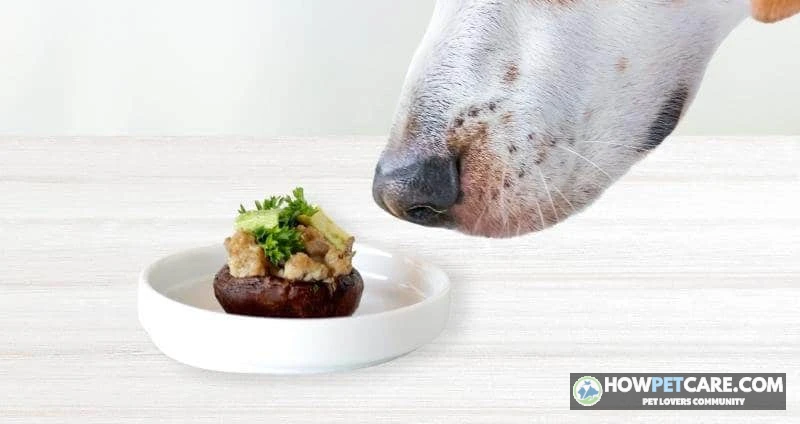

Plain cooked store-bought mushrooms such as white button or portobello are generally safe for most adult dogs in small, portion-controlled amounts. Wild, yard, or unknown mushrooms can be highly toxic and should never be fed. If your dog eats an unidentified mushroom, contact your veterinarian or poison helpline immediately and go to emergency care without waiting for symptoms.
Plain cooked store-bought mushrooms are generally safe for most adult dogs in small amounts, but wild mushrooms, yard mushrooms, and any unknown mushroom should be treated as potentially toxic until a veterinarian says otherwise. This guide covers a fast verdict, weight-based portion limits in grams, a form-by-form safety matrix, and an emergency checklist for dogs that have eaten mushrooms.
Can Dogs Eat Mushrooms? The Quick Verdict

Plain cooked store-bought mushrooms are safe for most dogs in small portions, but the risk depends entirely on the mushroom type and how it was prepared. Store-bought edible varieties such as white button, portobello, and shiitake mushrooms carry lower risk when cooked and unseasoned. Wild mushrooms growing in yards, parks, or woods should be treated as dangerous, and dogs should never eat them.
Cooking makes store-bought mushrooms easier for a dog’s digestive system to handle, but it does not destroy all mushroom toxins. Cooking a wild or unknown mushroom does not make it safe. Puppies, small dogs, senior dogs, and dogs with health conditions need stricter limits and closer monitoring—smaller body weight means smaller amounts can cause bigger problems.
Safe mushrooms for dogs: what the verdict covers
This verdict applies to plain, cooked, store-bought edible mushrooms fed as an occasional treat. It does not apply to mushrooms cooked with garlic, onion, salt, butter, or oils; canned mushroom products; wild mushrooms; yard mushrooms; or unknown mushrooms found on walks. If you are not certain what mushroom your dog ate, treat it as toxic.
When mushrooms are never safe for dogs

Never feed your dog wild mushrooms, yard mushrooms, or mushrooms you cannot identify. Do not feed raw mushrooms regularly, because chitin in raw cells is harder for dogs to digest and may cause stomach upset. Avoid any mushroom prepared with ingredients toxic to dogs, especially garlic and cooked onions for dogs. If you are also reviewing produce for pesticide residues, the dirty dozen foods list is a useful companion guide. Do not give human mushroom supplements to dogs without veterinary guidance.
Safe vs Toxic Mushrooms for Dogs: Store-Bought vs Wild

Edible mushrooms such as white button, portobello, and shiitake mushrooms are lower-risk store-bought options when plain and cooked. Toxic mushrooms include Amanita species and many wild varieties that cause mushroom poisoning in dogs. Mycotoxins and amatoxins can damage the liver, kidneys, and nervous system even in tiny amounts. Dogs do not have a natural instinct to avoid poisonous mushrooms in nature.
Common edible mushrooms and their risk profile
White button and portobello mushrooms are common store-bought varieties. Shiitake and maitake mushrooms are also sold for culinary use. These are considered edible for humans and are generally lower risk for dogs when cooked plain and fed in small amounts. However, lower risk does not mean risk-free; individual dogs can have sensitive stomachs or show allergic reaction signs such as itching, swelling, or digestive upset after eating even a safe mushroom.
Toxic wild mushrooms owners may encounter in the US

Use this as a caution guide, not a field identification tool. If you cannot positively identify a mushroom as a known edible species, treat it as toxic. Never rely on a photo alone to declare a wild mushroom safe.
- Death Cap (Amanita phalloides): pale greenish to yellowish cap, white gills, white stem with a ring and cup-like base; associated with severe liver and kidney damage.
- Destroying Angel (Amanita species): white cap, white gills, white stem, often with a ring and bulbous base; extremely dangerous.
- Fly Agaric (Amanita muscaria): red or orange cap with white spots, white gills, white stem; can cause nervous system signs.
- False Morel (Gyromitra species): brain-like, wrinkled, or saddle-shaped cap rather than a true honeycomb morel; can be toxic.
- Little Brown Mushrooms (LBMs): small brown caps in lawns or mulch; many species look alike and some are toxic.
Practical takeaway: photograph the mushroom, do not rely on color or size alone, and contact a veterinarian or poison helpline after any ingestion.
Why cooking changes safety but does not guarantee it
Cooking breaks down chitin, making mushrooms easier for a dog’s digestive system to process, and can reduce some heat-sensitive compounds. But cooking does not remove amatoxins from Death Cap mushrooms or other heat-stable poisons. A wild mushroom cooked in a pan is still potentially toxic to your dog.
 You might be wonderingCan dogs eat cucumbersCan Dogs Eat Cucumbers? Vet-Backed Portion Charts, Prep & Safety GuideRead the answer
How Many Grams of Mushrooms Can a Dog Eat by Body Weight
Treats including mushrooms should stay within roughly 10 percent of daily calories. Because dogs vary widely in size, a "small amount" means very different gram amounts for a Chihuahua and a Labrador. The chart below gives maximum cooked mushroom grams per treat occasion by dog weight category. Use these as upper limits, not targets, and start much smaller the first time.
| Dog weight category | Example weight range | Maximum cooked mushroom grams per treat occasion | Frequency guidance |
|---|---|---|---|
| Toy / small | Under 10 lb (4.5 kg) | 1-3 g | Occasional only, not weekly for sensitive dogs |
| Small | 10-25 lb (4.5-11.3 kg) | 3-8 g | Occasional treat, spaced by several days |
| Medium | 26-50 lb (11.8-22.7 kg) | 8-15 g | Occasional treat, 1-2 times per week at most |
| Large | 51-90 lb (23.1-40.8 kg) | 15-25 g | Occasional treat, 1-2 times per week at most |
| Extra-large | Over 90 lb (40.8 kg) | 25-40 g | Occasional treat, 1-2 times per week at most |

Notes: Use plain, cooked, unseasoned store-bought mushrooms only. Treats should stay near 10 percent of daily calories, so reduce the portion if other treats are given the same day. Start with a pea-sized piece the first time and watch for vomiting, diarrhea, itching, or lethargy.
How to calculate your dog’s personal mushroom limit
Find your dog’s weight category in the chart, then weigh the cooked mushrooms on a kitchen scale before feeding. Do not estimate by slice count, because mushroom pieces vary in density. If your dog receives other treats that day, subtract those calories from the mushroom allowance. Adjust down for puppies, senior dogs, and dogs with sensitive stomachs.
Signs your dog ate too many mushrooms
Watch for vomiting, diarrhea, drooling, belly pain, refusal to eat, or lethargy after a mushroom treat. These signs can appear with store-bought mushrooms if the portion is too large or your dog is sensitive. Stop feeding mushrooms and call your veterinarian if signs persist or worsen.
Mushroom Forms Safety Matrix: Raw, Cooked, Canned, Dried, Powdered, Supplements
Not all mushroom products are equal. Plain cooked fresh mushrooms are the safest form when fed in portion limits. Canned mushrooms often contain added salt, preservatives, or broth ingredients unsafe for dogs. Dried mushrooms concentrate compounds and may be harder to dose safely. Powdered mushroom supplements vary widely in quality and may include ingredients toxic to dogs.
| Mushroom form | Generally safe? | Key risks or concerns | Veterinary guidance recommended? |
|---|---|---|---|
| Plain cooked fresh store-bought | Lower risk in small portions | Overfeeding, seasoning residue, individual sensitivity | Ask if your dog has health conditions |
| Raw fresh store-bought | Not preferred | Harder digestion, stomach upset, possible bacterial contamination | Ask before feeding regularly |
| Canned | Usually avoid | Added salt, broth, garlic, onion, preservatives, oil | Yes, before feeding any canned product |
| Dried | Higher caution | Concentrated compounds, uneven rehydration, hard to dose | Yes, especially for wild or mixed blends |
| Powdered culinary mushroom | Case-by-case | Dose uncertainty, blends, added flavorings | Yes |
| Mushroom supplements for pets or humans | Not automatically safe | Variable quality, unverified claims, ingredients that may be unsafe for dogs | Always ask your veterinarian first |

Rule of thumb: plain cooked fresh mushrooms are the only routine form to consider, and only in portion limits.
Ingredients to avoid in mushroom products
Avoid garlic in dog food, onion, excess salt, butter, oils, wine, and mushroom soup or gravy mixes. These can turn an otherwise safe store-bought mushroom into a risky food for dogs. Read ingredient labels carefully before sharing any prepared mushroom dish.
Mushroom supplements for dogs: what to ask your vet
Some mushroom supplements are marketed for dogs, but quality and safety vary widely, and certain ingredients may not be appropriate for every dog. Speak with your veterinarian before giving any powdered or supplemental mushroom product. Do not give human mushroom supplements to dogs without professional guidance. Ask about fruiting-body versus mycelium sources, dosage for your dog’s weight, and any interactions with medications.
What to Do If Your Dog Eats a Wild or Unknown Mushroom
Act fast. Remove any remaining mushroom from your dog’s mouth and prevent further eating. Do not induce vomiting unless a veterinary professional specifically instructs you to. If safe, take a clear photo of the mushroom and collect a small sample in a paper bag or container without touching it directly. Call your veterinarian and a pet poison helpline immediately. Transport your dog to veterinary care without waiting for symptoms to appear, especially for small dogs or unknown mushrooms.

Emergency first-aid checklist for dog eating mushrooms
- Remove any remaining mushroom from your dog’s mouth and block access to more.
- Do not induce vomiting unless a veterinary professional specifically instructs you to.
- If safe, take a clear photo of the mushroom and collect a small sample in a paper bag or container without touching it directly.
- Call your veterinarian and a pet poison helpline immediately.
- ASPCA Animal Poison Control Center: (888) 426-4435.
- Pet Poison Helpline: (855) 764-7661.
- Have ready: your dog’s weight, age, health conditions, medications, mushroom photo or sample, time of ingestion, and amount eaten.
- Transport your dog to veterinary care without waiting for symptoms, especially for small dogs or unknown mushrooms.
- Bring the mushroom sample, packaging, or a photo in a sealed bag.
Poison helpline numbers to keep saved
Save these numbers in your phone today:
- ASPCA Animal Poison Control Center: (888) 426-4435
- Pet Poison Helpline: (855) 764-7661
- Your regular veterinarian’s office and nearest emergency veterinary clinic
Information to have ready for the vet
Be prepared to share your dog’s weight, age, breed, health conditions, current medications, the time of ingestion, the estimated amount eaten, and any photo or sample of the mushroom. This helps the veterinary team assess risk faster.
Small-Dog Emergency Triage: Toxic Dose Thresholds by Body Weight
Small dogs reach dangerous exposure levels with much smaller amounts than large dogs. There are no universally established safe toxic dose thresholds for most wild mushrooms in dogs, so avoid calculators or online charts that promise exact toxic doses by weight. Treat any wild mushroom ingestion by a small dog as higher risk and seek care sooner.
Why small dogs need different triage rules
A few grams of a toxic mushroom may cause mild stomach upset in a 70-pound dog but serious poisoning in a 6-pound dog. Toy and small breeds should be taken to veterinary care sooner after any suspected wild mushroom ingestion, even if they seem fine at first. Puppies also need faster triage because of their size and developing systems.
Symptoms that require immediate versus urgent care
Immediate or life-threatening signs include collapse, seizures, severe weakness, trouble breathing, and repeated vomiting with blood. Go to emergency veterinary care now. Early gastrointestinal signs such as vomiting, diarrhea, drooling, belly pain, and refusal to eat require a same-day call to the vet or poison helpline; do not wait for worsening. Neurologic signs such as tremors, wobbliness, confusion, unusual behavior, or excessive sleepiness need urgent veterinary evaluation. Delayed liver or kidney signs such as lethargy, increased thirst or urination, jaundice, and poor appetite may appear days later and require bloodwork and monitoring.

Fake specificity to avoid: exact toxic doses
No exact toxic dose is reliable for most wild mushrooms, so timing and symptoms matter more than a calculated threshold. Do not wait to see how many grams your dog ate before calling for help.
Mushroom Poisoning in Dogs: Diagnosis, Treatment, Prognosis, and Cost
If your dog is suspected of mushroom poisoning, veterinary diagnosis may include a physical exam, bloodwork, urinalysis, and toxin identification when possible. Treatment can include decontamination, IV fluids, liver support, and symptomatic care. Prognosis depends on mushroom type, amount, dog size, and how fast treatment begins. Long-term care may involve monitoring liver and kidney function after serious poisoning. Emergency veterinary treatment cost varies widely by region, severity, and hospitalization length.

What diagnosis and testing usually involve
The veterinarian will examine your dog, ask about the mushroom and timing, and may run bloodwork to check liver and kidney function. Urinalysis and toxin identification may be used if the mushroom can be identified or a sample is available. Bring any mushroom sample or photo to the clinic.
Common treatment pathways for mushroom poisoning
Treatment may involve inducing vomiting only under professional supervision, activated charcoal, IV fluids, medications to control vomiting or seizures, and liver-supportive therapies. Hospitalization may be needed for severe cases, especially those involving amatoxins from Death Cap mushrooms, which can cause irreversible liver damage in dogs.
Prognosis and long-term recovery outlook
Prognosis depends on the mushroom species, amount ingested, dog size, and how quickly treatment starts. Dogs treated early for gastrointestinal-only symptoms often recover well. Cases involving liver toxins have a more guarded prognosis, and some dogs need extended monitoring of liver and kidney values after discharge.
Emergency veterinary cost factors and estimates
Emergency veterinary treatment cost varies widely by region, severity, and hospitalization length. An exam and basic testing may cost a few hundred dollars, while intensive care with IV fluids, hospitalization, and liver support can run into the thousands. Ask for an estimate at triage and discuss payment options with the clinic.
Your Dog Mushroom Safety Decision Checklist
Use this checklist to decide whether a mushroom is safe and what to do after an exposure.
Store-bought mushroom feeding checklist
- Is the mushroom a plain cooked store-bought edible variety such as white button or portobello?
- Is it free of garlic, onion, salt, butter, oils, and seasonings?
- Is the portion within your dog’s weight-based gram limit from the chart above?
- Is this an occasional treat, not a daily food replacement?
- Have you watched for allergic reaction signs or digestive upset after the first tiny piece?
Wild mushroom emergency response checklist
- Treat any wild, yard, or unknown mushroom as toxic.
- Remove remaining mushroom from your dog’s mouth.
- Do not induce vomiting unless instructed by a veterinary professional.
- Photo or sample the mushroom if safe.
- Call your vet and a poison helpline immediately.
- Go to emergency veterinary care without waiting for symptoms.
Prevention habits for dogs and mushrooms
- Check your yard and walking routes regularly for mushrooms and remove them.
- Use a leave-it cue on walks to stop your dog from investigating fungi.
- Store cooked mushrooms and mushroom products out of reach.
- Keep poison helpline numbers saved in your phone.
Mushroom safety for dogs comes down to one rule: store-bought, plain, cooked, and portion-controlled can be an occasional treat; wild, unknown, seasoned, or raw should never be fed. When in doubt, call your veterinarian or a pet poison helpline before waiting to see what happens.
 You might be wonderingCan dogs eat peasCan Dogs Eat Peas? Vet-Approved Safe Prep & Portion LimitsRead the answer
FAQ
Can puppies eat mushrooms?
Puppies should generally avoid mushrooms because their smaller size and developing digestive systems make them more sensitive to stomach upset and potential toxins. If your veterinarian approves a tiny piece of plain cooked store-bought mushroom, treat it as an occasional snack only. Call your vet immediately if a puppy eats a wild or unknown mushroom.
Are cooked mushrooms bad for dogs?
Plain cooked store-bought mushrooms are usually safe for adult dogs in small, portion-controlled amounts. Cooked mushrooms become risky when prepared with garlic, onion, salt, butter, or oils, and wild cooked mushrooms are still potentially toxic. Never feed seasoned or wild cooked mushrooms to your dog.
Can dogs eat wild mushrooms in the yard?
No. Dogs should not eat wild mushrooms growing in the yard because many toxic mushrooms look similar to safe ones, and visual identification is unreliable for non-experts. Treat all yard and wild mushrooms as dangerous and contact your veterinarian if your dog eats one.
What are the symptoms of mushroom poisoning in dogs?
Symptoms can include vomiting, diarrhea, drooling, lethargy, yellowing of the eyes or gums, seizures, tremors, and coma, depending on the mushroom toxin involved. Some signs appear within hours, while liver damage from certain toxic mushrooms may show up later. Any suspected mushroom poisoning requires immediate veterinary care.
Can dogs eat store-bought mushrooms?
Yes, plain cooked store-bought mushrooms such as white button or portobello are generally safe for most adult dogs in small amounts. Avoid raw mushrooms, canned mushrooms with added salt, and any mushrooms cooked with toxic ingredients like garlic or onion. Introduce a tiny piece first to watch for allergic reaction signs or digestive upset.
Are mushroom supplements safe for dogs?
Some mushroom supplements are marketed for dogs, but quality and safety vary widely, and certain ingredients may not be appropriate for every dog. Speak with your veterinarian before giving any powdered or supplemental mushroom product. Do not give human mushroom supplements to dogs without professional guidance.