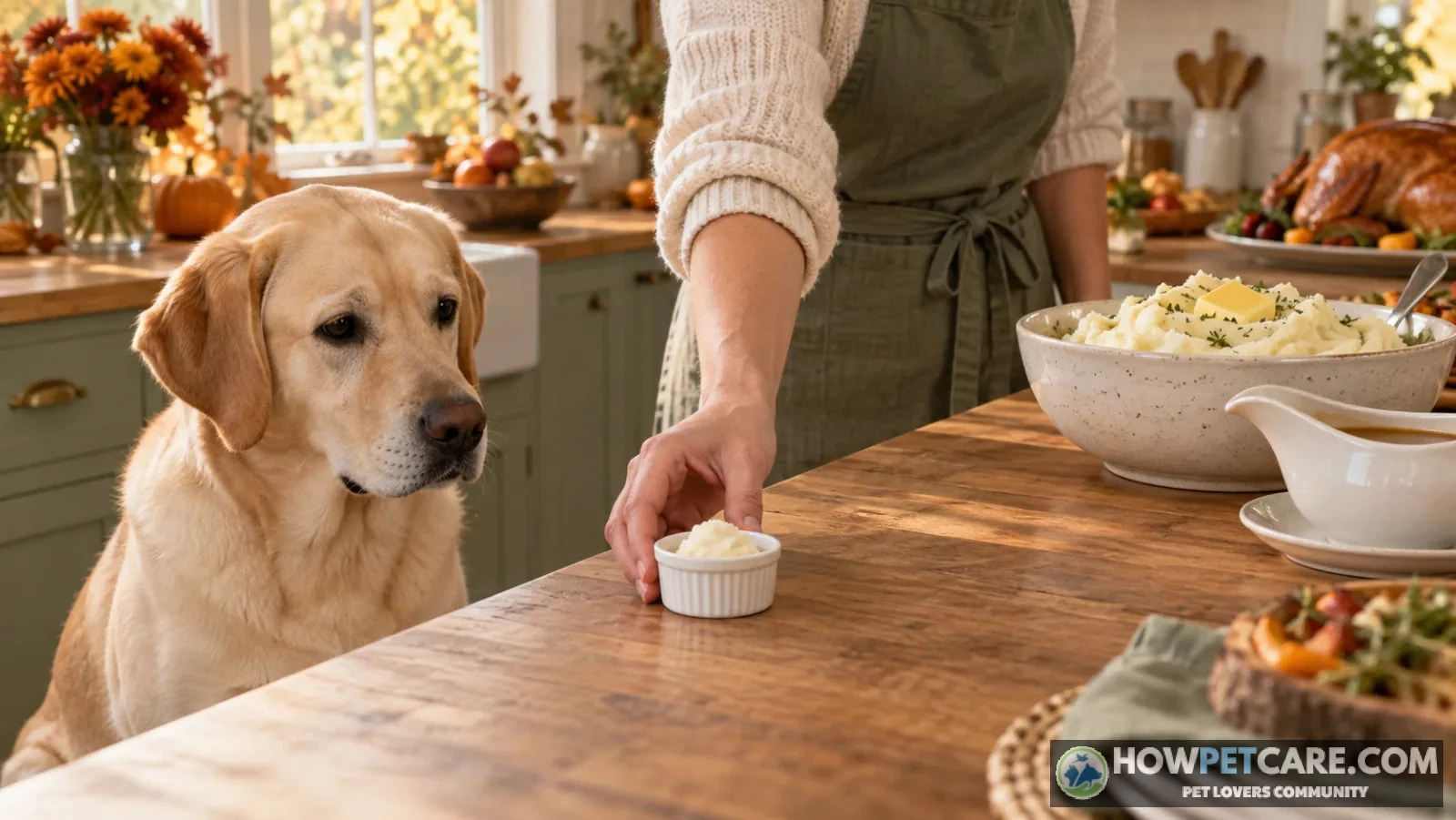

Healthy adult dogs can eat a small amount of plain, fully cooked mashed potato occasionally, provided it has no butter, milk, salt, gravy, garlic, onion, or chives. Keep portions modest and count them toward daily treats. Garlic, onion, and chives can be toxic; contact a veterinarian or pet poison service promptly after exposure.
Healthy adult dogs can have a small amount of plain, fully cooked mashed potato now and then. But mash made with garlic, onion, chives, or other alliums is unsafe: call a veterinarian or pet poison service right away. If your dog ate plain mash, use the weight-based chart below as a conservative treat guide. For a larger serving, ask a veterinarian for advice based on your dog’s size, health, and any symptoms.
Are butter, milk, gravy and other mashed potato ingredients safe for dogs?
The ingredient table separates toxic alliums from ingredients that aren’t toxic but may still cause problems. Butter and cream add fat, which can upset digestion or trigger pancreatitis, especially in dogs prone to it. Milk contains lactose, and many dogs don’t have enough lactase to digest it well; diarrhea or gas may follow. Gravy often contains alliums, salt, and fat, so treat it as potentially toxic unless you can confirm every ingredient. Large amounts of salt, seasonings, and the sweetener xylitol (rare in mashed potatoes but possible in some packaged products) also warrant a veterinary call. For instant potato flakes, store-bought tubs, or restaurant mash, check the full ingredient list and sodium per prepared serving. Plain flakes can differ substantially from seasoned products.
Can dogs eat mashed potatoes with butter or milk?
Butter and milk aren’t toxic, but they add fat, calories, and lactose. A small taste may be fine for some dogs; larger or repeated portions can cause digestive upset, and fatty foods may trigger pancreatitis in susceptible dogs. Plain potato is a better choice.
Are instant, store-bought or restaurant mashed potatoes safe?
Choose plain potato without added salt, onion, garlic, dairy, or other seasonings. Prepared instant mash can contain more than 300 mg of sodium per ½-cup serving; check the label for sodium and additives, including allium powders. Ask the restaurant for the complete ingredients, and if you can’t confirm them, don’t serve it.
Check the mash ingredient by ingredient
| Ingredient or preparation | Risk | What to do or check |
|---|---|---|
| Plain, fully cooked potato | Generally suitable in a small amount | Set aside before adding anything; cool before serving. |
| Butter | Caution | Fat can cause digestive upset and may trigger pancreatitis, particularly in susceptible dogs. |
| Milk | Caution | Some dogs do not tolerate lactose and may develop diarrhea or gas. |
| Cream | Caution | High fat and lactose can cause digestive upset; avoid for dogs prone to pancreatitis. |
| Salt | Caution | Avoid adding it; a large salty intake warrants veterinary advice. |
| Gravy | Caution; potentially toxic | Check for onion, garlic, fat and salt; call promptly if it contains alliums or the ingredients are unknown. |
| Chives | Toxic | An allium that can damage red blood cells; contact a veterinarian promptly. |
| Garlic, including powder | Toxic | Can damage red blood cells; powder is concentrated, so retain the label and call promptly. |
| Onion, including powder | Toxic | Can damage red blood cells even when cooked; retain the label and call promptly. |
| Cheese | Caution | Fat and lactose can upset digestion; some products also contain seasonings. |
| Bacon | Caution | High fat and salt make it a poor addition and can be especially risky for dogs prone to pancreatitis. |
| Instant flakes, prepared tubs or restaurant mash | Depends on ingredients | Check the complete ingredient list and sodium per prepared serving; ask the restaurant if needed. Plain flakes are not equivalent to seasoned products. |
| Xylitol | Toxic | Not typical in mashed potatoes, but if confirmed on a label, seek veterinary advice immediately. |
If you can’t rule out garlic, onion, or chives, don’t assume the mash is safe. Contact a veterinarian or pet poison service.

Garlic or onion in mashed potatoes: what to do now
If your dog ate mash containing garlic, onion, chives, or an unknown seasoning, act now.
- Move the remaining food out of reach.
- Keep the package, ingredient list, or recipe. Note whether any garlic or onion was fresh, cooked, or powdered; equal weights don’t necessarily have equal potency.
- Estimate your dog’s weight, how much mash they ate, and when. If you’re unsure, say so—don’t delay the call.
- Call your veterinarian, an emergency veterinarian, or the ASPCA Animal Poison Control Center at 888-426-4435; a consultation fee may apply. Don’t wait for symptoms before calling.
- Don’t induce vomiting or give home remedies unless a veterinarian or poison specialist tells you to.
- Report vomiting, weakness, pale gums, rapid breathing, collapse, or dark urine immediately, and seek emergency evaluation. Red-blood-cell damage and anemia can show up days later; monitor at home only if a professional advises it.
Before you call about seasoned mash
- ☐ Move the remaining food out of reach.
- ☐ Keep the package, ingredient list, or recipe. Note whether any garlic or onion was fresh, cooked, or powdered; equal weights don’t necessarily have equal potency.
- ☐ Estimate your dog’s weight, how much mash they ate, and when. If you’re unsure, say so—don’t delay the call.
- ☐ Call your veterinarian, an emergency veterinarian, or the ASPCA Animal Poison Control Center at 888-426-4435; a consultation fee may apply. Don’t wait for symptoms before calling.
- ☐ Don’t induce vomiting or give home remedies unless a veterinarian or poison specialist tells you to.
- ☐ Report vomiting, weakness, pale gums, rapid breathing, collapse, or dark urine immediately, and seek emergency evaluation. Red-blood-cell damage and anemia can show up days later; monitor at home only if a professional advises it.
How much garlic or onion is toxic for a dog’s weight?
Published toxicity estimates vary with the source and the preparation (fresh, powdered, or cooked). A veterinary toxicologist should verify any dose-by-weight figures; don’t rely on one number. The relevant dose is the amount of allium eaten relative to the dog’s body weight, not the weight of the mash. Powder is concentrated, and repeated exposures can matter. A smaller dog may face more risk from the same amount, but there is no dependable safe amount to use at home. Since the amount eaten is often uncertain, call a professional right away.
What to tell the veterinarian and which symptoms are urgent
Tell the veterinarian your dog’s weight, the estimated amount of mash eaten, when it happened, and what was in it. Vomiting, weakness, pale gums, rapid breathing, collapse, and dark urine are urgent signs. Anemia from allium toxicity can take several days to appear, so follow any monitoring advice even if your dog seems fine at first.

How much plain mashed potato can a dog eat?
The chart below offers conservative example portions for healthy adult dogs. Each portion is measured in teaspoons or tablespoons of plain, boiled, unseasoned potato, with approximate calories. Treats and extras together should generally stay within 10% of your dog’s daily calorie allowance. Use the chart as a guide, not a universal safe dose.
Serving chart by body weight and calories
Example portions for healthy adult dogs
| Dog weight | Example portion | Approximate calories | Approximate share of illustrative daily calories |
|---|---|---|---|
| 5 lb | 1 teaspoon | 4 | 2% |
| 10 lb | 2 teaspoons | 9 | 2.5% |
| 20 lb | 1 tablespoon | 13 | 2% |
| 30 lb | 1 tablespoon | 13 | 1.5% |
| 40 lb | 2 tablespoons | 26 | 2.5% |
| 70 lb | 3 tablespoons | 39 | 2.5% |
| 100 lb | 3 tablespoons | 39 | 2% |
| Over 100 lb | Start with no more than 3 tablespoons | Up to 39 | Depends on the individual dog’s calorie needs |
These are conservative examples, not toxicity thresholds or individual prescriptions. Use plain, boiled potato without skin or additions. A small treat once a week is one possible occasional serving. Keep all treats and extras within 10% of daily calories, subtracting other extras from that allowance.
How the estimates work: Boiled potato without skin supplies approximately 87 calories per 100 g, according to USDA FoodData Central. The table assumes 1 level teaspoon of mash weighs 5 g and 1 tablespoon weighs 15 g; actual density varies. Percentages are rounded and use an illustrative daily energy estimate of 1.6 × 70 × body weight in kilograms raised to the 0.75 power. Actual needs vary with activity, body condition, health, and other factors. Ask your veterinarian what portion suits your dog; these examples haven’t been individually reviewed for your pet.

Can dogs eat mashed potatoes every day?
Mashed potatoes aren’t a good daily addition. Their starch can raise blood glucose, contribute to weight gain, and displace balanced nutrition. Keep plain potato as an occasional treat—roughly once a week—and count it toward the 10% treat calorie budget.
Can puppies under six months eat mashed potatoes?
A weaned puppy may tolerate a tiny taste of plain, cooked potato, but complete puppy food should provide the nutrients needed for growth. Puppies differ in how well they tolerate starch, and some may develop digestive upset. Don’t use the adult chart or guess at an age-specific amount; ask a veterinarian before offering extras, especially to very young or small puppies. Avoid seasoned instant mash. If you suspect garlic or onion exposure, call a veterinarian promptly; seek advice for vomiting, diarrhea, or unusual lethargy.
Which dogs need to avoid mashed potatoes or get veterinary advice?
Dogs with diabetes or obesity need individualized advice about carbohydrates and calories because potato’s high glycemic index can cause sharp glucose spikes. Kidney disease may bring potassium, phosphorus, or other dietary restrictions that make potato unsuitable. Dogs with a history of pancreatitis should avoid rich, fatty mash made with butter, cream, or gravy; ask the veterinarian before offering plain potato. If your dog is on a therapeutic diet, including a cancer diet, get the treating veterinarian’s approval before offering potato. Persistent vomiting, diarrhea, or other signs of illness warrant veterinary advice, whatever the food involved.
Raw, green and sprouted potatoes: solanine and cooking
Keep raw, green, or sprouted potatoes and potato plants away from your dog. Glycoalkaloids, including solanine, build up in green areas and sprouts and can cause gastrointestinal and neurological signs. Ordinary boiling or mashing doesn’t reliably make a green or sprouted potato safe. Discard suspect potatoes rather than relying on cooking. For a healthy adult dog, serve a suitably small portion of fully cooked, cooled, plain potato without salt, dairy, gravy, or seasonings.

Does cooking remove solanine?
Cooking may reduce solanine levels but doesn’t reliably eliminate it. Discard green or sprouted potatoes; heat won’t make them safe.
Simple homemade mashed potatoes for dogs

-
Inspect
Choose a sound potato. If it is green or sprouted, discard it; boiling is not a reliable fix for its glycoalkaloids.
-
Cook separately
Peel and boil until fully cooked in plain water. Do not use a pot containing salted water, stock, garlic or onion.
-
Set aside before mixing
Move a small amount to a clean bowl using a clean utensil. Shared spoons, pans and serving dishes can transfer seasonings or gravy.
-
Mash and cool
Mash the reserved potato without butter, milk, salt or other additions. Let it cool before offering it.
-
Portion
For a healthy adult dog, use the example weight chart as a starting point and count the portion with other treats. If the potato was already seasoned or its ingredients are unknown, do not serve it; if the dog has eaten it, follow the exposure checklist.
Choose a treat and decide your next step
The comparison table covers plain cooked white potato, sweet potato, unsweetened pumpkin, and cooked cauliflower. Glycemic responses vary with preparation and the individual dog; calories and notable nutrients per 100 g are included for reference. Glycemic comparisons are not a substitute for advice tailored to your dog.
White potato, sweet potato, pumpkin or cauliflower?
| Food and preparation | Calories per 100 g | Notable nutrients | Glycemic evidence and limitations | Dog-specific cautions |
|---|---|---|---|---|
| White potato, boiled, no skin | 87 | Potassium, vitamin C, B6 | High glycemic index; may raise blood glucose | Ask a vet about diabetes or excess weight |
| Sweet potato, boiled, no skin | 90 | Beta-carotene, fiber, vitamin A | Glycemic response varies with preparation | Still a starch; individual tolerance varies |
| Pumpkin, canned unsweetened | 34 | Fiber, vitamin A, potassium | Glycemic response varies by portion and individual | Ensure no added spices or sugar |
| Cauliflower, boiled | 25 | Vitamin C, vitamin K, fiber | Glycemic response varies by portion and individual | May cause gas in some dogs; introduce slowly |

Three-step checklist
- Check what’s in the mash: plain or seasoned, and whether it contains alliums, dairy, salt, or xylitol.
- Consider your dog’s health (diabetes, kidney disease, pancreatitis, obesity, or puppy age) and how much they ate.
- Call a veterinary professional about toxic or uncertain ingredients, or concerning symptoms. Otherwise, use the plain-potato portion guide above.
For broader human-food safety advice, see the cluster pillar on what human food dogs can eat. This article focuses on potato preparations and what to do after an exposure.
| Ingredient or Preparation | Risk Level | Health Effect or Mechanism | Recommended Action or Precaution |
|---|---|---|---|
| Cream | Caution | High fat and lactose can cause digestive upset | Avoid for dogs prone to pancreatitis. |
| Gravy | Caution; potentially toxic | Check for onion, garlic, fat and salt | Call promptly if it contains alliums or the ingredients are unknown. |
| Chives | Toxic | An allium that can damage red blood cells | Contact a veterinarian promptly. |
| Garlic, including powder | Toxic | Can damage red blood cells; powder is concentrated | Retain the label and call promptly. |
| Onion, including powder | Toxic | Can damage red blood cells even when cooked | Retain the label and call promptly. |
| Instant flakes, prepared tubs or restaurant mash | Depends on ingredients | Plain flakes are not equivalent to seasoned products. | Check the complete ingredient list and sodium per prepared serving; ask the restaurant if needed. |
| Xylitol | Toxic | Not typical in mashed potatoes | If confirmed on a label, seek veterinary advice immediately. |
| Plain, fully cooked mashed potato | Generally suitable | Starch can raise blood glucose, contribute to weight gain, and displace balanced nutrition if fed daily. | Offer only small amounts occasionally (roughly once a week) as a treat within 10% of daily calorie budget. Avoid for dogs with diabetes, obesity, or kidney disease without veterinary advice. |
| Garlic, onion, chives, or other alliums | Toxic | Causes red blood cell damage and anemia, which can lead to symptoms like pale gums, weakness, dark urine, collapse, and rapid breathing days later. | Unsafe. Call a veterinarian, emergency vet, or pet poison control right away. Do not wait for symptoms or induce vomiting unless instructed. |
| Butter and cream | Caution | Adds fat, which can upset digestion or trigger pancreatitis, especially in prone dogs. | Avoid serving to dogs, especially those with a history of pancreatitis. |
| Milk | Caution | Contains lactose which many dogs cannot digest well due to insufficient lactase, leading to diarrhea or gas. | Avoid giving in large or repeated portions; opt for plain potato instead. |
| Gravy | Caution / Potentially toxic | Often contains alliums (toxic), high salt, and fat, which can cause digestive upset or pancreatitis. | Treat as potentially toxic unless every ingredient is confirmed safe. Avoid for dogs with pancreatitis history. |
| Salt and seasonings | Caution | Large amounts of salt and seasonings can cause adverse health issues; prepared instant mash can contain high sodium (>300 mg per 1/2 cup). | Check ingredient labels for sodium levels and avoid seasonings; warrant a veterinary call if ingested in large amounts. |
| Xylitol | Toxic | Toxic sweetener occasionally found in packaged products. | Requires an immediate veterinary call if ingested. |
| Instant, store-bought, or restaurant mashed potatoes | Caution | Can contain elevated sodium (over 300 mg per ½-cup), allium powders, added dairy, or seasonings. | Check full ingredient lists and sodium levels; if ingredients cannot be confirmed, do not serve to dogs. |
| Raw, green, or sprouted potatoes (and potato plants) | Toxic / High Risk | Contains glycoalkaloids (solanine) in green areas and sprouts, causing gastrointestinal and neurological signs. | Keep away from dogs. Discard green/sprouted potatoes because ordinary boiling or cooking does not reliably make them safe. |
| Potato skins | Caution | Skins can be harder to digest, and green or sprouted skins carry glycoalkaloid toxicity risk. | Avoid green or sprouted skins entirely. A small amount of cooked skin from sound, non-green potato may be tolerated. |
| Plain, fully cooked potato | Generally suitable in a small amount | Not in source | Set aside before adding anything; cool before serving. |
| Butter | Caution | Fat can cause digestive upset and may trigger pancreatitis, particularly in susceptible dogs. | Not in source |
| Milk | Caution | Some dogs do not tolerate lactose and may develop diarrhea or gas. | Not in source |
| Salt | Caution | Not in source | Avoid adding it; a large salty intake warrants veterinary advice. |
| Cheese | Caution | Fat and lactose can upset digestion; some products also contain seasonings. | Not in source |
| Bacon | Caution | High fat and salt make it a poor addition and can be especially risky for dogs prone to pancreatitis. | Not in source |

FAQ
Are potato skins safe for dogs?
A small amount of cooked skin from a sound, non-green potato may be tolerated, but skins can be harder to digest. Avoid green or sprouted potatoes and their skins because of glycoalkaloid risk.
Can mashed potatoes replace a dog’s regular meal?
No. Plain mashed potato alone is not a complete and balanced dog food; consult a veterinarian if your dog needs a temporary dietary change.
Can dogs eat cold leftover mashed potatoes?
Temperature alone does not make plain cooked potato unsafe, but leftovers must have been refrigerated promptly and contain no harmful seasonings or spoiled ingredients. If the ingredients or storage history are uncertain, do not offer them.