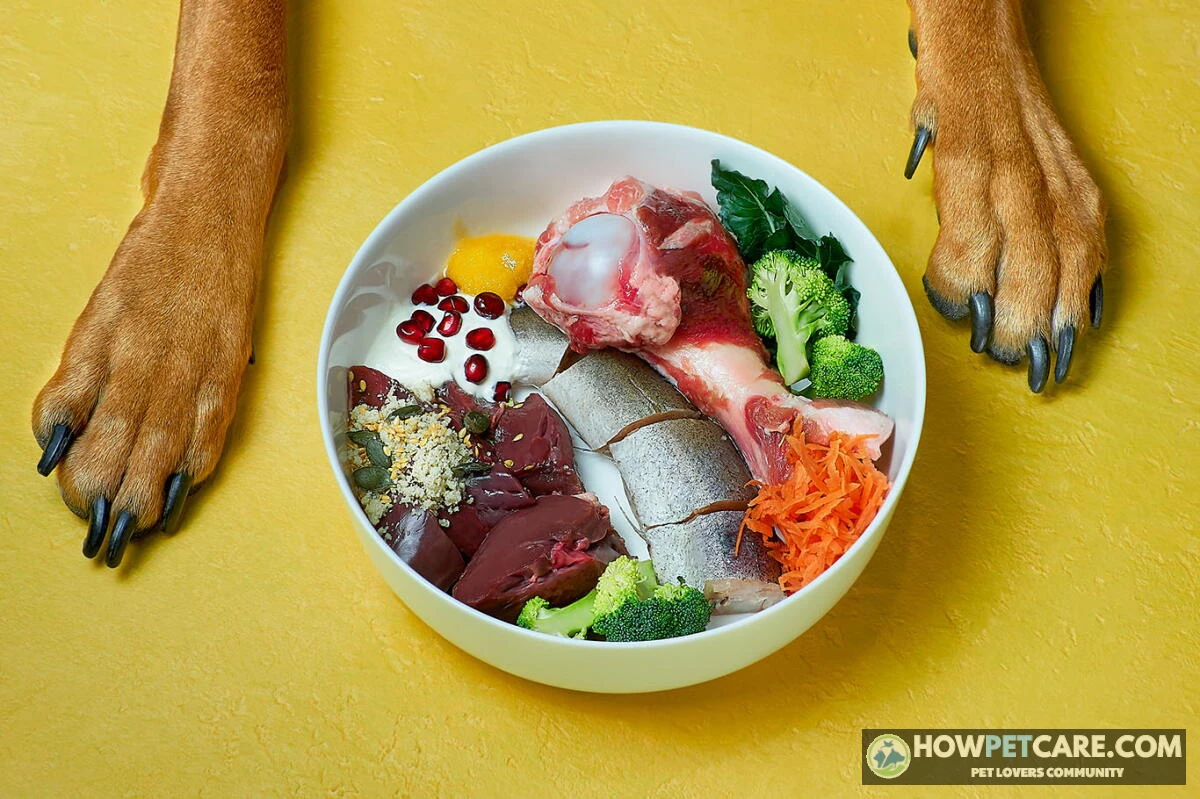

The best high calorie dog food is a complete, balanced option suited to your dog’s life stage and health needs, with enough calories in a manageable portion. Compare label calories and daily cost, but ask a veterinarian to assess unexplained weight loss and set a target before increasing intake. Transition gradually and track weight and body condition.
For an underweight dog, a suitable high calorie dog food is complete for the dog’s life stage and health needs, provides enough energy in a manageable portion, and fits your budget. Start with a veterinary assessment of unexplained weight loss and a target weight. Then compare label calories and daily costs, make any food change gradually, and track weight and body condition each week.
A healthy working dog may need more energy-dense food if regular portions don’t keep up with its activity. Dogs recovering from illness or surgery need a plan suited to their condition—not an automatic increase in fat. This guide can help you compare options, but it can’t diagnose a health problem.
Choose a safe starting point for your dog’s weight-gain plan
High-calorie dog food supplies more usable energy in a given amount than a less calorie-dense option. Labels list this energy as metabolizable energy, often in kilocalories (kcal) per cup for kibble and per can, package, or unit of weight for other foods. Some calorie-dense dry foods provide around 400–500 or more kcal per cup. That range isn’t a universal cutoff, though; the right choice depends on the dog.
Before you buy, consider your dog’s appetite, recent weight trend, body condition, age, activity, and any diagnosed conditions or dietary restrictions. A dog that looks thin isn’t necessarily underweight. If your dog is losing weight despite eating, a larger bowl may not be the answer; contact your veterinarian.
Quick decision: vet assessment, complete food, or calorie topper
- Unexplained weight loss, reduced appetite, vomiting, diarrhea, marked thirst, weakness, visible muscle loss, or a rapid change: Contact a veterinarian promptly before increasing calories. Severe symptoms or a dog who seems acutely unwell call for urgent veterinary advice.
- Underweight or recovering: Ask the veterinarian to set a target weight and feeding plan before changing the diet. Choose a complete food that fits your dog’s restrictions. An assessment can help identify medical reasons for low weight.
- Healthy, highly active working dog: Compare complete performance foods by label calories and daily cost. Keep an eye on weight as workload changes.
- Puppy: Choose a complete growth diet; check that it’s suitable for large-breed growth if relevant.
- Senior losing weight or muscle: Arrange an assessment rather than assuming your dog simply needs more food.
- Kidney disease, cancer, exocrine pancreatic insufficiency (EPI), or previous pancreatitis: Ask the veterinarian to choose an appropriate diet and fat level before changing food.
- Considering a topper: Keep the main diet complete and balanced, count the topper’s calories, and make sure it suits your dog’s health needs.

Calculate daily calories using target weight, RER, and activity
A calorie estimate can help you get started, but it isn’t a prescription. If your dog is underweight or has complex medical needs, ask the veterinarian to set an appropriate target weight and initial calorie allowance. Package feeding guidelines are a starting point, not an individualized weight-gain plan.
Resting energy requirement (RER) estimates the energy a dog needs at rest:
RER = 70 × target weight in kilograms raised to the 0.75 power
To convert pounds to kilograms, divide pounds by 2.2. Maintenance energy requirement (MER) applies a factor to RER to account for activity, life stage, and other circumstances. The factor varies from dog to dog. A maintenance estimate doesn’t automatically serve as a weight-gain prescription; a veterinary team can help decide whether to increase intake and by how much.
Worked RER/MER examples by dog size
These examples use a hypothetical factor of 1.6 for illustration. The figures estimate daily intake; they aren’t guaranteed weight-gain targets. A veterinarian may take a different approach for an underweight dog.
| Example dog size | Target weight | RER estimate | Illustrative MER assumption | Estimated daily calories | Notes and limitations |
|---|---|---|---|---|---|
| Small | 5 kg, about 11 lb | 234 kcal | 1.6 × RER | 374 kcal | Confirm the target and plan with a vet if underweight. |
| Medium | 15 kg, about 33 lb | 534 kcal | 1.6 × RER | 854 kcal | Activity and individual circumstances affect needs. |
| Large | 30 kg, about 66 lb | 897 kcal | 1.6 × RER | 1,435 kcal | Size alone does not determine calorie needs. |
Turn a calorie target into measured portions
Divide the daily calorie allowance for the food by the calories per unit listed on its label. For example, if the full illustrative 854-kcal allowance comes from a hypothetical kibble with 380 kcal per cup, the calculation is 854 ÷ 380, or about 2.25 cups per day. This is an arithmetic example, not a product recommendation.
If the plan includes treats, toppers, or supplements, subtract their calories before working out the main-food portion. Split the remainder across the dog’s usual meals; two or more smaller meals may be easier for some dogs. A kitchen scale, used with the label’s kcal-per-weight figure, can give you more consistent portions than a scoop. Record what your dog actually eats, not only what you serve.

Compare calorie density, nutrition, and cost across food formats
The most kcal per cup doesn’t automatically make a food the right high calorie dog food for weight gain. Check that the food has the right nutritional adequacy statement, a suitable fat level, acceptable taste, dependable availability, and a daily cost you can sustain.
Use the table to note what you need before making a shortlist. The available evidence doesn’t include product-specific prices, label values, or adequacy statements, so the table doesn’t claim a 2026 price check or identify which products have the highest kcal per cup. Verify the exact recipe and package with the manufacturer or retailer before buying; recipes, package sizes, and prices can change.
| Product and format | Complete or supplemental | kcal per cup/package | Protein content | Fat percentage | Estimated daily cost | Estimated monthly cost | Life-stage or health notes | Price source and date |
|---|---|---|---|---|---|---|---|---|
| Dry kibble, exact recipe to select | Check AAFCO statement | Enter label kcal/cup or kcal/kg | Enter label minimum | Enter label minimum | Calculate from package price and amount fed | Daily cost × 30 | Match adult maintenance, growth, or other needs | Record retailer and date checked |
| Fresh or wet food, exact recipe to select | Check AAFCO statement | Enter label kcal/package or kcal/kg | Enter label minimum | Enter label minimum | Calculate from package price and amount fed | Daily cost × 30 | Check storage, life stage, and any restrictions | Record retailer and date checked |
| Topper or supplement, exact product to select | Check whether supplemental | Enter label kcal/serving or kcal/kg | Enter label minimum if provided | Enter label minimum if provided | Add serving cost to main-food cost | Combined daily cost × 30 | Not a replacement for a complete diet unless labeled as such | Record retailer and date checked |

To estimate daily cost, divide the dog’s daily food calories by the calories in a package, then multiply by the package price. For example, a hypothetical $40 bag with 20,000 kcal costs about $1.71 per day at 854 kcal per day, or $51.24 for 30 days. If some calories come from another food, calculate each item separately and add the costs. These figures show how to do the math; they aren’t verified product prices.
For a topper, work out the cost of the actual daily serving and add it to the cost of the reduced main-food portion. Don’t compare a topper’s price as if it supplied the whole diet. Include shipping or subscription terms if they affect what you pay.
How to compare kcal per cup with kcal per package
For each candidate, note the metabolizable energy on the exact product label. A cup of dry food and a cup of fresh food aren’t interchangeable because moisture content changes the weight and calories in a cup. For wet vs dry food, compare kcal per package or per gram, then calculate how much you’d need to meet the same calorie allowance.
Read the AAFCO nutritional adequacy statement, not just the ingredient list or claims on the front of the bag. For a primary diet, look for a statement that the food is complete and balanced for your dog’s life stage. Food labeled for intermittent or supplemental feeding serves a different purpose. For a large-breed puppy, look for growth suitability that includes growth of large-size dogs.
The guaranteed analysis lists minimum protein content and fat percentage as sold, but moisture varies across formats. Comparing those percentages directly between wet and dry products can mislead. If it matters for your decision, ask your veterinary team to help compare them on a dry-matter basis. An appealing ingredient list alone doesn’t show that a diet is nutritionally appropriate.
When performance dog food or a calorie-dense option makes sense
A healthy dog with a demanding workload, such as long backpacking days, may need more energy without a much larger food volume. A complete performance dog food is one option if its life-stage statement and nutrient profile suit the dog. Plan water, meal timing, and food changes before a demanding trip. Reassess portions when activity drops.

Fat is energy-dense: it provides about 9 kcal per gram, compared with about 4 kcal per gram for protein or carbohydrate. That’s why a high fat dog food can provide more calories in a smaller portion. But a high-fat or high-protein food isn’t automatically the safest or most useful choice. Palatability matters for picky eaters, too; food left in the bowl can’t provide its planned calories.
Choose a safe approach for puppies, seniors, and dogs with health conditions
High calorie puppy food and senior dog considerations
Puppies need a complete puppy growth formula, not simply an adult weight gain dog food with more calories. For a large-breed puppy, choose a complete food specifically suitable for large-breed growth and ask the veterinarian about portions and growth monitoring. Don’t add calorie boosters without advice; faster gain isn’t the goal by itself.
In a senior dog, scale weight and muscle condition can tell different stories. Muscle may diminish over the spine, shoulders, or hind legs even when body fat isn’t obviously low. Prominent ribs and a narrow waist, on the other hand, may suggest low body fat. Neither observation diagnoses the cause. Ask the vet to assess muscle condition separately from body condition, and mention any changes in chewing, dental comfort, appetite, or activity.

Chronic illness, muscle loss, and fat-related risk
Is high fat dog food safe, or can it cause pancreatitis? It can suit some healthy, active dogs, but it isn’t right for every dog, and a rich meal may trigger pancreatitis in a susceptible dog. If your dog has a history of pancreatitis or another condition that calls for fat restriction, get veterinary guidance before trying a high-fat diet or rich topper. Contact the vet if vomiting, abdominal discomfort, or other symptoms develop.
Kidney disease, cancer, and EPI can each change a dog’s feeding priorities, and dogs with the same diagnosis may have different needs. A veterinarian can balance calorie density with nutrient restrictions, digestive tolerance, medication, and the treatment plan. Don’t choose a performance diet or supplement just because it has the most calories.
A richer food can hide a worsening trend without addressing its cause. Contact your veterinarian before changing the diet when weight loss is unexplained or accompanied by illness, poor appetite, or muscle loss.
Switch foods gradually and use toppers without unbalancing the diet
A gradual transition over about a week is a common starting approach. Some dogs need more time, and a veterinarian may recommend a different schedule for a medical diet. Keep fresh water available and stick to a consistent routine.
Seven-day food transition
The percentages below refer to calories, not cup volume: the old and new foods may have different calories per cup. For example, at an 854-kcal daily allowance, a 75% old and 25% new mix means approximately 641 kcal from the old food and 213 kcal from the new food. Divide each calorie amount by the food’s label calories per unit to find the portions.
| Days | Old food | New food | What to watch |
|---|---|---|---|
| 1–2 | 75% | 25% | Appetite and stool |
| 3–4 | 50% | 50% | Appetite, stool, and comfort after meals |
| 5–6 | 25% | 75% | Continue only if the dog tolerates the change |
| 7 | 0% | 100% | Keep portions measured and routine consistent |

Split each day’s measured total across the dog’s usual meals; two or more smaller meals may suit a dog that struggles with a large serving. If mild stool changes or reduced appetite occur, pause at the last tolerated mix or return to it, then move more slowly. Contact a veterinarian if symptoms are persistent or severe, your dog refuses food, or its condition worsens. Don’t speed up the change to force weight gain.
Safe topper limits and supplement trade-offs
For a dog without relevant dietary restrictions, a little plain cooked lean chicken or turkey, without skin, bones, seasoning, or added fat, can make a meal more appealing. Count it toward the day’s calories. As a practical ceiling, keep treats and other unbalanced extras together to no more than 10% of daily calories unless the veterinarian recommends otherwise; the rest should come from the appropriate complete diet. For the illustrative 854-kcal allowance, 10% is about 85 kcal—not an extra 85 kcal on top.

Avoid onion, garlic, grapes, raisins, chocolate, xylitol, cooked bones, seasoned scraps, and fatty trimmings. Check with the vet before giving any topper to a dog on a therapeutic diet or at risk of pancreatitis. A homemade diet shouldn’t replace a complete commercial food unless a veterinary nutrition professional formulates it for that dog.
A calorie supplement such as Ready Cal may help in selected cases if a veterinarian recommends a small, concentrated addition or the dog can’t eat enough of its primary diet. Check the exact product’s directions and nutritional adequacy statement; a supplement isn’t automatically a complete meal. An appropriate complete, calorie-dense food may make it easier to provide calories and essential nutrients together. Neither option takes the place of assessing unexplained weight loss.
Track weekly weight and body condition, then adjust the plan
Weigh your dog on the same scale at roughly the same time and under similar conditions each week. For a small dog, weigh yourself while holding the dog, then subtract your own weight. That can be a practical home method; for a larger dog, a clinic scale may give more consistent results.

A body condition score (BCS) adds context to the number on the scale. On a common 1–9 scale, check whether you can feel the ribs beneath their fat covering, see a waist from above, and see an abdominal tuck from the side. At an ideal score of approximately 4–5, ribs should generally be easy to feel without heavy fat cover, with a visible waist and tuck. Ask your veterinary team to show you how to score your dog; a thick coat or particular build can make visual checks difficult. Assess muscle condition separately, especially in seniors.

Weekly weight and BCS tracker
Log food names and amounts, including treats, toppers, and supplements. If your dog’s intake varies, write down what it actually ate.
| Week/date | Weight | BCS (1–9) | Daily calories, including treats | Appetite and stool notes | Action or adjustment |
|---|---|---|---|---|---|
| Baseline: ___ | ___ | ___ | ___ | ___ | Confirm target and plan: ___ |
| Week 1: ___ | ___ | ___ | ___ | ___ | ___ |
| Week 2: ___ | ___ | ___ | ___ | ___ | ___ |
| Week 3: ___ | ___ | ___ | ___ | ___ | ___ |
| Week 4: ___ | ___ | ___ | ___ | ___ | ___ |
Rules for too-slow or too-fast change
There’s no single safe weekly gain rate or timeline for every dog. The starting condition, cause of weight loss, and medical needs all matter. Agree on a target and review date with the vet instead of relying on a fixed number of weeks.
If weight and body condition haven’t improved by the agreed review, first check the scale, measured portions, label calories, uneaten food, and how consistently you’ve followed the plan. Contact the vet before making a substantial increase; a reassessment may help more than repeatedly adding food. Seek veterinary advice promptly if gain is rapid, your dog becomes uncomfortable, digestive symptoms appear, or its condition worsens; ask whether the calorie allowance should be reduced. Once your dog reaches the target, ask how to adjust intake to maintain it.
Build a shortlist and start with a monitored feeding plan
- Arrange a veterinary assessment if weight loss is unexplained or your dog is ill, recovering, losing muscle, or living with a condition that affects diet. Agree on a target weight, calorie allowance, and review date.
- Shortlist two or three exact recipes with appropriate AAFCO adequacy statements. Compare label calories, life-stage suitability, fat level, package cost, and the amount your dog would need each day.
- Choose an option your dog can tolerate and you can reliably obtain. Add a topper only if it fits the calorie allowance and health plan.
- Measure both foods by their calorie contribution during the transition. Record weekly weight, BCS, appetite, stool, and actual intake; contact the vet if progress or tolerance is poor.

| Product and format | Complete or supplemental | kcal per cup/package | Protein content | Fat percentage | Life-stage or health notes |
|---|---|---|---|---|---|
| Dry kibble, exact recipe to select | Check AAFCO statement | Enter label kcal/cup or kcal/kg | Enter label minimum | Enter label minimum | Match adult maintenance, growth, or other needs |
| Fresh or wet food, exact recipe to select | Check AAFCO statement | Enter label kcal/package or kcal/kg | Enter label minimum | Enter label minimum | Check storage, life stage, and any restrictions |
| Topper or supplement, exact product to select | Check whether supplemental | Enter label kcal/serving or kcal/kg | Enter label minimum if provided | Enter label minimum if provided | Not a replacement for a complete diet unless labeled as such |
FAQ
How many calories per cup should high-calorie dog food have?
There is no universal cutoff: compare the kcal-per-cup figures on product labels, then calculate the portion needed for your dog’s calorie target. For wet and fresh foods, compare kcal per package or weight because moisture content makes cups a poor cross-format measure.
Can I use homemade food as a high-calorie diet?
Plain, dog-safe ingredients may be used as limited toppers if they fit your dog’s calorie plan, but homemade additions should not replace a complete-and-balanced diet unless a veterinary nutrition professional formulates the recipe. Avoid seasoned or fatty scraps and ingredients known to be toxic to dogs.
Are calorie supplements better than changing to a calorie-dense food?
Neither is always better: a complete food can provide calories alongside essential nutrients, while a supplement may be useful when a veterinarian recommends a small calorie boost or a dog will not eat enough food. The right choice depends on the cause of low weight, health conditions, and the full diet.
Is high-fat dog food good for active dogs?
Some active working dogs may benefit from an appropriately formulated energy-dense diet, but high fat is not suitable for every dog and can be risky for dogs with pancreatitis history or other medical concerns. Ask your veterinarian to assess the dog’s activity and health before making a major change.