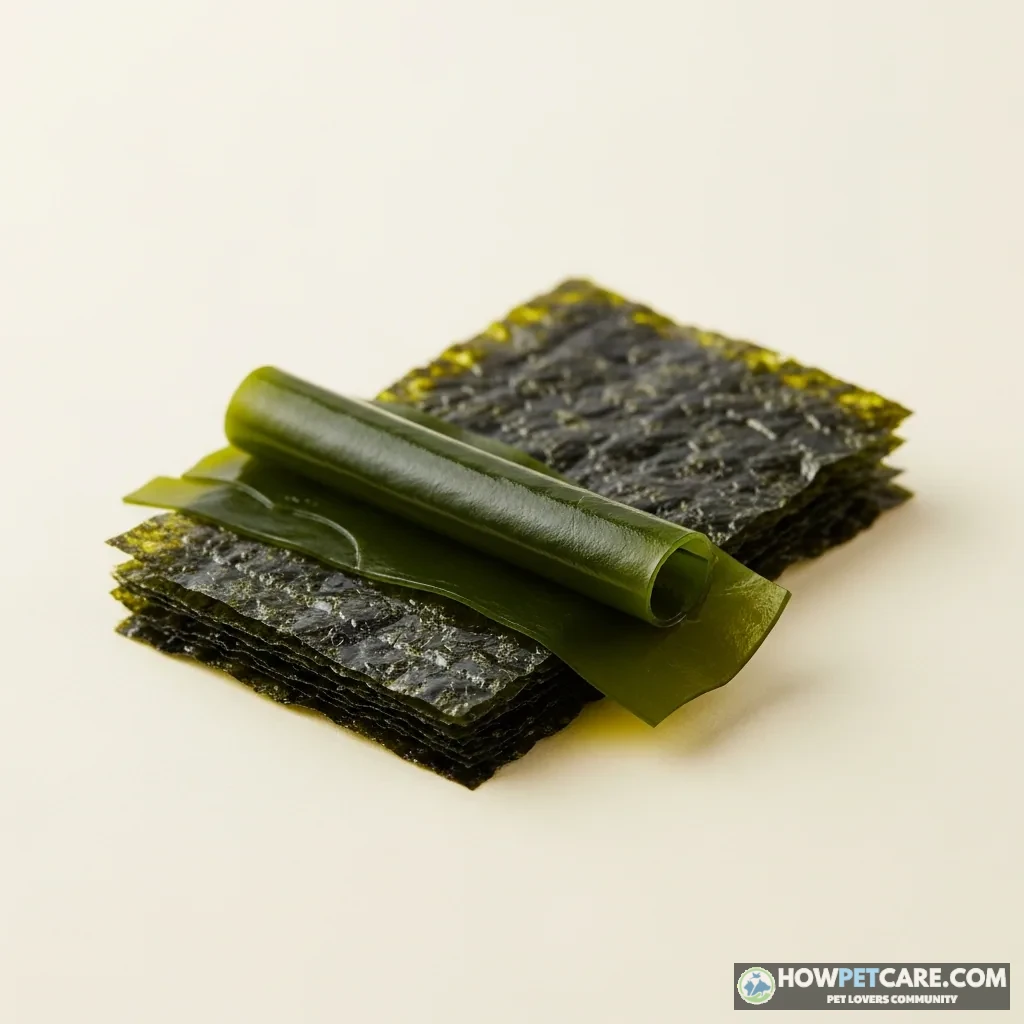

Plain, unseasoned seaweed can be an occasional treat for healthy adult dogs. Feed only known varieties like plain roasted nori in small portions, avoid salted or seasoned products, and skip seaweed for dogs with thyroid, kidney, or heart disease unless a veterinarian approves it.
Plain, unseasoned seaweed can be an occasional treat for healthy adult dogs, but it should not become a daily staple. Feed only known varieties such as plain roasted nori, and keep portions small enough to watch for vomiting, diarrhea, or lethargy. Do not feed wild or beach seaweed, because dried beach seaweed can expand in the gut and cause obstruction. Skip seaweed entirely if your dog has thyroid disease, kidney disease, heart issues, or sodium sensitivities unless a veterinarian approves it.
When to skip seaweed
Avoid salted, flavored, oil-coated, or seasoned seaweed products, including nori snacks with garlic, onion, chili, soy sauce, or excess salt. Avoid sushi seaweed served with sauces or raw fish, and never offer seaweed salad, which typically contains dressings, salt, sesame, and other ingredients unsafe for dogs. Wild or rotting beach seaweed carries sand, bacteria, toxins, and unpredictable iodine levels, so treat it as an emergency ingestion risk rather than a food. For dogs that enjoy crunchy snacks, cucumbers are another safer option.

Safe vs Unsafe Seaweed Types for Dogs (With Iodine Levels)
Safer choices
Plain roasted nori sheets are the safest common option when they contain no added salt, oil, or seasonings. Plain wakame that has been rehydrated and chopped into tiny pieces can be offered in very small amounts, provided it is rinsed well to reduce surface salt. Plain dulse flakes can also work as an occasional tiny topper, but the strong flavor makes it easy to overuse.

High-risk and unsafe choices
Kelp supplements and concentrated seaweed powders carry higher risk because iodine levels vary sharply by species and processing, and excess iodine can disrupt thyroid function. Seasoned nori snacks, sushi seaweed with sauces, and seaweed salad are unsafe for dogs because they usually contain salt, oil, garlic, onion, soy sauce, sugar, or dressings. Wild or beach seaweed and rotting seaweed are unsafe because they may contain sand, bacteria, toxins, and unpredictable iodine levels, and dried beach seaweed can swell in the stomach or intestines.
| Seaweed type or form | Safety level | Key concern | Iodine note |
|---|---|---|---|
| Plain roasted nori sheets | Safer occasional treat | Must be unseasoned and unsalted | Low to moderate |
| Plain wakame, rehydrated and chopped | Safer in tiny amounts | Rinse well; watch sodium | Low to moderate |
| Plain dulse flakes | Safer in tiny amounts | Strong flavor; easy to overuse | Moderate |
| Kelp supplement or powder | Higher risk | Concentrated iodine; dosing errors | High |
| Seaweed powder blends | Higher risk | Unknown blends and iodine load | Variable, often high |
| Seasoned nori snacks | Unsafe | Salt, oil, garlic, onion, chili, soy sauce | Varies |
| Sushi seaweed with sauces | Unsafe | Condiments and excess sodium | Varies |
| Seaweed salad | Unsafe | Dressings, salt, sesame, garlic | Varies |
| Wild or beach seaweed | Unsafe | Sand, bacteria, toxins, expansion in gut | Unpredictable |
| Rotting seaweed | Unsafe | Toxins and severe gastrointestinal illness | Unpredictable |
Iodine comparison
Iodine content varies sharply by species and processing, so owners should treat every package as different. For example, 10 grams of dried nori can contain up to 232 milligrams of iodine. Because dried nori and other seaweed forms also provide calcium, magnesium, fiber, and trace minerals in varying amounts, iodine is the main nutrient to manage when deciding whether seaweed fits your dog’s diet.
How Much Seaweed Can Dogs Eat by Weight
Start at the lowest amount for your dog’s size, increase only if stools stay normal, and count seaweed as part of treat calories. Seaweed should remain an occasional topper or treat, not a meal replacement.
| Dog size | Dried nori | Fresh seaweed | Seaweed powder | Frequency |
|---|---|---|---|---|
| Under 10 lb | 1/8 plain sheet, broken small | 1/4 tsp rehydrated and chopped | Pinch (about 1/16 tsp) | No more than once weekly |
| 10–25 lb | 1/4 plain sheet, broken small | 1/2 tsp rehydrated and chopped | 1/8 tsp | No more than once weekly |
| 26–50 lb | 1/2 plain sheet, broken small | 1 tsp rehydrated and chopped | 1/4 tsp | No more than once weekly |
| 51–90 lb | 3/4 plain sheet, broken small | 2 tsp rehydrated and chopped | 1/2 tsp | No more than once weekly |
| Over 90 lb | 1 plain sheet, broken small | 1 tbsp rehydrated and chopped | 3/4 tsp | No more than once weekly |

Dried nori portions
Break plain nori sheets into bite-size pieces before feeding. A whole sheet is too much for most dogs and can pose a choking risk or deliver too much iodine at once. The portion table above gives starting amounts only; your veterinarian may recommend less based on your dog’s health history.
Fresh seaweed portions
Rehydrate fresh or dried plain seaweed according to package instructions, rinse thoroughly, drain, and chop into tiny pieces. Use the fresh-seaweed column as the starting guide, and do not exceed the listed frequency.
Powder portions
Plain seaweed powder is easy to overfeed because a small scoop can carry a concentrated iodine load. Use only a pinch for small dogs and no more than the table amount for larger dogs, and avoid kelp or high-iodine powder blends unless a veterinarian approves them.
How to Prepare Fresh or Dried Seaweed at Home for Dogs
Fresh seaweed steps
- Purchase food-grade plain seaweed from a reputable supplier; never harvest seaweed yourself from an unknown beach.
- Rinse the seaweed thoroughly under running water to remove sand, salt, and debris.
- Soak or rehydrate as needed, then drain well.
- Chop into pieces small enough that your dog cannot choke on them.
- Serve plain, or mix a small amount into your dog’s regular food.

Dried seaweed steps
- Choose plain roasted nori sheets with no oil, salt, garlic, onion, chili, soy sauce, or flavor coating.
- Check the ingredient list: seaweed only is ideal.
- Break the sheet into small pieces based on your dog’s weight.
- Serve one piece with the regular meal, or mix it in.
- Store the remainder in an airtight container away from moisture.
Serving and storage
Do not add sauces, dressings, sushi condiments, or seasonings. Discard prepared seaweed that smells stale, fishy, or shows mold. Keep prepared portions refrigerated if not used immediately, and treat leftovers as perishable.
Example: a 25-pound healthy adult dog.
- Choose one plain, unseasoned nori sheet with no oil, salt, garlic, onion, or flavor coating.
- Check the ingredient list: seaweed only is ideal.
- Break the sheet into 8 small pieces.
- Give 1 piece (about 1/8 of the sheet) with the dog’s regular meal.
- Wait 24 hours and check stool, appetite, and energy.
- If normal, the same 1-piece serving can be repeated no more than once weekly.
- Store the remaining 7 pieces in an airtight container away from moisture; discard if they smell stale, fishy, or show mold.
Do not give the whole sheet at once, even if the dog likes the taste.
Emergency Protocol If Your Dog Ate Beach Seaweed
Wild or beach seaweed can be very dangerous for dogs, while controlled commercially prepared forms can be nutritious. Dried beach seaweed can expand after ingestion, potentially causing digestive blockage, rupture, dehydration, and circulatory shock. Symptoms include vomiting, diarrhea, loss of appetite, lethargy, depression, weakness, dehydration, and shock.

First 30 minutes
Remove any remaining seaweed from your dog’s reach. Note the approximate amount, the time it was eaten, and whether it was dry, sandy, rotting, or fresh. Keep the dog calm. Do not give food, treats, water, salt, oil, or home remedies unless a veterinarian specifically instructs you to.
Signs over 24 hours
Watch closely for repeated vomiting, drooling, abdominal pain, restlessness, or bloating in the first half hour. Over the next 24 hours, watch for diarrhea, constipation, straining, lethargy, dehydration, loss of appetite, or a swollen abdomen.
When it is an emergency
Contact a veterinarian or emergency clinic immediately, especially if the seaweed was dry beach seaweed. Do not induce vomiting unless a veterinarian specifically tells you to, and do not do it if the dog is lethargic, already vomiting, bloated, or having trouble breathing. Bring photos or packaging, the dog’s weight, symptom timeline, and any known medical conditions to the clinic.
Treat it as an emergency now if there is repeated vomiting, a swollen or painful abdomen, weakness, collapse, breathing difficulty, or suspected obstruction.
-
Remove and record
Remove access to the seaweed and note the approximate amount, time, and whether it was dry, sandy, rotting, or fresh.
-
Keep the dog calm
Do not give food, treats, water, salt, oil, or home remedies unless a veterinarian instructs you to.
-
Call a vet
Contact a veterinarian or emergency clinic immediately, especially if the seaweed was dry beach seaweed.
-
Do not induce vomiting
Do not induce vomiting unless a veterinarian specifically tells you to; avoid it if the dog is lethargic, already vomiting, bloated, or having trouble breathing.
-
Watch for 30 minutes
Monitor for repeated vomiting, drooling, abdominal pain, restlessness, or bloating.
-
Watch for 24 hours
Watch for diarrhea, constipation, straining, lethargy, dehydration, loss of appetite, or a swollen abdomen.
-
Bring records
Bring photos or packaging, the dog’s weight, symptom timeline, and any known medical conditions to the clinic.
Puppies, Senior Dogs, Pregnant Dogs, and Thyroid Medication
Puppy guidance

Puppies should receive only tiny, infrequent amounts after weaning because their iodine needs and digestion are sensitive. Introduce any new food one at a time and watch for stomach upset before offering more.
Senior and chronic-condition guidance
Senior dogs may need lower sodium and smaller portions, especially with kidney, heart, or thyroid disease. Dogs with chronic conditions should not eat seaweed without veterinary approval.
Pregnancy and medication guidance
Pregnant or nursing dogs should not receive iodine-heavy seaweed or kelp supplements without veterinary approval. Dogs on thyroid medication need careful iodine management because seaweed can interfere with thyroid balance.
Choosing Quality Seaweed: Heavy Metals, Sourcing, and Iodine Overdose Signs
Sourcing checklist
Choose food-grade seaweed from reputable suppliers. Avoid unknown coastal harvests and untested supplements. Look for plain ingredients with no added salt, oil, garlic, onion, or flavorings.
Heavy-metal concerns
Heavy metals and contaminants vary by water source, species, and processing, so sourcing quality matters for dog nutrition. Because testing data is not available for every product, treat every new package as an unknown until your veterinarian advises otherwise.
Overdose warning signs
Iodine overdose signs can include vomiting, restlessness, rapid heartbeat, excessive thirst, diarrhea, or thyroid-related changes. Stop feeding seaweed and contact a veterinarian if overdose or contamination is suspected.

Calories and Nutrients in Common Seaweed Servings
Calorie snapshot
Seaweed provides protein, iron, iodine, magnesium, and omega-3s that may support red blood cells, brain development, immunity, inflammation, and nervous system health. It also provides calcium up to 575 mg per 100 g, magnesium up to 500 mg per 100 g, copper, fiber, and iodine, with 10 g of dried nori containing up to 232 mg of iodine. Plain seaweed has an umami flavor dogs may enjoy, but that is a reason to offer small amounts, not a reason to overfeed.
| Serving | Calories | Sodium | Iodine | Fiber | Omega-3 |
|---|---|---|---|---|---|
| Plain nori, 1/8 sheet (small dog) | Trace to low | Low if unsalted | Low to moderate | Minimal | Trace |
| Plain nori, 1/4 sheet (medium dog) | Low | Low if unsalted | Low to moderate | Minimal | Trace |
| Plain nori, 1/2 sheet (large dog) | Low to moderate | Low if unsalted | Moderate | Minimal | Trace |
| Fresh seaweed, 1 tsp rehydrated | Very low | Variable after rinsing | Low to moderate | Minimal | Trace |
| Fresh seaweed, 1 tbsp rehydrated | Low | Variable after rinsing | Moderate | Minimal | Trace |
| Seaweed powder, 1/8 tsp | Very low | Low | Variable, often high | Minimal | Trace |
| Seaweed powder, 1/2 tsp | Low | Low | Variable, often high | Minimal | Trace |
Nutrient comparison
Exact calorie and sodium figures vary by brand and processing, so use this table as context rather than a prescription. Account for sodium, iodine, and calories in the dog’s overall diet, including treats and supplements.
Treat-budget impact
Treats should stay within a controlled share of daily intake. Because seaweed servings are small, the direct calorie impact is usually minor, but iodine and sodium can add up quickly if seaweed is fed too often or combined with other salty treats.
Seaweed Feeding Checklist and When to Call the Vet
Safe-to-feed checklist
- ☐ The product is plain seaweed only, with no salt, oil, garlic, onion, chili, soy sauce, or flavoring.
- ☐ The species or form is known, such as plain roasted nori, wakame, or dulse.
- ☐ It is food-grade and from a reputable supplier, not an unknown coastal harvest or untested supplement.
- ☐ The iodine level is not concentrated; avoid kelp supplements and high-iodine powders unless a veterinarian approves them.
- ☐ The portion matches the dog’s weight and is broken into small pieces.
- ☐ The dog is a healthy adult with no thyroid, kidney, heart, sodium-sensitive, or pregnancy-related concerns.
- ☐ The dog has not eaten beach seaweed, rotting seaweed, or seasoned seaweed snacks.
- ☐ If any box is unchecked, skip the seaweed and use a balanced dog food or veterinarian-approved treat.
Call the vet now
Escalate immediately for beach seaweed ingestion, repeated vomiting, bloating, lethargy, diarrhea, or suspected iodine overload. Keep records of brand, amount, and symptoms to share with the veterinarian.
Simpler alternatives
When in doubt, skip seaweed and use a balanced dog food or veterinarian-approved vegetable treats like carrots. Your veterinarian can help you decide whether seaweed fits your dog’s diet and suggest safer options if it does not.

| Seaweed Type or Form | Safety Level | Key Concern | Iodine Note |
|---|---|---|---|
| Plain roasted nori sheets | Safer occasional treat | Must be unseasoned and unsalted | Low to moderate |
| Plain wakame, rehydrated and chopped | Safer in tiny amounts | Rinse well; watch sodium | Low to moderate |
| Plain dulse flakes | Safer in tiny amounts | Strong flavor; easy to overuse | Moderate |
| Kelp supplement or powder | Higher risk | Concentrated iodine; dosing errors | High |
| Seaweed powder blends | Higher risk | Unknown blends and iodine load | Variable, often high |
| Seasoned nori snacks | Unsafe | Salt, oil, garlic, onion, chili, soy sauce | Varies |
| Sushi seaweed with sauces | Unsafe | Condiments and excess sodium | Varies |
| Seaweed salad | Unsafe | Dressings, salt, sesame, garlic | Varies |
| Wild or beach seaweed | Unsafe | Sand, bacteria, toxins, expansion in gut | Unpredictable |
| Rotting seaweed | Unsafe | Toxins and severe gastrointestinal illness | Unpredictable |
FAQ
Can dogs eat seaweed snacks?
Dogs should only eat plain, unsalted seaweed snacks. Flavored or salted varieties can contain too much sodium and seasonings that may upset the stomach.
Can dogs eat seaweed with salt?
No, salted seaweed is not a good choice. Extra sodium can contribute to dehydration, stomach upset, and problems for dogs with heart or kidney disease.
Can dogs eat seaweed sheets?
Yes, plain dried seaweed sheets such as unseasoned nori can be given in small pieces. Avoid sheets with oil, salt, garlic, onion, or other flavorings.
Can dogs eat seaweed from sushi?
Plain seaweed from sushi is generally safer than the full roll, but sushi rice, sauces, raw fish, and seasonings can be risky. Offer only a tiny piece of plain seaweed, not sushi.
Can dogs eat seaweed chips or salad?
Seaweed chips and salad are usually poor choices because they often contain oil, salt, sugar, dressings, or other ingredients. Plain seaweed is the safer option.