

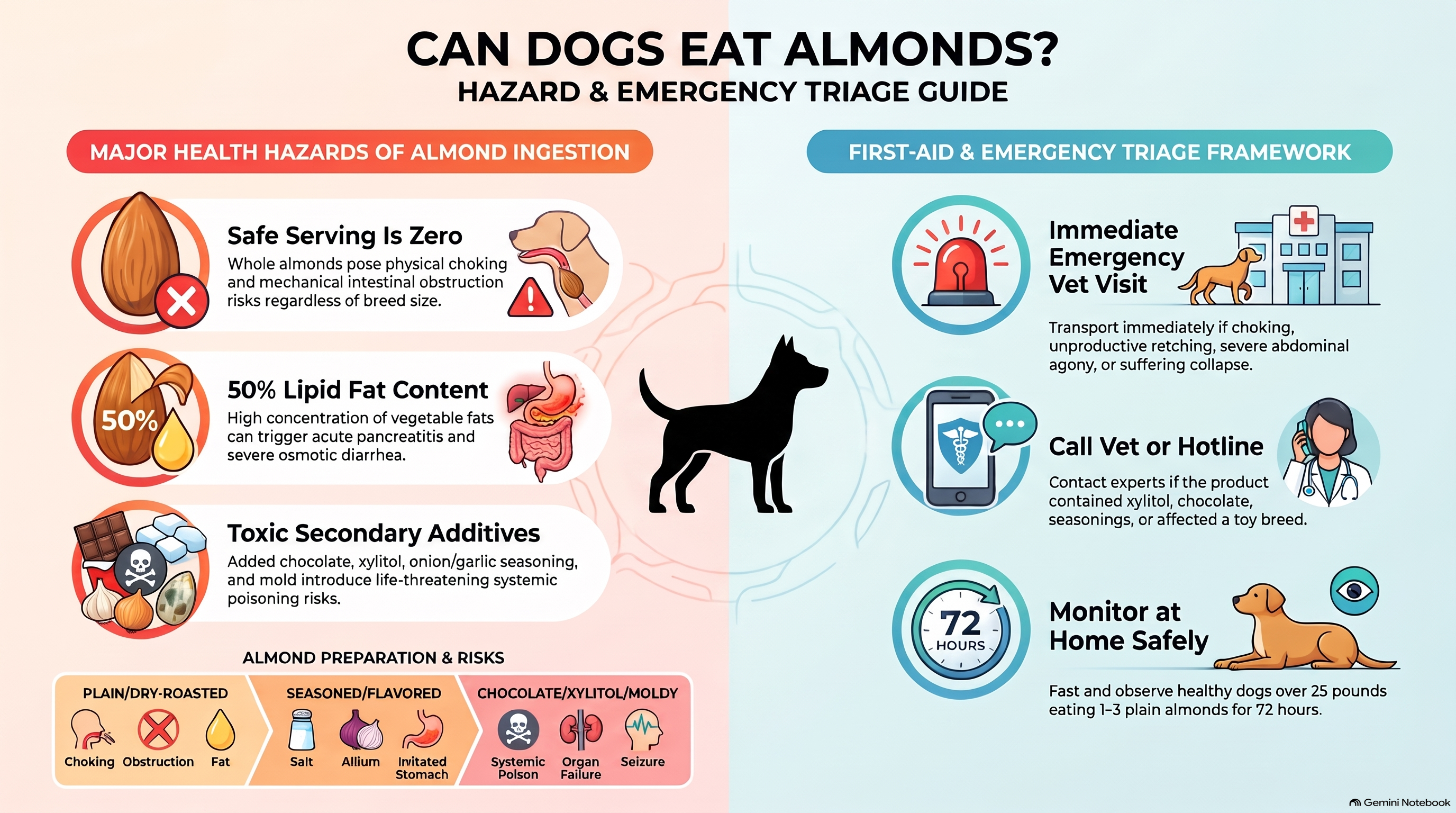
No, dogs should not eat almonds. While sweet almonds aren’t chemically toxic, they pose choking, intestinal blockage, and pancreatitis risks. The safe intentional amount is zero; even a single almond can be dangerous for small breeds or if the nut is salted, flavored, or contains xylitol or chocolate.
No, dogs should not eat almonds. Sweet almonds are not inherently toxic to dogs in the way macadamia nuts are, but whole almonds are neither safe nor suitable as treats. The medically recommended intentional portion of whole almonds for every dog, regardless of breed or size, is zero. Almonds pose a serious choking hazard, can cause a mechanical intestinal obstruction or painful gastrointestinal upset, and contain enough fat to trigger acute pancreatitis.
If your dog just swallowed a stray almond from the kitchen floor, don’t panic. dogs can have honey safely A single plain sweet almond rarely causes serious harm to a healthy medium or large dog. The risk changes considerably, however, based on your dog’s body weight, preexisting medical conditions, the quantity eaten, and whether the nuts contained salt, seasonings, chocolate, or artificial sweeteners.
Can Dogs Eat Almonds? The Immediate Answer
Veterinarians draw a firm distinction between intentionally feeding almonds and dealing with accidental ingestion. Never feed them intentionally. After an accidental ingestion, the right response depends on the dog’s size and exactly how the almond was prepared.
Dogs don’t chew food the way people do. They often gulp nuts whole, allowing the almond’s rigid, teardrop-shaped structure to enter the esophagus intact. Once swallowed, almonds are difficult for the canine gastrointestinal tract to digest. Their dense structure and high lipid concentration can irritate the stomach lining, slow gastric emptying, and become wedged in narrow parts of the digestive tract.
Are Almonds Safe for Dogs or Toxic?
Standard grocery store almonds (sweet almonds, Prunus dulcis var. dulcis) are not botanically toxic to dogs. what human foods are safe for dogs They don’t contain systemic poisons that rapidly shut down canine organ systems. Even so, veterinary emergency clinics regularly treat dogs after almond ingestion because "non-toxic" does not mean "safe".
Never confuse standard sweet almonds with bitter almonds (Prunus dulcis var. amara). Bitter almonds naturally contain amygdalin, a cyanogenic glycoside that breaks down into hydrogen cyanide upon digestion. Ingestion of raw bitter almonds is an acute, life‑threatening toxic emergency requiring immediate veterinary intervention.
Commercial almond products can also introduce dangerous secondary toxins. dogs can eat peanuts safely Seasoned almonds often contain toxic alliums such as garlic and onion powder. Chocolate‑covered almonds add dose‑dependent theobromine toxicity, while sugar‑free almond butters may contain xylitol (birch sugar), a compound that can trigger a massive, life‑threatening insulin release and acute hepatic necrosis in dogs.
Will a Dog Be Okay After Eating One Almond?
In most cases, a healthy adult medium or large dog will be fine after eating a single plain sweet almond. The nut may pass through the digestive tract largely intact or break down partially before being eliminated in the stool. Mild flatulence or a brief episode of soft stool may occur, but systemic illness is unlikely.
The outlook changes if that same almond is eaten by a toy breed, a young puppy, or a dog with a history of pancreatitis. For a 5‑pound Chihuahua, an unchewed whole almond is proportionally equivalent to an adult human swallowing an unchewed whole golf ball. Its diameter may fully block a toy breed’s esophagus, pylorus, or ileocecal valve. Dogs predisposed to hyperlipidemia or pancreatitis may also experience acute inflammatory flares after even a small spike in dietary fat.

Use This Decision Tree If Your Dog Ate Almonds
If you discover that your dog has eaten almonds, prompt, structured triage can prevent complications. Don’t guess or wait hours for symptoms when high‑risk factors are present. Use this clinical decision framework to decide whether your dog needs an emergency hospital, a poison consultation, or monitored observation at home.
Almond Safety Decision Tree: Text Walkthrough
Follow this step‑by‑step triage path to determine what your dog needs right now:
START: Did your dog swallow or chew whole almonds, almond butter, or an almond‑flavored product?
Branch 1: Active Physical or Neurological Distress
- Is your dog choking, gagging, pawing at the mouth, wheezing, vomiting uncontrollably, showing severe abdominal distension or pain, collapsing, or having seizures?
- YES -> ACTION: EMERGENCY VET NOW. Transport your dog immediately to the nearest open veterinary facility. Keep the airway clear; do not attempt blind finger sweeps.
- NO -> Proceed to Branch 2.
Branch 2: High‑Hazard Ingredients & Toxin Co‑Ingestion
- Does the ingested item contain any of the following: Xylitol/birch sugar (found in specialty nut butters), chocolate, cocoa coating, raisins, macadamia nuts, heavy onion/garlic seasoning, or bitter (wild) almonds? Are the nuts visibly moldy?
- YES -> ACTION: CALL VET / PET POISON HOTLINE NOW. Contact ASPCA Animal Poison Control (888‑426‑4435) or Pet Poison Helpline (855‑764‑7661), or your local emergency vet immediately. Have the product packaging in hand.
- NO -> Proceed to Branch 3.
Branch 3: Patient Vulnerability & Quantity Assessment
- Is your dog a toy breed (under 10 lbs), a young puppy (under 6 months), or diagnosed with a history of acute or chronic pancreatitis? OR did a medium‑to‑large dog consume a large quantity (more than 0.5 to 1 oz of whole nuts, roughly 10 to 20+ almonds)?
- YES -> ACTION: CALL VET CLINIC FOR TRIAGE. A professional should assess whether inducing emesis in clinic (within a safe 2‑hour window) is clinically appropriate.
- NO -> Proceed to Branch 4.
Branch 4: Isolated Small Ingestion of Plain Sweet Almonds
- A healthy, adult, medium or large dog ingested 1 to 3 plain, unsalted sweet almonds with zero toxic additives, and shows no respiratory distress or retching.
- YES -> ACTION: MONITOR AT HOME. Keep the dog fasted from rich treats for 12 hours, maintain normal water access, and track stool, appetite, and energy for 48 to 72 hours.
Vet Now: Emergency Warning Signs
Some clinical signs require immediate transport to a veterinary emergency department. Under these conditions, waiting even an hour can result in irreversible respiratory arrest, gastrointestinal perforation, or fatal hypovolemic shock:
- Active Asphyxiation or Airway Distress: Audible gasping, stridor (high‑pitched wheezing), blue or purple mucous membranes (cyanosis), frantic pawing at the muzzle, or orthopneic posturing.
- Unproductive Retching: Forceful, repeated dry‑heaving where nothing comes up, frequently paired with sudden abdominal enlargement.
- Intractable Vomiting: Vomiting more than twice in an hour, projectile emesis, or vomiting blood (hematemesis).
- Severe Abdominal Agony: Assuming the "prayer position" (front paws and chest on the floor with rear quarters elevated), extreme vocalization upon abdominal palpation, or sudden guarding and rigidity of the flank.
- Neurological Collapse: Staggering (ataxia), profound weakness, muscle tremors, seizures, or loss of consciousness.

Call a Veterinarian or Pet Poison Hotline Now
If your dog is physically stable but ate a complex almond product, call your veterinarian or an animal poison control service immediately. Keep the packaging in front of you so you can read out exact percentages and chemical names.
Situations that require immediate phone triage include:
- Ingestion of sugar‑free almond spreads containing xylitol, birch bark extract, or wood sugar.
- Ingestion of chocolate‑covered, cocoa‑dusted, or trail‑mix almonds.
- Ingestion of smoked, spiced, or heavily salted varieties, where sodium ion toxicity or allium toxicosis may occur.
- Any consumption of wild, bitter, or raw uncultivated almonds.
- Consumption of nuts showing gray, green, or powdery mold, which introduces tremorgenic mycotoxins.
Watch at Home Only When the Exposure Is Low Risk
Home monitoring is appropriate only when every risk factor is absent. Your dog must be an adult weighing over 25 pounds, with no prior history of gastrointestinal compromise or pancreatitis. The almonds must be confirmed sweet, dry‑roasted or raw, strictly unsalted, unflavored, and limited to an isolated small quantity (1 to 3 nuts). If your dog meets all these criteria, you may monitor at home while following standard low‑fat dietary protocols.
What to Do Right Now: A Step‑by‑Step First‑Aid Plan
After an accidental ingestion, following the right sequence saves valuable diagnostic time and can prevent unnecessary medical interventions.
The First 10 Minutes
Take control of the area and check your dog’s physical condition before investigating further.
-
Secure Airway and Dog
Check that your dog is breathing comfortably without wheezing or gasping. If the dog is choking, transport immediately to the clinic. If the dog is stable, separate them from the ingestion site.
-
Confiscate Remaining Product
Collect the remaining almonds, bags, foil wrappers, and contaminated garbage. Place them out of reach to eliminate further exposure and preserve evidence.
-
Inspect the Oral Cavity Safely
Gently open the mouth only if your dog is docile. Remove any unswallowed nuts resting loose on the tongue. Never force fingers down the throat or perform a blind finger sweep.
-
Secure the Packaging
Retrieve the product container, ingredient label, and barcode. Note the net weight, brand name, and full ingredient list for veterinary calculation.
Information to Give the Veterinarian
When you call your veterinarian, a veterinary emergency room, or the ASPCA Animal Poison Control Center, clear information matters. Organize your report using this clinical framework:
- Patient Details: Weight in pounds or kilograms, exact age, breed, and confirmed medical conditions (specifically noting history of pancreatitis, diabetes, renal disease, or food sensitivities).
- Exposure Timeline: Exact time of ingestion or the narrowest possible window since the incident occurred.
- Product Identification: Specific product name (e.g., "Blue Diamond Wasabi & Soy Sauce Almonds" or "Trader Joe’s Organic Raw Unsalted Almond Butter").
- Dose Estimation: Maximum plausible quantity missing from the container, calculated in ounces, grams, or absolute nut counts.
- Current Clinical Status: Present demeanor, gum color, respiratory rate, and any observed vomiting, retching, drooling, or restlessness.
Why You Should Not Induce Vomiting Without Instructions
Many pet owners assume that inducing vomiting at home with 3% hydrogen peroxide is standard first aid for anything a dog swallows. With almond ingestion, giving home emetics without veterinary authorization can cause serious harm.
Whole almonds are hard, abrasive foreign bodies. Regurgitating a mass of jagged, rigid nuts can cause mechanical esophageal laceration, pharyngeal trauma, or fatal aspiration into the lungs. Hydrogen peroxide also causes chemical gastritis and gastric ulceration in dogs. If the almonds contained chocolate or xylitol, improperly induced vomiting may cause the dog to aspirate caustic stomach contents during sudden neurological deterioration.
If emesis is indicated, veterinarians induce it using targeted pharmaceutical agents—such as apomorphine (for dogs) administered intravenously or via conjunctival instillation. These veterinary medications act within minutes, empty the stomach under controlled medical supervision, and can be immediately reversed with naloxone.
Never give table salt, olive oil, feeding dogs eggs safely, milk, or an activated charcoal slurry at home unless a board‑certified veterinary toxicologist explicitly tells you to do so. Table salt frequently causes fatal hypernatremia (salt poisoning), while oils add a heavy lipid load to an already stressed pancreas.

Symptoms to Monitor Over the Next 24 to 72 Hours
If your dog is cleared for home observation, remember that gastrointestinal foreign bodies and pancreatitis rarely cause immediate symptoms. Monitor your dog closely throughout the full 72‑hour window:
- Hours 1 to 12: Watch for acute mechanical distress, esophageal discomfort, persistent lip‑smacking, excessive drooling (ptyalism), regurgitation of unchewed nuts, and initial nausea.
- Hours 12 to 36: Watch for gastric and intestinal irritation. Signs include osmotic diarrhea, voluminous loose stool, progressive abdominal distension, loss of appetite (anorexia), and lethargy.
- Hours 36 to 72: Watch for downstream physical intestinal obstruction or acute delayed pancreatitis. Hallmarks include persistent bilious vomiting, complete absence of defecation, severe depression, fever, trembling, and the abdominal "prayer stretch".
Keep clean, fresh water available at all times. If your dog is nauseated or vomiting, however, don’t allow them to gulp from a large bowl because this can trigger more vomiting. Offer small sips (a few tablespoons every 30 minutes) and contact your veterinarian immediately.
Weight‑Based Almond Exposure and Portion Guide
A dog’s metabolic tolerance and gastrointestinal anatomy vary with body mass. One almond creates a very different physical and nutritional burden for an 8‑pound Maltese than for an 80‑pound Golden Retriever.
Whole Almonds: Recommended Serving Is Zero
Veterinary nutrition guidelines set the medically safe intentional serving of whole almonds at zero for dogs in every weight category. Whole almonds offer no clinical advantage over canine‑formulated treats, balanced diets, or dog‑safe vegetables such as carrots or green beans.
The following matrix breaks risk into five weight bands to help owners assess accidental exposure and understand practical limits for processed almond products:
| Dog Weight Band | Recommended Whole‑Almond Serving | Accidental‑Exposure Concern | Plain Almond Butter Calorie Formula (Max 10% Treat Rule) | Unsweetened Almond Milk Guidance | When to Call |
|---|---|---|---|---|---|
| Toy Breeds (Under 10 lbs / <4.5 kg) | 0 whole almonds | High: 1–2 nuts can cause complete intestinal obstruction or trigger acute pancreatitis. | Not recommended. Exceeds single‑treat caloric density (1 tsp plain almond butter ≈ 33 kcal; 10‑lb dog daily maintenance ≈ 250 kcal). | Strictly avoid; fluids add unnecessary sodium and potential emulsifiers. | Call vet immediately for any whole nut or any ingestion over 0.5 tsp almond butter. |
| Small Dogs (10–25 lbs / 4.5–11.3 kg) | 0 whole almonds | Moderate to High: Choking risk is high; unchewed nuts risk pyloric or duodenal impaction. | Max 0.5 teaspoon (≈ 16 kcal; 20‑lb dog maintenance ≈ 400 kcal) very rarely as a medication disguise only. | Max 1 teaspoon as a rare bowl splash; zero nutritional benefit. | Call if 2+ whole almonds eaten, or if symptoms appear after 1 nut. |
| Medium Dogs (26–55 lbs / 11.4–25 kg) | 0 whole almonds | Moderate: High fat load can trigger acute gastrointestinal distress (vomiting/diarrhea). | Max 1 teaspoon (≈ 33 kcal; 40‑lb dog maintenance ≈ 700 kcal) maximum once per week. | Max 1 tablespoon occasional lick; discontinue if loose stool occurs. | Call if 5+ whole almonds ingested, or if any seasoned/salted variety was consumed. |
| Large Dogs (56–90 lbs / 25.1–41 kg) | 0 whole almonds | Low to Moderate: Obstruction less likely, but gastric irritation and osmotic diarrhea common. | Max 1 to 1.5 teaspoons (≈ 33–50 kcal; 70‑lb dog maintenance ≈ 1,050 kcal). | Max 2 tablespoons; plain and unsweetened only. | Call if 10+ almonds eaten, if dog has a history of pancreatitis, or if retching occurs. |
| Giant Breeds (Over 90 lbs / >41 kg) | 0 whole almonds | Low: Low intestinal obstruction risk; fat‑induced pancreatitis remains a clinical concern. | Max 2 teaspoons (≈ 66 kcal; 100‑lb dog maintenance ≈ 1,400 kcal). | Max 2 to 3 tablespoons plain liquid only. | Call if half a bag or more (>20 nuts) is consumed, or if abdominal pain is evident. |

How Dog Size Changes Accidental‑Ingestion Risk
After a dog swallows whole nuts, the diameter of the gastrointestinal tract determines how likely an obstruction is. An adult medium‑to‑large dog’s intestinal lumen measures 2.0 to 2.5 cm in diameter, generally allowing a single 1.2‑cm almond to pass without becoming trapped. A toy breed’s lumen often measures less than 0.8 cm. A whole almond may be unable to pass the duodenal curve in these dogs, creating an acute mechanical blockage that requires surgical laparotomy.
Body size also changes the metabolic impact. This worked veterinary triage case shows how clinical dosage, excess calories, and lipid concentration interact in practice:
Patient Profile:
- Weight: 25 lbs (11.3 kg)
- Ingestion: 12 plain dry‑roasted, unsalted sweet almonds
- Time Elapsed: 45 minutes prior to discovery
Step 1: Calorie and Fat Calculation
- An average commercial dry‑roasted almond weighs ~1.2 g, containing ~7 kcal and 0.6 g of crude fat.
- Total calories ingested: 12 × 7 = 84 kcal.
- Total fat ingested: 12 × 0.6 g = 7.2 g fat.
- Context: A 25‑lb dog requires ~480–520 kcal per day. Ingestion of 84 kcal from pure fat represents 16‑17.5% of the dog’s daily caloric requirement, exceeding the clinical 10% treat threshold in a single event.
Step 2: Risk Stratification
- Toxicity Risk: Low (sweet almonds contain no systemic toxins; no xylitol or chocolate).
- Physical Obstruction Risk: Low‑to‑Moderate. Swallowed whole, 12 rigid nuts can cluster in the stomach and delay gastric emptying or create a mechanical blockage at the ileocecal valve.
- Pancreatitis & GI Irritation Risk: High. 7.2 g of dense plant lipid can cause sudden inflammation of the digestive lining and stimulate excess pancreatic enzymes.
Step 3: Concrete Veterinary Action Plan
- Decontamination: Because ingestion occurred 45 minutes ago, the nuts remain primarily in the stomach. The owner calls the local clinic. Given the patient’s size relative to 12 whole nuts, the veterinarian advises bringing the dog in for apomorphine‑induced emesis.
- Post‑Visit Instructions: The clinic safely retrieves 10 whole and 2 masticated nuts. The dog is discharged with a 3‑day course of a bland, ultra‑low‑fat diet (boiled chicken breast and white rice).
- Monitoring Window: The owner tracks the dog for 72 hours for signs of delayed pancreatitis: hunched posture, abdominal tenderness, or persistent lip‑smacking indicating nausea.
Plain Almond Butter and Almond Milk: Calorie‑Based Limits
Smooth almond butter removes the choking and obstruction risks associated with whole nuts, but it concentrates fat and calories. One level tablespoon of standard almond butter contains approximately 98–100 kcal and nearly 9 g of dietary fat. An average 20‑lb dog needs roughly 400 kcal per day. A single tablespoon of almond butter consumes 25% of that dog’s daily calorie allowance in seconds.
Veterinary nutritionists follow the "10 Percent Rule": non‑balanced foods, table scraps, and treats should never exceed 10% of a dog’s daily caloric intake. If you use plain, unsweetened, 100% xylitol‑free almond butter to hide medication, keep the portion small: no more than 1/4 to 1/2 teaspoon for a small dog, and no more than 1 teaspoon for a large dog.
Unsweetened almond milk consists mainly of filtered water, emulsified ground almonds, and stabilizing gums. dogs can eat cheese safely Many commercial almond milks also contain tricalcium phosphate, sunflower lecithin, carrageenan, sea salt, or natural flavorings that can cause diarrhea in dogs with sensitive digestive tracts.

Why There Is No Reliable Number of Almonds That Can Kill a Dog
Pet owners often ask search engines: "How many almonds can kill a dog?" Toxicologically, sweet almonds have no universal "lethal dose" (LD50) for dogs because they are not direct chemical poisons.
One whole almond can be fatal if it becomes tightly lodged in the trachea of a coughing Yorkshire Terrier and causes immediate asphyxiation. A 110‑lb Bernese Mountain Dog, on the other hand, might eat 30 whole almonds and develop only temporary loose stool and audible gut sounds. Almond‑related deaths in dogs usually follow one of three secondary pathways: complete intestinal obstruction leading to bowel necrosis or sepsis, severe acute necrotizing pancreatitis progressing to multi‑organ dysfunction syndrome (MODS), or exposure to co‑ingested toxins such as xylitol or theobromine.
Why Almonds Are Bad for Dogs Even When They Are Not Poisonous
The mechanical, enzymatic, and physiological effects of almond ingestion explain why veterinarians advise keeping these nuts out of a dog’s diet.
Choking and Intestinal Obstruction
Dogs have teeth suited to tearing flesh and crushing bone, not the lateral grinding needed to pulverize hard plant material. Given almonds, they tend to swallow them whole or split them into sharp, irregular halves. An unchewed almond may become lodged in the pharynx or upper trachea, particularly when a dog gulps food competitively. If it clears the airway, the nut enters the esophagus, where its dry, rigid surface can cause an impaction. In the stomach, gastric acid cannot readily dissolve the fibrous, cellulose‑rich outer skin or the almond’s dense cotyledon.
Several nuts passing into the small intestine together may cluster at the ileocecal junction—the narrow transition between the ileum and colon. A mechanical obstruction stops food, gas, and fluids from moving through the digestive tract. As pressure rises, blood flow to the intestinal wall falls, potentially causing ischemic necrosis, bacterial translocation, and peritonitis unless the obstruction is surgically relieved.

Vomiting, Diarrhea, and Pancreatitis
The canine digestive system evolved to process animal fats and clean proteins, and it handles sudden, concentrated loads of vegetable lipids poorly. Almonds contain roughly 50% fat by weight. A concentrated dose of plant fat entering the canine duodenum stimulates the release of cholecystokinin (CCK), which tells the exocrine pancreas to secrete digestive enzymes.
In susceptible dogs, this sharp enzymatic surge causes zymogens—specifically trypsinogen—to activate prematurely as trypsin inside the pancreatic parenchyma. Instead of digesting dietary chyme in the intestinal lumen, the pancreas begins digesting its own glandular tissue. Acute pancreatitis causes intense pain, localized peritonitis, intractable vomiting, and severe dehydration. Breeds predisposed to abnormal lipid metabolism, including Miniature Schnauzers, Shetland Sheepdogs, Cocker Spaniels, and Yorkshire Terriers, face a higher risk of pancreatitis after even minor dietary indiscretions.
Even without pancreatitis, unabsorbed fatty acids draw water into the intestinal lumen through osmosis. The result can be profuse, explosive diarrhea with painful cramping and gas.
Salt, Seasonings, and Allergic Reactions
Commercial snack almonds are often heavily salted, roasted in oil, or coated with spice blends. A standard 1‑ounce serving of commercial salted almonds can contain over 150–200 mg of sodium. A small dog’s entire daily physiological sodium requirement may be less than 100 mg, so a handful of salted nuts can quickly disrupt fluid balance.
Mild salt excess causes increased thirst (polydipsia) and frequent urination (polyuria). Severe exposure, particularly in toy dogs eating heavily salted varieties, can lead to acute sodium ion poisoning. Symptoms include vomiting, diarrhea, tremors, hyperthermia, seizures, and cerebral edema.
Seasonings bring their own hazards. Barbecue, ranch, and savory blends commonly contain concentrated onion and garlic powders. Alliums contain organic sulfur compounds (thiosulfates and disulfides) that cause oxidative damage to canine erythrocyte membranes, forming Heinz bodies and leading to hemolytic anemia. Smoked almonds may also contain liquid smoke preparations, high sodium levels, and artificial flavor enhancers that cause severe gastroenteritis.
True IgE‑mediated tree nut allergies are documented more thoroughly in people than in dogs, but dogs can have acute allergic reactions to almonds. Signs develop quickly and may include facial pruritus (intense face rubbing), acute periocular or muzzle angioedema (swelling around eyes and lips), generalized hives, respiratory stertor, and acute anaphylaxis. Any sudden facial swelling or wheezing after nut ingestion requires immediate emergency veterinary care.

Raw, Roasted, Salted, Flavored, and Bitter Almond Risks
Almond preparations don’t all carry the same clinical risk. Identifying the specific type of nut allows for a more precise assessment.
Raw Unsalted vs Plain Roasted Almonds
Raw, unsalted sweet almonds are dense, hard, and high in phytic acid, making them difficult for dogs to break down mechanically or enzymatically. They present the greatest mechanical obstruction and choking risks.
Heat treatment reduces the moisture in plain dry‑roasted almonds and slightly softens their cell wall matrix. It does not reduce the dense lipid content or remove the risk of choking and obstruction. The baseline recommendation is therefore the same for raw and dry‑roasted plain sweet almonds: zero intentional feeding.
Salted, Oil‑Roasted, and Seasoned Almonds
Oil‑roasted almonds are dipped in or sprayed with vegetable oils during processing. The added oil substantially increases their fat content and raises the risk of pancreatitis. Salted varieties strain the canine renal and cardiovascular systems and may cause acute fluid retention and gastrointestinal distress.
Seasoned varieties—including smoked, spicy, wasabi, chili, and garlic‑parmesan almonds—are dangerous. Capsaicin and chili powders irritate the canine gastrointestinal mucosa, causing severe abdominal cramps, profuse vomiting, and bloody diarrhea. Onion and garlic seasonings add direct hematologic toxicity and require professional veterinary assessment.
Chocolate‑Covered and Flavored Almonds
Chocolate‑covered almonds combine the almond’s mechanical and lipid hazards with the direct toxicity of cocoa. Chocolate contains methylxanthines, specifically theobromine and caffeine, which dogs metabolize far more slowly than humans. These compounds stimulate the central nervous system and cardiac muscle while relaxing smooth muscle.
Dark chocolate and baker’s chocolate have the highest theobromine concentrations. Ingestion can cause severe tachycardia, cardiac arrhythmias, muscle rigidity, tremors, seizures, and death. Milk chocolate contains fewer methylxanthines but much more sugar and fat, adding to the risk of pancreatitis. Every chocolate‑covered almond ingestion warrants an immediate call to a veterinarian or animal poison control.

Bitter or Moldy Almonds
Bitter almonds come from Prunus dulcis var. amara and contain significant amounts of amygdalin. Once chewed and exposed to beta‑glucosidase enzymes in the digestive tract, amygdalin hydrolyzes into hydrocyanic acid (cyanide). Cyanide blocks cytochrome c oxidase in canine mitochondria, stopping cellular respiration and preventing cells from using oxygen. Signs include bright red mucous membranes, rapid panting, dilated pupils, convulsions, and sudden death. Treat bitter almond ingestion as an acute toxic emergency.
Moldy or improperly stored nuts pose a similarly serious threat. Almonds with visible fungal growth may harbor Aspergillus species that produce aflatoxins and cause acute hepatic failure. Other molds synthesize tremorgenic mycotoxins, including penitrem A and roquefortine. Dogs that eat moldy nuts may develop tremors, hyperthermia, ataxia, and continuous seizures that require aggressive intensive care and decontamination.
Almond Flour in Baked Treats
Almond flour is made from finely ground, blanched almonds. Milling removes the physical choking and mechanical obstruction risks associated with whole nuts, but the flour remains high in calories and fat.
Other ingredients create the greatest danger in baked goods made with almond flour. Many low‑carbohydrate or keto recipes use xylitol (birch sugar) as a sweetener, creating an acute toxic hazard for dogs. Human baked goods also commonly contain raisins, macadamia nuts, or chocolate chips. Never share store‑bought or homemade almond flour pastries with your dog unless you have personally checked every ingredient against canine toxicity databases.
| Almond Form | Primary Hazards | Danger‑Raising Ingredients | Recommended Response |
|---|---|---|---|
| Raw Unsalted Sweet Almonds | Choking, mechanical bowel obstruction, osmotic diarrhea. | Hard physical texture, high natural fat. | Triage by dog weight; monitor small dogs closely for obstruction signs. |
| Plain Dry‑Roasted Almonds | Esophageal lodging, delayed gastric emptying, pancreatitis. | High lipid profile; dense physical structure. | Monitor at home if medium/large dog ate 1–2; call vet if small dog or large quantity. |
| Salted / Oil‑Roasted Almonds | Fluid retention, sodium toxicosis, acute gastroenteritis. | Added vegetable oils, concentrated sodium chloride. | Call vet clinic if a small dog ate multiple nuts; offer fresh water continuously. |
| Flavored / Spiced Almonds | Mucosal ulceration, hemolytic anemia, severe vomiting. | Onion powder, garlic powder, chili, capsaicin, soy sauce. | Call vet or pet poison hotline immediately; report all package seasonings. |
| Chocolate‑Covered Almonds | Cardiac arrhythmias, seizures, pancreatitis, fatal toxicosis. | Cocoa solids, theobromine, caffeine, high dairy fat. | Emergency. Call vet or poison control now; calculate theobromine exposure. |
| Bitter (Wild) Almonds | Cellular asphyxiation, respiratory collapse, rapid death. | Amygdalin, cyanogenic glycosides, hydrogen cyanide. | Emergency. Immediate transport to veterinary ER; hospital decontamination required. |
| Moldy / Rancid Almonds | Acute mycotoxicosis, sustained muscle tremors, liver injury. | Aflatoxins, tremorgenic mycotoxins (penitrem A). | Emergency. Transport immediately to veterinary facility for neurological stabilization. |
| Almond Flour Baked Treats | Acute hypoglycemia, hepatic necrosis, lipid‑induced vomiting. | Xylitol (birch sugar), chocolate, raisins, baking spices. | Check label for sugar alcohols; call vet if artificial sweeteners are present. |

Almonds vs Peanuts, Walnuts, and Macadamia Nuts
Dog owners often place all nuts in one category when assessing kitchen risks. In reality, different nuts have dramatically different safety profiles, ranging from acceptable occasional treats to lethal systemic poisons.
Nut Toxicity and Hazard Matrix
| Nut Type | Safety Rating | Inherently Toxic to Dogs? | Primary Pathological Hazards | Hallmark Symptoms | Immediate Action Required |
|---|---|---|---|---|---|
| Peanuts (Plain, Unsalted) | Caution (Yellow) | No | High fat content; choking in small dogs; aflatoxin contamination if raw or poorly stored. | Mild vomiting, soft stool, excessive thirst if salted. | Monitor at home for small amounts; ensure product contains zero xylitol. |
| Almonds (Sweet) | Caution (Yellow) | No | Rigid physical structure (esophageal/intestinal obstruction); high lipid content (pancreatitis); choking hazard. | Regurgitation, unproductive retching, abdominal pain, diarrhea. | Calculate dose based on dog size; call vet if multiple whole nuts were swallowed by small dogs. |
| Pistachios | Caution (Yellow) | No | Intestinal laceration/impaction from rigid shells; prone to Aspergillus mold producing aflatoxins. | Jaundice, lethargy, vomiting, liver enzyme elevations, bowel blockage. | Contact vet if whole unshelled nuts or moldy nuts were consumed. |
| English Walnuts | Caution (Yellow) | No | High oil profile induces severe gastroenteritis; rigid physical obstruction in gastrointestinal tract. | Vomiting, liquid diarrhea, abdominal cramping. | Monitor closely if shelled; call vet if whole uncracked nuts or substantial quantities eaten. |
| Black Walnuts / Moldy Walnuts | TOXIC (Red) | Yes (via tremorgenic mycotoxins / juglone) | Penitrem A and roquefortine mycotoxins; juglone causes severe gastrointestinal toxicity and vascular collapse. | Muscle tremors, hyperthermia, ataxia, seizures, excessive panting. | Emergency Vet Now. Immediate decontamination and anti‑seizure stabilization required. |
| Macadamia Nuts | TOXIC (Red) | Yes (True systemic toxin; mechanism unknown) | Toxicosis occurs at exposures as low as 0.7 g/kg (≈ 1 nut per 2 lb body weight). | Hind‑limb weakness/paralysis, depression, hypothermia or hyperthermia, tremors, joint swelling. | Emergency Vet Now. Rapid clinical decontamination needed even after 1–2 nuts in small dogs. |
| Pecans | Caution to Toxic (Yellow/Red) | Conditional | High risk of tremorgenic mycotoxins; juglone content; high fat content causing acute pancreatitis. | Tremors, incoordination, severe vomiting, persistent bloody stool. | Call poison control or vet immediately if pecans were found outdoors or appear weathered/moldy. |

Which Nut Exposures Need the Fastest Response?
Macadamia nuts and moldy black walnuts require the quickest clinical response. Macadamia nuts contain an unidentified, canine‑specific systemic toxin that affects neuromuscular and peripheral nerve function. Even very small exposures (one or two nuts in a small dog) can cause profound hind‑limb paresis, severe muscle tremors, hyperthermia, and recumbency within 12 hours. Any macadamia exposure warrants immediate medical care.
Black walnuts and weathered pecans found outdoors often support molds that produce tremorgenic mycotoxins. Ingestion can cause full neurotoxic tremors and status epilepticus within two hours. Sweet almonds, plain peanuts, and standard English walnuts are not inherently toxic, so small, unseasoned exposures can be triaged methodically rather than treated as immediate poisoning.
Your Final Watch, Call, or Vet‑Now Checklist
After an almond ingestion, use this checklist to keep the response clear and focused.
Watch at Home
Observe your dog at home only if every one of these criteria is met:
- The dog is an adult, non‑pregnant, and weighs over 25 pounds.
- The dog ingested no more than 1 to 3 whole almonds.
- The almonds were confirmed sweet, plain, raw or dry‑roasted, and free from salt, spices, chocolate, or sweeteners.
- The dog has no history of pancreatitis, inflammatory bowel disease, or digestive disorders.
- The dog is currently swallowing normally, breathing easily, fully alert, and showing zero signs of discomfort.
- Fast the dog from treats and high‑fat chews for 24 hours, provide access to clean water, and monitor every stool passed for the next 72 hours.
Call for Professional Guidance
Call your regular veterinarian, a local emergency hospital, or an animal poison control service under any of these conditions:
- A toy or small dog (under 25 pounds) swallowed whole almonds.
- A dog of any size consumed more than a small handful of almonds (5+ nuts).
- The product contained salt, barbecue spices, onion powder, garlic seasoning, or unknown flavorings.
- You suspect, but cannot confirm, the presence of xylitol, chocolate, or macadamia nuts.
- The dog has displayed a single episode of vomiting or loose stool within the first 12 hours.
- Have the product package, ingestion time, and dog’s exact body weight ready before dialing.
Go to an Emergency Veterinarian Now
Take your dog to the nearest emergency clinic immediately if you see any of the following:
- Active choking, gagging, noisy stridor, or gasping for breath.
- Gum tissue appearing blue, pale, or brick red.
- Ingestion of any almond butter containing xylitol, birch sugar, or birch bark extract.
- Ingestion of chocolate‑covered almonds, bitter almonds, or visibly moldy nuts.
- Repeated, forceful vomiting (more than twice in an hour) or unproductive retching.
- Severe abdominal pain, marked by the hunched "prayer position," vocalization, or a hard, distended abdomen.
- Neurological symptoms including staggering, muscle tremors, seizures, or collapse.
Prevent another exposure by keeping tree nuts, trail mixes, and specialty nut butters in airtight, rigid plastic or glass containers stored in elevated pantry cabinets. A dog’s keen sense of smell can lead it to chew through thin foil bags, cellophane wrappers, and cardboard packaging left on a counter. For a safer reward, choose veterinarian‑recommended options such as crunchy baby carrots, crisp apple slices (seeds removed), or plain steamed green beans.

FAQ
Can puppies eat almonds?
No. Whole almonds are a particularly poor choice for puppies because their smaller airways and digestive tracts increase choking and obstruction concerns, and rich foods can cause gastrointestinal upset.
Can almonds cause an allergic reaction in dogs?
They may, although almond‑specific allergy data in dogs are limited. Facial swelling, hives, repeated vomiting, breathing difficulty, weakness, or collapse requires urgent veterinary care.
How many almonds can kill a dog?
There is no established lethal number of ordinary sweet almonds for dogs. Outcomes depend on size, choking or obstruction, fat sensitivity, almond type, added ingredients, and how quickly treatment is given.
Can dogs eat baked treats made with almond flour?
Almond flour is less likely than whole almonds to cause an obstruction, but the finished treat may be high in fat or contain xylitol, chocolate, raisins, or other dangerous ingredients. Check the full recipe and avoid sugar‑free products.
Do almonds provide health benefits for dogs?
Almonds contain nutrients, but dogs on a complete and balanced diet do not need them. Their calories, fat, choking risk, and possible additives generally outweigh any practical benefit.