

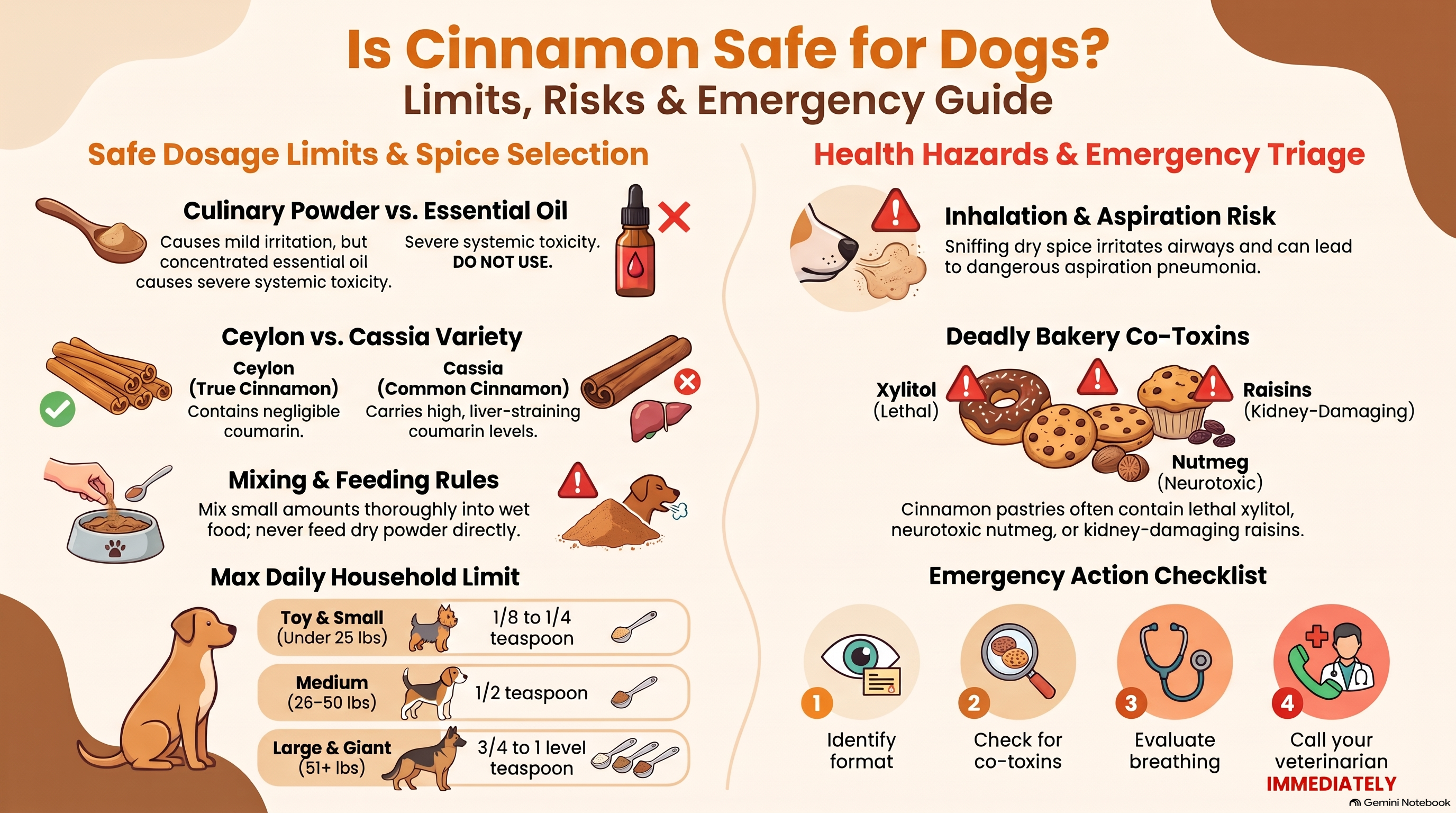
Pure culinary cinnamon is not toxic or poisonous to dogs in small amounts. However, large quantities can cause oral irritation, vomiting, and diarrhea. Inhaled powder risks severe respiratory distress, concentrated essential oils are highly toxic, and baked goods frequently contain deadly additives like xylitol, raisins, or nutmeg.
Is Cinnamon Bad for Dogs? The Direct Answer for Worried Owners
If you are wondering is cinnamon bad for dogs, pure culinary cinnamon is not toxic or poisonous to dogs in small amounts. Even so, a heavy dose irritates the mouth and digestive tract, while inhaled powder or concentrated cinnamon oil creates urgent respiratory and systemic risks.
If your dog licked a dusting off the floor or ate food lightly seasoned with pure spice, severe poisoning is unlikely. Your first task is figuring out the exact format: did your dog get into dry ground powder, a hard stick, concentrated essential oil, or a baked treat containing other harmful ingredients?
Culinary Ground Cinnamon vs. Concentrated Cinnamon Oil
Kitchen cinnamon powder behaves very differently from cinnamon essential oil. Ground spice mainly causes contact irritation, coughing fits, vomiting, or diarrhea when a dog consumes too much or accidentally breathes it in.
Cinnamon essential oil is far more hazardous. Even drops of this concentrate can burn skin, inflame mucous membranes, and drive vomiting, respiratory distress, dangerous drops in blood sugar, or liver injury. Never put cinnamon oil on your dog’s skin, paws, gums, food, or bedding, and keep diffusers out of reach. If your dog licks pure oil or gets it on their skin or eyes, contact a veterinarian or pet poison hotline immediately.
Do not wait for symptoms after a dog swallows concentrated cinnamon oil. Do not induce vomiting, because the oil can enter the lungs during regurgitation.
When a Lick Becomes a Veterinary Concern
Licking a few stray specks off the tile rarely causes trouble, but swallowing a heaping spoonful is another story. Large mouthfuls trigger oral irritation, vomiting, loose stool, coughing fits, a racing heart rate, and low blood sugar. Dry powder also poses an immediate aspiration risk: a curious dog sniffing a spill can draw fine particles directly into the airways before swallowing anything at all.
Call your vet if you cannot tell how much your pet ate, if they consumed concentrated oil, or if symptoms appear. Head directly to an emergency clinic for open-mouth breathing, collapse, tremors, seizures, repeated vomiting, or pale or blue gums.
Weight-Based Cinnamon Limits: Exact Safe Portions by Dog Size
Veterinary medicine has no universally established therapeutic dose for cinnamon. The figures below are conservative upper limits for food use, not target nutritional goals or proven safety thresholds. Dogs can still show sensitivity below these lines depending on age, baseline health, current prescriptions, spice variety, and individual stomach tolerance.
Safe Daily Upper Limits by Weight Tier
Canine Ground Cinnamon Dosage Limits by Weight Tier
| Dog Size Tier | Body Weight Range (lbs) | Max Daily Limit (Household) | Metric Equivalent (mg) | Primary Clinical Risk |
|---|---|---|---|---|
| Toy | Under 10 lbs | 1/8 teaspoon | About 325 mg | Mouth irritation, gagging, nausea |
| Small | 11–25 lbs | 1/4 teaspoon | About 650 mg | Gastric upset or diarrhea |
| Medium | 26–50 lbs | 1/2 teaspoon | About 1,300 mg | Vomiting or loose stool |
| Large | 51–80 lbs | 3/4 teaspoon | About 1,950 mg | Oral irritation or abdominal cramping |
| Giant | 81 lbs and over | 1 level teaspoon | About 2,600 mg | Medication interactions or gastrointestinal upset |

These upper limits are safety ceilings, not daily requirements. If you choose to offer pure cinnamon to a healthy adult dog, keep it occasional and mix it completely into wet food rather than giving it every day. Never let a dog lick powder directly off a measuring spoon or inhale near an open jar.
A 20-pound dog sits in the small tier, keeping their ceiling at 1/4 teaspoon blended into food. A 65-pound dog falls under the large tier with a 3/4 teaspoon limit. If your pet manages diabetes, liver disease, inflammatory bowel disease, bleeding issues, or takes regular medications, skip the spice entirely until your vet reviews the situation.
Can Puppies Have Cinnamon Safely?
A puppy that licks up a stray pinch of pure ground cinnamon will be fine, but you should not intentionally add the spice to their meals. Puppies have narrower airways, smaller bodies, and far less digestive resilience. Inhaling dry powder, vomiting, or persistent diarrhea can dehydrate or compromise a young puppy in a hurry.
Keep cinnamon sticks away from puppies altogether. These woody quills cause choking, lacerate mouth tissue, and can lodge in the stomach or intestines. Call a vet right away if your puppy swallows a piece of a stick, dry-heaves, refuses meals, shows a tense or painful belly, or struggles to pass stool.

Ceylon vs. Cassia: Why Spice Variety and Coumarin Levels Matter
Grocery store shelves carry two primary varieties: Ceylon and Cassia. They differ drastically in coumarin, a natural chemical compound that strains canine liver tissue during heavy or long-term exposure. Common Cassia carries substantially more coumarin than Ceylon.
Coumarin Toxicity and Canine Liver Function
Chemical and Safety Comparison: Ceylon vs. Cassia Cinnamon
| Feature | Ceylon Cinnamon (C. verum) | Cassia Cinnamon (C. cassia) | Canine Health Implication |
|---|---|---|---|
| Common grocery label | “True Cinnamon” or “Ceylon” | Often labeled only “Cinnamon” | An identified Ceylon product is preferable for repeated use |
| Approximate coumarin concentration | About 0.004% | Up to 1.0% | Cassia creates greater cumulative coumarin exposure |
| Liver risk | Lower because coumarin is minimal | Higher with repeated feeding | Dogs with liver disease should avoid supplementation |
| Stick texture | Thin, soft, layered quills | Thick, hard, single curl | Hard Cassia sticks present a greater choking or blockage concern |
| Powder character | Light tan and mild | Darker and more pungent | Stronger powder may cause more noticeable oral irritation |

Ceylon cinnamon (Cinnamomum verum) is the safer choice whenever a veterinarian clears dietary use because its coumarin concentration stays exceptionally low. That does not mean Ceylon is safe in unlimited quantities, nor does it make cinnamon an established therapy for arthritis, infections, or metabolic problems. Verified research on anti-inflammatory and antioxidant benefits specifically in dogs remains scarce, similar to questions regarding whether dogs can have honey for seasonal ailments.
How to Verify True Ceylon (Cinnamomum verum)
Inspect the packaging carefully for "Ceylon," "true cinnamon," Cinnamomum verum, or Sri Lanka as the country of harvest. If the label simply reads "cinnamon" or "ground cinnamon," it is almost certainly Cassia. Color alone will not tell you the difference once the bark is ground.
If your veterinarian approves cinnamon, choose clearly labeled Ceylon powder and mix it completely into moist food. Avoid daily Cassia use and all essential-oil products.
Emergency Triage: What to Do If Your Dog Inhales Cinnamon Powder
Dry spice dust easily irritates the sensitive lining of the nose, mouth, and lungs. Inhaling powder triggers sudden coughing fits, choking, tissue burning, and acute respiratory distress. Treat powder inhalation as an airway emergency rather than standard food ingestion: your first priority is breathing quality, not stomach upset.
Immediate First-Aid for Spilled Spice Inhalation
-
Move to clean air
Lead or carry your dog outdoors or into a well-ventilated room. Close the spill area so airborne dust is not inhaled again.
-
Remove surface residue
Use a clean washcloth moistened with cool water to wipe the outer nostrils, nose, tongue, and visible gums gently. Do not spray water into the mouth or nose.
-
Offer a small drink
If the dog is alert and breathing normally, offer a shallow dish of plain water. Do not force drinking, pour liquid into the mouth, or give food to a dog that is actively choking.
-
Count resting breaths
Once the dog settles, count chest rises for a full 60 seconds. A typical resting rate is approximately 15 to 30 breaths per minute, but effort, noise, gum color, and change from normal matter as much as the number.
-
Escalate for respiratory signs
Go to an emergency veterinary clinic for pale or blue gums, open-mouth breathing, collapse, pronounced wheezing, repeated unproductive retching, or violent coughing that does not ease promptly.
Never induce vomiting for inhaled powder. Do not sweep blindly down the throat with your fingers, force oils into the mouth, or rinse airways with a spray bottle, syringe, or hose. Forcing water down the throat flushes fine spice particles deeper into lung tissue.
Recognizing Aspiration Pneumonia and Respiratory Distress
A dog might recover from an initial fit of coughing and appear fine, only to decline hours later if spice entered the lungs. Keep a close watch for lingering coughs, rapid breathing, heavy chest movements, lethargy, feverish behavior, or crackling breath sounds. These symptoms point toward aspiration pneumonia or severe airway inflammation, both of which require urgent veterinary diagnostics and prescription care.

Toxic Additives in Cinnamon Baked Goods: Hidden Holiday Hazards
Pastries, breads, cookies, and pies flavored with cinnamon routinely pose greater dangers than the spice itself. Sweet baked goods often contain dangerous doses of nutmeg, xylitol, raisins, or rich fats. When evaluating what human food can dogs eat safely, rich desserts and bakery items pose far more severe risks than simple seasonings. Always keep the ingredient wrapper so your veterinarian knows exactly what your dog swallowed.
Nutmeg vs. Cinnamon: The Critical Chemical Difference
Nutmeg carries myristicin, a compound that attacks the canine nervous system. Dogs exposed to toxic doses show severe disorientation, muscle tremors, racing heart rates, stomach distress, and seizures. Culinary cinnamon does not cause seizures; if a dog convulses after eating a spiced snack, suspect a co-ingredient like nutmeg or xylitol, or an unrelated acute emergency.
Xylitol (frequently listed as birch sugar or wood sugar) triggers precipitous, life-threatening drops in blood sugar along with acute liver failure. Treat any xylitol exposure as a red-alert emergency. Do not wait for your dog to wobble, vomit, or collapse before seeking care.

Evaluating Cinnamon Rolls, Cookies, and Holiday Pastries
| Bakery Item | Lurking Co-Toxin | Severity Level | Why It Can Eclipse the Cinnamon Risk |
|---|---|---|---|
| Cinnamon rolls and pastries | Butter, margarine, oils | High | A large fatty meal can trigger pancreatitis |
| Sugar-free cinnamon bread or gum | Xylitol or birch sugar | Critical | Can cause severe hypoglycemia and acute liver injury |
| Holiday spice cookies or pumpkin loaf | Nutmeg | Severe | Myristicin can cause neurological and cardiovascular signs |
| Cinnamon-raisin bread | Raisins or currants | Critical | Can cause acute kidney injury in susceptible dogs |
| Cookies with macadamias | Macadamia nuts | High | Can cause weakness, tremors, and other systemic signs |

Read the complete ingredient deck, checking glazes, buttercreams, fillings, and sugar substitutes. If you spot xylitol, raisins, currants, macadamia nuts, baking chocolate, or significant quantities of nutmeg, call an emergency clinic or poison line immediately. While owners often ask can dogs eat almonds or other festive nuts safely, macadamias present a far more acute toxic threat. Do not base your triage decision on the cinnamon alone.
If xylitol appears anywhere on the ingredient list, seek emergency veterinary advice immediately, even when the dog looks normal.
Medical Contraindications: Diabetes, Bleeding Disorders, and Liver Disease
Do not add cinnamon to the food of a dog diagnosed with diabetes, liver issues, chronic bowel disorders, or blood clotting conditions, or one scheduled for surgery, without clearance from your veterinarian. Kitchen spices are never substitutes for insulin, prescribed pain management, or standard medical treatments.
Interactions with Canine Insulin and Hypoglycemia Risks
High doses of cinnamon can lower blood glucose levels. While minor in healthy pets, this blood-sugar shift poses serious risks for dogs receiving insulin or oral diabetic medications. Signs of hypoglycemia include profound lethargy, muscle wobbling, tremors, disorientation, sudden collapse, and seizures.
Never adjust a dog’s prescribed insulin dose on your own because they ate cinnamon. If a diabetic pet ingests a large amount or shows unsteady movements, get them to a clinic immediately and report the timing of their last insulin injection.
Cinnamon compounds can also slow blood clotting. Dogs taking anticoagulant drugs, dogs with diagnosed bleeding problems, and pets scheduled for surgery must avoid cinnamon supplements. Make sure your veterinary team knows about all powders, chews, herbal preparations, and oils your dog receives alongside their regular medications.

Pre-Existing Liver Conditions and Surgical Precautions
Regular Cassia intake is risky for dogs with compromised liver function because of its high coumarin payload. Avoid using cinnamon supplements if blood tests show elevated liver enzymes or if your dog has hepatic disease, unless your veterinarian has cleared the exact brand and serving size.
If you notice vomiting, dark urine, yellowing of the eyes or gums (jaundice), unusual bruising, or sudden fatigue, stop feeding the spice immediately. While these symptoms stem from many underlying causes, they demand immediate veterinary attention in medically sensitive pets.
Decision Checklist: Responding to Cinnamon Ingestion Step-by-Step
- Identify the form. Determine whether your pet reached ground powder, a hard cinnamon stick, concentrated essential oil, a supplement chew, or a baked holiday treat. Take away any remaining items and save the packaging.
- Estimate the amount and time. Note your dog’s current weight, the maximum amount missing, the time of ingestion, and whether they snorted or inhaled loose dust. Do not burn critical minutes trying to calculate exact grams before calling for help.
- Screen every ingredient. Check labels for xylitol (birch sugar), nutmeg, raisins, currants, macadamia nuts, baking chocolate, alcohol, or concentrated oils.
- Check breathing and behavior. Check gum color, listen for noisy breaths, and watch for coughing, staggering, repeated vomiting, or loose stool. If an otherwise healthy dog ate a tiny trace of pure spice, keep a close eye on them for at least 4 to 6 hours.
- Call when risk is uncertain. Contact your primary vet, a local emergency clinic, ASPCA Animal Poison Control, or Pet Poison Helpline. Have the product wrapper, your dog’s weight, approximate dose, timeline, symptoms, and medical history in front of you.

Head straight to an emergency animal hospital for labored breathing, blue or pale gums, collapse, seizures, severe muscle tremors, continuous retching, suspected powder aspiration, essential oil contact, or any ingestion involving xylitol. Never try to induce vomiting or force home remedies down your dog’s throat without explicit instructions from a veterinary professional.
FAQ
Can cinnamon cause seizures in dogs?
Pure culinary cinnamon does not cause seizures in dogs. However, seizures can occur if a dog eats cinnamon treats seasoned with nutmeg (which contains the neurotoxin myristicin) or sweetened with xylitol, which causes severe hypoglycemic seizures.
Can a dog eat a whole cinnamon stick?
No, whole cinnamon sticks are dangerous because they present an acute choking hazard, can splinter to cause gastrointestinal puncture, and can severely burn oral tissues through concentrated direct contact.
Does cinnamon help dogs with arthritis or joint inflammation?
Cinnamon contains natural anti-inflammatory compounds, but clinical evidence in dogs is limited. Never rely on cinnamon over proven veterinary NSAIDs, and always consult your vet before adding it to an arthritic dog’s diet.
Can dogs safely eat cinnamon applesauce?
Plain applesauce with a light dusting of pure cinnamon is safe in moderation, provided it contains zero added sugars, artificial sweeteners like xylitol, or toxic preservatives.