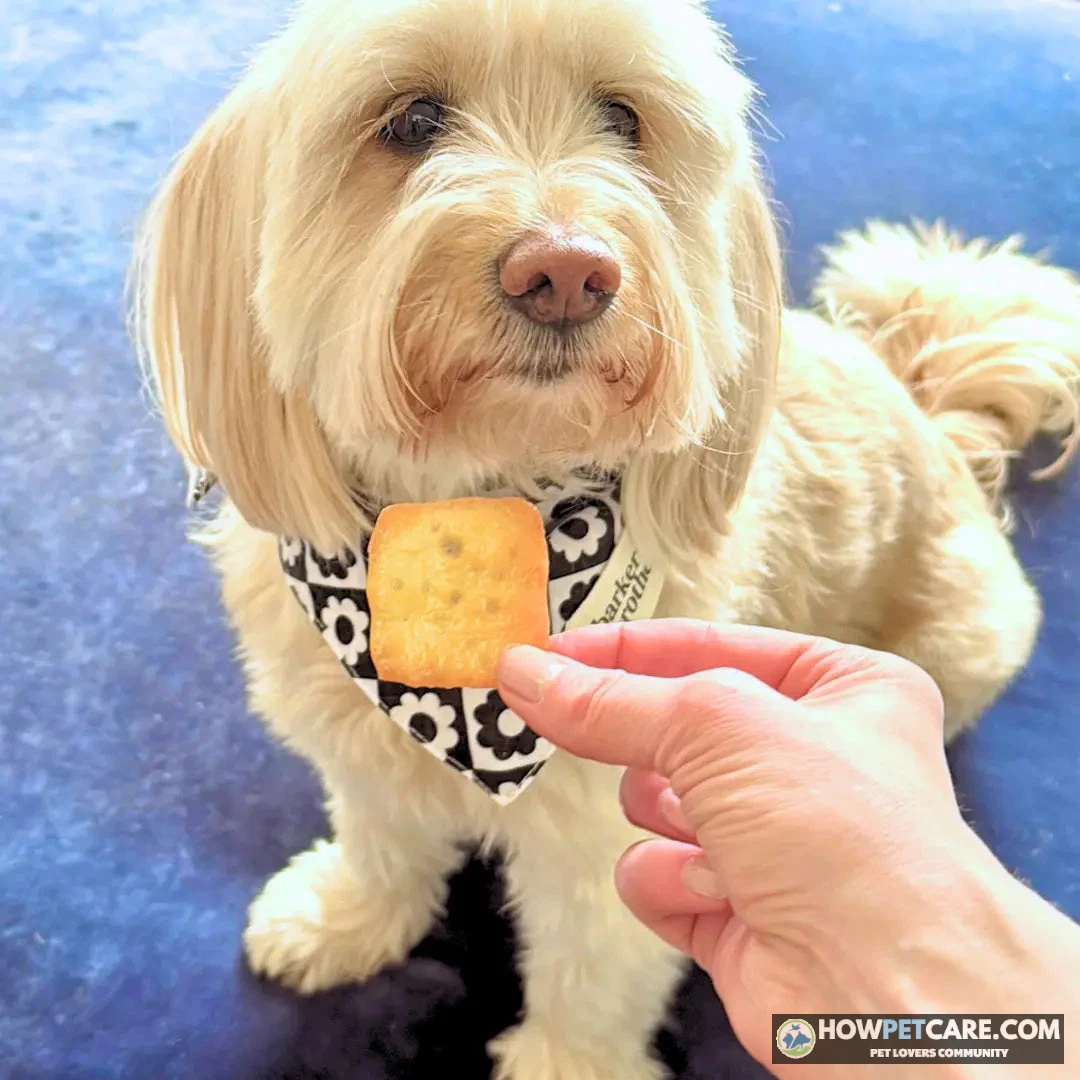

Yes—dogs can eat cheese in moderation, but only low‑fat, low‑lactose varieties such as cottage cheese or part‑skim mozzarella. Offer only tiny portions (a few grams) based on the dog’s size, avoid high‑fat, high‑sodium or blue‑veined cheeses, and never give processed snack cheeses or vegan cheeses that may contain toxic additives.
Yes, dogs can eat specific types of cheese in strict moderation, provided they don’t have a severe dairy sensitivity or pre-existing health condition. Cheese provides protein, calcium, vitamin A, and essential fatty acids. Its strong appeal also makes it a useful high‑value training reward and an effective way to conceal oral medications. Still, cheese isn’t biologically essential for dogs, and eating too much carries immediate medical risks.
Before sharing dairy, dog owners need to consider three main physiological hazards: high fat content, which can trigger acute pancreatitis; elevated sodium levels, which burden renal and cardiovascular function; and the lactase deficiency that can cause gastrointestinal distress in dogs. Cheese should never replace a meal. It belongs only in a fraction of the dog’s daily 10% treat allowance.
When Cheese Is Safe as a High-Value Treat or Pill Pocket
Canine behaviorists and veterinarians often use cheese as a high‑value training incentive. Its pungent aroma and rich taste make tiny morsels particularly effective for reinforcing critical commands such as emergency recall or helping dogs settle during high‑stress enrichment activities. You can also smear a thin layer of low‑fat cheese spread inside rubber Kong toys or across textured lick mats, then freeze it to create an engaging activity that keeps dogs occupied and may reduce anxiety.
Cheese can also work well as a pill pocket. Moldable varieties such as low‑moisture mozzarella or mild cheddar can encase bitter tablets and keep dogs from spitting out daily prescriptions. However, dairy interacts with some veterinary drugs, so the medication matters.
Never wrap tetracyclines (such as doxycycline) or fluoroquinolones (such as enrofloxacin or ciprofloxacin) in cheese, cream cheese, or butter. Calcium ions in dairy bind directly to these antibiotic molecules in the canine digestive tract, creating insoluble chelates that can’t be absorbed into the bloodstream. This reduces the medication’s therapeutic bioavailability to near zero. Always consult your veterinarian about drug‑food interactions.
For medication that doesn’t interact with calcium—such as heartworm preventatives, anti‑parasitics, or non‑steroidal anti‑inflammatory drugs (NSAIDs)—use the three‑treat "double‑blind" technique:
- Prepare three identical micro‑balls of room‑temperature cheese.
- Feed Ball #1 (empty) as a quick warm‑up treat that the dog swallows eagerly.
- Offer Ball #2 (containing the hidden tablet) immediately while holding Ball #3 in front of their nose.
- Present Ball #3 (empty) at once; the dog will gulp down Ball #2 whole without chewing to secure the third piece.
The Biological Reality of Lactose Sensitivity in Canines
Dogs are facultative carnivores. Nursing puppies produce abundant intestinal lactase, the enzyme that breaks the milk sugar lactose into glucose and galactose. Lactase production drops sharply after weaning, however. As dogs mature, they become naturally lactose intolerant to varying degrees.
If a lactose‑deficient dog consumes more milk sugar than its brush‑border enzymes can process, the unabsorbed lactose passes intact into the large intestine. There, it draws excess water into the bowel through osmotic pull and undergoes rapid fermentation by colonic bacteria. The resulting volatile fatty acids and gas cause stomach cramping, flatulence, and osmotic diarrhea. Sensitivity differs dramatically between dogs. Some comfortably tolerate small amounts of hard aged cheese, while others develop loose stools after a single lick of high‑lactose dairy.

Cheese Nutritional Safety Matrix: Best to Worst Cheeses for Dogs
Dairy products don’t affect dogs equally. How a cheese is made—particularly the separation of curds from liquid whey, its moisture level, and its aging time—determines how much fat, sodium, and lactose remain in the finished product. Liquid whey retains most dairy lactose, so firm, aged curds naturally contain much less lactose than unaged, wet cheeses.
| Cheese Variety | Fat per 100g | Sodium per 100g | Lactose Level | Canine Safety Status | Best Use Case / Primary Risk |
|---|---|---|---|---|---|
| Low-Fat Cottage Cheese | 1.0–2.5g | ~360mg | Low (~2.7–3.0%) | 🟢 Green (Safe) | Bland diet recovery; low pancreatitis risk |
| Part-Skim Mozzarella | ~15–18g | ~480mg | Low (~1.0–2.0%) | 🟢 Green (Safe) | High‑value training bites and pill concealment |
| Swiss Cheese | ~28–31g | ~190mg | Negligible (<0.5%) | 🟡 Yellow (Caution) | Low lactose, but dense fat requires strict micro‑cubing |
| Mild/Sharp Cheddar | ~33g | ~620mg | Negligible (<0.5%) | 🟡 Yellow (Caution) | Excellent pill pocket; high fat and salt trigger gut upset |
| Parmesan (Hard Aged) | ~29g | ~1,500mg | Trace (<0.2%) | 🟡 Yellow (Caution) | Potent scent for appetite stimulation; excessive sodium |
| American Pasteurized Singles | ~25g | ~1,300mg | Moderate (~4–6%) | 🔴 Red (Avoid) | Heavy phosphate emulsifiers and oils trigger acute diarrhea |
| Garlic / Herb Infused Cheeses | 25–35g | Varies | Low to Moderate | 🔴 Red (Strictly Toxic) | Allium content damages canine red blood cells |
| Blue Cheeses (Roquefort, Stilton) | ~31g | ~1,400mg | Low (~1.0–2.0%) | 🔴 Red (Strictly Toxic) | Roquefortine C alkaloid triggers hyperthermia, tremors, and seizures |
Safe, Low‑Lactose Options: Cottage Cheese and Mozzarella
Low‑fat cottage cheese and part‑skim mozzarella are the safest starting points when introducing dairy to a dog. Plain, low‑fat cottage cheese has little fat and less sodium than aged cheeses. Because it is relatively easy to digest and provides mild protein, veterinarians often recommend it as a temporary protein base alongside plain boiled white rice while a dog recovers from non‑dietary stomach upset.
Part‑skim mozzarella cheese sticks and unseasoned mozzarella balls offer a practical balance for healthy dogs. Mozzarella contains less fat and sodium than hard cheeses but remains pliable enough to serve as a clean training treat. Slice a mozzarella stick into paper‑thin disks or tiny cubes before a training session.

Aged Favorites: Feeding Cheddar and Swiss Safely
Can dogs eat cheddar cheese safely? Yes, but only in rigorously controlled portions. Aged hard cheeses such as cheddar and Swiss undergo prolonged fermentation, allowing bacteria to consume virtually all the residual lactose sugars. As a result, a lactose‑sensitive dog is far less likely to develop osmotic diarrhea from a micro‑cube of sharp cheddar than from a sip of milk.
That low lactose comes with a trade‑off: exceptionally dense concentrations of saturated fat and sodium. One hundred grams of cheddar provides roughly 33 grams of fat and 620 milligrams of sodium. Swiss cheese is lower in sodium (~190 mg per 100 g) but remains calorie‑dense. Reserve these aged cheeses for high‑distraction training or disguising foul‑tasting capsules, rather than offering them as casual table handouts.

Strictly Forbidden: Blue Cheeses and Allium Additions
Some cheeses pose an acute toxicity risk and should never be fed to dogs. Blue‑veined varieties—including Roquefort, Gorgonzola, Stilton, Danish Blue, and Cabrales—are made with cultures of the mold Penicillium roqueforti. During ripening, this fungus produces a potent mycotoxin called Roquefortine C. Dogs are highly sensitive to Roquefortine C. Ingestion can cause severe systemic poisoning marked by muscular tremors, hyperthermia, vomiting, ataxia, and life‑threatening epileptic seizures.
Specialty cheeses containing alliums, including garlic jack, chive‑infused cheddar, and onion‑seasoned spreads, are also dangerous. Every member of the Allium genus contains organosulfur compounds that canine enzymes can’t neutralize. These oxidants irreversibly damage canine hemoglobin, form Heinz bodies, and trigger acute hemolytic anemia. A single serving of garlic cheese can destroy red blood cells and make an emergency transfusion necessary.

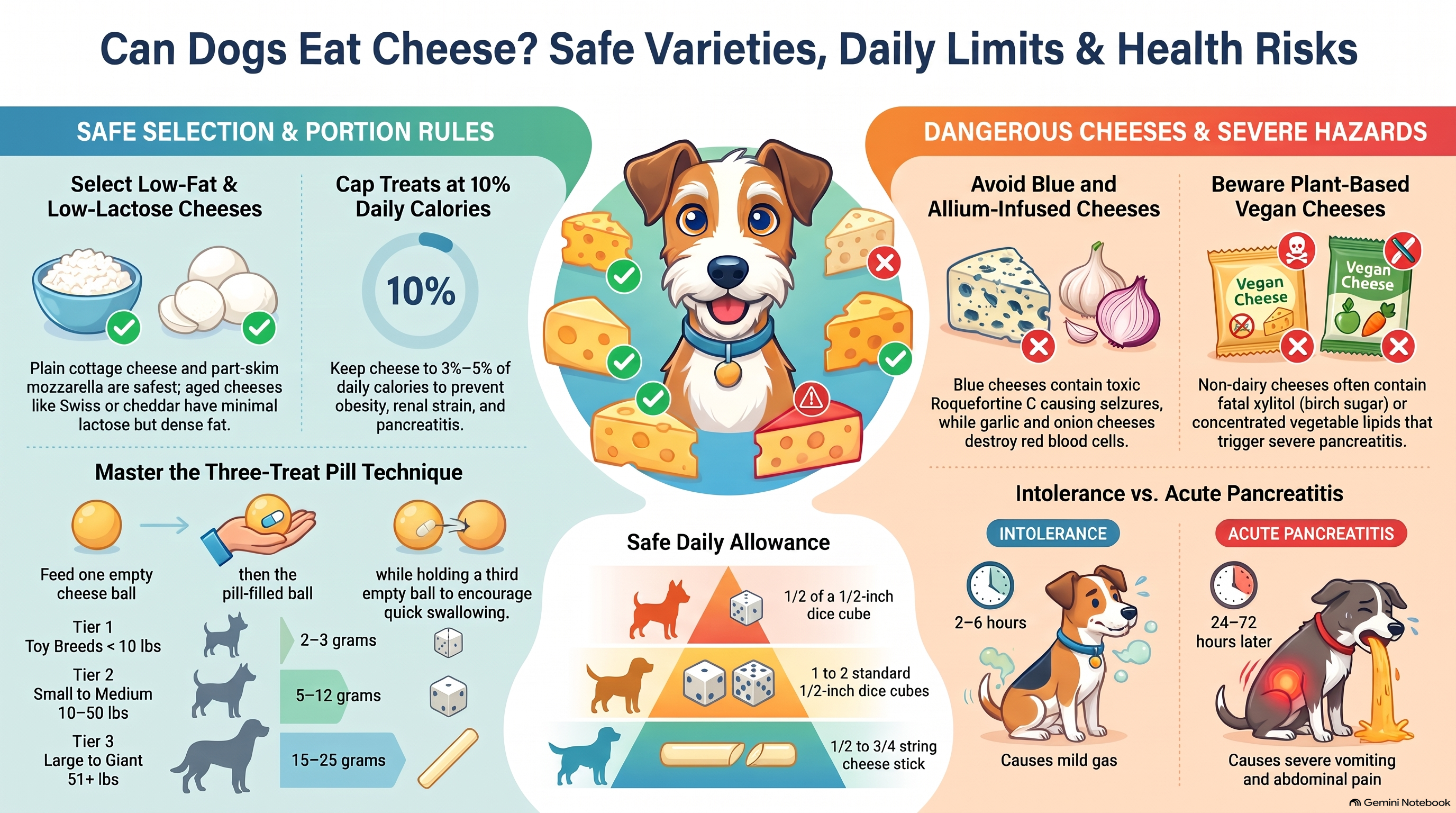
Weight‑Based Daily Feeding Limits: Exact Grams, Calories, and Cube Sizes
Vague advice to "feed in moderation" leads to routine overfeeding. A single 1‑inch cube of cheddar cheese contains approximately 70 kilocalories and 6 grams of fat. For a 10‑pound dog with a total daily maintenance energy requirement of roughly 250 kilocalories, that cube uses nearly 30% of the entire daily calorie budget and greatly exceeds safe dietary limits.
Veterinary nutrition guidelines state that treats should never provide more than 10% of a dog’s total daily calorie intake. When considering what human food can dogs eat, the remaining 90% should come from an AAFCO‑complete balanced diet. Because cheese is calorie‑dense and high in saturated fatty acids, veterinary clinical practice suggests limiting cheese treats to 3% to 5% of the daily calorie ceiling. That leaves the rest of the treat allowance for low‑calorie vegetables or training kibble.
Daily Calorie Math and the 10% Treat Boundary
To include cheese safely in your dog’s routine, calculate their resting energy requirement (RER) and set an exact gram limit. The table lists maximum daily cheese allowances across standard canine weight tiers, with limits designed to prevent acute gastrointestinal distress and cumulative weight gain.
| Dog Weight Bracket | Typical Daily Calorie Budget | Max 10% Treat Calorie Limit | Safe Daily Cheese Allowance (Grams) | Visual Portion Equivalent | Recommended Cheese Variety |
|---|---|---|---|---|---|
| Toy Dogs (< 10 lbs / < 4.5 kg) | 200–275 kcal | 20–27 kcal | 2–3 g | 1/2 of a standard 1/2‑inch dice cube | Low‑fat cottage cheese or shredded skim mozzarella |
| Small Dogs (10–25 lbs / 4.5–11 kg) | 300–550 kcal | 30–55 kcal | 5–7 g | 1 standard 1/2‑inch dice cube | Part‑skim mozzarella or low‑sodium Swiss |
| Medium Dogs (26–50 lbs / 12–23 kg) | 600–950 kcal | 60–95 kcal | 10–12 g | 1.5 to 2 standard 1/2‑inch dice cubes | Cheddar or Swiss micro‑cubes |
| Large Dogs (51–75 lbs / 23–34 kg) | 1,000–1,350 kcal | 100–135 kcal | 15–18 g | 1/2 of a standard string cheese stick | Part‑skim string cheese or sharp cheddar |
| Giant Dogs (76+ lbs / 35+ kg) | 1,400–1,800+ kcal | 140–180 kcal | 20–25 g | 3 standard 1/2‑inch dice cubes (or 3/4 string cheese) | Low‑fat cottage cheese, Swiss, or cheddar |
Visual Portion Guide: Dice Cubes and Gram Weights by Dog Size
Use visual references or a digital kitchen scale to portion cheese rather than estimating by eye:

- Toy Breeds (Chihuahua, Yorkie, Pomeranian): Never exceed a sliver the size of half a playing die (2–3 g). Grating a tiny pinch of part‑skim mozzarella over a meal is much safer than handing the dog a solid block.
- Small Breeds (Dachshund, French Bulldog, Cavalier King Charles): Limit portions to one single 1/2‑inch dice cube per day (5–7 g).
- Medium Breeds (Beagle, Border Collie, Australian Shepherd): On training days, these dogs can safely have up to two 1/2‑inch dice cubes (10–12 g).
- Large Breeds (Labrador, Golden Retriever, German Shepherd): Keep the maximum daily allowance to half of a standard part‑skim string cheese stick (15–18 g).
- Giant Breeds (Great Dane, Mastiff, Newfoundland): Limit cheese to three 1/2‑inch cubes or three‑quarters of a string cheese stick (20–25 g).
Offer cheese as an occasional high‑value bonus two to three times per week, not as an automatic daily ritual. Daily cheese can acclimate dogs to highly palatable fats, potentially prompting them to refuse standard kibble while also contributing to canine obesity.
Processed Cheese and Human Snacks: American Singles, Cheez‑Its, and Pizza
Many pet owners don’t feed their dogs artisan blocks of cheese. Instead, they share processed commercial cheese products from the pantry. These convenience foods carry distinct physiological risks that broad veterinary warnings can miss.
| Snack Item | Primary Formulation Hazard | Gastrointestinal & Metabolic Risk | Strict Safety Verdict |
|---|---|---|---|
| American Cheese Singles (e.g., Kraft) | Sodium hexametaphosphate, sodium phosphate emulsifiers, vegetable oil fillers. | Rapid osmotic diarrhea, stomach cramping, and gas due to high processing agents. | Avoid: Not natural cheese; causes unnecessary intestinal distress. |
| Standard String Cheese (Part‑Skim) | Plain cultured pasteurized milk, salt, microbial enzymes. | Safe in moderation; overfeeding contributes excess sodium and unneeded calories. | Acceptable: Excellent low‑mess treat when cut into small 1/4‑inch wheels. |
| Cheesy Crackers (e.g., Cheez‑Its) | Enriched flour, vegetable oil with TBHQ, high sodium, zero bioavailable protein. | Empty carbohydrate load; sharp cracker fragments cause stomach irritation. | Avoid: No nutritional value; salt content strains hydration. |
| Puffed Cheese Balls / Curls | Expeller corn meal, artificial coloring (Yellow 6), heavy oil spray, high salt. | High grease concentration poses acute pancreatitis risk in smaller breeds. | Strictly Avoid: Chemically dense snack food with zero canine utility. |
| Takeout Cheese Pizza Crusts | Garlic powder, onion powder in sauce, high saturated baking fats, yeast dough residue. | Allium toxicity from sauces, grease‑induced gastrointestinal inflammation, and severe gas. | Strictly Forbidden: Garlic and onion residues make this a toxic household threat |

American Slices and Processed Singles
The FDA legally classifies American cheese singles not as cheese, but as "pasteurized process cheese food" or "pasteurized process American cheese product." Manufacturers make these products by blending scrap cheese curd with excessive whey protein concentrates, added vegetable oils, sodium chloride, and synthetic emulsifiers such as sodium phosphate and sodium hexametaphosphate.
An accidentally eaten corner of an American single is unlikely to prove fatal. Even so, the concentrated sodium and high emulsifier burden often cause acute watery diarrhea, painful flatulence, and stomach cramping. American slices also soften quickly at room temperature. When used as pill wrappers, they coat the dog’s mouth in a sticky emulsion that can be difficult to swallow cleanly. Choose plain block cheddar or low‑moisture mozzarella instead.
Cheesy Crackers, Chips, and Pizza Crusts
Don’t feed companion animals processed snacks such as Cheez‑Its, cheese curls, or nachos. These products contain refined carbohydrates, palm oils, chemical preservatives (such as TBHQ), synthetic food dyes, and high sodium levels. A single handful of cheese crackers delivers an unhealthy sodium dose that stresses a dog’s renal filtration system and causes substantial gastric dehydration. As with other rich human snacks where owners might ask can dogs eat peanuts or processed nutty crackers, high fat and sodium levels should always give pet owners pause.
A leftover takeout cheese pizza crust presents several toxic hazards. Pizza crusts are saturated with heated animal greases, high‑acidity tomato paste, and heavy concentrations of powdered alliums. Commercial pizza sauces rely heavily on granulated garlic and onion powder for savory flavor. Powdered alliums are concentrated forms of these toxic plants, so feeding pizza crust directly exposes a dog to hemolytic toxins as well as inflammatory grease.

The Hidden Lethal Danger of Vegan and Dairy‑Free Cheeses
As plant‑based diets become more popular, vegan cheese alternatives are appearing in more household refrigerators. Pet owners may assume that a dairy‑free product with zero lactose is safer for a lactose‑intolerant dog. In veterinary toxicology, the exact opposite is true: non‑dairy vegan cheeses are frequently far more dangerous—and potentially lethal—to dogs than genuine dairy.
Many commercial vegan, keto, and plant‑based cheeses contain xylitol, which may appear on ingredient labels as birch bark extract, wood sugar, or birch sugar, as a natural humectant and texturizer. In dogs, xylitol triggers an immediate, catastrophic insulin release. Systemic blood glucose can fall to life‑threatening levels within 30 to 60 minutes, followed rapidly by acute hepatic necrosis and liver failure. Ingestion of any xylitol‑sweetened product is an immediate veterinary emergency.
Artificial sweeteners aren’t the only concern. The basic formulation of vegan cheese creates several risks for dogs:
- Extreme Lipid Concentrations: Traditional cheese gets its structure from natural milk proteins (casein) bound with animal fat. Without casein, manufacturers reproduce melt and stretch by emulsifying solid saturated vegetable lipids—most commonly concentrated coconut oil, palm kernel oil, or pure cashew butter. The result is essentially a solid block of saturated vegetable fat and a potent trigger for acute canine pancreatitis.
- Concentrated Allium Seasonings: Plant oils lack the natural umami profile of fermented animal milk, so vegan cheese formulations often depend on nutritional yeast blended with garlic powder, onion powder, and concentrated "natural savory flavors" derived from alliums.
- High Salt and Starch Fillers: To create a solid texture, vegan products combine modified potato and tapioca starches with high sodium concentrations, placing stress on both the digestive tract and renal function.

Genuine dairy intolerance usually causes self‑limiting gastrointestinal discomfort. By contrast, eating a block of vegan cheese can lead to fatal hepatic collapse from hidden birch bark extracts or severe systemic pancreatitis from pure coconut oil emulsions.
Lactose Intolerance vs. Acute Pancreatitis: Clinical Symptoms and Timelines
Dog owners need to distinguish between benign, self‑limiting dairy sensitivity and life‑threatening acute pancreatitis. Both can cause gastrointestinal distress, but their physiological mechanisms, timelines, and veterinary prognoses are entirely different.
LACTOSE INTOLERANCE TIMELINE (Enzymatic Deficiency)
Ingestion → [2 to 6 Hours] → Borborygmi, Flatulence, Watery Diarrhea → [12 to 24 Hours] → Full Recovery

ACUTE PANCREATITIS TIMELINE (Lipid‑Induced Systemic Inflammation)
Ingestion → [24 to 72 Hours] → Repeated Vomiting, Severe Pain ("Prayer Posture"), Fever → Shock / Emergency Care
Recognizing Benign Dairy Sensitivity
Lactose intolerance is a localized, non‑inflammatory enzyme deficiency. Symptoms usually begin within 2 to 6 hours of eating cheese, once undigested milk sugars reach the lower intestinal tract:
- Audible borborygmi (loud intestinal rumbling and stomach gurgling).
- Excessive, foul‑smelling flatulence.
- Soft, watery, or frothy diarrhea.
- Mild, temporary abdominal discomfort or reluctance to eat dinner.
Dogs with ordinary lactose intolerance remain bright, alert, and responsive. They don’t develop systemic weakness, their gums remain a healthy pink, and they rarely vomit more than once. Symptoms generally resolve without treatment within 12 to 24 hours as the unabsorbed sugars leave the bowel.
Red‑Flag Signs of Life‑Threatening Pancreatitis
Acute pancreatitis is a severe, life‑threatening inflammatory disease. It occurs when high‑fat food overstimulates the exocrine pancreas and causes powerful digestive enzymes, such as trypsin, to activate prematurely inside the pancreatic tissue. The organ begins digesting its own cellular matrix, leading to tissue necrosis, intense abdominal pain, and possible multi‑organ failure.
Unlike lactose intolerance, clinical pancreatitis usually develops after a delay, appearing 24 to 72 hours after a dog eats fatty cheese. Watch for these red‑flag symptoms:
- Repeated, Intractable Vomiting: The dog can’t keep water or bland food down and may expel clear liquid or yellow bile.
- The "Prayer Position" (Thoracoabdominal Pain): The dog presses its chest and front paws flat against the floor while keeping its hindquarters raised.
- Extreme Lethargy and Depression: The dog is unwilling to rise, walk, or respond to family members.
- Fever, Tachycardia, and Dehydration: Dry, tacky gums, rapid breathing, and weak peripheral pulses.
- Hemorrhagic Diarrhea: Stools contain dark, digested blood (melena) or bright red blood (hematochezia).

Some breeds have genetic predispositions to abnormal lipid metabolism and face a higher risk of fatal pancreatitis. The most notable are Miniature Schnauzers, Cocker Spaniels, Shetland Sheepdogs, and Yorkshire Terriers. In these susceptible breeds, even a modest piece of cheddar can provoke severe pancreatic inflammation. Any dog with repeated vomiting and severe abdominal pain needs immediate hospitalization for intravenous fluid therapy, antiemetics, and pain management.
Emergency Triage: What to Do If Your Dog Ate a Block of Cheese
A dog may jump onto a kitchen counter and eat an entire eight‑ounce block of cheddar, raid a charcuterie board containing blue cheese, or tear into artisan garlic‑herb spread. Stay calm and follow a structured emergency response during the critical first hour.
The First 60 Minutes: Triage Checklist
-
Contain the Scene and Retrieve the Packaging
Secure your dog away from the kitchen and remove all remaining cheese scraps. Find the discarded wrapper immediately and check the ingredient list for toxic red flags: garlic, onion, chives, leeks, raisins, xylitol (birch sugar), or mold cultures (e.g., Penicillium roqueforti). Keep the packaging available for poison specialists.
-
Calculate Total Grams and Lipid Load
Work out how much cheese your dog ate by subtracting the remaining weight from the package’s total net weight. Assess the approximate risk based on body weight: a 60‑pound Labrador that ate 100 g of plain cheddar may develop digestive upset, while a 7‑pound Yorkie eating the same block faces an extreme risk of life‑threatening acute pancreatitis.
-
Perform an Immediate Physical Baseline Assessment
Examine your dog closely. Lift the lip and inspect the gums. Healthy gums are salmon‑pink and moist; pale, white, brick‑red, or blue gums can indicate clinical distress or shock. Watch the dog’s breathing and check for muscle tremors, head twitching, or an uncoordinated, wobbly gait (ataxia), all of which can signal toxic Roquefortine C exposure.
-
Execute the Appropriate Care Pathway
If your dog ate blue cheese, allium‑seasoned cheese, or any product containing xylitol, or if tremors appear, don’t wait for the symptoms to worsen. Drive to the nearest emergency veterinary hospital immediately. If the cheese was plain (cheddar, mozzarella, Swiss) and the dog seems stable, begin the home observation protocol.
Don’t give your dog 3% household hydrogen peroxide or salt water to induce vomiting at home unless a licensed veterinarian or veterinary toxicologist explicitly tells you to do so. Inducing vomiting after a dog eats dense, fatty dairy carries a high risk of chemical aspiration pneumonia if the animal inhales regurgitated fat into the lungs. Hydrogen peroxide can also cause severe hemorrhagic gastritis in dogs.
Toxic Ingestion Contacts and Emergency Vet Criteria
If you suspect toxic ingestion, contact veterinary poison control while traveling to the clinic:
- ASPCA Animal Poison Control Center (APCC): (888) 426‑4435
- Pet Poison Helpline: (855) 764‑7661
Both services operate 24/7, 365 days a year throughout North America. A consultation fee applies, but board‑certified veterinary toxicologists will open an active medical case file and give your emergency veterinarian treatment protocols, including specific antidotes, lipid infusion guidelines, or therapies to control tremors.

For a plain‑cheese gorge with toxic additives ruled out, begin a gut‑rest protocol at home. Withhold solid meals for 6 to 8 hours, but provide small amounts of fresh water to prevent dehydration. After the stomach settles, feed a bland diet of 75% boiled white chicken breast (skin and fat removed) and 25% plain white rice for 48 hours, then gradually transition back to standard kibble. Seek immediate veterinary care if repeated vomiting, fever, or signs of abdominal pain develop.
FAQ
Can dogs eat cheese everyday as a training treat?
Dogs should not eat cheese daily because the cumulative fat and sodium can promote obesity and place stress on the pancreas and kidneys. Reserve cheese for high‑stakes obedience milestones or occasional pill hiding rather than daily routine rewards.
What is the best cheese to hide pills in for stubborn dogs?
Low‑sodium, low‑fat mozzarella or a pinch of mild cheddar are ideal for wrapping pills because of their moldable texture. Avoid processed cheese slices with artificial emulsifiers, and only use enough cheese to cover the capsule.
Can lactose intolerant dogs eat parmesan or hard cheeses?
Yes, hard aged cheeses like parmesan, Swiss, and mature cheddar contain virtually zero lactose because it is eliminated during whey separation and fermentation. However, parmesan is exceptionally high in sodium, so dogs should consume no more than a light dusting.
Can dogs eat cream cheese or cheesecake?
Plain cream cheese is non‑toxic but extremely high in fat and should be avoided or limited to a pea‑sized smear. Cheesecake is strictly off‑limits due to dangerous levels of refined sugar, high‑fat heavy cream, and potential inclusions of toxic ingredients like xylitol, raisins, or chocolate.