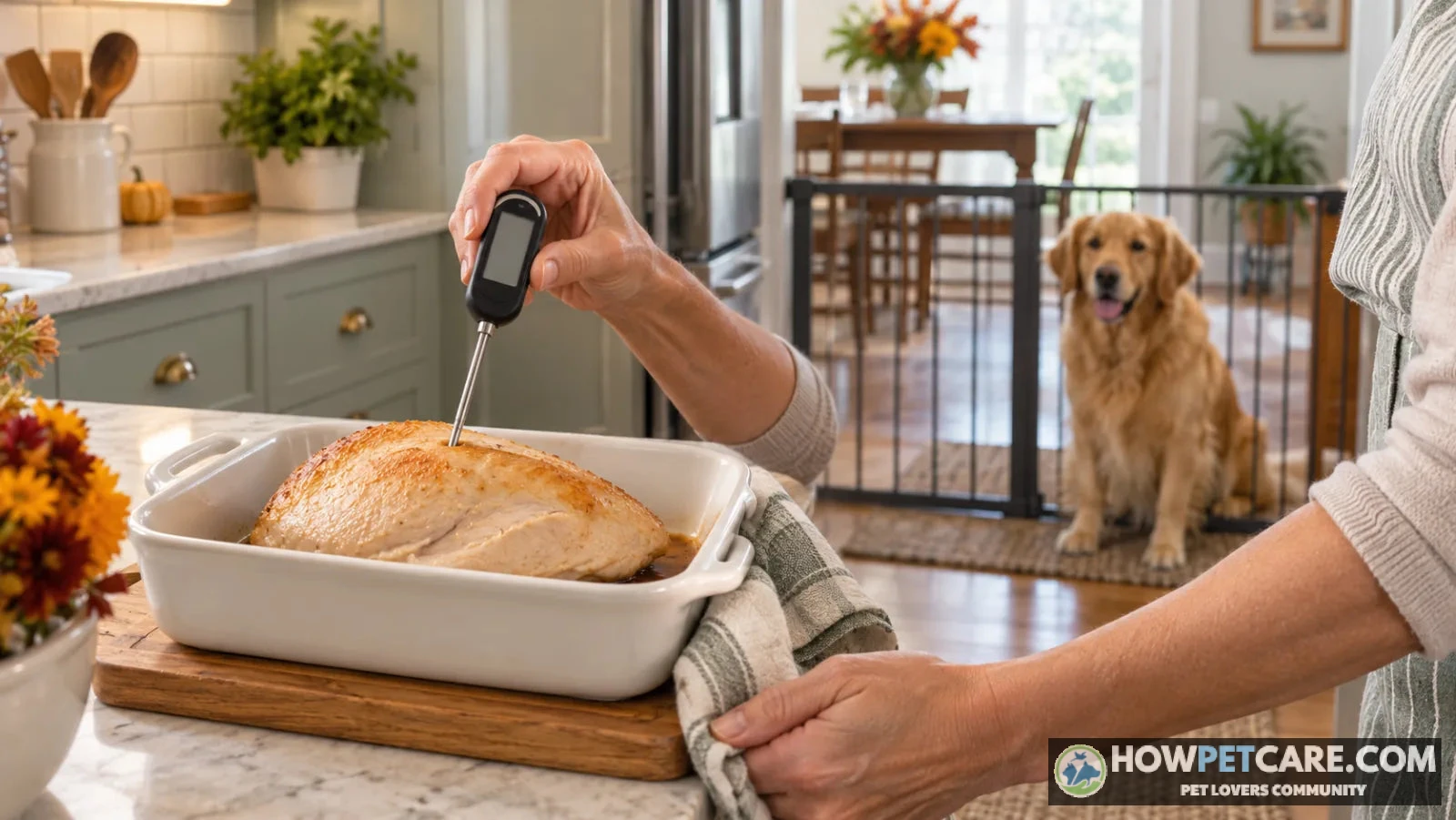

Yes. Dogs can eat plain, fully cooked turkey in small portions when it is boneless, skinless, and unseasoned. Avoid cooked or raw bones, fatty skin, gravy, stuffing, deli meat, and onion or garlic seasonings. Count turkey within the 10% daily treat-calorie limit, and call a veterinarian after bone or toxic-scrap ingestion.
Can Dogs Eat Turkey? The Immediate Safety Ruling
Yes, dogs can safely eat plain, fully cooked turkey meat when it is boneless, skinless, and unseasoned. Lean turkey provides protein and nutrients, but it should be a measured treat or temporary veterinarian-directed bland-food component—not a replacement for complete and balanced dog food.
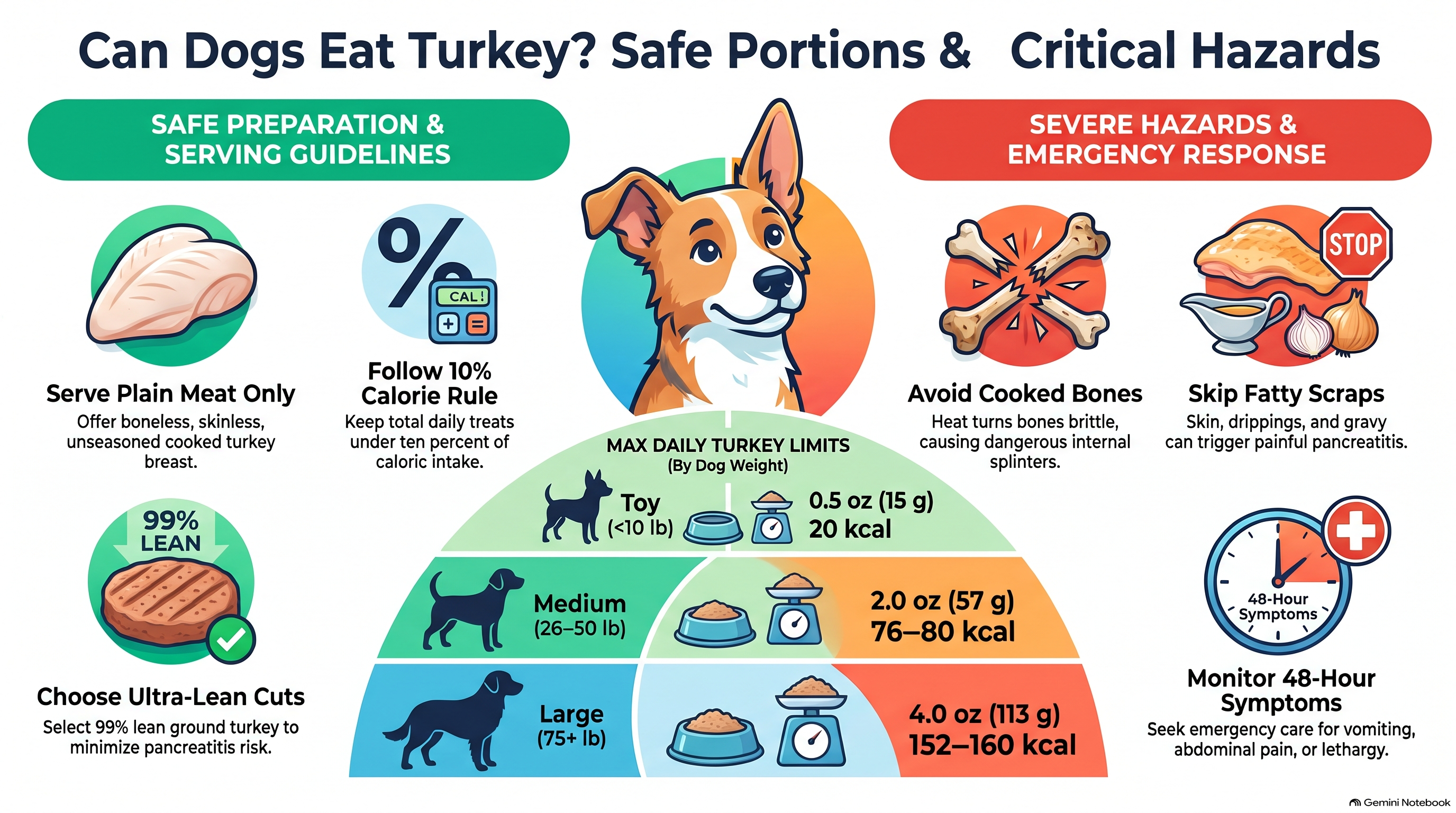
Never give a dog cooked turkey bones, fatty skin, gravy, stuffing, or meat prepared with onion or garlic. Cooked bones can splinter and cause choking, perforation, or intestinal obstruction, while fatty scraps may trigger pancreatitis. Onion and garlic—including powders used in seasoning blends—can damage canine red blood cells and cause anemia.
Turkey supplies highly digestible protein along with B vitamins, phosphorus, zinc, riboflavin, and selenium. A typical 84-gram serving of skinless turkey contains about 117 calories, 24 grams of protein, and 2 grams of fat. Those qualities make lean turkey useful as a treat, meal topper, or alternative protein for some dogs that do not tolerate beef or chicken.
Safe Cuts vs. Dangerous Scraps: Quick-Check Guide
Safe choices include:
- Boiled, poached, or baked turkey breast with no salt, oil, butter, or seasoning
- Plain dark meat after removing every piece of skin, visible fat, cartilage, and bone
- Fully cooked 99% lean ground turkey
- Fully cooked 93/7 ground turkey for healthy dogs that tolerate moderate fat
- Small portions of unseasoned cooked turkey heart or gizzard
Avoid feeding:
- Cooked bones, including drumsticks, wings, ribs, wishbones, and neck vertebrae
- Turkey skin, fatty drippings, gravy, stuffing, or casseroles
- Turkey seasoned with onion, garlic, chives, heavy salt, or spice blends
- Deli turkey, turkey bacon, sausage, cured meat, or heavily smoked turkey
- Spoiled leftovers or cooked turkey left at room temperature long enough to permit bacterial growth
Plain meat is food; the holiday preparation is the hazard. Serve only cooked, boneless, skinless, unseasoned turkey and count it within the dog’s daily treat allowance.
Can Puppies Eat Turkey Meat?
Puppies can eat tiny portions of plain cooked turkey once they eat solid food steadily. Their primary diet must remain a complete, balanced puppy formula designed for growth. Because puppies have tight calorie budgets and developing digestive tracts, offer a single bite first and watch for vomiting, loose stool, itching, or facial swelling.
Never use turkey to dilute a puppy’s regular meals unless your veterinarian advises it. Growing dogs need balanced ratios of calcium, phosphorus, and energy that plain muscle meat cannot supply on its own.

Weight-Based Turkey Portion Calculator: The 10% Treat Rule in Ounces and Grams
Treats and supplemental foods should provide no more than 10% of a dog’s daily calories. When deciding what human food can dogs eat as a snack, remember that the other 90% needs to come from food formulated for the dog’s life stage to meet recognized AAFCO nutritional profiles.
The guidelines below assume cooked, boneless, skinless turkey breast at roughly 38 to 40 calories per ounce, based on the documented 117 calories in an 84-gram serving. Treat these numbers as strict ceilings rather than mandatory daily helpings.
Weight-Tier Daily Feeding Guidelines
| Dog Weight Bracket | Typical Breeds | Max Daily Turkey (Ounces) | Max Daily Turkey (Grams / Tablespoons) | Approximate Calories |
|---|---|---|---|---|
| Under 10 lb | Chihuahua, Yorkie, Pomeranian | 0.5 oz | 15 g / about 1.5 tbsp shredded | 20 |
| 10–25 lb | Pug, Beagle, French Bulldog | 1.0 oz | 28 g / about 3 tbsp shredded | 38–40 |
| 26–50 lb | Spaniel, Border Collie, Standard Poodle | 2.0 oz | 57 g / about 1/4 cup diced | 76–80 |
| 51–75 lb | Boxer, Labrador Retriever, German Shepherd | 3.0 oz | 85 g / about 1/3–1/2 cup diced | 114–120 |
| 75+ lb | Great Dane, Mastiff, Newfoundland | 4.0 oz | 113 g / about 1/2 cup diced | 152–160 |
Daily energy needs shift with age, activity, body condition, neuter status, and overall health. A quiet 80-pound dog may require less than the table lists, while a working dog often has more caloric room. If your pet is on a veterinary weight-loss plan, follow the clinic’s specific treat allowance instead of this general guide.

Adjusting Meal Calorie Intake to Avoid Weight Gain
Lean meat still packs calories. Handing out 40 calories of turkey means cutting 40 calories from other snacks, or asking your vet how to reduce kibble portions without shortchanging essential nutrients.
Start well below the maximum limit, especially with toy breeds, puppies, older dogs, or pets with touchy stomachs. Break the allowance into small training bites throughout the day instead of dropping it in one bowl. You can offer plain turkey daily or as an occasional reward, but varying treats does not change that firm 10% ceiling.
The Three Critical Hazards: Cooked Bones, Fatty Skin, and Pancreatitis
Why Cooked Poultry Bones Splinter in Canine Guts
Heat robs poultry bones of their moisture and structural give. A dog’s jaw easily shatters a cooked wing or drumstick into jagged shards. Those points can lodge in the throat, pierce the stomach or bowel wall, or pack together into a physical blockage. A fragment that looks small enough to swallow can still tear tissue on the way down.
Problems often take hours to surface. Choking or an obstruction in the esophagus prompts rapid gagging, excessive drooling, constant swallowing, or labored breathing. Deeper damage along the intestinal tract manifests later through vomiting, belly pain, bloody stool, loss of appetite, or sudden weakness.
Commercial turkey tendon chews carry different risks than whole skeleton cuts, but they still warrant close supervision. Pick an item matched to your dog’s size, throw away short end stubs, and take the chew away if the dog tries to gulp large pieces whole.

Recognizing Pancreatitis Symptoms in Dogs
Turkey skin, pan drippings, butter, and gravy deliver a heavy surge of dietary fat. That sudden overload can spark acute pancreatitis, an excruciating inflammatory flare-up that can turn fatal. Dogs face elevated risk if they have had pancreatitis before, carry excess weight, manage diabetes, or struggle with rich meals.
Watch for these warning signs:
- Repeated vomiting or an inability to hold down water
- A tense, guarded, or painful belly
- The classic "praying" posture, with front paws flat and hips held high
- Severe lethargy, weak footing, or collapse
- Watery diarrhea, skipped meals, or fever
Holiday seasonings introduce extra hazards. Onion and garlic belong to the Allium genus and destroy red blood cells. Concentrated garlic or onion powder can induce toxicity. Heavy brines and salty gravies also drive up thirst and place dangerous strain on dogs with underlying heart or kidney conditions.
Gravy, stuffing, skin, drippings, brined meat, and seasoned scraps combine fat, sodium, and potentially toxic Allium ingredients. If the recipe is unknown, do not feed it.
Deli Slices, Bacon, and Ground Turkey: Assessing Processed Meats and Fat Ratios
Fresh home-cooked poultry bears little resemblance to processed cold cuts. Packaged deli slices, turkey bacon, and links are packed with sodium, nitrates, smoke flavorings, sweeteners, and garlic blends. Even items labeled low-sodium carry far too much salt compared to fresh, unseasoned breast meat.
| Turkey Product | Safety Rating | Average Sodium / Fat Hazard | Pancreatitis & Toxicity Risk | Vet Recommendation |
|---|---|---|---|---|
| Plain boiled or baked turkey breast | Safe | Very low when skinless and unsalted | Low | Feed within the 10% calorie limit |
| 99/1 ground turkey | Safe | Very low fat; check label for additives | Low | Cook thoroughly without oil and drain |
| 93/7 ground turkey | Use cautiously | Moderate fat | Moderate for sensitive dogs | Suitable for many healthy adults; avoid after pancreatitis unless approved |
| 85/15 ground turkey | Avoid as a treat | High fat | High digestive and pancreatitis risk | Choose 93/7 or leaner instead |
| Deli turkey or sandwich meat | Avoid | High sodium; may contain curing agents and seasonings | Moderate | Replace with fresh unseasoned breast meat |
| Turkey bacon or sausage | Avoid | High sodium and concentrated fat | High | Do not feed |
| Smoked turkey or jerky | Avoid unless made specifically for dogs | Salt, smoke flavoring, and seasoning vary | Moderate to high | Read the full label; plain fresh meat is safer |
| Cooked turkey neck | Dangerous | Bone hazard overrides nutrition | Extreme obstruction and perforation risk | Never feed |
Ground Turkey Lean-to-Fat Thresholds: 99% Lean vs. 85/15
Reach for 99% lean ground turkey to keep dietary fat minimal. A 93/7 mix works for most healthy adult dogs if you brown it completely, pour off the grease, and keep portions inside daily limits. An 85/15 package brings far more fat to the bowl: nutritional profiles indicate 85% lean turkey carries around 6 grams of saturated fat compared to roughly 1 gram in extra-lean grinds. Skip 85/15 and 80/20 grinds altogether, especially for pets prone to gut distress or pancreatitis.
No fat ratio removes the threat of pancreatitis entirely. Every dog tolerates fat differently, so treating 93/7 as a working threshold is a practical shopping habit rather than an ironclad safety shield.

The Dangers of High Sodium in Turkey Lunch Meat and Bacon
Never share a turkey sandwich. The cold cuts bring preservatives and heavy salt, while common additions like bread spreads, onions, and garlic introduce direct digestive irritants and toxins. Swallowing an accidental scrap of plain deli meat will rarely hurt a sound medium or large dog, but processed meats should never become regular treats.
These products carry sharp risks for dogs battling hypertension, heart failure, or kidney disease that requires a strict low-sodium regimen. Check package labels for onion powder, garlic powder, unspecified "spices," and cured salts instead of trusting the turkey label on the front.
Can Dogs Eat Turkey Necks, Giblets, and Organs?
Preparing Turkey Liver, Heart, and Gizzard Safely
The gizzard and heart are lean, hard-working muscles. You can boil or bake them plain without butter, oils, or spices. Trim away visible fat deposits, dice the cooked organ into bite-sized bits, and log them against your dog’s treat quota.
Turkey liver demands much tighter limits. While loaded with vital micronutrients, liver easily causes watery stool if overfed, and chronic excess can trigger vitamin A toxicity. Offer just a couple of small morsels rather than using liver as a primary meat, and hold off completely if your dog’s regular kibble or daily supplements already supply dense organ meats.
Never feed the giblet pouch if it simmered alongside onions, celery salt, or rich basting juices. Cook internal organs to safe temperatures and practice clean kitchen handling to prevent bacterial issues.

Raw vs. Cooked Turkey Necks: Obstruction Risks
Cooked turkey necks are unsafe under any circumstance. Heat turns their small spinal vertebrae brittle, inviting splintering, choking, and severe gut tears.
Raw necks spark debate among owners. While some raw-diet protocols include them under clinical supervision, veterinary guidelines generally advise against all poultry bones due to risks of broken teeth, choking, impaction, and Salmonella contamination. Skip raw necks to keep your dog safe. If you want to feed a raw diet, consult a board-certified veterinary nutritionist rather than experimenting with whole poultry parts.
Turkey vs. Chicken, Beef, and Salmon: Canine Protein Comparison
Different dogs thrive on different proteins. Plain turkey and chicken provide light, easily digestible protein; lean beef delivers high iron and zinc alongside naturally higher fat; salmon supplies beneficial omega-3 fatty acids, provided you cook it thoroughly and remove every fine pin bone. Pet parents managing sensitive stomachs often wonder can i feed a dog eggs as another gentle protein, which works well when thoroughly scrambled or hard-boiled.
| Protein Source (Cooked, Plain) | Crude Protein (per 100g) | Fat Content (per 100g) | Calories (per 100g) | Primary Canine Health Benefit | Allergy / Sensitivity Risk |
|---|---|---|---|---|---|
| Skinless turkey | About 29 g | About 2.4 g | About 139 kcal | Lean protein plus B vitamins, phosphorus, and selenium | Useful alternative for some dogs, but reactions remain possible |
| Skinless chicken breast | Varies by cut and cooking | Low | Lean | Highly digestible protein | Chicken sensitivity is possible |
| Lean ground beef | Varies by leanness | Moderate to high | Higher than lean poultry | Protein, iron, and zinc | Beef sensitivity is possible |
| Cooked salmon | High | Moderate | Moderate | Protein and omega-3 fatty acids | Usually well tolerated; avoid raw or undercooked fish |
The turkey figures reflect values calculated from an 84-gram baseline providing 24 grams of protein, 2 grams of fat, and 117 calories. True values fluctuate based on cuts, cooking styles, and trimming, so verify nutrition labels rather than treating every meat serving as identical.
Turkey is not automatically hypoallergenic. A dog allergic to chicken may do well on turkey, but cross-reactivity and independent poultry allergies happen. True elimination food trials require veterinary supervision and strictly isolated ingredients.
Plain boiled turkey works well in a vet-recommended short-term bland diet. While can dogs eat rice alongside boiled meat to calm minor stomach irritation, plain meat and grains lack the complete balance needed long-term, and persistent symptoms require prompt veterinary care.

Emergency Triage: 48-Hour Action Protocol for Ingested Bones or Toxic Scraps
Contact your veterinarian or local emergency hospital immediately if your dog swallows a cooked bone, consumes seasoned scraps, or shows sudden distress. If you suspect onion or garlic poisoning, ring your vet or the ASPCA Animal Poison Control Center with the dog’s weight, the ingredients, an estimate of the amount eaten, and the time it occurred.
Immediate Actions: What NOT to Do
-
0–2 minutes: Check breathing and the mouth
If the dog is gagging, pawing at the face, drooling heavily, or struggling to breathe, seek emergency help. Remove a fragment only when it is plainly visible, loose, and easy to grasp. Never sweep blindly behind the tongue.
-
0–2 hours: Call a veterinary professional
Report the dog’s weight, the type and size of bone or scrap, ingredients, quantity, and time eaten. Follow the clinic’s instructions rather than waiting for symptoms.
-
Do not induce vomiting
Never give hydrogen peroxide or another emetic after a sharp cooked bone is swallowed. Bringing fragments back up can injure or perforate the esophagus and can lead to aspiration.
-
Feed only if the veterinarian approves
Do not rely on cotton balls or force bulky food. A veterinarian may recommend a normal meal or a specific soft food in an individual case, but food cannot neutralize a sharp bone or treat an obstruction.
Never tug on bone fragments stuck in the throat or visible near the rectum. Hold off on oils, human laxatives, antacids, or pain relievers unless your veterinarian explicitly prescribes them.
The 24- to 48-Hour Symptom Checklist: When to Go to the ER
From 2 to 24 hours: Watch for hard swallowing, heavy drooling, dry heaving, vomiting, a tucked belly, the praying pose, food refusal, restlessness, or sudden exhaustion. Unstoppable vomiting, labored breathing, collapse, or severe belly pain demands immediate emergency care.
From 24 to 48 hours: Keep evaluating energy, bowel movements, water intake, and abdominal comfort. Black tarry stool, streaks of fresh blood, unproductive straining, distended bellies, weakness, or pale gums point toward internal tears, blockages, pancreatitis, or infection. Head to an emergency animal hospital without delay.
Mild dietary indiscretion can produce a single soft stool in a pet that otherwise acts lively, happy, and hungry. That looks very different from continuous diarrhea, visible blood, repeated vomiting, or profound lethargy. When in doubt—especially with small breeds, puppies, seniors, or dogs with chronic conditions—call the clinic instead of waiting it out at home.
A dog can initially appear normal after swallowing a cooked turkey bone. Early veterinary advice is safer than waiting for obstruction, bleeding, or perforation signs.

Step-by-Step Checklist: How to Cook Plain Turkey for Your Dog
- Select a lean cut. Choose fresh turkey breast, extra-lean ground turkey, or well-trimmed dark meat. Avoid spoiled packs or raw poultry pre-basted in high-sodium brines.
- Remove skin and visible fat. Pull the skin and trim fat deposits prior to cooking, then inspect the meat again afterward. Skin and drippings add unnecessary fat that may upset dog digestion or trigger pancreatitis.
- Cook without additions. Poach, boil, or bake the meat dry with zero oil, butter, salt, broths, onions, or seasonings. Brown ground turkey completely and drain off remaining fat.
- Debone by hand. Shred the meat thoroughly with your fingers, checking for fine rib splinters, gristle, and neck bones. Seal discarded bones inside an outside garbage can your pet cannot reach.
- Cool and measure. Let the cooked meat cool to room temperature. Weigh out the safe portion using the chart, and dice it to match your dog’s chewing habits. Start small if turkey is new to their diet.
- Adjust the day’s treats. Count turkey toward the 10% daily treat ceiling. Do not add the full turkey allowance on top of biscuits, chews, table scraps, and training rewards.
- Store promptly. Place cooked turkey in an airtight container in the fridge for up to three days, or freeze pre-portioned baggies. Throw away leftovers left out at room temperature to avoid bacterial contamination.
- Observe after serving. Stop feeding turkey and contact your clinic if your dog exhibits vomiting, diarrhea, abdominal sensitivity, hives, or breathing problems.
Plain turkey serves as an effective training reward when prepared correctly. Check portions ahead of time, keep carcasses and spiced scraps locked away, and save the packaging if an accidental ingestion requires a quick call to the vet.

FAQ
Can dogs eat turkey sandwich meat if it is low-sodium?
Even low-sodium deli turkey remains too high in sodium and contains nitrates, dextrose, and curing salts unsuitable for canine digestion. Opt instead for freshly boiled, unseasoned turkey breast slices as a treat.
Is ground turkey better for dogs with an upset stomach than chicken?
Boiled 93% or 99% lean ground turkey is an excellent alternative to boiled chicken for gastrointestinal recovery, particularly for dogs with suspected chicken sensitivities or poultry allergies.
Can dogs eat raw turkey on a raw diet?
While raw turkey meat and raw bone-in cuts are used in balanced BARF diets, raw commercial poultry carries a significant risk of bacterial contamination like Salmonella and Campylobacter for both dogs and human handlers. Consult a board-certified veterinary nutritionist before feeding raw poultry.
Will a small piece of turkey with gravy hurt my dog?
A tiny scrap is unlikely to cause lasting harm in large dogs, but rich gravy contains concentrated fats, sodium, flour, and frequently toxic garlic or onion powder. In small or sensitive dogs, even a tablespoon of fatty gravy can trigger painful acute pancreatitis.