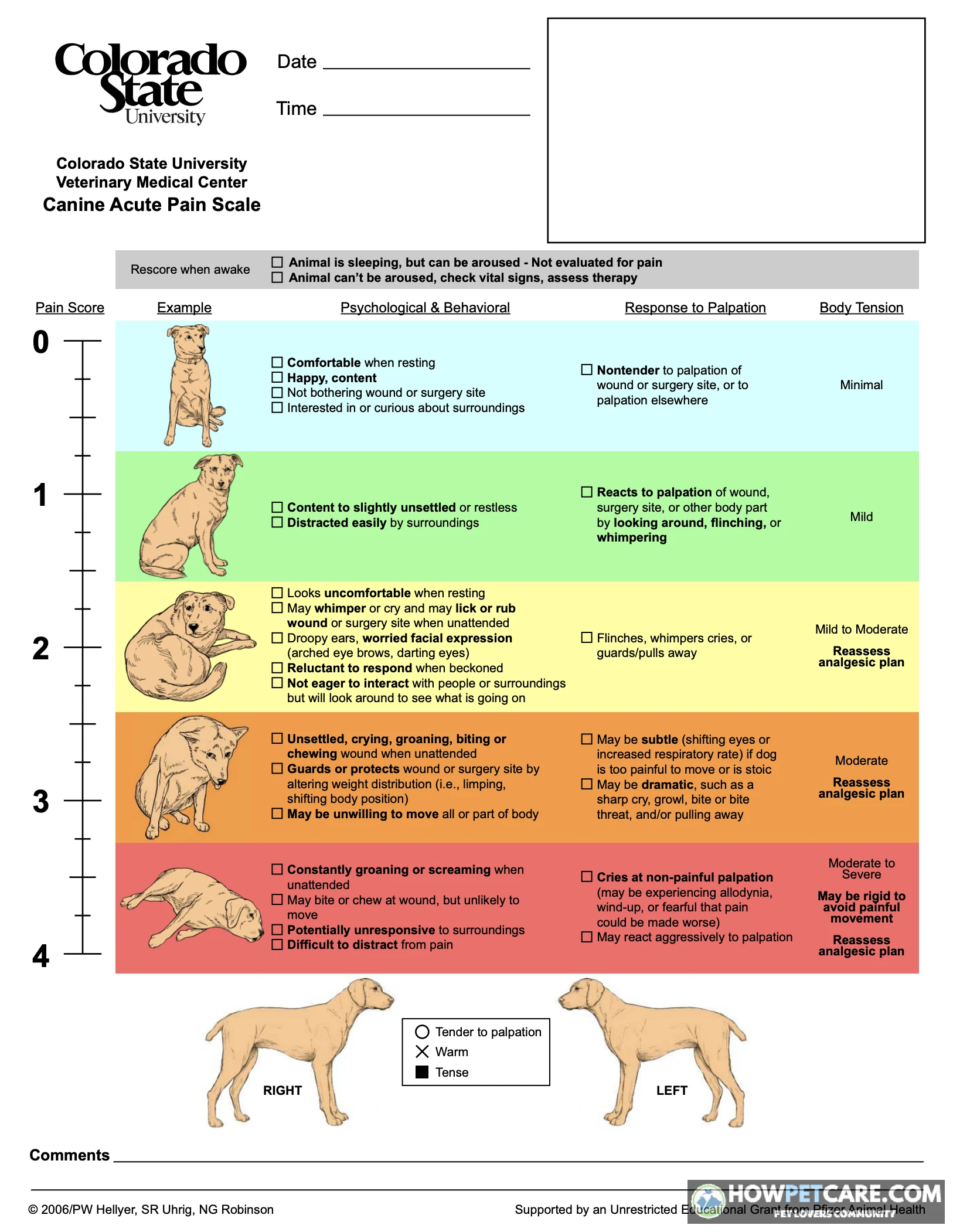

Look for a change from your dog’s normal routine, not only crying or limping. Common clues include:
- New limping, stiffness, shorter steps, or hesitation with stairs and jumping
- Arched back, tucked abdomen, lowered head, or repeated prayer position
- Restlessness, panting at rest, trembling, hiding, clinginess, or irritability
- Eating less, sleeping differently, or licking one spot repeatedly
- Emergency signs: breathing trouble, collapse, swollen painful belly, inability to urinate, major trauma
Persistent, worsening, or multiple changes warrant a call to a veterinarian.
A dog in pain may limp or whimper, but the clues are often quieter: taking longer to stand, skipping a favorite jump, licking one spot repeatedly, eating less, or acting differently around family. Compare what you notice with your dog’s usual routine and note when the change began. These signs can have causes other than pain, so they can’t confirm a diagnosis.
If your dog is struggling to breathe, has collapsed, can’t urinate, has a swollen, painful belly, or has suffered a major injury, contact an emergency veterinarian and go in immediately. For less obvious changes, the urgency guide below can help you decide what to do next.
How to tell if your dog is in pain: check these signs first
Look for a new change in movement, posture, behavior, or daily habits—especially one that persists, worsens, or appears alongside other symptoms. A dog doesn’t have to cry or limp to need veterinary attention.
Mobility and posture changes
Watch your dog move during their usual routine. Possible signs of pain include limping, taking shorter steps, shifting weight off a leg, or making several attempts to rise. Your dog may hesitate at stairs, stop jumping onto a favorite chair, or walk more slowly than usual.
Posture can offer useful clues. A dog may stand with an arched back, a tucked-up abdomen, or their head held lower than usual. In the prayer position, the front legs and chest are lowered while the hindquarters remain raised. Dogs stretch this way, too, so a brief stretch alone doesn’t prove pain. Repeated or prolonged positioning, especially with vomiting or a swollen belly, calls for urgent veterinary advice.

Behavior, physical symptoms, and daily habits
Watch for restlessness, panting while resting, trembling or shaking, whimpering, or trouble settling. Some dogs lick or chew one area repeatedly; others eat less, sleep differently, avoid touch, or become unusually quiet. Repeated licking can point to localized discomfort, though skin problems and other causes are possible.
Normal versus possible pain: a 30-second scan
| Area | Usual behavior | Possible pain sign | What to note |
|---|---|---|---|
| Standing | Bears weight comfortably; usual relaxed posture | Arched back, tucked abdomen, lowered head, or weight shifted off a leg | Which leg is affected and how long the posture lasts |
| Walking | Usual stride and pace | Limping, short steps, or reluctance to use stairs | When it started and whether it changes after rest |
| Rising and jumping | Gets up and reaches favorite places in their usual way | Multiple attempts to stand or hesitation before jumping | Time of day and whether the floor is slippery |
| Sleep and rest | Settles in familiar positions | Repeatedly changes position, pants at rest, or cannot settle | When it happens and how often |
| Eating | Eats at their normal pace | Leaves food, drops kibble, or chews on one side | Foods affected and when they last ate |
| Social behavior | Usual interest in people and interaction | Hides, becomes unusually clingy, or growls when approached | What changed and what happened immediately beforehand |
| Grooming | Occasional grooming | Repeated licking or chewing of one spot | Location and any visible redness or swelling |
Why dogs hide pain—and why some become clingy instead
Dogs may show pain indirectly rather than vocalizing, so even a small change can be worth noting. The best comparison isn’t another dog’s behavior; it’s your dog’s own routine.
Subtle signs your dog is in pain
A dog that still goes for walks might take a shorter route, lag behind, or lie down sooner afterward. One that normally sleeps through the night might get up repeatedly and change position. Less play, a pause before climbing steps, or reluctance to be brushed can also be subtle signs your dog is in pain.

These changes don’t point to pain alone. Illness, stress, changes in vision, and other problems can also alter a dog’s routine. Tell your veterinarian what’s different rather than trying to identify the cause yourself.
Dog behavior changes that signal pain
Some dogs withdraw; others become clingy. One may hide or move away, while another follows their owner closely or seeks more contact than usual. A dog may also become irritable or show aggression when touched, even if they normally enjoy being handled.

Give a dog that growls or pulls away some space. Don’t punish the behavior or touch them again to test their reaction. Pain or fear can make even a familiar dog bite.
Choose the right urgency: emergency vet, prompt appointment, or brief monitoring
Read the table from top to bottom. If you’re unsure which category fits, call a veterinarian or emergency clinic and describe what you’re seeing. A low score on a home log doesn’t override an emergency sign.
| Action | Example signs | What to do |
|---|---|---|
| Emergency vet now | Difficulty breathing, collapse, sudden inability to stand, uncontrolled bleeding, major trauma, suspected poisoning, inability to urinate, a swollen painful abdomen, or a seizure | Call an emergency clinic while arranging immediate transport; don’t wait to see whether the signs resolve |
| Call a veterinarian promptly | Significant or worsening pain, a persistent limp, repeated vomiting, refusal to eat or drink, pain interrupting sleep, or a concerning change after surgery | Call now for same-day guidance; the clinic can determine whether your dog needs urgent examination |
| Brief monitoring | A mild, one-time change that is already improving in a dog otherwise eating, drinking, walking, and resting normally | Limit activity, record what happened, and reassess; call if it persists, returns, worsens, or another sign appears |
Emergency red flags
A swollen or hard abdomen, especially with distress or unproductive attempts to vomit, needs emergency attention. So do repeated attempts to urinate with little or no urine, sudden inability to stand, serious bleeding, or difficulty breathing. After a major accident, seek emergency care even if your dog initially seems able to walk.
Call ahead if possible, but don’t delay leaving for a lengthy home assessment. Handle your dog gently and ask the clinic how best to move them.

Signs that need a scheduled or prompt appointment
Contact your regular veterinarian promptly if the pain seems to be worsening or affects walking, eating, drinking, or sleep. Repeated vomiting, refusal of food or water, inability to bear weight, and concerns after surgery warrant a call now—not an appointment automatically booked several days away. The clinic may direct you to emergency care.
For a milder, persistent change—such as hesitation on stairs or an intermittent limp—call to arrange an appointment and ask how soon your dog should be seen. Mention other symptoms, even if they seem unrelated.
When short-term monitoring may be appropriate
If your dog briefly hesitates on a walk but returns to normal right away and has no other concerning signs, cautious observation may be reasonable. Note the time, restrict strenuous activity, and check again over the next several hours and the following morning. Call if the change persists, recurs, or worsens. Don’t assume every limp is safe to watch for a fixed number of days.
A clinic can give case-specific triage advice based on your dog’s symptoms, medical history, and circumstances. Call rather than relying on a checklist when you are unsure.

Score and track pain at home before you call the vet
A log can help you describe a trend, but it can’t measure pain precisely or tell you whether your dog is safe to wait. The Canine Brief Pain Inventory is a validated owner questionnaire that asks about pain severity and interference with daily activities. The simple log below borrows that practical focus, but it is not the validated questionnaire or a clinical pain scale for dogs.
A simple daily pain and function log
Morning and evening, watch your dog during normal activities. For each category, use 0 for usual behavior, 1 for a mild change, 2 for a clear change, or 3 for a major change. Add a brief description. If you didn’t observe an activity, write “not observed” rather than guessing.
- ☐ Movement: Walking, rising, and willingness to do usual activities.
- ☐ Rest and posture: Settling, sleep, panting at rest, and usual positions.
- ☐ Eating and drinking: Interest, amount, pace, and any difficulty eating.
- ☐ Mood and interaction: Usual engagement, hiding, clinginess, or irritability.
- ☐ Everyday contact: Responses to ordinary, unavoidable handling—not a deliberate touch test.
For example, you might write: “Movement 2: limped on right front leg when walking to water; rest 0: settled normally.” Compare the same categories over time instead of relying on a total. There’s no validated cutoff for this homemade log. A severe sign, an emergency symptom, or a worsening pattern matters regardless of the numbers.

Never press an injured area, lift a painful limb, or make your dog walk, climb, or accept touch to complete the log. If your dog can’t stand or is severely distressed, seek urgent care instead of scoring.
What to document for the appointment
Keep a note on your phone so you can report the details accurately:
DOG SYMPTOM NOTE
Dog: name, age, breed, weight
First noticed: date and time; what was happening
Changes: movement, posture, eating, sleep, behavior, licking
Location: affected leg or body area, if known
Morning/evening observations: category ratings and examples
Trend: better, unchanged, or worse; since when
Last normal urination and bowel movement:
Medicines, supplements, or other substances given: name, amount, time
Questions for the veterinarian:
If your dog is already moving or eating, a short video can show the vet what you’re seeing at home. Capture walking on flat ground, rising naturally, or eating. Don’t ask your dog to use stairs, jump, or repeat a painful movement for a video.
Match common pain patterns to likely causes, including age and recovery
Patterns can help you explain your concern, but they can’t identify the cause. Several conditions can produce the same behavior, and a veterinarian needs to assess your dog.
| Possible source | Common observable clues | Recommended next step |
|---|---|---|
| Arthritis or hip problems | Stiffness after rest, difficulty rising, shorter walks, or reluctance to jump | Arrange a veterinary examination; record when movement is hardest |
| Post-surgery discomfort | Difficulty settling or moving, particularly if worsening rather than improving | Follow discharge instructions and call the surgical clinic about concerns |
| Dental or mouth pain | Dropping food, chewing on one side, bad breath, or avoiding hard food | Arrange an examination; do not force the mouth open |
| Abdominal discomfort | Hunched posture, repeated prayer position, restlessness, or vomiting | Call promptly; go to an emergency vet for a swollen painful belly or severe distress |
| Cancer-related pain or another illness | Persistent limping, a growing lump, reduced appetite, or declining activity | Arrange an examination; these signs are not specific to cancer |
How to tell if an older dog is in pain
An older dog may rest more or choose a slower walk, but difficulty getting up, avoiding a step they once managed, or repeatedly changing position at night shouldn’t simply be dismissed as age. Note what your dog could do a month ago and what has changed. A veterinarian can investigate whether pain, another medical problem, or several factors are involved.

Arthritis, hip, and post-surgery pain
Signs of joint pain in dogs can include stiffness after lying down, slipping when rising, hesitation before jumping, or a shorter stride. Arthritis and hip problems are possible explanations, not conclusions you can draw from home observations. Share a video of your dog walking naturally and explain which activities have changed.
After surgery, compare your dog’s progress with the written discharge instructions. Some changes may be expected during recovery, but call the surgical clinic if pain seems to be increasing, your dog can’t settle, the wound looks worse, your dog is markedly lethargic, or recovery isn’t progressing as the clinic described. If the clinic is unavailable and your dog has an emergency sign, contact an emergency veterinarian.
Dental, stomach, and cancer-related pain
A dog with mouth discomfort may approach food but drop pieces, chew on one side, chatter their teeth, or move away from the bowl. Bad breath or facial sensitivity can be useful details to report, but don’t try to inspect the mouth if your dog resists.

Signs of stomach pain in dogs can include an arched back, repeated prayer position, restlessness, and vomiting. These signs have many possible causes. A swollen, painful belly or severe distress calls for emergency care; repeated vomiting warrants a prompt call.
For a dog with cancer, a new limp, reluctance to move, reduced appetite, unexplained weight loss, or a change in rest may signal discomfort or another problem. The same signs also occur in dogs without cancer. Contact the veterinary team about new or worsening changes rather than assuming what they mean.
Keep your dog safer and more comfortable while arranging care
Give your dog a quiet, padded resting place they can reach without jumping. Put non-slip mats along the route to their bed, water, and the door. Limit running, rough play, stairs, and jumping. If your dog can walk safely, use short, controlled leash trips for bathroom breaks. A ramp may help if your dog can use it comfortably and your veterinarian hasn’t restricted movement. A raised bowl may make eating easier for some dogs, but don’t force a position that seems uncomfortable.

Offer water unless the veterinary clinic gives different instructions. If an emergency visit, sedation, or testing may be needed, ask the clinic whether to feed your dog. Don’t force-feed or change the normal feeding routine without guidance.
What to avoid before the appointment
Don’t massage a painful area, force exercise, or apply a heating pad or ice pack without advice specific to your dog’s condition. Avoid repeatedly checking an area that makes your dog flinch or growl. Don’t change or stop prescribed medication without contacting the prescribing clinic for instructions.
Human medicines and veterinary pain relief
Ibuprofen, acetaminophen (Tylenol), and naproxen can be toxic and dangerous to dogs. Don’t give them as home pain relief. Don’t give aspirin or another human medicine unless a veterinarian specifically directs you to do so for your dog.
Benadryl (diphenhydramine) is an antihistamine used for certain allergy-related symptoms, not a pain reliever. It isn’t a substitute for pain treatment. Ask a veterinarian before using it for any purpose because products and individual dogs differ.
If your dog has already swallowed a human medication, call a veterinarian or animal poison-control service immediately. Have the packaging and the approximate amount and time available. Don’t induce vomiting unless a professional directs you to.

Only give a medicine when your veterinarian has advised it for your dog and the current problem. A product that helped another pet—or was prescribed for an earlier illness—may not be appropriate now.
What the vet may check, how pain is treated, and what it may cost
Bring your symptom log, any useful videos, and a list of all medicines and supplements your dog has received. Tell the clinic about your budget before testing begins so the team can explain priorities and provide an estimate.
Diagnosis and treatment options
The veterinarian will ask when the changes began and how they affect your dog’s routine. They may watch your dog walk, perform a physical and neurologic examination, and recommend tests based on their findings. These may include X-rays, blood work, or an ultrasound; not every dog needs every test.

Treatment depends on the cause and the individual dog. Options may include veterinarian-prescribed NSAIDs for dogs, other veterinarian-prescribed pain medication, treatment of the underlying condition, or veterinarian-directed physical rehabilitation. A veterinarian may also discuss veterinarian-administered acupuncture or cold laser therapy when appropriate. Dog-specific NSAIDs require veterinary selection and monitoring; never substitute a human product.
Questions to ask about estimates and costs
Costs for an examination, X-rays, blood work, ultrasound, and treatment vary by region and clinic, and emergency care can cost more. Reliable price ranges aren’t available in the evidence used for this article, so a local written estimate is more useful than an unverified national figure.
Ask the clinic:
- What is the examination fee, and is there an emergency or after-hours charge?
- Which tests are most important now, and what does each estimate include?
- Are there reasonable staged options if my budget is limited?
- What might medication, follow-up visits, or rehabilitation add to the cost?
- What changes should prompt me to call before the next appointment?
Use this next-step checklist to decide what to do today
- ☐ Check for emergency signs first. If your dog has one, call an emergency veterinarian and arrange immediate care.
- ☐ Call promptly for persistent, worsening, or disruptive changes. Describe effects on walking, eating, drinking, sleep, and recovery from surgery.
- ☐ If the change is mild and already improving, observe briefly. Record what happened and reassess over the next several hours and the following morning; call if it persists, returns, or worsens.
- ☐ Keep your dog comfortable while you arrange care. Limit exertion, provide a padded resting place and secure footing, and avoid unapproved medicine.
- ☐ Take your notes and natural-activity videos to the appointment. Include the names and timing of anything your dog has received.
| Possible Source or Condition | Common Observable Clues | Urgency Level | Recommended Action | Things to Avoid |
|---|---|---|---|---|
| Emergency condition (e.g., major trauma, collapse, swelling/bloat, urinary obstruction, severe pain) | Difficulty breathing, collapse, sudden inability to stand, uncontrolled bleeding, major trauma, suspected poisoning, inability to urinate, swollen painful abdomen, or a seizure | Emergency vet now | Call an emergency clinic while arranging immediate transport; don't wait to see whether the signs resolve. Handle your dog gently and ask the clinic how best to move them. | Don't wait to see whether signs resolve. Don't press an injured area, lift a painful limb, make your dog walk, climb, or accept touch. Don't force-feed, massage, apply heat/ice, or give human medication. |
| Significant, worsening, or persistent internal/physical pain condition | Significant or worsening pain, a persistent limp, repeated vomiting, refusal to eat or drink, pain interrupting sleep, or a concerning change after surgery | Call a veterinarian promptly | Call now for same-day guidance; the clinic can determine whether your dog needs urgent examination. Limit activity and keep your dog comfortable. | Do not wait for an appointment automatically booked several days away. Don't massage, force exercise, apply heat/ice, test touch/pain responses, or change/stop prescribed medication without guidance. |
| Abdominal discomfort | Hunched posture, repeated prayer position, restlessness, or vomiting (or swollen, painful belly) | Call promptly; Emergency vet if belly is swollen/painful or dog is in severe distress | Call promptly; go to an emergency vet for a swollen painful belly or severe distress. | Do not wait if accompanied by severe distress, unproductive vomiting attempts, or abdominal swelling. |
| Post-surgery discomfort | Difficulty settling or moving, particularly if worsening rather than improving; wound looking worse, marked lethargy, or failure to progress | Prompt call / Urgent (if worsening) | Follow discharge instructions and call the surgical clinic about concerns. If unavailable and emergency signs are present, contact an emergency vet. | Don't ignore worsening pain or failure to progress as described by the clinic. |
| Mild, self-limiting issue or minor strain | A mild, one-time change (e.g., brief hesitation on a walk) that is already improving in a dog otherwise eating, drinking, walking, and resting normally | Brief monitoring | Limit activity, record what happened, restrict strenuous activity, and reassess over the next several hours and the following morning; call if it persists, returns, or worsens. | Don't assume every limp is safe to watch for a fixed number of days; do not force exercise, run, jump, or play roughly. |
| Arthritis or hip problems | Stiffness after rest, difficulty rising, shorter walks, reluctance to jump, slipping when rising, or a shorter stride | Not explicitly specified (requires veterinary evaluation/appointment) | Arrange a veterinary examination; record when movement is hardest and share a video of your dog walking naturally. | Do not force your dog to walk, climb, jump, or use stairs to take a video or complete a log; avoid slipping by placing non-slip mats. |
| Dental or mouth pain | Dropping food, chewing on one side, bad breath, avoiding hard food, teeth chattering, moving away from bowl, or facial sensitivity | Not explicitly specified (requires veterinary examination) | Arrange a veterinary examination; report details like bad breath or facial sensitivity. | Do not force the mouth open or try to inspect the mouth if your dog resists. |
| Cancer-related pain or another illness | Persistent limping, a growing lump, reduced appetite, declining activity, reluctance to move, unexplained weight loss, or changes in rest | Not explicitly specified (requires veterinary assessment) | Arrange an examination and contact the veterinary team about new or worsening changes. | Do not assume what the signs mean or dismiss them without contacting your veterinary team. |
FAQ
Can a dog be in pain without limping or whimpering?
Yes. Dogs may show pain through reduced activity, stiffness, appetite or sleep changes, repeated licking, altered posture, or becoming unusually withdrawn or clingy. Compare with your dog’s normal behavior and contact a veterinarian about persistent or worsening changes.
Should I feed my dog before a pain-related vet appointment?
Call the clinic for instructions, especially if sedation, anesthesia, or testing may be needed. Do not withhold food or change your dog’s routine without veterinary guidance unless the clinic tells you to.
Can I use a heating pad or ice pack on my dog’s painful area?
Do not apply heat or ice without advice specific to the injury or condition; either can be inappropriate or cause harm if used incorrectly. Ask your veterinarian what, if anything, is safe while you arrange care.
How long should I monitor a mildly limping dog at home?
There is no safe time limit for every dog or cause. Restrict activity and contact a veterinarian if the limp persists, worsens, follows trauma, or comes with other symptoms; seek urgent advice if your dog cannot bear weight or appears severely distressed.