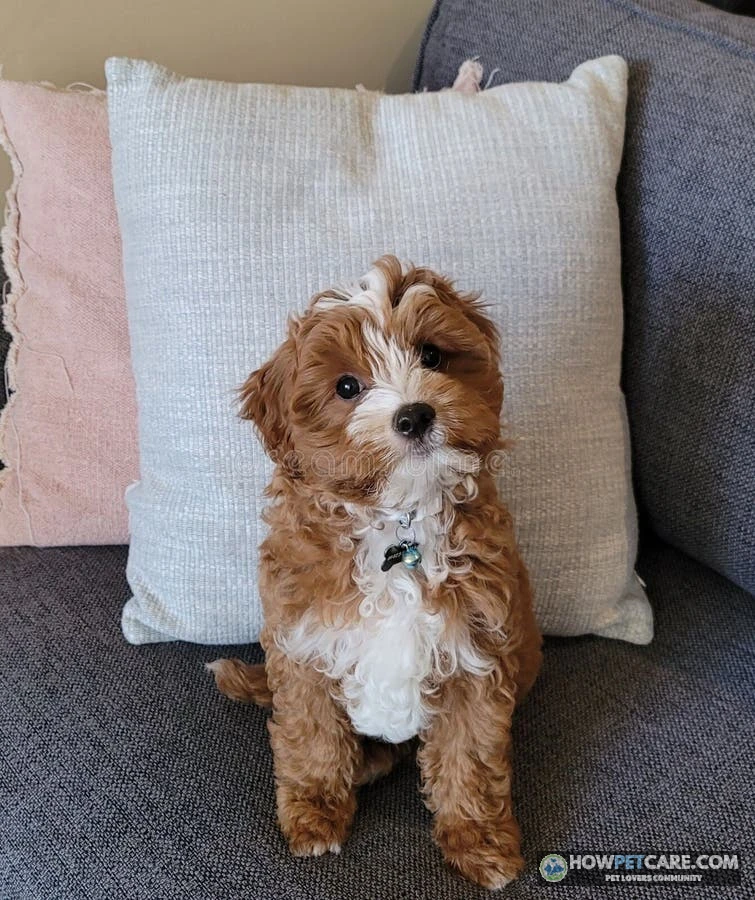

A Cavapoo is a small Cavalier King Charles Spaniel and Poodle cross prized for an affectionate, people-oriented temperament. US buyers should budget about $1,500–$4,000 for a puppy and $3,900–$10,000 for the first year, while vetting breeders with PRA, patellar, cardiac, and eye documentation and planning for grooming, daily exercise, and gradual alone-time training.
A Cavapoo is a cross between a Cavalier King Charles Spaniel and a Poodle, usually a Toy or Miniature Poodle. For many US households, it works as a first dog when the family wants an affectionate, people-oriented companion and can commit to grooming, daily exercise, and gradual alone-time training. It is not a good fit for a home that needs long unattended hours, very low maintenance, or a guaranteed non-shedding dog.
No dog is 100% hypoallergenic; Cavapoos may shed less than many breeds, but allergy triggers come from dander and saliva, not hair alone.
What a Cavapoo Is and Whether It Fits Your Home
A Cavapoo is commonly described as a designer dog breed created from a Cavalier King Charles Spaniel and a Poodle. The appeal is usually temperament: affectionate, social, adaptable, and often suitable for first-time owners. The trade-off is that the same people-oriented nature can make separation anxiety more likely if the dog is left alone for long stretches.
Apartment suitability is less about yard size and more about routine. A Cavapoo can live comfortably in an apartment if it gets daily exercise, mental enrichment, and gradual alone-time conditioning. A fenced yard helps, but it does not replace walks, training, or companionship.
Quick facts at a glance
- Height: about 9–14 inches at the shoulder
- Weight: about 8–20 pounds, depending on the Poodle parent size
- Lifespan: commonly 10–16 years
- Coat types: wavy, curly, or straight
- Common colors: apricot, cream, red, black, chocolate, and parti patterns
- Daily exercise: roughly 30–80 minutes, split between walks, play, and training
- Shedding: low to moderate; no coat type is guaranteed non-shedding
- Best fit: people-oriented homes that can provide companionship, grooming, and consistent routines

Suitability scorecard
| Factor | Usually fits | Watch out for |
|---|---|---|
| First-time owners | Yes, with training support | Separation anxiety if alone too long |
| Families with children | Often yes | Needs gentle handling and supervision |
| Allergy-sensitive homes | Maybe | No hypoallergenic guarantee; dander and saliva matter |
| Apartment living | Often yes | Noise, barking, and alone-time training |
| Low-grooming homes | No | Regular brushing and professional grooming needed |
| Very busy schedules | No | Needs companionship and routine |
Cavapoo Size, Coat and Shedding: What "Hypoallergenic" Really Means
Growth and adult size
Full-grown Cavapoos vary more than many purebred dogs because adult size depends heavily on the Poodle parent and generation. Most fall around 9–14 inches tall and 8–20 pounds, with miniature Cavapoos often at the smaller end of that range. A buyer should ask the breeder for parent sizes and prior litter adult weights rather than relying on labels such as "teacup" or "mini."
Coat, shedding, and allergy evidence
A Cavapoo coat can be curly, wavy, or straight, depending on inherited traits and generation. Shedding is often low to moderate, but it is not zero. The common claim that Cavapoos are hypoallergenic is marketing language, not a medical guarantee: allergy triggers are linked to dander and saliva, so a low-shedding coat alone does not promise allergy safety.
Practical management includes frequent brushing, professional grooming every 4–8 weeks, regular bathing, vacuuming, washing bedding, and keeping the dog out of bedrooms if allergies are a concern. A trial visit with the specific puppy or parent dog is more useful than a breed-level promise.

US Cavapoo Cost and First-Year Budget
Purchase-price bands
US Cavapoo puppy prices from reputable breeders commonly fall around $1,500–$4,000, with variation by generation, parent size, region, demand, and health testing. Marketing terms such as "rare color," "F1b," or "hypoallergenic" should not be treated as automatic price justifiers. Rescue or rehome options may cost less but can involve different age, health, and temperament unknowns.
First-year cost breakdown
| Expense | Typical US range | Notes |
|---|---|---|
| Puppy from reputable breeder | $1,500–$4,000 | Varies by generation, region, demand, and health testing; marketing labels should not justify extreme prices |
| Initial exams, vaccines, microchip | $250–$600 | Includes first-year core veterinary visits |
| Spay or neuter | $200–$500 | Often scheduled after growth milestones |
| Food for 12 months | $400–$900 | Small-breed formula; adjust for weight and activity |
| Professional grooming | $400–$1,200 | Every 6–8 weeks is common for curly or wavy coats |
| Pet insurance | $300–$800 | Premiums vary by age, deductible, and reimbursement level |
| Supplies, crate, bed, toys | $200–$500 | One-time and replacement costs |
| Training classes or private help | $150–$600 | Useful for crate, leash, and alone-time skills |
| Emergency reserve | $500–$1,500 | Recommended buffer, not a bill |
| Total first year | $3,900–$10,000 | Excludes unusual medical events; keep the reserve funded |

After the first year, many owners should expect roughly $1,500–$3,500 annually for food, grooming, routine veterinary care, insurance, and supplies, with medical surprises as the main variable. UK-denominated cost examples from overseas sources should not be used as US budget anchors.
F1 vs F1b vs F2 Cavapoos: Coat, Shedding, Size and Health Odds
Generation comparison table
| Generation | Coat and shedding | Adult size tendency | Inherited-disease odds | Best for |
|---|---|---|---|---|
| F1 (Cavalier x Poodle) | Wavy to curly; low to moderate shedding | Mid-range, often 12–20 lb | Hybrid vigor is strongest; still screen both parents for known conditions | Buyers wanting a balanced coat and temperament |
| F1b (F1 x Poodle, usually) | Curlier and more predictable; often lowest shedding | Often slightly smaller and lighter-coated | Depends heavily on the Poodle parent; coat predictability improves | Allergy-sensitive homes and low-shedding goals |
| F2 (F1 x F1) | Most variable: wavy, curly, or straight; shedding less predictable | Widest range within one litter | Less predictable than F1; health odds depend on both F1 parents | Buyers flexible on coat and size |

Choosing by coat and health goals
F1 Cavapoos often have the most predictable hybrid balance, but no generation removes inherited-disease risk. F1b is often chosen for curlier, lower-shedding coats, though it depends heavily on the Poodle parent. F2 litters can vary widely in coat, size, and shedding even within the same litter.
Hybrid vigor should be treated as uncertain, not guaranteed. A Cavapoo can inherit health issues from either parent breed, including mitral valve disease and progressive retinal atrophy. Generation choice should therefore be paired with parent health testing, not used as a substitute for it.
Feeding a Cavapoo by Age and Weight
Calorie and portion table
| Life stage | Typical daily calories | Feeding notes |
|---|---|---|
| Puppy, 2–4 months | About 400–700 | 3–4 small meals; use puppy formula |
| Puppy, 4–8 months | About 500–850 | 3 meals; monitor growth and body condition |
| Adult, 8–20 lb | About 350–700 | 2 meals; adjust for activity and neuter status |
| Senior or low-activity adult | About 300–550 | Watch weight; reduce portions if body condition rises |
These are planning ranges, not prescriptions. The food label, veterinary guidance, and body-condition checks should override any table. Puppies should transition foods gradually over 5–7 days.
Feeding schedule
Feed puppies three to four times daily until about six months, then move toward two meals daily for adults. Measure portions rather than free-feeding, especially in a breed prone to begging and weight gain. Fresh water should always be available, and treats should stay a modest share of daily calories.

How to Vet a Cavapoo Breeder and Read Parent Health Tests
Breeder-vetting checklist
Required parent documentation:
- ☐ PRA DNA test results for both parents, with clear or carrier status explained
- ☐ Patellar luxation exam results, ideally OFA or equivalent veterinary documentation
- ☐ Cardiac screening by a veterinarian or cardiologist, with date and findings
- ☐ Eye exam documentation within the recommended window
- ☐ Hip or other breed-relevant screening if the breeder or parent line indicates risk
Acceptable results to look for:
- ☐ No affected parents for the tested condition
- ☐ Carrier status disclosed before deposit, with a clear plan if pairing two carriers
- ☐ Test dates are current and match the named dogs
- ☐ Breeder provides copies, not just verbal summaries
Red flags:
- ☐ No health testing or "vet checked" used as a substitute for genetic and orthopedic screening
- ☐ Refusal to show parent results or allow a veterinarian to review them
- ☐ Puppies available immediately with no waitlist or screening of buyers
- ☐ Pressure to pay a deposit before seeing documentation
- ☐ Multiple litters, multiple breeds, or no in-home visitation policy
- ☐ Claims of "100% hypoallergenic," "teacup," or guaranteed temperament

Health-test interpretation
A reputable breeder should explain what each test means rather than simply saying the parents "passed." For progressive retinal atrophy, DNA results may show clear, carrier, or affected status; a responsible plan avoids producing affected puppies. For patellar luxation, orthopedic screening helps identify kneecap instability. Cardiac screening matters because Cavalier King Charles Spaniels are associated with mitral valve disease. Eye and hip screening may also be relevant depending on the parent lines.
Passing results reduce risk; they do not eliminate it. Ask for documentation, dates, and the names of the tested dogs, and have your veterinarian review the records before paying a deposit.
Red flags
Red flags include no health testing, no waitlist, immediate availability, pressure to pay before documentation, multiple breeds or litters, and no visitation policy. These do not automatically prove a puppy mill, but they shift the burden of proof onto the seller.
Preventing Separation Anxiety in a Cavapoo
Step-by-step prevention protocol
Week 1: build a predictable base
- Feed, potty, play, training, and sleep at roughly the same times daily.
- Place the crate in a busy family area with a safe chew and a worn T-shirt.
- Practice 5–10 minutes of crate time while you remain nearby.
Weeks 2–3: add micro-absences
- Step out for 30–60 seconds, then return calmly before distress starts.
- Repeat 5–8 times per day, gradually reaching 5, 10, and 20 minutes.
- Keep departures boring: no long goodbyes, no excited greetings.
Weeks 4–6: build real alone time
- Leave for 30–60 minutes while the puppy has a food puzzle or chew.
- Increase by 15–30 minutes only if the puppy stays relaxed on camera.
- Add one "quiet room" session daily where the puppy rests without direct attention.
Daily enrichment minimum
- 10 minutes of nose work or scatter feeding
- 10 minutes of obedience or trick practice
- One short walk or play session before longer absences
Stop and reassess if you see:
- Panicked barking or howling that does not settle within 2–3 minutes
- Drooling, escape attempts, or accidents only during absences
- Refusal to eat when alone
If these appear, reduce the alone-time goal and contact a qualified trainer or veterinary behaviorist.

Daily routine and enrichment
Crate training and puppy socialization should be gradual and positive. A predictable routine lowers anxiety, while enrichment prevents boredom-driven barking. If distress persists, reduce the goal and seek professional help rather than pushing through.
Cavapoo vs Cockapoo, Maltipoo and Cavachon for Beginner Households
Side-by-side comparison
| Breed | Size | Coat and shedding | Temperament | Beginner fit |
|---|---|---|---|---|
| Cavapoo | Small, often 8–20 lb | Low to moderate; variable | Affectionate, people-oriented | Good for companion-focused homes |
| Cockapoo | Small to medium | Low to moderate; variable | Energetic, social | Good for active families |
| Maltipoo | Very small | Often low shedding | Delicate, companion-focused | Good for calm homes, less ideal for rough play |
| Cavachon | Small | Moderate; often more shedding | Gentle, affectionate | Good for family companionship |
Choosing by household type
Choose a Cavapoo if the priority is a small, affectionate companion and the household can provide grooming and companionship. A Cockapoo may suit a more active family, a Maltipoo may suit a quieter adult household, and a Cavachon may appeal to buyers wanting a gentler, slightly less Poodle-influenced companion. Availability, breeder quality, and individual puppy temperament matter more than breed generalizations.
Your Cavapoo Decision Checklist and Next Steps
Decision checklist
- ☐ You can budget $3,900–$10,000 for the first year and ongoing care after that.
- ☐ You can provide 30–80 minutes of daily activity plus training.
- ☐ You can commit to brushing several times weekly and professional grooming every 4–8 weeks.
- ☐ You can build alone-time tolerance gradually and avoid long daily absences.
- ☐ You accept that no Cavapoo is guaranteed hypoallergenic.
- ☐ You will vet breeders using health-test documentation, not marketing claims.
Breeder interview questions
Ask before paying a deposit:
- Which generation is this litter, and why was that pairing chosen?
- What are the adult weights of both parents and prior litters?
- Can I see current PRA, patellar luxation, cardiac, and eye documentation?
- How are puppies socialized before go-home?
- What is your waitlist, return policy, and health guarantee?
- Can my veterinarian review the records before I commit?
If the answers are vague, or if pressure replaces documentation, walk away. A Cavapoo can be a rewarding companion when the home, budget, allergy expectations, and breeder standards all align.

| Expense Category | Typical US Cost Range | Notes & Details |
|---|---|---|
| Puppy from reputable breeder | 1,500–4,000 | Varies by generation, region, demand, and health testing; marketing labels should not justify extreme prices |
| Initial exams, vaccines, microchip | 250–600 | Includes first-year core veterinary visits |
| Spay or neuter | 200–500 | Often scheduled after growth milestones |
| Food for 12 months | 400–900 | Small-breed formula; adjust for weight and activity |
| Professional grooming | 400–1,200 | Every 6–8 weeks is common for curly or wavy coats |
| Pet insurance | 300–800 | Premiums vary by age, deductible, and reimbursement level |
| Supplies, crate, bed, toys | 200–500 | One-time and replacement costs |
| Training classes or private help | 150–600 | Useful for crate, leash, and alone-time skills |
| Emergency reserve | 500–1,500 | Recommended buffer, not a bill |
| Total first year | 3,900–10,000 | Excludes unusual medical events; keep the reserve funded |
FAQ
How much exercise does a Cavapoo need each day?
Most adult Cavapoos do well with about 30 to 60 minutes of daily activity, split between walks, play, and training. Puppies need shorter, more frequent sessions to protect developing joints.
Can a Cavapoo live comfortably in an apartment?
Yes, many Cavapoos can thrive in apartments if they get daily exercise, mental enrichment, and gradual alone-time training. Noise sensitivity and barking should be addressed early.
Do Cavapoos bark a lot?
Cavapoos are not typically excessive barkers, but they may alert-bark or vocalize when lonely, bored, or anxious. Consistent training and enrichment reduce nuisance barking.
How often should a Cavapoo be groomed?
Most Cavapoos need brushing several times a week and professional grooming every 4 to 8 weeks, depending on coat length and curl. Regular ear, nail, and dental care are also important.