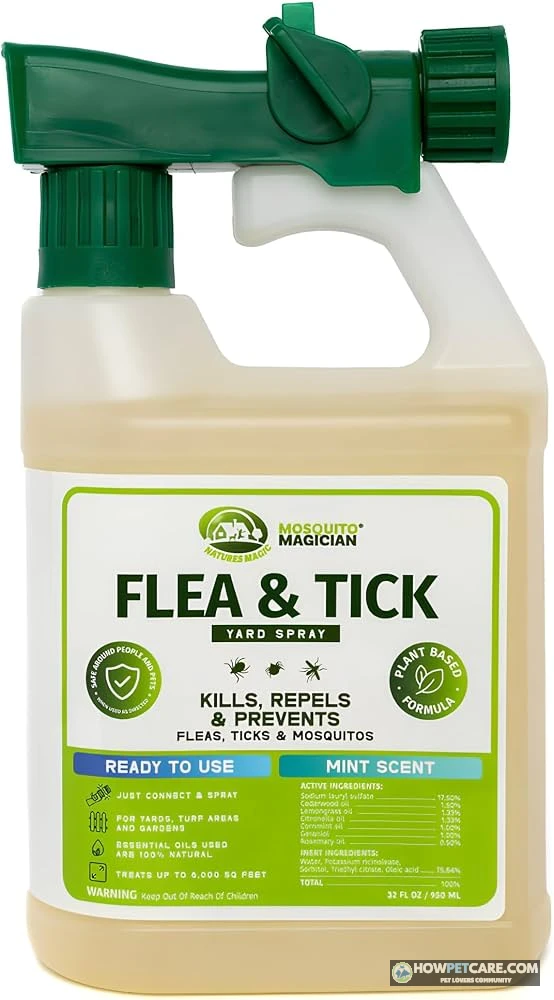

The most effective grass treatment for fleas uses a coordinated dual-phase approach: apply a broad-turf granular insecticide activated by measured watering to reach thatch, paired with a targeted liquid flea spray on shaded perimeter resting areas. Keep pets off treated turf until completely dry (typically 2–4 hours).
For an active outdoor infestation, the most reliable grass treatment for fleas is a coordinated plan, not a single “strongest” product. Use a label-approved liquid flea spray for yard hotspots and perimeter knockdown. Add a granular treatment when the label permits broad turf coverage and soil activation, then monitor through the flea life cycle. Natural options such as cedarwood oil or beneficial nematodes can reduce reliance on synthetic pesticides, but they usually demand more precise timing, thorough coverage, and repeat work.
Keep dogs, cats, children, and wildlife out of treated areas during application and until the product label permits re-entry. Many liquid lawn applications need roughly 2–4 hours to dry. Shade, humidity, heavy application volume, dew, and cool temperatures can extend that wait. Dry doesn’t mean harmless in every circumstance: wet concentrate, spray droplets, granules, and contaminated runoff require stricter controls than a dry, undisturbed residue.
This guide compares liquid, granular, botanical, and biological flea treatment for lawn areas. It then lays out a Day 1 through Day 14 protocol for reaching flea larvae and improving access to the turf-soil interface without scorching grass or contaminating edible gardens.
Best Grass Treatment for Fleas by Lawn, Infestation, and Safety Needs
Quick Picks for Severe, Moderate, and Low-Chemical Control
For a severe or recurring infestation, choose a two-part program. Apply a label-approved granular product to core turf zones if the label specifies flea use, turf approval, rate, and irrigation directions. Follow with a compatible liquid treatment on shaded refuges, fence lines, kennel edges, shrub bases, and perimeter bands where adult fleas are likely to contact treated surfaces. During the same control cycle, treat pets with veterinarian-approved products—such as a veterinary flea collar or monthly preventative—and clean indoor resting areas.
A moderate infestation concentrated in shaded areas may need only a calibrated liquid flea spray for yard use. Aim for the soil and thatch interface rather than simply wetting grass blades. A hose-end sprayer is convenient, but it must deliver the label-required finished volume. More concentrate won’t make up for poor distribution.
For low-chemical control, consider beneficial nematodes in suitable moist soil, an approved botanical spray such as cedarwood oil, and habitat correction. These approaches aren’t automatically risk-free. Botanical products still need label-compliant application and drying controls. Nematodes can fail when soil dries or ultraviolet exposure is intense.
The best outdoor flea killer has an active ingredient, formulation, site approval, residual behavior, and safety restrictions that fit your property. The strongest-sounding concentration isn’t necessarily the best choice.

Granular vs. Liquid Flea Treatment for Lawn Areas
Liquid treatments provide faster contact coverage. They’re useful for concentrated hotspots and perimeter bands because adequate carrier volume helps the spray reach exposed adults and larvae. Their weaknesses are uneven penetration through dense thatch and reduced performance after mowing, irrigation, sunlight, or rain.
Granular treatments can provide broader residual coverage, releasing active ingredient into the turf and soil layer after label-directed irrigation. They don’t automatically penetrate the soil. Dense thatch can block water movement, and granules may stay near the surface if they aren’t activated as directed. Never guess the irrigation amount. Measure it with straight-sided containers or rain gauges placed across the treatment area.
| Decision factor | Granular treatment | Liquid treatment | Best choice when |
|---|---|---|---|
| Primary action | Residual release after label-directed activation | Contact and residual action on covered surfaces | Use liquid for immediate hotspots; granules for approved broad turf coverage |
| Thatch access | Depends heavily on irrigation and thatch structure | Depends on carrier volume and canopy penetration | Use mechanical cleanup and correct water volume before either format |
| Speed | Usually slower to activate and distribute | Faster contact action against exposed adults | Choose liquid for rapid knockdown |
| Coverage | Efficient for measured core turf zones | Precise for edges, refuges, and perimeter bands | Combine only when labels allow the sequence |
| Main mistake | Applying without required irrigation or exceeding the rate | Spraying only the upper grass blades | Direct treatment toward the turf-soil interface |

When a Dual-Phase Treatment Is Worth the Extra Work
Consider a dual-phase approach when fleas return after apparently successful spraying, pets rest outdoors, the yard has heavy thatch, or shaded areas stay humid. The granular phase treats approved core turf. The liquid phase targets concentrated refuges and routes where fleas can re-enter the yard.
Don’t automatically mix products in one tank or overlap active ingredients. Check each label for compatibility, sequence, retreatment interval, annual maximum, irrigation rules, and site restrictions. Liquid spray can’t reliably destroy every cocooned pupa instantly. A follow-up monitoring window is essential.
Chemical vs. Natural Flea Treatment for Yard Grass
Synthetic pyrethroids such as bifenthrin and permethrin generally provide faster adult knockdown and longer residual control than botanical oils when exposed surfaces receive complete coverage. Rain, ultraviolet exposure, mowing, irrigation, and poor application still reduce their performance. The exact residual period depends on the formulation and label, so don’t assume a fixed number of weeks without reading the product label.
Cedarwood oil and other approved botanical sprays can help when minimizing synthetic pesticide use is the priority. Their residual period is usually shorter, which means more frequent inspection and reapplication. A botanical product marketed as a pet-safe yard spray is still a pesticide or pest-control product. Keep people and animals away during application, prevent licking of wet grass, and follow its drying and re-entry directions.
Beneficial nematodes are living biological controls that target susceptible soil-dwelling stages. They need suitable soil habitat, moisture, careful storage, and protection from drying and intense ultraviolet light. Think of them as part of a biological program, not an instant adult flea killer.
Diatomaceous earth is a poor choice for blanket treatment of frequently irrigated grass. It becomes ineffective when wet, can become airborne during application, and poses inhalation concerns. Don’t spread food-grade diatomaceous earth across a lawn just because it sounds natural. Use only a product labeled for the intended site and pest.
| Treatment type | Example active ingredient | Best use | Kill speed | Typical residual pattern | Rain and UV limitations | Key safety considerations |
|---|---|---|---|---|---|---|
| Granular synthetic | Bifenthrin or another label-approved active | Broad approved turf zones | Moderate after activation | Often longer than botanical sprays; exact duration is label-specific | Rain, irrigation, mowing, and UV can reduce performance | Keep people and pets out during application and until label conditions are met; prevent access to granules |
| Liquid synthetic | Bifenthrin or permethrin where turf use is labeled | Hotspots, edges, and perimeter bands | Fast against exposed adults | Residue remains only where coverage and conditions support it | Rain before the rainfast window, UV, and mowing reduce performance | Wet chemical residue is the main exposure concern; follow label drying and re-entry rules, especially around cats |
| Botanical oil | Cedarwood oil or another approved botanical | Lower-synthetic-pesticide programs | Moderate to fast with complete coverage | Shorter; repeat inspection is usually necessary | Sunlight and 1–2 inches of summer rain can degrade residue faster than synthetic formulations | Still requires application, drying, drift, and pollinator precautions |
| Beneficial nematodes | Living nematodes suited to the site | Moist soil habitat and biological programs | Slow and uneven compared with contact insecticides | Depends on living organisms and suitable soil conditions | Drying, heat, and UV reduce survival | Follow handling and irrigation instructions; do not apply to dry, sun-baked turf |
| Diatomaceous earth | Silica-based desiccant dust | Small, dry, protected areas | No dependable rapid lawn knockdown | Persists only while dry and undisturbed | Wet grass removes its practical effect; dust can become airborne | Prevent inhalation and use only where the label allows |
A pet-safe product isn’t necessarily one you can apply around pets without restrictions. Safety depends on exposure: what you applied, where it landed, whether it’s wet or dry, how much you used, and whether a pet can lick, ingest, or contact it.

Bifenthrin and Permethrin: Speed, Residual Control, and Restrictions
Bifenthrin and permethrin are synthetic pyrethroids found in some outdoor flea and tick products. Both can act quickly on exposed adults, but neither is a universal lawn solution. Check that the specific product label names the turf site, flea use, grass type where applicable, equipment, rate, and re-entry conditions.
A higher concentration doesn’t mean safer or more effective treatment. Excess product can increase runoff, residue, turf injury, and exposure while leaving missed refuges untouched. Keep cats away from wet pyrethroid treatments, and prevent all animals from drinking runoff or contacting granules.
Cedar Oil and Botanical Sprays: Lower Residual, Higher Reapplication Demand
Cedarwood oil is a reasonable option if you’re willing to trade residual durability for a lower-synthetic-pesticide approach. One plant-based formulation contains 40.42% cedarwood oil, 2.73% sesame oil, and 1.09% sodium lauryl sulfate. The product is marketed as “Spray & Play” with no required dry time and as safe for beneficial insects once residue dries. Those claims apply to that particular label and product, not to every cedar oil spray.
The same product is listed as covering up to 5,000 square feet per 8 ounces for fleas and mosquitoes, or 2,500 square feet for ticks. It requires application below 90°F and out of direct sunlight to reduce the risk of phytotoxic leaf burn. Follow the actual package label for your formulation. Don’t spray hot, drought-stressed turf simply because a botanical product seems mild.
Beneficial Nematodes and Diatomaceous Earth: Where They Do and Do Not Work
Nematodes work best in appropriately moist soil when applied under lower-UV conditions. Pre-moisten soil only when the supplier’s directions require it, then irrigate as instructed. They can’t replace a liquid adult knockdown when pets and wildlife continually introduce new fleas.
Diatomaceous earth can work in dry cracks, sheltered gaps, or other label-approved areas. Grass, however, is usually exposed to dew, irrigation, and rain. Once wet, the material no longer provides the same desiccating effect. Avoid broad dust clouds around children, pets, pollinators, and people with respiratory sensitivities.
Prepare the Lawn for Thatch Penetration Without Scorching Turf
Fleas favor shaded, humid, protected areas; they aren’t evenly distributed across sun-baked turf. Start by mapping fence lines, under-deck areas, kennel edges, shrub bases, leaf piles, wildlife routes, and places where pets lie down. Treating every square foot indiscriminately can increase exposure yet still leave the most important refuges poorly covered.
The 24-Hour Mowing and Cleanup Schedule
Mow about one day before treatment at the normal recommended height for your grass species. A height of 1.5–2 inches may suit some lawns, but don’t force that height on grass that needs something different. Avoid scalping heat-stressed or dormant turf. Remove heavy clippings, leaves, pet waste, toys, bowls, beds, and movable furniture.
Use this pre-treatment checklist:
- ☐ Map shaded, humid hotspots and measure each treatment zone.
- ☐ Mow at the correct species-specific height without scalping.
- ☐ Remove leaves, sticks, waste, toys, bowls, beds, and furniture.
- ☐ Check whether the selected product requires dry foliage, pre-moistened soil, or post-application irrigation.
- ☐ Run the sprayer with water only over a measured area and calculate finished volume per 1,000 square feet.
- ☐ Postpone treatment during drift-producing wind, saturated soil, excessive heat, or rain before the product’s rainfast window.

Don’t mix until the label confirms the turf site, flea use, application rate, equipment, irrigation directions, retreatment interval, and re-entry requirements.
When to Dethatch, Aerate, or Leave the Turf Alone
Inspect the organic layer where grass meets soil. If compacted thatch blocks water and spray movement, light dethatching or core aeration before treatment can improve access. This step manages habitat; it doesn’t guarantee that insecticide will enter every flea cocoon.
Avoid aggressive renovation while turf is heat-stressed, drought-stressed, dormant, or recovering from disease. Remove leaf litter and excess debris first. Aeration can open pathways through compacted soil, but time it around turf health and product restrictions. Don’t aerate immediately after treatment if it could disturb residues or violate the label.
Sprayer Calibration and Weather Cutoffs
Measure the lawn rather than estimating it. Run the hose-end or backpack sprayer with water over a known area, record the water used, and calculate the finished spray volume per 1,000 square feet. Add concentrate only at the label rate. Keep the nozzle low and use coarse droplets when the label permits. Stop if visible mist drifts toward a garden, drain, pond, or neighboring property.
Don’t apply above the product’s temperature cutoff. For one cedarwood formulation, the stated limit is below 90°F and out of direct sunlight. Other products may have different limits. Avoid saturated soil, gusty wind, heavy dew, and rain expected before the rainfast interval ends.

How to Reach Flea Larvae and Pupae Beneath Dense Lawn Thatch
Adult fleas are only the visible part of an infestation. Eggs fall from pets into resting areas, larvae develop in organic debris, and pupae form protective cocoons near the turf-soil interface. Those cocoons can protect pupae from treatments that kill exposed adults. No responsible lawn protocol promises complete, instant pupal kill.
Why Adult Top-Kills Miss Most of the Infestation
A surface-only spray may kill adults jumping through treated grass but leave larvae and pupae under leaves, thatch, low groundcover, or pet bedding. Fleas can seem to disappear, then rebound when vibration, warmth, or carbon dioxide stimulate adults to emerge.
Open up access before spraying: remove leaf litter, reduce excessive thatch, clear pet waste, and target shaded resting zones. Then use the approved carrier volume to distribute the product through the canopy toward the turf-soil interface without creating runoff.
Carrier Volume, Irrigation, and the Turf-Soil Interface
More concentrate doesn’t mean better penetration. The label’s finished spray volume determines how much liquid carries active ingredient through the grass canopy. Too much can run off into drains or garden soil. Too little leaves untreated pockets.
Apply granules at the exact labeled rate and activate them with the specified irrigation amount. Place several straight-sided containers across the area, irrigate, and compare the collected depth instead of guessing from the hose timer. Don’t irrigate before application when the pesticide label requires dry foliage. Likewise, don’t pre-soak nematode treatment areas unless the biological product’s directions require it.

The Pupal Cocoon Problem No Spray Fully Solves
Even after an initial treatment, more adults may emerge from protected cocoons on Days 7–14. That doesn’t automatically mean the product failed. Monitor the same route with white socks at the same time of day and record what you find. Wait for the product’s minimum retreatment interval before applying anything again.
Treat the habitat you can reach and monitor the stages you can’t immediately eliminate. Coordinate that outdoor work with pet and indoor control.
Dual-Phase Lawn Flea and Tick Treatment: Exact Application Timeline
The schedule below covers Day 1 through Day 14 and includes the preparation period. Adjust every product step to the label. This schedule isn’t permission to combine incompatible products.
| Timing | Action | Application or irrigation requirement | Safety checkpoint | Expected result |
|---|---|---|---|---|
| Days -2 to -1 | Measure turf and hotspot zones; inspect labels and weather | Calculate product quantity from measured square footage | Mark edible beds, water, pollinator areas, and untreated refuges | Defined treatment map |
| Day 1 | Mow correctly and remove debris, waste, toys, bowls, and furniture | Leave foliage in the condition required by the label | Keep people and pets away from stored concentrate and preparation areas | Better access to shaded turf-soil interfaces |
| Day 2: base phase | Apply granular treatment to approved core turf | Use the exact label rate and measured activation irrigation | Keep people and animals out during application and until re-entry conditions are met | Residual active ingredient reaches the intended turf-soil zone |
| Day 2: knockdown phase | Apply compatible liquid treatment to perimeter bands and hotspots | Use calibrated volume; do not improvise tank mixes | Prevent drift toward gardens, water, blooming plants, and neighbors | Faster contact action in concentrated refuges |
| Days 3–6 | Inspect runoff, turf stress, and missed shaded areas | Resume only label-permitted irrigation | Maintain restricted access until treated areas are dry and compliant | Residue remains in place without unnecessary rewetting |
| Days 7–14 | Monitor the same route with white socks | Do not automatically reapply | Treat new adults as monitoring data | Identify pupal emergence or missed habitat |
| Day 14 and later | Reapply only if monitoring and label interval justify it | Follow retreatment interval and annual maximum | Rotate tactics and call a professional if coordinated control fails | Reduced rebound without unsafe overapplication |
Days -2 to 0: Preparation and Base Barrier
Measure the yard, calculate product quantities, confirm active ingredients, and mark areas you won’t treat. Mow and clean on Day 1. On Day 2, apply the granular base only to approved core turf zones. If the label requires irrigation, activate the product exactly as directed. Keep water out of drains, swales, vegetable beds, and ponds.
Day 0: Liquid Perimeter and Hotspot Knockdown
Use this Day 0 heading as the liquid-action reference; in the chronological schedule, apply the liquid treatment on Day 2 where labels allow the planned sequence. Treat shaded edges, fence lines, kennel zones, and other concentrated hotspots. Use a low-pressure, coarse-droplet pattern when permitted. Don’t overlap products just to create a stronger barrier. Avoid spraying blooming groundcover or pollinator-active areas unless the label expressly allows it and you can follow every precaution.
Days 7 to 21: Monitoring the Pupal Emergence Window
Walk the same monitoring route in the same manner. Compare flea counts, not impressions. If adults appear after an initial reduction, check for missed thatch, leaf litter, pet resting areas, and wildlife routes. Review rain before the rainfast interval, incorrect irrigation, and possible reinfestation from untreated pets and indoor areas.
Reapply only at the label-defined interval. Applying again too early can increase exposure without reaching protected pupae.

Pet Re-Entry, Drying Time, and Edible-Garden Buffer Protocols
A Practical 2–4 Hour Drying and Residue Check
For many liquid lawn products, plan on at least 2–4 hours before re-entry. Wait longer when humidity is high, grass is shaded, temperatures are cool, dew is present, or the application volume was heavy. Always follow the product label as the controlling rule.
Check several sunny and shaded locations with a clean paper towel or gloved hand. Grass and thatch should be dry, without visible wet spots or transferable liquid. Don’t let pets lick treated grass, drink runoff, walk through wet granules, or contact sprayers, measuring containers, or concentrate. Store unused product securely.
Special Precautions for Dogs, Cats, and Children
Keep dogs, cats, and children outside the treatment area during application and until every label re-entry condition is met. Take particular care with cats around wet pyrethroid applications. Remove and clean pet toys, bowls, and beds, then keep them out of the area until the site meets re-entry requirements.
Dry residue doesn’t override label restrictions, annual limits, or runoff warnings. If a pet contacts wet product or ingests granules, follow the product’s first-aid instructions and contact a veterinarian or poison-control resource.

Treating Turf Beside Vegetables, Herbs, and Fruit Trees
No single buffer distance is safe for every bifenthrin or permethrin product. Follow the product’s crop-site approval, setback language, drift restrictions, and local rules. As a practical minimum, mark a clear 5-foot untreated edible-crop buffer unless the label requires a greater distance or gives different specific instructions. Don’t treat that buffer or take the distance as permission to spray edible plants or bare garden soil.
Cover edible plants temporarily during application if appropriate, but don’t spray the covered plants. Use the lowest pressure that produces the approved pattern, coarse droplets, and a downward-pointing wand. Apply only when wind won’t carry mist toward the garden. Stop if wind shifts or runoff could enter garden soil, drains, ponds, or swales.
You may consider a separately labeled botanical perimeter outside the edible area. It still requires drying time, drift control, pollinator precautions, and repeat-treatment planning. Near sensitive beds, beneficial nematodes or mechanical cleanup may be better choices when the habitat is suitable.

Why Fleas Return 7–14 Days After Yard Treatment
Pupal Emergence vs. True Product Failure
Fleas can appear after treatment as movement, warmth, or carbon dioxide stimulate protected pupae to emerge. The first spray may have killed exposed adults without affecting the pupal reservoir. Before deciding the product failed, compare monitoring results from the same route and time of day.
Rain, UV, Mowing, and Missed Refuges
Common failure points include treating only open lawn, leaving shaded thatch untouched, and applying the wrong water volume. Irrigating too soon, rain before the rainfast window, mowing immediately after treatment, and fleas reintroduced by pets or wildlife can also undermine control. Cedarwood oil and similar botanicals generally lose residue faster under sunlight and heavy rain than synthetic pyrethroids, so botanical programs need more frequent inspection.
Correct the habitat before increasing the dose. Remove leaf litter, inspect under decks and shrubs, and coordinate pet and indoor controls. Before applying again, check the label’s minimum retreatment interval and annual application limit.
When to Reapply or Call a Professional
Reapply only when monitoring shows continued activity and the product label permits it. Don’t combine products or shorten intervals because adult fleas appeared during the expected emergence window. Call a licensed pest professional if fleas persist after coordinated pet, indoor, and outdoor control, or if the property borders water or edible crops. Professional help is also warranted when wind, slope, drainage, children, pets, or sensitive wildlife make DIY application unsafe.
Choose and Execute Your Yard Flea Control Plan
Final Product Selection Checklist
Liquid-only treatment suits concentrated hotspots where rapid contact action matters. Granules make sense when the label permits broad turf use and gives clear activation directions. For widespread, recurring infestations with dense thatch, choose a dual-phase plan. Botanical or biological control suits homeowners who accept shorter residual performance and more monitoring.
Before buying, confirm:
- The label names the intended turf site and flea use.
- The active ingredient and formulation fit the infestation and property.
- The label specifies application equipment, rate, water volume, irrigation, and rainfastness.
- The product gives a retreatment interval, annual maximum, and re-entry conditions.
- The plan protects edible crops, drains, ponds, pollinator habitat, and neighboring property.
- You have measured the treatment area rather than estimating product quantity.
Application-Day Checklist
Mow and clear the yard, check the weather, and calibrate the sprayer with water. Mark the 5-foot minimum edible-crop buffer and remove pets, children, toys, bowls, and furniture. Apply only below the product’s temperature and wind limits. Keep the wand low; stop if spray drifts. Record the product, active ingredient, rate, treated area, start time, weather, irrigation, and rainfall.
After treatment, restrict access until the label permits it and treated grass is dry. Check shaded areas separately because they often dry more slowly. Don’t wash residues toward drains or gardens.
Prevention Plan After the Fleas Are Gone
Keep removing leaf litter and pet waste, correcting persistently damp habitat, managing excessive thatch, and limiting wildlife access to pet resting areas. Use veterinarian-directed flea prevention for pets—whether an oral preventative, topical dose, or a long-lasting option like a seresto flea collar—so they don’t reseed the yard. Pet owners often pair these with comprehensive parasite protection such as heartgard to safeguard health indoors and out. Clean indoor resting areas alongside outdoor treatment. Outdoor yard flea control alone can’t stop an infestation maintained indoors or on an untreated animal.
Monitor rather than spray automatically by the calendar. Record white-sock counts, rainfall, mowing, irrigation, and pet activity. If fleas return, investigate the pupal window and missed refuges before increasing pesticide exposure. A measured, label-compliant program that reaches the turf-soil interface is safer and more effective than repeatedly spraying the visible grass canopy.


| Treatment Type | Example Active Ingredient | Best Use | Kill Speed | Typical Residual Pattern | Rain and UV Limitations | Key Safety Considerations |
|---|---|---|---|---|---|---|
| Liquid synthetic | Bifenthrin or permethrin where turf use is labeled | Hotspots, edges, and perimeter bands | Fast against exposed adults | Residue remains only where coverage and conditions support it | Rain before the rainfast window, UV, and mowing reduce performance | Wet chemical residue is the main exposure concern; follow label drying and re-entry rules, especially around cats |
| Granular synthetic | Bifenthrin or another label-approved active | Broad approved turf zones | Moderate after activation | Often longer than botanical sprays; exact duration is label-specific | Rain, irrigation, mowing, and UV can reduce performance | Keep people and pets out during application and until label conditions are met; prevent access to granules |
| Botanical oil | Cedarwood oil or another approved botanical | Lower-synthetic-pesticide programs | Moderate to fast with complete coverage | Shorter; repeat inspection is usually necessary | Sunlight and 1–2 inches of summer rain can degrade residue faster than synthetic formulations | Still requires application, drying, drift, and pollinator precautions |
| Beneficial nematodes | Living nematodes suited to the site | Moist soil habitat and biological programs | Slow and uneven compared with contact insecticides | Depends on living organisms and suitable soil conditions | Drying, heat, and UV reduce survival | Follow handling and irrigation instructions; do not apply to dry, sun-baked turf |
| Diatomaceous earth | Silica-based desiccant dust | Small, dry, protected areas | No dependable rapid lawn knockdown | Persists only while dry and undisturbed | Wet grass removes its practical effect; dust can become airborne | Prevent inhalation and use only where the label allows |
FAQ
How can I tell whether fleas are actually living in my grass?
Walk slowly through shaded lawn edges and pet resting spots wearing tall white socks. Fleas will jump onto the white fabric, making them easy to spot before you treat the lawn.
What kills fleas in grass instantly?
A label-approved contact liquid insecticide kills exposed adult fleas rapidly on contact. However, no spray penetrates pupal cocoons immediately, meaning emerging adults must be controlled through residual action and follow-up monitoring.
Should I treat my pets and house at the same time as the yard?
Yes. Outdoor treatments fail if pets continuously reintroduce fleas from indoors or untreated animals reseed the grass. Coordinate veterinarian-approved pet preventatives, indoor vacuuming or washing, and lawn treatments concurrently.
Can I use dish soap, salt, or baking soda as a lawn flea killer?
No. Kitchen remedies do not offer dependable lawn-wide control and frequently cause phytotoxic blade scorch or damage underlying soil biology. Use EPA-registered turf products or approved biological controls like beneficial nematodes instead.