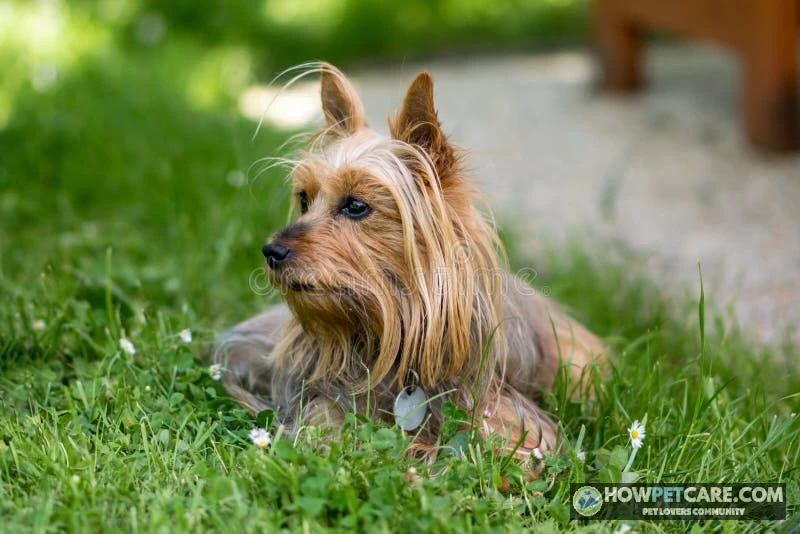

The Australian Silky Terrier is a compact toy terrier—roughly 9–10 inches tall—with the alertness, energy, and prey drive of a working terrier. It suits engaged households that can provide daily exercise, consistent coat care, and secure management around children and small pets.
Is an Australian Silky Terrier Right for Your Household?
An Australian Silky Terrier can suit an engaged household looking for an affectionate, alert small dog—provided everyone is ready for genuine terrier behavior. Good owners make time for daily exercise, brief training sessions, regular coat care, secure handling, and careful management around prey-sized pets. A compact body does not make this breed passive, low-effort, or automatically safe with children.
The Australian Silky Terrier is a toy dog with the energy, persistence, and vermin-chasing instinct of a working terrier. Expect a devoted companion that notices movement and noise, enjoys learning, and may bark or give chase when excited. Its long single coat sheds relatively little, but it tangles easily without consistent grooming.
A Silky may be a poor or conditional fit in a home with unsupervised young children, free-roaming rodents or birds, long workdays without a care plan, little tolerance for barking, or no interest in frequent combing. Adults and families with respectful older children may find the breed a strong match, especially if they enjoy interactive play and can maintain clear routines.

Best-fit homes and potential deal-breakers
| Household factor | Likely fit | Terrier-related consideration | Practical management |
|---|---|---|---|
| Adults or older children | Often good | Some Silkies dislike grabbing or rough restraint | Teach gentle handling and supervise children |
| Toddlers or highly active young children | Conditional | A small dog can be injured or may defend itself when cornered | Use gates, adult supervision, and dog-only rest areas |
| Apartment or condo | Possible | Alert barking can disturb neighbors | Teach a quiet cue, block window patrols, and provide daily outings |
| Other dogs | Individual | Confidence can exceed the dog’s physical size | Use controlled introductions and prevent bullying |
| Cats | Conditional | Movement may trigger chasing | Choose carefully, introduce behind barriers, and maintain escape routes |
| Rodents, rabbits, birds, or reptiles | Often poor | Prey drive creates serious risk | Keep permanently separated behind secure doors and enclosures |
| Long weekday absences | Conditional to poor | Boredom can increase barking and destructive behavior | Arrange a midday break, enrichment, and gradual alone-time training |
| Grooming-averse household | Poor for a long coat | Fine hair mats around friction points | Choose a shorter trim and budget for professional grooming |
Could a Silky work here? Household scorecard
Score each item 0 for poor fit, 1 for workable with changes, or 2 for good fit. The highest possible total is 14.
- Children remain calm and supervised and know not to grab, chase, or lift the dog incorrectly.
- Free-roaming rodents, birds, rabbits, or reptiles are absent, or permanent separation is realistic.
- Typical alone time stays below about four to six hours, with a midday care or enrichment plan when needed.
- Someone can provide 10–20 minutes of coat care most days and arrange periodic trimming.
- Fencing, gates, harnesses, and leash habits prevent escapes and uncontrolled chasing.
- The household and nearby neighbors can tolerate alert barking while training is underway.
- Food, grooming, preventive care, and an emergency fund fit the monthly budget without strain.
A score of 11–14 points to a strong candidate. A score of 7–10 requires a specific management plan. At 0–6, reconsider the timing or look for a lower-maintenance breed.
Australian Silky Terrier characteristics at a glance
The Australian Silky Terrier breed developed in Australia from Yorkshire Terrier and British terrier lines, though historical accounts differ on the exact crosses. Once called the Sydney Silky, it received its current Australian name in 1959. Recognition by the Australian National Kennel Council or American Kennel Club establishes breed identity and conformation standards. It does not show that an individual dog has passed health screening.
Breed references place males at about 9–10 inches at the shoulder, with average weights reported around 10 pounds for males and 8 pounds for females. Build and healthy body condition matter more than pushing a dog toward one number. Puppies are born black and tan, and the characteristic blue color may continue developing until approximately 18 months.

A Silky has the body of a toy companion but the behavioral equipment of a terrier. Plan for chasing, alerting, investigating, and persistent problem-solving rather than expecting a decorative lapdog.
Australian Silky Terrier Temperament, Children, and Other Pets
Australian Silky Terrier temperament and personality are often described as bright, devoted, watchful, spirited, and self-assured. A well-socialized Silky usually wants to take part in household life, but affection does not erase independence. The dog may follow an interesting smell, challenge a larger canine, or continue barking long after the owner considers the matter settled.
What a terrier nature means in a typical home
At home, terrier behavior may look like chasing squirrels, digging in soft ground, patrolling windows, grabbing moving toys, or refusing to give up on a food puzzle. Redirect these instincts instead of punishing the dog for having them. Scent games, structured tug, toy searches, and reward-based impulse-control exercises offer safer outlets for natural behavior.

Silkies can live successfully with calm, respectful school-age children. Even then, adults should supervise, prevent carrying or cornering, and provide an undisturbed bed. Compatibility with toddlers is harder to predict because sudden grabbing, falls, and quick movement can frighten the dog or cause injury.
Careful matching matters with other dogs. Early socialization can improve communication, but it cannot guarantee friendship. For cats, choose an individual with a suitable history and introduce the animals through gates, leashes, and separate rooms. Don’t assume that apparent calm during one meeting proves long-term safety. Rodents, rabbits, and birds remain high-risk because they resemble traditional prey.
Apartment living, barking, and neighbor considerations
A Silky can live in an apartment when exercise, toilet breaks, and sound management are reliable. Reward brief quiet pauses instead of shouting over the barking. Curtains or window film can reduce visual triggers, while resting areas placed away from hallways limit exposure to passing neighbors. Background sound may also help when building noise prompts repeated alerts.
Teach a mat-based settle and practice door sounds at low intensity. A sudden increase in barking may signal pain, anxiety, hearing changes, or environmental disruption, so don’t treat it only as disobedience.

Exercise, Training, and Feeding by Life Stage
Silkies need both physical activity and mental work throughout their lives. One reference gives a basic exercise recommendation of 20 minutes daily, but many healthy adults benefit from a broader 30–45-minute routine divided among walks, play, sniffing, and training. Let fitness, weather, age, and veterinary guidance determine the final amount.
Puppy, adult, and senior weekly routine
| Life stage | Exercise | Short training | Scent or puzzle enrichment | Coat maintenance | Dental care |
|---|---|---|---|---|---|
| Puppy | 3–5 short play or walk periods daily, with protected rest | 3–5 sessions of 2–3 minutes for name response, settling, leash skills, and handling | 1–2 easy food puzzles or scent games; introduce new surfaces and sounds | 5–10 minutes of gentle handling and combing daily | Introduce brushing 3–4 times weekly |
| Adult | 30–45 minutes daily, split among walks, play, and recovery | 2–3 five-minute sessions for recall, leave-it, greetings, and grooming cooperation | 2–3 weekly sessions using a snuffle mat, puzzle feeder, or treat search | Comb for 10–20 minutes most days; detangle before bathing | Brush 4–7 times weekly and monitor breath and tartar |
| Senior | 20–30 minutes of low-impact movement, divided according to recovery | 2–3 sessions of 3–5 minutes for settling, easy tricks, and harness skills | 2–3 gentle scent games at floor level | Use shorter sessions and check skin beneath the coat | Brush 4–7 times weekly; report pain, loose teeth, or appetite changes |

Puppies need safe exposure, not indiscriminate contact with every dog. Pair people, household sounds, surfaces, grooming tools, car rides, and veterinary-style handling with food and choice. While vaccines are incomplete, follow your veterinarian’s disease-risk guidance for public spaces.
For adults, priorities include recall, leave-it, polite greetings, settling, resource management, and dependable harness skills. A leash remains essential around wildlife, even when recall seems reliable in quiet settings. Seniors should keep moving and learning, but shorten their sessions if stiffness, slower recovery, vision loss, hearing loss, or dental discomfort appears.
Choosing food and monitoring body condition
Choose food labeled complete and balanced for the dog’s life stage. Treat its calorie statement and feeding chart as a starting point, not a universal prescription. Divide the daily allowance into suitable meals, include training treats in the total, and adjust for activity, neuter status, stool quality, and body condition.
You should be able to feel the ribs beneath a light covering and see a waist from above. Ask a veterinarian to demonstrate body-condition scoring, then reassess during growth, after neutering, during illness, and as activity declines. Avoid quoting cups without accounting for calorie density: the same volume of two foods can contain very different numbers of calories.

Reserve part of the measured daily ration for recall, handling, and settle practice. This provides frequent reinforcement without quietly adding a second meal in treats.
Australian Silky Terrier Grooming Requirements: A Home Routine That Prevents Mats
The Silky coat is long, fine, single-layered, and generally low-shedding, but loose hair may remain trapped and form tangles. Low shedding does not make the breed hypoallergenic. Allergic reactions can involve dander, saliva, and urine as well as hair, so sensitive household members should spend time with individual dogs before committing.
The short tool list for a Silky coat
Keep a pin brush, wide-tooth comb, fine metal comb, detangling spray, gentle dog shampoo and conditioner, absorbent towels, and a dryer with a cool or warm setting. You’ll also need nail trimmers or a grinder, dog toothpaste and a toothbrush, and blunt-tip scissors for limited maintenance. Someone trained to use clippers and scissors safely should handle work near skin folds.
Inspect behind the ears, beneath the collar and harness, in the armpits and groin, along the legs and tail, and between the feet. Mats can hide in these friction zones even when the visible hair across the back looks smooth.

Brush, bathe, dry, and trim in the right order
-
Inspect before bathing
Check every friction zone. Mist a tangle, hold the hair near the root, and work from the ends upward. Do not soak or pull a tight mat.
-
Brush and comb to the skin
Work in small sections with the pin brush, then follow with the metal comb. A brush that passes only over the surface can leave compacted hair underneath.
-
Bathe and condition
Once the coat is tangle-free, apply properly diluted dog shampoo, rinse thoroughly, condition, and rinse again. Keep products and water out of the eyes and ear canals.
-
Blot, dry, and line-brush
Blot rather than rub with towels. Dry small sections from skin to tip while brushing, then confirm with the fine comb. Leaving the coat damp encourages tangles.
-
Complete the body check
Wipe the eye and beard area, inspect ears and feet, trim nails as needed, and brush the teeth. Stop if you find pain, inflamed skin, discharge, or an unfamiliar lump.
Comb a longer coat daily or at least several times weekly. Bathe the dog when dirty or when the coat needs refreshing, but only after fully detangling it. Face and sanitary areas may need attention between full appointments. Clipping the body shorter reduces the length of each grooming session, but it doesn’t eliminate brushing, nail care, dental care, or skin checks.
When to book a professional groomer
For planning purposes, consider appointments every 4–8 weeks for a longer styled coat or every 8–12 weeks for a short, tidy trim. Coat growth, climate, activity, and grooming skill at home may change that schedule. Book sooner if mats keep returning, nails become overgrown, hair blocks the dog’s vision, or handling turns contentious.

Never cut a tight mat with scissors because folded skin can be pulled into it. A groomer can select the least stressful removal method, which may mean clipping rather than preserving coat length.
Stop home detangling when a mat sits tightly against the skin, the dog flinches, or brushing becomes a struggle. Preserving trust and skin safety matters more than preserving coat length.

Australian Silky Terrier Health Problems and Responsible Screening
Health risks provide reasons to screen and monitor; they don’t predict what will happen to every dog. Reported concerns include patellar luxation, Legg-Calvé-Perthes disease, cataracts, and periodontal disease. Reliable, current breed-wide prevalence figures are limited, so labeling every condition common or assigning percentages would be misleading.
References report an average lifespan of 12–15 years, but no range can predict an individual outcome. Genetics, injury prevention, body condition, dental care, preventive veterinary care, and prompt treatment all affect longevity.
Reported conditions versus known prevalence
Patellar luxation occurs when the kneecap moves out of its normal track. A dog may skip intermittently, carry a rear leg, or develop persistent lameness. Legg-Calvé-Perthes disease affects the hip’s femoral head and can cause pain or progressive limping. Signs of eye disease may include cloudiness, redness, discharge, bumping into objects, or reduced confidence in dim light.
Small dogs also require deliberate dental prevention. Daily or near-daily toothbrushing, veterinary oral examinations, and treatment when needed do more than relying on chews alone. Seek veterinary attention for limping, eye changes, breathing changes, collapse, pain, appetite loss, or a notable change in behavior.

What health records a responsible breeder should provide
Ask the breeder to identify the current screening recommendations from the U.S. national Silky Terrier breed club and the Canine Health Information Center. Verify submitted results directly in the Orthopedic Foundation for Animals database rather than accepting a claim that the parents were “vet checked.” A routine examination has value, but it isn’t equivalent to condition-specific screening.
Request registered names or identification numbers for both parents, copies of results, the date and type of each examination, and an explanation of any abnormal or preliminary finding. Ask how the patellas and eyes were evaluated and whether family history points to orthopedic or other inherited concerns. Recommendations can change, so confirm the current club and registry requirements before leaving a deposit.
American Kennel Club registration or conformity to a breed standard does not demonstrate that a dog passed orthopedic, eye, or other health screening. Verify each result with the organization that recorded it.
What an Australian Silky Terrier Costs in the United States
A realistic 2026 U.S. budget separates acquisition costs from routine care and unpredictable medical bills. No authoritative nationwide puppy price is published for the United States. As planning figures—not promised market quotes—the worksheet below uses $2,200 as a middle breeder-puppy assumption and $3,500 as a higher scenario. Rarity, region, health documentation, rearing, travel, and breeder support can move actual prices substantially.
First-year budget assumptions
This model uses 2026 U.S. dollars for one healthy dog and assumes no major illness. Professional grooming is included, but not every possible expense. Replace each figure with quotes from local veterinary practices, groomers, trainers, insurers, licensing authorities, and dog sources.
| Expense category | First year | Typical later year | Assumptions and variables |
|---|---|---|---|
| Acquisition or adoption | $250–$3,500 | Usually $0 | Rescue versus breeder; travel not included |
| Veterinary care and vaccines | $350–$600 | $300–$700 | Region, examination schedule, vaccines, and diagnostics |
| Parasite prevention | $180–$260 | $200–$320 | Product, weight, and local parasite risk |
| Supplies | $250–$500 | $40–$120 replacement | Crate, gates, bed, harness, dishes, toys, and grooming tools |
| Training | $180–$900 | $100–$400 | Group classes versus private instruction |
| Food and treats | $360–$600 | $480–$900 | Calorie needs, diet, and treat use |
| Professional grooming | $240–$640 | $300–$900 | Four to eight initial visits; coat style and local rates |
| Insurance or emergency reserve | $500–$2,000 | $600–$1,800 | Policy terms or cash savings strategy |
| Irregular care | Variable | Variable | Dental treatment, urgent care, boarding, and major diagnostics |
| Illustrative total | $2,430–$9,260 | $2,020–$5,140 plus irregular care | Totals vary because the endpoints represent different scenarios |

The low first-year example comes to $2,430: a $250 rescue fee, $350 initial veterinary care, $180 prevention, $250 supplies, $180 training, $360 food, $120 grooming tools, $240 professional grooming, and a $500 emergency reserve.
The typical example totals $5,600: a $2,200 puppy, $450 veterinary care, $220 prevention, $350 supplies, $300 classes, $480 food, $180 tools, $420 professional grooming, and a $1,000 reserve. The high example totals $9,260 using a $3,500 puppy, $600 veterinary care, $260 prevention, $500 supplies, $900 private training, $600 food, $260 tools, $640 grooming, and a $2,000 reserve.
Spay or neuter, microchipping, licensing, travel, pet deposits, and insurance premiums aren’t separately included in every scenario. Check whether the acquisition fee covers any of these costs.
Recurring annual costs and emergency reserve planning
Predictable later-year expenses include food, prevention, wellness care, grooming, replacement tools, and enrichment. Dental procedures, illness, injury, boarding, and advanced diagnostics are irregular costs that belong outside the ordinary budget.
Insurance and cash savings address different problems. Compare exclusions, waiting periods, deductibles, reimbursement limits, and coverage for exam fees or dental illness. If you plan to self-fund, keep the reserve accessible and replenish it after use. A low purchase price isn’t a bargain if records, socialization, health screening, or lifetime return support are missing.
The 2026 cost model is an editable worksheet. Region, acquisition source, coat length, insurance choice, veterinary needs, and grooming frequency can change the total by thousands of dollars.
Silky Terrier vs Yorkshire Terrier vs Australian Terrier
The Australian Silky Terrier is its own breed, not merely a larger Yorkshire Terrier. It shares a fine coat and ancestry with the Yorkie. The sturdier Australian Terrier, by contrast, has a harsher, weather-resistant coat and a different daily maintenance profile.
| Factor | Australian Silky Terrier | Yorkshire Terrier | Australian Terrier | Daily ownership consequence |
|---|---|---|---|---|
| Size and build | Toy terrier; fine-boned but sturdy for its size | Very small toy terrier with delicate proportions | Small, noticeably more robust terrier | Silkies and Yorkies require particularly careful handling |
| Coat | Long, fine, silky single coat | Long, fine, silky coat | Harsh, weather-resistant double coat | Silky and Yorkie coats demand more frequent detangling |
| Grooming | Regular combing and periodic trimming | Frequent combing; long show coats require intensive care | Less mat-prone, but still needs brushing and coat-specific trimming or stripping | Choose based on the maintenance method you can sustain |
| Activity | Alert and playful; benefits from walks and games | Lively, often active in shorter bursts | Sturdy and generally suited to more vigorous activity | The Australian Terrier may better suit owners wanting robust outings |
| Training style | Bright, independent, and distractible | Bright but potentially sensitive or stubborn | Bold and often strongly motivated by activity | All benefit from brief reward-based sessions |
| Prey interest | Strong for its size | May readily chase small animals | Strong vermin-hunting heritage | None is an automatic match for prey-sized pets |
| Household fit | Engaged owners who accept grooming and terrier management | Owners wanting a tiny companion with substantial coat care | Active homes wanting a sturdier small terrier | Decide by handling safety, activity, pets, and grooming—not appearance |

Which breed better matches your routine?
Choose the Silky if you want a compact, active companion and can commit to coat care as well as impulse-control training. The Yorkshire Terrier may fit when extremely small size appeals and everyone can accommodate delicate handling and comparable grooming. The Australian Terrier may be a better match when a sturdier body and more vigorous terrier lifestyle suit the household, though its coat still requires specialized maintenance.
In homes with young children, assess the individual dog’s tolerance for handling and the adults’ ability to supervise instead of choosing by breed reputation alone. Where small pets live, management may matter more than the differences among these three terriers.
Choose a Responsible U.S. Source and Prepare Before Bringing One Home
Start with neutral routes: the American Kennel Club’s parent-club information, the U.S. national Silky Terrier breed club (the Silky Terrier Club of America), local club contacts, breed rescue, and established shelters. Verify current contacts yourself. A referral offers a starting point, not an endorsement of every breeder or available dog.
Questions to ask before a deposit or adoption application
Request documented, verifiable health screening for both parents and a clear account of family health. Ask how the puppies are raised, which people and environments they encounter, how grooming and crate training begin, and how temperament guides placement. You should also receive veterinary records, registration details when applicable, a written contract, and a return-to-source policy that covers the dog’s lifetime.

A responsible source will discuss barking, prey drive, grooming, and possible health problems without pressure or guarantees. Avoid anyone who won’t identify the mother, refuses to provide records, offers immediate shipping with minimal screening of you, or demands a deposit before answering routine questions.
For a rescue dog, ask about bite history, resource guarding, separation distress, house training, leash behavior, grooming tolerance, medical findings, and observed behavior around children and animals. Clarify which details have been directly observed and which remain unknown. After placement, arrange an independent veterinary examination according to the contract.
A final ready-or-not-ready checklist
Before proceeding, confirm that your household can:
- Provide daily walks, play, training, scent work, and companionship.
- Maintain secure leash, gate, and door habits around chase triggers.
- Separate the dog permanently from vulnerable small pets when necessary.
- Supervise children and give the dog a protected resting place.
- Comb the coat most days or maintain a shorter style with professional help.
- Fund routine veterinary care, dental care, grooming, and emergencies.
- Verify health records instead of relying on registration or verbal assurances.
- Accept alert barking and independent terrier behavior while training patiently.
If any essential item remains uncertain, pause the deposit or application. Meet adult Silkies, talk with responsible owners and breed-club volunteers, gather local veterinary and grooming quotes, and close the management gap before bringing a dog home.
| Breed Name | Size and Build | Coat Type | Grooming Needs | Activity Level | Training Style | Prey Interest | Best Household Fit |
|---|---|---|---|---|---|---|---|
| Australian Terrier | Small, noticeably more robust terrier | Harsh, weather-resistant double coat | Less mat-prone, but still needs brushing and coat-specific trimming or stripping | Sturdy and generally suited to more vigorous activity | Bold and often strongly motivated by activity | Strong vermin-hunting heritage | Active homes wanting a sturdier small terrier |
| Australian Silky Terrier | Toy terrier; fine-boned but sturdy for its size | Long, fine, silky single coat | Regular combing and periodic trimming | Alert and playful; benefits from walks and games | Bright, independent, and distractible | Strong for its size | Engaged owners who accept grooming and terrier management |
| Yorkshire Terrier | Very small toy terrier with delicate proportions | Long, fine, silky coat | Frequent combing; long show coats require intensive care | Lively, often active in shorter bursts | Bright but potentially sensitive or stubborn | May readily chase small animals | Owners wanting a tiny companion with substantial coat care |
FAQ
How big does an Australian Silky Terrier get?
Australian Silky Terriers are compact toy dogs, typically around 9 to 10 inches tall at the shoulder. Use the applicable breed standard for current ideal size guidance, and expect healthy adult weight to vary with build and body condition.
Do Australian Silky Terriers shed much?
They are generally lower shedding than many double-coated breeds, but their fine, long coat still drops hair and tangles easily. Regular brushing matters more than low-shedding labels because loose hair can remain caught in the coat and form mats.
How long do Australian Silky Terriers live?
Small dogs often have relatively long lifespans, but no lifespan figure can predict an individual Silky’s outcome. Genetics, preventive veterinary care, dental care, healthy weight, injury prevention, and timely treatment all affect longevity.
Are Australian Silky Terriers hypoallergenic?
No dog is truly hypoallergenic. A Silky may be easier for some people to live with because of its coat type and lower shedding, but allergies are triggered by dander, saliva, and urine as well as hair.