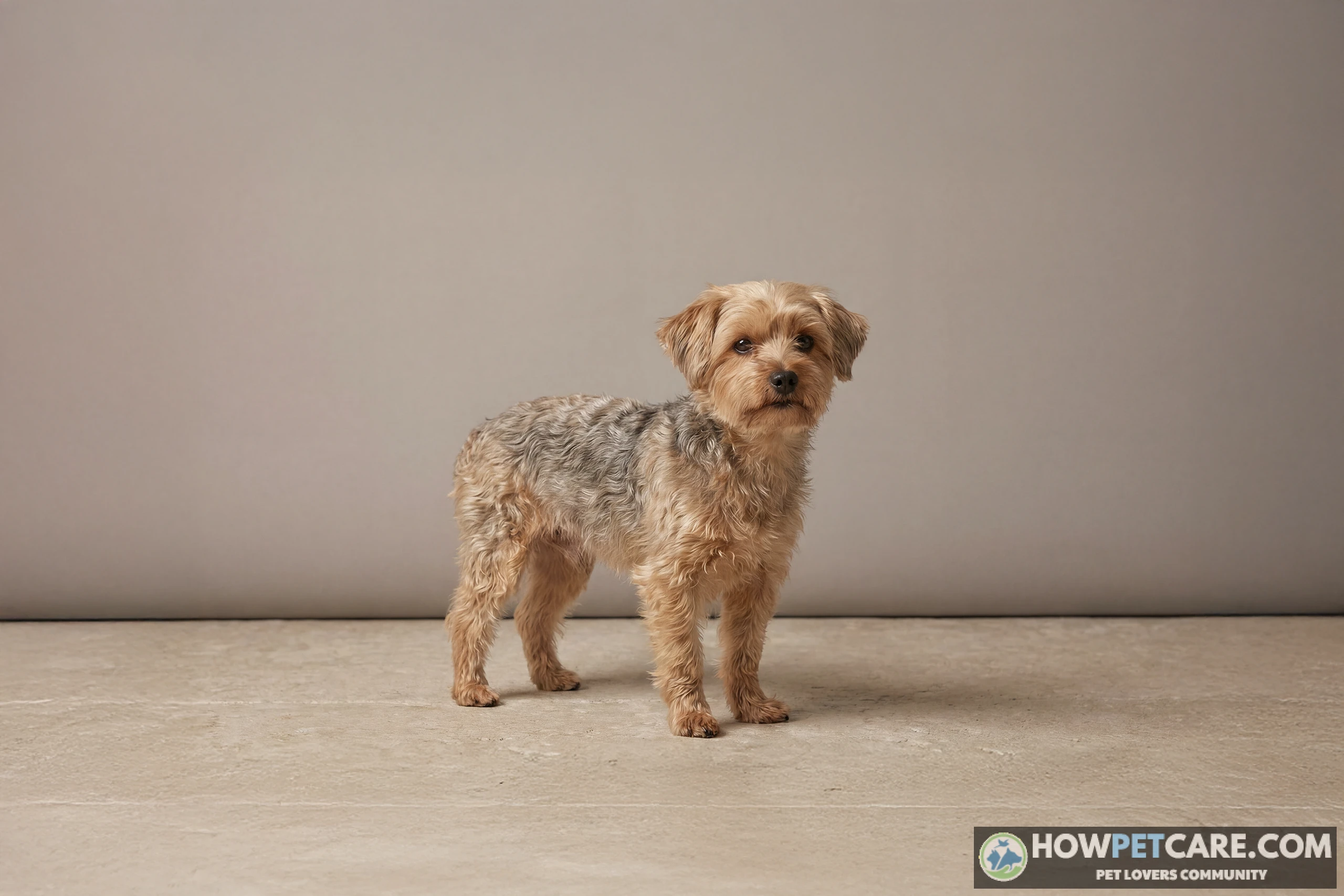

The Yorkie Poo is a small, energetic hybrid of a Yorkshire Terrier and a Toy or Miniature Poodle. Adults range from 6‑14 inches tall and 4‑15 lb, featuring low‑shedding curly or wavy coats. They need daily mental and physical exercise, regular grooming, and vigilant health care.
Deciding to bring a Yorkie Poo dog breed puppy home means looking past designer marketing and examining the day-to-day realities of life with a high-energy terrier-poodle cross. The Yorkie Poo combines the intense alertness and prey drive of a working ratter with the intelligence and low-dander coat of a water retriever. While breeders often pitch them as effortless lap pets, Yorkie Poos need structured mental workouts, clear boundaries against alert barking, and a strict daily grooming routine to prevent severe coat matting.
Knowing their growth stages, inherited health risks, and ongoing upkeep costs will help you decide if this cross fits your household, schedule, and long-term budget.
Yorkie Poo Size, Appearance, and Growth Milestones
A full-grown Yorkie Poo typically stands 7 to 15 inches tall at the shoulder and weighs between 4 and 15 pounds. Because the Yorkie Poo is a hybrid rather than an established purebred dog, no kennel club standard governs its build. Physical traits vary widely across litters and even between littermates.
Toy vs. Miniature Yorkie Poo: Full-Grown Weight and Height Baselines
A Yorkie Poo’s final adult frame depends largely on whether the Poodle parent was a Toy or a Miniature:
- Toy Yorkie Poo: Bred by crossing a Yorkshire Terrier with a Toy Poodle. Adults stand 6 to 10 inches tall and weigh 4 to 9 pounds. These compact dogs fit easily into small apartments, but their fragile bones need protection from drops and rough handling.
- Miniature Yorkie Poo: Bred by crossing a Yorkshire Terrier with a Miniature Poodle. Adults stand 10 to 14 inches tall and weigh 10 to 15 pounds. This size offers sturdier bones and greater physical endurance for active households.

Be cautious of breeders advertising "micro" or "teacup" Yorkie Poos weighing under 4 pounds. Extreme miniaturization usually results from breeding runts or introducing genetic dwarfism, leading to lifelong health complications like open fontanelles, hypoglycemia, and liver shunts.
Coat Type Variations: Straight, Wavy, and Curly Textures
Coat texture depends on the specific genetic blend each puppy inherits. A Yorkie Poo can develop a medium-to-long coat that is curly, wavy, or nearly straight:
- Curly Fleece Coat: Dominated by the Poodle parent, this dense, woolly coat traps shed hair. It releases little dander, but it mats quickly without daily, skin-level combing.
- Wavy or Shaggy Coat: The most common first-generation (F1) coat. It blends the silky Yorkshire Terrier texture with loose Poodle curls, producing a soft, scruffy look.
- Straight, Silky Coat: Inherits the Yorkshire Terrier’s fine, single-layer hair. It lacks curl, but it picks up static and tangles quickly under collars and harnesses.
Typical coat colors include solid black, black-and-tan, silver, cream, and apricot. Their ears fold forward, and their medium-length tails curve upward.

Growth Timeline: When Does a Yorkie Poo Reach Adult Size?
Yorkie Poos grow quickly over their first six months. Toy puppies reach their adult height and bone structure between 8 and 10 months of age, then spend two to three more months building muscle tone. Miniature Yorkie Poos take slightly longer, reaching adult weight between 10 and 13 months.
Between 6 and 10 months of age, Yorkie Poos shed their puppy coats. Their coat density increases during this window, and color clearing often begins. In this process, inherited from the Yorkshire Terrier, dark black or sable puppy coats gradually fade into steel blue, silver, or tan.
Yorkie Poo Temperament: Energy, Cuddle Drive, and Terrier Realities
The Yorkie Poo temperament combines the Poodle’s focus and eagerness to please with the Yorkshire Terrier’s bold, curious nature. They bond closely with their families and love physical affection, but they are far from sluggish.
Affection and Social Drive: Are Yorkie Poos Good for First-Time Owners?
For first-time owners, the Yorkie Poo is a responsive companion that picks up cues quickly under gentle, positive training. They thrive when kept close to their owners throughout the day. Because of that close bond, they do not handle being left alone for long stretches.
Small size and high sensitivity also mean they require owners who respect their personal space. When handled roughly, a Yorkie Poo may growl or snap to defend itself. Keep a close eye on interactions with young children.

The Terrier Factor: Watchdog Alertness and Natural Prey Drive
New owners often forget that Yorkshire Terriers were bred to hunt mill rats. That lineage leaves Yorkie Poos with a strong watchdog instinct and an active prey drive.
They react instantly to sights and sounds outside: a knock at the door, delivery drivers on the sidewalk, or squirrels in the grass. Without early socialization and impulse-control work, that sharp alertness turns into non-stop nuisance barking and reactivity.
Exercise Needs: Daily Physical and Mental Stimulation Quotas
Despite their small frames, Yorkie Poos need 30 to 60 minutes of daily physical exercise and brain work. A casual stroll around the block will rarely burn off their energy.
A balanced daily routine includes:
- Structured Leash Walking: Two 20-minute walks each day for cardiovascular exercise and scent exploration.
- Interactive Play: 15 minutes of indoor fetch, tug, or flirt-pole games to work their natural chase drive.
- Mental Puzzles: Puzzle feeders, snuffle mats, or scent-tracking games to challenge their Poodle intelligence and stop destructive chewing.

Managing Excessive Barking and Separation Anxiety in Yorkie Poos
Because both parent breeds are vocal and perceptive, Yorkie Poos can quickly develop barking habits and separation anxiety without early training. The Yorkshire Terrier brings alarm barking, while the companion Poodle brings distress whining when left alone. Setting clear house rules early keeps these habits in check.
Counter-Conditioning Alarm and Demand Barking
Demand barking (demanding food, attention, or an open door) and alarm barking (reacting to strange sounds) call for calm redirection rather than yelling. Shouting "No!" or "Quiet!" sounds like an answering bark to a terrier mix, which only ramps up its excitement.
Use this four-step desensitization sequence to manage noise reactions:
-
Identify Acoustic Triggers
Catalog the specific sounds that cause alarm barking, such as doorbells, hallway footsteps, or car doors closing outside.
-
Mark and Reward Before the Bark
Use the Look at That (LAT) training technique. When a trigger sounds at low volume, say a neutral marker word ("Yes") the instant your puppy cocks an ear, before it barks. Immediately drop a high-value treat on the floor to redirect its gaze downward.
-
Desensitize the Doorbell Sound
Record your doorbell on your phone. Play the recording at 10% volume while feeding your puppy. Over 7 to 10 days, raise the volume by 15% daily, keeping your dog focused on eating rather than barking.
-
Establish a Doorbell Settle Mat
Pair the real doorbell chime with tossing a kibble-loaded snuffle mat into an open exercise pen placed away from the front entryway, establishing an alternate target behavior.
Preventing Separation Anxiety Through Independent Crate and Pen Conditioning
Preventing separation issues starts by showing your puppy that alone time at home is safe and normal. Settling a young puppy in a playpen or crate with a chew toy teaches it to relax on its own.
Use planned short absences to build your dog’s tolerance for being alone:

- Put your puppy in an exercise pen with a frozen rubber toy stuffed with canned food.
- Grab your keys, slip on a coat, and step out of sight behind a closed interior door for 30 seconds. Return calmly without talking or making eye contact.
- Repeat this four times a day, slowly stretching the duration: 30 seconds, 2 minutes, 5 minutes, 15 minutes, then 30 minutes.
- Never walk back in or open the pen while the puppy is whining or barking. Wait for 5 seconds of total quiet before opening the door.
Yorkie Poo vs. Maltipoo vs. Cavapoo: Direct Doodle Comparison
Buyers often compare Yorkie Poos to other small Poodle mixes, especially the Maltipoo (Maltese x Poodle) and Cavapoo (Cavalier King Charles Spaniel x Poodle). All three shed minimally, but their energy levels, temperaments, and physical builds differ.
| Breed Mix | Average Size & Weight | Barking & Alertness Drive | Shedding & Coat Maintenance | Energy & Exercise Level | Suitability for Toddlers |
|---|---|---|---|---|---|
| Yorkie Poo (Yorkshire Terrier x Toy/Mini Poodle) | Toy: 6–10 in, 4–9 lbs Mini: 10–14 in, 10–15 lbs | Very High: Inherits strong terrier watchdog instinct; alarms at sounds and movement. | Minimal to Low Shedding: Hair-like coat; high matting risk around collar/ears; requires daily comb-outs. | Moderate-High: Bursts of terrier speed; needs 30–45 mins daily walking plus mental puzzles. | Low to Moderate: Toy variants have fragile bones easily fractured by drops or rough handling. |
| Maltipoo (Maltese x Toy/Mini Poodle) | 8–14 in, 5–12 lbs | Moderate: Alarm barks, but lacks high terrier prey drive; vocalizes more from isolation distress. | Very Low Shedding: Soft, wooly or silky hair; forms surface mats easily without leave-in conditioner. | Moderate: Playful bursts followed by extended lap cuddling; needs 20–30 mins daily walking. | Moderate: Gentle nature, but under 7 lbs remains too delicate for unsupervised toddler play. |
| Cavapoo (Cavalier King Charles x Toy/Mini Poodle) | 11–16 in, 12–22 lbs | Low to Moderate: Friendly greeter rather than sentry; lowest watchdog drive of the three. | Low Shedding: Wavy to fleece coat; seasonal light shedding possible; requires 3x/week line brushing. | Moderate: Adaptable pace; matches family activity; needs 45–60 mins daily activity. | High: Sturdier build and gentle, patient temperament better withstand clumsy interactions. |
Yorkie Poo vs. Maltipoo: Barking, Energy, and Independence Compared
Choosing between a Yorkie Poo and a Maltipoo comes down to terrier drive versus toy-companion traits. Maltipoos are softer, calmer, and happy to sit on your lap for hours. They also run a higher risk of separation anxiety and clinginess.
Yorkie Poos show more independent problem-solving and an active prey drive. They investigate noises, chase bugs, and monitor windows with clear focus. If you want an inquisitive dog that enjoys games and self-directed play, the Yorkie Poo is the better fit.

Yorkie Poo vs. Cavapoo: Size Differences and Family Compatibility
Cavapoos are larger and heavier than Toy Yorkie Poos. Thanks to their Cavalier King Charles Spaniel roots, Cavapoos have an easygoing, patient disposition that fits busy homes with toddlers.
A 5-pound Toy Yorkie Poo can easily suffer fractures from rough handling or falls from furniture. In homes with children under six, a Cavapoo or a Miniature Yorkie Poo offers a much safer, sturdier match.

Best Diet for a Yorkie Poo Puppy and Adult Feeding Protocols
Small-breed puppies burn far more metabolic energy per pound than large breeds. Because their stomachs are tiny, Yorkie Poo puppies need calorie-dense meals that are easy to chew, packed with animal proteins, and balanced with essential fats.

Feeding Benchmarks: Grams, Cups, and Meal Frequencies by Weight
| Age / Milestone Stage | Target Adult Weight | Daily Food Portion (Grams / Cups) | Daily Feeding Frequency | Key Nutritional Priority |
|---|---|---|---|---|
| 8 to 12 Weeks | 4 to 8 lbs (Toy) | 45–60 g (approx. 1/3 to 1/2 cup) | 4 meals (7:00 AM, 11:30 AM, 4:00 PM, 8:30 PM) | Caloric density (min. 30% protein, 20% fat); hypoglycemia prevention |
| 3 to 6 Months | 5 to 10 lbs (Toy/Mini) | 65–85 g (approx. 1/2 to 3/4 cup) | 3 meals (7:30 AM, 1:00 PM, 6:30 PM) | Skeletal growth support; DHA for cognitive development; small kibble size. |
| 6 to 12 Months | 5 to 12 lbs | 70–95 g (approx. 2/3 to 1 cup) | 2 meals (8:00 AM, 6:00 PM) | Controlled calorie intake to prevent joint-stressing juvenile obesity. |
| Adult (1 Year+) | Stable Adult Weight | 60–90 g (adjusted for body condition score) | 2 meals (Morning, Evening) | Oral health maintenance; balanced omega fatty acids for skin and coat barrier. |
Preventing Hypoglycemia in Small Puppies: Warning Signs and Emergency Protocols
Hypoglycemia (dangerously low blood sugar) is a real pediatric risk in toy puppies under four months old. Skipped meals, stomach upsets, cold snaps, and exhausting play sessions can all trigger an episode.
Warning Signs:
- Lethargy and slow responses
- Wobbly or uncoordinated steps
- Shivering or cool ears and paws
- Glassy, unfocused eyes
- Limp limbs, stupor, or seizures in severe episodes
If your puppy shows signs of low blood sugar, act quickly:
- Apply Fast-Acting Glucose: Rub 1/2 teaspoon of Karo syrup, maple syrup, or honey directly onto the puppy’s gums. Do not force liquid down the throat if the puppy is unresponsive to avoid choking.
- Provide Warmth: Wrap the puppy in a warm towel taken directly from the clothes dryer. Hypoglycemic puppies lose body heat rapidly.
- Evaluate and Feed: If the puppy perks up within 10 minutes, offer a tablespoon of warm canned puppy food. If lethargy continues past 10 minutes, or if the puppy experiences seizures, take it to an emergency veterinary clinic immediately.
Yorkie Poo Grooming: Home Maintenance Schedules and Matting Prevention
Yorkie Poos have hair instead of double fur, keeping shedding minimal. The catch is that loose strands get trapped in the coat instead of dropping to the floor. Without daily brushing, this trapped hair knots into dense mats that pull at the skin and breed infections.
Essential Tool Kit: Slicker Brushes, Greyhound Combs, and Sprays
Bristle brushes only glide across the coat’s surface, missing the deep tangles where mats take hold. A practical home grooming kit includes:
- Long-Pin Slicker Brush: Pick a brush with 15–20mm stainless steel pins and bare tips. Plastic ball tips pull and snap fine hair.
- 7.5-inch Steel Greyhound Comb: Use a metal comb with medium and fine teeth to catch hidden snags near the skin.
- Leave-In Detangling and Conditioning Spray: Never brush dry coat hair. Dry brushing creates static and snaps the strands. Mist lightly before starting.
- Curved Blunt-Tip Shears: Needed for trimming hair out of the eyes and keeping the sanitary area clean.
- Enzymatic Toothpaste and Finger Brush: Daily brushing is vital to prevent severe dental disease in tight toy jaws.

Step-by-Step Line Brushing Protocol to Eliminate Friction Mats
Line brushing is the standard method groomers use to keep wavy and curly coats completely mat-free:
- Part the Hair: Push a section of coat upward with your non-dominant hand until you see a clean line of skin.
- Brush Downward in Layers: Using short, gentle strokes with your slicker brush, comb the freed hair downward away from the skin.
- Move Systematically: Let down another thin section of hair and repeat, working your way up the body in rows.
- Check with the Comb: Run the steel comb through the brushed section from root to tip. If the teeth catch, work the knot loose with your fingers and the slicker brush before combing through again.
- Target High-Friction Areas: Check behind the ears, through the armpits, down the groin, and beneath the collar or harness.
The Professional Grooming Cycle: Haircuts, Sanitary Trims, and Ear Hygiene
Daily brushing at home works best when paired with a professional grooming appointment every 4 to 6 weeks. A standard session covers:

- Full Bath and High-Velocity Blowout: Blow-drying stretches curls straight, clearing out dander and making an even scissor cut possible.
- Style Trims: Common choices include the easy-care "Puppy Cut" (shaved to 1/2 inch over the body) and the "Teddy Bear Cut" (short body with a rounded face).
- Sanitary and Paw Pad Trimming: Clearing hair from between the paw pads gives better footing on hard floors, while a sanitary trim prevents hygiene issues.
- Ear Canal Cleaning: Yorkie Poos inherit folded, hairy ears from both sides of their lineage. Cleaning them with a drying ear wash stops trapped moisture from turning into yeast infections.
Yorkie Poo Lifespan and Health Issues: Risks and Teacup Realities
A healthy Yorkie Poo typically lives 10 to 15 years. Hybrid breeding can reduce the frequency of certain recessive defects, but Yorkie Poos remain susceptible to structural and genetic problems seen in both parent breeds.
Hereditary Health Concerns: Patellas, Tracheas, and Retinal Atrophy
Key health problems seen in Yorkie Poos include:
- Patellar Luxation: Occurs when the kneecap slips out of its groove on the femur. Grade 1 causes minor skipping, but Grade 4 leads to chronic lameness that requires corrective surgery.
- Tracheal Collapse: Inherited from the Yorkshire Terrier, this condition involves weakening cartilage rings in the windpipe. The airway flattens under pressure, producing a dry, honking cough. Walk your dog on a chest harness rather than a neck collar to protect the windpipe.
- Progressive Retinal Atrophy (PRA-PRCD): A genetic disorder causing steady degeneration of the retina, starting with night blindness and leading to complete vision loss. Responsible breeders test their breeding pairs to avoid passing this gene on.
- Portosystemic Shunts (PSS): An abnormal blood vessel that bypasses the liver, leaving toxins in the bloodstream. Watch for poor weight gain, lethargy, or confusion after eating.

The Biological Hazards of Unethical ‘Teacup’ Sizing
Breeding dogs to weigh under 4 pounds creates severe medical problems. Teacup Yorkie Poos frequently suffer from open fontanelles (holes in the skull where bones fail to close), hydrocephalus (water on the brain), chronic low blood sugar, and fragile limbs that snap during normal play.
Preventative Wellness: Dental Scaling and Tracheal Protection
Because small jaws crowd teeth together, Yorkie Poos develop early plaque, gum inflammation, and bone loss. Without daily tooth brushing and periodic veterinary cleanings under anesthesia, periodontal disease can take hold by age two or three. Oral bacteria can enter the bloodstream and damage internal organs over time.
Total Cost of Ownership: Upfront Purchase vs. Lifetime Expenses
Owning a Yorkie Poo comes with recurring bills for grooming, veterinary prevention, and quality food that far exceed the puppy’s purchase price.
| Expense Category | Initial Outlay (One-Time) | Monthly Cost Range | Annual Estimated Total |
|---|---|---|---|
| Acquisition (Ethical Breeder vs. Rescue) | $1,200 – $3,000 (Rescue: $350–$600) | N/A | $0 (Post-Year 1) |
| Core Veterinary Care & Vaccines | $350 – $600 (Puppy series, rabies, bordetella, microchip) | N/A | $150 – $300 (Annual exam, titers/boosters) |
| Spay / Neuter Surgery | $250 – $550 (Includes pre-op blood panel and IV fluids) | N/A | $0 (Post-Year 1) |
| Professional Grooming Cycles | N/A | $65 – $95 | $520 – $760 (Every 6 weeks, bath & haircut) |
| Premium Toy-Breed Nutrition | $40 (Initial food/treats) | $25 – $45 | $300 – $540 |
| Preventative Pet Insurance | N/A | $35 – $65 | $420 – $780 (Accident/illness covering luxating patellas) |
| Parasite Preventatives (Heartworm/Flea/Tick) | N/A | $18 – $30 | $216 – $360 |
| Essential Supplies & Gear | $250 – $400 (Crate, pen, harness, grooming tools, bowls) | $15 – $25 (Toy replacement) | $180 – $300 |
| Professional Dental Scaling (Age 2+) | N/A | N/A | $400 – $900 (Annual/biennial under anesthesia) |
| YEAR 1 TOTAL | $2,090 – $4,590 | — | — |
| RECURRING ANNUAL TOTAL (Year 2+) | — | $158 – $260 | $2,186 – $3,940 |
Puppy Purchase Price vs. Adoption Costs in the United States
In 2026, an ethically raised Yorkie Poo puppy from health-tested parents costs between $1,200 and $3,000 in the United States. Prices at the top of that range reflect full genetic testing on both parents, early vet checks, and structured socialization.
Adopting through a rescue or shelter costs between $350 and $600. That fee typically covers spay or neuter surgery, core vaccines, microchipping, and an initial health exam.
Itemized First-Year Setup and Healthcare Outlays
First-year costs cover veterinary setups and home gear. Core vaccines (distemper, adenovirus, parvovirus, parainfluenza, and rabies), deworming, and a microchip cost $350 to $600. Spay or neuter surgery, including pre-operative bloodwork and IV fluids, adds another $250 to $550.
Basic supplies—a playpen, travel crate, harness, grooming tools, and food dishes—cost roughly $250 to $400.
Recurring Annual Budget: Grooming, Veterinary Care, and Daily Upkeep
After year one, plan to spend $2,100 to $3,900 each year. Professional grooming is a steady expense, running $65 to $95 every six weeks ($520 to $760 per year).
Pet insurance covering hereditary problems like luxating patellas costs $420 to $780 annually, while food, treats, and parasite prevention run $500 to $900 per year.
Ethical Breeder Screening Checklist: Vetting Criteria and Red Flags
Because the Yorkie Poo is a popular designer mix, puppy mills and backyard breeders regularly sell litters without testing for hereditary defects. Finding a healthy puppy requires strict screening.
Non-Negotiable Health Clearances for Yorkshire Terrier and Poodle Parents
Ethical breeders screen their adult dogs to avoid passing down genetic defects. Do not settle for basic wellness checks. Insist on written clearances from the Orthopedic Foundation for Animals (OFA) or the Canine Eye Registration Foundation (CERF):
- Patellas: OFA clearance showing normal knees in both parents.
- Eyes: Annual CAER exam clearances confirming no signs of progressive retinal disease.
- Genetic DNA Panels: Proof of clear or non-carrier status for PRA-PRCD, degenerative myelopathy (DM), and von Willebrand disease (vWD).
- Cardiac Screening: An OFA basic cardiac evaluation confirming normal heart function.
Commercial Doodle Mill Red Flags and Online Broker Traps
Steer clear of these red flags during your breeder search:
- "Teacup" Guarantees: Sellers promoting puppies under 4 pounds as premium or rare pets.
- No Access to the Mother: Anyone who refuses to let you see the mother nursing her puppies, or asks to meet in a parking lot or transit hub.
- Broker Websites: Online pet marketplaces listing puppies from dozens of unrelated litters across multiple states.
- No Health Guarantees: Breeders offering no multi-year genetic warranty, or requiring you to buy a specific supplement brand to keep the contract valid.
Actionable Breeder Vetting Questions Checklist
Ask these questions when screening potential breeders:
- ☐ Can you provide OFA registry links or paper certificates showing normal patella, eye, and heart clearances for both parents?
- ☐ Are the puppies born and raised inside your home, and what early socialization protocols (such as handling exercises or noise exposure) do you use?
- ☐ Can I see the mother dog interacting with the puppies on-site or via live video call?
- ☐ At what age do the puppies go home? (Ethical breeders never release puppies before 8 full weeks; 9 to 10 weeks is standard for toy breeds).
- ☐ What specific steps do you take to prevent low blood sugar in your weaning puppies?
- ☐ Do you have a return-to-breeder contract guaranteeing you will take the dog back at any point in its life if I can no longer care for it?


| Breed Mix | Average Size & Weight | Barking & Alertness Drive | Shedding & Coat Maintenance | Energy & Exercise Level | Suitability for Toddlers |
|---|---|---|---|---|---|
| Yorkie Poo (Yorkshire Terrier x Toy/Mini Poodle) | Toy: 6–10 in, 4–9 lbs Mini: 10–14 in, 10–15 lbs | Very High: Inherits strong terrier watchdog instinct; alarms at sounds and movement. | Minimal to Low Shedding: Hair-like coat; high matting risk around collar/ears; requires daily comb-outs. | Moderate to High: Bursts of terrier speed; needs 30–45 mins daily walking plus mental puzzles. | Low to Moderate: Toy variants have fragile bones easily fractured by drops or rough handling. |
| Maltipoo (Maltese x Toy/Mini Poodle) | 8–14 in, 5–12 lbs | Moderate: Alarm barks, but lacks high terrier prey drive; vocalizes more from isolation distress. | Very Low Shedding: Soft, wooly or silky hair; forms surface mats easily without leave-in conditioner. | Moderate: Playful bursts followed by extended lap cuddling; needs 20–30 mins daily walking. | Moderate: Gentle nature, but under 7 lbs remains too delicate for unsupervised toddler play. |
| Cavapoo (Cavalier King Charles x Toy/Mini Poodle) | 11–16 in, 12–22 lbs | Low to Moderate: Friendly greeter rather than sentry; lowest watchdog drive of the three. | Low Shedding: Wavy to fleece coat; seasonal light shedding possible; requires 3x/week line brushing. | Moderate: Adaptable pace; matches family activity; needs 45–60 mins daily activity. | High: Sturdier build and gentle, patient temperament better withstand clumsy interactions. |
FAQ
Are Yorkie Poos truly 100% hypoallergenic dogs?
No dog breed is completely hypoallergenic. While the Yorkie Poo inherits low‑dander hair from both the Yorkshire Terrier and Toy Poodle, they still produce proteins in saliva, urine, and skin flakes that can trigger reactions in allergy sufferers.
Can a Yorkie Poo be left home alone during a standard workday?
Adult Yorkie Poos can typically manage 4 to 6 hours alone if properly crate trained, but their small bladder capacity and high companion drive make full 8‑to‑9‑hour solitary periods unsuitable without a mid‑day dog walker or family check‑in.
Are Yorkie Poos safe and suitable around toddlers and young children?
Yorkie Poos can thrive in family settings, but Toy variants under 8 pounds are anatomically delicate and can be easily injured by unintentional rough handling. They are best suited for households with older children who understand gentle handling protocols.
Do Yorkie Poos shed their puppy coat, and does their coat color change?
Yes, between 6 and 10 months of age, Yorkie Poos transition from their soft puppy coat to their adult texture, which often brings changes in density and color clearing, a common genetic trait inherited from Yorkshire Terriers.