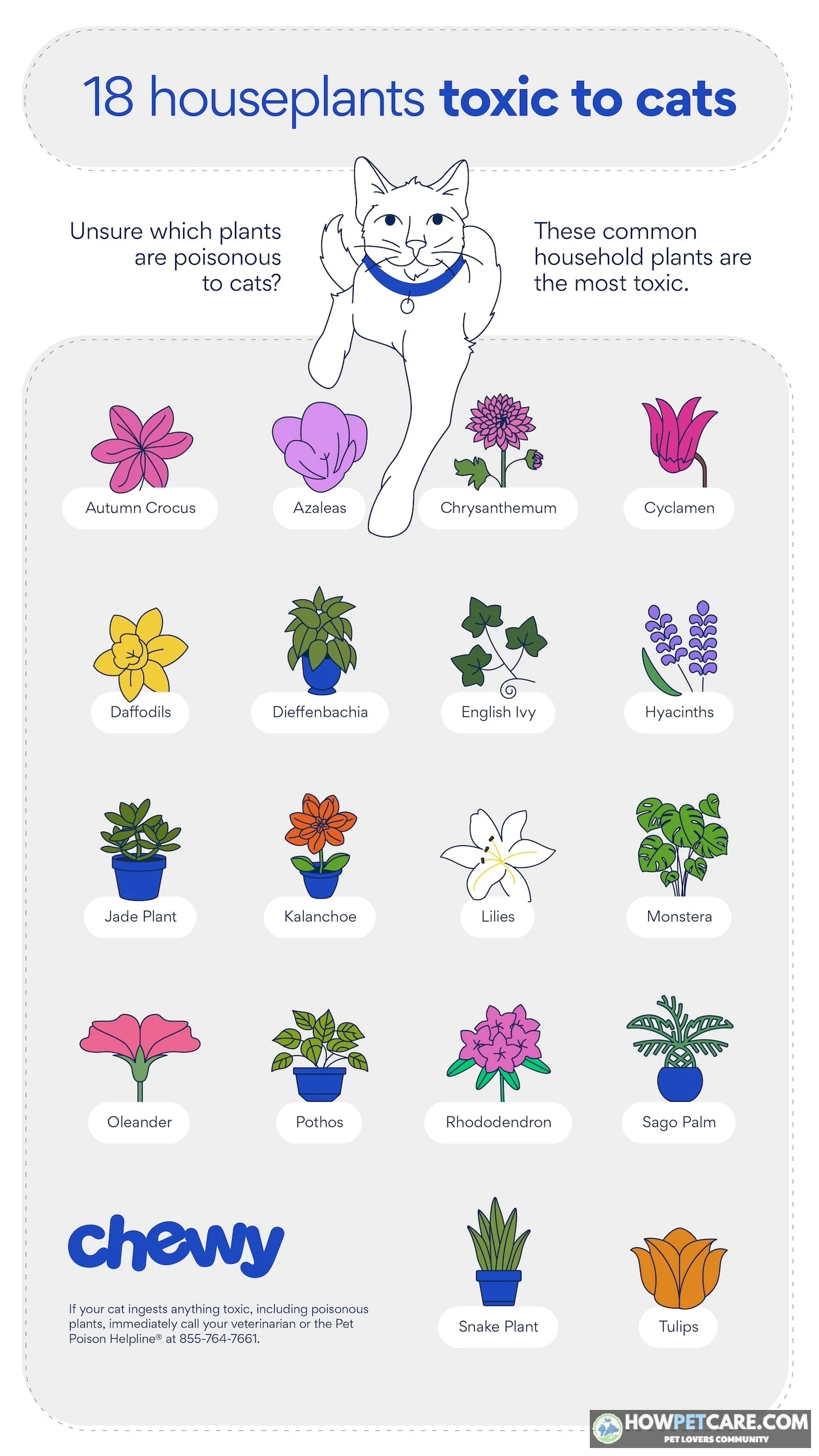

Yes—mums (chrysanthemums) are poisonous to cats, dogs, and horses. If your cat ate any part of one, move them away from the plant and call your veterinarian or animal poison control. Seek emergency care for tremors, seizures, collapse, breathing trouble, or repeated vomiting.
Are mums poisonous to cats? The immediate answer
Yes—mums, also called chrysanthemums, are toxic to cats. If your cat ate any part of one, move them away from the plant and call your veterinarian or an animal poison-control service for advice specific to the exposure. Chrysanthemums are classified as toxic to cats, dogs, and horses.
Go to an emergency veterinarian now if your cat has trouble breathing, collapses, has seizures or tremors, is markedly unsteady, or vomits repeatedly or uncontrollably. Call ahead if you can do so without delaying your departure. If your cat has no symptoms or only mild signs, call a professional before deciding to monitor at home. Don’t wait for symptoms before seeking advice about the exposure.
| Situation you can observe | Do this now | Why it matters |
|---|---|---|
| Trouble breathing, collapse, seizure, tremors, repeated uncontrolled vomiting, or marked wobbliness | Go to an emergency vet now. Call ahead only if it won’t delay leaving. | These can indicate severe toxicity, another plant, or pesticide exposure. |
| No symptoms, or one mild episode of drooling or vomiting after a witnessed nibble | Call your veterinarian, an emergency clinic, or animal poison control before deciding to monitor. | A professional can assess the amount, timing, plant identity, and possible residues. |
| The plant may be a lily or daylily, or a pesticide or dog flea product may be involved | Treat the exposure as urgent, even if your cat looks normal. | Lilies can cause life-threatening kidney injury in cats; some pyrethroid products are dangerous to cats. |
| Sap or residue is on your cat’s fur or paws | Prevent grooming and call for washing instructions. | Your cat may swallow residue while grooming. |
What to do in the first 30 minutes if your cat eats mums
Use this checklist while you arrange professional advice. Don’t delay an emergency visit to complete it.
- Move your cat away from the plant, vase water, fallen petals, and bouquet debris. Remove loose plant material from your cat’s mouth only if they allow it safely. Don’t put your fingers or tools into a resisting cat’s mouth.
- Photograph the plant, the chewed areas, and any label or packaging. Keep the plant or its packaging available for identification.
- Write down when the exposure happened, which parts your cat may have eaten, the estimated amount, and any symptoms you’ve seen. Note whether pesticides, fertilizer, flower food, or flea products could be involved.
- Call your veterinarian, an emergency clinic, or a pet poison helpline. Follow their advice on whether to come in, what to do about residue, and how long to monitor your cat.
- If sap or another residue is on your cat’s fur or paws, prevent grooming if you can do so safely and ask a veterinarian how to wash it off. A suspected concentrated pesticide or flea-product exposure calls for prompt professional instructions.
- Don’t induce vomiting or give hydrogen peroxide, milk, oils, activated charcoal, medication, food, or water as a treatment unless a veterinarian specifically directs you to do so.

Mum poisoning symptoms in cats: monitor or emergency?
Possible signs include drooling, vomiting, diarrhea, poor coordination (listed as incoordination in ASPCA toxic-plant information), and dermatitis (skin irritation). These signs aren’t unique to mums, so symptoms alone can’t confirm the cause.
Signs that need emergency care
Seek emergency care for seizures, tremors, collapse, trouble breathing, pronounced unsteadiness or inability to walk normally, or repeated or uncontrolled vomiting. Don’t assume severe neurological signs are a routine response to a mild plant exposure. Another plant, a concentrated pesticide, or another cause may be involved.
When a professional may recommend home monitoring
A veterinarian or poison-control professional may decide that an alert cat with no signs—or only mild, isolated drooling or vomiting—can be monitored at home. That decision depends on the exposure details. You should also receive a specific monitoring window and instructions on when to return. Seek reassessment if signs worsen, vomiting persists, or new neurological symptoms appear.
| Timing after exposure | What may be seen | Practical response |
|---|---|---|
| Early after exposure | Drooling, lip-smacking, vomiting, diarrhea, pawing at the mouth, or mild skin irritation | Call a professional with the exposure details. Monitor only if they agree and give you a recheck window. |
| Later, especially after a larger or unknown ingestion | Poor coordination, unsteady walking, lethargy, or ongoing stomach upset | Contact a professional promptly if signs are pronounced, worsening, or persistent, or if residues or an unidentified plant may be involved. |
| Any time | Tremors, seizures, collapse, breathing difficulty, or repeated uncontrolled vomiting | Seek emergency care now. Don’t wait to identify the plant if your cat is seriously ill. |
| During a professional-approved home-monitoring period | Mild signs should improve rather than worsen | Call back if signs persist, appetite drops, new signs appear, or the monitoring period ends without improvement. |

Sources often describe ordinary mum ingestion as causing mild stomach or skin signs, while also warning about poor coordination and, in severe cases, neurological effects. Neither possibility should be ignored. Exposure severity varies, and pesticide residues or a misidentified plant can change the risk. Tremors and seizures are emergency red flags, not symptoms to watch through at home.
How much mum is toxic, and how long do symptoms last?
The minimum toxic dose of chrysanthemum for cats has not been established. That means there’s no reliable amount you can use to declare a bite safe—not that every tiny nibble will cause serious poisoning. A single witnessed nibble is useful information for a veterinarian, but it isn’t a proven safe threshold. A larger or unknown amount deserves particular care.
Timing and recovery vary. Don’t rely on a fixed number of hours for symptoms to start or a set number of days for recovery: the available evidence here doesn’t establish a dependable chrysanthemum-specific timeline. Ask the professional assessing your cat when signs might appear and how long to monitor. Note whether your cat stays normal or develops new signs during that window.
The outlook is generally favorable for uncomplicated exposures when the cat receives appropriate advice and care. Persistent vomiting, neurological signs, or possible pesticide exposure need individual assessment. There is no specific antidote for pyrethrin poisoning; veterinary care focuses on supportive treatment and managing symptoms.

Mum leaves, flowers, vase water and skin contact: exposure risks
Don’t assume any part of the plant is safe to chew, or that one part is more toxic than another. The amount of toxin in individual mum varieties has not been established.
| Plant part or exposure route | Potential concern | What to tell the veterinarian |
|---|---|---|
| Leaves, flowers, or stems chewed or swallowed | Plant ingestion may cause irritation or other signs; the amount and any residues matter. | Which parts, the estimated amount, when it happened, and whether your cat can still reach the plant. |
| Sap on fur, paws, or skin | Skin irritation may occur; residue can also be swallowed during grooming. | Where the residue is, whether your cat is licking it, and any redness or drooling. |
| Vase water | It may contain material from the flowers, bacteria, or added flower food; the risk depends on what’s in it. | Whether water was drunk, the estimated amount, any additives, and when the flowers were placed in the vase. |
| Dried mums, potpourri, or chrysanthemum tea | Concentration and other ingredients may be unknown. | The product name or a photo, ingredient list, approximate amount, and whether the tea had additives. |
| Bouquet poms or homecoming-mum decorations | Poms may be chrysanthemum cultivars; ribbons, wire, or glitter create separate swallowing or injury hazards. | The label or florist’s identification and whether any ribbon, string, or wire is missing. |

Brushing against or walking through a plant doesn’t by itself prove poisoning, but contact can cause dermatitis, and sap on fur can be swallowed later. If your cat drinks vase water, tell the veterinarian what was in it rather than assuming it’s harmless or toxic; the same hidden-additive concern is covered in our guide to cat-safe flowers and vase risks. Don’t offer chrysanthemum tea to a cat; if a cat drinks it, share the ingredients and estimated amount with a veterinarian.
Pompom flowers sold in bouquets can be chrysanthemum cultivars and carry the same plant-toxicity concern. Confirm their identity with the label or florist rather than relying on appearance. Homecoming-mum ribbons and wires are a separate hazard. If you suspect your cat swallowed string or wire, contact a veterinarian promptly and don’t pull anything protruding from the mouth or body.
Why mums are toxic: plant compounds, pesticides and lily confusion
Chrysanthemums contain pyrethrins, sesquiterpene lactones, and volatile oils associated with their toxicity. Cats are more sensitive than dogs to pyrethrins because their livers are less able to metabolize these compounds. Exposure to a plant isn’t the same as exposure to a concentrated insecticide: the product, concentration, and amount can make a major difference.
Plant exposure versus pesticide or flea-product exposure
Store-bought mums may have pesticide or fertilizer residues, but don’t assume a particular plant has been treated. If you know or suspect a product was used, give the veterinarian its name, ingredient list, or label. That information can change the advice you receive.
Dog flea treatments containing permethrin or other pyrethroids can be dangerous to cats. Never apply a dog flea product to a cat. If your cat contacts or licks one, seek prompt veterinary advice even if the cat seems well; don’t treat it as ordinary mum ingestion.
Mums versus true lilies and daylilies
Mums are toxic to cats, but they shouldn’t be confused with true lilies and daylilies. Lilies can cause life-threatening kidney injury in cats after small exposures. If a bouquet might contain a lily or you can’t identify a flower, call a veterinarian or poison-control service urgently instead of relying on the less severe general expectations for mums. The same identify-first rule applies to tulip toxicity in cats and other bouquet flowers.

Veterinary treatment and emergency visit costs
The veterinarian will ask about the plant, timing, amount, symptoms, and possible residues, then examine your cat. Depending on the situation, care may include decontamination when appropriate, anti-nausea medication, fluids, observation, or treatment for neurological signs. There is no specific antidote for pyrethrin poisoning; treatment is supportive and tailored to the cat’s condition.
Costs vary substantially by location, time of day, testing, and treatment, so there’s no dependable nationwide price to quote here. Call the clinic and ask for its emergency exam fee and an estimate for likely care. If your cat has red-flag symptoms, don’t delay leaving for emergency care to compare prices.
In the United States, the ASPCA Animal Poison Control Center can be reached at (888) 426-4435, and Pet Poison Helpline at (855) 764-7661. Both services are available around the clock. Consultation fees may apply, so confirm the fee when calling. If your cat is in immediate distress, go to an emergency veterinarian and call ahead only if doing so won’t slow you down.

Next steps: prevent another mum exposure
Remove potted mums and cut flowers from spaces your cat can reach, including patios and gardens. Put away vase water and fallen petals as well; a high shelf or deterrent spray isn’t a dependable substitute for keeping the plant inaccessible. Check labels on fall bouquets and ask the florist to identify unfamiliar flowers.
For safer, cat-safe flower choices, verify every species in a bouquet rather than relying on a mixed arrangement’s main flower. The ASPCA lists Gerbera daisies and asters as non-toxic to cats. Even flowers considered non-toxic can still be a concern if treated with pesticides, placed in vase water with additives, or arranged with hazardous ribbons or wire.
Keep your regular veterinarian’s number, the nearest emergency clinic’s number, and a poison-control service’s contact details where you can find them quickly. Check contact details, hours, and fees when you save them. If an exposure happens, record what your cat encountered and follow professional instructions rather than waiting for symptoms to decide whether the call was necessary.

| Plant or Flower Name | Toxicity Level for Cats | Toxic Compounds / Hazards | Common Symptoms | Urgency / Action Required |
|---|---|---|---|---|
| True Lilies and Daylilies | Highly toxic / Life-threatening | Kidney toxicity | Life-threatening kidney injury | Treat exposure as urgent even if cat looks normal; seek immediate emergency vet care or call poison control. |
| Chrysanthemums (Mums) | Toxic | Pyrethrins, sesquiterpene lactones, volatile oils; potential pesticide/fertilizer residues | Drooling, lip-smacking, vomiting, diarrhea, pawing at mouth, dermatitis (skin irritation), poor coordination (unsteady walking), lethargy; severe signs include tremors, seizures, collapse, breathing trouble, repeated uncontrolled vomiting | Move cat away from plant. Seek immediate emergency vet care if severe signs (tremors, seizures, collapse, trouble breathing, repeated vomiting) occur; otherwise call vet or poison control before deciding to monitor. Do not induce vomiting without vet instruction. |
| Chrysanthemum Tea / Dried Mums / Potpourri | Toxic | Unknown concentration of plant toxins, unknown additives | Stomach upset, vomiting, diarrhea | Do not offer to cats. If ingested, contact a veterinarian with product details, ingredients, and estimated amount consumed. |
| Dog Flea Products / Treatments (containing Permethrin/Pyrethroids) | Highly toxic / Dangerous | Permethrin or pyrethroids | Severe toxicity / dangerous neurological and systemic effects | Never apply to a cat. Seek prompt veterinary advice even if the cat seems well. |
| Bouquet Poms / Homecoming-Mum Decorations | Toxic / Mechanical hazard | Chrysanthemum toxins; physical hazards from ribbons, string, wire, or glitter | Swallowing, stomach upset, or physical injury hazards | Confirm plant identity. Contact a veterinarian promptly if string or wire is swallowed; do not pull protruding materials from the mouth or body. |
| Asters | Non-toxic | Pesticides, vase additives, or decorative ribbons/wires can still pose risks | None (unless ingested with external hazards) | Safe alternative; verify species identity and ensure bouquet elements are free of pesticides and additives. |
| Gerbera Daisies | Non-toxic | Pesticides, vase additives, or decorative ribbons/wires can still pose risks | None (unless ingested with external hazards) | Safe alternative; verify species identity and ensure bouquet elements are free of pesticides and additives. |
| Orchids | Non-toxic | Pesticides, vase additives | None (unless ingested with external hazards) | Safe alternative; verify species identity and ensure bouquet elements are free of pesticides and additives. |
| Roses | Non-toxic | Thorns (mechanical hazard), pesticides, vase additives | Skin or mouth punctures from thorns | Safe alternative; verify species identity, remove thorns, and check for pesticides/additives. |

FAQ
Are chrysanthemums poisonous to dogs as well as cats?
Yes. Chrysanthemums are toxic to dogs as well as cats. If a dog eats one, contact a veterinarian or animal poison control for advice based on the amount, symptoms and any possible residues.
Are grocery-store pompom flowers the same as mums?
Poms or pompoms in bouquets can be chrysanthemum cultivars, but the name alone does not confirm the plant. Check the label or ask the florist, and keep unidentified flowers away from cats.
Can cats drink chrysanthemum tea?
Do not offer chrysanthemum tea to cats. If your cat drinks some, contact a veterinarian and provide the ingredients, approximate amount and whether the tea contained any additives.
What flowers are safer alternatives to mums around cats?
The ASPCA lists Gerbera daisies and asters as non-toxic to cats, and roses and orchids are also listed as non-toxic. Thorns, pesticides, vase additives and other bouquet flowers can still present risks, so verify every species before bringing flowers home.