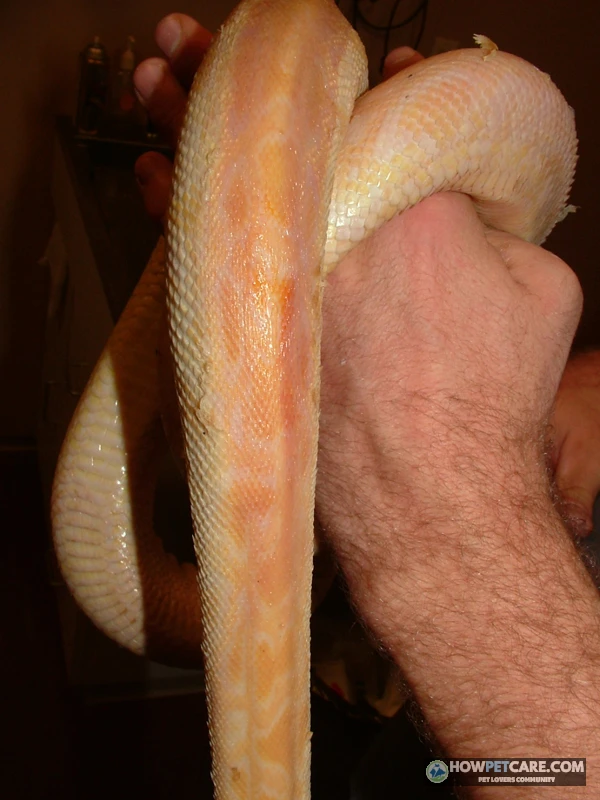

Dysecdysis is abnormal or incomplete shedding in reptiles — old skin that stays on instead of coming off cleanly. It’s usually caused by low humidity or dehydration: fix it with a humid hide and supervised 85–90°F soaks, and see a vet for retained eye caps, toe or tail constriction rings, or repeated bad sheds.
Dysecdysis Is Stuck Shed: How to Tell It From a Normal Shed
Dysecdysis is the veterinary term for abnormal or incomplete shedding (ecdysis) — old skin that stays on the body instead of coming off in a clean cycle. Keepers usually call it stuck shed, bad shed, or retained shed, and it signals that something in the environment or the animal’s health needs attention.
What a normal shed cycle looks like
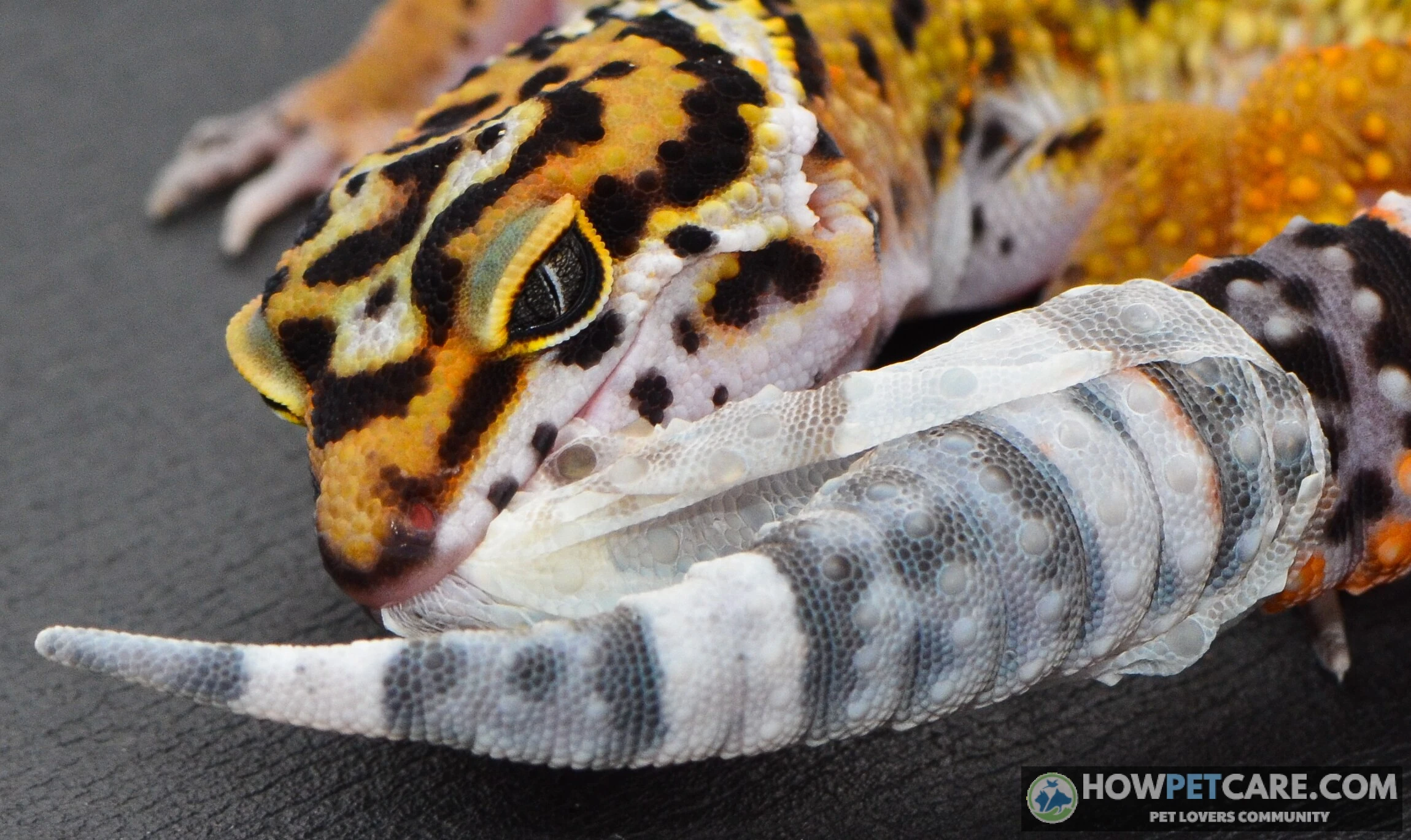
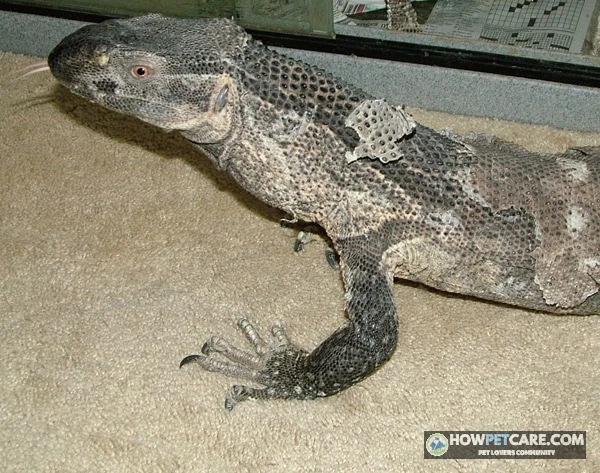
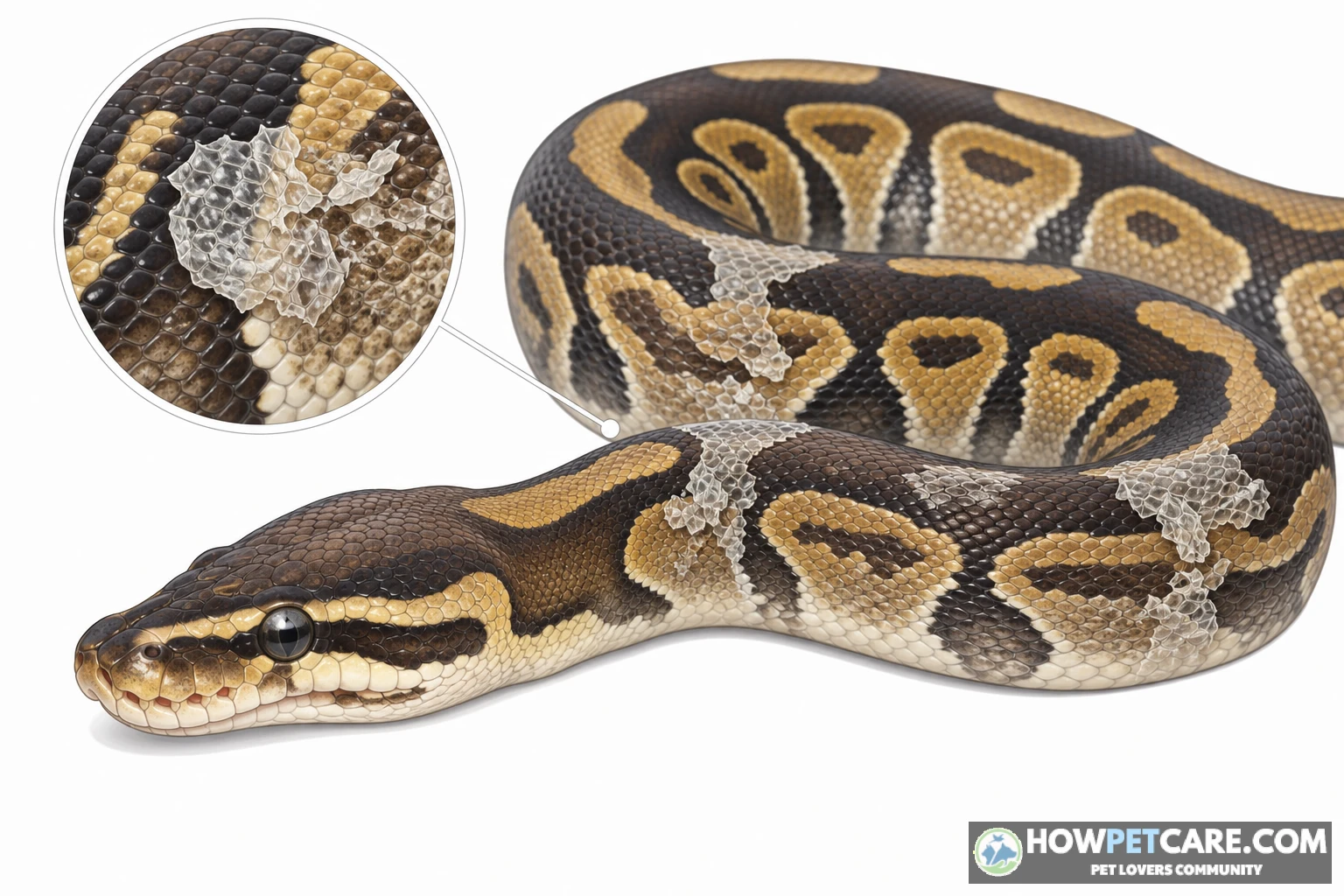
Snakes typically enter a "blue phase": the skin dulls, the eyes turn cloudy, then the eyes clear and the snake rubs its nose on rough surfaces to peel the old skin off in one inside-out piece. Leopard geckos and bearded dragons shed in patches over several days. You’ll see flakes on the head, limbs, and tail, and the animal often eats the shed. In both groups, the new skin underneath should look bright, hydrated, and free of leftover fragments.
Signs of dysecdysis by body area
- Body: Dry, flaky patches that remain after the expected shed window; skin that looks dull or segmented instead of a single piece (snakes) or persistent patches that don’t fall off (lizards).
- Toes and tail tip: Rings of old skin that constrict like rubber bands. These can cut off blood flow within days, leading to toe loss or tail necrosis.
- Eyes (snakes and some geckos): A retained spectacle (eye cap) appears as a dull, wrinkled, or opaque disc over the eye while the other eye is clear, and the eye underneath still looks normal. If the eye itself looks milky or sunken, or you see discharge or swelling, that’s injury or infection rather than a simple retained cap — a vet job, not a soak job. Stacked caps from multiple cycles can cloud vision permanently.
Quick triage: home care or vet?
- Home care first: Stuck shed only on the body, no redness, swelling, or behavior change. Fix humidity, provide a humid hide, and do supervised soaks.
- Careful home care + monitoring clock: Stuck shed on toes, tail tip, or a single retained eye cap with no discharge or swelling. Start soaks today, reassess in 3 days.
- Vet now: Constriction rings with swelling or color change, cloudy/sunken eye, discharge, open wounds, mites, lethargy, refusal to eat, or repeated bad sheds after husbandry correction.
Why Your Reptile Has Stuck Shed: Husbandry Causes vs Medical Causes
Environmental causes you can fix tonight
Low enclosure humidity is the number-one driver of dysecdysis. A hygrometer reading at the cool end of the tank often misses the real problem: the microclimate inside the hide where the animal actually rests. Other common husbandry gaps:
- No moist hide (or the hide’s substrate is dry).
- Missing rough surfaces (cork bark, rocks, branches) for the animal to start the peel.
- Dehydration from inadequate water bowl access or low water intake.
- Incorrect temperature gradient — too cool slows metabolism and skin turnover.
- Handling or disturbing the animal during the blue phase, which interrupts the natural rubbing behavior.
Medical causes to rule out
If humidity, hydration, and hides are correct and the animal still sheds poorly, consider these:
- Mites and parasites: Tiny black/red dots around the eyes, vent, and under scales; they damage the skin and cause dysecdysis.
- Skin infection: Bacterial or fungal dermatitis often shows as discolored, smelly, or ulcerated patches under retained shed.
- Nutritional deficits: Vitamin A deficiency (especially in insectivores) thickens the keratin layer, making shed stick.
- Old injuries or scarring: Scar tissue lacks elasticity and never sheds normally.
- Systemic illness: Any chronic disease that dehydrates or weakens the animal can manifest as repeated bad sheds.
Why bad sheds continue after you fix humidity
- Verify hygrometer accuracy with a second calibrated device.
- Measure RH inside the humid hide, not the room.
- Check for mites with a magnifying glass and a white paper towel rub.
- Review diet: gut-loaded insects, appropriate supplements, fresh prey for snakes.
- If all above are solid and the animal still has stuck shed, book a reptile vet for a full workup (bloodwork, fecal, skin scrape).
A ball python shedding in pieces is often a humidity or hydration signal, but if it keeps happening after correction, mites or illness are likely. Constriction rings on toes and tails can restrict blood flow and cause tissue loss if left alone — this is a veterinary emergency.
 You might be wonderingBearded dragon lifespanBearded Dragon Lifespan: How Long Pet Dragons LiveRead the answer
Humidity and Temperature Targets for Shedding, by Species
The table below gives consensus husbandry ranges drawn from veterinary and herpetological care sheets. Treat them as starting points, not guarantees — confirm against your species’ current care sheet or your reptile vet, especially for locality-specific geckos, Indonesian blue-tongues, and juveniles, which often need higher humidity.
Snakes: ball python, corn snake and similar
Ball pythons need a baseline of 50–60% RH, jumping to 70–80% inside a humid hide during the blue phase. Corn snakes tolerate 40–60% baseline but benefit from a damp hide at 65–75% when shedding. Between them, expect a warm side of 85–92°F (29–33°C) and a cool side of 72–80°F (22–27°C) — the species table below gives the exact split.
Lizards: leopard gecko, bearded dragon, crested gecko
Desert species (leopard gecko, bearded dragon) need a dry overall enclosure (30–40% RH) with a localized humid hide at 70–80% (gecko) or 50–60% via soaks (dragon). Crested geckos thrive at 50–70% ambient with a nightly spike to 75–85% after misting. Temperatures vary: leopard geckos need 88–92°F floor heat, bearded dragons 95–105°F basking, crested geckos 72–78°F ambient.
How to measure and verify your numbers
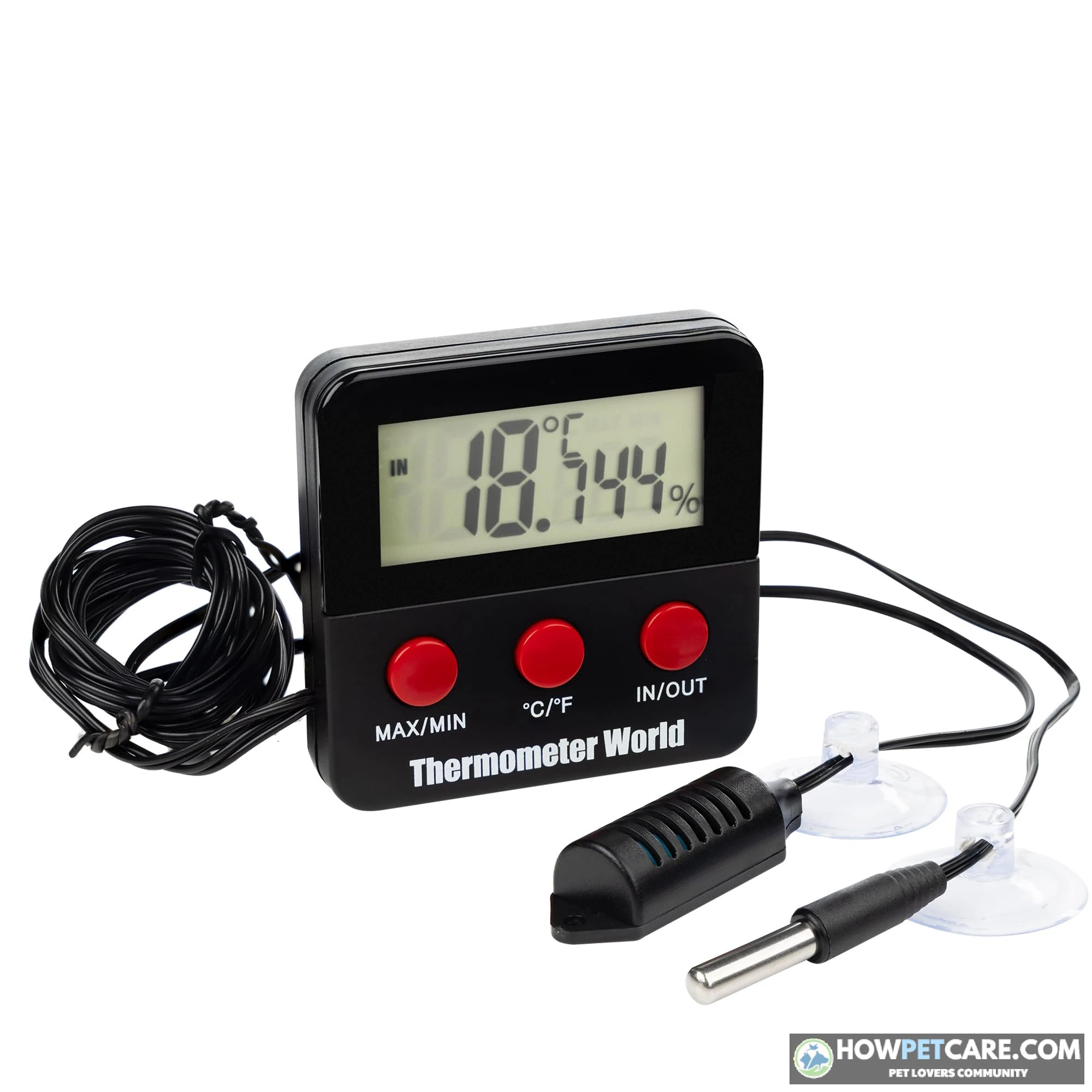
Use a digital hygrometer/thermometer probe at animal level on the cool side, and a second probe inside the humid hide. The hide microclimate is what actually loosens the shed, not the room reading on the wall. Calibrate annually with a salt-test kit or replace cheap units.
| Species | Baseline enclosure RH% | RH% during shed / inside humid hide | Warm-side or basking temp | Cool-side temp | Notes |
|---|---|---|---|---|---|
| Ball python | 50–60% | 70–80% (humid hide essential during blue phase) | 88–92°F (31–33°C) | 75–80°F (24–27°C) | Chronic low humidity is the #1 cause of pieced-out sheds in this species. |
| Corn snake | 40–60% | 65–75% in a damp hide | 85–88°F (29–31°C) | 72–75°F (22–24°C) | Hardy, but sheds fragment below ~40% RH. |
| Leopard gecko | 30–40% | 70–80% inside the humid hide only | 88–92°F (31–33°C) floor temp | 70–77°F (21–25°C) | Dry enclosure + humid hide. Never raise ambient RH — risk of respiratory infection. |
| Bearded dragon | 30–40% | 50–60% in a shed hide or via soaks | 95–105°F (35–40°C) basking spot | 75–85°F (24–29°C) | Desert species: use soaks, not a humid enclosure. Sheds in patches. |
| Crested gecko | 50–70% (dry-out to ~50% between mistings) | 75–85% right after evening misting | No basking spot needed | 72–78°F (22–26°C) ambient | Needs a wet/dry cycle — constant 80%+ invites mold and skin issues. |
| Blue-tongue skink | 40–60% | 60–70% in humid hide | 95–100°F (35–38°C) basking | 70–78°F (21–26°C) | Indonesian species generally need higher humidity than Northern species — check yours. |
How to Treat Stuck Shed at Home: Soak, Humid Hide and Removal Protocol
What you need before you start
Gather a clean tub or container with a secure lid and air holes (for snakes), a water thermometer, a soft towel, damp cotton swabs, and paper towels. Do not reuse the animal’s enclosure or a kitchen sink.
Snake soak and towel method
-
Step 1: Prepare water
Fill the tub with lukewarm water at 85–90°F (29–32°C) — verify with the thermometer, not your wrist. Hotter risks burns; cooler won’t soften the skin.
-
Step 2: Set depth
For snakes, 1–2 inches is enough. Never leave the animal unattended, even for a minute.
-
Step 3: Soak
15–20 minutes. Snakes often soak better in a ventilated container with warm damp towels instead of standing water — same 15–20 minute window, same supervision rule.
-
Step 4: Check skin
Loosened shed looks translucent and edges lift freely. Skin that is still bonded tight stays put — do not force it.
-
Step 5: Remove only what lifts easily
Rub gently in the direction of the scales with your fingers or a damp towel. For small patches, use the q-tip roll: press a damp cotton swab at the skin’s edge and roll it slowly so the skin peels under the swab. No scraping, no pulling against resistance.
-
Step 6: Repeat
Once daily, maximum two sessions per day, for up to three days. Between sessions, the animal lives in its normal enclosure with a stocked humid hide.
-
Step 7: Build the humid hide
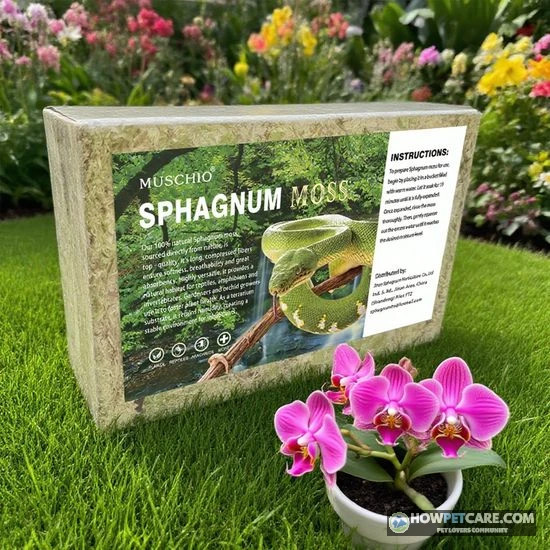
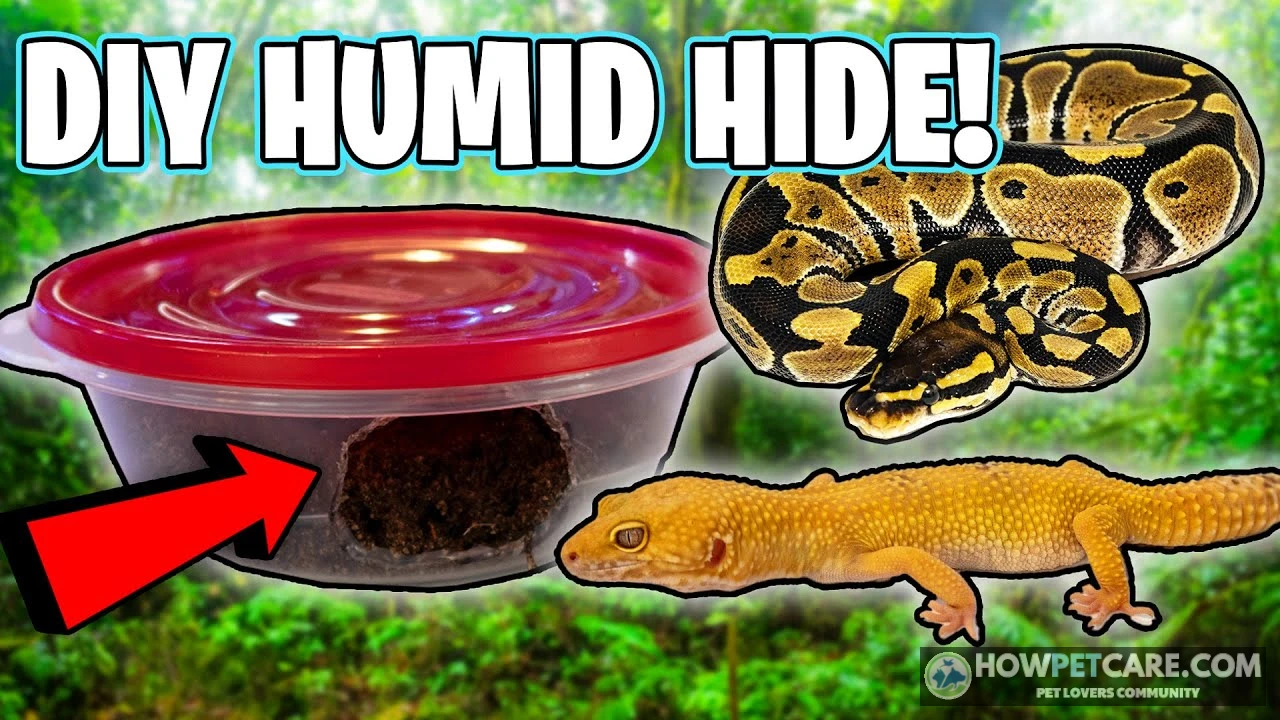
A plastic container with a smooth-edged entrance hole, filled with damp (not dripping) sphagnum moss or damp paper towels. Check and re-dampen daily; replace moss weekly and at the first sign of mold.
Stuck shed on leopard gecko toes and tail tips
Soak the gecko in a shallow dish with the water at shoulder level and the chin clear, at 85–90°F for 10–15 minutes. Gently roll or tease skin off toes with a damp q-tip, then check every toe again after soaking. Never pull skin that resists — it may take tissue with it. If a ring remains tight after three sessions, see a vet.
Build a humid hide that works
Place the humid hide on the warm side of the enclosure so the damp substrate stays warm, and position it where the animal already likes to rest. This single addition prevents most stuck sheds in desert species.
When to stop trying at home
Quit and call a vet if: the same skin hasn’t released after 3 sessions, you see any bleeding or raw tissue, a skin ring on a toe or tail is tight enough to pinch (with swelling or color change below the ring), or the animal shows strong stress such as frantic escape attempts or defensive striking that doesn’t settle. Forcing bonded skin removes living tissue with it.
Retained Eye Caps on a Snake: Safe Removal vs Eye Damage
Snakes have no eyelids — the eye sits under a clear scale called a spectacle (eye cap). A retained cap is a husbandry problem, but what’s underneath it can be an injury. Check these signs before attempting anything.
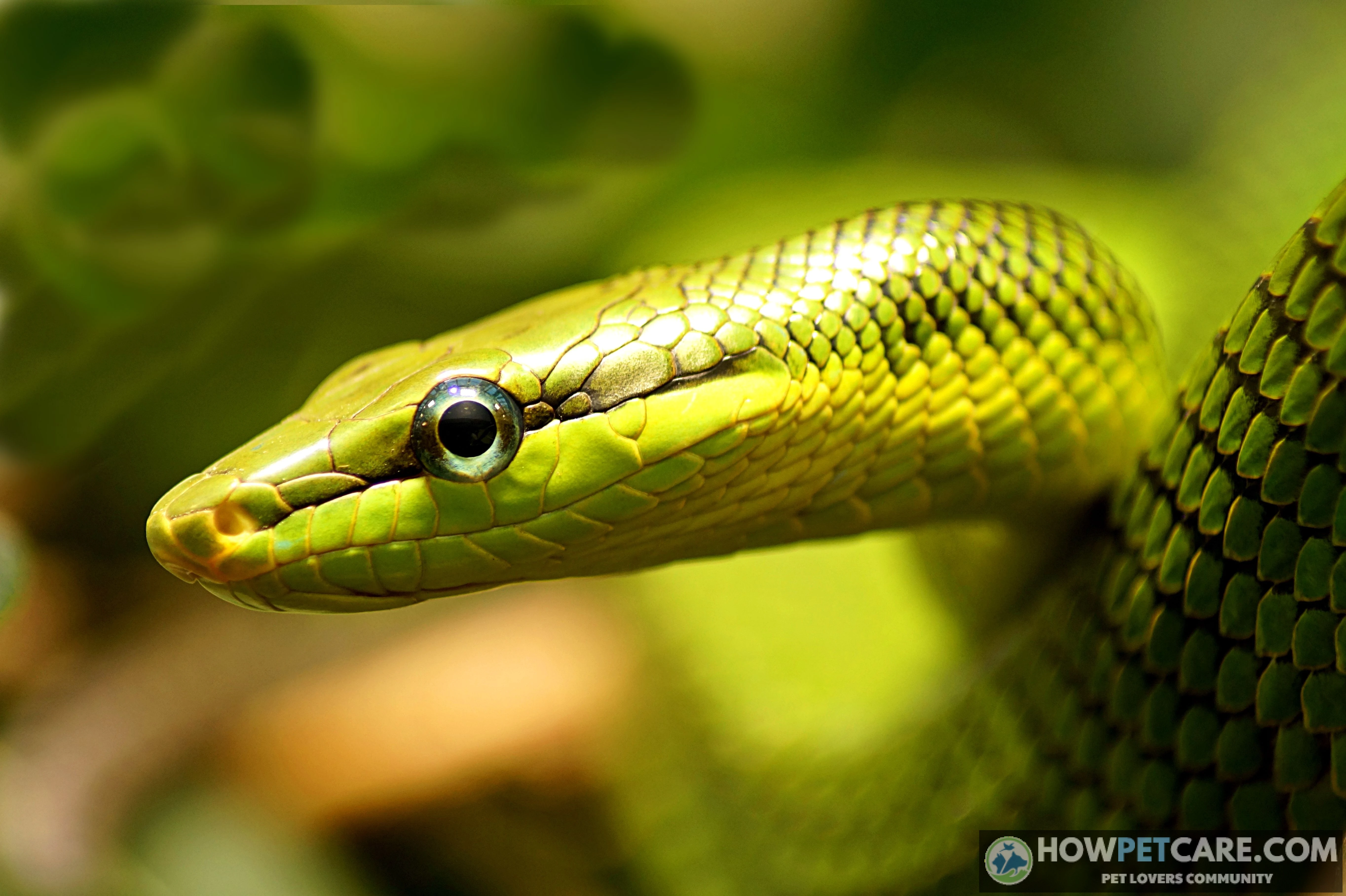
Retained cap or corneal injury? What to look for
Probably a retained cap (home care OK):
- ☐ A dull, wrinkled, or slightly opaque disc on the eye while the rest of the shed came off cleanly
- ☐ The cap edge looks lifted or separated from the surrounding scales
- ☐ The other eye is clear, and the snake behaves normally (exploring, striking at food)
- ☐ No discharge, no swelling around the eye, no face-rubbing
Probably an injury or infection (vet, not a q-tip):
- ☐ Cloudiness under the cap — the eye itself looks milky, not just the surface
- ☐ Any discharge, pus, swelling, or redness around the spectacle
- ☐ A dented, sunken, or abnormally bulging eye
- ☐ The snake rubs its face on surfaces constantly, flinches from touch near the head, or refuses food
The do-not-attempt rules (hard stops):
- ☐ Never insert tweezers, hemostats, or fingernails near the spectacle
- ☐ Never peel a cap that doesn’t release with one gentle damp q-tip pass at a visibly lifted edge
- ☐ Never retry home removal on a cap that survived a full second shed cycle — stacked caps need a vet
- ☐ If cloudiness appears or changes after a cap releases, that was never just a cap — book the visit
Safe home steps for a loose cap
Raise humidity, give a warm soak or damp-towel session, then check again the next day. If the cap edge is visibly lifted, you may try once with a damp q-tip rolled gently from the edge. If it doesn’t release immediately, stop.
When to leave it to a vet
More than one shed cycle with retained caps, cloudiness that changes when the cap is removed, any pus or swelling, and any sign of pain all require veterinary intervention. Sedated removal is safe and prevents corneal damage.
Do Shed Aid Sprays, Oils and Moisturizers Actually Work?
What the evidence supports
Humidity, hydration, and a proper soak are the evidence-backed fixes. Products are at best a supplement; they cannot fix a husbandry or medical cause. The table below grades common categories.
| Product type | What it claims | Verdict | Why |
|---|---|---|---|
| Plain lukewarm water soak | Softens retained skin so it releases | ✅ Effective — first-line fix | Hydration plus mechanical softening is the mechanism behind every successful removal. Free. |
| Humid hide (damp moss/paper towel) | Raises local humidity where the skin needs it | ✅ Effective — prevention and treatment | Fixes the actual cause for most stuck sheds: a too-dry microclimate. |
| Commercial shedding sprays | Loosen stuck skin, ‘condition’ scales | ⚠️ Marginal | Mostly water plus humectants. May help mildly stuck shed as a supplement, but cannot fix a husbandry or medical cause — and costs money a damp towel doesn’t. |
| Oils (mineral oil, olive oil, baby oil) | Lubricate skin, soften retained shed | ❌ Risky — skip it | Greasy films can trap debris, interfere with normal skin function, and are dangerous near eyes, nostrils, and the vent. Vets generally advise against them. |
| Lotions, moisturizers, ‘reptile skin conditioners’ | Hydrate skin topically | ❌ Avoid | Formulated claims exceed the evidence; fragrances, essential oils, and alcohols in some products irritate reptile skin. |
| Antiseptic / wound sprays | Prevent infection in damaged skin | ⚠️ Vet decision, not a shed fix | Useful only when a vet says so — they treat wounds, not shedding, and don’t replace an exam. |
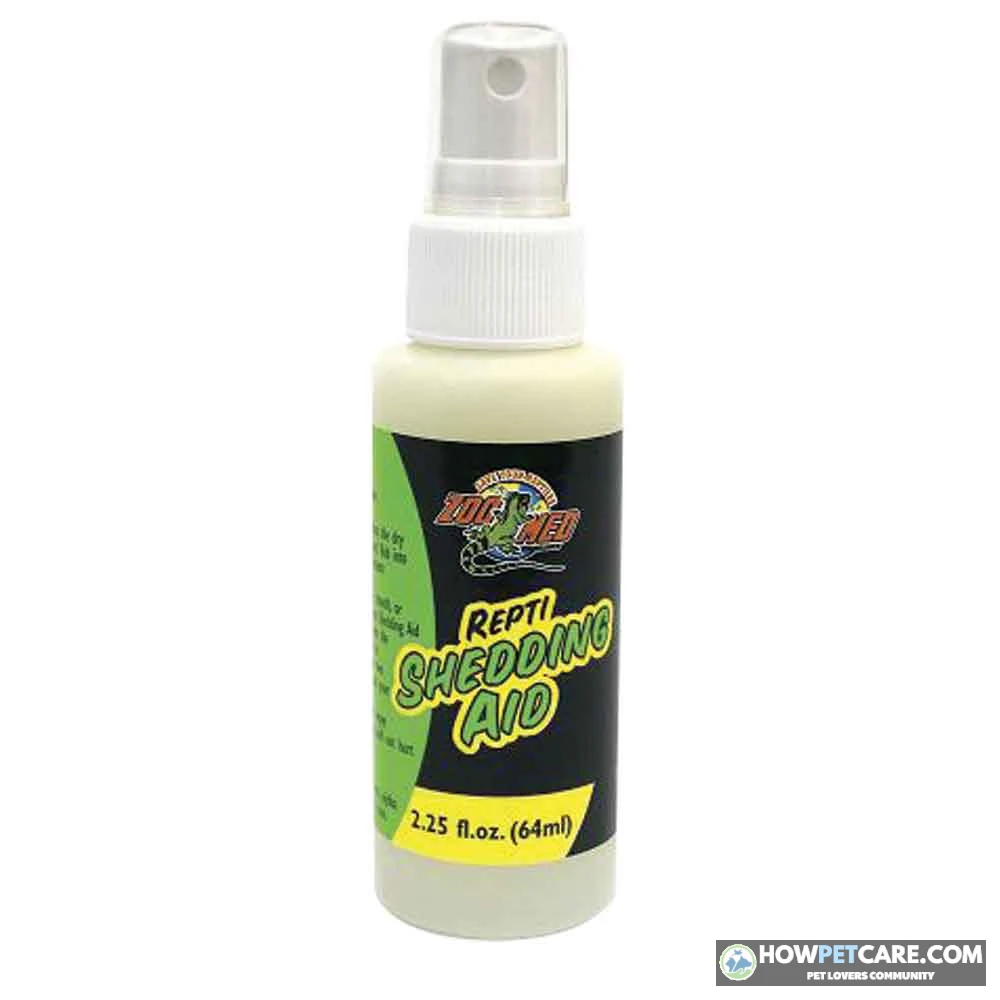
Water and humidity are what veterinary guidance actually recommends — no spray compensates for a 30% enclosure that should be 60%.
Products to avoid or check with a vet first
Avoid any product with fragrance, essential oils, alcohol, or undisclosed ingredients. Oils and greasy products can trap dirt, interfere with the skin, and cause problems around the eyes and vent. Always check with a reptile vet before applying anything beyond water and humidity.
How Often Reptiles Shed and How Long to Monitor a Bad Shed Before Escalating
Normal shedding frequency by species and age
Shedding frequency depends on age and growth rate. Juveniles shed far more often than adults. The table below gives typical ranges from reputable sources — guidelines, not guarantees.
| Species / life stage | Typical shed frequency | What a normal shed looks like | Monitor at home for | Escalate to a vet if |
|---|---|---|---|---|
| Ball python (juvenile) | Every 3–5 weeks | One piece, clear eyes after blue phase | 3 days of soaks + humid hide | No improvement after 3 sessions, or constriction rings |
| Ball python (adult) | Every 6–8 weeks | One piece, clear eyes after blue phase | 3 days of soaks + humid hide | No improvement after 3 sessions, or constriction rings |
| Corn snake (juvenile) | Every 4–6 weeks | One piece | 3 days of soaks + humid hide | No improvement after 3 sessions |
| Corn snake (adult) | Every 6–10 weeks | One piece | 3 days of soaks + humid hide | No improvement after 3 sessions |
| Leopard gecko (juvenile) | Every 2–4 weeks | Patches over days, eats shed | 3 days of soaks + humid hide | Toe rings not released, swelling |
| Leopard gecko (adult) | Every 4–8 weeks | Patches over days, eats shed | 3 days of soaks + humid hide | Toe rings not released, swelling |
| Bearded dragon (juvenile) | Every 2–3 weeks | Patches over days | 3 days of soaks + humid hide | Tail tip constriction, open wounds |
| Bearded dragon (adult) | Every 4–6 weeks | Patches over days | 3 days of soaks + humid hide | Tail tip constriction, open wounds |
| Crested gecko (juvenile) | Every 2–3 weeks | Patches, often at night | 3 days of soaks + humid hide | Retained eye caps, toe rings |
| Crested gecko (adult) | Every 4–6 weeks | Patches, often at night | 3 days of soaks + humid hide | Retained eye caps, toe rings |
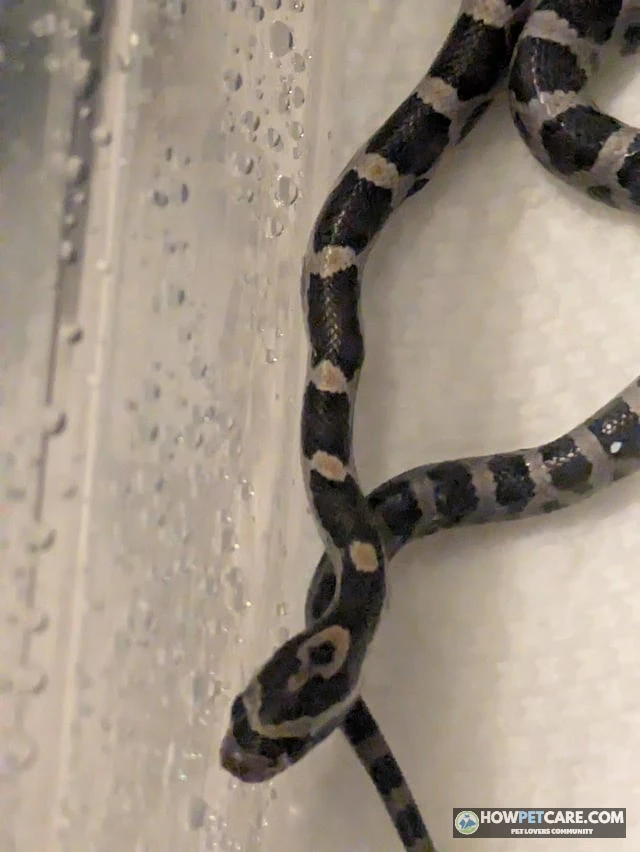
The monitoring clock: when to wait and when to act
Day 0: Spot stuck shed. Verify the hygrometer, add or fix a moist hide, and set up a soak.
Days 1–3: Repeat soaks once daily, up to two sessions per day. Check toes, tail, and eyes. Log humidity readings, soak times, what came off, and take photos.
Day 3 reassessment: If the same skin hasn’t released, or any red flag appears — swelling, discharge, or behavior change — escalate to a vet immediately.
Immediate escalation overrides the timeline: eye problems, toe or tail constriction, wounds, or any behavior change. Do not wait.
Log template: Date
| AM/PM RH% (cool side / hide) | Soak duration | Skin released (y/n) | Photo (y/n) |
Notes.
When Stuck Shed Needs a Reptile Vet, and What the Visit Costs
Red flags that mean go now
- Constricting ring on a toe or tail with swelling or color change
- Cloudy, sunken, or bulging eye; discharge
- Open wounds, raw tissue, or odor
- Visible mites
- Lethargy, refusal to eat, abnormal posture
- Repeated bad sheds despite corrected husbandry
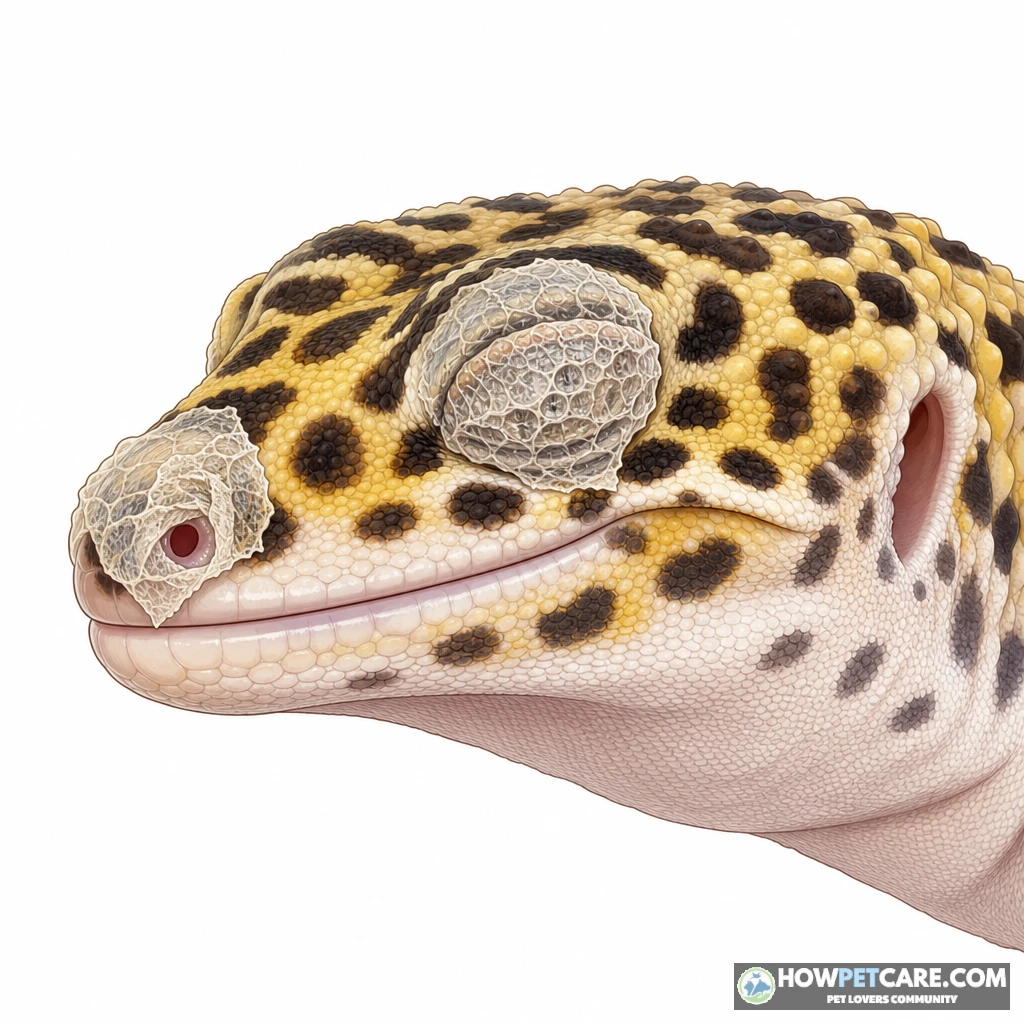
What a vet visit includes
A physical exam, eye and skin check, mite check, and husbandry review. Possible tests include a skin scrape or tape prep for mites and infection, a fecal test for internal parasites, and bloodwork if systemic illness is suspected. A vet may use sedation for safe removal of a stuck cap or constriction ring, and can prescribe medication for infection or pain.
Typical cost ranges and what changes the price
The table below reflects commonly published US clinic fee schedules for exotic practices (2026 data). Your region may fall outside these ranges — call two clinics and ask for an itemized estimate before you go.
| Service | What it involves | Typical US range | What moves the price |
|---|---|---|---|
| Exotic vet exam | Physical exam, eye and skin check, husbandry review | $60–$150 | Exotic specialists cost more than general vets; metro areas run higher |
| Skin scrape / tape prep | Sample of skin surface checked under microscope for mites and infection | $20–$60 | Sometimes bundled into the exam fee |
| Fecal test | Stool sample screened for internal parasites | $25–$60 | In-house vs. sent-out lab |
| Eye cap removal | Manual removal of a retained spectacle, sometimes under sedation | $75–$250 | Sedation roughly doubles the cost; stacked caps take longer |
| Constriction ring / dead tissue treatment | Removal of a skin ring cutting off a toe or tail tip, wound care, possible amputation | $100–$500+ | Sedation, tissue loss severity, and follow-up visits |
| Emergency / after-hours visit | Same services at urgent timing | Add $100–$300 to any above | Nights, weekends, exotics ER |
Treat these as planning ranges, not quotes. To control costs, bring your husbandry log (temps, RH readings, soak dates, photos), ask which diagnostics are essential versus optional, and ask whether the cap or ring removal genuinely needs sedation for your animal. The expensive version of stuck shed is the one that’s been constricting a tail tip for two weeks — early visits are the cheap visits.
Your Stuck Shed Action Plan: A Checklist From Tonight to Day Seven
Tonight’s checklist
- ☐ Check hygrometer against a second device; calibrate if needed.
- ☐ Add or fix a moist hide (damp sphagnum moss or paper towels).
- ☐ Set up a supervised soak at 85–90°F for 15–20 minutes.
- ☐ Compare your enclosure readings to the species table above.
- ☐ Take a clear photo of the stuck shed areas for baseline.
Decision path: home care or vet?
Fix the environment first, but go to a vet when eyes, constriction, or infection signs appear.
- If only body shed is stuck → soak + humid hide, reassess Day 3.
- If toe/tail rings or single eye cap → soak + humid hide, reassess Day 3. Any swelling, color change, or discharge → vet same day.
- If no improvement by Day 3 → vet.
- If bad sheds recur after husbandry is correct → vet for full workup.
Prevent the next bad shed
- Maintain species-appropriate baseline humidity and a functional humid hide.
- Provide rough surfaces (cork bark, stone, branches) in the enclosure.
- Keep fresh water available at all times; monitor hydration.
- Run regular mite checks (monthly, and after any new animal introduction).
- Feed a complete, species-appropriate diet with proper supplementation.
- Schedule annual wellness exams with a reptile veterinarian.
 You might be wonderingBearded dragon lung infectionBearded Dragon Respiratory Infection: Triage, Vet Costs & RecoveryRead the answer
FAQ
Can stuck shed cause a reptile to lose toes or its tail?
Yes. Retained skin that tightens around a toe or tail tip can cut off blood flow, and the tissue can die if the skin isn’t removed in time. Swelling, dark color or a visible ring on a toe or tail means you should see a reptile vet promptly.
Is it normal for a ball python to shed in pieces?
An occasional patchy shed can happen, but a snake that regularly sheds in pieces usually has a humidity or hydration problem. If it keeps happening after you have corrected the enclosure, have a vet check for mites or illness.
Should I peel off stuck shed by hand?
No. Soften the skin with humidity and a soak first. Only skin that lifts easily should come off, and anything that resists can take healthy tissue with it.
Is it safe to put oil on a reptile with stuck shed?
Oils are not a proven fix and can trap dirt or irritate the skin, especially near the eyes and vent. Use humidity and a soak first, and ask a reptile vet before applying anything.
Do lizards shed differently from snakes?
Yes. Snakes usually shed in one piece, while most lizards, including leopard geckos and bearded dragons, shed in patches over several days. Patchy skin is normal in lizards, but skin left on toes or the tail tip is a problem.