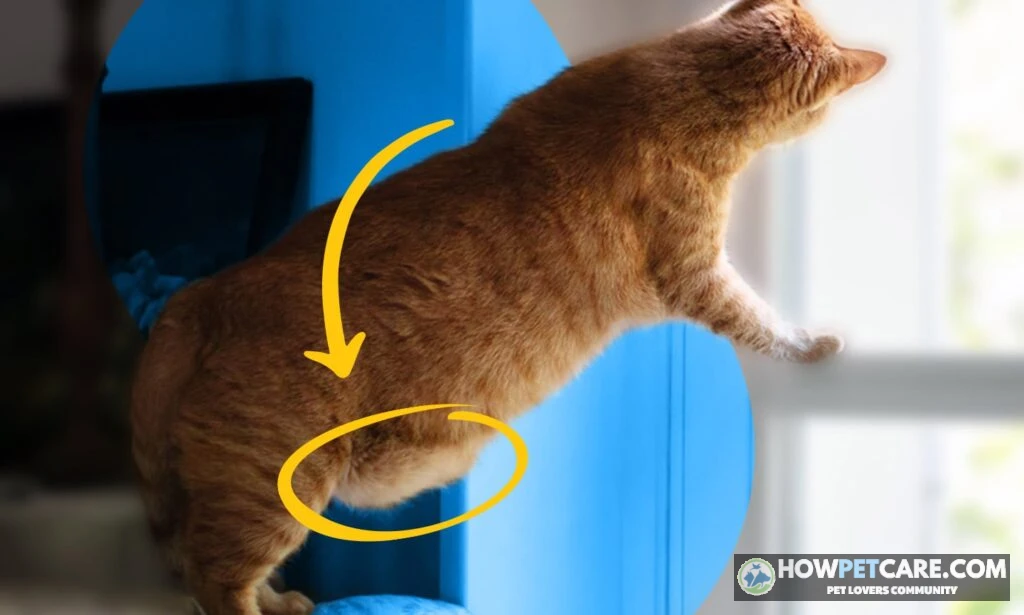

A primordial pouch is a loose fold of skin, fur, and a small amount of fat along a cat’s lower belly—normal feline anatomy, not a health problem. Most cats have one. It only needs a vet’s attention if the area is new, growing, firm, painful, or discolored.
What a Primordial Pouch Is and Why Cats Have One
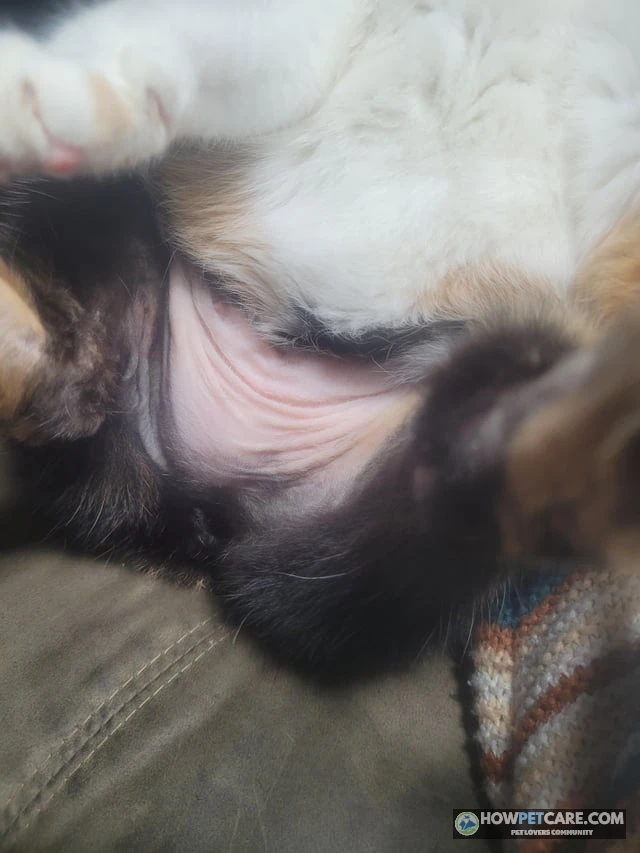
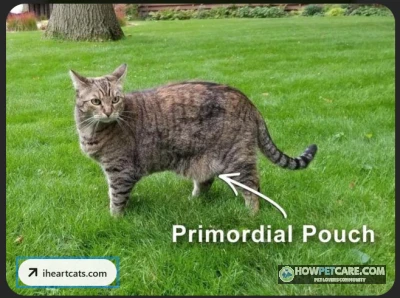
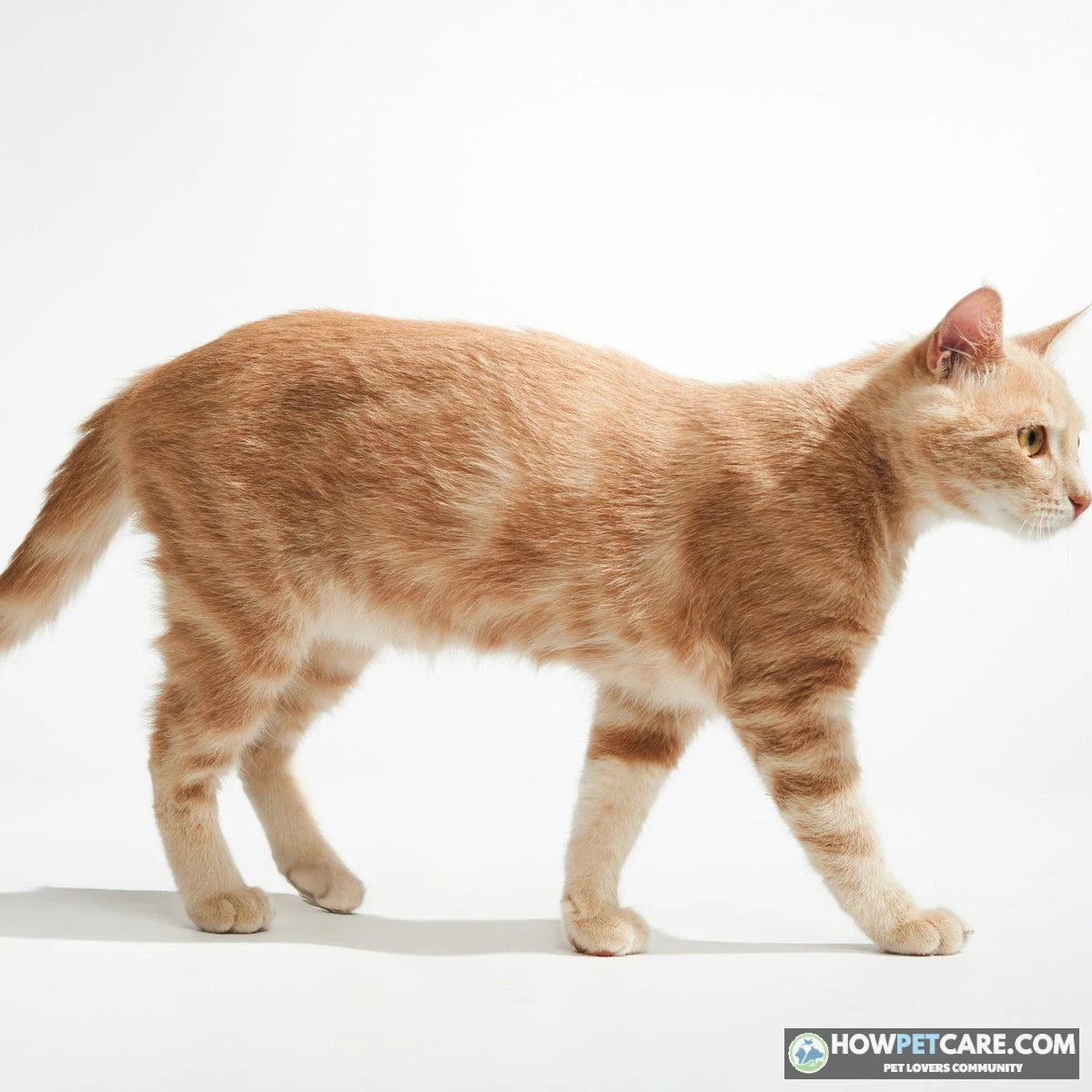
A primordial pouch is a loose fold of skin, fur, and a variable amount of fat along a cat’s lower belly. It’s often most visible in front of the hind legs, and it’s normal feline anatomy—not an organ or a disease. No one knows for certain why cats have one. The familiar explanations are hypotheses, not established facts.
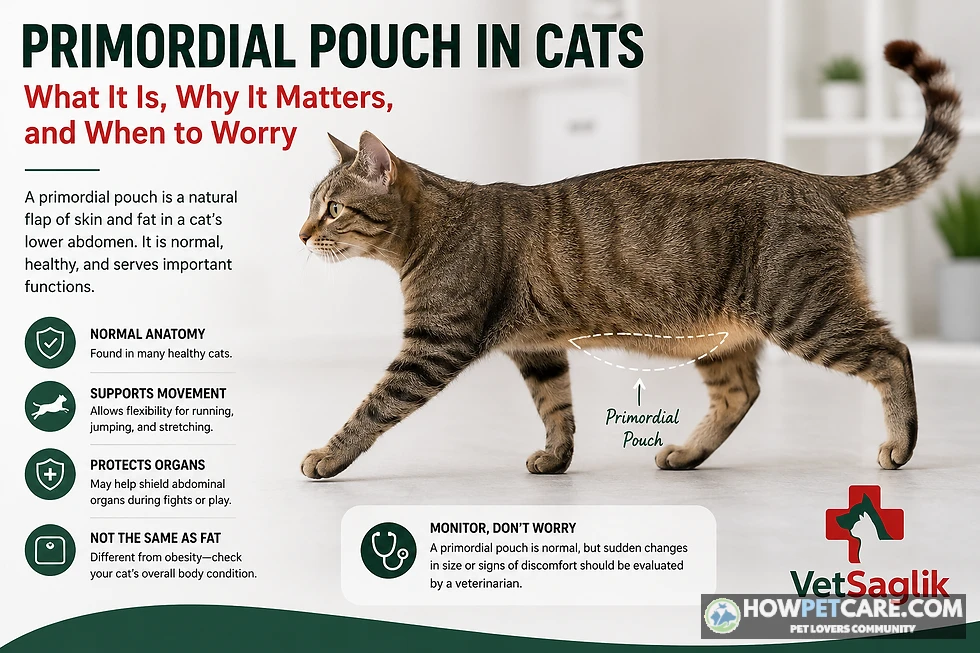
A normal pouch is generally soft and loose. It may sway as your cat walks, but it shouldn’t cause pain. Appearance alone can’t rule out a medical problem, though. If your cat’s belly has suddenly enlarged, feels painful, or has a new lump, use the red-flag guide below rather than assuming it’s a pouch.
Is it skin, fat, or muscle?
The pouch is mostly a fold of skin, with some underlying fatty tissue. The amount of fat varies. It sits outside the abdominal wall, which contains muscles and separates the skin and fat from the organs inside the abdomen—structures you can see mapped in a labeled feline anatomy guide. A cat can have both a normal pouch and excess body fat, so a visible flap doesn’t tell you your cat’s overall body condition.
Where exactly it sits on the belly
Look along the underside of your cat, especially toward the back legs. The fold may hang below the rest of the abdomen and become more noticeable in motion. Males and females can have a pouch, whether intact, spayed, or neutered; in some cats, it’s barely visible.
Why Do Cats Have a Primordial Pouch? Three Theories, None Proven
Theories about the pouch’s role in feline evolution are interesting, but they aren’t proven explanations. Knowing the proposed purpose won’t tell you whether a particular swelling is normal.
Protection in fights: the evidence
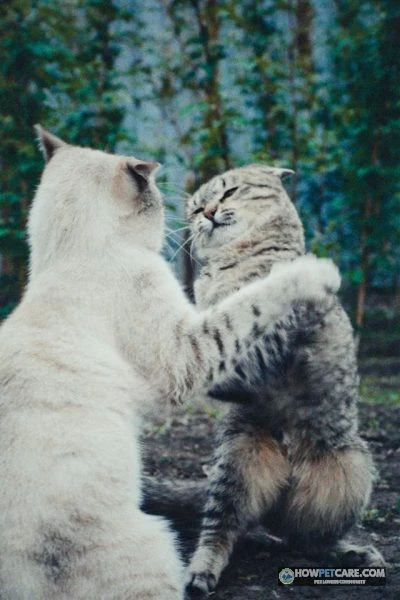
One hypothesis is that loose skin and padding could offer some protection to the abdomen during fights, including against a cat’s hind-leg “bunny kicks.” Another is that loose skin makes it easier for a cat to twist away when grabbed. These are hypotheses, not demonstrated measures of protection.
Flexibility and food storage: the evidence
A second hypothesis is that extra skin gives a running or stretching cat more freedom of movement. A third suggests that it leaves room for a large meal. Neither explanation is established as the pouch’s function. The food-storage idea is particularly speculative: the stomach is inside the abdomen, not inside the external skin fold.
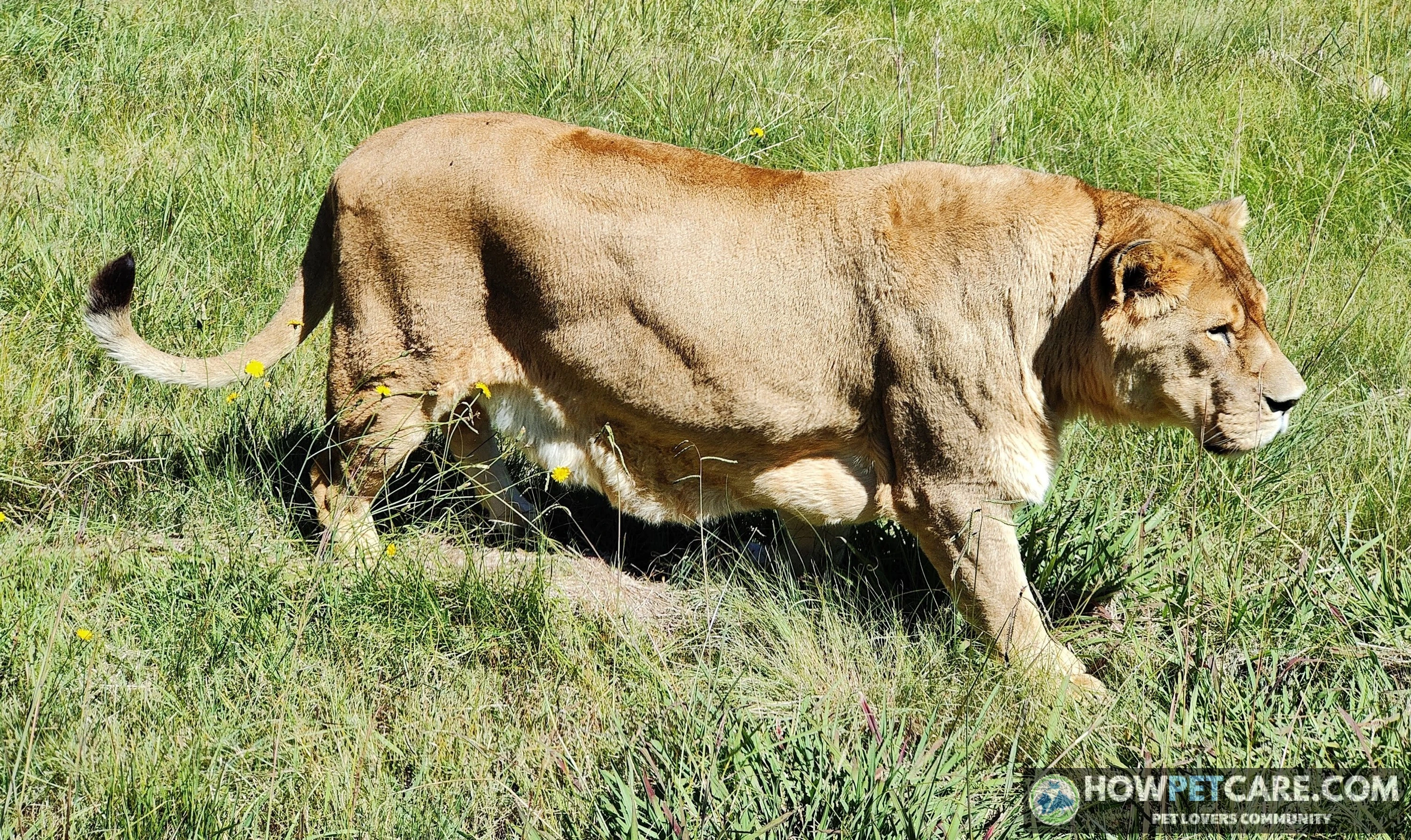
The supplied research notes a lack of experimental biomechanical evidence measuring how much protection or additional stride the pouch provides. Loose belly skin has also been reported in large wild cats, including lions and tigers, but its presence in other felines doesn’t establish what it does.
Do dogs or humans have a primordial pouch?
Dogs and humans can have loose abdominal skin or fat, but those features shouldn’t automatically be called a feline primordial pouch. A new or changing abdominal bulge in any species needs assessment on its own terms.
How to Check Your Cat at Home: Pouch or Fat in Six Steps
This check can help you describe what you see. It can’t diagnose a hernia, identify fluid, or guarantee your cat is healthy. If you notice a concerning change, call your vet rather than waiting to recheck it yourself.
Before you start: what you need
Choose a quiet room with good light, and wait until your cat is relaxed. Let your cat stand naturally on the floor, with a treat handy. You can look first and leave the touch checks for later if your cat isn’t cooperative.
Stop if your cat struggles or seems distressed. Many cats dislike having their belly handled, so resistance alone doesn’t prove pain. A new or clear pain reaction, especially alongside a belly change, warrants a call to your veterinarian. Don’t squeeze a lump or try to push it back inside.
The six steps
-
Look from above
Check for a waist behind the ribs. A healthy-weight cat usually has a visible waist. A broad or outward-bulging outline is a reason to assess body condition or speak with a vet.
-
Look from the side
Look for an abdominal line that rises behind the rib cage, with a loose flap hanging below it. A generally rounded or newly enlarged abdomen needs further attention.
-
Feel the ribs
Gently run flat fingers over the rib cage. You should generally be able to feel the ribs beneath a thin covering without pressing hard. If they’re difficult to find, ask your vet about body condition.
-
Watch the walk
Let your cat walk naturally. A loose pouch may sway on its own. Note any new one-sided bulge, rigid-looking abdomen, or change from your cat’s usual movement.
-
Feel the fold
If your cat allows it, gently gather a little loose skin between your fingers. Note any new firm lump, heat, redness, or apparent pain. Don’t pinch hard or probe for an opening.
-
Observe the belly above it
With your cat relaxed, use a light touch rather than deep pressure. A newly tense, swollen, or painful abdomen needs veterinary advice. Don’t keep pressing to test it.
A fold that doesn’t visibly swing isn’t proof of a problem, and a swinging fold doesn’t prove everything underneath is normal. Long fur, body shape, posture, and how willing your cat is to be handled can all make a check harder to interpret.
Reading your results
If the fold is soft and longstanding, your cat is comfortable and acting normally, and the other checks raise no concerns, a normal pouch is likely. Take a dated photo and compare it in about a month. A home check can’t confirm a diagnosis or replace routine veterinary care.
If the waist or rib check suggests excess weight but there are no warning signs, arrange a routine body-condition assessment. Veterinarians commonly use a nine-point body condition score, or BCS, alongside an examination. Ask your vet to show you how to use a recognized chart from the World Small Animal Veterinary Association or the American Animal Hospital Association.
If you find a new lump, rapid change, pain, or another red flag—or can’t tell what you’re feeling—use the urgency guide below. Don’t try to diagnose it yourself.
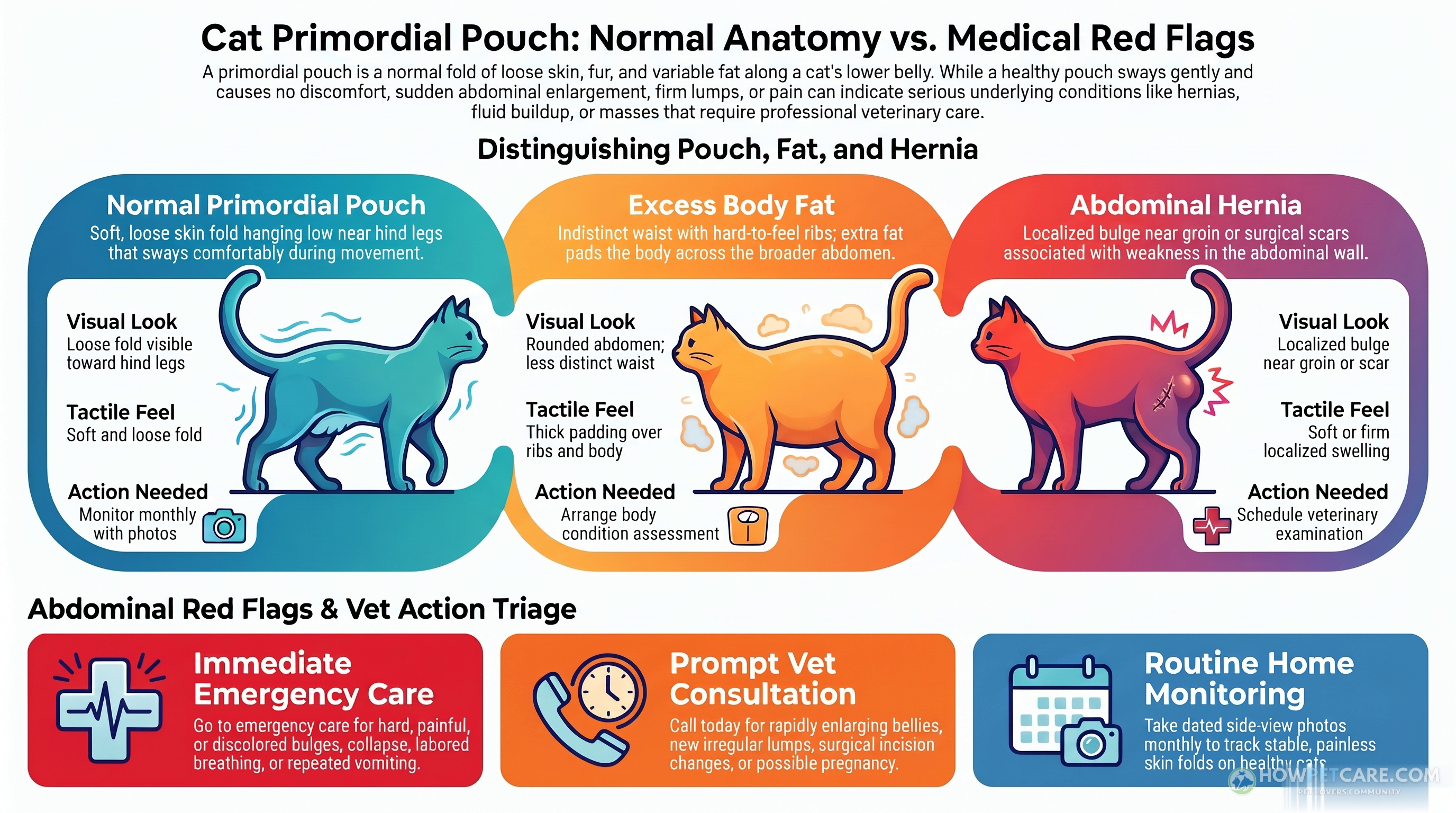
Primordial Pouch vs. Belly Fat vs. Hernia: Side-by-Side Comparison
A normal pouch is an external fold. Excess fat affects body condition more broadly, while a hernia is a bulge associated with an opening or weakness in the body wall. Their appearances can overlap, and neither a photo nor a swing test can reliably identify the cause.
| Feature | Normal primordial pouch | Overweight cat (belly fat) | Possible hernia | What to do |
|---|---|---|---|---|
| Look | Loose fold, often most visible toward the hind legs | Waist may be less distinct; abdomen may look rounded | Localized bulge, sometimes near the groin or a surgical site | Compare with your cat’s usual appearance |
| Feel | Generally soft and loose | More padding over the ribs and body; the fold may also contain fat | May be soft or firm; appearance and feel vary | Do not squeeze or attempt to push a bulge back |
| Movement | May sway as the cat walks | The abdomen may move more with the body | May change in prominence with position or straining | Movement alone cannot diagnose the cause |
| Other clues | Longstanding, comfortable, no new symptoms | Ribs may be harder to feel; an overweight cat can still have a normal pouch | May appear after injury or surgery; serious cases can cause pain or illness | Ask a vet about new or changing findings |
| Next step | Monitor if unchanged and your cat is well | Arrange a body-condition assessment | Arrange a veterinary examination | Seek emergency care for a painful or discolored bulge or a visibly ill cat |
How to tell a normal pouch from belly fat
Look at the whole cat: waist, ribs, and overall shape matter more than the flap alone. A cat whose ribs are difficult to feel may carry excess fat, even if the loose skin underneath looks like a textbook pouch. A lean cat, on the other hand, can have a prominent belly pouch.
Can a cat be overweight and still have a normal pouch?
Yes. The fold and your cat’s body condition are separate questions. If weight is a concern, a veterinarian can score body condition and discuss weight management without treating a normal skin fold as a defect.
Red Flags: When a Saggy Belly Means Hernia, Tumor, Fluid, or Pregnancy
You can’t safely sort a new or changing belly into these categories by touch alone. Use the table to decide what to do next; a veterinarian will determine the cause.
Go-now signs vs. book-this-week signs
| What you see or feel | Other symptoms to look for | Possible cause for a vet to assess | Urgency | Next step |
|---|---|---|---|---|
| Swollen abdomen or bulge | Labored breathing, collapse, or repeated vomiting | Serious abdominal illness or another emergency | Emergency now | Go to an emergency veterinarian; call ahead if possible |
| Hard, painful, or discolored bulge | Distress, vomiting, or unusual weakness | A complicated hernia or another emergency | Emergency now | Go to an emergency veterinarian; do not push on it |
| Newly round, tight, or rapidly enlarging abdomen | Low energy, reduced appetite, or a thin-looking body | Fluid buildup or another abdominal problem | Prompt: call today | Ask for an urgent examination; go to emergency care if your cat is distressed or breathing poorly |
| Firm, fixed, irregular, or growing lump | Weight loss or reduced appetite | A mass, including a possible tumor, or another condition | Call promptly | Arrange an examination and report any appetite or weight change |
| Localized bulge near a scar or groin | May otherwise seem well | Hernia, fluid pocket, or another swelling | Call promptly | Arrange an exam; contact the surgeon directly if surgery was recent |
| Enlarging belly in an unspayed female | Possible mating, nipple changes, or appetite changes | Pregnancy or another cause of enlargement | Call promptly | Arrange a veterinary assessment; do not assume pregnancy |
| New one-sided droop, redness, heat, discharge, or persistent licking | Hiding, discomfort, or reduced activity | Skin problem, swelling, injury, or another cause | Call promptly | Describe the change and follow the vet’s timing advice |
| Longstanding loose fold, no changes or other symptoms | Normal eating and activity | May be a normal pouch | Monitor | Take a dated photo and compare monthly |
If you’re unsure how urgent a change is, call your veterinarian rather than waiting for a table to decide. A cat can be seriously ill without showing every sign listed.
Hernia, mass, fluid, and pregnancy: what each tends to look like
A hernia may show up as a localized bulge, including near a surgical incision; umbilical hernias appear at the navel—and yes, cats do have belly buttons. A mass may feel like a distinct lump, but its shape or firmness can’t tell you whether it’s a tumor. Ascites, or fluid in the abdomen, can make the belly look broadly enlarged; other conditions can cause a rounded abdomen too.
An unspayed cat may develop a larger abdomen during pregnancy; the supplied research places obvious enlargement around four to five weeks in some cats. Nipple or appetite changes may also occur, but they aren’t proof. A veterinarian can assess a possible pregnancy and check for other causes.
What the vet will do
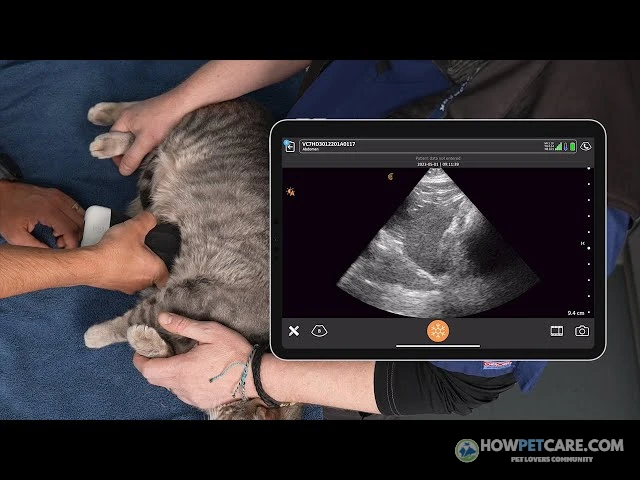
Your vet will ask when the change started and examine your cat. Depending on the findings, they may recommend imaging, such as ultrasound or X-rays, or other tests. Dated photos and a short walking video can show how the belly has changed, but they don’t replace an examination.
When the Pouch Appears and How It Changes with Age, Spaying, and Weight Loss
Kittens to adults: the usual timeline
A pouch may become noticeable during adolescence, commonly around six to 12 months, though timing and visibility vary. That window overlaps with other developmental milestones, such as when kittens lose their baby teeth. Sources differ on whether the underlying fold is present at birth or develops later; becoming visible isn’t necessarily the same as first forming. A kitten without an obvious pouch isn’t automatically abnormal.
After spaying, neutering, or other abdominal surgery
Spaying and neutering don’t create the primordial pouch. The fold may become more noticeable as a cat matures or if body weight changes after surgery.
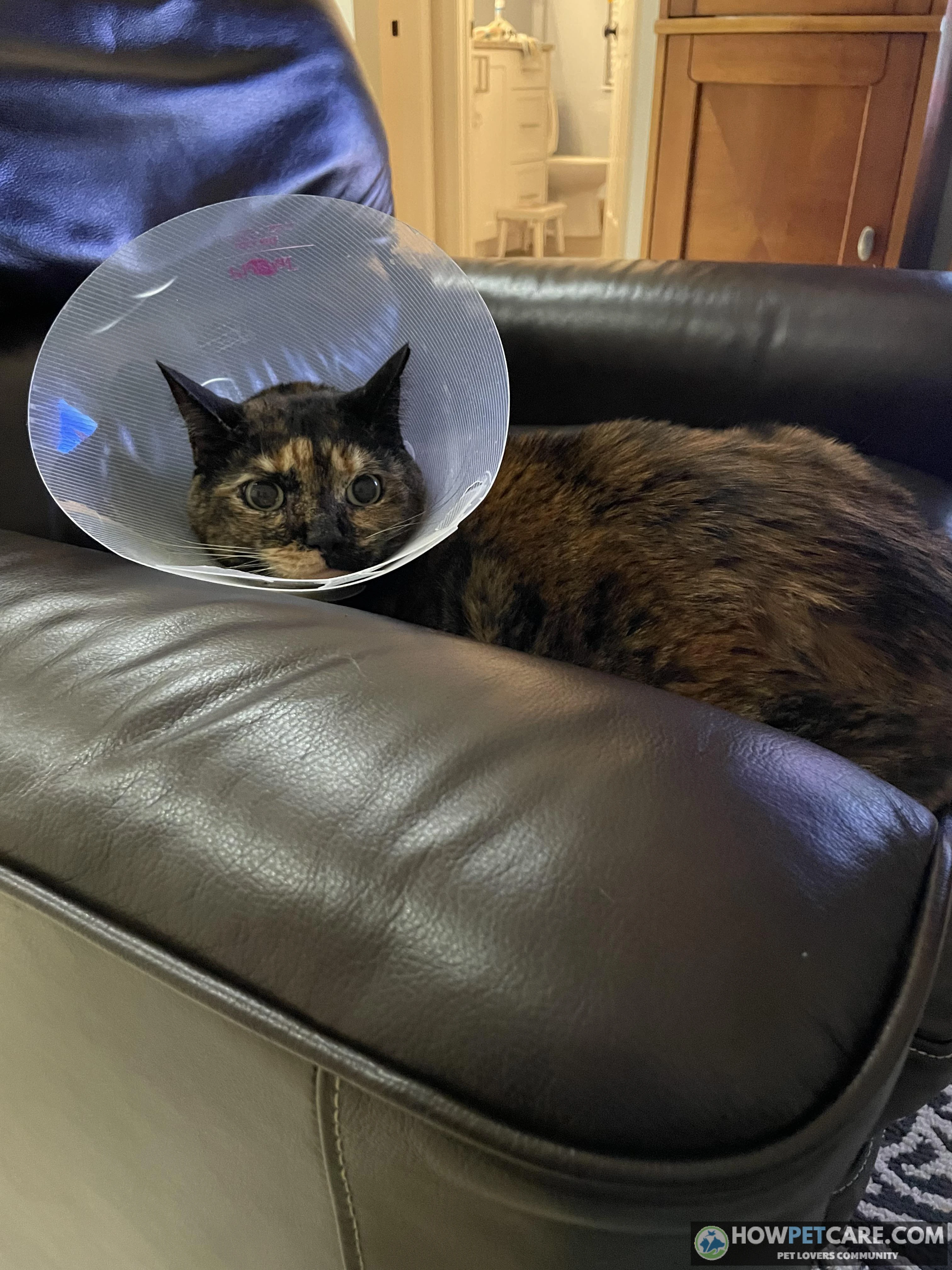
A surgical incision is a separate matter. Follow your veterinarian’s discharge instructions and contact the surgical team about a new or increasing bulge, redness, heat, discharge, or opening at the incision. Mild early swelling can occur during healing, but only the care team can judge whether your cat’s incision looks as expected. Don’t dismiss a prominent or painful bulge as a pouch.
After pregnancy, and in senior cats
A belly may look looser after pregnancy and nursing. But call your vet if it stays enlarged, becomes tight, or changes along with appetite or energy. Don’t assume a postpartum change is harmless.
In older cats, changes in skin elasticity may make the fold hang more visibly. Age isn’t a safe explanation for sudden enlargement, a new lump, or unplanned weight loss—especially if the belly is growing at the same time.
Which Cat Breeds Have the Biggest Primordial Pouch?
The supplied evidence doesn’t provide a reliable size ranking. Coat, body shape, individual variation, and body condition all affect visibility. The research mentions several breeds in discussions of prominent pouches or breed standards, but it doesn’t establish a consistent size comparison or provide the exact standard wording for each breed. Some breed standards do reference the fold—for example, the Egyptian Mau standard describes a loose flap of skin along the belly—so a visible pouch is partly built into certain breeds’ expected anatomy. Other breed-linked quirks exist too: Pixiebobs, for instance, are among the polydactyl cat breeds with extra toes.
Breed comparison table
| Breed | Typical pouch visibility | Body type and coat | Source or breed standard | Notes for owners |
|---|---|---|---|---|
| Bengal | Can be noticeable; individual variation is substantial | Muscular, short-coated | Identified in the supplied research as a breed associated with pouch prominence; no specific standard wording verified | A visible fold alone does not establish a weight problem |
| Egyptian Mau | Can be noticeable; no verified size ranking | Athletic, short-coated | Identified in the supplied research; no specific standard wording verified | Assess changes and body condition separately |
| Pixiebob | Can be noticeable; coat may affect what you see | Substantial build; coat length varies | Identified in the supplied research; no specific standard wording verified | Feel gently rather than relying only on appearance |
| Japanese Bobtail | Visibility varies by individual | Slender to muscular; coat length varies | Identified in the supplied research; no specific standard wording verified | A new lump or change still needs attention |
| Mixed-breed domestic cat | Varies widely | Any build or coat | Individual assessment | Use the six checks rather than guessing breed |
Is a big pouch normal for my breed?
It can be, especially if it’s soft, longstanding, and your cat is otherwise well. Breed isn’t a diagnosis: a new firm area, one-sided swelling, or sudden change deserves the same attention in a Bengal as in any other cat. The available evidence doesn’t support assigning precise low, moderate, or high pouch sizes to these breeds.
Can You Reduce or Remove a Primordial Pouch? What Actually Works
You can’t spot-reduce a normal pouch, and a healthy fold doesn’t need treatment. If an overweight cat has extra fat in the area, reaching a healthy body condition with veterinary guidance may reduce that fat, but it won’t necessarily remove the loose skin.
Weight management and the pouch
If your cat appears overweight, ask your vet for a body condition score and a suitable feeding and activity plan. Play can support fitness, but it won’t selectively tighten a skin fold. Avoid crash diets or withholding food: rapid weight loss and not eating can put cats at risk of serious liver problems.
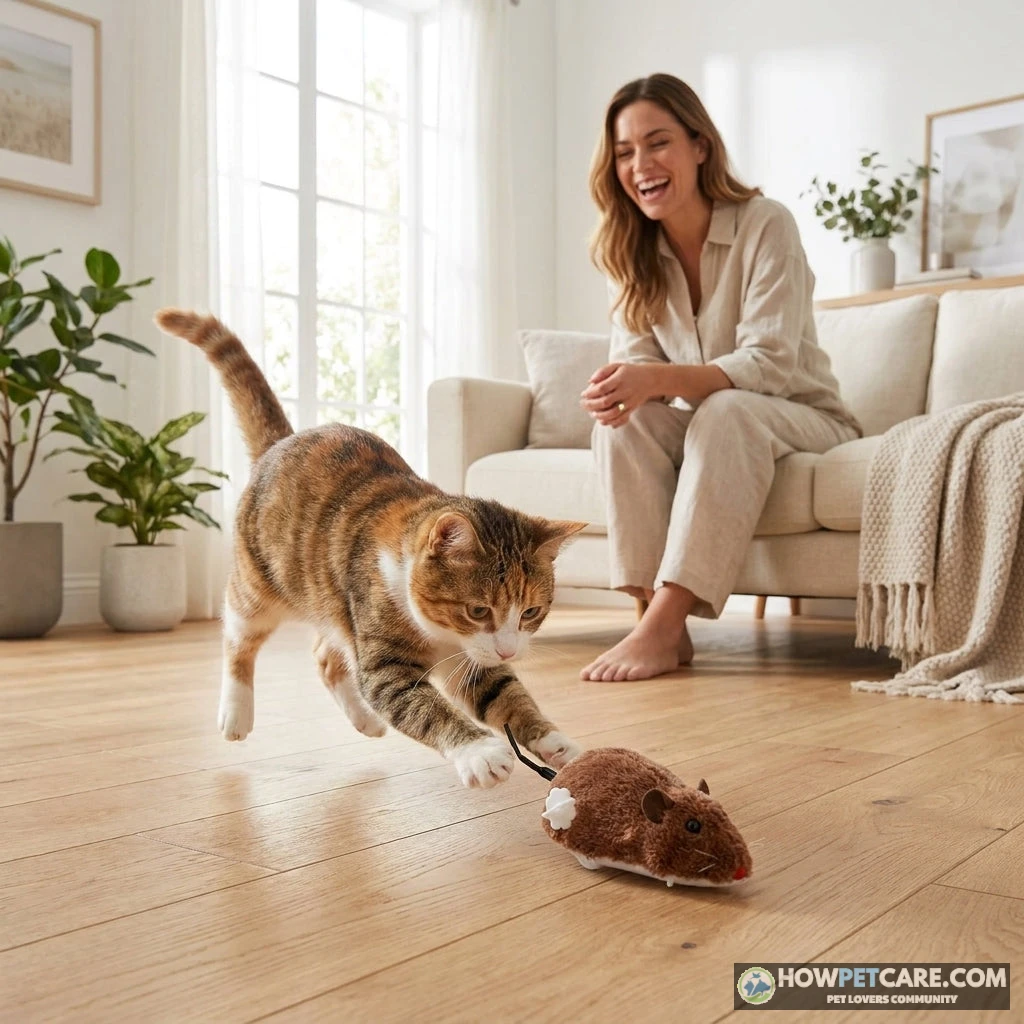
A healthy weight and a visible pouch can coexist. Focus on your cat’s overall body condition and well-being rather than trying to make the fold disappear.
Why surgery is not recommended for a normal pouch
A normal, comfortable pouch doesn’t need cosmetic removal. Surgery and anesthesia carry risks, so discuss any proposed procedure with your veterinarian. Treating a hernia, mass, or irritated skin area is different from removing normal anatomy for appearance’s sake.
Your Next Step: A Decision Checklist for Your Cat’s Belly
If your cat passes the check
A stable, soft fold on a comfortable cat is likely to be a normal pouch. Take a dated side-view photo and check again in about a month; raise any uncertainty at your cat’s next veterinary visit. If the waist or rib check suggests excess weight, arrange a routine body-condition assessment instead of trying to diet the pouch away.
If something looks off
Use this checklist to prepare for a call or appointment. Don’t delay emergency care to complete it.
- ☐ Viewed from above: waist visible, unclear, or newly bulging?
- ☐ Viewed from the side: loose fold, broadly rounded abdomen, or new change?
- ☐ Ribs: easy or difficult to feel without pressing?
- ☐ Walking: usual loose sway, no obvious sway, or new one-sided movement?
- ☐ Fold: soft and comfortable, or new lump, heat, redness, or pain?
- ☐ Belly above the fold: relaxed, or newly tight, enlarged, or painful?
- ☐ Red flags: breathing trouble, collapse, repeated vomiting, a painful or discolored bulge, rapid enlargement, discharge, or a new lump?
- ☐ Date first noticed: __; date of latest change: __.
- ☐ Other changes in appetite, energy, vomiting, or litter-box habits: __.
- ☐ Recent surgery or possible pregnancy: __.
- ☐ Dated photos and a short walking video ready to share, if available.
When you speak with the vet, ask: “What is my cat’s body condition score? Does this feel like a normal pouch or something that needs testing? What changes should prompt another call?” Use the emergency signs above to decide whether to go now rather than waiting for an appointment.
1An owner notices a soft, saggy flap along the underside of their cat's body. What anatomical structure separates this external skin and fat layer from the cat's internal abdominal organs?
The abdominal wall contains muscles that physically separate the external layer of skin and fat from the internal organ structures inside the abdomen.
2Which of the following methods provides the most accurate assessment of whether a cat carries excess body fat versus having a normal primordial pouch?
Body condition evaluation relies on assessing key structural landmarks like waist definition and rib feel rather than inspecting the lower belly flap alone.
3During a home evaluation of a cat's belly, which of the following observations represent urgent red flags requiring immediate emergency veterinary care?
A hard or discolored bulge accompanied by pain can indicate a complicated hernia or tissue strangulation requiring emergency intervention.
4A cat owner notices a localized bulge near a recent surgical incision site. How does a hernia structurally differ from a normal primordial pouch?
Hernias result from defects or tears in the abdominal muscle wall, whereas primordial pouches are external folds resting over an intact body wall.
5Which of the following statements reflect current hypotheses regarding the evolutionary origin of the feline primordial pouch?
One proposed theory suggests loose skin and fat offer protection against physical impacts, such as hind-leg kicks from rival cats.
6An owner observes that their cat's lower belly fold does not swing back and forth when walking. What should the owner infer from this observation?
Coat length, body posture, build, and handling willingness can all affect fold visibility and movement without indicating pathology.
7When evaluating whether an overweight cat carries excess body fat alongside a primordial pouch, what standardized clinical framework do veterinarians commonly utilize?
Veterinarians use a 9-point BCS framework alongside physical exams to evaluate body composition and fat reserves.
FAQ
Do all cats have a primordial pouch?
Most cats have some loose skin on the lower belly, but how visible it is varies by body type, coat length, and weight. A cat with a barely noticeable pouch is not abnormal.
Do male cats have a primordial pouch?
Yes. Male and female cats both have one, whether or not they have been neutered or spayed.
Does touching my cat’s primordial pouch hurt?
A normal pouch is not painful. Many cats dislike belly handling, but crying out, flinching sharply, or a pouch that feels hard or warm is a reason to call a vet.
Do wild cats like lions and tigers have a primordial pouch?
Loose belly skin is commonly reported in larger wild cats, which suggests the pouch is an inherited feline trait. Its function is still not established.
Can a primordial pouch get infected or irritated?
Skin folds can occasionally get irritated, especially with dirt, matted fur, or grooming problems. Redness, discharge, heat, or constant licking is not normal for a pouch and should be checked by a vet.