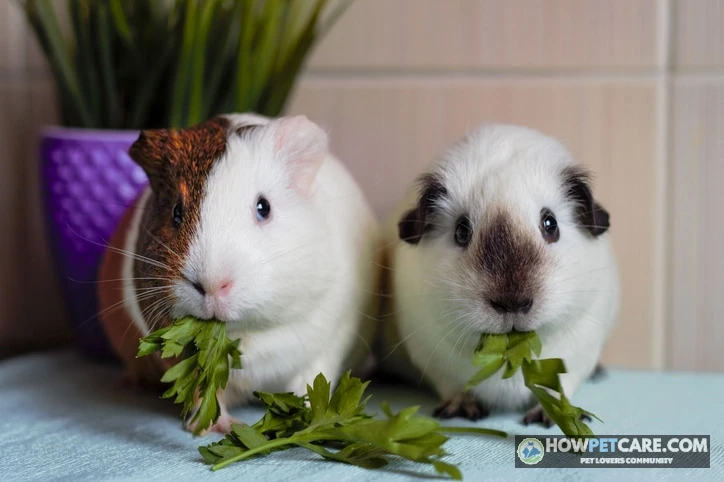

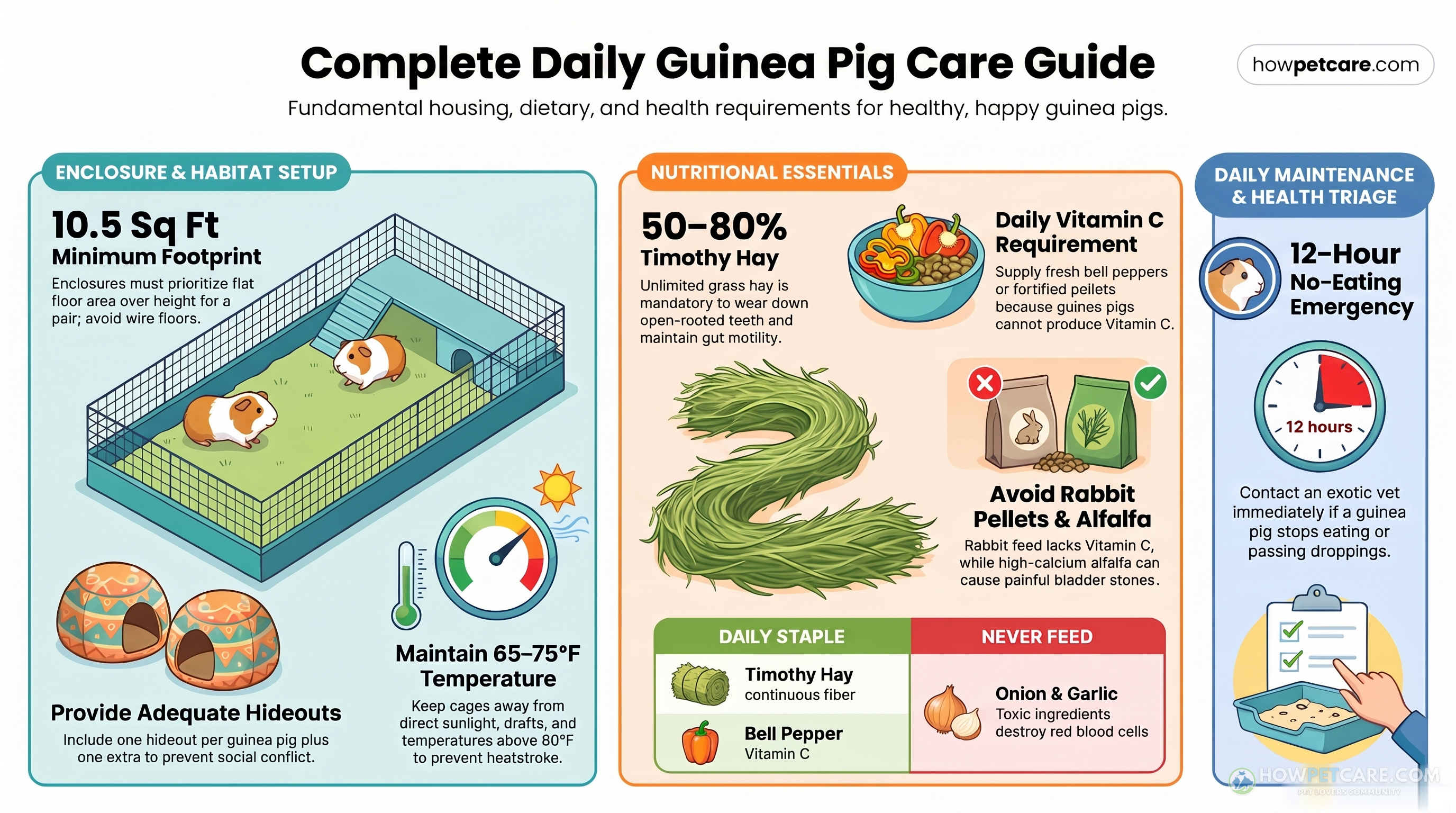
To take care of a guinea pig, provide these essentials every day:
- A cage with at least 10.5 sq ft of floor space for a pair
- Unlimited timothy hay plus 1–2 oz of plain guinea pig pellets
- Fresh vegetables daily, including a vitamin C source like bell pepper
- Clean water in a sipper bottle, refreshed each morning
- A same-species companion, hideouts, and daily floor time
- Weekly full cage cleans and an exotic vet identified before emergencies
A guinea pig needs a roomy cage, unlimited timothy hay, a measured portion of plain guinea pig pellets, fresh vegetables daily, a reliable vitamin C source, clean water, daily floor time, gentle handling, a same-species companion, and an exotic vet lined up before illness strikes. The minimum standard cage size is 10.5 square feet, or 36 x 30 inches, for a pair. Adults grow to about 8–10 inches long and weigh 700–1,100 grams. With proper care, most live 4–8 years, sometimes longer.
Guinea pigs thrive on adequate space, quiet hiding spots, chewing and foraging outlets, a companion of their own kind, and a predictable schedule. Plan on spending about 15–20 minutes per day and 30–45 minutes per week on their care. That covers feeding, spot-cleaning, a quick health check, handling, and one thorough cage clean. For the full beginner framework, keep this complete guinea pig care guide handy; the sections below outline how to turn these tasks into an easy routine.
Setting Up a Guinea Pig Cage: Size, Bedding, Hideouts and Placement
Housing is the bedrock of your setup. A guinea pig enclosure must emphasize flat floor area over height, since guinea pigs run and popcorn rather than climb. Start with the correct footprint, then select bedding and accessories that keep the living space dry, clean, and calm.
How big should a guinea pig cage be?
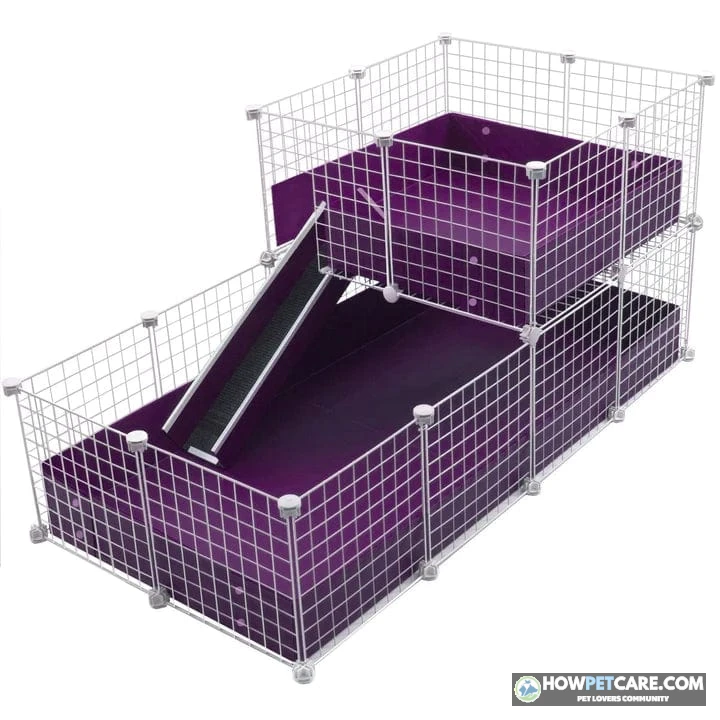
The standard recommended minimum is 10.5 square feet, or 36 x 30 inches, for a pair. Single guinea pigs require that same minimum footprint, though keeping a pair is much better because guinea pigs are social. For three or more animals, expand the floor area for each additional pig. Most pet-store cages fall well short of these dimensions, so measure the usable interior base rather than relying on box labels. C&C (cubes and coroplast) grid cages, large commercial enclosures, and DIY bin-style cages all work well if the floor is solid and the enclosure is large enough. Avoid wire or slatted floors, which injure delicate foot pads and cause bumblefoot.
Bedding options compared: fleece, paper and shavings
Maintain loose bedding at a depth of about 1–2 inches unless you choose fleece liners. Your priorities are moisture control, low dust, and manageable cleaning.
| Option | Absorbency and odor control | Safety and health concerns | Cleaning effort | Cost over time |
|---|---|---|---|---|
| C&C grid cage | Not bedding; relies on liner or loose bedding | Safe if the coroplast base is solid and there is no wire floor | Easy to spot-clean; liner wash adds laundry | Low over time if reused |
| Large store-bought cage | Not bedding; often too small for a pair | Check bar spacing and remove any wire floor | Moderate; awkward corners | Moderate |
| DIY bin cage | Not bedding; needs ventilation holes and chew-safe edges | Safe only if ventilation and escape-proofing are done well | Moderate | Low upfront |
| Fleece liners | High with an absorbent layer; good odor control if washed promptly | Must be kept dry; loose threads can entangle toes | High: wash often, vacuum debris | Higher upfront, lower over a year |
| Paper bedding | High; good odor control | Avoid scented or heavily inked products | Easy full change weekly | Moderate |
| Aspen shavings | Moderate; low dust | Safer than cedar or pine, but less absorbent | Weekly full change | Moderate |
| Cedar or pine shavings | Poor | Aromatic oils and dust can irritate airways and feet; avoid | Not recommended | Avoid |
Keep bedding dry and clean at all times. Damp, soiled bedding draws flies and puts guinea pigs at risk of flystrike, a life-threatening maggot infestation that demands immediate veterinary intervention.
Hideouts, water bottle and enrichment essentials
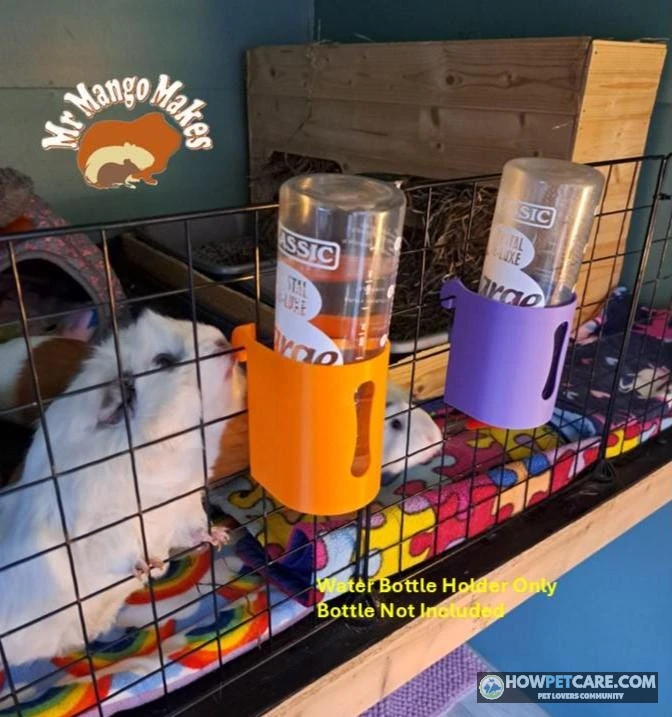
Set up one hideout per pig, plus one extra to prevent squabbles. Provide a heavy ceramic dish for vegetables or pellets, a water bottle with a small ceramic bowl as backup, a hay rack or loose hay pile, and safe chew items. Good enrichment includes untreated cardboard tubes, fleece tunnels, and foraging puzzles hidden in hay. Never use exercise wheels or run-about balls; their rigid curve causes spinal deformities and limb fractures. Position the cage in a quiet, temperature-stable room away from direct sunlight, cold drafts, and loud TVs or speakers. As prey animals, guinea pigs rely on reliable overhead cover to feel secure.
Keep the room around 65–75°F (17–20°C). Above about 80°F (26°C), guinea pigs can suffer heat stress because they cannot sweat. Move them to a cooler room and call a vet if they are panting, limp, or unresponsive.
Can guinea pigs be litter box trained?
Only partially. Many guinea pigs gravitate toward a corner pan for urination, especially if you hang a hay rack directly above it. Fill the pan with safe paper-based pellets or litter rather than clay clumping litter. Expect partial success at best; you will still need to spot-clean stray droppings across the cage daily.
What Guinea Pigs Eat Every Day: Hay, Pellets, Vegetables and Vitamin C
A sound guinea pig diet is straightforward, yet mistakes are common. The foundation is constant access to grass hay, supported by a measured daily ration of pellets and fresh greens. Vitamin C is the critical nutrient owners most frequently overlook.
Hay and pellets: how much and which kind
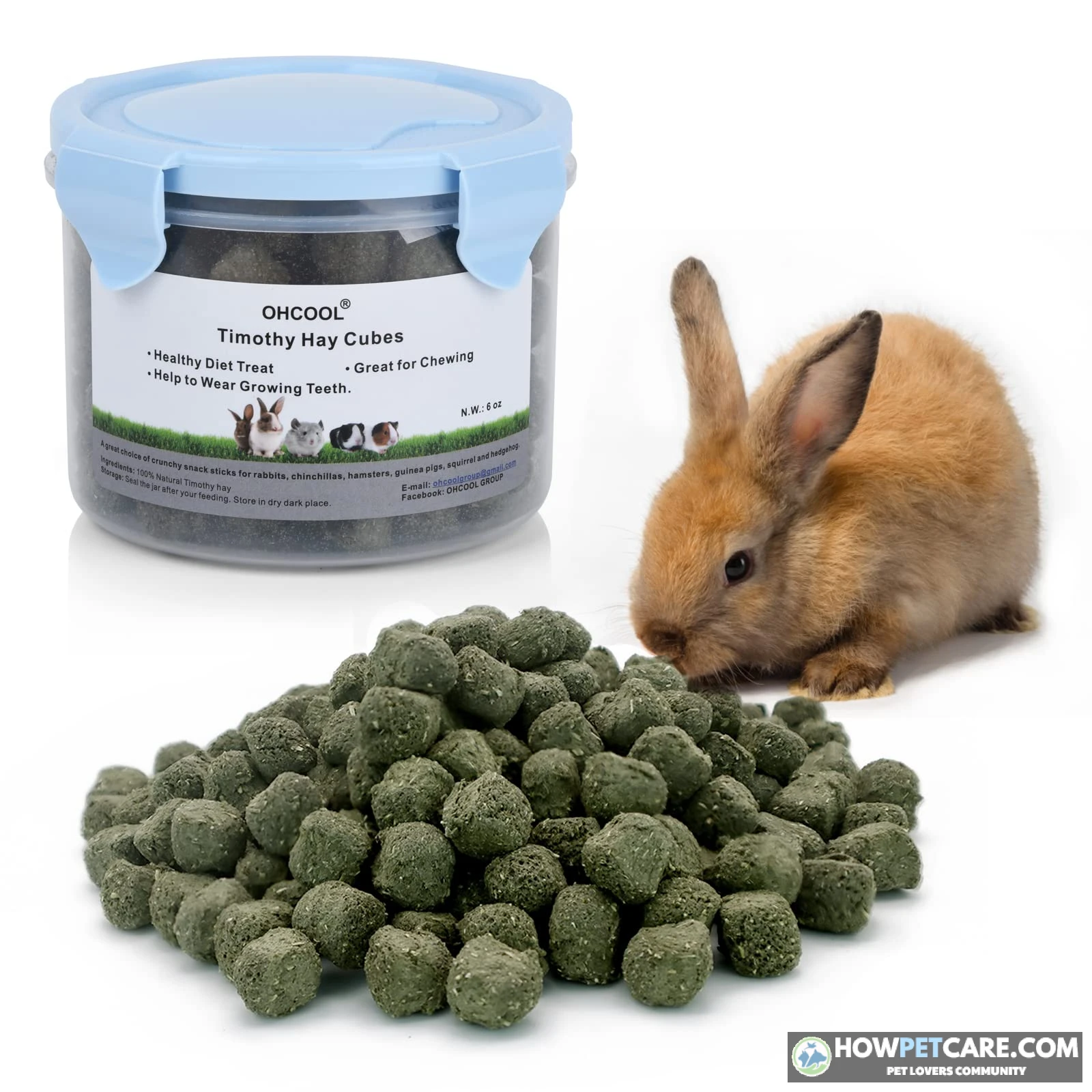
Timothy hay must form roughly 50–80% of what your guinea pig eats each day. The tough, fibrous strands wear down continuously growing open-rooted teeth and maintain healthy gut motility. Supply plain guinea pig pellets at about 1–2 ounces per day. Never substitute rabbit feed, because guinea pigs require supplemental vitamin C that rabbit formulas lack. Avoid feeding alfalfa hay to adult pigs, as its high calcium content promotes painful bladder stones.
Do guinea pigs need vitamin C supplements?
Yes. Guinea pigs lack the enzyme needed to produce vitamin C internally, making them susceptible to scurvy if their intake dips. A quality fortified pellet paired with vitamin-C-dense vegetables like bell peppers usually covers their needs. Keep in mind that vitamin C in bagged pellets degrades quickly, losing significant potency 60–90 days from manufacture. Purchase modest bags and feed them within that period. Skip water-drop supplements; they degrade rapidly under light, oxidize within hours, and often impart a foul taste that discourages drinking. If your exotic vet prescribes a standalone supplement, follow their specific product and dosage directions.
Safe and toxic foods at a glance
Use this list to guide your grocery purchases. When considering an unfamiliar green or vegetable, confirm it with a qualified veterinary source first.
| Food | Category | Why | Serving note |
|---|---|---|---|
| Timothy hay | Daily staple — unlimited | Fiber for gut motility; wears down constantly growing teeth | Always available; refill every morning |
| Bell pepper (any color) | Daily staple | High vitamin C, low sugar | About 1/4 pepper per pig daily |
| Romaine or green leaf lettuce | Daily staple | Hydration and fiber | A few leaves per pig daily |
| Cucumber | Daily staple | Low nutrient but hydrating | A few slices; remove seeds if they cause loose stools |
| Cilantro, parsley | Daily staple | Vitamin C; parsley is calcium-heavy | Rotate — parsley every other day rather than daily |
| Carrot | Occasional | High sugar | A 1-inch slice, 2–3 times a week |
| Kale, spinach, broccoli | Occasional | Nutritious but high in calcium or oxalates | Small portions, 1–2 times a week |
| Apple, berries | Occasional treat | High sugar | A thin slice or 1–2 berries, weekly |
| Onion, garlic, chives | Never feed | Toxic; damage red blood cells | — |
| Avocado | Never feed | Too high in fat; persin is toxic | — |
| Chocolate, candy | Never feed | Theobromine is toxic to them | — |
| Rhubarb | Never feed | Oxalic acid toxicity | — |
| Raw potato (or skins) | Never feed | Contains solanine | — |
| Nuts, seeds, bread, crackers | Never feed | Choking risk; wrong nutrition for a fiber-dependent gut | — |
| Dairy and meat | Never feed | Guinea pigs are strict herbivores | — |
A standard daily meal plan looks like this: morning timothy hay with 1/8 cup plain pellets, a few romaine leaves, and 1/4 bell pepper per pig; evening cucumber and fresh cilantro; clean water refilled daily. Offer a thin apple slice or a couple of berries once a week as a treat. Introduce unfamiliar produce gradually, testing one item at a time while monitoring stool consistency over the next 24 hours.
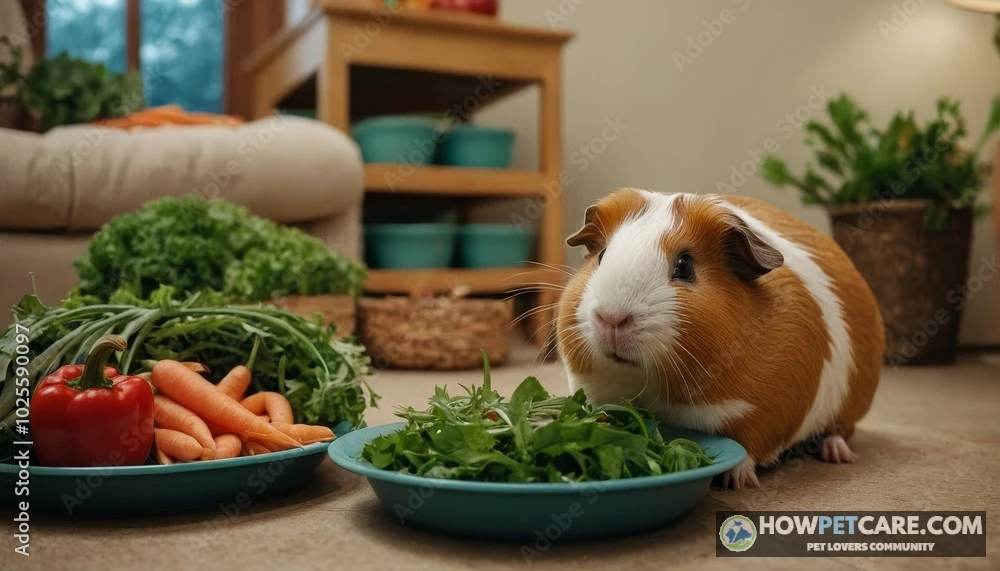
Vitamin C in pellets degrades after 60–90 days from manufacture. Small bags reduce waste and keep the nutrient closer to label strength.
One Guinea Pig or Two? Choosing and Bonding a Compatible Pair
Guinea pigs are herd animals that require same-species companionship to stay emotionally healthy. While a solitary pig can survive, meeting its social needs requires substantial daily human attention, and isolation remains a significant welfare issue. Do not house guinea pigs with rabbits. Rabbits possess powerful hind legs that can accidentally break guinea pig bones, can pass along Bordetella bronchiseptica, which may be fatal to guinea pigs, and have different dietary needs.
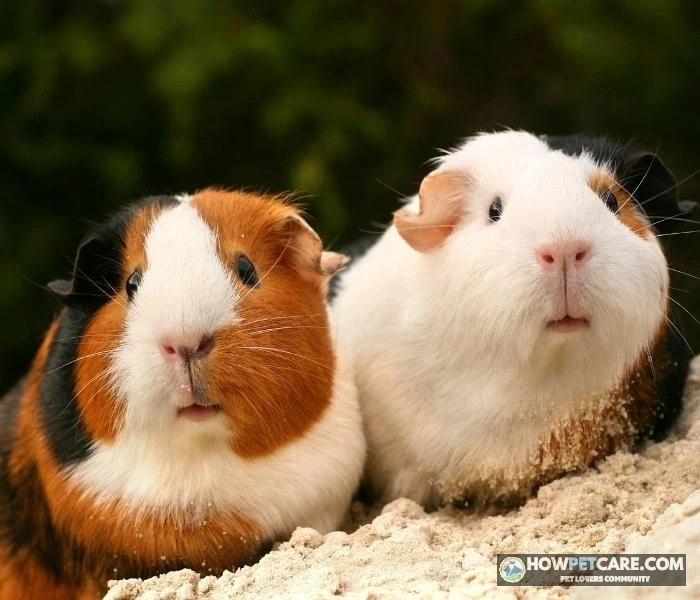
Two females, two males, or a neutered male and a female?
Pairs of females are generally the easiest to maintain together. Two males can get along well if they grew up together or bonded on neutral ground with ample space. A neutered male paired with a female is another dependable match, provided an exotic vet verifies the surgery succeeded and allowed sufficient healing time. Intact mixed pairs inevitably reproduce; young females reach reproductive maturity as early as 4–6 weeks. Never house intact males and females together.
Rescue or pet store: which to choose
Adopting through a rescue or animal shelter is the most reliable path. Rescues routinely house established bonded pairs, track their medical histories, and verify sexes accurately. Pet shops and backyard breeders often misgender juvenile pigs and provide little insight into their temperament. Beginners do best with smooth, short-haired varieties; long-haired breeds demand daily brushing and frequent sanitary trims. Before bringing any pig home, watch it eat, walk, and interact with its environment.
How to introduce two guinea pigs that have never met
- Quarantine and vet-check any new pig before mixing.
- Introduce on neutral ground, not inside either pig’s cage.
- Use a clean space with hay and at least two hideouts.
- Supervise a short session and watch body language.
- If calm, house side by side with a barrier for a few days.
- Move to a shared, freshly cleaned cage with extra hides and two food and water stations.
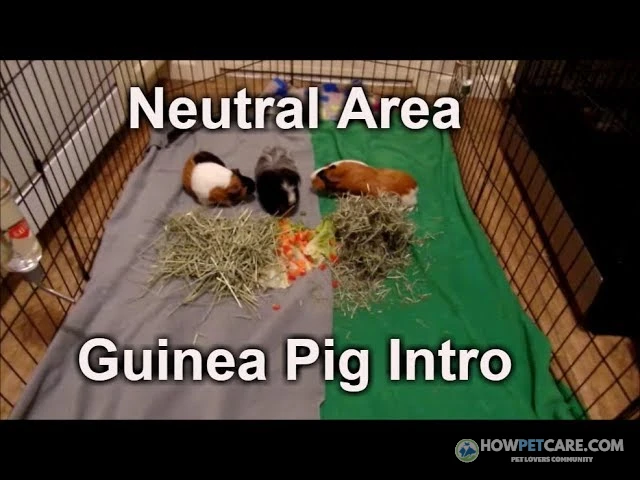
Mild chasing, rumblestrutting, brief chattering, and mutual mounting are normal dominance behaviors during introductions. However, deep bite wounds, rolling fights, or one pig trapping another in a corner indicate that you must separate them immediately. Some pairings settle within days, while others take several weeks. Always provide a spacious cage, two hideouts plus one spare, and dual feeding stations to prevent resource guarding.
Your First Week With a New Guinea Pig: Day-by-Day Plan, Taming and Safe Handling
The initial week centers on establishing safety and trust rather than petting. Set up your cage, hay rack, bowls, hides, and water bottle before bringing your guinea pig home, and book an initial exotic vet checkup. Then follow a calm, deliberate timeline.
Day-by-day first-week checklist
-
Before arrival
Set up the cage, fill the water bottle, add hay and pellets, place three hideouts, and schedule an exotic vet appointment.
-
Days 1–2
Leave the pig alone to settle. Refill food and water quietly, speak calmly, and confirm it is eating and drinking. No handling.
-
Day 3
Sit near the cage for 5–10 minutes, talk softly, and watch whether the pig comes out of its hideout while you are there.
-
Day 4
Offer a small piece of bell pepper or cilantro through the cage bars. Let the pig take it from your fingers. Repeat 3–4 times.
-
Day 5
Repeat hand-feeding with the cage door open. Let the pig come to you; never reach into its hideout.
-
Day 6
While the pig eats from your hand, stroke its head or back once or twice. Stop if it freezes or bolts. Teeth chatter means back off.
-
Day 7
Scoop one hand under the chest, support the hindquarters with the other, lift low over the cage floor, and sit down holding the pig against your chest for under a minute. Return it and offer a veggie.
If your guinea pig stays hidden or runs, pause and repeat the previous step for an extra day or two. Taming has no strict deadline; adult rescues often require three weeks or more to feel secure around people.
How to tame a shy or skittish guinea pig
Build confidence through calm hand-feeding, predictable lap time on a soft fleece towel, and tunnel transfers rather than hand-chasing inside the cage. Pay close attention to posture: freezing flat or darting away signals distress, whereas loud teeth chattering warns you to back off. Confident exploration and bouncy popcorning indicate your pet feels secure. Keep handling sessions brief and always conclude on a calm, positive note.
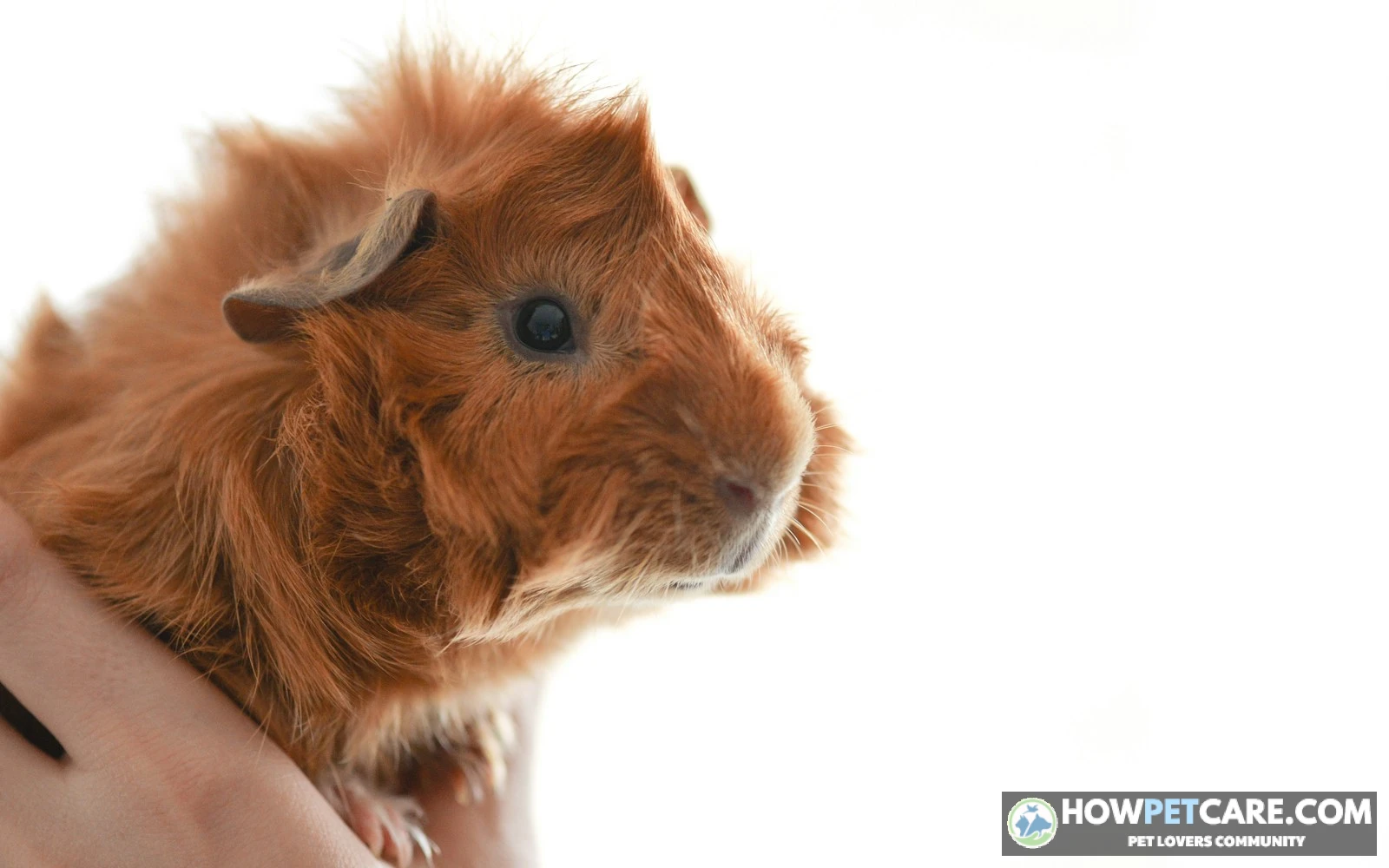
How to pick up and hold a guinea pig safely
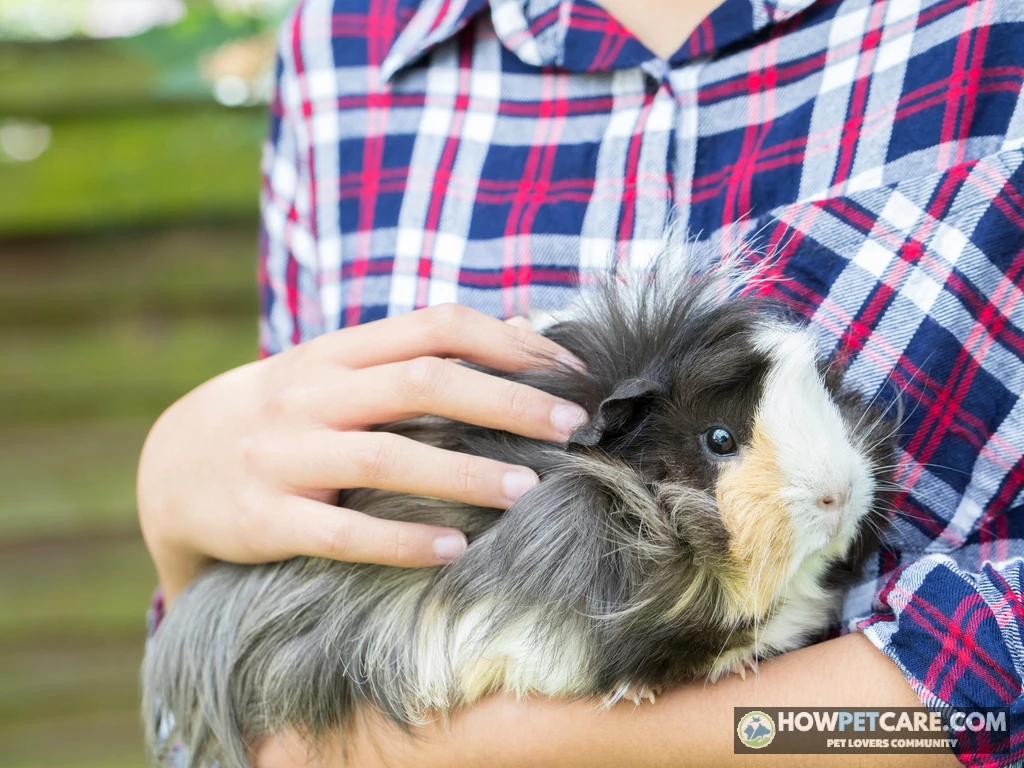
Slide one hand under the chest behind the front legs while fully cradling the rump and hindquarters with the other. Hold the animal close against your body and remain seated while holding it. Never grab a guinea pig from above like a raptor, never squeeze its ribcage, and never risk a drop. When children handle a pet, have them sit flat on a carpeted floor under direct adult supervision for short periods, such as five to ten minutes.
Guinea Pig Daily Care Routine and Weekly Checklist, Including Grooming
A regular care schedule maintains sanitary conditions and makes subtle health problems obvious early on. Post this routine near the cage or enter it into your digital calendar.
Daily checklist
- ☐ Morning: refresh water bottle, top up hay rack with unlimited timothy hay
- ☐ Morning: serve measured pellets (about 1/8 cup plain guinea pig pellets per pig) and fresh vegetables (about 1 cup per pig)
- ☐ Evening: spot-clean wet bedding areas and droppings piles
- ☐ Evening: 10+ minutes floor time and handling
- ☐ Evening: 30-second health check — clear eyes and nose, eating normally, normal droppings, moving freely
Weekly checklist
- ☐ Full cage clean: replace bedding or wash fleece liner, wipe cage floor
- ☐ Wash hideouts, bowls, and water bottle with unscented soap and rinse well
- ☐ Weigh each pig on a kitchen scale; log the number
- ☐ Check nail length, coat condition, and foot pads
Spot-clean droppings every day, perform a full cage clean at least weekly, and swap fleece liners more frequently if they feel damp or hold odor. A healthy guinea pig cage should never smell strongly of ammonia.
Nail trimming and coat care step by step
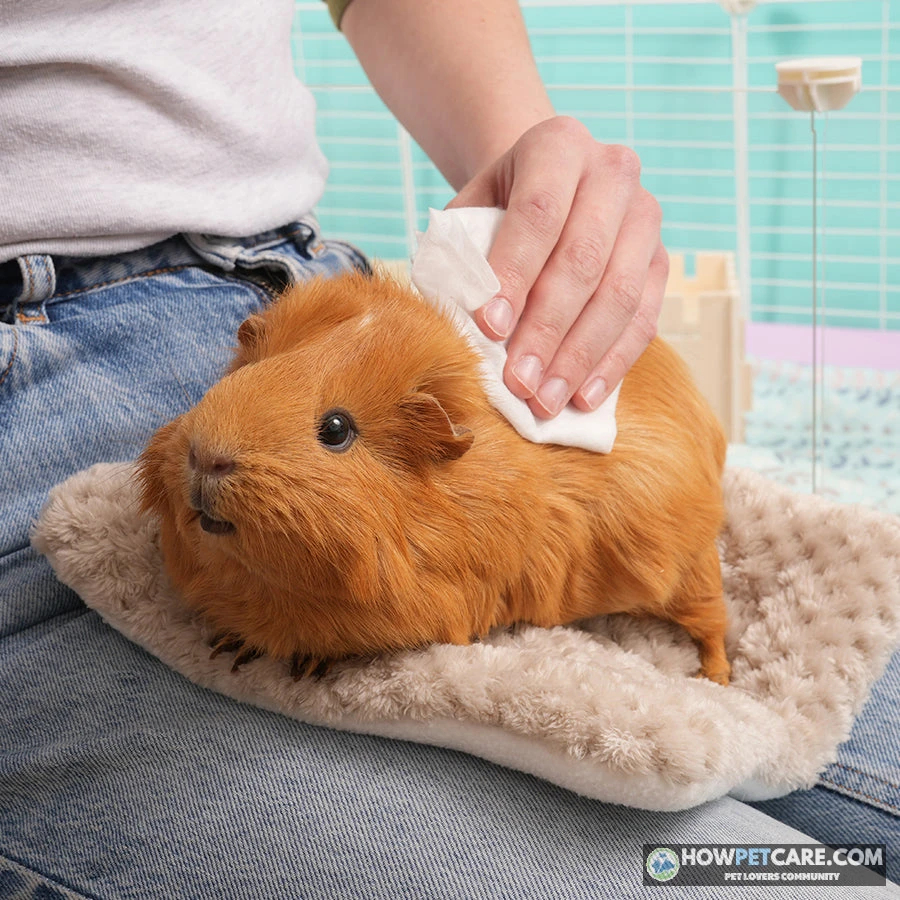
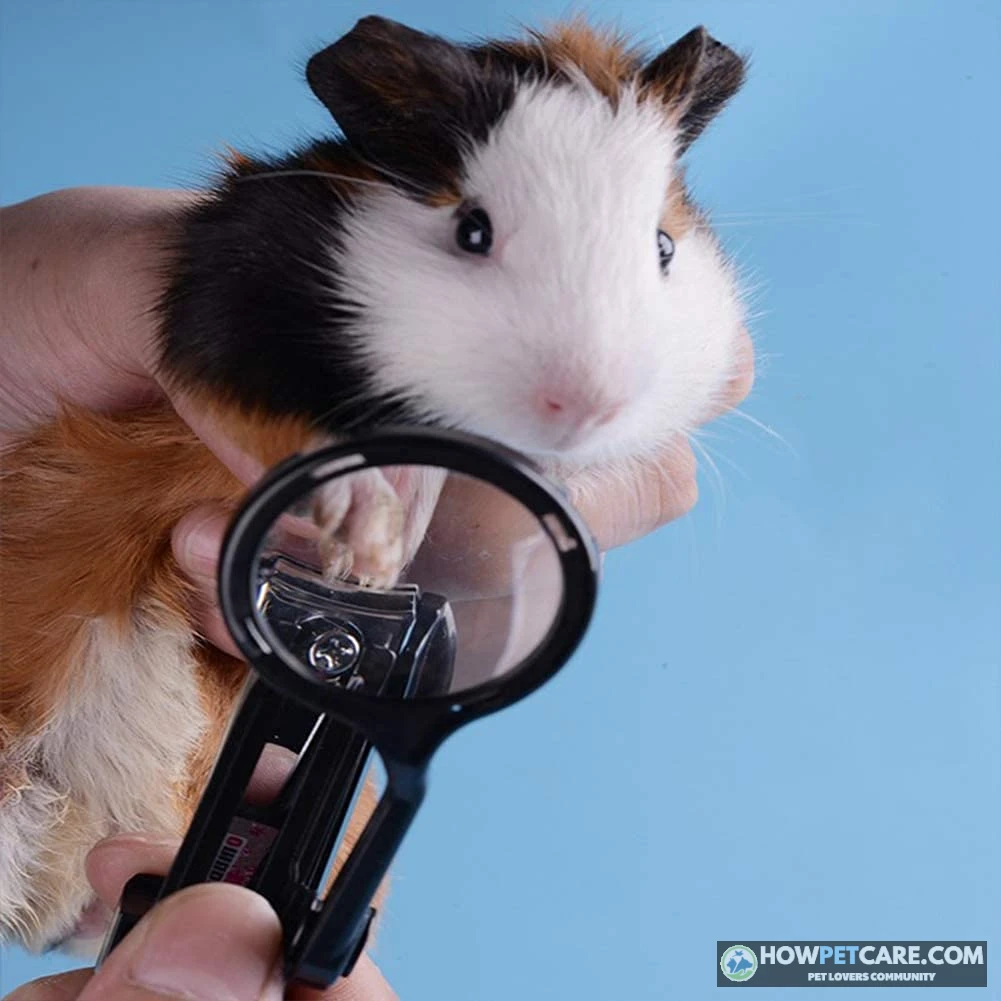
Inspect your guinea pig’s claws every few weeks and clip off sharp tips as they lengthen or curve inward, usually every 3–4 weeks. Use small-animal nail clippers, secure the pig firmly against your chest, and take care not to cut into the quick—the pink blood vessel running down the center of the nail. If you are nervous, ask your exotic vet or a groomer to demonstrate proper technique. Long-haired breeds require regular brushing to prevent painful mats, particularly during seasonal molts. Routine baths are unnecessary and often cause dangerous chills; simply wipe soiled spots with a damp cloth and consult your vet before using medicated shampoos on skin conditions.
Male guinea pig hygiene and rectal pouch checks
Senior boars frequently develop muscle weakness in the perianal sac, leading to impaction. Inspect the rectal pouch gently during your weekly physical check. If you find a mild accumulation of debris, soften and loosen it with mineral oil or warm water on a soft cloth, working without force. If the pouch looks inflamed, smells foul, or appears severely packed, schedule an appointment with an exotic vet.
Every month, trim nails if needed, inspect hideouts and chew sticks for wear, replenish food reserves, and check your veterinary savings account. Every year, bring each guinea pig in for a wellness checkup with an exotic animal veterinarian.
How Much Does a Guinea Pig Cost? Setup and Monthly Budget
Guinea pigs are not low-cost starter pets. While basic equipment is reasonably priced and everyday food costs remain steady, specialized veterinary care can result in significant bills. These estimates reflect typical US expenses in 2026 and vary by location, shop, and local shelter.
One-time setup costs
Expect an initial setup for an adopted pair to run approximately $200–350:
- C&C grid cage built to welfare minimum (~10.5 sq ft / 1 sq m for a pair): $60–100
- Adoption fee for a bonded pair: $50–80; buying from a store often costs $70–120 with less reliable sexing
- Hideouts x3, ceramic bowls x2, water bottles x2: $40–60
- First fleece liners (reusable): $40–80
- Carrier for vet trips: $20–35
- Initial exotic vet exams for both pigs: $100–200
Monthly and yearly costs
Ongoing care for a pair averages $50–75 each month:
- Timothy hay bought in bulk: $15–25
- Plain guinea pig pellets: $8–15
- Fresh vegetables: $20–30
- Laundry costs for fleece, or about $20–30 per month if using disposable paper bedding
- Vitamin C and small extras: $5
Housing a pair does not double your monthly outlay because the enclosure, liners, and core equipment are shared. Feeding and caring for two pigs generally costs around 1.3–1.5 times the amount spent on a single pig.
The expense most new owners underestimate: vet care
An unexpected exotic vet exam can easily reach $150–500 or more per incident. Most first-time keepers fail to budget for this reality. Putting aside just $15 per month builds a $180 cushion in year one. Complex issues like molar burring, neutering, abscess drainage, or bladder stone removal carry much steeper costs. Keep your local exotic clinic’s emergency number on hand and build up your medical fund well before health problems emerge.
These are typical US ranges, not quotes. Shelter fees, local vet prices, and bedding choices change the total. The full itemized cost guide in the companion article goes deeper.
Signs Your Guinea Pig Needs a Vet: Symptom Triage Chart
As prey animals, guinea pigs instinctively mask illness until their condition becomes advanced. Use this symptom triage guide to determine whether to observe, call your clinic for an appointment, or rush to an exotic emergency hospital immediately.
Healthy vs. sick: symptom-to-action chart
| What you see | Possible cause | Urgency | What to do now |
|---|---|---|---|
| Not eating, or no droppings for 12 hours | Gut stasis, dental overgrowth, serious illness | Emergency — same day | Offer fresh hay and water, keep warm, call an exotic vet now. Do not wait overnight. |
| Labored breathing, clicking sounds, nasal or eye discharge | Respiratory infection (often bacterial) | Emergency — same day to 24 hours | Separate from cage mates, keep warm and quiet, see a vet promptly — colds turn to pneumonia fast. |
| Limping, swollen or scabbed foot pads | Bumblefoot (pododermatitis) | See vet within a few days | Check wire floors or soiled bedding as a cause; keep bedding dry and soft until the visit. |
| Steady weight loss over 1–2 weeks | Dental disease, scurvy, or internal illness | See vet within a few days | Keep a weekly weight log to bring; note any food the pig now drops or refuses. |
| Hair loss with scabs, flakes, or circular patches | Ringworm or mites | See vet within a few days | Wear gloves when handling; wash hands after every touch. |
| Drooling, wet chin, dropping food | Molar overgrowth | See vet within a few days | Check whether the pig still eats hay but abandons hard vegetables — a classic sign. |
| Rough coat, reluctance to move, sore joints | Scurvy (vitamin C deficiency) | See vet within a few days | Review the diet’s vitamin C sources; do not dose supplements without vet guidance. |
| Diarrhea or very soft droppings | Diet change, bacterial imbalance | Monitor 24 hours | Remove new vegetables, offer hay only, watch closely; vet sooner if lethargic or bloated. |
| A new lump or swelling | Abscess or cyst | See vet within a few days | Do not squeeze or lance; note size and whether it grew since first noticed. |
If a guinea pig has not eaten or has not passed droppings for 12 hours, treat it as an emergency. Call an exotic vet now. Never give leftover antibiotics — several common ones are fatal to guinea pigs.
Normal quirks that look alarming
Certain behaviors look alarming to beginners but are entirely harmless. Popcorning, low rumbling, occasional teeth chattering during play, consuming soft night feces called cecotropes, and short naps are normal. Teeth chattering during a tense face-off is a clear warning sign, while occasional chatter during food sorting has a different meaning. Eating cecotropes is essential nutrient recycling, not illness.
Why antibiotics need an exotic vet
Several common antibiotics, such as penicillins and cephalosporins, disrupt guinea pig intestinal flora and cause fatal enterotoxemia. Never administer leftover human or canine medication to a small herbivore. Ensure your attending doctor has dedicated exotic mammal training before any treatment begins. Locate an exotic veterinarian right away, and bring your weekly weight records, diet list, and stool samples to your first consultation.
Is a Guinea Pig Right for Your Family? Readiness Checklist and Next Steps
Guinea pigs make wonderful companions for careful children, provided an adult oversees their daily husbandry and everyone understands their average guinea pig lifespan. Assign age-appropriate duties: younger kids can replenish hay and watch mealtimes; older children can weigh pets and help scoop droppings; adults must oversee nail trimming, medical triage, and thorough cage cleanings.
| Need | Guinea pig | Hamster |
|---|---|---|
| Social | Needs a same-species companion | Usually solitary; can fight if housed together |
| Space | Needs a large floor area, not a tall cage | Smaller cage is acceptable but floor space still matters |
| Lifespan | 4–8 years on average | Usually shorter, often around 1.5–3 years |
| Handling | Tolerates gentle handling if tamed slowly | Often more defensive and less tolerant of handling |
| Activity | Most active around dawn and dusk; adapts to household rhythm | Often nocturnal, so nighttime noise can be an issue |
Readiness checklist: adequate floor space for a sizable enclosure, a budget that covers paired animals and unforeseen veterinary bills, an exotic clinic within reasonable driving distance, and a dependable pet-sitting plan for vacations. While guinea pigs can stay home alone for a single day with ample hay and water, they need fresh vegetables and a visual health check every 24 hours. For longer absences, hire a knowledgeable sitter who understands their routine.
To move forward: select a compatible bonded pair, build out an enclosure that meets minimum space standards, stock fresh timothy hay and fortified pellets, schedule an exotic wellness exam, print the daily checklist, and give your pets time to settle on their own schedule. Focus on solid housing, daily consistency, and patient handling to raise healthy, confident guinea pigs.
FAQ
Can guinea pigs live with rabbits?
No. Rabbits can injure guinea pigs by kicking, rabbits can carry bacteria such as Bordetella that cause respiratory illness in guinea pigs, and their dietary needs differ. Guinea pigs need vitamin C and rabbits do not, so rabbit pellets are unsuitable. Keep guinea pigs with their own species.
How long do guinea pigs live?
With good care, most guinea pigs live roughly 5 to 7 years. Diet, housing, and early vet care all affect lifespan. See the dedicated guinea pig lifespan article for an age chart.
Do guinea pigs need baths?
Rarely. Guinea pigs groom themselves, and baths can chill and stress them. Spot-clean soiled fur with a damp cloth, and ask an exotic vet before bathing a pig with a skin problem.
Can I leave my guinea pig alone for a weekend?
A day away is manageable with plenty of hay and water, but guinea pigs need fresh vegetables and a daily health check. For anything longer, arrange a trusted sitter who has seen your routine.
Are guinea pigs nocturnal?
No. Guinea pigs are most active around dawn and dusk and nap in short bursts through the day and night. They can adapt to household rhythms, but a quiet room helps them rest.