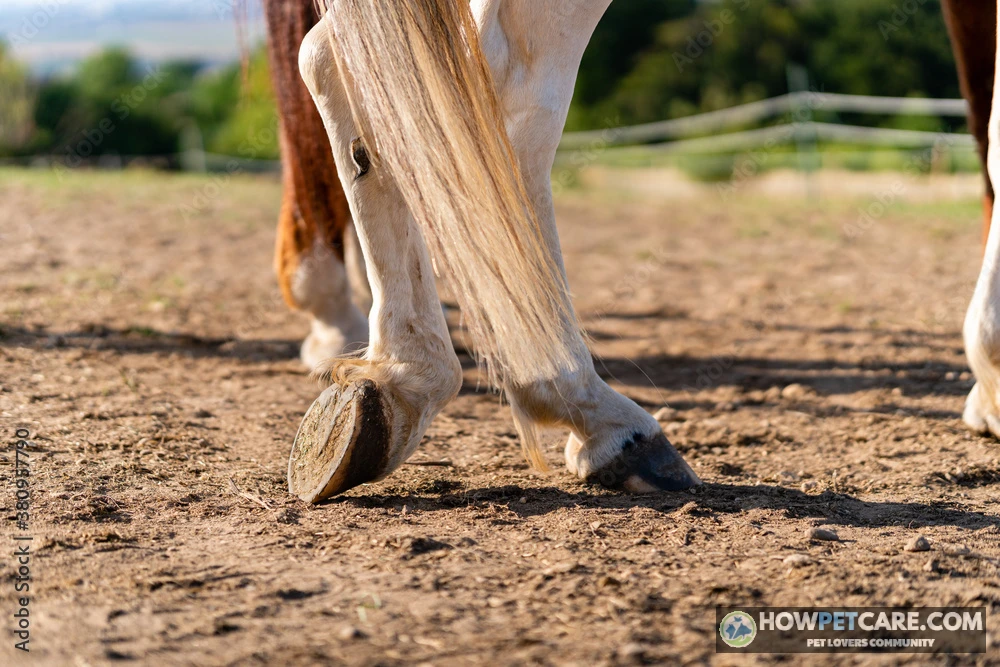

Horse hooves are keratin structures made of three key tissues: the weight-bearing wall, the protective sole, and the shock-absorbing frog. They grow roughly a quarter-inch per month and fully regrow in 9–12 months — which is why daily picking and a 6–8-week trim schedule keep them healthy.
Horse hooves are made of keratin, the same protein family that forms human fingernails, but arranged in specialized layers that bear a thousand-pound animal’s weight and dissipate concussion with every stride.
The outer wall, the sole, and the frog each have a different density and moisture content, and the wall’s outermost layers have no nerve endings — which is why trimming doesn’t hurt but the sensitive structures beneath do.
Typical wall growth runs roughly a quarter to three-eighths of an inch per month, so a full hoof regrows in about 9–12 months; that rate varies with age, season, nutrition, and workload.
Because growth drives trim intervals, a supplement or management change you make today won’t show at the ground surface for months. (Spelling note: "hooves" is the standard plural in horse care writing; "hoofs" is an accepted variant.)
Hoof wall, sole and frog: three tissues, three jobs
The hoof wall is the hard, weight-bearing rim that grows down from the coronary band. The sole is the slightly concave, waxy surface that protects the coffin bone. The frog is the V‑shaped, rubbery wedge in the center that acts as a shock absorber and a circulatory pump. Each tissue has a distinct role, and each gives you a specific thing to check during daily picking.
Growth rate and what it means for your schedule
A quarter‑inch per month is the rule of thumb, but young horses, summer weather, and heavy work can push it higher; winter and senior horses often grow slower. That range is why most farriers schedule visits every 6–8 weeks — frequent enough to keep the capsule balanced before leverage distortions set in, but not so frequent that you’re paying for unnecessary rasping.
Horse Hoof Anatomy Labeled: What to Check on Each Part
External parts: the underside tour
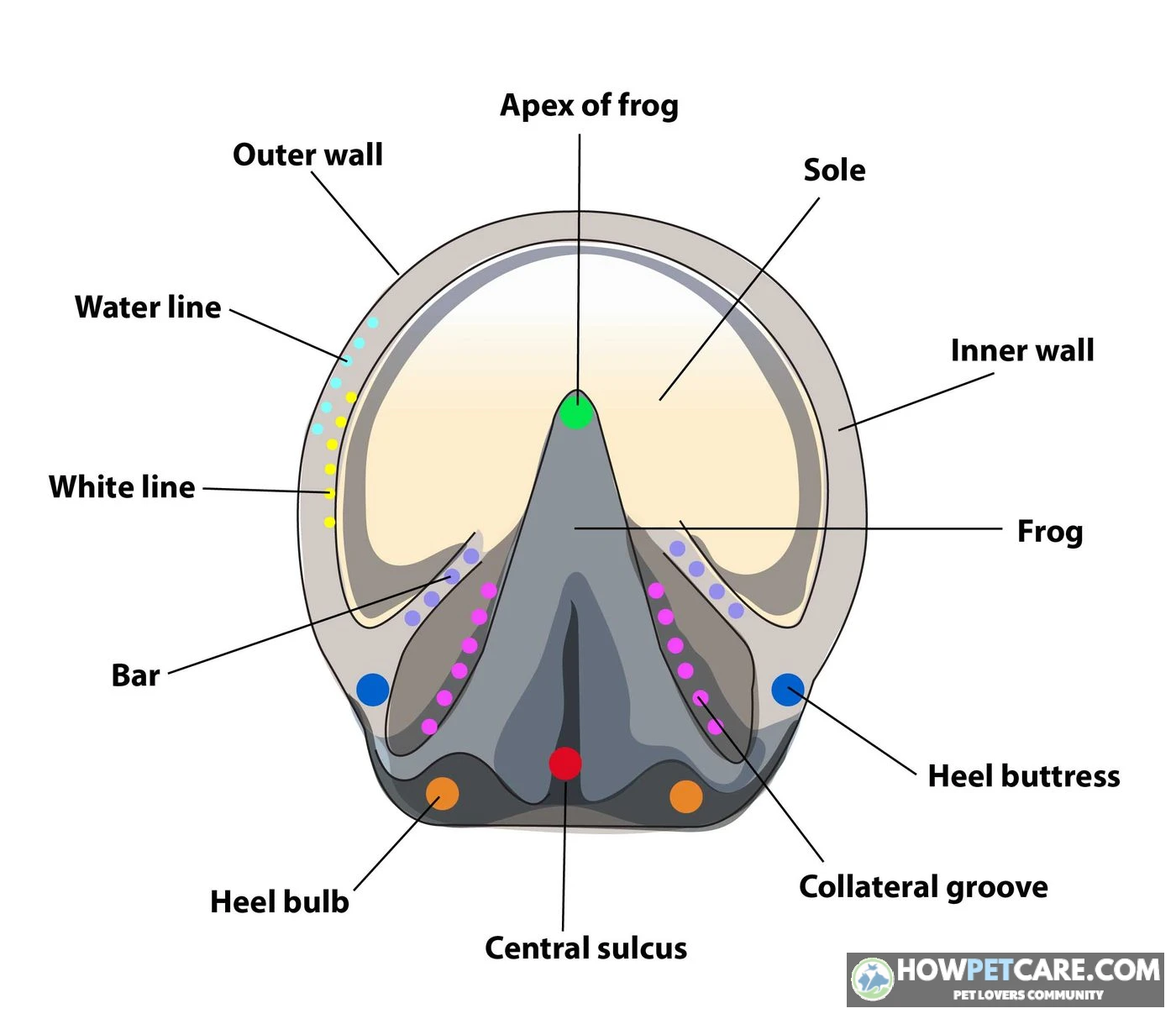
Hold the hoof up and look at the ground surface. Here is every structure, in the order your eye and your pick will meet it:
- Heel bulbs (back of the foot, where your hand supports the hoof) — two soft, rounded cushions on either side of the rear. They should feel springy, like a firm rubber ball. Swelling, heat, or a crack between them is worth a closer look.
- Frog — the V‑shaped rubbery wedge pointing from heel to toe in the center of the foot. It’s a shock absorber and pump. Run your thumb down its center groove: healthy frog is firm with a slight give, not mushy, flaky, or smelly.
- Collateral grooves — the two channels running alongside the frog. Your pick cleans these first. Deep grooves are normal; grooves packed with black, foul‑smelling gunk suggest thrush.
- Sole — the slightly dished (concave) surface filling most of the foot. It should not flex when you press it firmly with your thumbs, and it should look dry and waxy, not flat or bruised pink/purple.
- Bars — the two ridges where the hoof wall angles inward on each side of the frog. They’re part of the wall folded under for support. They should look straight and intact, not laid over the sole or crumbling.
- White line — the pale ring tracing the edge of the sole, where sole meets wall. It should look tight and uniform, like a sealed seam. Gaps, stretching, or black crumbly spots mean separation.
- Hoof wall — the hard outer rim that touches the ground. From below you see its bottom edge; check it for chips, flares, and uneven wear.
- Toe — the front of the wall. Uneven wear here tells you how the horse breaks over and moves.
Now set the hoof down and look at it from the side: the coronary band is the hairline ridge where hair meets hoof — all new hoof grows down from here, so any swelling, discharge, or horizontal crack starting at this line matters. The bulbs and pastern above it complete the picture.Internal structures you can’t see but need to understand
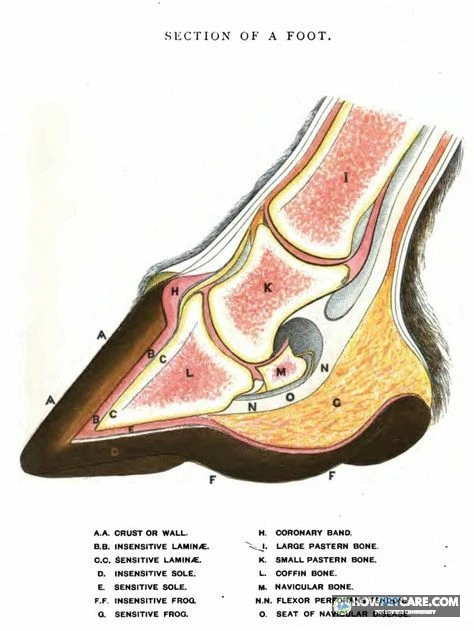
- Coffin bone (P3): the foundation bone inside the hoof capsule; its shape mirrors the outer wall.
- Navicular bone: a small, boat‑shaped bone behind the coffin bone, involved in deep digital flexor tendon function and a common source of chronic heel pain.
- Digital cushion: a fibrous, fatty pad above the frog that dissipates concussion and aids venous return.
- Laminae: the interlocking leaf‑like layers that suspend the coffin bone inside the wall; inflammation here is laminitis.
These structures explain why a bounding digital pulse signals trouble in the laminae, why a flat sole warns of coffin bone remodeling, and why a shriveled frog reduces shock absorption.

Inside the capsule: coffin bone, navicular bone, laminae and digital cushion. (Source: pinterest/pin)
What a Healthy Horse Hoof Looks Like: Benchmarks to Check Against Your Horse
Quick 60‑second healthy‑hoof checklist
- ☐ Wall surface — Healthy: smooth, shiny, no cracks deeper than a surface chip. Warning: cracks reaching toward the coronary band, flares (wall bending outward), or peeling layers.
- ☐ Growth rings — Healthy: rings run level and parallel all the way around, evenly spaced. Warning: rings that are wider at the heel than the toe, or a sudden change in spacing — a record of stress or diet change; diverging rings are a classic laminitis clue.
- ☐ Frog — Healthy: firm and rubbery, fills the V, slight give under thumb pressure, no odor. Warning: mushy, ragged, shrunken, or black discharge with a foul smell.
- ☐ White line — Healthy: tight, uniform seam, like a closed zipper between sole and wall. Warning: stretched, gaping, or packed with crumbly dark material.
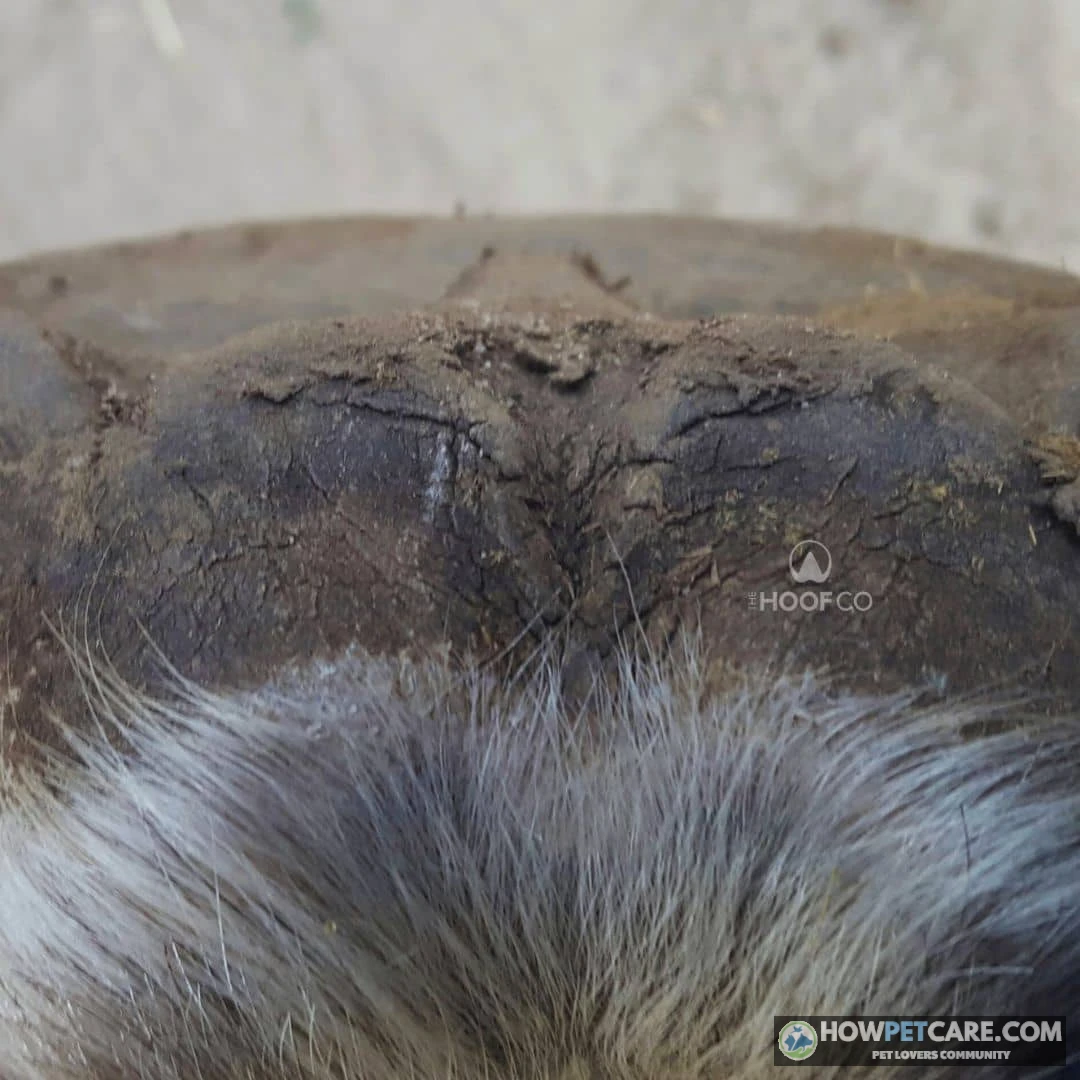
- ☐ Coronary band — Healthy: even, cool, same texture all the way around, hair lies flat. Warning: swelling, squishy spots, heat, or any discharge — an abscess often exits here.
- ☐ Sole — Healthy: mildly concave, dry, waxy, doesn’t flex under firm thumb pressure. Warning: flat or bulging sole, visible pink/purple bruising, or a sole soft enough to dent.
- ☐ Heat and pulse — Healthy: hoof feels the same temperature as the other feet; digital pulse at the fetlock is faint and takes a moment to find. Warning: one foot noticeably warmer, or a pulse you can feel instantly and strongly.
- ☐ Symmetry — Healthy: left and right front feet match each other; hinds match each other (hinds are normally narrower and more oval than fronts). Warning: one foot visibly changing shape, heel height, or size compared to its pair.
How draft horses, Thoroughbreds and ponies differ
- Draft horses: large, broad, flatter soles; thicker walls but more prone to thrush in deep grooves.
- Thoroughbreds: thin walls, low heels, often flat soles; higher risk of quarter cracks and bruising.
- Ponies: small, tough hooves but metabolically prone to laminitis; often grow more heel than toe.
- Pasture vs. stalled: horses on abrasive turnout self‑trim the toe; stalled horses grow longer toes and need more frequent farrier visits.Hoof‑pastern axis
View the horse from the side: the dorsal hoof wall and the pastern should form a straight line. A broken‑back axis (hoof angle lower than pastern) often means long toe/low heel; a broken‑forward axis (hoof steeper) can indicate club foot or contraction.
How to Pick a Horse’s Hooves: A Daily Step‑by‑Step Routine
Step‑by‑step: the 10‑step pick‑and‑inspect routine

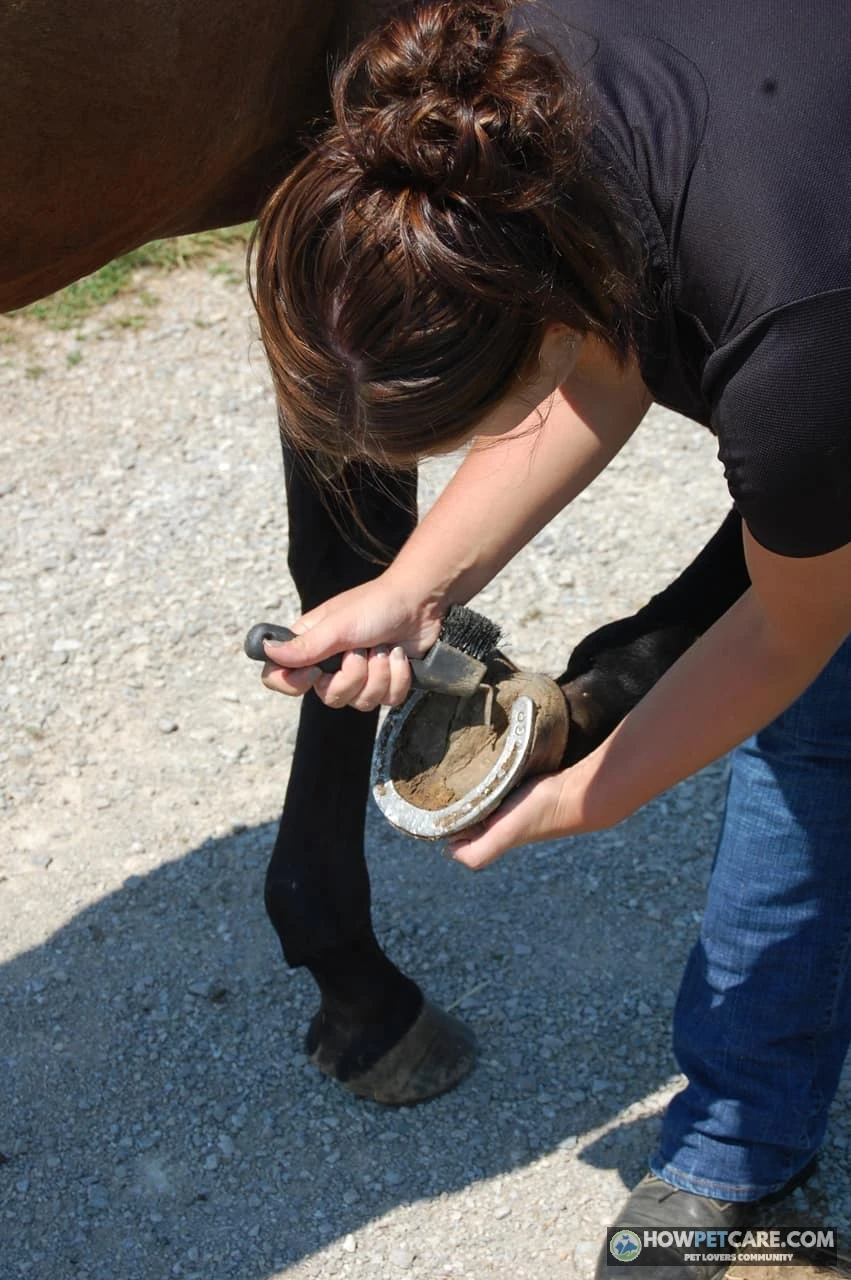
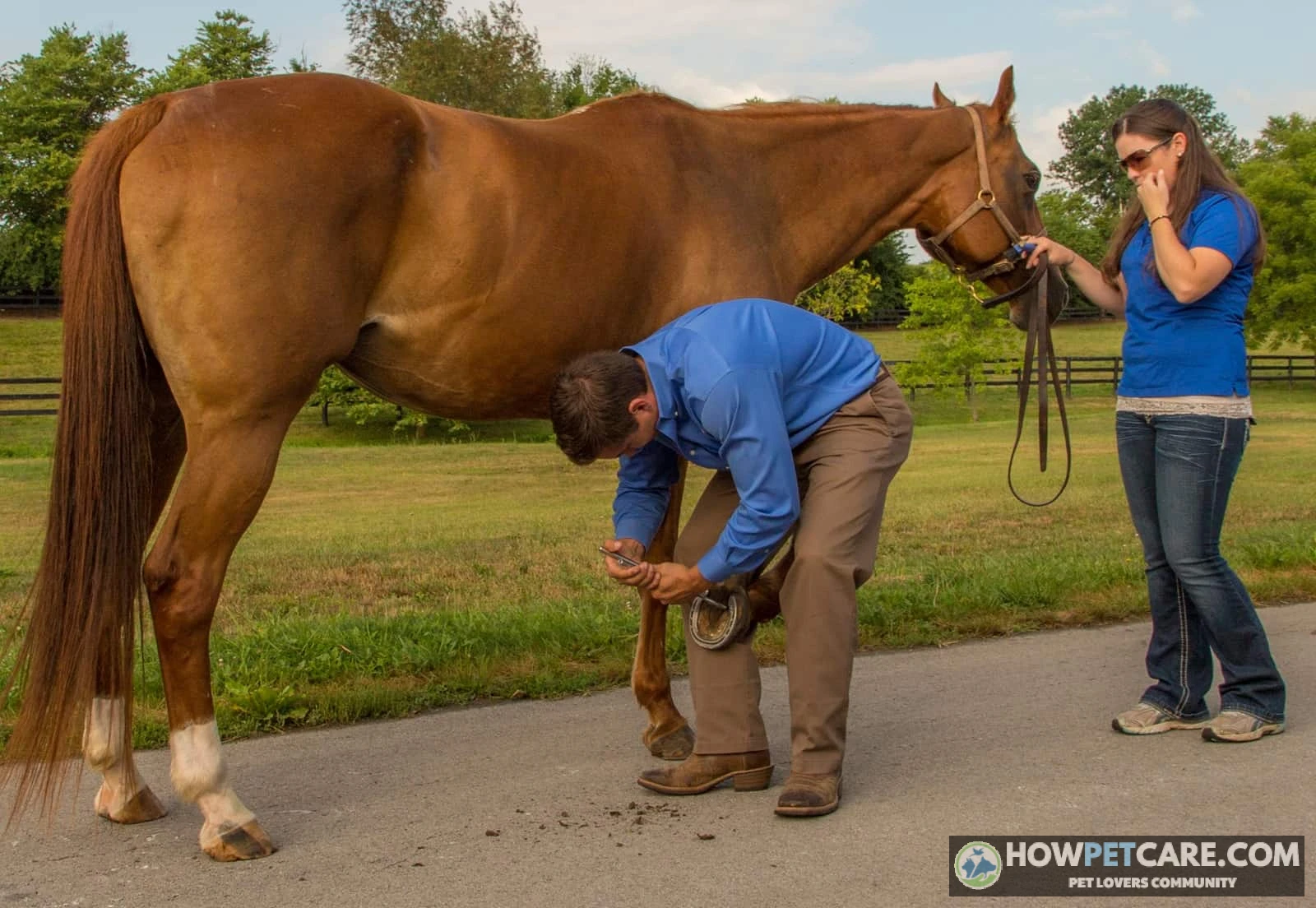
Daily routine: support the hoof and pick from heel to toe, away from your body. (Source: thehorse) -
1. Approach and position
Stand at the horse’s shoulder, facing the tail, with your feet clear of the kick zone. Run your hand down the leg to signal the request.
-
2. Ask for the foot
Squeeze the chestnut or press the tendon just above the fetlock; most trained horses will lift. If not, lean your shoulder into the horse’s shoulder to shift weight off that leg.
-
3. Support the hoof
Cup the hoof in your non‑dominant hand, holding the toe or the heel bulbs. Keep your back straight and knees bent — don’t hold the leg outstretched.
-
4. Pick from heel to toe
Insert the pick at the heel bulb and scrape forward, away from your body, cleaning the collateral grooves first, then the frog cleft, then the sole surface.
-
5. Brush debris
Use a stiff brush to clear remaining dirt so you can see the white line and sole clearly.
-
6. Inspect the frog
Check for odor, black discharge, or a mushy texture — early thrush signs.
-
7. Check the white line
Look for separation, stretching, or crumbly dark material (white line disease).
-
8. Scan for foreign objects
Stones, nails, or wire. Do not pry out an embedded object — leave it, tape the foot, and call the vet.
-
9. Check shoes (if shod)
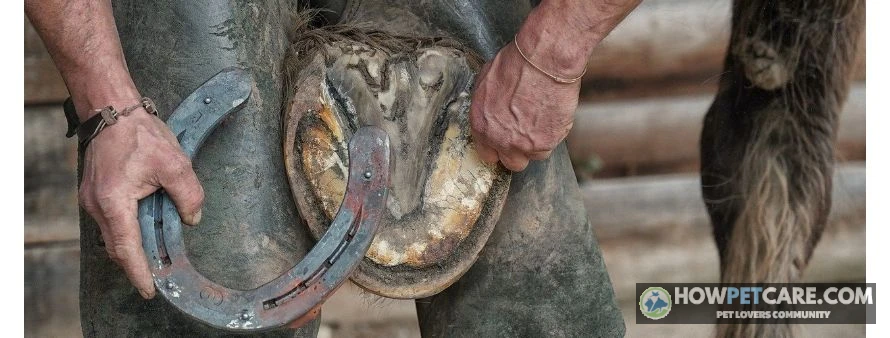
Look for risen clinches, shifted shoes, missing nails, or excessive wear.
-
10. Feel heat and digital pulse
Palpate the fetlock for a bounding pulse; compare left vs. right. Set the hoof down gently.
Timing: before and after every ride, and at least once daily for turned‑out horses. Add extra checks after wet or muddy weather. Log anything new in a barn notebook or phone app so you can show the farrier or vet.
Safety and troubleshooting a horse that won’t pick up a foot
- Stay parallel to the horse’s barrel, not directly behind the leg.
- If the horse leans or pulls, don’t fight — release, reposition, and ask again.
- For chronic resistance, work with a trainer on ground‑work basics; never sedate or hobble without veterinary direction.Embedded object rule
If you find a nail, stake, or other object penetrating the sole, do not remove it. The object may be sealing a vessel or stabilizing a fracture. Tape the foot, keep the horse still, and call the vet immediately. Radiographs with the object in place guide safe removal.
Common Horse Hoof Problems and How to Tell Them Apart
Symptom matrix: abscess vs. laminitis vs. thrush
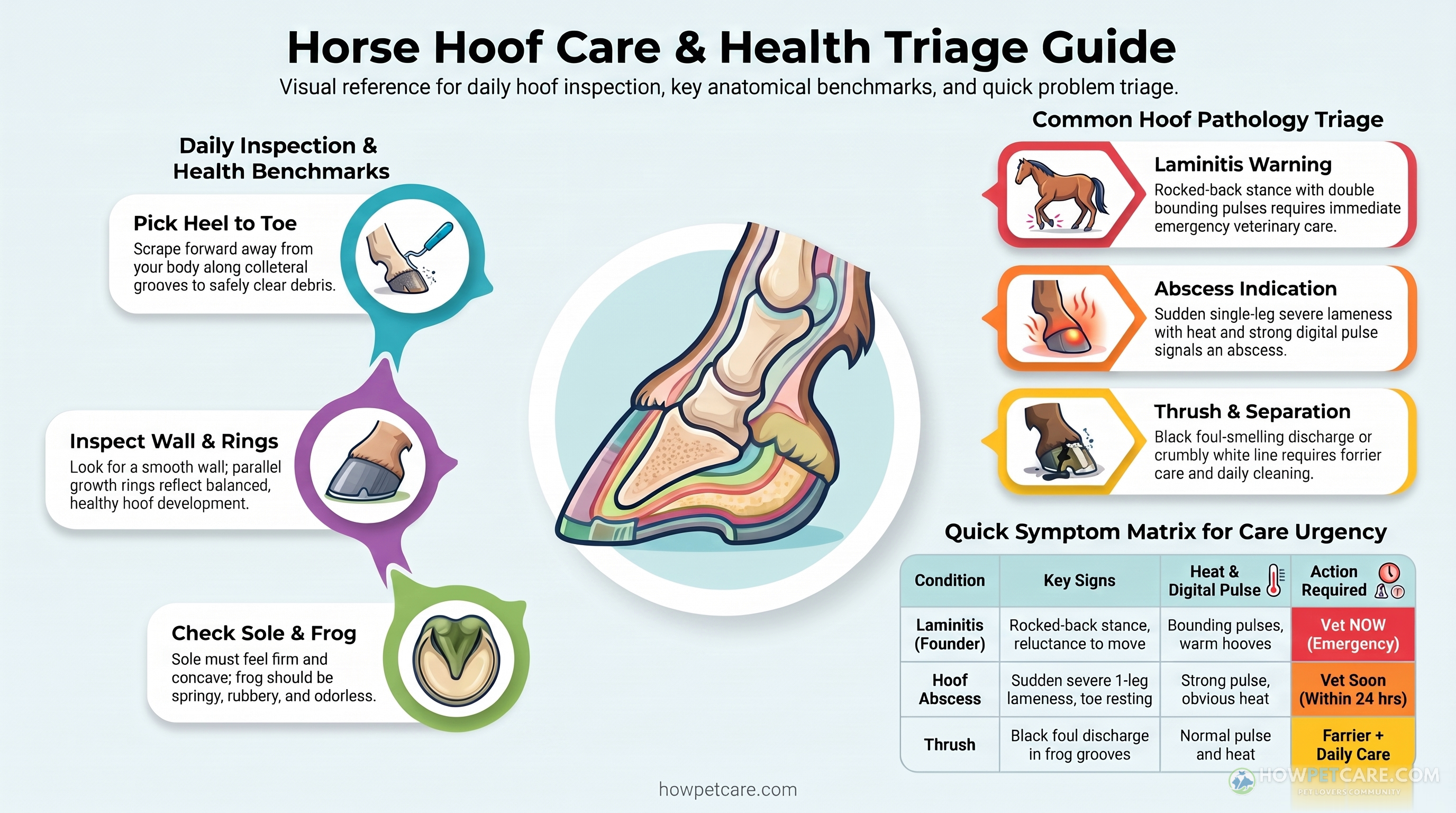
Condition Onset Feet affected Key signs Digital pulse and heat Urgency (vet now / soon / farrier) Hoof abscess Sudden — horse fine yesterday, hopping lame today Usually one foot Severe lameness, horse points or rests the toe; may burst and drain foul pus at the coronary band or heel Strong bounding pulse, obvious heat in the hoof Vet soon (within a day); monitor closely, as it mimics fractures Laminitis (founder) Can develop over hours to a couple of days, often after grain overload, lush grass, or illness Usually both fronts, sometimes all four Rocked‑back stance (weight on heels), reluctance to turn or walk, shifting weight between feet Bounding pulses in both feet, warm hooves Vet NOW — this is an emergency Thrush Gradual One or more, often hind feet in wet conditions Black, foul‑smelling discharge in the frog grooves; crumbly frog; usually little or no lameness until advanced Normal pulse and heat Farrier + your own daily care; vet if frog is eaten deep or horse is sore White line disease Gradual; usually found at a trim One or more Crumbly separation and black/gray material along the white line; hollow sound when wall is tapped Normal Farrier at next visit; sooner if wall separation is extensive Stone bruise Sudden mild‑to‑moderate lameness, often after work on hard or rocky ground One foot Sore to hoof testers in one spot, sole may show pink/purple discoloration later, horse improves over days Mild pulse increase, possible mild heat Monitor 24‑48 hours on soft footing; vet if worsening or no improvement (rule out abscess) The two‑minute triage: one foot + severe + bounding pulse + heat = suspect abscess and call the vet. Both fronts + rocked‑back stance = treat as laminitis until proven otherwise. Smell but no lameness = clean and schedule the farrier.

Triage: heat, a bounding pulse and sudden lameness are red-flag findings. (Source: thehorse) Call the vet now vs. mention it to the farrier next visit
- Vet now: laminitis stance, non‑weight‑bearing lameness with heat/pulse, puncture wound, sudden severe lameness with no obvious cause, fever with foot pain.
- Vet soon (within 24‑48 hrs): suspected abscess not draining, stone bruise not improving, white line separation with instability.
- Farrier next visit: thrush (you’re already treating daily), minor chips or cracks not reaching the coronary band, routine white line separation found at trim, shoe adjustments.

Benchmark: smooth shiny wall, level growth rings, a tight white line and a firm frog. (Source: thehoofco) Trimming, Shoeing and Farrier Costs: Schedules, Prices and How to Choose

Most horses see the farrier every 6 to 8 weeks. (Source: tallyhotours) How often to trim or shoe
A typical interval is 6–8 weeks, but adjust for: faster summer growth, young horses, heavy work → 5–6 weeks; winter, seniors, light work → 8–9 weeks. Horses on abrasive terrain may self‑trim enough to stretch intervals slightly, but the farrier should still evaluate balance each visit.
What a farrier visit costs in the US
Typical price ranges per visit. These are honest working ranges, not quotes — always get local prices before budgeting.
Service Typical US range Notes Trim only (barefoot) ~$45–$90 Higher in metro and coastal areas; some rural farriers still charge less Two shoes (fronts) + trim ~$100–$180 Most common setup for ridden horses Full set (four shoes) ~$150–$280 Aluminum, corrective, or therapeutic shoes push above this Reset (reuse same shoes) Usually $10–$30 less than new set Only if shoes aren’t worn What moves the price: region (Northeast and West Coast run high, rural Midwest and South often lower), farm‑call or travel fees, corrective/therapeutic work, drafts and difficult horses, and appointment frequency (6‑week regulars often pay less per visit than one‑off calls).
5 questions to ask a farrier before booking:
- What training or certification do you hold, and how long have you been shoeing?
- Can you share a reference — ideally a local vet or barn owner you work with?
- Do you work with vets on therapeutic cases if my horse ever needs it?
- What’s your schedule like — do you book the next visit before leaving, and what happens when you run late?
- What do you charge for a trim vs. a reset vs. a new set, and are there farm‑call or difficult‑horse fees?
Budget roughly the per‑visit cost times 8–9 visits a year, plus a reserve of one extra full‑set visit for lost shoes and emergencies.
What a good visit looks likeClean, dry hooves; horse caught and calm; a level standing spot. The farrier evaluates each foot, trims to live sole plane, balances mediolateral and dorsopalmar, fits shoes (if used) with appropriate expansion, and clinches neatly. They should show you the finished foot and note any concerns.
Barefoot vs. Shod: How to Decide and What a Transition Looks Like
Barefoot vs. shod decision factors
Factor Barefoot Shod Notes Terrain Soft arena/pasture Rock, gravel, pavement Boots bridge the gap Workload/discipline Light trail, arena Jumping, eventing, endurance, sliding sports Therapeutic needs often dictate shoes Hoof quality Thick walls, strong frogs, concave soles Thin walls, flat soles, chronic chipping Shoes protect while you improve quality History No major pathology Navicular, laminitis, conformational issues Vet/farrier team decision Time and budget Saves shoeing cost; may need boots ($80–$250/pair) and stricter diet/turnout management Higher recurring cost; less daily management Boots for in‑between cases 
Barefoot suits healthy hooves on forgiving terrain with moderate work. (Source: scootboots) If "shod" wins on terrain or workload alone, don’t force barefoot — use boots for the in‑between cases.
Shoe types and hoof boots compared
Option Best for Pros Cons Typical cost range Steel shoes General riding, hard terrain Durable, cheap, easy to modify Heavy, conducts cold/heat Included in shoeing price Aluminum shoes Racing, performance, therapeutic Light, wider web for support Wears faster, more expensive +$20–$50 per set Glue‑on shoes Thin walls, cracks, laminitis rehab No nails, distributes load Requires skill, limited lifespan (4–6 wks) $150–$300 per application Hoof boots Barefoot transition, trail riding Removable, protects sole, no nails Fit challenges, can rub, lost on trail $80–$250 per pair 
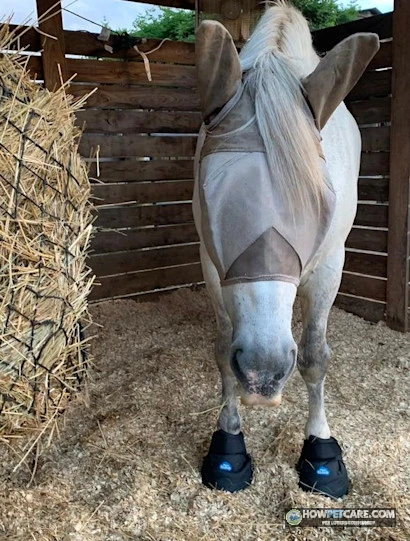
Hoof boots bridge the gap between barefoot and shod for rocky terrain. (Source: smartpakequine) What a barefoot transition looks like over time
Transition timeline (general guide — your farrier sets the real pace):
- Months 0–1: Shoes come off. Expect visible sensitivity on gravel and hard ground — this is normal, not damage. Keep turnout on forgiving footing; use boots for any ridden work. Schedule a barefoot trim.
- Months 1–3: Soreness windows shrink. The sole begins to thicken and callus. Walk work only on varied but gentle footing; 20–30 minutes of walking is the standard conditioner.
- Months 3–6: Most horses handle everyday turnout comfortably. Gradually add trot and arena work. If the horse is still foot‑sore on soft ground at this stage, get the farrier and vet involved — diet (especially sugar intake) is a common hidden cause.
- Months 6–12: New, tighter hoof wall has grown down from the coronary band (the hoof fully replaces itself in roughly 9–12 months). Judge the final result now, not at month 2.

A barefoot transition takes 9 to 12 months as new hoof grows down. (Source: renegadehoofboots) Slow down or get help if: lameness appears rather than mere sensitivity, soles stay flat and thin past month 4, or the horse won’t walk freely on its own pasture.
Hoof supplements: what to expect and when
Biotin (15–20 mg/day), zinc, methionine, and a balanced mineral profile help only when a deficiency exists. New healthy growth takes months to grow down the hoof, so judge results over 6–12 months, not weeks. A forage‑first diet with a ration balancer covers most horses; supplements are insurance, not a fix for poor trimming or metabolic disease.
Supplement reality checkNo supplement overrides a high‑sugar diet in a laminitis‑prone horse. Test hay, soak if needed, and work with an equine nutritionist before spending on hoof products.
Watch the video summaryFoal Hooves and Your Hoof‑Care Action Plan
Foal slippers (eponychium): what they are and when they wear off
Newborn foal hooves have soft, rubbery eponychium (foal slippers) that covers the sharp hoof edges to protect the mare and the womb during birth. The slippers wear away within hours to days once the foal begins to walk. Early handling — picking up feet for a few seconds daily — builds trust for future farrier visits. Schedule the first trim discussion with your vet and farrier at the foal’s first wellness check (usually 2–4 weeks).

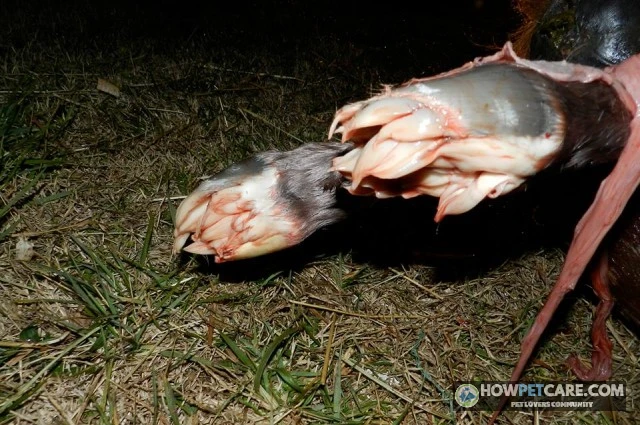
Foal slippers wear away within hours to days of birth. (Source: reddit/r/natureismetal) Your first‑month hoof care checklist
Week 1
- ☐ Buy a quality hoof pick and stiff brush.
- ☐ Learn to find the digital pulse on both front and hind fetlocks.
- ☐ Book a farrier visit (ask the 5 questions above).
Week 2 - ☐ Perform the 10‑step pick‑and‑inspect routine daily.
- ☐ Photograph each hoof (sole, side, heel) for baseline.
Week 3 - ☐ Compare hooves to the healthy‑hoof checklist; note any flags.
- ☐ Confirm farrier appointment; prepare clean, dry hooves and a level spot.
Week 4 - ☐ Farrier visit: discuss trim schedule, shoeing plan, and any concerns.
- ☐ Set calendar reminders for 6‑week intervals.
- ☐ Start a hoof‑care log (paper or app) recording date, observations, farrier notes, and any treatments.
Decision rules:
- Call vet now: non‑weight‑bearing lameness, heat + bounding pulse, puncture, laminitis stance.
- Tell farrier next visit: minor cracks, thrush you’re managing, white line separation, shoe wear.
- Keep watching: slight asymmetry, occasional stone bruise that resolves in 48 hrs.
For whole‑horse anatomy, see our pillar article Horse Anatomy and Terms.
Quick self-check1An owner observes that a horse has a flat sole that dents under thumb pressure and a shriveled frog. Which underlying structural and mechanical changes best explain these clinical signs?
A flat sole fails to maintain its natural concave protection over the coffin bone, signaling structural remodeling, while an compromised frog reduces digital cushion engagement and blood pumping action.
2Which of the following clinical scenarios warrant an IMMEDIATE (Vet NOW) emergency veterinary call?
This characteristic stance combined with bilateral bounding digital pulses points to acute laminitis, which is a life-threatening medical emergency.
3During daily picking, a horse owner discovers a nail deeply embedded into the ground surface of the sole. What is the correct immediate management step?
Leaving the embedded object in place allows the veterinarian to take targeted radiographs to assess depth and affected internal structures while preventing internal hemorrhage.
4A barn manager cares for both a Thoroughbred used for performance riding and a Draft horse turned out in a wet pasture. Based on their anatomical traits, which specific risks should be monitored for each horse?
Thoroughbred hooves naturally tend toward thin walls and flat soles vulnerable to cracks, whereas Draft horses have wider ground surfaces with deeper grooves that easily trap wet debris.
5Which of the following physical benchmarks indicate a healthy, balanced horse hoof capsule?
Parallel and evenly spaced growth rings signal uniform wall growth and a steady, uninterrupted diet and metabolic state.
6Why might a farrier recommend shortening a horse's routine trim cycle from 8 weeks down to 5 or 6 weeks during the summer months?
Hoof wall growth accelerates in warm weather and active seasons, requiring shorter intervals to maintain proper capsule balance before long toes exert damaging leverage.
7A horse presents with acute single-leg lameness, resting the toe of one front foot, while demonstrating localized heat and a strong bounding digital pulse. Which conditions are most plausible, and what is the appropriate course of action?
Sudden severe single-leg lameness with localized pulse and heat is classic for an abscess, which can closely mimic bone fractures.
FAQ
Is it spelled ‘hooves’ or ‘hoofs’?
Both are accepted plurals, but ‘hooves’ is the most common and standard in horse care writing. ‘Hoofs’ is a valid variant that you may still see in some dictionaries and older texts.
Do all horses need horseshoes?
No. Many horses stay sound barefoot when their hooves are healthy, their terrain is forgiving and their workload is moderate. Shoes help horses that need extra traction, protection or therapeutic support, and a farrier or vet can advise which suits yours.
Can I trim my horse’s hooves myself?
Trimming is a skilled job, and mistakes can cause lameness or long-term imbalance. Owners are usually best off picking and inspecting daily and leaving trimming to a trained farrier or qualified trimmer unless they have been formally taught.
Why do foals have soft rubbery pieces on their hooves at birth?
Those pieces are called the eponychium, or foal slippers. They cover the sharp hoof edges to protect the mare and the womb during birth, and they wear away within hours to days once the foal starts walking.
How can I tell if my horse’s hoof is too dry or too wet?
A hoof that is too dry may show brittle walls and small cracks, while a hoof that is too wet tends to be soft with a mushy frog and a higher thrush risk. Aim for stable, clean, dry-ish footing with some natural moisture, and ask your farrier before using any moisturizing or sealing product.
-
1. Approach and position