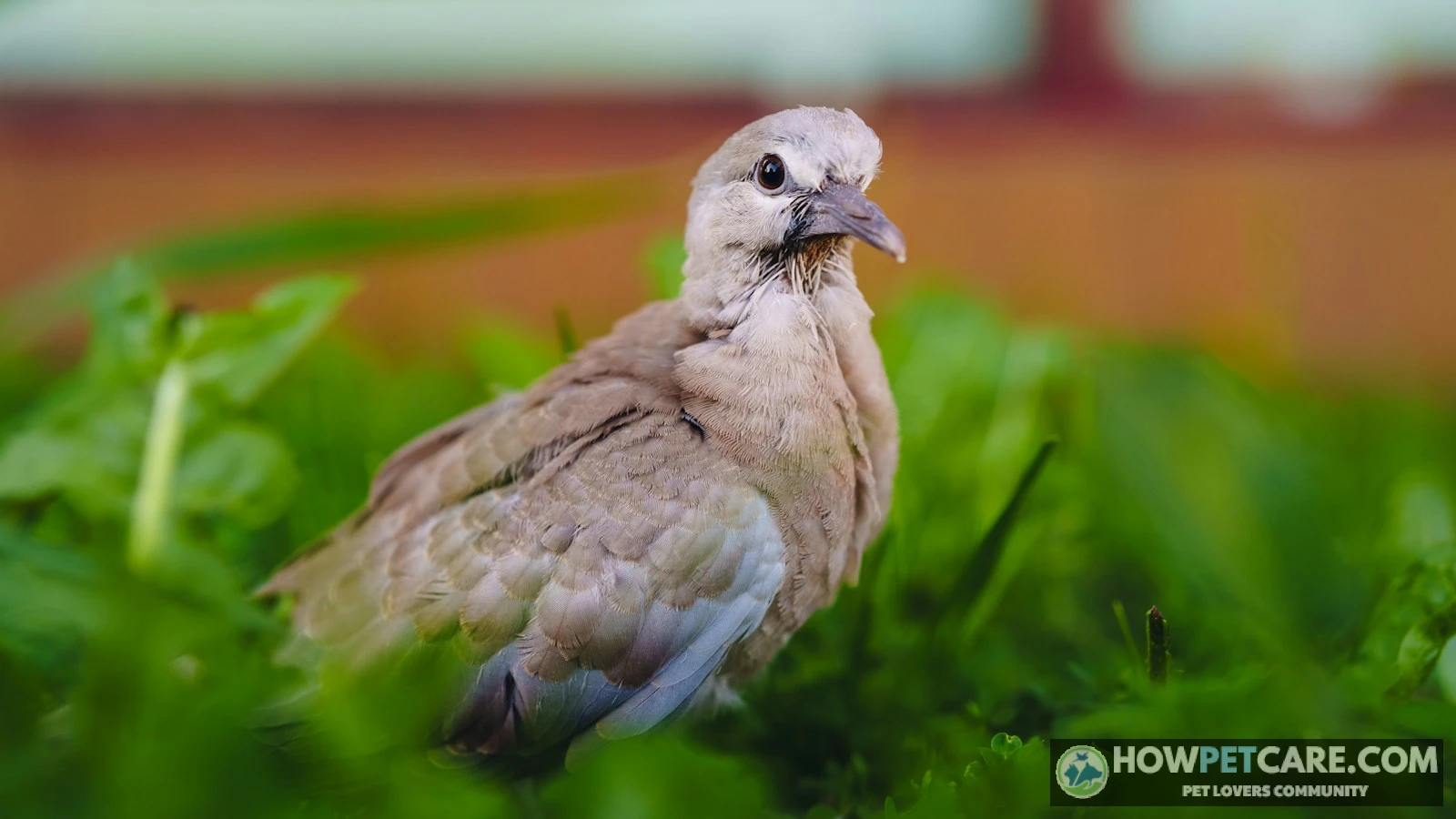

Common signs of dove health problems include:
- Fluffed feathers and lethargy during the day
- Not eating or drinking; sitting on the cage floor
- Watery, green, or foul-smelling droppings
- Sneezing, clicking breath, or eye/nasal discharge
- Yellow or cheesy lesions in the mouth or throat
- Drooping wing, limping, or inability to perch
Open-mouth breathing, inability to stand, bleeding, or a cat attack is an emergency — get an avian vet or wildlife rehabilitator now.
Doves and pigeons hide illness until they’re quite sick, so a fluffed, lethargic dove needs help today. This guide connects symptoms to likely conditions, ranks them by urgency, and explains the next step: a warm hospital box, an avian vet, or a licensed wildlife rehabilitator. It covers pet doves — ringneck, diamond, and other species — as well as sick wild mourning doves you may find in your yard.
If a dove is open-mouth breathing, unable to stand, bleeding, or caught by a cat, treat it as an emergency now.
Sick Dove Symptoms and What They Usually Mean
As prey animals, doves tend to hide weakness from predators. They may act normal until they’re quite sick. By the time a dove is visibly fluffed and lethargic, its illness is usually advanced. That’s why early changes in appetite or droppings matter.
Healthy dove vs sick dove: quick comparison
A healthy dove is sleek and alert, with tight feathers, bright open eyes, both feet gripping the perch, and a steady posture. It eats and drinks regularly. Its droppings are firm, dark or greenish-brown, with a white urate cap.
A sick dove is often fluffed up, still, and less responsive. It may sit on the cage floor, stop eating or drinking, hold its head in, or let you approach more closely than usual. Brief fluffing while resting or in a cool room is normal; constant daytime fluffing is not.

Symptom-to-condition map with urgency levels
Use this table to connect signs with likely problems and see what clues to check next. Only an avian vet can confirm a diagnosis.
| Observable sign | Most likely conditions | Confirming clues | Urgency | Next step |
|---|---|---|---|---|
| Fluffed, lethargic | Respiratory infection; canker; coccidiosis; salmonellosis; injury | Breathing effort, droppings, mouth lesions | Same day; emergency if open-mouth breathing | Warm box; call avian vet |
| Yellow/cheesy mouth or throat | Canker; wet avian pox | Drooling, neck-stretching, trouble swallowing | Emergency if swallowing/breathing affected | Vet swab; quarantine |
| Crusty, swollen, watery eyes | Respiratory infection; pox near eye | Nasal discharge, sneezing, clicking | Within 48 hours | Vet exam; quarantine |
| Wart-like skin growths | Avian pox (dry form) | Growths inside beak signal wet form | 48 hours; emergency if mouth lesions | Vet; mosquito control |
| Labored breathing, tail bobbing, clicking | Respiratory infection; canker/wet pox blocking airway | Open-mouth breathing, flared nostrils | Emergency | Vet now |
| Watery, green, or foul droppings | Salmonellosis; coccidiosis; diet change; stress | Lasts >1 day, weight loss, undigested seed | Same day if persistent | Fresh sample to vet |
| Swollen or sour crop | Crop stasis, sour crop, canker | Crop full hours after eating; regurgitation | Same day | Vet; no force-feeding |
| Drooping wing, limping, can’t perch | Fracture, sprain, trauma, cat attack | Visible wound, wing held lower | Emergency if cat-caught or bleeding | Box; vet/rehabilitator |
| Feather loss, scratching, restless at night | Mites/lice; molt | Broken shafts, skin specks | Monitor if molt; days if skin damage | Vet-recommended treatment |
Why your dove is fluffed up and lethargic
A fluffed, sleepy dove is spending its energy staying warm or fighting illness. Respiratory infection, canker, coccidiosis, salmonellosis, parasites, and trauma can all cause this posture. Check for a sour crop, yellow mouth patches, watery or green droppings, or clicking breath. If your dove is fluffed and not eating, call a vet today. Open-mouth breathing or an inability to perch makes it an emergency.

Emergency, Same-Day, or Monitor at Home: Triage for Dove Symptoms
Small birds can deteriorate quickly once they stop eating. A mildly fluffed dove can be weak by evening. Check the symptoms and act on the highest tier that applies to any single sign.
Emergency signs
Seek an avian vet or wildlife rehabilitator now for:
- Open-mouth breathing, tail bobbing, or clicking sounds.
- Inability to stand or perch; sitting flat on the floor.
- Active bleeding, broken wing/leg, or drooping wing.
- Cat, dog, car, or window strike — even without wounds, cat saliva causes fast infection.
- Seizures, head tilt, circling, or loss of balance.
- Mouth or throat lesions blocking swallowing or breathing.
- Unresponsiveness or eyes closed during the day.

Signs to act on within 48 hours
Call an avian vet today or within the next day or two for:
- Fluffing and not eating or drinking.
- New eye or nasal discharge, sneezing, wheezing, or clicking.
- Droppings abnormal for more than one day.
- Wart-like skin growths on the face, legs, or feet.
- A swollen, slow-emptying, or sour-smelling crop.
Signs that are safe to watch
Monitor at home, with a recheck in a few hours, if you see:
- One odd dropping after a diet change.
- Brief fluffing while resting or in a cool room, followed by perking up.
- Feather loss matching a normal molt with healthy skin.
- Mild scratching with no skin damage.
If the dove shows two or more signs together, or any single sign lasts beyond a day, move it up one tier. A fluffed bird that is also not eating is no longer a monitor-at-home case.
 You might be wonderingWhat do mice need to survive?What Do Mice Need to Survive? Food, Water, Shelter & WarmthRead the answer
What to Do Right Now Before You Can Reach a Vet
First aid can help stabilize a sick dove, but it doesn’t replace veterinary care. Focus on warmth, quiet, and isolation. Setup takes about ten minutes.
-
Isolate
Put the dove in a small box or carrier lined with a clean towel. Cover three sides for darkness and quiet, away from other birds, pets, and children. Handle it last and use separate dishes.
-
Warm it to 80–85°F (27–29°C)
Place a heating pad on LOW under half the enclosure, or a warm (not hot) water bottle wrapped in cloth on one side, so the bird can move away. Panting or wings held away from the body means overheating — remove the heat.
-
Offer water and its normal food
Provide shallow fresh water and usual seed. Never squirt water or food into the beak. A bird that will not drink needs a vet, not home syringe feeding.
-
Minimize handling
Check by looking, not lifting. No baths, no repeated picking up. Stress raises a sick bird’s energy needs beyond what it can meet.
-
Give nothing by mouth except water and seed
No leftover antibiotics, human medicine, or essential-oil products. Then prep for the vet: photograph symptoms, collect a fresh dropping, and note when signs began and what the bird last ate.
Warm, dark, quiet: setting up a hospital box
Choose a hospital box smaller than the bird’s usual cage, with low sides or a towel floor. Line it with paper towels or an easily changed cloth; avoid shredded bedding, which can trap feet or be eaten. Keep the box at 80–85°F, away from drafts and direct sun. Darkness helps lower stress.
Isolation steps for multi-bird homes
Many dove diseases, including trichomoniasis and salmonellosis, spread through shared water, food, and close contact. Keep the sick dove in a separate room and handle it last. Wash your hands, and consider changing your shirt before touching other birds. Don’t share dishes, perches, or food bowls until the vet clears the bird.

What to bring to the appointment
Bring the bird in its warmed carrier, along with photos or video of symptoms, a fresh dropping sample, and notes on its diet and when signs began. If the bird takes a supplement, bring the container so the vet can check the ingredients.
A fresh dropping sample lets the vet run a fecal test for parasites, bacteria, and yeast during the same visit.
Common Dove Diseases: Causes, Progression, and Treatment Reality
The entries below explain what causes common dove diseases, how they appear, and what treatment involves.
Canker (trichomoniasis) in doves
Canker, or trichomoniasis, is caused by the protozoan Trichomonas gallinae. It spreads through shared water and food, and adults can pass it to young through crop milk. Signs include yellow or cheesy mouth, throat, or crop lesions; drooling; neck-stretching; trouble swallowing; and weight loss. Advanced lesions can block the airway. Canker is a common reason sick mourning doves are found at feeders: they can’t swallow seed.
A vet must prescribe antiprotozoals to treat it. Early cases usually respond well, while advanced throat or crop involvement has a poorer outlook. Carrier birds can look healthy while shedding the parasite. Quarantine and cleaning protect other birds, including pigeons, finches, poultry, and raptors. Cats that catch an infected bird can also be exposed, but canker is not known to infect people.
Avian pox
Avian pox is a virus spread by mosquitoes and contact. The dry form causes wart-like growths on the unfeathered skin of the face, feet, and legs. The wet form causes growths inside the mouth and throat that interfere with eating and breathing. There’s no antiviral cure, so care is supportive. Many birds with the dry form recover over weeks; the wet form is more serious. Mosquito control helps reduce risk.

Dove respiratory infection symptoms
Respiratory infections can be bacterial, fungal, or tied to poor air quality. Signs include sneezing, wheezing, clicking, nasal or eye discharge, and tail bobbing. Open-mouth breathing is a late, serious sign. Causes include bacteria such as Mycoplasma and Chlamydia, and the fungus Aspergillus in damp or moldy settings. Aspergillosis in particular needs veterinary care and the right antifungal. A vet must test before prescribing; leftover antibiotics are dangerous.
Salmonellosis
Salmonella spreads through contaminated droppings, food, and water, especially at crowded feeders. Signs include watery or green droppings, lethargy, weight loss, joint swelling, and sometimes tremors or a twisted neck. A vet is needed for diagnosis and treatment. Because salmonellosis also affects human health, feeder hygiene and hand washing matter.
Coccidiosis and parasites
Coccidiosis is caused by protozoan parasites that damage the intestinal lining. Signs include loose droppings, weight loss, fluffed feathers, and poor appetite. A fecal test confirms it, and a vet prescribes treatment. Overcrowding and wet, dirty floors raise the risk. Mites and lice cause scratching, feather damage, and nighttime restlessness. Use only vet-recommended products; some over-the-counter sprays are unsafe for birds.
Crop problems and wing injuries
Crop stasis, sour crop, or impaction causes a swollen, slow-emptying, or squishy crop, sometimes with a sour smell or regurgitation. These need a same-day vet visit: the bird isn’t digesting and can dehydrate quickly.
Wing and leg injuries can follow window strikes, cat attacks, or falls. A bird with a drooping wing, a limp, or an inability to perch should be boxed and seen promptly. Cat-caught birds need antibiotics even if the skin looks intact.

No reliable disease-frequency statistics exist for pet doves. The earlier a sick dove is seen, the better the outlook; advanced respiratory, canker, or wet pox cases are much harder to treat.
Sick Pet Dove: Ringneck and Diamond Dove Health Problems and Vet Care
Pet dove health problems often trace to stresses associated with captivity: all-seed diets, poor cage hygiene, overcrowding, and disease introduced by new birds or wild contact.
Ringneck and diamond doves are common pets. Ringnecks are larger and often kept in groups, so one sick bird raises quarantine questions. Diamond doves are smaller and decline faster, making same-day care even more important. Female doves can also develop egg-laying problems, such as egg binding, especially on poor diets or under stress. Signs include straining, a swollen abdomen, and lethargy; this is an emergency. Both species need an avian vet when they show the signs above.

Finding a vet who treats doves
Not every “exotics” vet sees doves. Search the Association of Avian Veterinarians directory, then call to confirm the vet sees doves and pigeons. If none is nearby, ask a local vet for a referral. Some emergency clinics see birds overnight for severe trauma, but call first because not all do.
What an avian exam involves and what it costs
A typical exam includes a physical check, weight, fecal test, and possibly swabs, bloodwork, or radiographs. Costs vary by region and tests. Before you go, call the clinic for the exam fee and the price of a fecal test and basic swab.
Preventing illness in a pet dove
Feed a quality pellet base with vegetables and limited seed, clean the cage and dishes regularly, quarantine new birds for at least 30 days, and schedule routine check-ups.
Found a Sick or Injured Wild Mourning Dove: What to Do and Who to Call
If you’ve found a grounded mourning dove, first decide whether it needs rescue. Mourning doves are about 11 to 13 inches long, so a fully feathered young bird on the ground may simply be a fledgling learning to fly.
Does this bird actually need rescue?
Answer in order; stop at the first “yes.”
1. Is it an alert, feathered fledgling hopping on the ground?
If yes and it can flutter with no visible injury, it’s likely a normal fledgling. Move it to a nearby shrub or low branch, keep pets away, and leave. Parents usually continue feeding it.

2. Is it injured, weak, or caught by a cat?
Signs that mean yes: the bird is fluffed and motionless, can’t stand, is bleeding, has a drooping wing, hit a window, or was in a cat’s mouth. Cat saliva causes fast infection even if the bird looks fine.
3. Who do you call?
Call a licensed wildlife rehabilitator first. Search Animal Help Now or your state wildlife agency’s rehabilitator list. If you can’t reach one, call a local veterinarian or humane society; many accept wildlife for transfer.
4. Can you keep it?
Generally no. Mourning doves are protected under the Migratory Bird Treaty Act, and keeping or raising one generally requires a federal permit. Transport it to a rehabilitator promptly. Holding limits vary by state, so confirm with your state agency. Mourning doves are also a hunted game species in many states, adding another layer of local rules.
Safe transport to a rehabilitator
Place the bird in a ventilated cardboard box with a towel. Keep the lid on and the box warm and quiet. Don’t give food or water — wild doves can aspirate, and the wrong diet harms them. Wear gloves or use a towel, wash your hands, and disinfect the box. If the bird is drooling or has cheesy mouth lesions, tell the rehabilitator; it likely has canker and must be housed away from other birds. Don’t attempt to feed or water it during the drive. A quiet, dark ride reduces stress.

Why you generally cannot keep a wild mourning dove
Possession of a protected migratory bird without a permit is illegal for most people. Wild doves also have different dietary and housing needs from pet ringnecks or diamond doves. A rehabilitator has the training, permits, and facilities to treat injuries and release the bird.
Never try to tame, keep, or long-term treat a wild dove at home. Even short-term holding is regulated by state law, and improper diet can cause irreversible damage.
Dove Droppings and Human Health: Which Diseases Can Doves Transmit?
Dove droppings can contain bacteria and parasites that may pose health risks to humans, especially in large accumulations [#3, #6]. Casual contact with a single dove is low risk for a healthy person. Risk rises with old droppings, enclosed spaces, and weakened immunity. The table below names the diseases and explains how they spread.
Histoplasmosis, cryptococcosis, salmonella, and psittacosis explained
| Disease | Cause | How it spreads | Who is most at risk | Precaution |
|---|---|---|---|---|
| Histoplasmosis | Fungus Histoplasma capsulatum in droppings-enriched soil | Inhaled spores from disturbed, dried droppings | People cleaning large, old accumulations in attics or barns | N95 mask and gloves; dampen before sweeping |
| Cryptococcosis | Fungus Cryptococcus neoformans in dried droppings | Inhaled dust from dried droppings | Immunocompromised people | Avoid heavy cleaning; ventilate |
| Salmonellosis | Bacteria Salmonella in droppings | Fecal-oral: touch contaminated surfaces, then mouth | Children, older adults, pregnant people, immunocompromised | Wash hands; clean feeders and baths |
| Psittacosis | Bacterium Chlamydia psittaci in droppings and secretions | Inhaled dust from dried droppings or secretions | Bird keepers, rehabilitators, poultry workers | Mask when cleaning; good ventilation |
Canker (trichomoniasis) is a bird disease and isn’t known as a significant human infection. It matters for other birds, not for people.
Healthy vs sick dove droppings
| Dropping appearance | What it indicates | Possible conditions | Action |
|---|---|---|---|
| Firm dark or greenish-brown with a white urate cap | Normal | Healthy bird | No action |
| Watery, no solid portion | Digestive upset, stress, or infection | Salmonellosis, coccidiosis, diet change | Same-day vet if persistent |
| Bright green and watery | Bacterial or systemic infection | Salmonellosis, severe stress | Vet within 24 hours |
| Yellow or blood-streaked | Parasites, bleeding, or severe infection | Coccidiosis, trauma | Vet today |
| Undigested seed | Crop stasis or malabsorption | Sour crop, canker, intestinal issue | Vet within 24–48 hours |
| Foul, sour smell | Sour crop or bacterial overgrowth | Crop stasis, infection | Vet today |
A fresh dropping on a patio or lawn is not the same as years of dried buildup in an attic. Fungal diseases grow where droppings accumulate, not from a single recent dropping.
How to clean droppings safely
Wear disposable gloves and, for large or dried areas, an N95 mask. Dampen droppings with water or mild detergent before wiping to keep dust down. Use a surface-safe disinfectant, bag the waste, and wash your hands. For routine small messes, soap and water is enough; reserve bleach for known illness or heavy buildup. People with weakened immunity, young children, pregnant people, and older adults should avoid cleaning large accumulations and talk to a doctor if they develop respiratory symptoms after exposure.

Backyard Feeders and Mourning Doves: How to Stop Disease From Spreading
Mourning doves feed on the ground and on platform feeders, sharing seed and water with many birds. That makes it easy for trichomoniasis and salmonella to spread at backyard stations. Good feeder hygiene protects doves, songbirds, and people.
Cleaning feeders and baths step by step
Use a bleach solution of one part household bleach to nine parts water, roughly 1.5 cups of bleach per gallon.
-
Empty
Dump old seed in the trash, not on the ground.
-
Scrub
Wash the feeder or bath with dish soap and hot water.
-
Soak
Wipe or soak all surfaces with the bleach solution and let it sit about 10 minutes.
-
Rinse
Rinse thoroughly until no bleach smell remains.
-
Dry
Dry completely in the sun before refilling.
Clean feeders every two weeks, or weekly in wet weather or heavy traffic. Dump and refill bird baths daily, and scrub them weekly. Rake up spilled seed and droppings underneath each week.
Feeder setups that lower the risk
Tube feeders with small ports or trays with drainage reduce the contact and pooling that happen on flat platforms. Space feeders apart and avoid scattering loose seed on the ground. Ground-feeding doves will still visit, but less shared surface means less disease spread.
When to pause feeding
If you see a sick or dead dove — fluffed, drooling, crusty eyes, or unable to fly — take feeders and baths down for at least two weeks so birds disperse. A dove at a feeder that can’t close its beak or is drooling likely has canker, and other birds are at risk. Clean everything with the bleach solution before rehanging. Wear gloves to remove dead birds, bag them, and follow local disposal guidance. If several sick or dead birds appear, report the cluster to your state wildlife agency. Keep cats away from feeding areas; they are a major source of injury to ground-feeding doves.

Your Next Step: A Decision Guide for Pet and Wild Doves
Use this guide to choose your immediate action.
Pet dove
- Any Tier 1 emergency sign → go to an avian vet now.
- Fluffed, not eating, or abnormal droppings >1 day → call an avian vet today.
- One mild, isolated change → set up a hospital box, monitor, and call if it doesn’t improve within a few hours.
Found wild mourning dove
- Injured, weak, bleeding, cat-caught, or grounded adult → box it warm and quiet, and call a licensed wildlife rehabilitator.
- Alert, feathered fledgling hopping on the ground → return it to a safe nearby spot and leave.
- Dead bird at a feeder → bag with gloves, follow local disposal guidance, and pause feeding for two weeks.
Feeder owner
- Clean feeders and baths now if it has been more than two weeks.
- Pause feeding and clean thoroughly if you see a sick or dead bird.
- Report clusters of sick or dead birds to your state wildlife agency.
Before you leave for the vet or rehabilitator, gather a photo or video of symptoms, a fresh dropping sample, room temperature, the last time the bird ate or drank, and phone numbers for your avian vet, wildlife rehabilitator, and animal poison control if relevant. This article helps with triage, not diagnosis. Any dove that stays fluffed and lethargic needs a professional.
 You might be wonderingWhat do goats eat?What Do Goats Eat? A Daily Feeding GuideRead the answer
FAQ
Why do doves hide signs of illness?
Birds are prey animals, and showing weakness attracts predators, so they often act normal until they are quite sick. By the time a dove is visibly fluffed and lethargic, the illness is usually advanced, which is why early changes in appetite or droppings matter.
Can a dove recover from avian pox?
Many doves with the dry, skin-lesion form recover over several weeks with supportive care, since there is no antiviral cure. The wet form, which affects the mouth and throat, is more serious and needs veterinary attention.
Can I give my sick dove leftover antibiotics or human medicine?
No. The wrong drug or dose can harm a small bird and may mask symptoms, and the right antibiotic depends on the cause, which a vet determines through testing.
Can mourning doves spread canker to other pets or poultry?
Trichomonas gallinae can infect other birds, including pigeons, finches, raptors, and poultry, and cats can catch infected birds. It is not known to infect people.
Is it normal for a dove to puff up its feathers?
Brief fluffing while resting, preening, or when cool is normal. Persistent fluffing during the day, especially with closed eyes, reduced appetite, or sitting on the cage floor, is a sign of illness.
Should I wash my hands after touching a dove?
Yes. Washing with soap and water after handling any bird, its cage, or its droppings reduces the risk of salmonella and other bacteria.