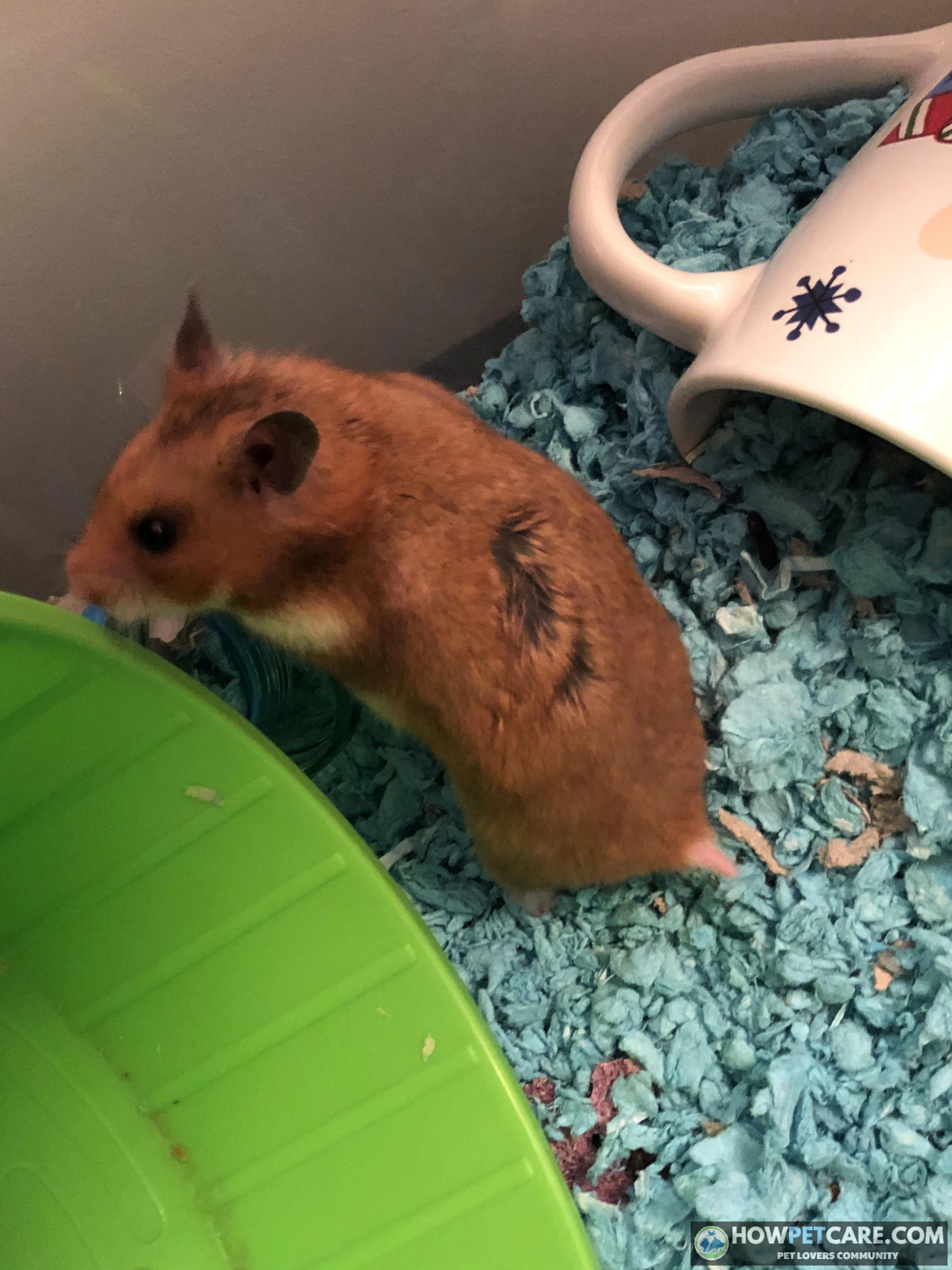

Hamster fur loss is a symptom, not a diagnosis — match the pattern to the likely cause first, then act on the right tier:
| Where the fur is missing | Most likely causes | Suggested next step |
|---|---|---|
| Back, rump, face — patchy, flaky or scabby | Mites / mange | Exotic vet within days |
| Circular scaly patches, often face or ears | Ringworm (contagious to people and pets) | Vet within days; isolate and wash hands |
| Belly, feet, face after a bedding change | Bedding irritation or cage friction | Swap to dust-free paper bedding; remove rub points; monitor 2 weeks |
| Trimmed-looking patches on normal skin | Barbering or over-grooming | Separate cage-mates, enrich, monitor |
| Symmetrical flank thinning in an older hamster | Hormonal / adrenal disease or normal aging | Vet check; monitor only if skin is healthy and weight holds |
| Loss over a lump, or with weight loss and lethargy | Tumor or serious illness | Same-day vet |
A bald patch on your hamster is a clue, not a diagnosis. Where the fur is missing, how much your hamster scratches, and what the skin underneath looks like can narrow the possibilities faster than a list of diseases. This guide starts with those observations.
Most hamster fur loss leads to one of three paths. Some changes are harmless and can be watched at home. Others are caused by something in the cage, such as bedding, a tight tunnel, a cage-mate, or a diet short on protein, and resolve when the setup changes. Some need an exotic veterinarian: mites, ringworm, and hormonal disease in an older hamster don’t clear up on their own and can spread or worsen while you wait.
Hamster Fur Loss at a Glance: Normal Shedding, a Fixable Problem, or a Vet Visit?
Start with three questions: where is the fur gone, is your hamster itchy, and does the skin look healthy? Location points to the likely group of causes. Itch helps distinguish parasites and skin infection from friction and grooming. The skin’s appearance—smooth and pale versus red, scabby, crusted, or greasy—helps show whether the skin itself is involved.
The main possibilities include parasites such as mites and mange; fungal infection, mainly ringworm; and irritation from bedding, damp litter, or contact with soiled areas. Fur can also be lost through barbering or over-grooming, friction against bars, tunnel mouths, or wheel edges, and nutritional deficiency, usually protein. Other possibilities are hormonal disease of the adrenal glands in middle-aged and older hamsters, normal aging, and, less often, tumors including lymphoma.
Hamster alopecia simply means hair loss. It’s a symptom, not a diagnosis. Several causes look nearly identical to the eye, and two of them—mites and ringworm—can only be confirmed with a skin scraping or a fungal test. This article helps you rank the likely causes and decide how urgently to act. It can’t tell you what’s wrong with your individual animal or replace a veterinarian’s examination.

To use the guide, start with the pattern map in the next section and note your top two suspects. Run the three-tier urgency check to decide whether to monitor, adjust the cage, or book a visit. Then read the section on your leading suspect for details, including recovery timelines, cost expectations, and safety rules.
Two causes warrant a household warning. Ringworm can pass to people and other pets, and hamster mites can cause temporary itchy skin in humans, even though they don’t usually settle in. If either is on your shortlist, see the sections on parasites and recovery for isolation, handwashing, and cage disinfection.
This is a sorting tool, not a diagnosis. The pattern map ranks suspicion; it doesn’t confirm a cause. Mites, ringworm, and hormonal disease all require a vet to identify, and treatments given by guesswork can harm a very small animal.
Where the Fur Is Missing: A Cause-by-Pattern Map (Back, Rump, Belly, Flanks, Face, Black Spots)
Start with the row that matches the location of the missing fur, then use itch level and skin appearance to narrow it down. Patterns overlap, so treat the table as a guide to suspicion, not a verdict.
| Likely cause | Typical loss pattern | Itch level | Skin appearance | Other clues | Suggested path |
|---|---|---|---|---|---|
| Mites / mange (Demodex and others) | Back, rump, face; often patchy and uneven | Moderate to intense scratching | Dry, flaky, scabby or crusted | Often flares after stress, illness, or a new home; more common in older or run-down animals | Vet within days |
| Ringworm (fungal) | Circular or irregular scaly patches, often face, ears, or body | Little to none in many cases | Scaly, greyish, broken hairs at the edges | Can spread to people and other pets; can look surprisingly mild | Vet within days; isolate and wash hands |
| Barbering (self or cage-mate) | Patchy, chewed-looking areas on belly, flanks, face | No skin-driven itch; the grooming behavior itself is the clue | Skin underneath looks normal | A dominant cage-mate, a mother with pups, or boredom; coat looks trimmed rather than fallen out | Fix the cage (separate, enrich), then monitor |
| Cage friction (tight tunnels, hide entrances, wheel edges, bar-rubbing) | Fur rubbed off face, shoulders, hips, or back | None | Normal skin, sometimes slightly thickened | The bald area lines up with a tunnel mouth, wheel edge, or bars the hamster squeezes through | Fix the cage, then monitor |
| Bedding irritation or allergy | Belly, feet, face — wherever bedding contacts the body | Mild to moderate | Mild redness possible, usually no scabs | Started after a bedding change; scented or dusty bedding in use | Fix the cage (two-week bedding swap), then monitor |
| Nutritional deficiency | General thinning or a dull coat rather than clean patches | Usually none | Normal to dry | Low-protein or seed-only diet; recent diet change or picky eating | Fix the diet, then monitor; vet if no improvement |
| Hormonal / adrenal disease | Symmetrical thinning on both flanks or the back, mostly middle-aged and older hamsters | Usually none | Skin may darken, thin, or look greasy | Gradual onset; may come with increased thirst or weight change | Vet within days to weeks |
| Age-related thinning | Gradual, even thinning starting over rump and flanks in seniors | None | Healthy-looking skin; coat may be rougher or greasier | Slow progression alongside normal signs of aging | Monitor; vet if skin changes or weight drops |
| Skin tumor or lymphoma | Localized loss over a lump, or general decline | Variable | A growing mass, thickened or ulcerated skin | Lumps, weight loss, lethargy, enlarged belly | Vet promptly — sooner if the lump grows fast |
| Normal scent glands (not a disease) | Dark, greasy, sometimes hairless patch — flanks in Syrians, belly-center in dwarfs | None | Darker, sometimes waxy | Usually symmetrical; more obvious in males | No action; vet only if crusted, bleeding, or growing |

Back, rump and flanks
Several different causes can affect the back and rump. Continuous rubbing against cage bars, sharp-edged toys, or hide openings that are too small frequently causes localized patches. Mites gather here too, especially in hamsters that are older or have been stressed; the skin usually looks flaky or scabby rather than smooth. In older Syrians, even thinning that starts over the rump and flanks and creeps forward is often simply age. Symmetrical loss on both flanks, on the other hand, can follow a hormonal pattern and warrants a vet visit.
Belly, chest and underside
Contact problems often show on the underside. Bedding irritation, damp litter, and urine-soaked sleeping corners can affect the belly, leaving it pink and thin. Barbering also targets the belly and flanks. A clue is healthy-looking skin beneath a coat that looks clipped. Dwarf hamsters have a scent gland in the center of the belly that can look like a small bald, waxy patch. It’s normal unless it’s crusted, bleeding, or growing.
Around the eyes, ears and face
Fur loss around the eyes and ears can be hard to see, so it’s worth photographing. Mites and ringworm both favor the face and ear edges, and ringworm’s circular, scaly patches are easy to mistake for a scrape. A hamster may also lose fur where it paws at its face because of an irritated eye or a painful tooth. Check the eyes and mouth as well. If the eye looks wet, cloudy, or half-closed, treat that as the primary problem.

Black spots with hair loss: scent gland or skin problem?
Dark patches can look alarming but are often normal. In Syrian hamsters, the flank glands on the sides of the body can be dark, greasy, and nearly bald; they’re more prominent in males. In dwarfs, the equivalent is the ventral gland on the belly. A normal pattern is symmetrical, waxy, and unchanged over weeks. Crusting, scabs, bleeding, a raised lump, or a growing patch aren’t normal. Book a vet visit rather than waiting to see what happens.
To sort through the overlap, look at itch, skin condition, and symmetry: itch plus scabs points toward parasites or infection, symmetry points toward hormones or age, and a smooth bare patch on healthy skin points toward friction or grooming.
 You might be wonderingHamster dietHamster Diet: Complete Feeding Guide With Safe PortionsRead the answer
When to Monitor, When to Fix the Cage, and When to Book an Exotic Vet
Choose the highest of the three tiers that applies. Hamsters are small animals that hide illness well, so if your hamster falls between two tiers, move up rather than down.
Tier 1 — Call for a same-day appointment if ANY of these apply:
- ☐ Open, weeping, or bleeding sores
- ☐ Hair loss plus lethargy, a hunched posture, or hiding constantly
- ☐ Not eating, not drinking, or visibly reduced food intake
- ☐ Weight loss confirmed on a kitchen scale
- ☐ Labored, clicking, or rapid breathing
- ☐ A lump that is growing fast, swelling, or discharge from skin or eyes
Tier 2 — Book an exotic vet within the next few days if ANY of these apply:
- ☐ The bald area keeps spreading over one to two weeks
- ☐ Intense or near-constant scratching
- ☐ Skin that is red, scabbed, crusty, or greasy rather than smooth
- ☐ Circular scaly patches that suggest ringworm — isolate from other pets meanwhile
- ☐ A cage-mate showing the same signs
- ☐ A senior hamster with symmetrical flank loss plus increased drinking or urination
Tier 3 — Reasonable to monitor for up to about two weeks while adjusting the cage, only if ALL of these apply:
- ☐ Patches are small and the skin underneath looks normal
- ☐ Appetite, activity, and weight are unchanged
- ☐ A plausible trigger exists: new bedding, a new tight tunnel or hide, a recent cage move, or age-consistent gradual thinning
- ☐ No scratching beyond normal grooming
A simple home log helps you spot changes instead of guessing. Photograph the patch on the same day each week in the same light, weigh your hamster weekly on a gram scale, and write one line about appetite and scratching. If the patch grows, the skin changes, or behavior shifts, move up a tier.
In short: open sores or a sick hamster → same-day vet. Spreading, itching, scabbing, or circular patches → vet within days. Small patch, healthy skin, normal behavior, known trigger → adjust husbandry and log for two weeks, then reassess. Nothing improves in two weeks → vet within days.
Fur loss that spreads, itches, or comes with any change in eating, drinking, breathing, or activity isn’t a watch-and-see case. Small patients deteriorate faster than large ones, and a few days matter.
Is It Normal? Seasonal Shedding, Scent Glands, and an Old Hamster Losing Fur
Normal thinning versus a problem
Normal coat change looks even: the coat is slightly thinner, with no bare skin, healthy pinkish skin underneath, no scratching, and no change in appetite or activity. Young hamsters go through a coat change as they mature, and it can briefly look patchy. Many hamsters also shift coat density as the light changes through the year. There’s no reliable fixed shedding calendar, though, so don’t assume a schedule explains a bald patch.
Senior hamsters: age, adrenal disease, tumors, or lymphoma
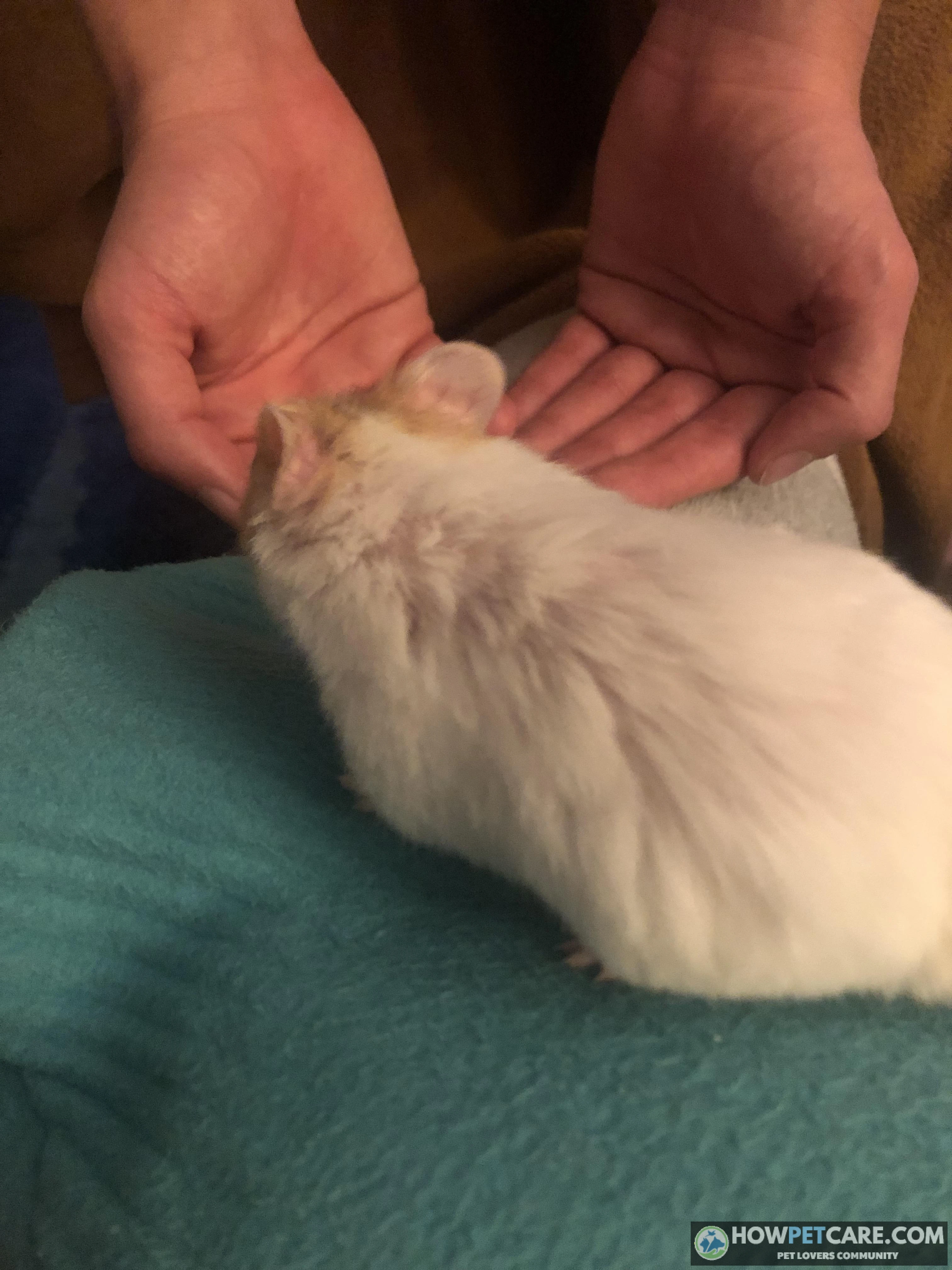
Hamsters live up to about three years, so a hamster is genuinely senior at two. Natural age-related thinning typically starts around two to two and a half years of age. The coat gradually becomes rougher, thinner, or greasier, often beginning over the rump and flanks. You can monitor that kind of change as long as the skin looks healthy and body weight holds.
Symmetrical baldness along both flanks and the back doesn’t fit normal aging, especially when accompanied by darkened skin and a rounded, distended belly. That combination points toward an adrenal gland tumor—sometimes described as hamster Cushing’s—and carries a higher risk in Syrians over 18 months old. Lumps, rapid weight change, lethargy, or increased drinking and urination in an older hamster should prompt a vet check for adrenal disease, other tumors, or lymphoma, rather than an assumption that age explains it.
Syrian, dwarf, and Roborovski differences
Species and size affect both the risk profile and the margin for error. Syrians are the largest common pet hamster and the species most associated with flank scent glands and adrenal disease in later life. Campbell’s and Winter White dwarfs are far smaller, and Roborovskis smaller still. That matters less for diagnosis than for treatment: medication is calculated per gram of body weight, and the safe window narrows as the patient shrinks. Dwarf and Roborovski hamsters also tend to be faster and harder to examine at home, so a photograph of the patch is often useful before a visit.
For a quick normal-or-not check, consider the skin’s health, symmetry, speed of change, and behavior. Healthy skin, no itch, slow change, normal behavior—monitor. Anything else—book.
Mites, Mange and Ringworm: Symptoms, Whether You Can Catch Them, and Which Treatments Are Unsafe
Mites and mange: what the skin and itch look like
Mites are among the most common parasitic causes of hamster hair loss. The two usually named are Demodex aurati and Demodex criceti. They often sit quietly on a hamster and flare when the immune system is worn down by stress, illness, or a move to a new home. The result is scratching, dry or scabby skin, and patchy loss concentrated on the back, rump, and face. Mange describes the more severe, crusted version of the same picture. Mites aren’t visible to the naked eye. A skin scraping, rather than a close look with a flashlight, confirms them.
Ringworm: signs and the human health angle
Ringworm is a fungal infection, not a worm. In hamsters it’s most often caused by Trichophyton mentagrophytes, and it typically produces circular, scaly patches with broken hairs. It’s a zoonosis, meaning it can pass from the hamster to people and other pets. Take extra care around the household while it’s suspected.
While a diagnosis is pending, wash your hands after every handling, consider disposable gloves for a suspected case, keep your hamster away from other animals, and don’t move cage items between hamsters. People with a weakened immune system, young children, and older adults should limit direct contact until the vet has confirmed what’s going on. If a ring-shaped, scaly rash appears on your own skin, see your doctor and mention that a pet is being investigated for ringworm.

Hamster mites rarely take up residence on humans, but they can leave brief itchy bumps on the arms or hands after handling. That’s a nuisance rather than a household outbreak, and it settles once the hamster is treated.
Over-the-counter products to avoid and why weight-based ivermectin dosing matters
Don’t use a pet-shop mite spray on a hamster. Products sold for dogs, cats, birds, or reptiles are formulated for body weights hundreds of times larger, and several common ingredients are toxic at hamster scale. Avoid permethrin-type sprays and spot-ons, any flea product designed for cats or dogs, and essential-oil or tea-tree-based remedies. Hamsters groom constantly and ingest whatever lands on their fur, so an overdose is a real risk.
Prescription treatment usually means ivermectin or a similar antiparasitic, dosed per gram of body weight. A hamster may weigh anywhere from roughly 30 grams to 150 grams depending on species, and a few grams of error changes the dose meaningfully. The product, amount, route, and repeat interval are all a vet’s call, not an owner’s. Any dose belongs to the vet’s calculation for your specific animal, not a figure copied from a chart.
Before the appointment, weigh your hamster on a kitchen gram scale and write the number down. Vets work from that figure, and an accurate weight shortens the visit.

Don’t apply an over-the-counter spray, dip, cream, or oil to a hamster. Weight-calculated dosing by a vet is the only safe route, and the wrong product can kill a small hamster far faster than the mites would.
Bedding, Cage Layout, Diet and Cage-Mates: Causes You Can Test at Home
A simple two-week bedding and cage-layout test
Bedding irritation is frequently missed. It usually shows on parts of the body that touch the litter: the belly, feet, and face, sometimes with mild redness and a little scratching. Try a controlled swap. Change one thing—for example, move to a plain, dust-free paper-based bedding and remove scented products—then hold that change for about two weeks and keep your photo and weight log running. Cedar and heavily scented beddings are common culprits and should be removed regardless.
Cage friction can be easier to spot than you might expect. Compare the bald patch with the places where your hamster squeezes through a tunnel mouth, brushes a wheel edge, or rubs a bar or sharp-cornered toy. Continuous rubbing against wire, sharp toys, or entrances the animal barely fits through produces localized loss. Reshape or replace the item and give the skin a couple of weeks.
While you’re checking the cage, look at the housing numbers: floor area of roughly 100 cm by 50 cm and litter deep enough to burrow, in the region of 6 to 10 inches. Undersized, shallow cages drive stress behaviors that show up as coat damage. Damp or soiled bedding in the sleeping corner can itself cause belly and rump skin trouble, so clean that spot more frequently.

Barbering and cage-mates
Barbering is fur-chewing. It leaves patches that look trimmed rather than fallen out, with intact skin underneath. It happens when hamsters are housed together and one grooms the other’s coat away. A hamster living alone may also over-groom because of boredom or stress. Syrian hamsters in particular need to be separated young, from roughly four to six weeks of age, to avoid this. Most adult Syrians and most dwarfs do best alone. Separating the pair is both the treatment and the test: a lone hamster that stops losing fur confirms the diagnosis.

Protein, fats and safe supplements
Diet is a slower, subtler cause. It usually produces diffuse thinning and a dull coat rather than a neat bald patch. For protein, 16 percent is the minimum generally cited for hamster food to prevent deficiency-related coat loss. Diets short on protein, B vitamins, or iron are associated with generalized thinning rather than clean patches. Growing, pregnant, nursing, or recovering hamsters need more than the maintenance figure, so ask your vet what target fits your animal rather than assuming the bag is right.
Occasional extras are fine in small amounts, but they’re keeper convention, not validated medicine. Confirm quantities with your vet or a reputable exotic-nutrition source, because treats displace balanced food. Common suggestions include a small pinch of linseed or hemp seed, no more than about a quarter teaspoon, once or twice a week, and a pea-sized piece of plain cooked egg white once or twice a week. Neither should replace the base diet, and neither will fix a protein deficiency on its own.

Don’t apply creams, oils, or human skin products to a bald patch. Your hamster will groom them off and swallow them, and some make the skin worse. Stress and boredom matter too. Check enrichment, noise, and cage size before concluding the cause is medical.
If you swap bedding, add a new hide, and change the food in the same week, you won’t know what worked. Change one thing, hold it about two weeks, and log the result.
Pre-vet husbandry self-audit — run this before the appointment:
- ☐ Bedding type: scented, dusty, cedar, or pine? Swap to plain dust-free paper.
- ☐ Bedding freshness: is there damp or soiled litter where the hamster sleeps?
- ☐ Friction points: does the bald patch line up with a tunnel mouth, hide doorway, wheel edge, or bar?
- ☐ Wheel: big enough that the back stays flat while running, with smooth edges?
- ☐ Cage-mates: is anyone housed together, and is one grooming the other?
- ☐ Food protein: what percentage is on the label, and is the diet seed-only?
- ☐ Recent changes: new bedding, treats, hide, cage move, or new pet in the last month?
- ☐ Space and enrichment: adequate floor area, deep litter, things to chew and dig?
- ☐ Your log: photos, weekly weight in grams, notes on scratching.
- ☐ Labels: photograph the food bag and bedding packaging to bring along.

What the Vet Will Actually Do: Skin Scraping, Fungal Tests and Typical Costs
What to bring and how to prepare your hamster
Find a veterinarian who sees exotics. A general practice may decline a hamster or refer you on, and a wasted trip is worse than a longer drive. Bring your photo timeline, weight log, food and bedding labels, and a note on cage-mates and any new products. Carry your hamster in a secure carrier with some of its own bedding, not a cardboard box.

A skin scraping, step by step
A typical visit starts with a history and then a hands-on exam. The vet weighs the hamster, checks the coat and skin, looks at the teeth and eyes, and palpates the body for lumps. From there, the vet chooses targeted tests rather than running everything.
A skin scraping or tape prep is the usual first step for suspected mites. The vet gently scrapes a small area of affected skin or presses it with adhesive tape, then puts the sample under a microscope. This often happens while you wait, sometimes providing an answer at the same visit. Most hamsters tolerate it with firm, gentle handling; it’s uncomfortable rather than painful.
Fungal testing is slower. A culture takes weeks to declare itself, so the vet may start treatment or isolation measures while you wait. Light-based screening is only a limited tool because not every ringworm strain fluoresces. A negative light check doesn’t rule ringworm out.
For an older hamster with symmetrical flank loss, the discussion shifts toward bloodwork or imaging. Imaging in a hamster generally means sedation or anesthesia, which calls for a real discussion of the risks at this size.
Typical cost ranges and how to ask for an estimate
The figures below are broad ballpark ranges. They vary widely by region and clinic, so ask for an itemized estimate before testing begins.
| Service or test | What it involves for a hamster | What it can rule in or out | Approximate cost range (varies by region and clinic) |
|---|---|---|---|
| Exotic exam | History, weight on a gram scale, skin, teeth, lumps, body condition | Overall health, tumors, dental or eye causes of face-rubbing | Roughly $70 to $150 or more |
| Skin scraping or tape prep | Gentle scrape or tape sample viewed under a microscope, often while you wait | Mites including Demodex | Roughly $50 to $100 |
| Fungal culture | Hair or skin sample on growth medium; results take one to three weeks | Ringworm — the reliable confirmation | Roughly $50 to $150 |
| Light-based screening | UV light over the coat in a dark room | A limited screen only; a negative does not rule ringworm out | Often included in the exam or a small add-on |
| Bloodwork | Small blood sample; sedation may need discussing | Organ function, some systemic disease | Roughly $80 to $200 |
| Imaging | Usually needs sedation or anesthesia | Internal masses, organ enlargement, adrenal disease | Roughly $150 to $400 |
| Medication | Weight-calculated prescription such as vet-dosed ivermectin or an antifungal | Treatment of the confirmed cause | Roughly $15 to $60 |
Ask which test will change the treatment. Sometimes the vet will phase tests across two visits to spread the cost; sometimes the exam alone narrows the possibilities enough to start.
Recovery at Home: How Long Fur Takes to Grow Back and How to Disinfect After Ringworm
Owners often want to know whether the coat will come back. Usually it does, but the timeline depends on the cause, and some loss never fully reverses.
| Cause | What treatment or fix is involved | First signs of regrowth | Typical timeframe (approximate) | When regrowth may be incomplete or slow |
|---|---|---|---|---|
| Bedding or friction | Removing the irritant or the rubbing point | Skin calms within a week; fuzz follows | Roughly 3 to 6 weeks | If the item stays in the cage, or the bald patch is over a thickened callus |
| Dietary deficiency | Correcting protein, vitamins, and overall diet | Coat looks less dull first, then thins less | Roughly 4 to 8 weeks | If underlying disease is also present, or the diet change is partial |
| Mites | Vet-prescribed antiparasitic at the correct interval | Scratching drops before fur returns | Roughly 4 to 8 weeks after the course | If the course is cut short, or the environment is not cleaned |
| Ringworm | Vet-prescribed antifungal plus cage disinfection | Scaly edges fade, then short hairs appear | Roughly 6 to 12 weeks; slower cases longer | If wooden items were kept, or treatment stopped early |
| Barbering | Separating or enriching, not medication | Stops within a couple of weeks of the change | Roughly 3 to 8 weeks | If the hamster remains bored or housed with the barber |
| Age-related thinning | Nothing to treat; supportive care | Little to none | Weeks to months, if at all | Often does not fully reverse — this is normal |
| Adrenal disease or tumor | Vet-directed management or surgery | Variable; depends on the treatment plan | Months, or not at all | Frequently incomplete; the focus is comfort and disease control |
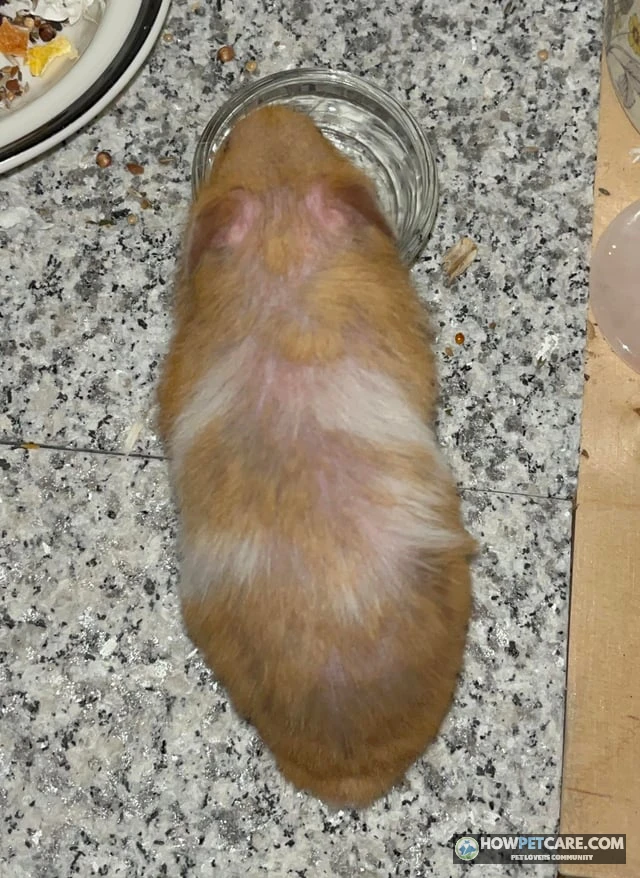
Early regrowth is easy to miss. You’ll likely see calmer, less red skin before any hair appears, followed by fine stubble or soft fuzz spreading in from the edges of the patch. It may look pale on pale hamsters and darker on dark ones. Take weekly photos to spot progress that’s hard to see day to day.
Recheck with the vet if there’s no improvement in the timeframe they gave, if a new patch appears, or if the skin worsens. Finish the full prescribed course even after the fur starts returning, and follow any retest advice for ringworm.
Ringworm cage disinfection, including wooden hides and toys
Ringworm spores persist in the environment, so treatment fails if the cage stays contaminated. Clean it once a diagnosis is confirmed, or while awaiting a culture if your vet advises it.

-
Set up a temporary holding space
Move the hamster to a clean, escape-proof container with fresh paper bedding, water, and a simple plastic hide, away from other pets.
-
Bag and discard everything porous
Discard used bedding, cardboard tubes and houses, paper stashes, and unfinished wooden hides, platforms, and chews. Wood can’t be reliably disinfected, so replace it rather than saving it.
-
Wash the hard items first
Scrub plastic, glass, and metal items—the wheel, bottles, bowls, and sand bath—in hot soapy water. Organic debris blocks disinfectants.
-
Disinfect, then rinse thoroughly
Use a disinfectant your vet considers appropriate for ringworm, follow the label contact time, then rinse well enough that no residue remains. Hamsters groom whatever is on their surfaces.
-
Dry and ventilate fully
Let everything air out until completely dry and odor-free before reassembling. A damp cage can lead to further problems.
-
Rebuild sparse and fresh
Use new bedding and disinfected plastic and glass only. Fewer items means fewer things to clean again.
-
Clean the surrounding area
Vacuum under and around the cage, empty the vacuum afterward, and hot-wash any handling cloths, towels, or playpen fabric.
-
Protect the household
Wash hands or wear disposable gloves after every handling, keep the hamster’s play area separate from other pets, and see your own doctor about any ring-shaped rash, mentioning the pet’s treatment.
Mite cleanup is simpler but follows the same logic. Replace bedding and clean the cage and accessories on the schedule your vet sets, so newly hatched mites don’t reinfect a treated hamster.
After ringworm, unfinished wooden hides, ledges, and chews are the items most likely to reinfect your hamster. Replacing them is cheaper than a second round of treatment.
Your Next-Step Plan: A Checklist to Match Symptoms, Triage and Act Today
-
Record what you see
Photograph the patch in good light, note exactly where it is, check whether the hamster scratches, and weigh it on a gram scale.
-
Rank your suspects
Use the pattern map to write down your top two likely causes and what made you pick them.
-
Run the triage
Apply the three tiers and stop at the first one that applies. Same-day, within days, or watchful—that’s today’s decision.
-
Act on the right path
If watching, change one husbandry variable, keep the log, and set a recheck date about two weeks out. If booking, assemble the photos, weight, and labels, and ask for an itemized estimate.
-
Reassess on the date you set
Improved skin and no new patches mean you can continue. Spreading loss, new patches, or any behavior change means moving up a tier.
Whatever path you take, don’t put home chemicals, creams, or parasite sprays on your hamster. Wash your hands after every handling, especially if ringworm or mites are on the shortlist. Keep any hamster with unexplained patches away from other animals until a vet has seen it.
Use the pattern to narrow the cause, the skin and behavior to judge urgency, and the triage rules to decide what to do today.
 You might be wonderingHamster teethHamster Teeth: Normal vs Problem Signs, Home Check & Vet CostsRead the answer
FAQ
Can stress cause hamster fur loss?
Stress can lead to over-grooming or fighting with a cage-mate, and either can leave bald patches. Because mites, ringworm, and nutrition problems look similar, check for those and fix the housing before you decide stress is the cause.
Do hamsters lose fur when pregnant or nursing?
Some females show mild thinning around pregnancy or nursing, often linked to hormones and nutritional demand. Patchy loss with scabs, sores, or poor appetite is not part of that and should be checked by a vet.
Can I put coconut oil or a human skin cream on my hamster’s bald patch?
Do not apply creams or oils without a vet’s advice. Hamsters groom and swallow whatever is on their fur, and some products can make skin trouble worse or be harmful when ingested.
Is hamster hair loss contagious to other hamsters?
It can be if the cause is mites or ringworm, so keep a hamster with unexplained patches away from other animals until a vet has examined it. Hair loss from friction, bedding, or age is not contagious.
Does fur loss hurt my hamster?
Bare skin alone is not necessarily painful, but itching, scabs, or sores can be uncomfortable. Scratching, flinching when touched, or eating less suggest the problem needs veterinary attention.