

Yes — mosquitoes bite dogs, usually on exposed or thinly furred areas like the nose, ears, and belly. Most bites cause only mild, temporary itching or a small bump. The bigger risk is heartworm, which an infected mosquito can transmit regardless of how minor the bite looks.
Yes, mosquitoes bite dogs, even those with thick coats. Most bites cause mild, temporary itching or swelling. But an infected mosquito can also transmit heartworm, a potentially serious parasite that develops separately from the skin reaction.
If you notice a new bump on your dog, check for an attached tick or another cause before assuming it’s a mosquito bite. A cool compress may soothe an isolated, mildly itchy spot. Facial swelling, trouble breathing, collapse, repeated vomiting, or rapidly spreading hives require emergency veterinary care.
Yes, mosquitoes bite dogs—and some bites can transmit heartworm
Mosquitoes can reach exposed or thinly furred skin, so dogs can be bitten in the yard, on walks, or indoors. Cats and other pets can be bitten, too, though their prevention needs differ from those of dogs.
Mosquito bites versus mosquito-borne disease
A bite isn’t the same as a heartworm infection. The bite may produce a local bump; heartworm develops only if an infected mosquito transmits the parasite, Dirofilaria immitis. You can’t tell whether transmission occurred by looking at the bite.
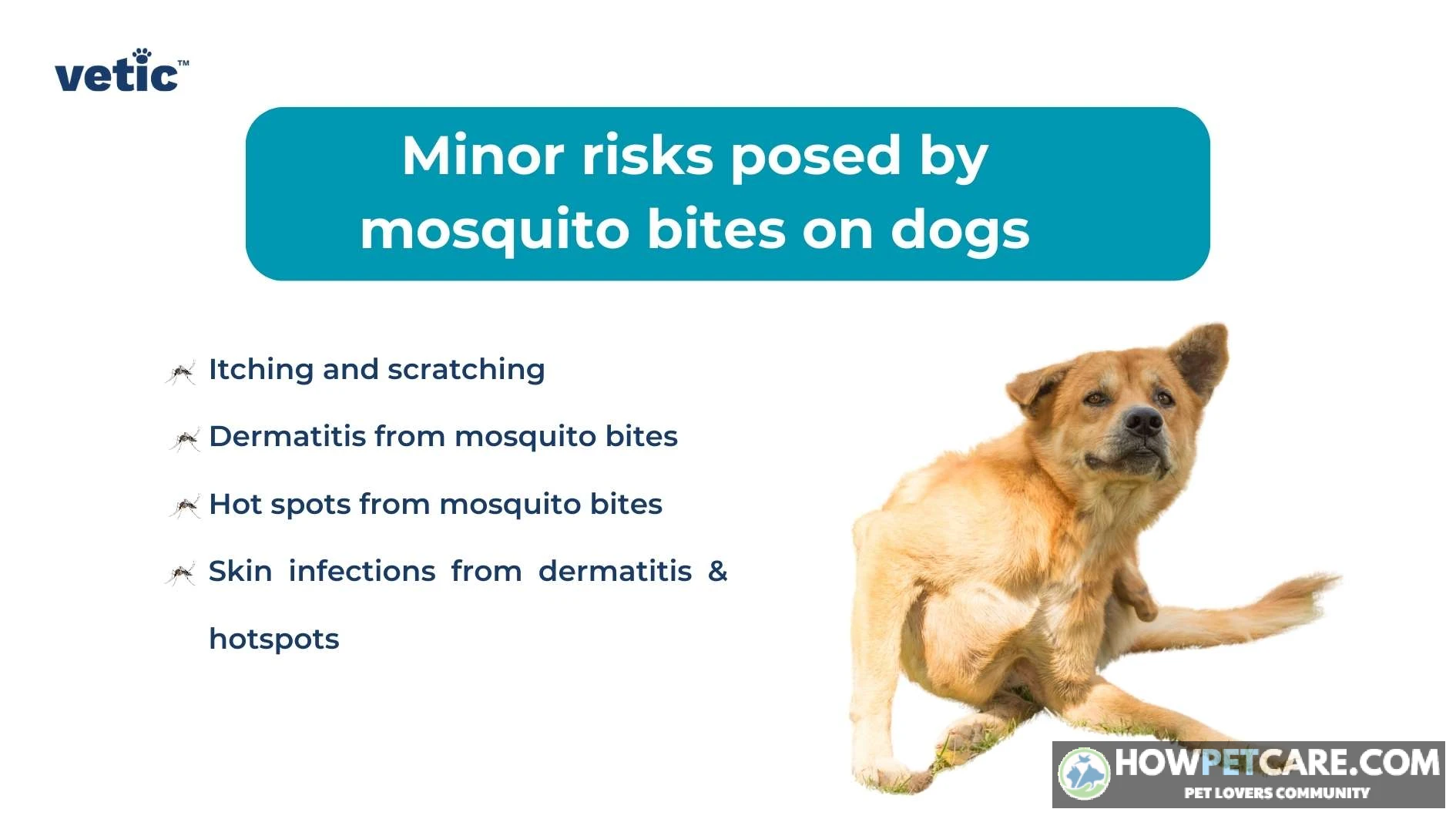
A dog doesn’t need visible bumps to need heartworm prevention. Even dogs that spend most of their time indoors can be exposed because mosquitoes get inside.
Where mosquitoes bite dogs, and how coat type affects exposure
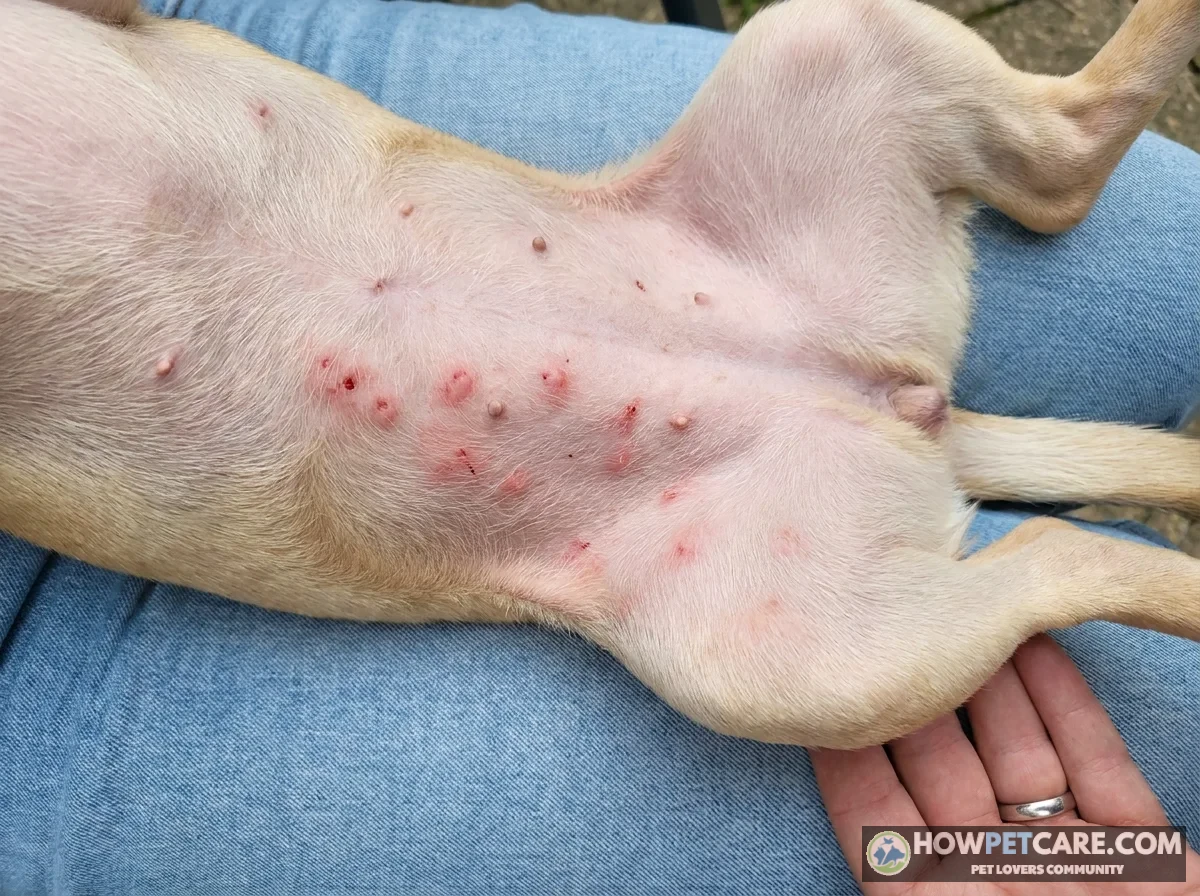
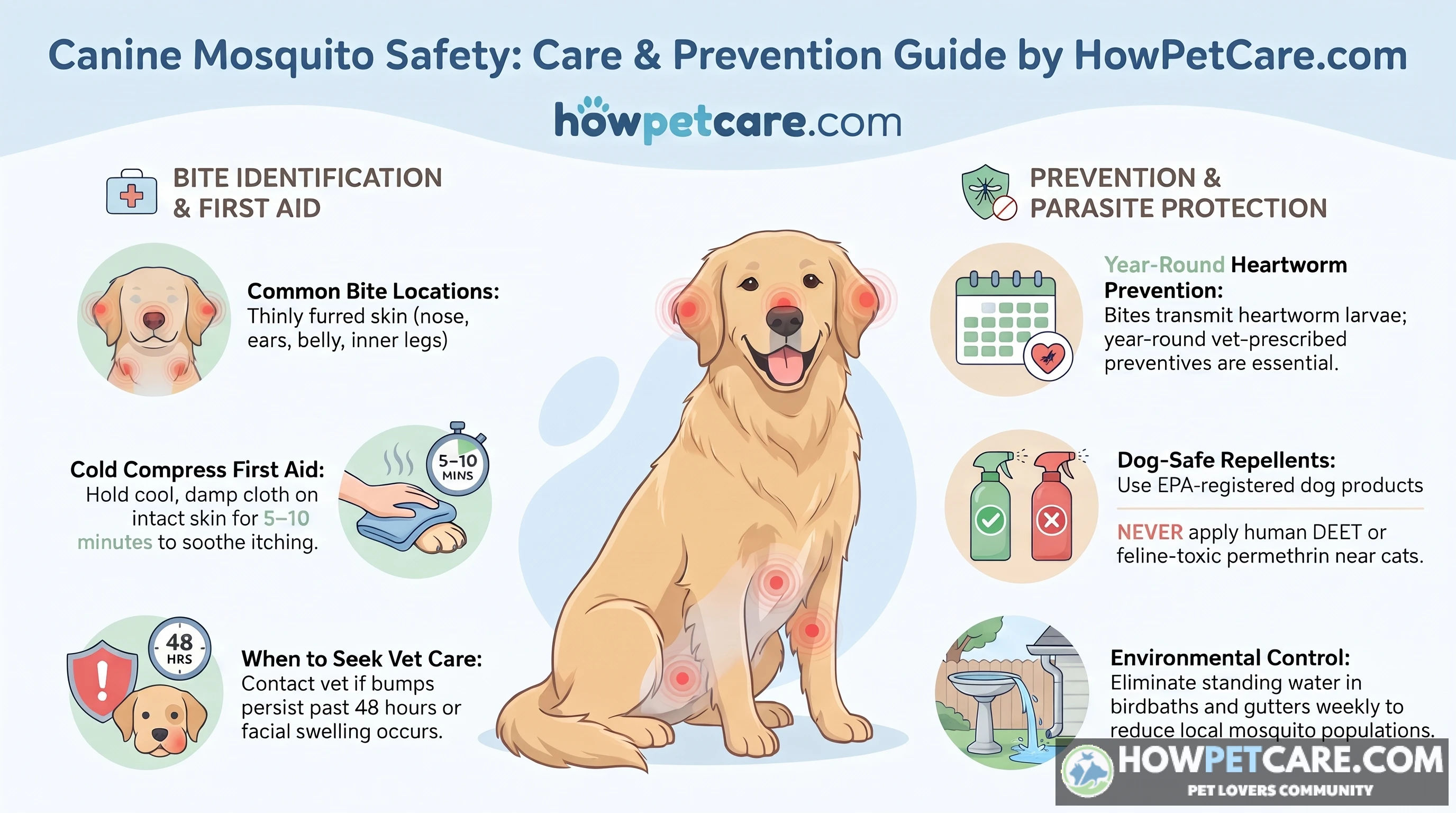
Check the nose and muzzle, ears, belly, armpits, groin, and inner legs. These areas may be exposed or have thinner fur, making the skin easier for mosquitoes to reach. A bump in one of these places is a clue, not proof of its cause.
Why long hair does not guarantee protection
A dense coat may make some skin harder to reach, but it doesn’t cover every part of a dog equally. Mosquitoes may find thinly covered areas or openings in the coat. Short-haired, thin-coated, and hairless dogs may have more accessible skin, but coat type alone can’t predict which dog will be bitten.
Time outdoors, local mosquito activity, and the environment matter, too. There’s no reliable rule that a dog will be bitten as often as the people nearby: a dog and owner may not have the same exposed skin or spend time in exactly the same places.
Identify mosquito bites: compare bumps with flea bites, ticks, and allergies
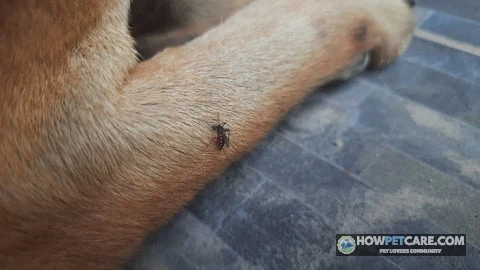
Mosquito bites on dogs can look like small, raised pink or red bumps, sometimes with localized itching and swelling. They can be hard to see through fur, and their appearance varies with the dog’s skin and reaction. Scratching alone doesn’t identify the cause.
Mosquito versus flea versus tick versus allergy
| Possible cause | Typical appearance or pattern | Common location or clue | What to do |
|---|---|---|---|
| Mosquito bite | One or a few small, raised bumps; mild local itching | Often noticed on exposed or thinly furred skin after outdoor time | Use a cool compress on intact skin and monitor; call the vet if the area worsens or persists |
| Flea bites | Small red bumps or scabs, sometimes clustered; scratching can be intense | Often near the rump and tail base; black, pepper-like flea dirt may be visible in the coat | Check the dog’s flea prevention with your vet and address the home environment if fleas are found |
| Tick | A dark or gray bump may be an attached tick; look closely for legs | Can attach anywhere, including the head, ears, neck, and between toes | Remove an attached tick carefully with fine-tipped tweezers; ask your vet for help if unsure |
| Allergic hives | Raised welts that can appear suddenly and affect several areas | May appear across the body after an exposure such as a sting, medication, or food | Call your vet promptly; facial swelling or breathing trouble requires emergency care |
A few bumps after a walk may suggest insect bites, but the pattern can’t confirm mosquitoes or rule out another problem. Part the fur in good light, check the surrounding skin, and look for fleas, flea dirt, or an attached tick. Don’t squeeze a bump to see what comes out.
If you find a tick, grasp it as close to the skin as possible with fine-tipped tweezers and pull upward with steady, even pressure. Don’t crush the tick or use a hot match or chemicals to make it detach. Contact your veterinarian if you can’t remove it, the site becomes irritated, or you have concerns about tick-borne disease.
Soothe an itchy mosquito bite at home: safe first aid and what to avoid
If your dog has an isolated bump, intact skin, and otherwise normal behavior, start with gentle care rather than medication. For more than a mild local reaction, contact a veterinarian instead of waiting for home care to work.
A quick cold-compress protocol
- Inspect the spot. Part the fur and look for broken skin, an attached tick, or another obvious cause. If the skin is open or you’re unsure what you’re seeing, ask your vet before applying anything.
- Apply a cool compress. Hold a cool, damp cloth against the intact skin for about 5–10 minutes. You can also wrap a cold pack in a thin towel. Never place ice directly on the skin; stop sooner if your dog resists or the skin looks pale or irritated.
- Check the skin. Remove the compress and make sure the area isn’t becoming more irritated. Give the skin a break before considering another short application.
- Prevent licking and scratching. Distract your dog or use a recovery collar if needed. Chewing can turn a minor irritation into an open sore.
- Monitor the bump. A photograph can help you judge whether swelling is increasing. Contact your vet if the bump or itching persists beyond 48 hours, worsens, or the skin becomes open, oozing, or foul-smelling.

A cool, damp cloth is the safest topical measure to try first. If your dog needs more itch relief, ask your veterinarian whether a dog-formulated hydrocortisone product is appropriate for your dog and that particular spot. Follow the vet’s directions and prevent licking; don’t apply it to broken skin unless your vet specifically instructs you to.
Don’t apply human mosquito repellent, essential oils, rubbing alcohol, calamine, antihistamine creams, or other medications without veterinary guidance. Even a product described as pet-safe may be unsuitable if your dog licks it or has a particular health condition.
When home care is not enough
Stop home treatment and seek emergency care for facial or throat swelling, breathing difficulty, collapse, repeated vomiting, or rapidly spreading hives. These can be signs of a serious allergic reaction.
Call your regular vet for persistent scratching, a sore your dog has chewed open, discharge, or a bump whose cause you can’t identify. Rather than assuming every bump is a mosquito bite, your vet can check for fleas, infection, allergies, or another condition.
Choose dog-safe mosquito protection without relying on human repellents
A protection plan has two separate jobs: reducing mosquito bites and preventing heartworm disease. A product that does one doesn’t necessarily do the other.
Repellents, exposure reduction, and yard measures
| Approach | What it helps with | Limitations and safety notes | Typical cost considerations |
|---|---|---|---|
| Vet-prescribed heartworm preventive | Prevents heartworm infection when used as directed | Does not reliably repel mosquitoes or stop itchy bites; follow the prescribed schedule | Ongoing medication costs, plus testing and veterinary visits |
| Dog-labeled mosquito repellent | Helps reduce mosquito bites | Choose a product labeled for your dog’s age and weight; check compatibility with other treatments | Product and dog size affect the price; it may be an additional expense |
| Exposure management | Reduces contact with mosquitoes around the home and outdoors | Cannot eliminate exposure; mosquito activity varies by location and species | Often free or low-cost; requires regular attention |
| Yard treatment | Can reduce mosquitoes in the treated area | Effects are temporary; follow the specific product’s pet re-entry instructions | DIY product costs vary; professional applications add recurring costs |
Two distinct options to discuss with your veterinarian are a dog-labeled mosquito repellent containing permethrin and a prescription ivermectin heartworm preventive. They aren’t interchangeable: permethrin in an appropriately labeled formulation helps repel mosquitoes, while ivermectin prevents heartworm infection but isn’t a mosquito repellent.
One named repellent example is K9 Advantix II, a dog-labeled topical product that repels and kills mosquitoes; it isn’t a heartworm preventive. Before buying it, ask your vet whether the exact product is appropriate for your dog’s age, weight, health, and household. Follow the package directions, and don’t combine parasite products without checking for overlapping ingredients.

Why product labels and household pets matter
Permethrin is highly toxic to cats. If you have cats in your household, discuss the risks with your vet and follow every separation precaution on the specific dog product’s label. Never apply a dog product to a cat.
Don’t apply human repellents containing DEET or picaridin to your dog. Dogs can lick treated skin or otherwise be exposed to an unsuitable dose, and human-use directions aren’t dog-use directions. Look for an EPA-registered repellent specifically labeled for dogs, then check the label and your vet’s advice rather than relying on a generic pet-safe claim.
Essential oils and concentrated natural repellents aren’t automatically safe or reliably effective. Avoid applying them to your dog unless your veterinarian recommends a specific formulation. For yard sprays, remove pets during application and keep them out for the full label-specified period; don’t assume all products have the same re-entry time.
Heartworm prevention: testing, medication options, and typical costs
An infected mosquito can transmit heartworm larvae when it bites. Those larvae can develop into adult worms that affect the heart and blood vessels, so a small-looking bite doesn’t necessarily reflect the risk of infection. Most bites do not establish that a dog has heartworm, and a skin examination can’t diagnose it.
Prevention choices and what they cover
Veterinarians can prescribe monthly oral or topical preventives, or administer longer-acting injectable options at the interval specified for the product. The right choice depends on your dog’s health, testing history, other medications, and your ability to keep the schedule.

Some combination products also cover certain intestinal parasites, fleas, or ticks. Others don’t. Check each product’s label with your veterinarian: flea and tick prevention doesn’t automatically replace heartworm prevention, and a heartworm preventive doesn’t automatically repel mosquitoes.
If a dose is missed or late, call your vet for a plan rather than assuming the gap is harmless. Your vet can advise when to resume prevention and whether additional testing is needed. Prevention is different from treatment for an established heartworm infection; a positive test needs veterinary follow-up.
Testing cadence and budgeting
The American Heartworm Society recommends year-round heartworm prevention for dogs throughout the United States. It also recommends testing dogs annually, even when they receive prevention, because missed doses and other gaps can occur. Your vet may recommend additional testing based on age, history, missed doses, or a change in prevention.
When comparing costs, ask the clinic for an itemized estimate covering the preventive, heartworm test, examination, and any injection or administration fee. Oral and topical products are commonly budgeted monthly, and many clinics quote roughly five to fifteen dollars per month per dog depending on the dog’s size and the product; injections involve a larger payment at the appointment but cover a longer labeled interval. Dog size, combination coverage, clinic fees, and location can change the total substantially. Ask for both a monthly equivalent and a yearly total so you can compare options fairly.
Heartworm prevention and mosquito repellents address different risks. Ask your veterinarian which preventive is appropriate even if you rarely see mosquitoes or your dog spends most of the day indoors.
Match mosquito precautions to your season, region, and dog’s symptoms
Mosquito exposure varies across the United States. Colder northern areas generally have a more pronounced low-activity season, while warmer areas can have longer periods of activity. Weather, local standing water, and mosquito species also affect what happens in a particular neighborhood. Some species are especially active around dusk or overnight, which may explain why your dog seems to be bitten at night; others bite at different times.
Those differences help you decide when to add bite-reduction measures, but they don’t change the American Heartworm Society’s recommendation for year-round prevention. Discuss any proposed change to your dog’s schedule with your vet rather than stopping medication when the weather cools.
Tonight, this season, and all year
- Tonight: Inspect a mild, isolated bump, use a cool compress on intact skin, and prevent scratching. Take a photo if you need to track changes.
- This week: Empty and refresh standing water in containers such as birdbaths, plant saucers, and outdoor bowls; clear clogged gutters. Keep drinking water available to your dog.
- When mosquitoes are active: Adjust outdoor time where practical, repair window screens, and ask your vet whether a dog-labeled repellent makes sense. These steps reduce exposure but don’t guarantee zero bites.
- All year: Keep heartworm prevention on schedule, arrange the recommended annual test, and confirm separately that flea and tick coverage meets your dog’s needs.
- If considering yard treatment: Compare the cost and temporary benefit with simpler water-removal and exposure measures, and follow the product’s pet-safety directions.

West Nile virus is another mosquito-borne concern, but an itchy bump alone can’t tell you whether a dog has an infection. If your dog seems ill, tell your veterinarian about the symptoms and any known mosquito exposure.
Use your dog’s symptoms to decide what happens next:
- Monitor at home: A small, isolated bump with mild itching in an otherwise normal dog can be watched while you use the gentle care steps above.
- Call your veterinarian: The itching or bump persists beyond 48 hours, the skin is broken or oozing, your dog seems unwell, or you can’t identify the cause.
- Seek emergency veterinary care now: Facial or throat swelling, trouble breathing, collapse, repeated vomiting, or rapidly spreading hives develop.
| Possible Cause | Typical Appearance or Pattern | Common Location or Clue | Recommended Action |
|---|---|---|---|
| Mosquito bite | One or a few small, raised bumps; mild local itching | Often noticed on exposed or thinly furred skin after outdoor time | Use a cool compress on intact skin and monitor; call the vet if the area worsens or persists |
| Flea bites | Small red bumps or scabs, sometimes clustered; scratching can be intense | Often near the rump and tail base; black, pepper-like flea dirt may be visible in the coat | Check the dog's flea prevention with your vet and address the home environment if fleas are found |
| Tick | A dark or gray bump may be an attached tick; look closely for legs | Can attach anywhere, including the head, ears, neck, and between toes | Remove an attached tick carefully with fine-tipped tweezers; ask your vet for help if unsure |
| Allergic hives | Raised welts that can appear suddenly and affect several areas | May appear across the body after an exposure such as a sting, medication, or food | Call your vet promptly; facial swelling or breathing trouble requires emergency care |
FAQ
Do mosquitoes bite dogs as often as they bite humans?
There is no reliable rule that dogs are bitten as often as nearby people. Exposure depends on factors such as outdoor time, local mosquito activity, and how much skin is accessible through the coat.
Can mosquito bites make a dog sick even if the bumps look mild?
Most bites cause only local irritation, but an infected mosquito can transmit heartworm even when the bite itself looks minor. Keep your dog on veterinarian-recommended heartworm prevention and follow the recommended testing schedule.
Why does my dog seem to get bitten at night?
Some mosquito species are most active at dusk or overnight, but activity varies by species and location. Limit exposure when mosquitoes are active and use only prevention approved for your dog.
Can dogs get West Nile virus from mosquitoes?
Mosquitoes can transmit West Nile virus to animals, but the risk and clinical significance for an individual dog depend on location and circumstances. Ask your veterinarian about local risks if you are concerned, and seek care if your dog becomes ill.