
GloFish are fluorescent genetically modified freshwater fish, not a single species. Pick them like their normal counterparts: match adult size, school needs, temperament, tank size, water range, and legality—then cycle the tank, quarantine new fish, and keep a steady day-night light schedule.
GloFish are genetically modified freshwater aquarium fish whose fluorescent colors become more noticeable under blue light. They are not one species: a GloFish tetra, danio, shark, or betta needs the same kind of care as its nonfluorescent counterpart. For a first tank, choose the fish by its adult size, social needs, and temperament—not by color.
For most beginners, a school of tetras or danios in a properly sized, cycled aquarium is a more manageable choice than a territorial shark. A single betta is another option if you prefer a smaller, heated tank. GloFish can be kept alongside ordinary freshwater fish when their species-specific needs match. There is no special handling required because a fish is genetically modified; the practical responsibilities are the same as for other aquarium fish. An adult should supervise setup and ongoing care.
Choose GloFish by tank size, temperament, and care needs
Start with the space you can provide, then choose a species whose adult size and social behavior fit. A tank that accommodates one fish may not be suitable for the group that species needs. Likewise, a tank large enough for one school is not automatically large enough for two.
The table compares seven fish types associated with the GloFish range or commonly discussed in GloFish care guides. Product lines and availability change: check the precise species name on the seller’s listing, particularly for corydoras and angelfish, before using a care plan. The brand also lists pristella tetras, which should not automatically be treated as black skirt tetras.
All GloFish species at a glance
These are practical planning ranges for healthy adult fish, not a substitute for identifying the exact species and matching the water in which it was raised. Tank minimums assume the stated social group and an appropriate footprint; larger or mixed communities need more room. Temperature is in degrees Fahrenheit, tank volume is in U.S. gallons, and hardness is in degrees of general hardness (dGH).
| Species | Adult size | Minimum tank size | Temperature | pH | Hardness | Temperament | Schooling minimum | Typical lifespan | Compatibility notes |
|---|---|---|---|---|---|---|---|---|---|
| Tetra, black skirt type | 2–2.5 in | 20 gal | 70–82°F | 6.0–7.5 | 5–20 dGH | Generally peaceful; may nip fins | 6+ | 3–5 years | Avoid slow, long-finned fish. |
| Danio, zebra type | 1.5–2 in | 20 gal long | 64–75°F | 6.5–7.5 | 5–19 dGH | Peaceful but very active | 6+ | 3–5 years | Needs swimming length and a secure lid. |
| Barb, tiger type | 2.5–3 in | 30 gal long | 74–79°F | 6.0–7.5 | 5–19 dGH | Assertive; can nip fins | 8+ preferred | 5–7 years | Avoid bettas, angelfish, and other slow or long-finned fish. |
| Shark, rainbow type | Up to 6 in | 55 gal long | 75–81°F | 6.5–7.5 | 5–15 dGH | Territorial, especially near the bottom | 1 | 5–8 years | Provide caves and avoid competing bottom dwellers. |
| Betta | About 3 in | 5 gal; 10 preferred | 76–82°F | 6.5–7.5 | 5–20 dGH | Often territorial; best housed alone by beginners | 1 | 2–4 years | Avoid other bettas and fin-nippers. |
| Angelfish | About 6 in body length; taller with fins | 29 gal tall for one; larger for a pair or group | 78–84°F | 6.5–7.5 | 3–10 dGH | Cichlid that can become territorial | 1, a compatible pair, or a managed group in a much larger tank | 8–12 years | May eat small fish; needs vertical space. |
| Corydoras, bronze type | 2–2.5 in | 20 gal long | 72–78°F | 6.0–7.5 | 2–15 dGH | Peaceful bottom dweller | 6+ of the same species | Around 5 years or longer | Use smooth sand and avoid territorial bottom fish. |

Ranges and lifespans vary with the exact variety, husbandry, and source. Ask the seller for the scientific name if a listing says only “glow fish aquarium” or “fluorescent fish.” A stable, suitable pH is generally preferable to frequent adjustments intended to hit an exact number.
Compatible community combinations—and fish to keep separate
A shared temperature range is only the starting point. Fish also need enough space, appropriate companions, and food they can reach. These are complete starting plans, not invitations to fill every remaining inch of the tank:
- 20-gallon long, danio school: Keep six zebra-type GloFish danios together, with open swimming space and a tight-fitting lid. Different fluorescent colors of the same species can form one school. Keep the room temperature stable or use a heater set within the fish’s range.
- 20-gallon long, tetra school: Keep six black skirt-type GloFish tetras together in a cycled tank with plants and open swimming space. Do not add a betta: even otherwise peaceful tetras can nip long fins.
- 5- to 10-gallon, betta only: Keep one GloFish betta with a heater, gentle filtration, cover, and resting places near the surface. Ten gallons offers more room and a more forgiving water volume.

For a larger community, a school of black skirt tetras and a group of compatible bronze-type corydoras can be considered in a roomy, well-filtered tank—30 gallons or more is a more conservative starting point than squeezing both groups into a minimum-sized tank. Aim for an overlapping temperature around 75–77°F, provide a sand bottom, and watch the fish for chasing or competition at feeding time. Different tank levels help, but they do not eliminate the need for adequate space.
Tiger barbs are a more demanding choice: keep a proper group in a spacious tank and avoid bettas and angelfish. Rainbow sharks are territorial and should not be treated as a small-tank cleanup crew. Angelfish need height and may eat fish small enough to fit in their mouths. Community behavior is never guaranteed, so have a separation plan if aggression develops.
A single schooling fish is not a safe way to test a new aquarium. Cycle the filter first, then introduce an appropriately sized group while monitoring water quality.
What GloFish are and how fluorescent protein makes them glow
GloFish are genetically modified versions of established aquarium species, including zebrafish and several other freshwater fish. Their inherited fluorescent coloration comes from genetic material associated with fluorescent proteins originally found in organisms such as jellyfish and coral. They are not ordinary fish dipped in a fluorescent coating.
Fluorescence is not bioluminescence
Fluorescence means absorbing light and emitting it at another wavelength; bioluminescence means producing light through a chemical reaction. GloFish fluoresce—they do not generate their own light in a dark room. Their colors are visible under ordinary white aquarium lighting, while blue LEDs intensify the fluorescent effect.

The apparent intensity can change with the light, background, viewing conditions, and the fish’s condition. If a fish suddenly looks dull and also hides or breathes rapidly, investigate its health and water rather than assuming its color is simply fading.
What the genetics mean for owners
A genetically modified organism has genetic material changed using biotechnology. For a GloFish owner, the important husbandry question remains which species is in the tank: a danio’s needs differ from those of a betta or shark. Genetic modification does not make a fish maintenance-free.
People may reasonably have different views about genetically modified pets. For prospective owners, consider both that question and the immediate welfare commitment: suitable housing, social groups, clean water, and a plan for the fish’s full lifespan. Do not release a fish or its eggs outdoors.
Set up a freshwater aquarium with stable water and sensible lighting
Choose the aquarium for the adult fish and its group, not for the small juveniles in a store display. Include a properly sized filter, a thermometer, a secure lid, dechlorinator, water tests, and a heater when needed to maintain the species’ range. Use smooth substrate appropriate to the fish, plus plants or sheltered areas that do not block all swimming space. Decor and plants can provide cover and help establish territories.

A GloFish-branded tank or accessory is not required. The equipment needs to suit the fish and aquarium, whether or not it carries the brand name.
Cycle the tank before buying fish
Tank cycling establishes beneficial bacteria in the filter and elsewhere that convert toxic ammonia from fish waste into nitrite and then nitrate. A new filter does not acquire a mature bacterial colony merely because water is clear.
- Assemble the aquarium, add dechlorinated water, and run the filter continuously. Set the heater if your chosen species needs one.
- Use a fishless cycling method with an aquarium-appropriate ammonia source, following its directions. Test with a freshwater test kit as the bacterial colony develops.
- Wait until the established filter can process the ammonia source and tests show 0 ppm ammonia and 0 ppm nitrite. Manage accumulated nitrate with water changes before fish arrive.
- Add a suitable group rather than the entire planned population at once, and continue testing as the filter adjusts to the new waste load.

Cycling can take weeks, and an ammonia source must be managed carefully. Follow a reliable fishless-cycling protocol and seek experienced help if readings are confusing. Do not use a fish to create waste in an uncycled tank.
Blue LED lighting, darkness, and a day-night schedule
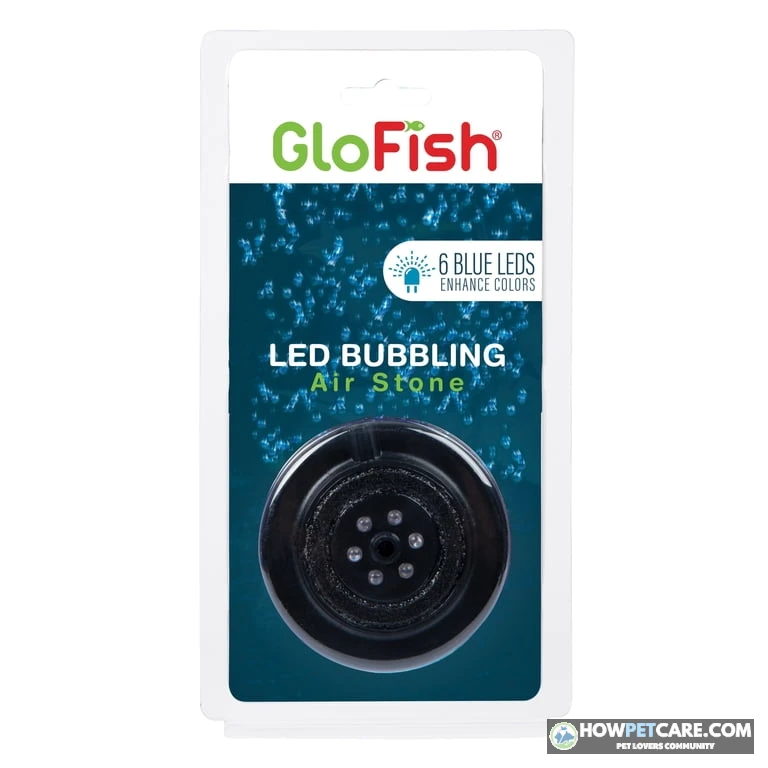
GloFish do not need a special blue aquarium light to survive or fluoresce. White light shows their coloration; a blue LED aquarium light makes the fluorescent effect stronger. Blue viewing light is an aesthetic choice, not a replacement for a suitable habitat.
Use a timer for a consistent day-night cycle; roughly 8–10 hours of aquarium lighting is a reasonable starting point, followed by a dark rest period. Avoid leaving blue lights on all night, and do not use UV lighting as a substitute for a normal light schedule. Long-term effects of continuous blue or UV exposure on these fish’s behavior and vision are not established by the available evidence.

Feed a species-appropriate staple once or twice daily in small portions the fish can finish promptly. Use appropriately sized food: for example, bottom-dwelling corydoras need food that reaches them, while a betta needs a suitable betta diet. Remove excess rather than letting it decay.
Test tap-water pH and hardness before choosing a species. Match fish to reasonably stable local water where possible instead of relying on repeated chemical adjustments.
Acclimate new GloFish and quarantine them before joining a community
Quarantine reduces the chance of introducing disease to an established aquarium, although observation cannot guarantee that a fish is pathogen-free. Prepare a separate tank before purchase, with a mature filter, suitable temperature, cover, and enough room for the species and group. A small bare tank may work for some young fish temporarily; a shark, angelfish, or large active group needs more space.
Step-by-step acclimation
- Check the destination water. Confirm that the quarantine tank is cycled, dechlorinated, and within the species’ temperature and water-parameter range. Ask the seller about the water conditions the fish came from.
- Dim the lights and float the sealed bag. Allow approximately 15–20 minutes for the temperature to begin equalizing. Keep the bag secure and avoid overheating it under a lamp.
- Gradually introduce tank water. Open the bag and add small amounts of quarantine water over approximately 15–20 minutes, keeping the bag supported. If the fish has been shipped for a long time, follow the seller’s acclimation instructions: opening a shipping bag can change its water chemistry, so prolonged acclimation may be unsafe.
- Transfer the fish without the transport water. Gently use a soft net or suitable container, then discard the bag water. Do not pour it into the aquarium.
- Let the fish settle. Keep lighting subdued and avoid a heavy meal immediately after transport. Offer a small amount once the fish has settled, removing uneaten food.

For transfer from quarantine to the display tank, check that both tanks’ temperature and water chemistry are reasonably close and acclimate again if needed. Avoid moving quarantine water into the display.
Quarantine and observation
Observe new fish separately for roughly 2–4 weeks, checking daily for normal breathing, swimming, appetite, and intact fins. Test ammonia and nitrite frequently, particularly if the quarantine filter is newly seeded or lightly established. Keep equipment separate from the display tank where practical.

If fish develop spots, sores, persistent clamped fins, or difficulty breathing, delay the move. Check water quality first and consult an aquatic veterinarian or knowledgeable fish-health professional for diagnosis and species-appropriate treatment. Avoid medicating every new arrival automatically: treatment depends on the problem, and not all species tolerate every medication equally.
Maintain the tank and spot stress or illness early
A colorful tank still produces ordinary fish waste. A written schedule makes it easier for a family to share responsibility and notice small changes before they become emergencies.
Daily, weekly, and monthly maintenance checklist
| Frequency | Task | What to check or do |
|---|---|---|
| Daily | Observe fish and equipment | Check swimming, breathing, appetite, filter flow, and the thermometer; remove dead fish promptly. |
| Daily | Feed | Offer small species-appropriate portions; remove uneaten food. |
| Weekly | Test water | Check ammonia and nitrite, aiming for 0 ppm; track nitrate and respond to rising levels. |
| Weekly | Change water | Replace about 20–30% as a starting routine, adjusting for test results and stocking. Use dechlorinated water close to tank temperature. |
| Weekly | Clean the tank | Siphon accessible waste from the substrate and wipe viewing glass as needed. |
| Monthly | Service equipment | Inspect the heater, filter flow, impeller, lid, and light timer. Rinse clogged reusable filter media gently in removed tank water when needed. |
| Monthly | Review the plan | Check the maintenance log, fish growth, behavior, test-kit condition, and whether the tank still meets the stocking plan. |

Do not replace all filter media at once simply because it looks dirty: it houses beneficial bacteria. Top off evaporation with appropriately treated water as needed, but remember that topping off does not replace a water change.
If ammonia or nitrite is above zero, act promptly: change a substantial portion of the water with temperature-matched, dechlorinated water, check the filter and feeding, and retest. Repeat water changes as needed and seek help if levels remain elevated or fish are distressed.
Stress and illness warning signs
Look for gasping at the surface, rapid gill movement, clamped fins, persistent hiding, loss of appetite, abnormal swimming, white spots, fuzzy growths, sores, or sudden changes in color and behavior. Some species naturally hide more than others, so compare each fish with its usual behavior.

Test water first, because poor water quality can cause or worsen signs that resemble disease. A fish struggling to breathe or unable to swim normally needs prompt attention; contact an aquatic veterinarian when available. Lifespans in the comparison table are estimates, not guarantees, and depend on the species, its history, and care.
Compare GloFish prices, find legal sellers, and select healthy fish
Look for GloFish for sale through at least three channels: a local independent aquarium shop, a national pet-store location such as Petco or PetSmart, or an established online live-fish retailer. The official GloFish brand site can also help identify product lines and direct shoppers to sellers. Call or check the actual listing before traveling: a retailer carrying the brand does not mean it has your chosen species, color, or full group in stock.
How to compare per-fish prices and seller policies
Prices vary by species, size, color, seller, and location. Reliable per-species price ranges and live inventory change too often for any fixed figure to stay accurate, so do not treat an undated number as a current quote. Compare the price of the whole required school, not just one fish, and include equipment, water tests, food, quarantine, and shipping in your budget.
| Purchase factor | What to verify | Why it matters |
|---|---|---|
| Fish identity and price | Scientific name, adult size, per-fish price, and number available | A similarly named fish can have different care needs; schooling fish need a group. |
| Total delivered cost | Shipping, minimum order, packing charges, and taxes | The final cost can differ substantially from the advertised fish price. |
| Seller and stock | Recent fish-health reviews and confirmation that the fish are actually available | A listing alone does not establish present inventory or quality. |
| Arrival policy | Delivery method, temperature precautions, claim deadline, and required photographs | Live-arrival terms differ and may offer credit rather than a refund. |
| Local rules | State and local agency guidance as well as seller shipping restrictions | A seller’s checkout rules are not a substitute for checking applicable regulations. |
| Quarantine readiness | A suitable separate tank and established filtration | New arrivals need somewhere safe to be observed. |
Healthy-fish checklist before purchase
Choose fish with balanced swimming, clear eyes, intact fins, and breathing that appears calm for the species. Look for normal body condition and no visible sores, spots, or fuzzy growths. Ask to see the fish eat if practical. Avoid buying from a tank with multiple visibly sick or dead fish, and do not assume a fluorescent color makes illness easy to see.

Buy after your main aquarium and quarantine system are ready. If the store cannot supply an appropriate school, wait or find another reputable seller rather than taking home a lone social fish.
Check state restrictions and understand breeding and resale limits
Rules concerning genetically modified fish, live-animal sales, and transport can depend on the jurisdiction and the activity. Buying a pet, importing fish across a state line, breeding them, and selling offspring are not necessarily governed by the same rules.
Verify legality before buying, including in California
California has appeared in older discussions of GloFish restrictions, but those references alone do not establish the rule in force for a purchase. Before buying in California—or any other state—check current guidance from the state fish and wildlife agency and any relevant agriculture or local authority. Ask the seller whether it can lawfully deliver the specific fish to your address, but independently verify the answer when a restriction is in question.
This guide cannot confirm a current state-by-state legal status and is not legal advice. If you plan to move with fish, check the destination and any applicable transport requirements first.
Breeding, patents, and resale
GloFish branding is protected, and the underlying fish or genetic technologies may be subject to intellectual-property rights. Whether a particular patent remains in force, what it covers, and whether a particular activity requires permission depend on the actual patent, date, and circumstances. Seller agreements and state rules may also matter.
Do not assume that accidental spawning gives you permission to breed deliberately or sell offspring. For planned breeding or commercial resale, check the applicable rights and regulations and seek qualified legal advice. If fish spawn unexpectedly, keep eggs and fish contained; never dispose of them in a pond, stream, or other natural waterway. Contact a responsible aquarium shop or animal-care organization if you need help rehoming fish.
Rehome unwanted fish through a responsible local aquarium store, rescue, or animal-care organization. Do not release fish, eggs, or aquarium plants into waterways.
Use this pre-purchase checklist to build a suitable GloFish tank
- Identify the exact species and confirm its adult size, temperament, group needs, and compatible water range.
- Choose a tank with enough floor space or height for that species and its complete planned group; leave room for swimming and shelter.
- Cycle the filter before purchase, verify ammonia and nitrite are at 0 ppm, and confirm the heater, thermometer, lid, and light timer work.
- Prepare a suitable quarantine tank and decide how you will observe and transfer new fish.
- Check local rules and actual seller availability; compare the total cost of the full group, equipment, and delivery.
- Put daily observation, feeding, weekly testing, and water changes on the household calendar before bringing fish home.
1How does the fluorescent coloration of GloFish differ fundamentally from bioluminescence?
Fluorescent proteins require an external light source to absorb and re-emit light, meaning the fish cannot glow independently in total darkness.
2Before introducing new fish to an aquarium, which test kit readings confirm that fishless cycling is complete?
A fully established biological filter processes waste completely, clearing both toxic ammonia and nitrite from the system.
3When planning a community tank with Tiger Barbs, which companion choice should be strictly avoided?
Tiger barbs exhibit assertive behavior and fin-nipping habits that target slow-swimming or long-finned species.
4Which setup parameter aligns with the specific housing requirements of a single GloFish Betta?
Bettas require warm water, low current flow, and protected spaces near the surface to thrive in captivity.
5What is the recommended procedure for transport water when transferring new fish into a quarantine tank?
Discarding shipping water prevents store waste, elevated ammonia, and potential waterborne pathogens from entering the clean setup.
6How should blue LED aquarium lighting be managed to support GloFish welfare?
Aquarium fish require consistent periods of darkness to maintain natural rest cycles and minimize continuous stress.
7Why should aquarists avoid replacing all biological filter media at the same time during routine maintenance?
Filter media houses the beneficial bacteria that convert toxic waste; replacing it entirely collapses the bio-filtration cycle.
8Which tank environment is appropriate for housing a Rainbow Shark-type GloFish?
Rainbow sharks reach up to 6 inches in length and exhibit strong territorial behavior near the tank bottom.
9What is the proper action to take if an owner can no longer care for their GloFish?
Working with established animal-care resources ensures safe, humane containment without threatening local ecosystems.
10When budgeting for a school of GloFish Danios or Tetras, how should total purchase costs be calculated?
Schooling fish require minimum group sizes (typically 6+) to prevent social stress, alongside complete hardware setup costs.
| Species | Adult Size | Minimum Tank Size | Temperature | pH Range | Hardness | Temperament | Schooling Minimum | Typical Lifespan |
|---|---|---|---|---|---|---|---|---|
| Tetra, black skirt type | 2–2.5 in | 20 gal | 70–82°F | 6.0–7.5 | 5–20 dGH | Generally peaceful; may nip fins | 6+ | 3–5 years |
| Danio, zebra type | 1.5–2 in | 20 gal long | 64–75°F | 6.5–7.5 | 5–19 dGH | Peaceful but very active | 6+ | 3–5 years |
| Barb, tiger type | 2.5–3 in | 30 gal long | 74–79°F | 6.0–7.5 | 5–19 dGH | Assertive; can nip fins | 8+ preferred | 5–7 years |
| Shark, rainbow type | Up to 6 in | 55 gal long | 75–81°F | 6.5–7.5 | 5–15 dGH | Territorial, especially near the bottom | 1 | 5–8 years |
| Betta | About 3 in | 5 gal; 10 gal preferred | 76–82°F | 6.5–7.5 | 5–20 dGH | Often territorial; best housed alone by beginners | 1 | 2–4 years |
| Angelfish | About 6 in body length; taller with fins | 29 gal tall for one; larger for a pair or group | 78–84°F | 6.5–7.5 | 3–10 dGH | Cichlid that can become territorial | 1, a compatible pair, or a managed group in a much larger tank | 8–12 years |
| Corydoras, bronze type | 2–2.5 in | 20 gal long | 72–78°F | 6.0–7.5 | 2–15 dGH | Peaceful bottom dweller | 6+ of the same species | 5+ years |
FAQ
Are GloFish safe to keep with ordinary freshwater fish?
They can share a tank with compatible fish when their species-specific temperature, water, space, and social needs match. Check temperament and adult size before combining them; fluorescent color alone does not determine compatibility.
Can GloFish live without a blue aquarium light?
Yes. Blue LED lighting can make fluorescence more visible, but it is not required for the fish to live. Provide a normal day-night cycle and turn aquarium lights off for a dark period each day.
Do GloFish change color or lose their fluorescence as they age?
Their fluorescent coloration is associated with the fish itself, not a coating that washes off. How vivid it appears depends on factors such as lighting, background, health, and viewing conditions.
Can I release unwanted GloFish into a pond or stream?
No. Never release aquarium fish, eggs, or plants into the environment; they can harm ecosystems or spread disease. Contact a responsible local aquarium store, rescue, or animal-care organization about rehoming.