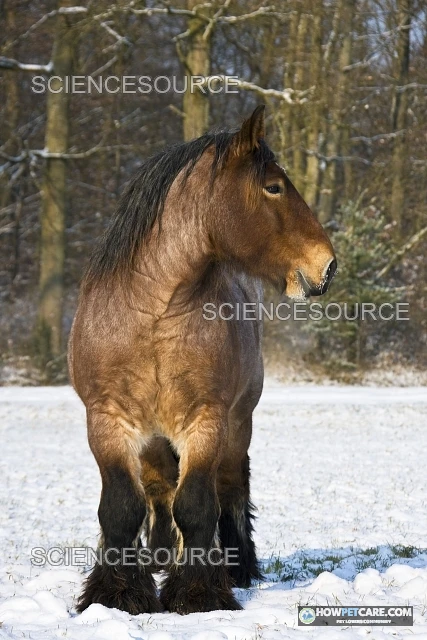

The Ardennais, also called the Ardennes horse, is a compact, cold-blooded draft breed from the Ardennes region of Belgium, France, and Luxembourg. Typically 15.1–16.2 hands and 1,500–2,200 lb, it is known for strength and a steady working type, and is used in forestry, farm work, driving, and leisure.
The Ardennais, also called the Ardennes horse, is a compact, heavily built draft breed developed in the Ardennes region of France, Belgium, and Luxembourg. Known for its strength and steady working type, it is used today in forestry, farm work, driving, and leisure. U.S. buyers should consider the breed’s limited availability, the facilities and farrier support a heavy horse needs, and screening for health issues such as GYS1-associated PSSM and chronic progressive lymphedema (CPL).
Ardennais horse at a glance: origin, identity and uses
An Ardennais is a cold-blooded draft horse: a powerful horse bred for pulling and other sustained work. The term doesn’t refer to its literal body temperature. The breed’s historic home is the Ardennes, a hilly region shared by Belgium, France, and Luxembourg. Although generally shorter and more compact than several familiar U.S. draft breeds, it is still a large, strong animal that needs experienced handling and draft-sized facilities.
Ardennais or Ardennes: what the names mean
“Ardennais” is the French breed name; “Ardennes” is commonly used in English and in other contexts. Naming and registration conventions can differ among national studbooks. Buyers should verify the issuing registry and the horse’s recorded identity rather than assume every similarly named horse is registered to the same standard. Ardennais is not simply another name for Belgian or Brabant. Those are related regional draft types with distinct breed identities.
The breed is described as one of Europe’s oldest draft breeds. A possible connection to prehistoric horses from Solutré is a traditional theory, not a proven direct lineage. Accounts also associate Ardennais horses with Roman forces, medieval knights, and Napoleon’s army, but those claims should be treated as tradition rather than a verified individual breeding record.
In the late nineteenth and twentieth centuries, crossbreeding with several types—including Belgian, Percheron, Boulonnais, Arabian, and Thoroughbred horses—helped shape the heavier modern type. The older, lighter type is now rare and valued by some enthusiasts.

From farm and war horse to modern work
The Ardennais developed as a practical farm horse and was also used in military settings. Today, its strength and relatively compact build can suit forestry, logging, farm draft work, and driving. Some are kept for leisure riding, though suitability depends on the individual horse’s training and conformation, not just its breed name.
Reliable current North American population counts are not well established. The breed is uncommon in the United States compared with Belgian and Percheron drafts. Prospective owners should expect a narrower search and verify current availability directly with registries and established draft-horse networks.

Quick stats: the Ardennais at a glance
| Trait | Typical profile |
|---|---|
| Type and origin | Cold-blooded draft horse from the Ardennes region of Belgium, France, and Luxembourg |
| Height | About 15.1–16.2 hands (155–168 cm), with variation by sex, bloodline, and registry |
| Weight | Roughly 1,500–2,200 lb (700–1,000 kg), depending on individual and type |
| Common colors | Bay, chestnut, and roan, including chestnut roan; registry rules vary |
| Build | Deep chest, muscular body and limbs, and variable lower-leg feathering |
| Lifespan | Often given as roughly 20–30 years; individual health and care matter |
| Uses | Forestry, farm work, driving, and leisure |
| U.S. availability | Uncommon; current listings and population counts should be verified |

A compact draft is still a draft. A horse near 2,000 lb needs suitable flooring, trailer capacity, hoof care, and safe handling. Height alone tells you little about the full scale of ownership.
Ardennais breed characteristics: size, conformation, colors and lifespan
Height, weight and lifespan
A typical Ardennais stands around 15.1–16.2 hands and weighs approximately 1,500–2,200 lb. These are broad reference ranges, not guarantees for an individual horse. Size varies with sex, bloodline, condition, and registry standards. Ask for the horse’s actual height and weight estimate, then assess whether your trailer, stall, fencing, and handling setup can accommodate it.
A lifespan estimate of about 20–30 years is commonly used for the breed, but no single figure predicts how long an individual horse will live. Workload, injury, dental care, nutrition, and long-term health management all matter. Plan for lifetime care rather than focusing only on a horse’s purchase age.
Build, feathering and common colors
The Ardennais is strongly muscled, broad through the chest, and relatively compact. Breed descriptions note short, thick limbs, a muscular croup, and feathering around the lower legs; the amount of feathering varies. Inspect the legs and feet rather than treating feathering as a sign of soundness. Hair can hide skin problems, and a heavy frame makes good hoof care and suitable footing especially important.
Bay is historically common, while chestnut, red roan, and chestnut roan are also associated with the breed. Color acceptance can vary between studbooks, and black or gray horses may be less typical in some descriptions. Confirm registration requirements with the relevant registry instead of relying on color alone to identify a horse.

Temperament, training and the best jobs for an Ardennais
Ardennais horses are often described as steady and willing, but temperament varies by individual. Even a calm horse can move with considerable force. Owners need sound handling habits, secure fencing, suitable equipment, and a plan for safely managing a horse that may weigh close to a ton.
With appropriate training and skilled support for the owner, an Ardennais can be a good match for forestry, farm work, and driving. Its more compact frame may be useful in some smallholding or woodland settings compared with a taller draft. Even so, access, terrain, and the task determine what size is practical. For a hobby farm, consider whether you have actual work for the horse, not just an interest in owning a working breed.
A progressive path from young horse to draft work
Training should build gradually. Don’t rush a young horse into pulling heavy loads; development, maturity, and individual readiness matter. A draft-horse trainer can help tailor the pace and equipment to the horse.
- Build basic handling. Teach calm haltering, leading, and standing for grooming and hoof handling. Include loading practice appropriate to the horse’s age, and keep sessions short and consistent.
- Introduce groundwork. Develop responses to voice and body cues, moving away from pressure, and standing quietly in different environments. Reward calm behavior rather than escalating pressure.
- Familiarize with tack and harness. Introduce equipment gradually. Check the fit and let the horse accept the feel and sound of each part before adding complexity.
- Practice driving foundations. With an experienced handler, establish voice cues and controlled movement before hitching. Don’t hitch a horse that is anxious, unbalanced, or unclear on basic cues.
- Add light work in stages. Start with a suitable, low-demand task. Increase duration or load only when the horse remains relaxed, responsive, and physically comfortable.

Driving and draft work carry real risks for horse and handler. Seek instruction from a qualified, experienced draft-horse professional, and have harness and equipment checked for fit and condition.
Matching the breed to your workload
A horse intended for pulling timber needs different experience and conditioning from one used for pleasure driving. Ask what the individual has actually done, how often, and with what equipment. A horse described as “driving trained” may have limited exposure. Request a demonstration in a safe setting and have an experienced person assess it.
Ardennais health risks: GYS1/PSSM, CPL and pastern dermatitis
Before buying, discuss breed-relevant health questions with an equine veterinarian. GYS1-associated PSSM Type 1 is a genetic muscle condition; test status can inform breeding decisions and help a veterinarian plan management. Signs and management needs vary. A genetic result doesn’t replace an examination of the horse’s history and current health.
CPL, or chronic progressive lymphedema, is a progressive disorder affecting the lower limbs. Look for persistent swelling, thickened skin, folds, or recurring lesions, especially under heavy feathering. Pastern dermatitis—also called scratches or mud fever—is a separate skin problem that can involve scabs, irritation, and sores around the pastern. Wet or dirty conditions and hidden skin changes deserve attention, but only a veterinarian can diagnose the cause of a particular horse’s signs.

How to arrange and interpret a GYS1 test
For a pre-purchase or breeding decision, agree on the test process with the seller and your veterinarian before collecting a sample.
- Discuss why testing is relevant. Ask your veterinarian whether GYS1 testing is appropriate for the horse and your intended use or breeding plan.
- Confirm identity and consent. Match the horse to its registration or identification records, and obtain the seller’s written agreement to test before the sale is complete.
- Follow the laboratory’s sample instructions. Depending on the laboratory, testing may use mane or tail hairs with roots attached, or a blood sample collected by a veterinarian. Don’t assume a hair sample without roots is usable.
- Use a qualified laboratory. Choose an established laboratory offering the relevant equine genetic test. Confirm its current submission requirements, fees, and turnaround time directly, since these vary between laboratories.
- Review the report with your veterinarian. Confirm the result belongs to the correct horse and discuss what it does—and does not—mean for management, purchase, or breeding. A genetic result doesn’t replace a pre-purchase examination.

CPL, pastern dermatitis and quality of life
CPL and pastern dermatitis are not interchangeable. Recurrent skin irritation may need veterinary attention. Progressive limb changes warrant assessment rather than being hidden by feathering or treated as routine dirt. Keep the lower legs as clean and dry as practical, and inspect the skin regularly.
Advanced CPL can be difficult to manage, and there is no simple cure to promise. Progression and comfort vary between horses. A veterinarian can assess pain, mobility, skin complications, and response to a care plan. Decisions should focus on the individual horse’s welfare and quality of life. Avoid relying on a generic prognosis or attempting intensive treatment without veterinary guidance.
Ardennes horse care: forage, body condition and preventive schedule
A heavy horse’s diet should be based on its body condition, workload, forage quality, and health—not its size alone. Forage is the foundation for most horses. A commonly used starting range is 1.5–2% of body weight per day on a dry-matter basis. For a 2,000-lb horse, that equals 30–40 lb of dry matter daily. Hay contains moisture, so the as-fed amount will be higher. Weigh the hay and consult an equine nutritionist or veterinarian to set an individual ration.

Daily forage and body-condition checks
A 2,000-lb horse eating around 35 lb of hay (as fed) per day would use roughly 6.4 tons in a year, before waste. Actual intake and hay needs vary with body condition, workload, forage analysis, pasture access, and climate. Hay prices also vary substantially by region and season, so use local quotes for budgeting.
Use the Henneke body-condition scale, which runs from 1 (poor) to 9 (extremely fat), as a standard reference. A moderate score around 5 is a reasonable general target for many adult horses, but a veterinarian or nutritionist should help set a target for an individual. Check:
- Ribs: They should be easy to feel under a light covering, not sharply visible or buried under thick fat.
- Topline: Look for a smooth outline over the back and loin rather than a sharp ridge or deep fat channel.
- Neck: Watch for a thickening crest or fat deposits that are increasing over time.
- Tailhead and shoulders: Check whether fat is accumulating around the tailhead or behind the shoulder.

An easy keeper at light work may need measured forage, limited access to lush pasture, and a ration balancer or vitamin-mineral supplement chosen from a forage analysis. A horse in sustained work may need more calories, but that doesn’t automatically mean more grain. Adjust the ration with professional advice, especially if the horse has a suspected or confirmed metabolic or muscle condition.
No two horses have identical nutritional needs. Consult your veterinarian or an equine nutritionist before making major diet changes, and use forage analysis where possible.
Vaccination, fecal testing and deworming
There is no single vaccine or deworming calendar for every Ardennais. A veterinarian should tailor prevention to age, location, travel, exposure, and health history. Discuss core and risk-based vaccines using current veterinary guidance. A fecal egg count can help determine whether parasite treatment is needed; avoid giving dewormers automatically on a fixed schedule without a veterinary plan.
For practical planning, discuss vaccination and dental needs during a regular veterinary visit, use fecal testing at intervals recommended for the horse, and recheck after treatment when advised. Foals, older horses, pregnant mares, and horses that travel or live in higher-risk settings may need different plans. Keep written records of vaccine dates, test results, and medications.
Daily care also means clean water, adequate shelter, safe footing, and grooming that includes parting the feathering to inspect the skin. A draft horse may need a larger stall, a trailer with adequate height and payload capacity, and equipment rated for its size. Confirm those specifications rather than assuming standard light-horse gear will fit.
Ardennais vs Belgian, Brabant, Percheron, Shire and Clydesdale
Breed averages can guide a search, but they don’t predict an individual horse’s training, health, or cost. The height and build ranges below are broad descriptions, not registry guarantees. U.S. availability is a general market comparison, not a live count.
| Breed | Typical height and build | Common uses | Relative upkeep considerations | Availability in the U.S. |
|---|---|---|---|---|
| Ardennais | About 15.1–16.2 hh; compact and heavily muscled | Forestry, farm work, driving | Draft-size facilities and hoof care; inspect feathered legs and ask about GYS1 testing | Rare compared with major U.S. draft breeds |
| Belgian (American) | Often around 16–17+ hh; tall, broad, very substantial | Farm draft, hitch work, pulling | Large frame means significant feed, hoof-care, and equipment needs | More readily found than Ardennais; verify local availability |
| Brabant (European Belgian) | Often around 15.2–17 hh; massive and compact | Farm draft and breeding | Heavy build requires draft-specific facilities and care | Uncommon; distinct identity from the American Belgian |
| Percheron | Often around 16–17 hh; powerful, generally more athletic in type | Driving, carriage work, logging, riding | Large-horse care; coat and feathering needs vary by individual | Established U.S. breed presence; availability varies by region |
| Shire | Often around 16.2–18 hh; very tall and large-framed | Hitch work, heritage farming, riding | Large size and feathering can increase facility and grooming demands | Uncommon |
| Clydesdale | Often around 16–18 hh; tall with notable feathering | Hitch work, driving, parades, riding | Inspect feathered legs and skin; plan for a large frame | Uncommon to moderate, depending on region and use |

Belgian and Brabant types are regionally related, but buyers shouldn’t treat the names as interchangeable. The Ardennais’s compact build may appeal to a smallholding or woodland operator, while a taller or more available horse may better suit a particular job or local support network. Compare individuals for soundness, temperament, training, and health records before choosing by breed.
Ardennais horse price in the U.S.: sourcing, imports and annual costs
There is no dependable single U.S. price for an Ardennais. Domestic availability is limited, and price depends on age, registration, training, health, location, and current market conditions. European marketplace listings offer some context but not a U.S. price: one listing page showed 12 Ardennes horses concentrated in Germany and Austria, with asking prices around €1,599–€6,500 and a stated average of €4,400. Those are European asking prices, not confirmed sale prices. They don’t include U.S. transport, import expenses, or the costs of assessing a horse from abroad.
Finding a horse domestically or importing from Europe
Start by contacting the relevant breed registry or national studbook. Ask how to verify papers and whether it can direct you to current breeder or owner contacts. Then widen the search through established draft-horse associations, reputable breeders, and rescue or adoption organizations. Don’t assume a directory entry is an active seller; confirm the horse, seller, registration, and location directly. Be prepared for a longer search than for a Belgian or Percheron.
A domestic purchase is usually simpler logistically when a suitable, well-documented horse is available. An import may make sense if you have a specific bloodline or registry requirement and can’t find an appropriate horse in North America. Before committing to either route:
- Set requirements. Define the horse’s intended job, age and training range, health criteria, and maximum total budget.
- Verify the seller and records. Confirm identity, registration, ownership, veterinary history, and the horse’s actual training. Arrange an independent pre-purchase examination.
- Agree on testing and examination. Discuss GYS1 status and any additional concerns with your veterinarian. Put sample collection, examination access, and responsibility for costs in writing.
- For an import, request a complete written quote. Ask for veterinary testing and certification, export paperwork, transport, insurance, customs or broker charges, and any required inspection or holding costs. Requirements depend on origin and current animal-health rules; don’t assume a universal quarantine period or a single fixed import cost.
- Check current rules before payment. Verify federal entry requirements and the destination state’s requirements with the relevant authorities and qualified import professionals. Rules can change, and the exporter’s assumptions are not a substitute for confirmation.

An import’s total cost can’t responsibly be reduced to a reliable figure without a route, origin, carrier, and current regulatory requirements. Obtain quotes before placing a deposit. Factor in the risk and expense of arranging an independent examination when you may not be able to visit the horse easily.
Purchase budget versus annual cost of ownership
The following is an illustrative planning example for a healthy 2,000-lb horse in the United States. It uses assumed hay and service prices rather than a quoted national average. Replace every line with local quotes. The example excludes purchase price, boarding, major illness, and capital costs such as building a barn.
| Cost category | Planning assumption | Estimated annual cost | What changes the estimate |
|---|---|---|---|
| Hay forage | About 35 lb/day as fed, roughly 6.4 tons/year, with waste varying | $1,600–$2,250 | Local hay price, quality, pasture, waste, and ration |
| Barefoot farrier care | $80–$120 per visit every 6–8 weeks | About $700–$900 | Region, hoof condition, travel fee, frequency; shoes cost more |
| Routine veterinary care | Wellness, routine vaccines, dental care, and Coggins as appropriate | $500–$900 | Local fees, dental needs, travel, and risk-based vaccines |
| Fecal testing and targeted parasite care | Two to three tests and treatment as indicated | $100–$200 | Veterinary plan, test results, and local fees |
| Supplements, salt, and minerals | Only as needed to balance the ration | $350–$700 | Forage analysis and individual diet |
| Bedding, if stalled | Regional bedding use and price | $500–$1,200 | Stall time, bedding type, and cleaning routine |
| Fly control and supplies | Basic seasonal products and replacement items | $150–$300+ | Climate, product choice, and equipment needs |
| Contingency and miscellaneous | Repairs, grooming replacements, and reserve | $500+ | Unexpected needs and existing equipment |
| Illustrative total | Excludes boarding and major medical events | About $4,300–$7,300+ | Replace assumptions with local quotes |
Hay calculations are approximate: 35 lb per day for 365 days is about 12,775 lb, or roughly 6.4 U.S. short tons. The estimate assumes hay averaging about $250–$350 per ton and doesn’t account for all waste or delivery charges. Farrier prices and visit intervals are planning assumptions, not a guarantee of local rates; draft-size shoeing may add substantially. Boarding can add thousands of dollars per year, depending on location and services. Build an emergency reserve separately from routine costs.
The purchase price is only one part of the budget. Before shopping, price hay, draft-capable farrier visits, veterinary calls, bedding, transport, and the equipment your intended use requires.
Before you pursue an Ardennais: buyer checklist and next steps
Use this sequence before money changes hands. It can help you separate enthusiasm for a rare breed from a workable ownership plan.
Before contacting sellers
- Decide whether you need a horse for forestry, driving, farm work, or leisure, and what level of training is essential.
- Measure the stall, trailer, gates, and handling areas. Check trailer payload and towing capacity against the horse and equipment.
- Locate an equine veterinarian and a farrier who are comfortable working with draft horses.
- Build an annual budget from local hay, farrier, veterinary, boarding, and transport quotes, with a separate reserve for emergencies.
When assessing a horse
- Request registration and ownership documents, then verify them with the issuing registry.
- Ask for veterinary, dental, hoof, and leg-care records, plus a clear account of any illness, injury, or lameness.
- Ask what the horse has actually done in harness, under saddle, on a farm, or in forestry. Request a safe demonstration appropriate to its training.
- Request existing genetic results. If GYS1 status matters to your decision and is unknown, arrange testing with the seller and veterinarian before committing.
- Arrange an independent pre-purchase examination. A genetic test is one part of screening, not a substitute for a physical examination.

Choose domestic or import using the same test. A suitable U.S.-based horse may reduce transport complexity; an import could provide access to a particular lineage but requires more coordination and quote-based budgeting. Compare each candidate’s health, training, documents, total cost, and fit for your facilities—not just its purchase price or rarity.
Proceed only when the horse’s needs match your handling experience, local professional support, facilities, and long-term budget. If a seller won’t allow a reasonable independent examination or provide verifiable identity and ownership records, pause. Don’t let the breed’s scarcity rush your decision.
| Breed | Typical Height and Build | Common Uses | Relative Upkeep Considerations | Availability in the U.S. |
|---|---|---|---|---|
| Belgian (American) | Often around 16–17+ hh; tall, broad, very substantial | Farm draft, hitch work, pulling | Large frame means significant feed, hoof-care, and equipment needs | More readily found than Ardennais; verify local availability |
| Percheron | Often around 16–17 hh; powerful, generally more athletic in type | Driving, carriage work, logging, riding | Large-horse care; coat and feathering needs vary by individual | Established U.S. breed presence; availability varies by region |
| Clydesdale | Often around 16–18 hh; tall with notable feathering | Hitch work, driving, parades, riding | Inspect feathered legs and skin; plan for a large frame | Uncommon to moderate, depending on region and use |
| Shire | Often around 16.2–18 hh; very tall and large-framed | Hitch work, heritage farming, riding | Large size and feathering can increase facility and grooming demands | Uncommon |
| Brabant (European Belgian) | Often around 15.2–17 hh; massive and compact | Farm draft and breeding | Heavy build requires draft-specific facilities and care | Uncommon; distinct identity from the American Belgian |
| Ardennais | About 15.1–16.2 hh; compact and heavily muscled | Forestry, farm work, driving | Draft-size facilities and hoof care; inspect feathered legs and ask about GYS1 testing | Rare compared with major U.S. draft breeds |

FAQ
How do you pronounce Ardennais and Ardennes?
Ardennais is commonly pronounced ar-duh-NAY, while Ardennes is often pronounced ar-DEN. Pronunciation varies by language and region.
Are Ardennais horses rare in North America?
They are uncommon compared with major US draft breeds, but reliable current North American population counts may not be available. Check breed registries and established draft-horse networks for current activity rather than relying on unsourced estimates.
Can an Ardennais be a good first horse?
A calm individual may suit a capable beginner with experienced support, but the breed’s size, strength, equipment needs and draft-specific care make it a demanding choice without access to knowledgeable help.
What should I ask an Ardennais seller before arranging a visit?
Ask for age, registration and ownership documents, training and workload history, veterinary records, hoof and leg-care history, and any GYS1 test results. Confirm the horse’s handling, transport experience and suitability for your intended work before paying a deposit.