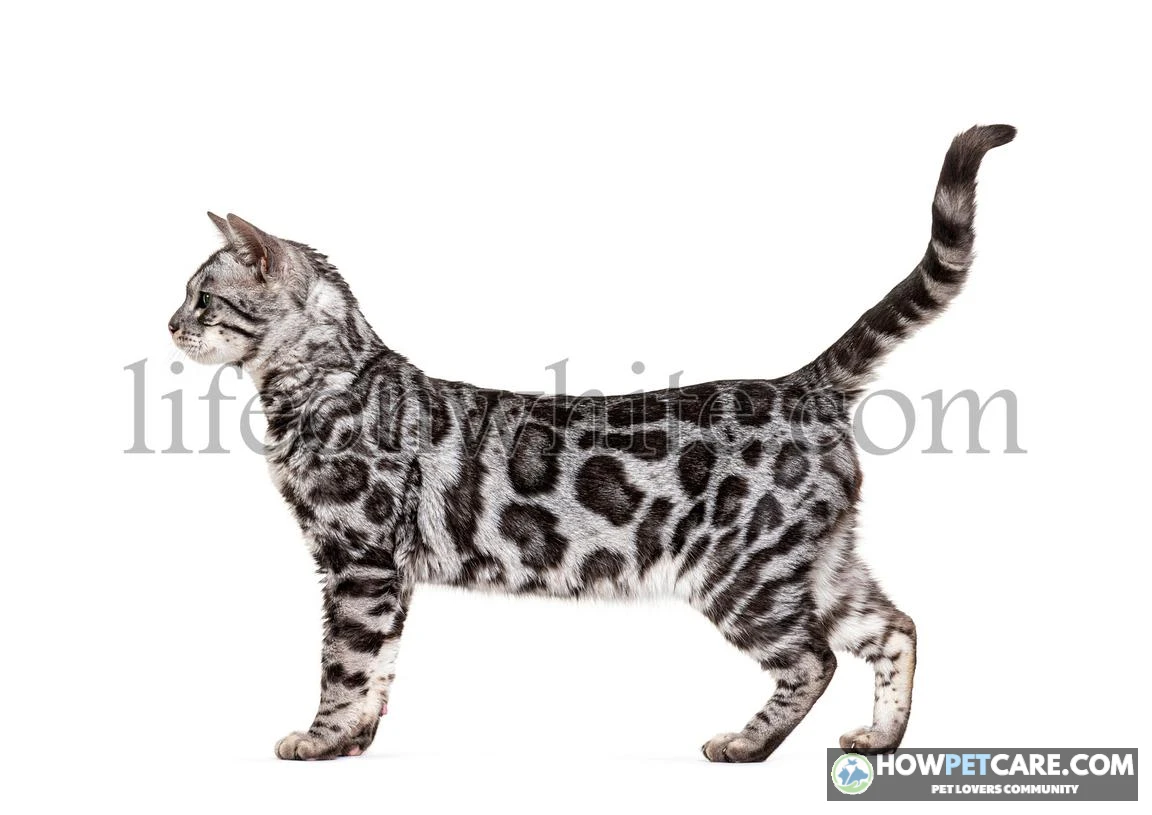

An adult Bengal commonly weighs 8–15 lb (3.6–6.8 kg), with males heavier than females. Combined reported body-plus-tail length is roughly 25–33 in (64–84 cm), and most reach full build around 18–26 months. If you mean lifespan, 12–16 years is the commonly reported range.
The question “how long do bengal cats get” can mean two things: adult size or lifespan. For size, an adult Bengal commonly weighs about 8–15 lb (3.6–6.8 kg), with males generally heavier than females. Combine the commonly reported body and tail measurements and you get roughly 25–33 in (64–84 cm), though that is not a verified nose-to-tail measurement: sources define body length differently, and some may leave out the head. Bengals are often described as reaching their full build at around 18–26 months.
If you mean lifespan, 12–16 years is a commonly reported range, not a guarantee or a firmly established average. Evidence for a different, shorter estimate appears later.
Bengal cat size and lifespan at a glance
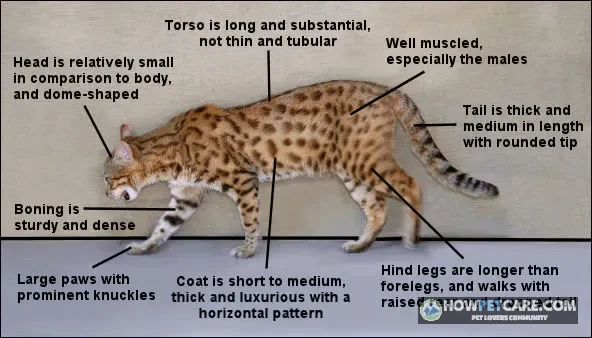
Bengals are generally described as medium to large cats with a long, muscular build, not the bulk of the largest domestic breeds. The figures below are reported size-guide ranges, not limits set by a breed standard.
Adult dimensions by sex
| Measurement | Male: inches or pounds | Male: centimeters or kilograms | Female: inches or pounds | Female: centimeters or kilograms | Source or note |
|---|---|---|---|---|---|
| Adult weight | 10–15 lb | 4.5–6.8 kg | 8–12 lb | 3.6–5.4 kg | Reported size-guide ranges; individual cats can fall outside them. |
| Shoulder height | 11–14 in | 28–36 cm | 10–12 in | 25–30 cm | Reported size-guide ranges, measured to the shoulder rather than the head. |
| Body length, excluding tail | 14–16 in | 36–41 cm | 13–15 in | 33–38 cm | Reported ranges; sources do not consistently define the starting point. |
| Tail length | 13–17 in | 33–43 cm | 12–15 in | 30–38 cm | Reported size-guide ranges. |
| Body plus tail | 27–33 in | 69–84 cm | 25–30 in | 64–76 cm | Arithmetic using the ranges above; not independently measured nose-to-tail totals. |
The length caveat matters: adding body and tail measurements only produces a true nose-to-tail-tip figure if the body measurement starts at the nose. The available source does not establish that. Treat the combined figures as rough planning estimates, not a precise tape-measure standard for your cat.
How big do Bengal cats get: weight, height and length by sex?
Adult weight: average size of a full-grown Bengal
A commonly reported Bengal weight is 10–15 lb (4.5–6.8 kg) for males and 8–12 lb (3.6–5.4 kg) for females. Other size guides give wider ranges, including lighter females and heavier males. These are descriptive ranges, not proof that every healthy adult belongs inside them.
The overlap matters: a large female can weigh more than a small male. Family line, sex and body condition all affect an individual cat’s weight. A scale alone cannot tell you whether that weight is healthy.
How tall Bengals stand at the shoulder
Reported shoulder heights are roughly 11–14 in (28–36 cm) for males and 10–12 in (25–30 cm) for females, although published ranges vary. Measure to the top of the shoulder blades, not to the ears or the top of the head.
The TICA breed standard describes a substantial, muscular cat; it should not be read as a chart of mandatory weights for individual pets. A Bengal can look large because of its long body and muscular build without being exceptionally heavy.
Nose-to-tail-tip length in inches and centimeters
For a broad estimate, add the reported body-length range of 13–16 in (33–41 cm) to the reported tail-length range of 12–17 in (30–43 cm) and you get about 25–33 in (64–84 cm). Those numbers come from general size reports, and the sum combines range endpoints rather than measurements taken from the same cats.
There is another limitation: if the body measurement starts at the shoulders rather than the nose, the sum leaves out the head. To answer the literal question for your own Bengal, measure from nose to tail tip as described below rather than assuming the sum is exact.
Male vs. female Bengal size
Males are generally reported as larger, but sex is only a rough predictor. For a prospective kitten, ask for the measured adult weights of both parents and look at adult relatives from the same line. Those observations are more useful than a promise that every male, or every kitten in a particular litter, will reach a certain weight.
 You might be wonderingHow long do havanese live?How Long Do Havanese Live? Lifespan, Health Risks & CareRead the answer
When do Bengal cats stop growing? A month-by-month growth chart
Bengals are commonly described as reaching their full build at around 18–26 months. Height and length may settle before the chest and musculature finish filling out, so an adolescent that looks long and lean is not necessarily finished developing.
A reliable Bengal-specific monthly dataset was not supplied for this article. Rather than invent weight or length ranges for each month, use this chart as a recording schedule, not a diagnostic growth standard. Ask your veterinarian to interpret your kitten’s measurements against an appropriate feline growth curve.
| Age | Weight (lb and kg) | Body or height cue | Development note |
|---|---|---|---|
| 8 weeks | Record your kitten’s weight | Record length if your kitten is comfortable | Establish a starting point. |
| 3 months | Record weight | Note changes in leg and body proportions | Review the trend rather than one reading. |
| 4 months | Record weight | Recheck body length | Keep the weighing method consistent. |
| 5 months | Record weight | Note overall frame | Compare with earlier entries. |
| 6 months | Record weight | Recheck shoulder height | Ask your vet about growth and neutering timing. |
| 7 months | Record weight | Note changes in frame | Individual growth rates differ. |
| 8 months | Record weight | Recheck body length | A leaner adolescent appearance can be normal. |
| 9 months | Record weight | Note chest and muscle development | Look at body condition as well as weight. |
| 10 months | Record weight | Recheck shoulder height | Bring your log to a routine vet visit. |
| 11 months | Record weight | Note changes in proportions | Avoid comparing with an unrelated kitten alone. |
| 12 months | Record weight | Recheck body length | Adult proportions may be emerging. |
| 13 months | Record weight | Note muscle development | Some cats continue to fill out. |
| 14 months | Record weight | Recheck shoulder height | A stable height does not establish final adult weight. |
| 15 months | Record weight | Note chest and shoulders | Continue to assess body condition. |
| 16 months | Record weight | Recheck body length | Compare with your own earlier measurements. |
| 17 months | Record weight | Note changes in build | Growth may be less obvious than in kittenhood. |
| 18 months | Record weight | Recheck height and length | The commonly reported full-build window begins around this point. |
| 19 months | Record weight | Note muscle development | Keep monitoring without aiming for a particular number. |
| 20 months | Record weight | Recheck body condition | Ask your vet if weight or condition concerns you. |
| 21 months | Record weight | Recheck body length | Some individuals may still be filling out. |
| 22 months | Record weight | Note changes in build | Compare measurements taken the same way. |
| 23 months | Record weight | Recheck shoulder height | Keep the log with your cat’s health records. |
| 24 months | Record weight | Recheck length and body condition | Compare with the reported adult ranges, cautiously. |
| 25 months | Record weight | Note any change | An adult’s healthy size remains individual. |
| 26 months | Record weight | Take a final growth-log measurement | The commonly reported full-build window extends to around this age. |
8 weeks to 6 months: the fast-growth phase
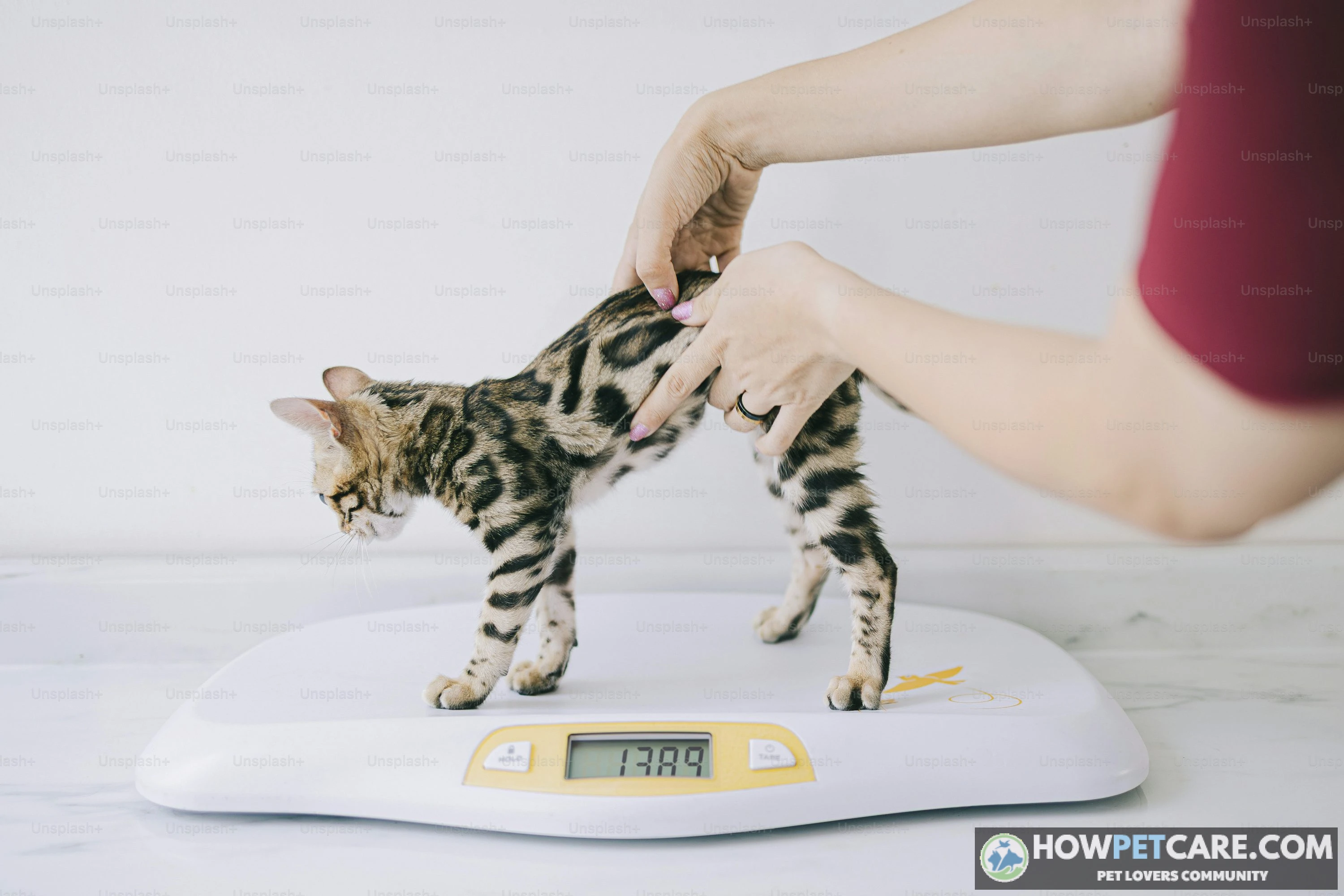
Use a scale that can weigh a small kitten securely, and record the result the same way each time. Your veterinarian can help judge whether the overall trend fits your kitten’s age and condition. Contact the clinic sooner if your kitten loses weight, seems unwell, has a persistently swollen belly or stops gaining as expected; don’t wait for a chart to confirm a problem.
6 to 12 months: lanky adolescence
As a kitten approaches sexual maturity, its proportions may look less rounded and more adult. Sexual maturity and full physical maturity are not the same milestone. Discuss neutering timing with your veterinarian rather than using a predicted change in adult size as the deciding factor.
12 to 26 months: filling out to adult weight
A Bengal may look close to adult size before its build is fully developed. Small measurement differences can also come from posture or a moving tape. Recheck under similar conditions, and ask your vet about a sustained change or any weight loss.
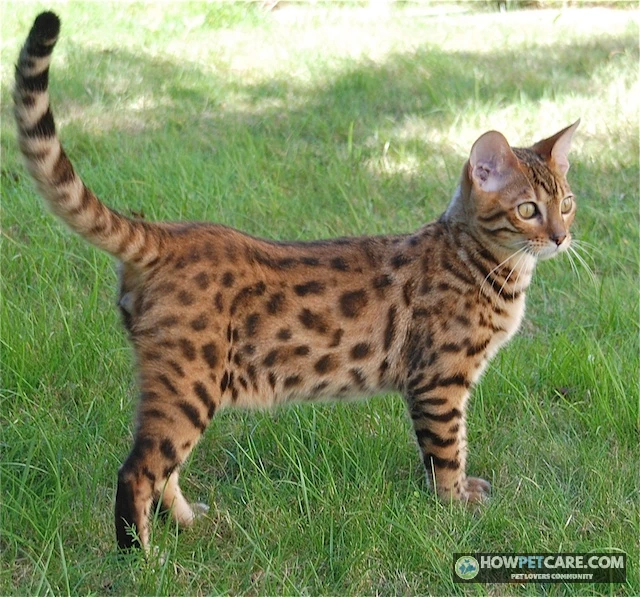
Keep your kitten’s weight log alongside notes about body condition. A single comparison with another Bengal cannot establish whether your kitten is growing healthily.
Are F1 and early-generation Bengals bigger than SBT Bengals?
The Bengal is a hybrid breed developed from the Asian leopard cat and domestic cats. F1 refers to a first-generation cross; F2 and F3 indicate later generations removed from the Asian leopard cat. SBT, or Stud Book Tradition, is a pedigree registration designation for Bengals with the required Bengal ancestry under registry rules; it does not promise a particular body size.
Early-generation cats are sometimes reported as larger than later-generation pets, but those reports do not establish a dependable size rule. One reported F1 range is 12–20 lb (5.4–9.1 kg); it should not be used to predict an individual kitten’s adult weight. Cats from different lines vary, and an early-generation label guarantees neither a larger nor a healthier animal.
Before accepting an “extra-large F-generation” claim, ask:
- What are the measured adult weights and body conditions of both parents?
- Are adult relatives from the same line available to see or documented in photographs?
- What evidence supports the claimed size across generations?
- What is the kitten’s documented generation and registration status?
Early-generation hybrids can have different care needs, and ownership restrictions vary by state and locality. Check the rules where you live before making a commitment.
Bengal size compared to a normal cat, Maine Coon and Savannah
A Bengal’s athletic outline can make it look bigger than a domestic shorthair of similar weight. It is not automatically heavier than an ordinary house cat, however, and individual cats overlap considerably. Bengals are generally described as medium to large rather than giant.
| Cat type | Adult weight | Shoulder height | Build | Lifespan comparison |
|---|---|---|---|---|
| Domestic shorthair | Varies widely; no single breed standard | Varies | Mixed ancestry; build ranges from compact to long and lean | Varies with the population and living conditions; no comparable estimate is established in the supplied evidence. |
| Bengal | Males commonly reported at 10–15 lb (4.5–6.8 kg); females at 8–12 lb (3.6–5.4 kg). | Males 11–14 in (28–36 cm); females 10–12 in (25–30 cm), as reported in size guides. | Long and muscular | 12–16 years is commonly reported, but is not a verified population average. |
| Maine Coon | Generally among the larger domestic breeds; individual weights vary. | Varies | Substantial frame | No directly comparable lifespan estimate is established in the supplied evidence. |
| Savannah | Highly variable by line and generation | Varies | Long-legged, lean build | No directly comparable lifespan estimate is established in the supplied evidence. |
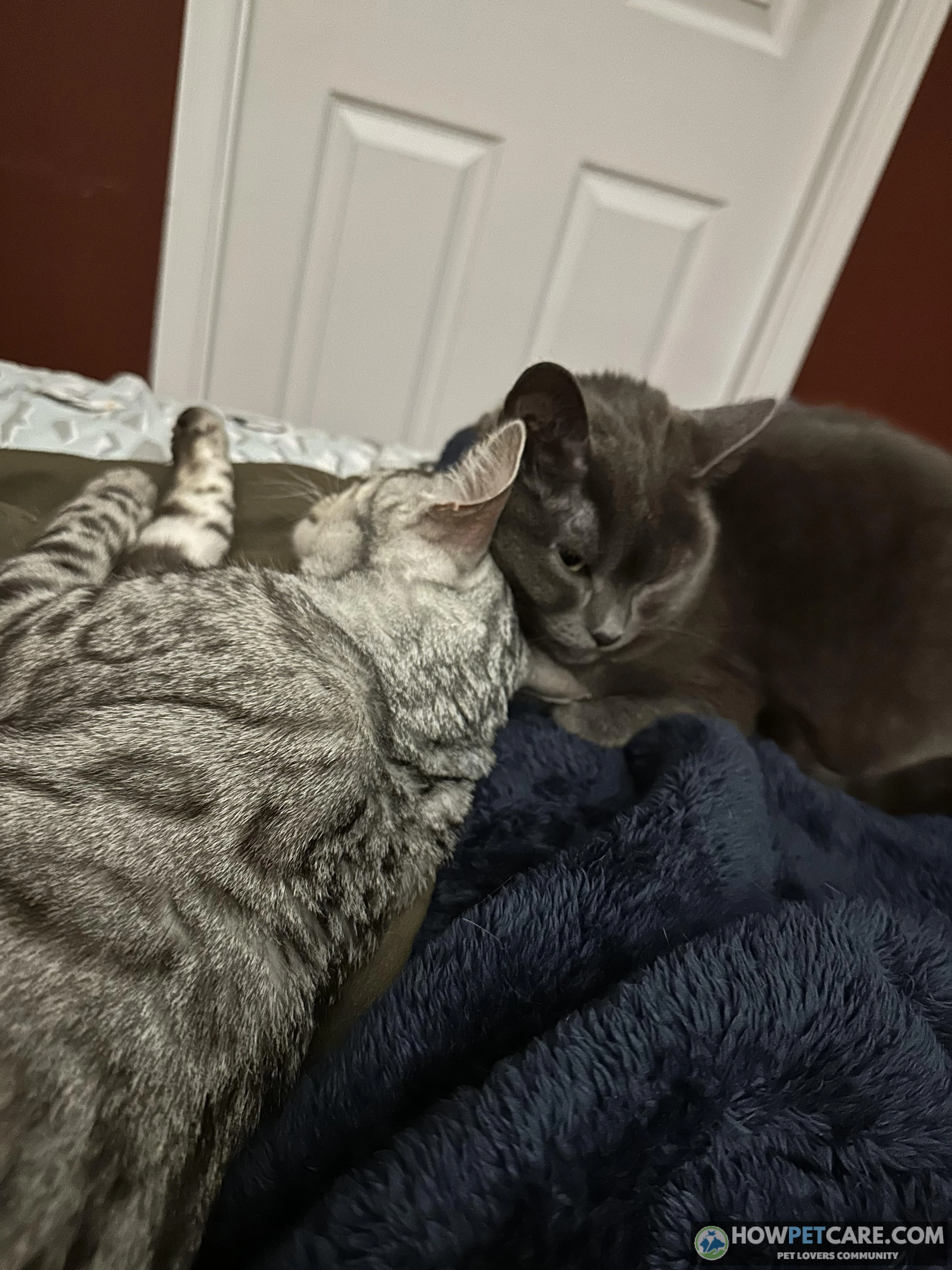
The practical comparison: expect a Bengal to have a muscular, elongated build, not the predictable mass of a particular Maine Coon or the predictable height of a particular Savannah. The supplied evidence does not support precise, consistently measured height and weight ranges for all four groups, so the table does not imply a level of precision it cannot support.
How to measure your Bengal at home and check healthy weight
What you need
Gather a soft sewing tape, a suitable scale, a treat and, if possible, a helper. Choose a quiet moment and a hard, level floor. Don’t pull the tail straight or force your cat to hold a position.
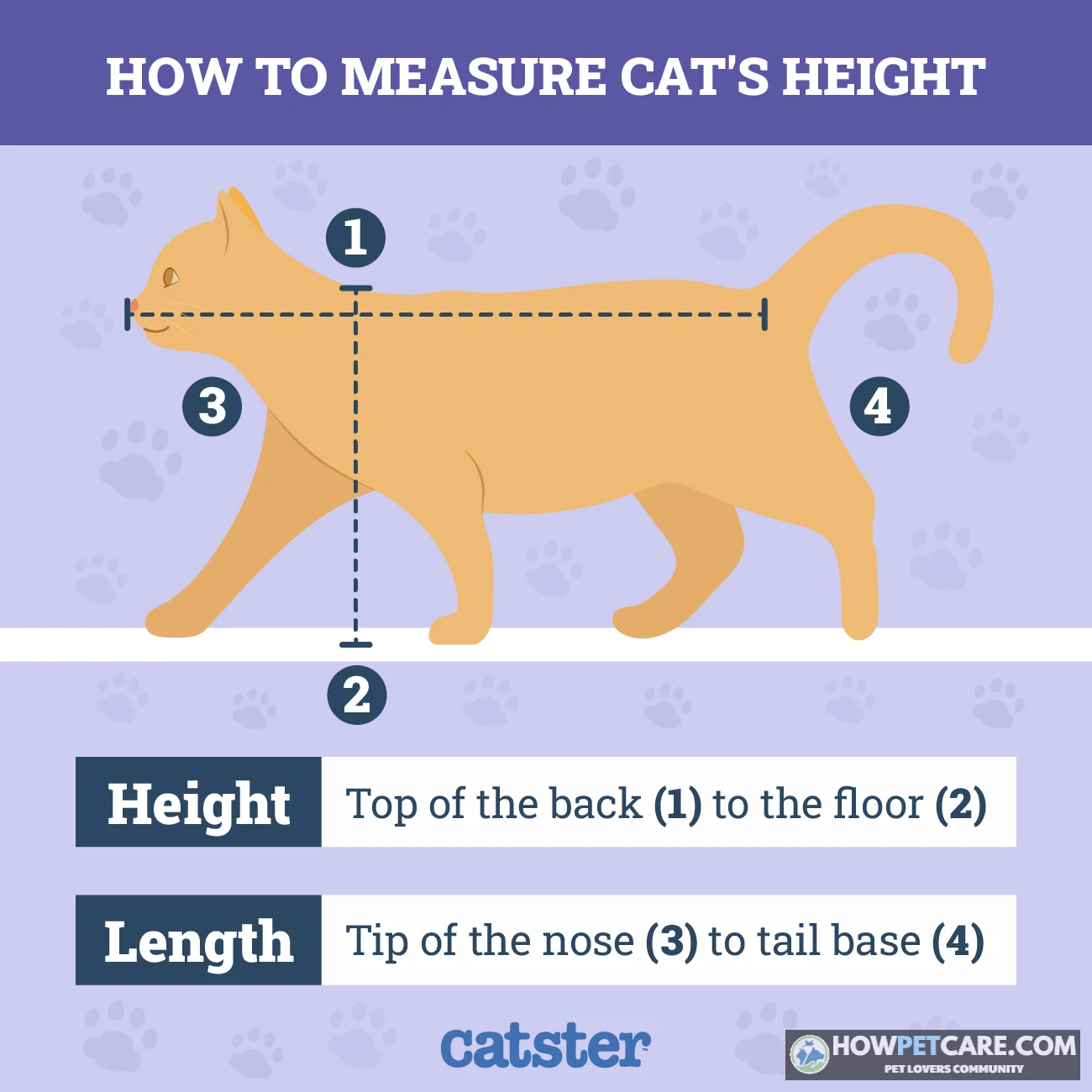
Measuring body length, tail and shoulder height
-
Measure shoulder height
While your cat stands naturally, measure vertically from the floor to the top of the shoulder blades, not to the head.
-
Measure body length
Measure from the base of the neck, near the shoulder blades, to the base of the tail. Write down where you started: published body-length figures do not always use the same landmarks.
-
Measure the tail
Measure from where the tail meets the rump to its tip. Follow its natural position gently without stretching it.
-
Measure nose to tail tip
Measure from the nose to the tail base, then add the tail measurement. Record this separately from shoulder-to-tail-base body length so the missing head length is not overlooked.
-
Weigh and record
Weigh yourself holding your cat, then subtract your own weight. For a small kitten, use an appropriate scale and secure container, accounting for the container’s weight.
For example, if your cat’s shoulder-to-tail-base measurement is 15 in (38 cm) and its tail is 13 in (33 cm), their sum is 28 in (71 cm). That is shoulder-to-tail-tip, not nose-to-tail-tip; measure the nose-to-shoulder portion or take a separate nose-to-tail-base measurement to include the head.
Weight and body condition checks
At a healthy body condition, you should generally be able to feel the ribs beneath a thin covering, see a waist from above and notice a tuck behind the ribs from the side. A muscular cat may feel solid while still being lean. A small female is not automatically underweight just because she is below 8 lb (3.6 kg); reported ranges include lighter females.
Measure monthly during growth under similar conditions. If a measurement falls slightly outside a published range but your cat is otherwise well, record it and ask your vet at the next visit. If weight is changing unexpectedly, growth appears stalled or your cat seems unwell, contact the clinic sooner. Body condition and the individual trend matter more than matching a breed chart.
How long do Bengal cats live? Reconciling 12–18 years with vet-record data
What the evidence supports
Bengal lifespan guides commonly report 12–16 years, and some use 12–18 years. Those ranges are useful as broad expectations owners may encounter, but the supplied research does not establish how they were calculated or provide a primary source. Do not present them as a measured average.
A UK veterinary-records estimate of about 8.5 years is also cited in discussions of Bengal lifespan. The primary study and its Bengal sample details are not included in the available evidence here, so the figure’s exact statistical definition and applicability remain unverified. Calling it a median, mean or life expectancy without checking the study itself would be misleading.
The responsible bottom line: a Bengal may live into its teens, but neither a commonly quoted range nor an unverified clinic-record estimate can predict an individual cat’s lifespan. Direct comparisons with domestic shorthairs or other purebreds require figures from comparable populations and methods; those are not available in the supplied evidence.
Why lifespan figures disagree
Sources can answer different questions. A breed guide may offer an expected age range without explaining its data; a veterinary-records study may analyze a defined group of cats and include early deaths. The cats captured, the country, the time period and whether the statistic describes age at death or life expectancy can all change the result. Without the primary data, no one can say which factor explains a particular gap.
Indoor living can reduce exposure to outdoor hazards, but it does not turn any published lifespan range into a guarantee for an individual Bengal.
HCM, PRA and PK deficiency: what to ask the breeder
Health history matters more than a breeder’s promise of exceptional size or longevity. Ask for documentation covering these inherited-health concerns:
- Hypertrophic cardiomyopathy (HCM): This heart disease can affect longevity. Ask whether the parents have had cardiac screening by echocardiogram, who performed it and when. A normal screening result is useful information, not a lifetime guarantee.
- Progressive retinal atrophy (PRA): PRA affects vision rather than body size. Ask specifically about testing for the Bengal-associated PRA variant and request the actual results.
- Pyruvate kinase deficiency (PK deficiency): This inherited condition can cause anemia, which may affect health and wellbeing. Ask for the parents’ PK-def DNA results.
For DNA results, ask the breeder to explain whether each parent is clear, a carrier or affected, and how the pairing was planned. A veterinarian can help you interpret the paperwork. The supplied evidence does not establish a new Bengal-specific longevity finding for 2025–2026.
A statement that breeding cats are “health tested” is less useful than dated screening reports and identifiable DNA test results for the parents.
Myth check: the 33 lb Bengal and 20-year lifespans
“Male Bengals reach 33 lb (15 kg).” Verdict: unverified. The supplied evidence does not identify an original documented case, veterinary record or registry entry supporting this as a healthy adult Bengal weight. It is far above the commonly reported male range of 10–15 lb (4.5–6.8 kg), but that comparison alone cannot tell us the cause of a particular cat’s weight.
A photograph may exaggerate apparent size, and a reported weight may be inaccurate or reflect an individual cat with excess body fat. Don’t assume which explanation applies without evidence. Even a Bengal weighing 20 lb (9.1 kg) needs an individual body-condition assessment rather than an automatic label of healthy, overweight or unusually large.
“Bengals live 20 years or more.” Verdict: possible as an exceptional individual claim, not an established expectation. The supplied research mentions cats reaching 20 years but does not provide an independently documented case to verify. Even a verified individual would not establish the breed’s average lifespan.
For an extraordinary size or age claim, ask for a dated scale reading or veterinary record, identifying details and, where relevant, pedigree documentation. A familiar object in a photo can provide context, but perspective makes it weaker evidence than an actual measurement.
Your Bengal size and lifespan checklist
If you own a Bengal
- Kitten growing steadily: Keep a monthly weight and measurement log, and bring it to routine veterinary visits.
- Kitten growing slowly or quickly: Compare the trend with your vet, not solely with a stranger’s kitten. Seek advice promptly for weight loss, a persistently swollen belly or signs of illness.
- Adult seems heavy: Check body condition with your vet rather than assuming a high number means a healthy large frame.
- Adult seems light: Remember that sex and frame vary. Ask your vet about unexpected weight loss or uncertainty about condition.
If you are buying a kitten
- Ask for both parents’ measured adult weights and, if possible, information about adult relatives.
- Confirm the kitten’s documented generation and check applicable local ownership rules.
- Request the parents’ HCM screening records and PRA-b and PK-def DNA results.
- Ask what the breeder knows about the lifespan and health history of related cats, while recognizing that family anecdotes cannot predict your kitten’s lifespan.
- Return to the adult-dimensions table when comparing claims, and check that any length measurement uses the same starting and ending points.
 You might be wonderingHow long do golden retrievers live?How Long Do Golden Retrievers Live? Lifespan, Cancer Risk & CareRead the answer
FAQ
Can I predict how big my Bengal kitten will get?
Only roughly. The parents’ adult weights and the kitten’s sex are better predictors than any single kitten weight, so ask the breeder for both parents’ adult weights and track your kitten against a growth chart.
Does neutering change how big a Bengal gets?
Neutering at a very young age can delay growth-plate closure in cats, so some end up slightly longer-limbed. It does not push a Bengal beyond the breed’s normal range. Ask your vet about timing.
Do indoor Bengals live longer?
Indoor cats generally live longer than outdoor cats because they face fewer injuries, infections and traffic risks. There is no Bengal-specific study that quantifies the difference.
Is a Bengal under 8 pounds underweight?
Not necessarily. Smaller females can be healthy at 6 to 8 lb. Judge by body condition (ribs easily felt under a thin fat layer, a visible waist) and by steady growth, and ask your vet if you are unsure.