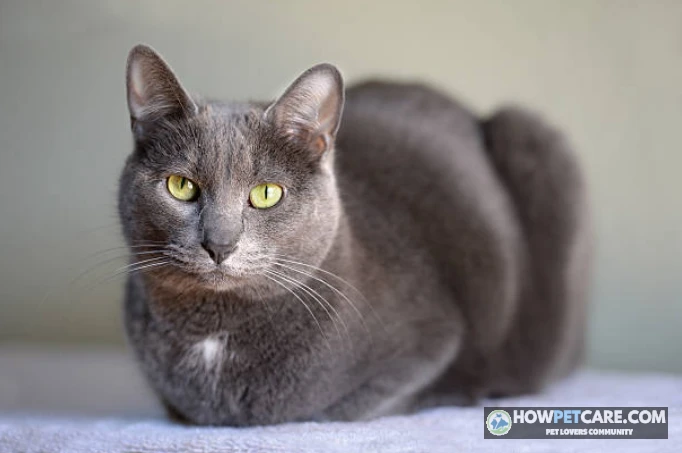

A Korat cat is a rare, ancient breed from Thailand with a short silver-tipped blue coat, large green eyes, and a heart-shaped face. Affectionate and people-oriented, it suits calm homes; US pedigree kittens typically cost $1,000–$2,500+, with DNA testing for inherited Gangliosidosis essential when choosing a breeder.
A Korat cat has a short, single silver-blue coat, large green eyes, and a gently heart-shaped face. Those features help distinguish it from other blue cats, but pedigree documentation is needed to establish its ancestry. Originally from Thailand, the Korat forms close bonds with its people and tends to prefer a calm, predictable home. This guide covers how to identify the breed, compare it with lookalikes, assess its health and temperament, and plan for the costs of bringing one home.
Identify a Korat Cat: Defining Features and Breed Standards

The Korat’s most striking feature is its short, close-lying, single silver-blue coat. Each hair has a silver tip, giving the coat a luminous appearance unlike the plush double coat of a Russian Blue or the woolly texture of a Chartreux. Its color is uniform, with no tabby markings, white spots, or other colors interspersed. Cat fancy organizations describe the coat as "blue," with a distinctive silver-tipped quality.
The eyes are another defining feature: large, clear, bright, and peridot green. Kittens, however, may have amber or yellow eyes. The vivid green typically develops as the cat matures, usually by the time it reaches two to four years of age. Until then, eye color alone cannot confirm a cat as a Korat.
Viewed from the front, the face is distinctly heart-shaped, with a rounded forehead, short muzzle, and well-developed chin. Both CFA (Cat Fanciers’ Association) and TICA (The International Cat Association) breed standards reference this heart shape. The body is compact and muscular, medium-small in size, and surprisingly heavy for its frame: typically 6 to 10 pounds (2.7 to 4.5 kg). Shoulder height ranges from 10 to 12 inches (25.4 to 30.5 cm). Full physical maturity generally comes between two and four years, later than in some smaller breeds but earlier than in the largest felines.
CFA and TICA standards describe the ideal Korat type, but show standards and pedigree documentation serve different purposes. A cat may have a silver-blue coat, green eyes, and a heart-shaped face yet lack documented ancestry. Conversely, a cat with full pedigree papers may not exhibit every physical trait to the extreme seen in the winner’s circle. Documented ancestry, CFA or TICA registration, and the parents’ registered names establish a pedigree Korat; coat color or eye shape alone does not. Evidence confirms that the Korat has a single silver-blue coat, large green eyes, and a heart-shaped face.
Korat Cat Origins: Thailand, Si-Sawat, and the Breed’s History

The Korat comes from Thailand, where it is known as Si-Sawat. In Thai culture, the Si-Sawat is associated with good fortune and prosperity and was traditionally given to brides to bless a marriage. The breed appears in the Cat-Book of Poems, an ancient Thai manuscript dating from the 14th century (1350–1767), which describes cats with physical traits matching the modern Korat. These poems are the earliest recorded references to the breed, though they reflect tradition rather than modern breeding records.
The Korat’s arrival in the international cat fancy is more recent. Jean Johnson is credited with importing the first Korats into the United States in 1959. Daphne Negus followed in 1969, bringing nine Korats from Thailand to the United Kingdom. The first Korat litter born in England arrived in 1972. These imports established the foundation stock for the breed outside Thailand, and CFA and TICA eventually recognized the Korat.
Despite its long history, the Korat remains uncommon compared with many popular pedigreed cats. Finding a kitten with a documented pedigree may take patience, and availability varies by region. Rarity alone doesn’t justify a seller’s claims or price. It does mean prospective owners should be ready to verify documentation and wait for a reputable breeder. The Korat is an ancient natural breed from Korat province, Thailand, and is referenced in the Cat-Book of Poems.
Korat Cat Personality: Affectionate, Alert, and People-Oriented
Korats are often described as intelligent, loyal, and people-oriented. They form strong attachments to their companions and may follow a favorite person from room to room. They are vocal too, though not necessarily loud, using a range of sounds to express needs or observations. A Korat may become unsettled if ignored or faced with sudden changes in routine, and generally prefers a predictable environment.
That attachment matters when considering household fit. A Korat does well with regular interaction, play, and companionship. Alert and curious, these cats often investigate new objects or changes around the home. They can also be sensitive to noise and upheaval. A calm, interactive home that respects the cat’s routine is typically a better fit than a high-traffic household with frequent, unpredictable changes.

Suitability for children and other pets depends on individual temperament, respectful handling, and careful introductions. Korats can bond with children who treat them gently, particularly older children who understand how to interact with cats. Rough handling can cause stress, however, and supervision is always recommended with young children. Introduce other cats gradually. The 14-day protocol outlined later in this guide offers a structured approach for homes with resident cats or dogs.
A first-time owner can care for a Korat, but should be ready for a cat that seeks connection rather than independence. Daily play, predictable feeding, and a stable environment help meet the breed’s needs. Someone willing to learn feline body language, provide consistent care, and interact with the cat each day can find the experience rewarding.
-
Day 1–2: Base Room Setup
Before bringing the Korat home, set up a closed base room with litter box, water, food, a hiding box, scratching post, and a worn T‑shirt carrying your scent. This becomes the new cat’s safe territory.
-
Days 1–2: Scent Pairing
Feed resident pets on the other side of the closed door so they pair the new cat’s smell with food. Do not allow direct contact yet.
-
Days 3–4: Bedding Swap
Rub a clean sock on one animal’s cheeks and leave it near the other’s feeding area. Watch for relaxed eating rather than hissing or refusal.
-
Days 5–6: Cracked Door Visual
Open the door 1–2 inches for visual contact during meals only. Close before anyone fixates, lunges, barks, or swats.
-
Days 7–9: Baby Gate Sessions
Use a baby gate or two stacked gates for 5–10 minute sessions. Reward quiet sniffing; end early if the dog’s body stiffens or resident cat stalks.
-
Days 10–12: Short Shared-Room Time
Allow short shared-room time while the dog is leashed or resident cat has an easy escape upward to a shelf or tree. Give the Korat vertical routes, not just floor space.
-
Days 13–14: Extended Sessions
Extend sessions to 30–60 minutes, still supervised. Separate overnight until all animals eat, play, and sleep normally in shared space.
-
After Day 14
Keep separate litter boxes for at least two cats (one per cat plus one extra is the usual rule). Maintain the Korat’s predictable play and attention routine, and slow down if noise, guests, or schedule changes cause hiding.
Korat vs. Russian Blue, Chartreux, and British Shorthair
Misidentification is a persistent challenge for prospective Korat owners. The breed’s silver-blue coat resembles those of several other breeds, and sellers don’t always distinguish them accurately. Comparing their features can help you avoid paying Korat prices for a Russian Blue, Chartreux, or British Shorthair mix. Use appearance as a first filter only: registration, documented ancestry, and breeder transparency carry more weight than a silver-blue photo.
| Breed | Coat | Typical eye color | Build and head shape | Typical temperament | Pedigree verification | |
|---|---|---|---|---|---|---|
| Korat | Single, short, close-lying silver-blue coat; hairs often look silver-tipped | Large green eyes; kittens may start amber/yellow and mature toward green | Compact, muscular, medium-small; heart-shaped face and rounded forehead | Alert, people-oriented, loyal, often vocal; may dislike chaos | Ask for CFA/TICA or equivalent registration plus named parents; blue coat alone proves nothing | |
| Russian Blue | Plush double coat with dense undercoat; blue with silver tipping | Vivid green in adults; kittens may be yellow/gold first | Fine-boned, graceful, wedge-shaped head; usually more elegant than stocky | Reserved with strangers, gentle, routine-loving | Registration should say Russian Blue; do not accept "blue shorthair" as interchangeable | |
| Chartreux | Woolly, water-resistant blue coat; more textured than sleek | Copper to gold/orange eyes are a classic clue | Robust, muscular, rounded head with smiling expression | Quiet, observant, calm; often less demanding than a Korat | Chartreux pedigree and copper/gold eyes argue strongly against Korat | |
| British Shorthair | Dense, crisp plush coat; blue is common but many colors exist | Copper/gold common in blue cats; other colors vary | Broad, cobby, round face and cheeks; heavier bone | Easygoing, independent, lower need for constant interaction | A round "teddy-bear" head plus copper eyes is a strong sign it is not a Korat | The Korat is not hypoallergenic; all cats produce the Fel d 1 protein found in saliva and skin. |

Korat Health, Gangliosidosis Testing, and a Realistic Lifespan
Inherited health concerns matter when choosing any pedigreed cat. For the Korat, the most significant genetic risk is Gangliosidosis, a group of inherited neurological disorders. GM1 and GM2 Gangliosidosis are autosomal recessive conditions that affect the nervous system. DNA testing of breeding cats is therefore essential to responsible breeding programs.
Post-2020 population-level prevalence data for Gangliosidosis in Korats is limited in the sources available for this article. Without a defensible, dated estimate, there is no sound percentage to give. Ask breeders for both parents’ Gangliosidosis DNA-test results and documentation of the mating decisions those results informed. A reputable breeder will provide dated laboratory reports covering GM1 and GM2 testing and explain how the results influenced the pairing, such as by avoiding carrier-to-carrier matings.
Published Korat lifespan figures vary with the methods, populations, and promotional framing behind them, so they shouldn’t simply be averaged. Some breed profiles list 10–15 years, pet-care sites list 12–16 years, and promotional or enthusiast sources give 15–20 years. The lower 10–15 range is often conservative and may reflect general domestic-cat assumptions, indoor/outdoor risk, or older references. The middle 12–16 range is the most plausible planning band for a well-cared-for indoor Korat, though it remains an estimate, not a guarantee. Read 15–20 as "possible upper longevity in excellent conditions" unless the source identifies a tracked population and date.
For planning, the largest number is less useful than a realistic care horizon. Prepare for a cat that may live into the mid-teens, ask the breeder about the ages and causes of death of related cats, and keep your cat indoors or in secured outdoor space. Maintain dental and preventive care, and budget for senior screening after about age 10. Treat an exact lifespan claim without an explained population as marketing rather than data.

You will see Korat lifespan listed as 10-15 years on some breed profiles, 12-16 years on pet-care sites, and 15-20 years in promotional or enthusiast sources. Treat these as different claim types, not a single contradiction to average blindly.
- The lower 10-15 range is often conservative and may reflect general domestic-cat assumptions, indoor/outdoor risk, or older references.
- The middle 12-16 range is the most plausible planning band for a well-cared-for indoor Korat, but it is still an estimate rather than a guarantee.
- The 15-20 figure is best read as "possible upper longevity in excellent conditions," unless the source names a tracked population and date.
For a buyer, the useful takeaway is not the biggest number: plan for a cat that may live into the mid-teens, ask the breeder for the ages and causes of death of related cats, keep the cat indoors or in secured outdoor space, maintain dental and preventive care, and budget for senior screening after about age 10. If a source cites an exact lifespan without explaining the population, treat it as marketing rather than data.
Korat Cat Price in the US: Purchase, Adoption, and Ongoing Costs
A realistic budget starts with the purchase or adoption fee, but it doesn’t end there. The breed’s rarity and the cost of documented pedigree health testing influence purchase prices, which also vary by region and breeding program. The ranges below are estimates, not fixed quotes.
A pedigree Korat kitten from a U.S. breeder often costs about $1,000 to $2,500+. The price varies with breeder reputation, show vs. pet quality, region, whether initial vaccines and DNA testing are included, and waiting-list demand. A cat marketed as a "Korat" far below that range calls for extra verification, not an assumption of legitimacy. If a Korat or Korat mix appears in a shelter or rescue, adoption fees typically range from about $75 to $300, depending on local fees, the cat’s age, and medical work already done. An adoption fee doesn’t guarantee a documented pedigree: many shelter cats are mixes, and a "Korat" label may be based on appearance rather than genetic or ancestry verification.

Plan for monthly and annual expenses as well as the initial cost. The table separates one-time and recurring expenses and shows what can change each range.
Use this list as a planning framework, not a fixed quote. Re-check local vet and insurance prices before committing, and remember that individual cat needs and regional price variation can shift these ranges.
| Cost category | Typical dollar range | One-time or recurring | What changes the cost |
|---|---|---|---|
| Pedigree kitten from a breeder | Often about $1,000-$2,500+ in the US | One-time | Rarity, breeder reputation, show vs pet quality, region, included testing/vaccines, waiting-list demand |
| Breed-rescue or shelter adoption | About $75-$300 when a Korat or Korat mix appears | One-time | Local shelter fees, age, medical work already done, whether pedigree is actually documented |
| Initial supplies | $200-$600 | Mostly one-time | Carrier, litter boxes, scratching posts, cat tree, bowls, toys, bed, microchip/ID if not included |
| First veterinary setup | $150-$450 | First year | Exam, remaining kitten vaccines, spay/neuter if not included, fecal test, microchip, baseline labs |
| Food and litter | $40-$120/month | Recurring | Food quality, wet vs dry mix, cat’s size and activity, litter type, household coupon/bulk buying |
| Preventive vet care reserve | $20-$60/month equivalent | Recurring | Annual exam, vaccines as advised, dental cleanings, senior screening, unexpected illness fund |
| Pet insurance | Roughly $15-$45/month for many cats; breed/rare status can affect quotes | Optional recurring | Age at enrollment, deductible, reimbursement %, exclusions, state pricing |
| Replacement/wear items | $10-$30/month equivalent | Recurring | Toys, scratching surfaces, litter-box liners, grooming tools, boarding/pet sitting |
A practical first-year planning range for a breeder kitten is roughly $2,000-$4,500, including purchase and setup. Excluding purchase, many homes can plan around $700-$1,800 for first-year essentials and care. Use these as budgeting ranges rather than quotes, and re-check local vet and insurance prices before committing.
How to Find and Vet Korat Cat Breeders in the United States
Vetting a Korat breeder takes more than admiring photos. The breed’s rarity and resemblance to other blue cats make fraud and mislabeling real risks. Work through this checklist to assess breeders’ health practices and transparency before making a commitment.
- Confirm registry status: Start with a breeder or cattery listed with a recognized registry such as CFA or TICA. Verify the listing independently through the registry’s online directory rather than relying on a screenshot or description.
- Request pedigree documentation: Ask for the kitten’s pedigree name, the parents’ registered names, and registration status. Clarify whether the kitten is pet quality, show quality, or sold without breeding rights.
- Require DNA-test documentation: Request dated laboratory DNA reports for BOTH parents covering GM1 and GM2 Gangliosidosis. A verbal "tested clear" isn’t documentation. Reports should come from an accredited laboratory and include the cat’s registered name, testing date, and results.
- Review how DNA results influenced mating: Ask how the results affected the pairing. Look for a specific answer, such as avoiding carrier-to-carrier matings, rather than vague reassurance that doesn’t refer to the results.
- Examine veterinary records: Review exam dates, vaccine and deworming history, microchip status, and any known issues in the kitten or its relatives.
- Inspect the rearing environment: Ask where kittens are raised and request a live video tour or, if possible, an in-person visit. Look for clean conditions, normal activity, and kittens that have been handled regularly.
- Confirm minimum release age and socialization plan: Be cautious if kittens are sent home very young (before 12 weeks is generally recommended) or the breeder can’t describe their handling routine. Ask about their exposure to sounds, people, and other animals.
- Read the contract thoroughly: Check the health guarantee length, what happens if a congenital disease appears, refund/replacement terms, spay/neuter terms, and the return-to-breeder clause.
- Check references: Contact the breeder-club, prior buyers, or a veterinarian familiar with the cattery. A willing and able breeder will provide references on request.
- Watch for red flags: These include pressure to pay immediately, refusal to share records or show the living environment, an unverified blue shorthair advertised as a "Korat," and demands for payment via gift cards/crypto/wire only. Inconsistent photos and a price far below typical pedigree ranges also warrant caution.

If a seller fails the first three checkpoints—independent registry verification, pedigree documentation, and dated DNA-test reports—don’t proceed with a deposit. Those checks form the foundation of a responsible purchase.
Korat Care: Feeding, Enrichment, and Safe Outdoor Access
A Korat’s care routine should account for its lean build and active, people-oriented temperament. Predictable feeding and interactive enrichment give this moderately active cat both structure and companionship.
Feeding by life stage and body condition
Calorie needs depend on weight, age, activity level, and body-condition score. Individual metabolism varies, so a veterinary assessment is the best starting point. Adult Korats generally benefit from measured portions divided into two meals per day, with fresh water always available. Kitten food supports growth through the first year, adult maintenance food helps sustain a healthy weight, and senior formulas may be recommended for cats approaching age 10 and older. Regular weight checks at home or during vet visits help maintain the lean physique associated with the breed’s medium-small, muscular build.
Life-stage formulas have different purposes. Kitten food is higher in protein and calories to support growth; adult formulas balance nutrients for maintenance; and senior formulas often include joint support, antioxidant complexes, and adjusted phosphorus levels. Avoid free-feeding, which can lead to weight gain in less-active cats. Start with the feeding guidelines on the package, adjust according to your veterinarian’s Body Condition Score assessment, and measure portions with a standard measuring cup.
Indoor living versus secured outdoor access
The Korat’s short coat needs little grooming. A weekly brushing session is typically enough to remove loose hair and distribute skin oils. Outdoor access is a separate safety decision. Korats are generally best kept indoors or in fully secured outdoor enclosures (catios, cat runs), since the breed lacks the streetwise experience of cats with more feral ancestry. Outdoor risks include traffic, injury from other animals, parasite exposure, and getting lost. Supervised time on a leash or in a secure enclosure can provide mental stimulation, though supervision doesn’t eliminate the underlying risks.

Korats are not highway-savvy. Even brief unsupervised outdoor access carries risks from traffic, disease-carrying parasites, and accidental displacement. Secure indoor living is the safest default.
Not hypoallergenic: understanding Fel d 1
Korats are not hypoallergenic. No cat breed is reliably hypoallergenic, and a Korat can trigger allergies in sensitive people. The allergen responsible for most cat allergies is a protein called Fel d 1, produced in cats’ salivary and skin glands. A short coat or low-shedding fur reduces the amount of hair and dander in the environment, but it doesn’t eliminate Fel d 1. If you have cat allergies, spend time with a Korat before adoption to assess your own reaction; don’t rely on coat length as a guarantee of allergen-free living.

Enrichment needs in daily life
Korats need mental and physical stimulation as well as attention from their people. Brief interactive sessions with wand toys, puzzle feeders that dispense kibble, and access to climbing areas or a cat tree can help meet those needs. Predictable daily attention—even 15–20 minutes of focused play—helps prevent boredom and strengthens the human-cat bond. A calm play area without loud, sudden disturbances suits the breed’s dislike of chaos.

For prospective owners in the United States, the decision starts with more than a silver-blue coat. Verify the cat’s pedigree and the breeder’s health testing, compare the likely costs with your budget, and consider whether your household can provide the attention and calm routine a Korat tends to need. Published lifespan and family-suitability claims differ, so weigh them alongside the individual cat and the conditions you can offer.
| Breed | Coat Description | Eye Color | Build and Head Shape | Temperament | Pedigree Verification |
|---|---|---|---|---|---|
| Korat | Single, short, close-lying silver-blue coat; hairs often look silver-tipped | Large green eyes in adults; kittens may start amber/yellow and mature toward green | Compact, muscular, medium-small build; heart-shaped face and rounded forehead | Alert, people-oriented, loyal, often vocal; may dislike chaos | Ask for CFA/TICA or equivalent registration plus named parents; blue coat alone proves nothing |
| Russian Blue | Plush double coat with dense undercoat; blue with silver tipping | Vivid green eyes in adults; kittens may start yellow/gold | Fine-boned, graceful build; wedge-shaped head; usually more elegant than stocky | Reserved with strangers, gentle, routine-loving | Registration should say Russian Blue; do not accept "blue shorthair" as interchangeable |
| Chartreux | Woolly, water-resistant blue coat; more textured than sleek | Copper to gold/orange eyes are a classic clue | Robust, muscular build; rounded head with a smiling expression | Quiet, observant, calm; often less demanding than a Korat | Chartreux pedigree and copper/gold eyes argue strongly against Korat |
| British Shorthair | Dense, crisp plush coat; blue is common, but many colors exist | Copper/gold eyes common in blue cats; other colors vary | Broad, cobby build; round face, heavy cheeks, and heavier bone | Easygoing, independent, lower need for constant interaction | A round "teddy-bear" head plus copper eyes is a strong sign it is not a Korat |
1At what age do Korat cats typically fully develop their signature vivid peridot green eyes?
While kittens may start with yellow or amber eyes, full eye color maturation to peridot green occurs as the Korat reaches full physical maturity between two and four years.
2What ancient manuscript provides the earliest recorded reference to the Korat breed?
This 14th-century Thai manuscript contains the earliest written descriptions of cats possessing physical traits matching the modern Korat.
3Which coat feature distinguishes the Korat from the Russian Blue?
The Korat possesses a close-lying single coat where each hair has a silver tip, creating a luminous finish without an undercoat.
4What autosomal recessive neurological disorder requires mandatory DNA testing of Korat breeding cats?
These autosomal recessive neurological conditions affect the nervous system, making lab-certified DNA screening of breeding stock critical for Korats.
5According to breed guidance, what should a buyer verify before placing a deposit on a Korat kitten?
Independent registry verification, parentage pedigree papers, and lab-certified Gangliosidosis DNA testing form the essential non-negotiable checks for vetting a Korat breeder.
6A blue cat with copper to gold eyes and a rounded head with a 'smiling' expression is most likely which breed?
Copper or gold eyes combined with a robust body and a rounded head with a smiling expression distinguish the Chartreux from other blue cats.
7Why are Korats unable to be classified as hypoallergenic despite having a short single coat?
Cat allergies are primarily triggered by the Fel d 1 protein produced in skin and salivary glands, which exists regardless of coat length or shedding level.
8Why is indoor living or secured outdoor access (such as a catio) recommended for Korats?
Korats lack urban survival instincts, placing them at severe risk from traffic, predators, parasites, and accidental displacement if left roaming.
9Who is credited with importing the first Korat cats into the United States in 1959?
Jean Johnson imported the first Korats into the United States in 1959, introducing the breed to the Western cat fancy.
10Which physical traits best describe the head shape and body build of a Korat?
Both CFA and TICA standards specify a medium-small, muscular body paired with a heart-shaped face and rounded forehead.
FAQ
Is the Korat cat rare?
Yes. Korats are uncommon compared with many popular breeds, so finding a documented pedigree kitten may take time. Rarity varies by region and should not be used by itself to justify a seller’s claims or price.
Are Korat cats hypoallergenic?
No cat breed is reliably hypoallergenic, and Korats can still trigger allergies. Their short coat does not eliminate the allergenic proteins found in cats’ saliva and skin.
Can a Korat be left alone during the workday?
Some adult Korats manage a regular workday, but the breed is often strongly people-oriented and may struggle with prolonged isolation. Predictable interaction, enrichment, and a suitable companion can help, though individual cats differ.
Do Korat kittens have green eyes?
Not always. A kitten’s eyes may be yellow or amber before developing the vivid green associated with mature Korats.